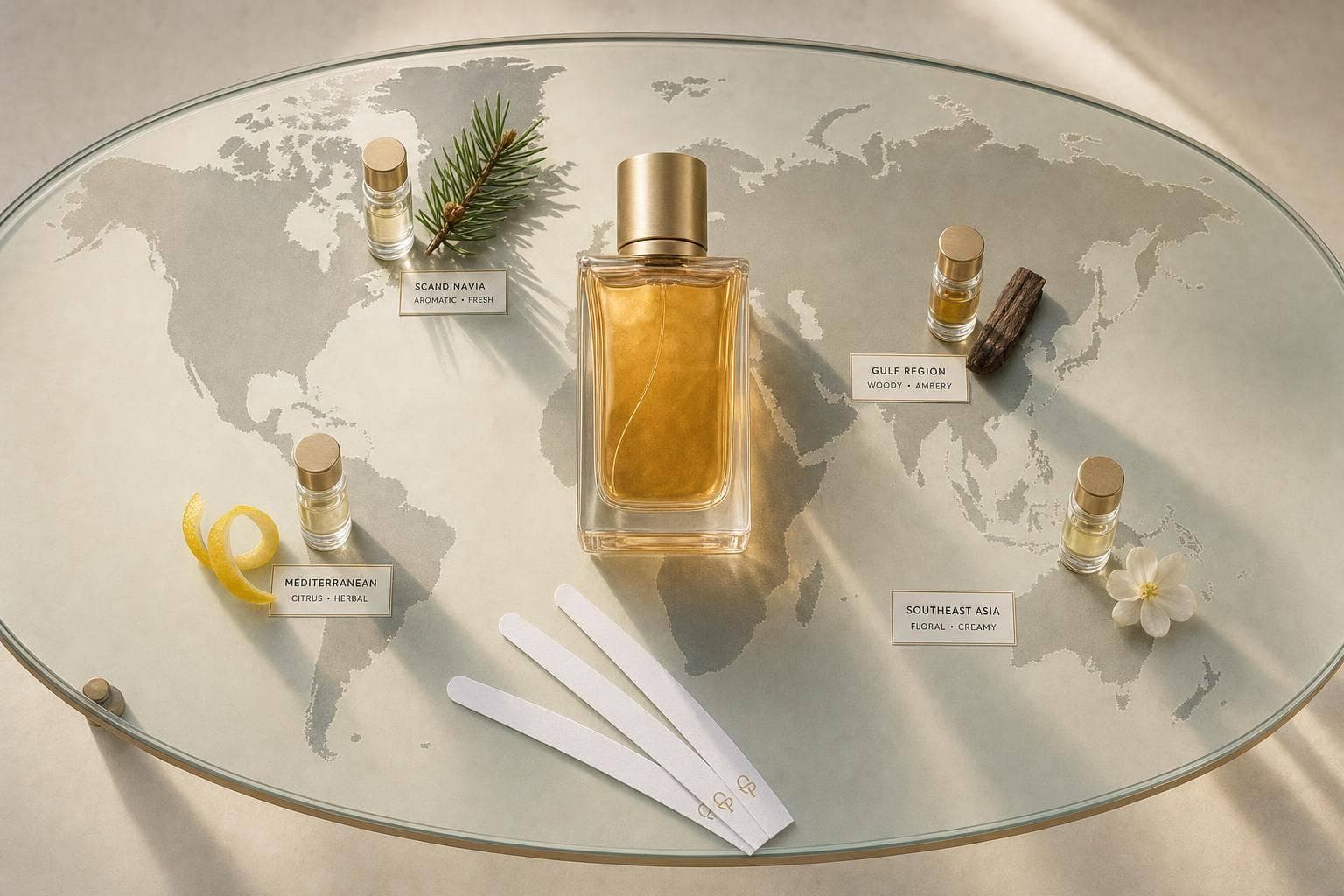
Il gusto per i profumi non è solo personale. Si apprende. La stessa nota di oud, rosa, sandalo, tè o vaniglia può sembrare ricca, rilassante, delicata, formale o fin troppo intensa a seconda di dove si vive, del contesto in cui si è cresciuti e dell’occasione in cui si intende indossarla.
In sintesi:
- Il luogo cambia il significato: l’oud appare spesso più naturale nel Golfo che in Germania
- Le norme quotidiane contano: una scia intensa può adattarsi a contesti sociali in un mercato, ma risultare eccessiva sui mezzi pubblici o in ufficio in Germania
- Il clima trasforma la resa: caldo, umidità e freddo modificano proiezione, dry-down e comfort
- Le note offrono indizi: tè e hinoki suggeriscono spesso un profumo discreto, mentre incenso, cuoio e note floreali opulente si addicono maggiormente alla sera
- Provare prima di acquistare: se un flacone costa €250,00+, un formato di prova da 2,0 ml, 5,0 ml o 8,0 ml ha molto più senso di un acquisto alla cieca
Il punto centrale dell’articolo si può riassumere così: il profumo funziona un po’ come un dress code. La fragranza è fondamentale, ma lo è altrettanto quando, dove e in presenza di chi la si indossa. Ecco perché la scelta di un profumo sofisticato inizia dal contesto, non dalle mode del momento.
Confronto rapido
| Regione | Stile consueto | Tratti olfattivi comuni | Occasioni d’uso tipiche |
|---|---|---|---|
| Medio Oriente | Più intenso, diffusivo | Oud, incenso, rosa, ambra | Ospiti, incontri conviviali, preghiera, serate |
| Asia meridionale | Ricco, intimo o più avvolgente | Sandalo, gelsomino, zafferano, attar | Matrimoni, eventi familiari, preghiera |
| Asia orientale | Più delicato, proiezione discreta | Tè, yuzu, hinoki, incenso soave | Uso quotidiano, ufficio, spazi pubblici |
| Europa | Proiezione moderata | Agrumi, note floreali, legni, muschio, vaniglia | Lavoro, fine settimana, serate |
| Africa / America Latina / Caraibi | Più caldo, festoso, espressivo | Legni, muschio, frutti tropicali, note floreali, vaniglia | Profumazione d’ambiente, eventi sociali, celebrazioni |
Dovendo scegliere in base a questo schema, userei le note come segnali guida, per poi testare una fragranza nella vita reale: a casa, durante gli spostamenti quotidiani e la sera fuori.
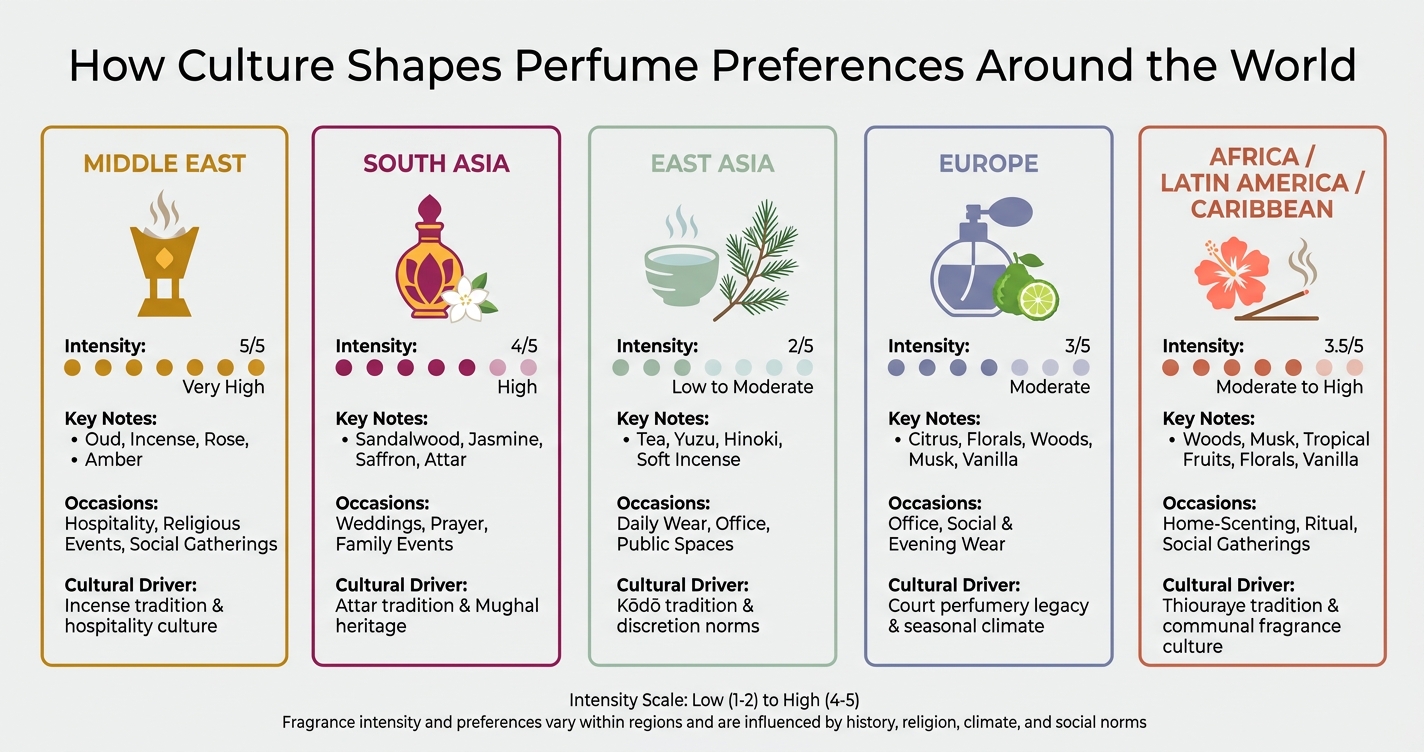
Global Perfume Preferences by Region: Intensity, Notes & Culture
Il significato dei principali ingredienti di profumeria nelle diverse regioni
Le note olfattive non hanno lo stesso significato ovunque. Il loro valore è plasmato da commercio, religione, clima e rituali. Una volta letta la piramide olfattiva attraverso questa lente, essa inizia a svelare come una fragranza è pensata per essere indossata.
Medio Oriente e Asia meridionale: oud, rosa, incenso e sandalo
Nelle culture del Golfo, l’oud è molto più di una nota profumata. Viene bruciato sotto forma di bakhoor - scaglie di legno fatte fumigare sulla carbonella - nelle case e nelle moschee. Molte persone si lasciano avvolgere da questo fumo prima della preghiera o di eventi speciali come gesto purificatorio. Viene anche offerto agli ospiti come parte della quotidiana ospitalità, con la stessa naturalezza con cui si servono caffè o datteri. Accettarlo è un segno di rispetto. Ciò spiega perché i profumi a base di oud siano spesso audaci e persistenti.
Incenso e mirra donano un tocco cerimoniale. Nella profumeria moderna, queste note resinose possono risultare austere e formali, prestandosi più a grandi occasioni che a un uso disinvolto da giorno.
In India e nell’Asia meridionale, il sandalo è il cuore pulsante degli attar - profumi a base oleosa prodotti in centri rinomati come Kannauj. Gli attar vengono spesso applicati picchiettandoli sui punti di pulsazione prima della preghiera, delle riunioni familiari e dei matrimoni. Sono scelti sia da uomini che da donne, e la loro consistenza oleosa a fior di pelle dona un senso di tradizione, eleganza discreta e intimità. Il gelsomino è strettamente legato al romanticismo, al buon auspicio e alla grazia femminile. Cardamomo e zafferano apportano lo stesso calore festoso che contraddistingue la tradizione culinaria: ricchezza, profondità e solennità.
Asia orientale: tè, agrumi, legni e incenso sussurrato
La profumeria dell’Asia orientale predilige la compostezza alla scia invadente. In Giappone e in gran parte dell’Asia orientale, i profumi intensi in pubblico sono spesso evitati. L’obiettivo è una fragranza discreta, percepibile solo a fior di pelle.
Il tè verde richiama la cultura della cerimonia del tè e i giardini silenziosi, evocando sensazioni di quiete e riflessione piuttosto che una freschezza pungente. Lo yuzu risulta più luminoso, legato ai bagni termali stagionali e alla vita urbana. L’hinoki, o cipresso giapponese, ricorda le architetture dei templi e le sorgenti termali. Il fiore di loto porta con sé rimandi buddisti alla purezza e all’illuminazione spirituale. L’incenso delicato evoca il fumo sacro e le dimore storiche, pur declinato in uno stile leggero ed etereo. Insieme, questi materiali danno vita a profili olfattivi improntati su calma, equilibrio e armonia naturale.
Europa, Nord America, Africa, America Latina e Caraibi
Nei mercati occidentali, freschezza e familiarità contano spesso più del valore rituale. Le note di testa agrumate come bergamotto, limone, arancia e pompelmo evocano pulizia, brio e professionalità. È uno dei motivi per cui compaiono così spesso nelle fragranze da giorno e da ufficio. I fiori classici come rosa, iris e mughetto tendono a comunicare romanticismo ed eleganza sobria. Le note gourmand come vaniglia, fava tonka, cioccolato e caramello offrono conforto, nostalgia e calore, motivo per cui riscuotono grande successo nei mesi più freddi e tra i consumatori più giovani.
In molte aree di Africa, America Latina e Caraibi, il profumo assume una dimensione più celebrativa e rituale. In Senegal, la tradizione del Thiouraye unisce legni, sandalo, muschio, oud e ambra in intime miscele da bruciare - un rito domestico radicato nella maestria femminile. In Brasile, frutto della passione, cocco e vaniglia guidano la predilezione per bouquet fruttati-floreali generosi e creazioni gourmand vellutate. In queste culture, spezie, fiori esotici e vaniglia richiamano calore, sensualità e gioia condivisa anziché una semplice intimità ovattata.
Perché le preferenze sui profumi variano da regione a regione
Conoscere l’origine di certe note racconta solo una parte della storia. L’aspetto più affascinante è perché le persone in luoghi diversi scelgano proprio quelle fragranze. I costumi olfattivi sono plasmati da cinque forze principali: storia, religione, commercio, norme sociali e clima.
Storia, religione e rotte commerciali
Molto prima che nascesse la profumeria moderna, le materie prime aromatiche viaggiavano già lungo le rotte mercantili. E non viaggiavano come semplici merci neutre: portavano con sé un valore sacro, medicinale, aristocratico o rituale.
Nel Golfo, l’uso dell’incenso nelle dimore e nelle occasioni sociali ha reso le essenze ricche e diffusive un emblema di ospitalità e prestigio. Nell’Asia orientale, la cerimonia giapponese del kōdō - la secolare arte di ascoltare l’incenso in un contesto meditativo e raccolto - ha consolidato un canone opposto: sobrietà, delicatezza e profumi intimi. In Europa, la profumeria di corte e la nascita delle grandi maison hanno reso familiari le composizioni a base di fiori, agrumi e muschio.
Il commercio ha aperto la strada diffondendo gli ingredienti nel mondo. La religione e i costumi delle élite hanno definito quali essenze custodissero maggior valore. Quegli antichi legami guidano ancora oggi il modo in cui percepiamo un profumo.
Norme sociali, codici di genere e uso quotidiano
Il modo in cui si vive la quotidianità incide profondamente sulle aspettative verso una fragranza. Negli Emirati Arabi Uniti, circa il 74% dei consumatori indossa un profumo ogni giorno. In questo contesto, una scia intensa è considerata segno di cura, ricercatezza e accoglienza - non un eccesso. In Giappone vale l’esatto contrario: si prediligono fragranze impercettibili a distanza, e indossare un profumo opulento sui mezzi pubblici o sul lavoro è spesso ritenuto poco garbato.
Anche i codici di genere cambiano a seconda del mercato. In alcuni paesi, i fiori dolci rimangono legati alla femminilità, mentre i legni speziati al mondo maschile. In altri - specialmente nell’Europa occidentale - la profumeria genderless è ormai diffusissima, e gli accordi unisex di ambra e muschio sono entrati a pieno titolo nelle abitudini quotidiane.
Il contesto è altrettanto determinante. La fragranza ideale per andare al lavoro potrebbe stonare a un pranzo di famiglia o durante una serata elegante. Sono convenzioni olfattive che si assimilano con il tempo e guidano le scelte d’acquisto molto più di quanto molti brand ammettano.
Clima e contesti olfattivi locali
Anche quando la cultura traccia le regole, il clima stabilisce come queste si manifestino sulla pelle. In climi caldi e aridi come quelli dei paesi del Golfo, resine dense, oud e ambra si fondono magnificamente con l’aria, poiché il calore secco ne accelera l’evaporazione. Nei climi tropicali e umidi, le medesime note possono apparire pesanti o asfissianti; qui gli accordi agrumati, marini e verdi risultano di gran lunga più piacevoli.
In Germania e in gran parte dell’Europa centro-settentrionale, la scelta della fragranza segue spesso l’alternarsi delle stagioni. Note agrumate, acquatiche e floreali leggere dominano la primavera e l’estate; con l’arrivo di autunno e inverno, legni, spezie e accordi ambrati trovano la loro naturale armonia. Il riscaldamento negli interni, i trasporti affollati e gli ambienti di lavoro orientano la clientela europea verso scie moderate - qualcosa che risulti sofisticato da vicino senza saturare l’ambiente.
| Regione | Intensità | Occasioni d’uso tipiche | Fattori chiave |
|---|---|---|---|
| Medio Oriente | Molto alta | Ospitalità, eventi religiosi, incontri sociali | Tradizione dell’incenso, storia mercantile, cultura dell’accoglienza |
| Asia meridionale | Alta | Matrimoni, preghiera, cerimonie familiari | Tradizione degli attar, retaggio delle corti Moghul, spiritualità |
| Asia orientale | Da bassa a moderata | Uso quotidiano, ufficio, luoghi pubblici | Canone di discrezione, rito del kōdō, densità urbana |
| Europa | Moderata | Ufficio, vita sociale e serate | Eredità della profumeria di corte, galateo urbano, clima stagionale |
| Africa (es. Senegal) | Da moderata ad alta | Profumazione d’ambiente, rituali, incontri familiari | Tradizione del Thiouraye, cultura della profumazione condivisa |
Questi schemi non sono immutabili. Con la libera circolazione dei costumi attraverso i confini, anche le preferenze iniziano a fondersi.
Il tuo esperto di profumi personale ti aspetta
Fai il nostro veloce quiz olfattivo per scoprire autentici profumi di design e di nicchia scelti in base ai tuoi gusti: esplorali in decant e campioni da 2, 5, 8 e 30 ml, così puoi provarne ognuno prima di scegliere il flacone intero.
Trova il tuo profumoCome la globalizzazione fonde le tradizioni olfattive
Flussi migratori, viaggi e social media hanno introdotto oud, attar e incenso nel cuore di metropoli europee come Berlino e Francoforte. Questo connubio sta ridefinendo le proposte delle boutique di profumeria.
Profumi ibridi ed evoluzione del gusto
La profumeria di nicchia e i designer di alta gamma hanno abbracciato questa trasformazione, creando consapevolmente fragranze che intrecciano patrimoni olfattivi differenti.
Gli accordi di oud e vaniglia ingentiliscono una materia prima austera con una carezza gourmand. Le unioni di incenso e fiori infondono una sensazione serena, quasi meditativa, perfetta anche di giorno. Le composizioni a base di tè e agrumi fondono il rigore orientale con la vivacità luminosa tanto amata dal pubblico europeo. Il fascino è intuitivo: queste creazioni riprendono note caratteristiche di una parte del mondo adattandole a codici di raffinata familiarità.
I brand di nicchia offrono ben più di una semplice fragranza: uniscono narrazione artistica e grande portabilità, calibrando persistenza e sillage per la vita di tutti i giorni. Anche il layering - l’arte di sovrapporre più essenze per creare un’impronta su misura - è sempre più diffuso e supera ogni confine. Si può così vaporizzare un agrume frizzante su una base profonda di oud, dando vita a un ibrido che esprime identità personale e cultura delle materie prime.
L’influenza delle diaspore e la riscoperta degli ingredienti
Le comunità diasporiche sono state le vere pioniere di questa evoluzione. Le comunità mediorientali e sudasiatiche a Berlino, Francoforte e Colonia hanno mantenuto viva la richiesta di oud, attar e accordi d’incenso per decenni. Questa presenza costante ha trasformato note un tempo considerate esotiche in capisaldi della profumeria contemporanea.
L’Europa resta uno dei mercati più prestigiosi. Per gli intenditori desiderosi di esplorare queste creazioni ibride senza l’impegno di un intero flacone, un decant da 2 ml o 5 ml rappresenta la scelta perfetta.
Come usare il simbolismo culturale per scegliere e provare i profumi
Leggere le note olfattive come indicatori culturali
Mentre i trend olfattivi si diffondono globalmente, la piramide olfattiva rimane la bussola più rapida per comprendere una creazione. Le note racchiudono significati, non solo aromi: l’oud e l’incenso suggeriscono ricchezza e solennità; sandalo e gelsomino evocano calore; tè, yuzu e hinoki rimandano alla sobrietà; vaniglia e note cipriate offrono un senso di confortevole eleganza.
Questo permette di interpretare la descrizione olfattiva con grande senso pratico, abbinando ogni nota al momento giusto:
- Fragranze più aeree per il giorno
- Composizioni più dense per la sera
- Accordi rassicuranti per i momenti intimi e di relax
La domanda cambia: non più soltanto «Mi piace?», ma «In quale occasione e per quale ragione lo indosserei?». È l’approccio più consapevole alla profumeria, perché inserisce l’essenza nella vita reale anziché limitarsi a un giudizio astratto su una mouillette.
Usa queste indicazioni per guidare le prime prove, testando poi il profumo nelle situazioni di ogni giorno.
Sperimentare le essenze in formati da viaggio prima del flacone intero
Alcune note hanno un’identità molto marcata - oud, cuoio, incenso denso, opulenze floreali e accordi gourmand - e sulla pelle possono evolvere in modo radicalmente diverso rispetto a una cartina profumata. La resa varia poi con la temperatura, i tessuti e il contesto: un profumo audace al chiuso può svelarsi morbidissimo all’aperto, mentre un altro può sbocciare con il calore e spegnersi con il freddo mattutino.
Scento propone decant da 2 ml, 5 ml e 8 ml, più un decant in flacone da 30 ml per la maggior parte dei profumi, per una scoperta olfattiva senza vincoli. Una soluzione ideale per confrontare le fragranze durante le normali abitudini quotidiane - in viaggio, sul lavoro, a cena e durante le uscite serali - prima di scegliere il flacone definitivo.
| Formato | Durata tipica del test | Utilizzo consigliato |
|---|---|---|
| 2,0 ml | 3–7 utilizzi | Prima impressione, analisi delle note, prova sulla pelle |
| 5,0 ml | 1–3 settimane | Test approfondito tra impegni di lavoro e serate |
| 8,0 ml | 2–6 settimane | Rotazione stagionale, uso continuo, scelta definitiva |
La strategia più efficace è semplice: prova una fragranza in tre situazioni distinte - a casa, durante gli spostamenti e in un’occasione sociale. Osserva l’apertura, l’evoluzione nel dry-down, la persistenza e l’impressione generale. È qui che si coglie la differenza tra un profumo affascinante sulla carta e quello perfetto per te.
La prova su pelle trasforma il simbolismo culturale in una scelta impeccabile.
Conclusione: la cultura dona senso al profumo
La cultura infonde significato a ogni materia prima, e quel significato determina come una creazione si rivela sulla pelle. Storia, fede, clima e convenzioni sociali plasmano il messaggio di ogni scia. Comprendere queste dinamiche trasforma la scelta del profumo in un autentico esercizio di stile e consapevolezza.
Domande frequenti
In che modo il clima influisce sulla resa di un profumo?
Il clima esercita una notevole influenza sul comportamento di una fragranza sulla pelle. Calore e umidità tendono ad accelerare l’evaporazione degli oli essenziali, modificandone sia la proiezione che la tenuta.
Ciò significa che una creazione morbida ed equilibrata con il freddo può reagire in modo diverso d’estate o in ambienti molto caldi: con le alte temperature l’arco evolutivo si abbrevia e la testa del profumo si sprigiona più rapidamente. Testare l’essenza in condizioni atmosferiche differenti offre un quadro fedele della sua interazione con la pelle.
Quali note olfattive sono più indicate per l’ambiente di lavoro?
Il muschio pulito è la scelta più affidabile e raffinata per l’ufficio. Offre un’impronta curata e sobria, che comunica professionalità senza imporsi.
In Germania molti appassionati prediligono bouquet legnosi-ambrati a base di Ambroxan o Akigalawood per via dell’eccellente tenuta e della scia decisa. Tratti di questo genere sono perfetti come firma olfattiva personale, ma in contesti professionali il muschio pulito resta l’opzione d’elezione: discreto, impeccabile e mai invadente.
Come conviene testare universi olfattivi sconosciuti prima dell’acquisto?
Il consiglio è partire con un piccolo decant e indossarlo sulla pelle per alcuni giorni. Questo permette di apprezzarne appieno persistenza, proiezione e lo sviluppo delle note dall’apertura al dry-down.
Come riferimento:
- 2 ml assicurano una valutazione approfondita
Se la fragranza conquista e merita un posto nella propria collezione settimanale, si può passare al formato da 5 ml o 8 ml.
In cerca dell’accordo perfetto? Il discovery quiz basato sulle note di Scento può orientare la scelta verso la fragranza ideale prima di acquistare il flacone intero.

