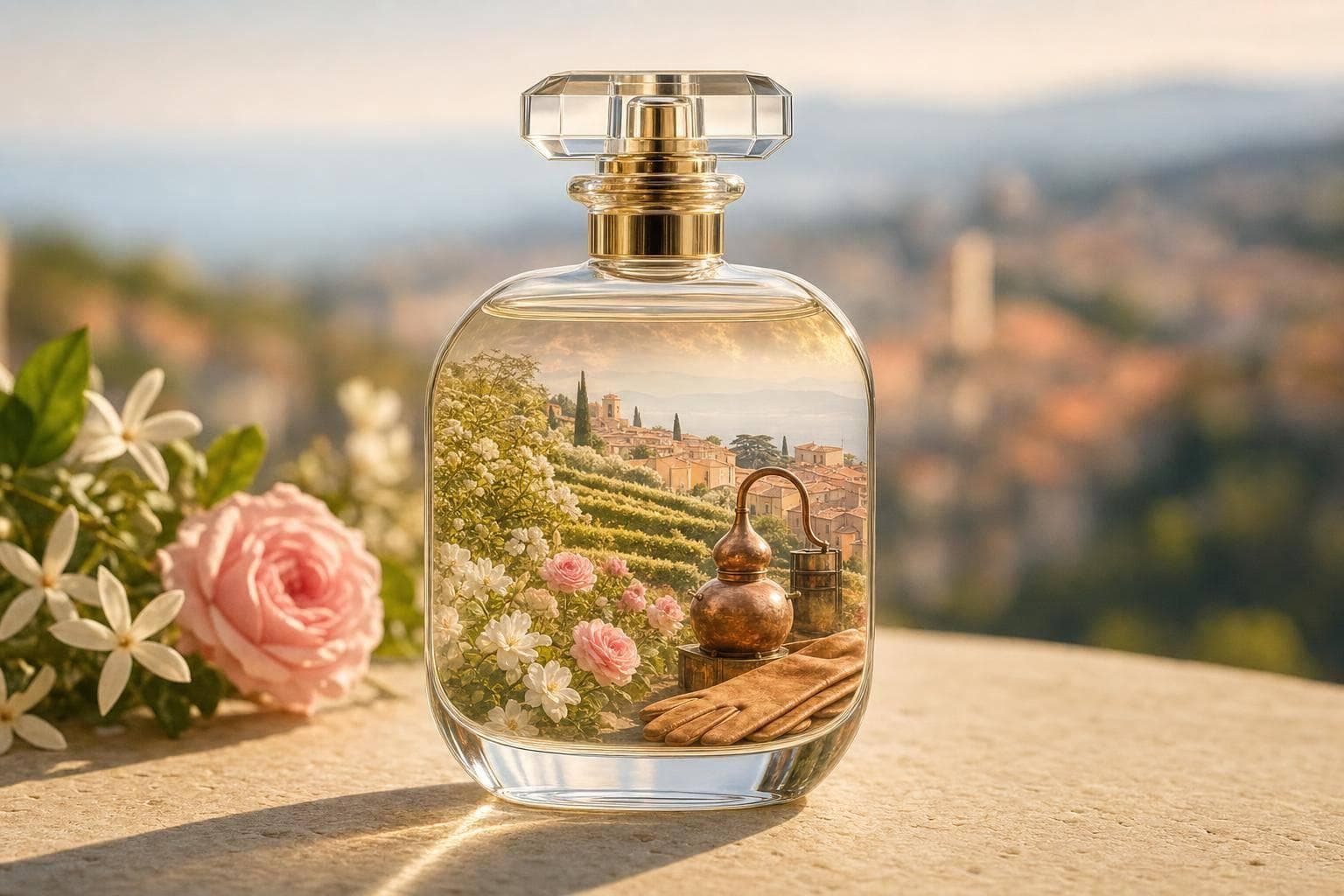
Grasse è diventata la capitale del profumo perché la terra ideale, i fiori perfetti e la maestria artigianale si sono incontrati nello stesso luogo. Si può riassumere così: un clima mite, oltre 300 giorni di sole all’anno, colline a circa 350 m di altitudine e un’industria profumiera nata dalla lavorazione del cuoio e dei guanti profumati hanno garantito a Grasse un vantaggio incolmabile.
In breve, ecco i punti chiave:
- La natura ha offerto il primo aiuto: Grasse godeva di sole, notti fresche, ottimo drenaggio e, in seguito, di un maggiore apporto idrico grazie al Canale della Siagne nel 1860.
- I fiori le hanno dato fama: il gelsomino e la rosa di maggio sono diventati le coltivazioni più celebri della città.
- Il cuoio ha dato inizio alla storia: i maestri guantai usavano le essenze per mascherare gli odori della concia; in seguito, il profumo è diventato l’attività principale.
- Il lavoro è rimasto locale: coltivatori, addetti all’estrazione e profumieri lavoravano a stretto contatto, permettendo di lavorare i fiori nel momento perfetto.
- Il savoir-faire è perdurato nel tempo: Grasse ha mantenuto il proprio primato fino al XXI secolo, coronato dal riconoscimento dell’UNESCO nel 2018.
In parole semplici: i campi rifornivano i laboratori e i laboratori hanno costruito la reputazione della città.
| Fattore principale | Il ruolo svolto per Grasse |
|---|---|
| Clima e territorio | Hanno favorito la coltivazione ottimale di fiori da profumo |
| Apporto idrico | Ha sostenuto l’agricoltura durante i mesi più secchi |
| Commercio dei guanti profumati | Ha unito l’arte della concia a quella della profumeria |
| Colture floreali locali | Hanno fornito le materie prime per i profumi |
| Sistema artigianale integrato | Ha connesso coltivazione, estrazione e composizione |
| UNESCO nel 2018 | Ha consacrato questo savoir-faire come patrimonio vivente |
La storia di Grasse è un connubio di territorio, maestria artigianale e una lunga tradizione: non un singolo evento, ma un percorso graduale che ha trasformato una cittadina del sud della Francia nella culla più celebre della profumeria.
In che modo le condizioni naturali di Grasse le hanno garantito un vantaggio iniziale
Il primo punto di forza di Grasse è giunto dalla natura stessa. Le colline, la luce e l’acqua hanno favorito la nascita di fiori dalla fragranza straordinariamente intensa. Questo aspetto è stato determinante agli inizi per l’agricoltura floreale e, in seguito, per i laboratori di profumeria sorti attorno a tali raccolti.
Come clima, acqua e territorio hanno favorito la floricoltura
Grasse sorge a circa 350 m sul livello del mare ai piedi delle Prealpi, a circa 20 km dalla costa mediterranea. Questa posizione geografica ha svolto un ruolo cruciale: abbastanza vicina al mare da godere di un clima mite, ma sufficientemente all’interno per evitare la salsedine e i venti costieri che potrebbero rovinare i petali più delicati.
La zona beneficia di oltre 300 giorni di sole all’anno, che favoriscono una fioritura costante, mentre le notti più fresche dovute all’altitudine aiutano i boccioli a preservare appieno la loro fragranza.
I pendii calcarei garantiscono un ottimo drenaggio, riducendo il rischio di marciume radicale e offrendo ai coltivatori lo spazio ideale per posizionare il gelsomino, la rosa di maggio e altri fiori nei punti più riparati e soleggiati.
Il canale della Siagne, completato nel 1860, ha assicurato l’approvvigionamento idrico nei mesi estivi più siccitosi, rendendo possibile una coltivazione intensiva.
Insieme, altitudine, sole, drenaggio e irrigazione hanno regalato a Grasse un contesto di coltivazione d’eccezione. Il clima non si è limitato a far prosperare i fiori: ha favorito proprio quelle specie che avrebbero definito l’identità della città.
Perché il gelsomino, la rosa di maggio e altri fiori locali hanno definito Grasse
La rosa di maggio (Rosa centifolia) e il gelsomino (Jasminum grandiflorum) sono diventati le colture d’elezione di Grasse. A essi si sono affiancati tuberosa, violetta, iris, fiori d’arancio, mimosa, lavanda e mirto. Il loro profilo olfattivo era strettamente legato al clima e al terroir della regione.
La rosa di maggio fiorisce per un breve lasso di tempo, da metà maggio a inizio giugno. La sua fragranza calda e mielata è plasmata dall’alternanza di notti fresche e giornate soleggiate. Il gelsomino, fiore simbolo della regione, necessita di una lunga stagione calda al riparo da calori eccessivi. Le estati temperate e i miti inverni di Grasse gli offrivano l’habitat perfetto, generando corolle dalla fragranza profonda e opulenta, tanto amata dai profumieri.
Questo patrimonio floreale ha poi alimentato il lavoro dei guantai, dei maestri dell’estrazione e dei profumieri di Grasse. Molto semplicemente: i campi hanno rifornito i laboratori e i laboratori hanno plasmato l’arte profumiera di Grasse.
Da città conciaria a capitale del profumo
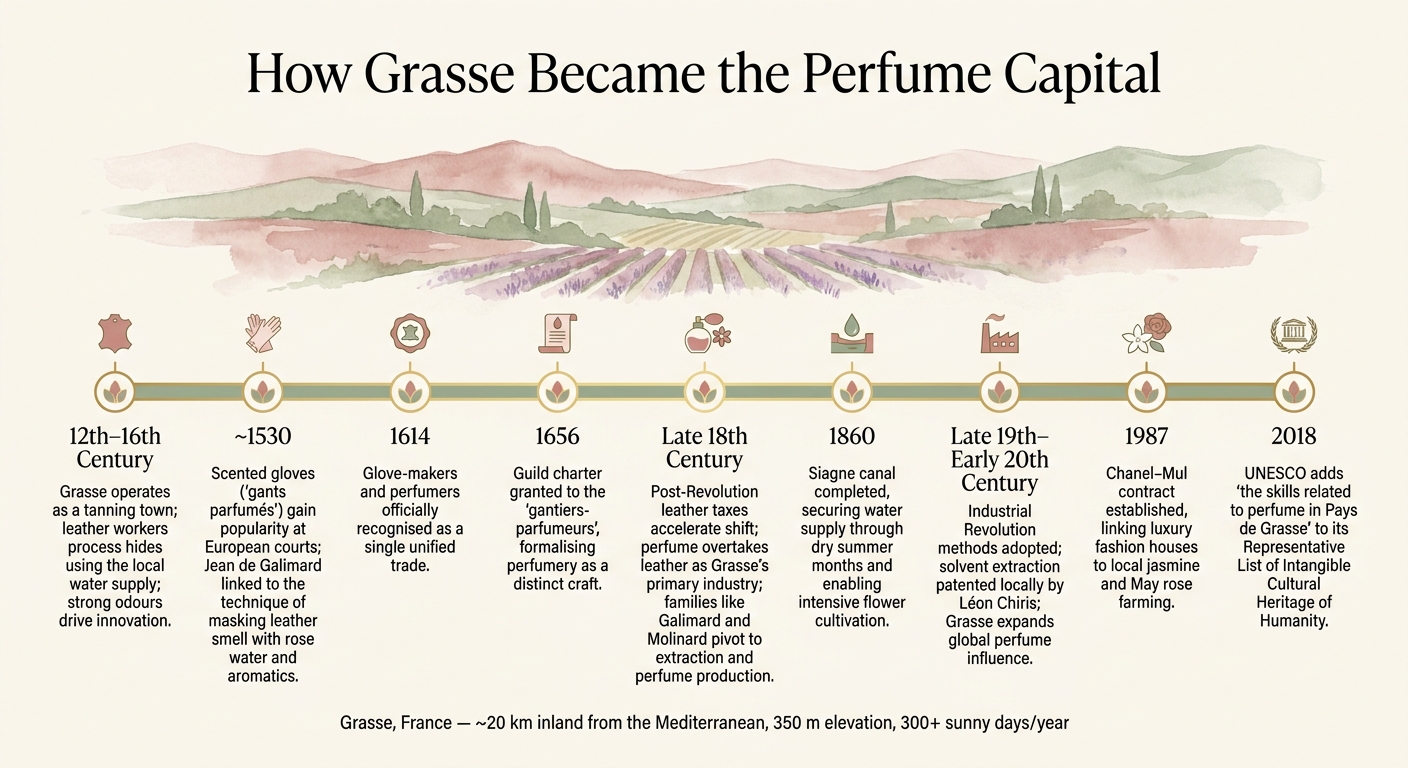
Come Grasse è diventata la capitale del profumo: una cronologia
Prima di dedicarsi al profumo, Grasse era rinomata per le sue concerie. Dal XII al XVI secolo, gli artigiani locali trattavano le pelli sfruttando i corsi d’acqua della città, e l’odore intenso di questa lavorazione permeava l’intera Grasse. Non era un problema trascurabile: l’odore condizionava la vita quotidiana, spingendo i conciatori a cercare una soluzione alternativa.
Come i guanti profumati hanno aperto un nuovo mercato
La soluzione fu inizialmente semplice: mascherare l’odore sgradevole. Gli artigiani iniziarono a immergere i guanti in acqua di rose, spezie e altre essenze aromatiche locali. A Jean de Galimard è spesso attribuita la popolarità di questo metodo, che diede vita ai rinomati gants parfumés (guanti profumati).
Intorno al 1530, questi guanti profumati conobbero uno straordinario successo tra l’aristocrazia delle corti europee, dove gli accessori profumati erano sinonimo di assoluta raffinatezza. Ciò che era nato come un rimedio pratico si trasformò rapidamente in un oggetto di lusso. A quel punto, la fragranza divenne più importante del pellame stesso. Sotto molti aspetti, la manifattura di guanti fu il primo passo di Grasse verso l’arte della profumeria.
Come la profumeria ha sostituito il cuoio come industria principale di Grasse
All’inizio del XVII secolo, la lavorazione dei guanti e la profumeria non erano più arti distinte. Nel 1614, guantai e profumieri ottennero il riconoscimento di un’unica corporazione, e nel 1656 seguì lo statuto ufficiale dei gantiers-parfumeurs. Questo passaggio formale sancì una trasformazione già in atto: le competenze locali si stavano allontanando dal trattamento delle pelli per orientarsi verso l’estrazione degli aromi e la composizione olfattiva.
Dopo la Rivoluzione, l’inasprimento delle tasse sul cuoio spinse molti conciatori ad abbandonare le pelli per dedicarsi interamente alle fragranze. Verso la fine del XVIII secolo, il profumo aveva ormai soppiantato il cuoio come attività cardine di Grasse. Famiglie storiche come Galimard e Molinard, legate inizialmente alla produzione di guanti, riconvertirono le proprie abilità nell’estrazione e nella creazione di essenze. I metodi introdotti dalla Rivoluzione Industriale resero questa transizione ancora più solida, dando vita a un ecosistema artigianale che garantì alla profumeria di Grasse una straordinaria longevità.
Il tuo esperto di profumi personale ti aspetta
Fai il nostro veloce quiz olfattivo per scoprire autentici profumi di design e di nicchia scelti in base ai tuoi gusti: esplorali in decant e campioni da 2, 5, 8 e 30 ml, così puoi provarne ognuno prima di scegliere il flacone intero.
Trova il tuo profumoCome il sistema artigianale di Grasse ha costruito la sua fama mondiale
Grasse non ha costruito il proprio prestigio unicamente sui fiori. Il suo vero punto di forza risiedeva in una rete sinergica di coltivatori, addetti all’estrazione e maestri profumieri che operavano fianco a fianco. Questa stretta vicinanza consentiva di trasferire i raccolti dal campo al laboratorio in tempi rapidissimi, preservando la freschezza e la perfezione dei fiori. Nella profumeria il tempismo è essenziale, e Grasse ha saputo trasformarlo nel suo più grande alleato.
Coltivatori, addetti all’estrazione e profumieri: un ecosistema integrato
L’UNESCO definisce il savoir-faire legato al profumo a Grasse attraverso tre abilità interconnesse: la coltivazione delle piante da profumo, la conoscenza delle materie prime e la loro trasformazione, e l’arte della composizione olfattiva. Queste fasi non vivevano in mondi separati; ciascuna influenzava l’altra.
I coltivatori calibravano i momenti di raccolta affinché i fiori più delicati come la rosa centifolia, colti nelle prime ore delle mattine di maggio, raggiungessero i laboratori di estrazione ancora intrisi di rugiada. Chi si occupava dell’estrazione condivideva i riscontri di laboratorio, spiegando come le variazioni di irrigazione o concimazione influissero sulla resa e sulla qualità olfattiva. I profumieri, a loro volta, valutavano i lotti di assolute e oli essenziali, indicando il profilo desiderato affinché coltivatori e tecnici potessero affinare il lavoro.
Si trattava di una filiera artigianale locale, perfezionata attraverso lunghi apprendistati nelle maison e nei campi. Gran parte di questo sapere risiedeva nella pratica piuttosto che nei manuali: cogliere l’istante esatto della raccolta o bilanciare un accordo all’organo del profumiere. Questa conoscenza tacita si è tramandata di generazione in generazione, costituendo la ragione fondamentale per cui Grasse ha preservato un’identità inimitabile.
I metodi di estrazione e la perizia tecnica che hanno mantenuto Grasse al vertice
Nel tempo, Grasse ha costantemente perfezionato le proprie tecniche di estrazione. Specie floreali diverse richiedevano lavorazioni dedicate, e l’intima cooperazione tra piantagioni, laboratori e case profumiere ha contribuito a definire queste metodologie.
| Metodo di estrazione | Come funzionava | Ruolo nello sviluppo di Grasse |
|---|---|---|
| Enfleurage a freddo | I fiori freschi venivano adagiati su uno strato di grasso fissato su telai di legno (châssis) e rinnovati quotidianamente per circa tre mesi; il grasso profumato veniva poi lavato con alcol per ottenere l’assoluta | Ha permesso di preservare le note floreali più fragili del gelsomino e della rosa di maggio, altrimenti danneggiate dalla distillazione |
| Enfleurage a caldo | I fiori venivano immersi in grasso animale fuso all’interno di grandi recipienti affinché rilasciassero il loro profumo | Utilizzato per violetta, fiori d’arancio e acacia; testimonianza della precoce maestria nei processi di assorbimento tramite sostanze grasse |
| Distillazione in corrente di vapore o idraulica | Metodi a vapore o idraulici impiegati per estrarre gli oli essenziali con grande efficienza | Ha reso più efficiente la distillazione di oli essenziali da un’ampia varietà di piante aromatiche |
| Estrazione con solventi volatili | Solventi chimici impiegati per catturare le molecole olfattive dal materiale vegetale | Ha incrementato le rese; l’industriale locale Léon Chiris depositò tra i primi brevetti per l’estrazione con solventi volatili |
Queste tecniche hanno permesso a Grasse di mantenere il primato anche quando la produzione dei profumi ha assunto dimensioni industriali. La regione ha saputo accogliere la chimica moderna senza sacrificare la propria cura artigianale. Tecnici e chimici analitici hanno integrato innovativi standard di controllo qualità, continuando a trattare i fiori più delicati con estremo rispetto. La storica partnership tra Chanel e la famiglia Mul, attiva sin dal 1987, testimonia come l’agricoltura locale e l’alta profumeria continuino a sostenersi a vicenda.
L’eredità profumiera di Grasse oggi
Il significato del riconoscimento UNESCO per il savoir-faire di Grasse

Questo patrimonio artigianale ha ottenuto il prestigioso riconoscimento formale dell’UNESCO. Nel 2018, l’UNESCO ha iscritto "le competenze legate al profumo nel territorio di Grasse" nella Lista Rappresentativa del Patrimonio Culturale Immateriale dell’Umanità. Si tratta di un’eredità viva, non di una tradizione confinata negli archivi: tutela i percorsi di apprendistato, incentiva la coltivazione locale e favorisce gli investimenti nella formazione e nelle aziende agricole attive.
L’importanza di questo status si respira nella stessa Grasse. Il Musée International de la Parfumerie illustra l’intera epopea dell’arte profumiera, dalla materia prima alla composizione finita. E storiche maison come Fragonard, Molinard e Galimard mantengono vivo questo mestiere attraverso visite guidate e workshop, dove i visitatori possono scoprire in prima persona i segreti della struttura e della creazione di una fragranza.
Conclusioni: gli elementi che hanno reso Grasse la capitale del profumo
Unendo ogni tassello, il ruolo centrale di Grasse nel panorama olfattivo si rivela con straordinaria chiarezza. Il clima favorevole e il terroir hanno posto le basi ideali, affiancati da un passato conciario che ha schiuso le porte al commercio degli aromi. Con il passare dei decenni, coltivatori, tecnici dell’estrazione e maestri profumieri hanno forgiato un legame indissolubile e inimitabile.
Un legame prezioso ancora oggi: le più prestigiose maison di lusso, come Chanel e Dior, continuano a selezionare gelsomino e rosa di maggio dai campi intorno a Grasse, mentre il riconoscimento dell’UNESCO assicura la trasmissione di questo sapere alle generazioni future attraverso la pratica quotidiana, oltre che nei testi storici.
Domande frequenti
Perché proprio Grasse e non un’altra città francese?
Grasse è diventata la capitale del profumo grazie a una felice convergenza di storia, clima e perizia artigianale.
Tutto ebbe inizio con la concia delle pelli. Il lavoro era complesso e l’odore molto sgradevole. Gli artigiani locali iniziarono così a impiegare i fiori del territorio per profumare i guanti e attenuare le esalazioni. L’usanza conquistò la corte di Francia, dando vita a una domanda crescente.
Grasse offriva inoltre condizioni pedoclimatiche perfette: il suo microclima, il terreno calcareo e la presenza d’acqua consentivano a gelsomino, rosa di maggio e tuberosa di crescere con vigore eccezionale. Con il tempo, le concerie hanno ceduto il passo alla floricoltura e alla creazione di profumi.
Questa transizione ha dato vita a quella sinergia tra agricoltori, artigiani ed esperti del profumo che rende Grasse inimitabile ancora oggi.
In che modo l’arte della concia ha portato alla profumeria?
L’ascesa di Grasse a capitale del profumo è scaturita da un settore del tutto inatteso: la lavorazione del cuoio.
La città era celebre per le sue concerie, un mestiere che comportava un inconveniente notevole: un odore acre, persistente e sgradevole. Per attenuarlo sui guanti finiti, gli artigiani idearono pomate profumate facendo macerare i petali dei fiori nel grasso animale.
La vera svolta avvenne nel 1533, quando Caterina de’ Medici diffuse la moda dei guanti profumati alla corte francese. La richiesta aumentò rapidamente e Grasse colse l’opportunità. Nel corso del tempo, i conciatori si convertirono all’arte profumiera, impiegando le sorgenti locali per distillare le essenze floreali.
Grasse riveste ancora un ruolo fondamentale nella profumeria odierna?
Assolutamente sì. Grasse ricopre un ruolo di primaria importanza per l’industria profumiera mondiale. Nel 2018 l’UNESCO ha premiato la città per il suo inestimabile savoir-faire olfattivo, a testimonianza della sua indiscussa identità: un polo d’eccellenza internazionale per la creazione di fragranze e la lavorazione di materie prime naturali.
Resta inoltre la fonte insostituibile di ingredienti leggendari come il gelsomino e la rosa di maggio. Il fascino eterno di Grasse deriva dal perfetto connubio tra la nobiltà dell’antica tradizione artigianale e l’innovazione scientifica: i metodi storici guidano ancora oggi la produzione, affiancati dalle più recenti conquiste della biotecnologia e della ricerca. È questa armonia che consente a Grasse di rimanere il cuore pulsante della profumeria mondiale.

