L’idrodistillazione riveste ancora un ruolo fondamentale poiché minime variazioni di processo possono alterare sia la resa dell’olio sia la sua sfumatura olfattiva. Dalla temperatura e dal tempo di estrazione fino alla granulometria e al rapporto con l’acqua, questo metodo può trasformare un’essenza da luminose note di testa a toni di fondo più densi e persistenti.
Riassumendo l’articolo nei suoi punti cardine, ecco gli elementi essenziali da conoscere:
- L’idrodistillazione rimane un punto di riferimento nella creazione di fragranze e cosmetici nell’UE, inclusa la Germania.
- Temperature più elevate e tempi prolungati possono accrescere la resa, ma rischiano di attenuare le molecole aromatiche più volatili e leggere.
- Metodi più rapidi o assistiti, come le tecnologie a microonde o a riscaldamento ohmico, consentono di ridurre tempi e consumi energetici.
- Idrodistillazione, distillazione in corrente di vapore ed estrazione con solvente offrono ciascuna un profilo olfattivo peculiare.
- Le normative dell’UE e gli standard ISO hanno la medesima rilevanza della configurazione di laboratorio, poiché i produttori necessitano di tracciabilità, dati sugli allergeni e rigoroso controllo dei lotti.
Nell’alta profumeria, il principio è intuitivo: il metodo di estrazione non modifica soltanto la quantità di essenza ottenuta, ma trasforma la materia prima stessa del profumo. Ciò incide sulla brillantezza olfattiva, sulla profondità, sul sillage e sul costo per lotto in €.
Quick Comparison
| Metodo | Principale compromesso | Effetto olfattivo | Tipica prospettiva di produzione |
|---|---|---|---|
| Idrodistillazione | Maggiore esposizione al calore e all’acqua | Apertura luminosa, ma il calore può alterare il profilo nel tempo | Metodo di riferimento fondamentale, ampiamente impiegato in tutta l’UE |
| Distillazione in corrente di vapore | Minore contatto con l’acqua, ma pur sempre termicamente intenso | Spesso più rotondo e sfaccettato | Diffuso laddove le sfumature sono essenziali |
| Estrazione con solvente | Maggiore necessità di purificazione e controllo dei residui | Risultato più opulento, corposo e incentrato sulle note di fondo | Utilizzato quando si ricerca una maggiore concentrazione di sostanze non volatili |
| Idrodistillazione assistita | Costi di macchinario più elevati | Conserva le note più delicate riducendo lo stress termico | Ideale quando tempistiche, energia e volumi di produzione sono prioritari |
Osservando la profumeria contemporanea, l’idrodistillazione non appare come una desueta tecnica di laboratorio, bensì come una scelta di processo consapevole in grado di plasmare simultaneamente impronta olfattiva, controllo qualità e costi produttivi.
Come funziona l’idrodistillazione e quali condizioni di processo incidono sul risultato
Principi fondamentali del processo e configurazioni standard
L’idrodistillazione è un processo lineare ed essenziale: la materia prima vegetale viene immersa in acqua e portata a ebollizione, condensando poi i vapori carichi di essenza per separare l’olio essenziale dall’idrolato. Con l’innalzamento della temperatura, le componenti aromatiche risalgono insieme al vapore sotto forma di miscela azeotropica; ciò consente a olio e acqua di co-distillare al di sotto del punto di ebollizione standard dell’olio. Una volta raffreddato, il vapore si separa spontaneamente in una fase oleosa e una fase acquosa.
La porzione acquosa costituisce l’idrolato, mentre la frazione oleosa viene raccolta come olio essenziale puro. Nelle prove di laboratorio, questa separazione si esegue comunemente tramite l’apparecchio di Clevenger. Questo dispositivo convoglia l’acqua condensata nuovamente nel pallone di distillazione mediante un braccio a sifone, mentre l’olio si raccoglie in una trappola graduata in vetro, consentendo una lettura immediata in mL. In sintesi, la trappola di Clevenger ricircola il condensato e quantifica l’essenza all’unisono. Per questa ragione costituisce lo standard analitico impiegato dai ricercatori per valutare i metodi di estrazione innovativi.
Sul piano operativo, si distinguono tre configurazioni principali:
- Distillazione in acqua: la materia vegetale è immersa direttamente nell’acqua in ebollizione. È una tecnica semplice, ma il contatto prolungato con l’acqua calda può degradare le frazioni più delicate.
- Distillazione in acqua e vapore: il materiale è sospeso al di sopra del livello del liquido, venendo lambito dal vapore ascendente anziché dall’acqua bollente. Questo accorgimento preserva i terpeni più sensibili e i composti ossigenati.
- Distillazione a vapore diretto: il vapore acqueo viene generato esternamente all’alambicco e immesso in una camera separata. Questa configurazione assicura maggiori volumi di resa e una modulazione del processo estremamente precisa.
Ciascuna opzione presuppone un equilibrio specifico tra stress termico, resa ed esigenze di impianto. Tali scelte determinano in che misura temperatura, durata e contatto idrico plasmeranno la qualità finale dell’olio.
Come temperatura, tempo, granulometria e rapporto con l’acqua modificano le rese
Sono quattro le variabili decisive del processo: temperatura, tempo di estrazione, granulometria e rapporto quantitativo tra acqua e materia vegetale. Una minima fluttuazione può modificare sia la resa sia il profilo olfattivo.
A pressione atmosferica standard, l’idrodistillazione opera in genere intorno ai 100 °C. Tuttavia, la regolazione termica puntuale è determinante. In uno studio condotto sulla camomilla con un impianto ottimizzato, una temperatura di 150 °C ha prodotto la resa più elevata, pari allo 0,5–0,6 %, mentre riducendo la temperatura a 100 °C la resa è scesa a circa lo 0,30 %. Al contempo, il regime termico più contenuto ha preservato una maggiore concentrazione dei composti nobili nell’olio. Oltrepassando la soglia di circa 175 °C, si possono innescare fenomeni di degradazione termica e la comparsa di noteEmpireumatiche o bruciate.
La curva temporale segue solitamente una dinamica prevedibile: la resa cresce rapidamente nella fase iniziale, per poi stabilizzarsi su un plateau. Nel caso di Mentha spicata (menta verde), cicli di idrodistillazione protratti per 60, 90 e 120 minuti hanno fornito rese superiori all’1,55 %, senza variazioni statisticamente significative. Di conseguenza, sotto il profilo dell’efficienza produttiva, un ciclo di 60 minuti si è rivelato la scelta ideale. Le matrici legnose richiedono invece un approccio differente: negli studi dedicati all’olio di Cupressus, circa 4 ore a 100 °C hanno offerto la resa migliore, poiché i tessuti vegetali densi e lignificati oppongono una resistenza maggiore alla penetrazione del vapore.
Anche la dimensione delle particelle riveste un’importanza superiore a quanto si possa supporre. Riducendo la materia prima a una granulometria compresa tra 0,5 e 2 mm, i risultati risultano ottimali. Questo intervallo dimensionale è sufficientemente fine da favorire la veicolazione di acqua e vapore verso i dotti oleiferi, evitando al contempo che il letto vegetale si compatti ostruendo il flusso del vapore. In molti contesti, particelle da medie a grossolane abbinate a un ciclo di estrazione di circa 60 minuti garantiscono il punto di equilibrio perfetto tra resa aromatica ed efficienza energetica.
Il rapporto tra acqua e matrice vegetale, espresso comunemente in mL di acqua per g di sostanza, influenza sia la generazione del vapore sia l’impegno energetico. Uno studio di ottimizzazione ha identificato nella proporzione di circa 1:30 (g:mL) un rapporto ideale per massimizzare la resa. Un volume d’acqua insufficiente rischia di provocare surriscaldamenti localizzati; per contro, un eccesso d’acqua non incrementa il volume estratto e comporta un inutile dispendio energetico.
| Variabile di processo | Intervallo tipico | Effetto |
|---|---|---|
| Temperatura | ≈100 °C a 1 bar; talvolta 100–175 °C in configurazioni ottimizzate | Temperature più alte possono elevare la resa, ma un calore eccessivo provoca degradazione e deviazioni olfattive |
| Tempo di estrazione | 30 minuti – 4 ore | La resa sale repentinamente per poi stabilizzarsi; i legni richiedono tempi più lunghi |
| Granulometria | 0,5–2 mm | Particelle più fini ottimizzano il trasferimento di massa; se eccessivamente sminuzzate, possono compattare la massa |
| Rapporto acqua-materia vegetale | Da 1:5 a 1:50 (g:mL) | Modula la generazione di vapore, la resa quantitativa e il consumo di energia |
Considerate congiuntamente, queste variabili attestano che l’idrodistillazione non si riduce a un banale processo di bollitura e raccolta. L’impianto e i parametri operativi stabiliscono non solo la quantità di estratto ottenuto, ma la natura stessa e la finezza dell’olio raccolto nel pallone. Per questo motivo, i ricercatori continuano a considerare l’idrodistillazione il paradigma di comparazione nell’analisi delle moderne tecniche estrattive assistite.
Il tuo esperto di profumi personale ti aspetta
Fai il nostro veloce quiz olfattivo per scoprire autentici profumi di design e di nicchia scelti in base ai tuoi gusti: esplorali in decant e campioni da 2, 5, 8 e 30 ml, così puoi provarne ognuno prima di scegliere il flacone intero.
Trova il tuo profumoLe evidenze scientifiche su profilo olfattivo, resa e qualità della fragranza
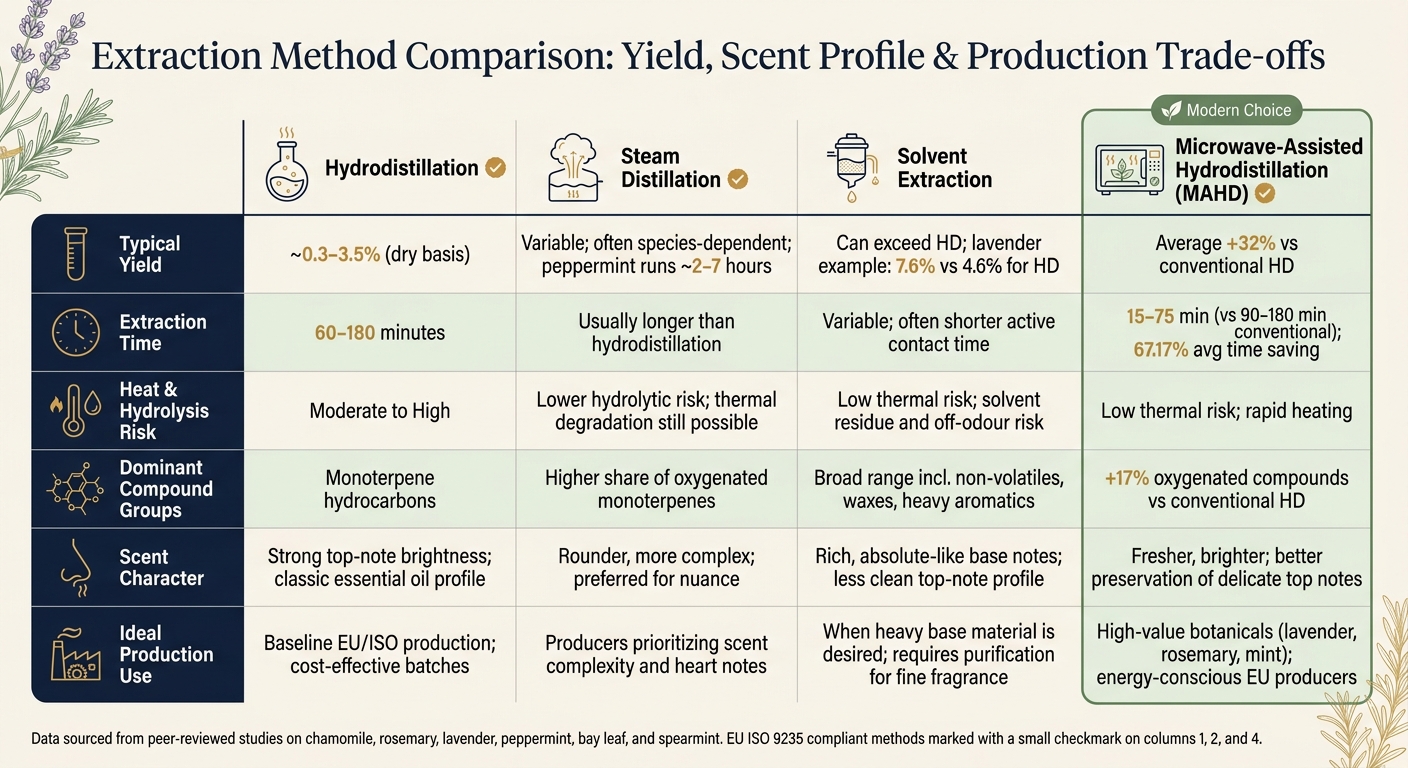
Idrodistillazione vs Distillazione in corrente di vapore vs Estrazione con solvente: resa, profilo olfattivo ed efficienza
Come l’idrodistillazione modella la composizione dell’olio essenziale
Le impostazioni di processo si riflettono in modo tangibile sull’architettura chimica dell’olio. L’idrodistillazione produce frequentemente essenze ricche di idrocarburi monoterpenici, sebbene la specie botanica e la scala di lavorazione possano orientare la partitura verso composti ossigenati o sesquiterpeni. In Myrtus communis, l’α-pinene è risultato il costituente primario, accompagnato da minori concentrazioni di 1,8-cineolo e linalool. In un’indagine del 2026 dedicata alla menta piperita, l’idrodistillazione ha determinato una presenza più cospicua di idrocarburi monoterpenici a discapito dei monoterpeni ossigenati.
Nella formulazione olfattiva, questa discrepanza è fondamentale. Una prolungata esposizione termica accentua il rischio di idrolisi degli esteri e di decomposizione delle molecole più volatili, quali limonene e myrcene. Uno studio comparativo su Heteromorpha arborescens ne ha fornito prova evidente: un’idrodistillazione più estesa ha sbilanciato l’olio verso sesquiterpeni più resistenti come germacrene-D, humulene e α-elemene, mentre un protocollo rapido assistito da microonde ha custodito percentuali superiori di limonene e altri monoterpeni ariosi. Una distillazione prolungata può incrementare il volume estratto, ma al prezzo di privare la fragranza del suo slancio più etereo e scintillante.
La lavanda evidenzia la medesima contrapposizione: l’idrodistillazione ha garantito la resa quantitativa più generosa, mentre la tecnologia a CO₂ supercritica ha preservato una frazione più elevata di linalyl acetate, e l’estrazione con solventi ha introdotto note spurie dovute alla coumarin.
Come le variazioni compositive si traducono nella percezione olfattiva
Queste famiglie molecolari non sono meri dati analitici: esse determinano la scansione temporale dell’apertura, l’evoluzione e la persistenza dell’aroma. Gli idrocarburi monoterpenici come α-pinene, limonene, β-ocimene e myrcene definiscono le note di testa fresche e frizzanti: effluvi esperidati, verdi, balsamici e aromatici che si percepiscono per primi per poi dissolversi rapidamente. I monoterpeni ossigenati come linalool, linalyl acetate, 1,8-cineolo e terpinen-4-ol conferiscono corpo e ricchezza al cuore della composizione, donando sfumature floreali e morbidezza. I sesquiterpeni, quali germacrene-D, humulene e caryophyllene, si collocano nelle fondamenta dell’accordo di fondo, aggiungendo tonalità legnose, resinose e delicatamente speziate che prolungano la persistenza sulla pelle e sulle mouillette.
Le analisi condotte su frazioni temporali differenti illustrano questa parabola con chiarezza. Prolungando la distillazione da 80 a 160 minuti, la composizione è virata da frazioni ad alto contenuto monoterpenico (come linalyl acetate, camphor e fenchol) verso la predominanza di sesquiterpeni quali α-bisabolol e β-eudesmol. In termini olfattivi, un ciclo più lungo fa evolvere la fragranza da un registro leggero e brillante a uno più denso e opulento. Per il maestro profumiere, i primi tagli di distillazione catturano la vivacità luminosa, mentre le frazioni tardive apportano struttura, corpo e tenuta.
Idrodistillazione, distillazione in corrente di vapore ed estrazione con solvente: analisi comparativa
La letteratura scientifica converge su un principio: nessun metodo di estrazione primeggia in termini assoluti sotto ogni aspetto. Una ricerca sulle foglie di alloro (Laurus nobilis) ha evidenziato come l’idrodistillazione garantisse una resa superiore (0,95 %) rispetto alla distillazione in corrente di vapore (0,79 %). Tuttavia, l’essenza estratta a vapore presentava un numero maggiore di molecole identificate — 73 contro 54 — unitamente a un’attività antimicrobica e antiossidante più marcata. Tale dato denota una tavolozza olfattiva più ricca e profonda, a fronte di una resa volumetrica inferiore. L’estrazione con solvente isola uno spettro più ampio di composti non volatili, cere e note aromatiche pesanti, conferendo ricchezza alle note di fondo, pur comportando il rischio di residui chimici e complesse fasi di purificazione aggiuntive.
| Metodo | Resa (%) | Frazioni molecolari dominanti | Tempo tipico di estrazione | Rischio termico e di idrolisi | Impronta olfattiva tipica |
|---|---|---|---|---|---|
| Idrodistillazione | Circa 0,3–3,5 % su sostanza secca; fino al 3,2–3,4 % nei processi ottimizzati | Idrocarburi monoterpenici; percentuali variabili di monoterpeni ossigenati e sesquiterpeni | 60–180 minuti | Da moderato a elevato; possibile idrolisi degli esteri e degradazione dei monoterpeni | Note di testa vivide e incisive; profilo classico dell’olio essenziale |
| Distillazione in corrente di vapore | Variabile; spesso superiore all’idrodistillazione, ma correlata alla specie botanica | Spesso una frazione più cospicua di monoterpeni ossigenati | Generalmente più lunga dell’idrodistillazione; un test comparativo su menta piperita ha richiesto 2–7 ore | Rischio idrolitico inferiore rispetto all’idrodistillazione; permane il rischio di degradazione termica | Profili più rotondi, sfaccettati e complessi; prediletta per la finezza aromatica |
| Estrazione con solvente | Spesso superiore all’idrodistillazione; uno studio sulla lavanda riporta il 7,6 % rispetto al 4,6 % dell’idrodistillazione | Spettro eterogeneo che include frazioni non volatili, cere e sostanze aromatiche dense | Variabile; sovente richiede un contatto attivo più breve | Basso rischio termico; rischi legati a residui di solvente e deviazioni odorose | Note di fondo corpose, simili all’assoluta; testa meno cristallina; necessita di purificazione per l’alta profumeria |
È proprio questa la ragione per cui le più moderne tecnologie mirano a conservare la purezza olfattiva dell’idrodistillazione, incrementandone al contempo l’efficienza estrattiva.
L’idrodistillazione evoluta nella filiera della profumeria europea
Varianti assistite da microonde, riscaldamento ohmico, ultrasuoni ed energia solare
Il limite intrinseco dell’idrodistillazione convenzionale è noto: richiede tempo ed elevate quantità di calore. Quando la materia vegetale è soggetta a ebollizione prolungata, le molecole aromatiche più fragili possono affievolirsi, alterarsi o perdere la loro originale freschezza. Le tecnologie di ultima generazione poggiano su un principio fondamentale: modulare l’apporto energetico all’interno della materia prima, consentendo un’estrazione efficace senza compromettere la purezza olfattiva.
Tra questi approcci innovativi, l’idrodistillazione assistita da microonde (MAHD) vanta la letteratura più ampia. Riscaldando l’acqua e il tessuto vegetale in modo più rapido e omogeneo, questo sistema riduce drasticamente la durata del processo. Nel trattamento del rosmarino, l’estrazione assistita da microonde raggiunge in 20–30 minuti la medesima resa che l’idrodistillazione tradizionale ottiene in 90–180 minuti, riducendo l’impegno energetico da 2,25 kWh a 0,23 kWh per 100 g di matrice vegetale. In una rassegna comparativa, la tecnologia MAHD ha evidenziato un risparmio di tempo medio del 67,17 % e un incremento medio della resa del 32% rispetto alla metodologia classica. Nel rosmarino, inoltre, ha aumentato i composti ossigenati del 17%, favorendo un’impronta olfattiva più brillante, limpida e vivace.
Gli altri sistemi assistiti adottano meccanismi differenti per risolvere la medesima criticità: gli ultrasuoni favoriscono la lisi delle pareti cellulari vegetali; il riscaldamento ohmico minimizza i gradienti termici all’interno del materiale; i dispositivi a concentrazione solare riducono drasticamente l’impiego di fonti fossili. Per le case essenziere, un fattore normativo è essenziale: le varianti che impiegano acqua o vapore consentono di classificare i distillati ottenuti come oli essenziali a pieno titolo ai sensi della norma ISO 9235.
Standard europei e tedeschi, parametri analitici e quadro economico
Nel contesto produttivo europeo, l’eccellenza prestazionale di un impianto rappresenta soltanto una parte del quadro complessivo. Qualsiasi progresso tecnico deve conformarsi ai parametri normativi, analitici ed economici. La norma ISO 9235 e il corrispondente standard DIN EN ISO 9235 definiscono l’olio essenziale come un prodotto ottenuto da materie prime vegetali mediante distillazione in corrente di vapore, idrodistillazione, spremitura meccanica o distillazione a secco. Le evoluzioni tecnologiche basate su acqua e vapore rientrano appieno in questa definizione, permettendo ai laboratori di modernizzare gli impianti senza pregiudicare la denominazione ufficiale di olio essenziale secondo la norma ISO 9235.
Le manifatture europee di fragranze sono tenute altresì al rispetto del Regolamento Cosmetici (CE) n. 1223/2009 e delle disposizioni sull’etichettatura degli allergeni introdotte dal Regolamento (UE) 2023/1545 della Commissione. Tali normative estendono gli allergeni soggetti a obbligo di dichiarazione in etichetta da 26 a 56 entro il 2026. Ciò comporta un’accurata pianificazione formulativa e rigorosi adempimenti di packaging, pur senza precludere l’impiego dell’idrodistillazione. Ne deriva l’obbligo inderogabile per i produttori di garantire una tracciabilità impeccabile, profilazioni cromatografiche scrupolose, certificazioni IFRA e schede allergeni dettagliate.
Sotto l’aspetto gestionale e industriale in Germania e nell’UE, gli indicatori chiave di prestazione comprendono:
- € per kg di olio essenziale
- Consumo energetico per lotto produttivo
- Resa percentuale d’estrazione
- Capacità produttiva oraria
- Costi per lo smaltimento delle acque reflue e dei residui di processo
Nel caso di botaniche di pregio — come lavanda, rosmarino, timo, menta o basilico — una tecnologia capace di abbreviare i cicli di distillazione e comprimere i costi energetici ottimizza sensibilmente la sostenibilità economica, compensando rapidamente il maggiore investimento iniziale nell’attrezzatura.
Quadro comparativo delle varianti di processo
Le differenze operative e qualitative emergono con evidenza nel prospetto seguente.
| Metodo | Consumo energetico | Tempo di estrazione | Andamento della resa | Intensità carbonica | Idoneità per materie prime delicate |
|---|---|---|---|---|---|
| Idrodistillazione convenzionale | Elevato; es. 2,25 kWh per 100 g di rosmarino | 90–180 min per il rosmarino; talvolta diverse ore per altre botaniche | Riferimento base | Più alta per kg di essenza a causa dei cicli prolungati | Moderata; il calore persistente può alterare la purezza delle note di testa e sbilanciare la formula |
| Idrodistillazione assistita da microonde (MAHD) | Contenuto; es. 0,23 kWh per 100 g di rosmarino | 15–75 min a seconda della botanica | Spesso equivalente o superiore; incremento medio del 32% in letteratura | Notevolmente inferiore per kg di essenza | Elevata; la minore esposizione termica preserva i composti ossigenati e la freschezza di testa |
| Idrodistillazione a riscaldamento ohmico | Riduzione moderata rispetto al metodo classico | Inferiore al convenzionale; la resistenza interna abbatte i gradienti termici | Sovrapponibile o lievemente migliorata | Contenuta, in presenza di un mix elettrico da fonti rinnovabili | Buona; il riscaldamento uniforme scongiura surriscaldamenti locali |
| Sistemi assistiti da ultrasuoni | Moderato; di particolare efficacia come pretrattamento | Più rapido se impiegato come pretrattamento o booster di estrazione | Può elevare la resa ottimizzando il trasferimento di massa | Moderata; in funzione della configurazione d’impianto complessiva | Ottimale per molte botaniche; l’efficacia varia in base alla matrice vegetale |
| Idrodistillazione a energia solare | Fabbisogno trascurabile di fonti fossili | Spesso affine al metodo tradizionale, ma vincolata all’irraggiamento e alle condizioni meteo | Paragonabile alla distillazione classica | Minima impronta di carbonio nelle aree climaticamente idonee | Moderata; indicata per la lavorazione di raccolti stagionali in aree ad alto irraggiamento solare |
Questi parametri bilanciano il profilo olfattivo finale e la redditività della produzione.
Conclusioni: Il valore dell’idrodistillazione nell’esperienza olfattiva contemporanea
Sintesi dei risultati della ricerca
L’idrodistillazione custodisce una centralità insostituibile nell’estrazione degli oli essenziali in Europa. Un filo conduttore unisce le evidenze sperimentali relative alla resa quantitativa e alla finezza olfattiva.
Numerose distillerie artigianali e industriali in Germania e in tutta Europa vi fanno costante ricorso per valorizzare botaniche quali Rosa damascena, lavanda, rosmarino, timo limone e scorze di agrumi. È per questo che la comprensione dei profili chimici si rivela fondamentale quanto la misurazione del volume finale estratto.
La ricerca lo dimostra senza riserve: le condizioni operative plasmano l’identità dell’olio. Nelle diverse analisi, gradienti termici elevati e cicli protratti spostano la bilancia aromatica dai vivaci monoterpeni verso i più densi sesquiterpeni, modificando radicalmente resa e fragranza. Le più recenti innovazioni tecnologiche condividono la medesima premessa, offrendo una modulazione più accurata, una trasmissione ideale dell’energia e un minore stress termico.
Le prospettive scientifiche convergono verso un unico orizzonte: l’alta profumeria europea sta perfezionando l’arte dell’idrodistillazione per conseguire una precisione olfattiva impeccabile, un’efficienza superiore e un consumo responsabile delle risorse.
Domande frequenti
In che modo l’idrodistillazione modifica l’impronta olfattiva di un profumo?
L’idrodistillazione può trasformare l’aroma di una fragranza poiché la materia prima vegetale è a diretto contatto con l’acqua in ebollizione. Questa prolungata esposizione al calore sottopone le molecole aromatiche più volatili a un notevole stress termico.
Ne consegue che diverse frazioni possono andare incontro a idrolisi o degradazione per via termica; in queste condizioni, le note di testa più delicate e volatili tendono a dissolversi precocemente. Invece di esprimere la purezza della pianta fresca, la fragranza finale può risultare più cupa, opaca o presentare una sfumatura lievemente cotta.
Quando è preferibile optare per l’idrodistillazione anziché per la corrente di vapore?
L’idrodistillazione rappresenta sovente la soluzione d’elezione per produzioni in piccoli lotti o a carattere artigianale, grazie a una configurazione d’alambicco più accessibile, intuitiva e rapida da calibrare.
In questo procedimento, la sostanza botanica è immersa interamente nell’acqua anziché essere sospesa sul flusso di vapore. Ciononostante, il contatto diretto con l’acqua bollente può indurre idrolisi e alterazioni termiche: questo metodo si dimostra dunque eccellente per matrici vegetali robuste, capaci di tollerare esposizioni prolungate a temperature elevate.
Come incide la normativa europea sugli oli essenziali idrodistillati?
Le normative dell’Unione Europea stabiliscono criteri rigorosi per gli oli essenziali idrodistillati, con particolare riguardo per la sicurezza d’uso, i limiti di concentrazione e gli obblighi di etichettatura. I compositori devono uniformarsi agli standard stabiliti dalle categorie IFRA, dedicando particolare attenzione a essenze come gli oli agrumati, noti per il loro potenziale fotosensibilizzante a contatto con i raggi solari.
In ottemperanza al Regolamento (CE) n. 1223/2009, ciascuno degli oltre 80 allergeni delle fragranze deve essere dichiarato in etichetta qualora superi la soglia dello 1 % nei cosmetici senza risciacquo (leave-on). Sul piano formulativo, tale disposizione induce spesso le maison a ricalibrare gli ingredienti o a rielaborare la formula, al fine di salvaguardare integralmente l’armonia e la firma olfattiva originaria.

