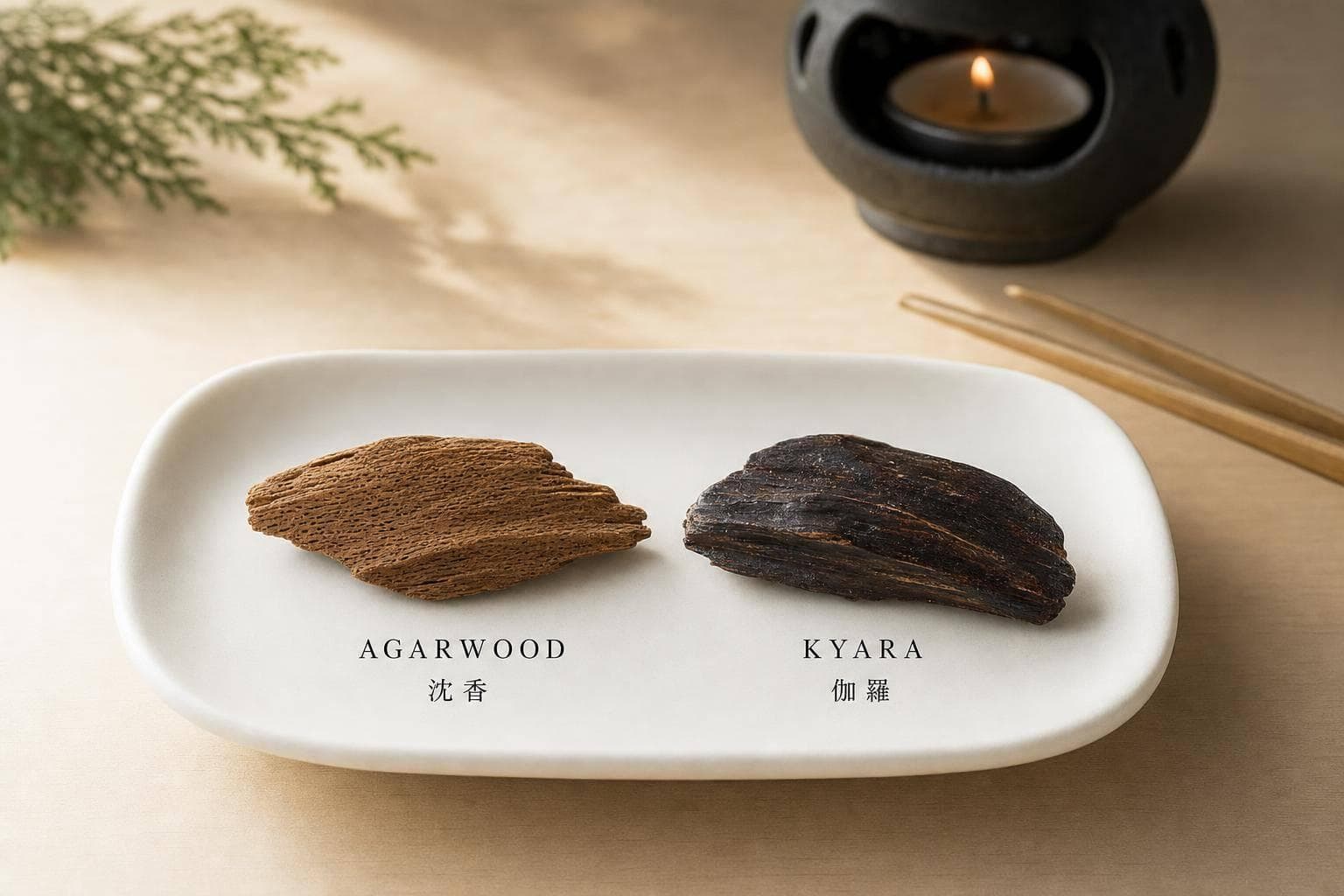
Se devi ricordare una sola cosa, che sia questa: il legno di agar è la materia, e il kyara è il suo grado giapponese più alto. Ecco perché i due termini vengono confusi così spesso.
Se volessi spiegarlo nel modo più semplice possibile, direi:
- Il legno di agar è l’ampia categoria di legno ricco di resina proveniente dagli alberi di Aquilaria
- Il kyara è il grado giapponese più raro e più elevato di quello stesso materiale
- Le principali differenze riguardano qualità, profumo, rarità, prezzo e utilizzo
- Il legno di agar comune compare in incensi da tempio, incensi per la casa e prodotti miscelati
- Il kyara è legato più strettamente al kōdō, dove piccoli frammenti vengono delicatamente riscaldati anziché bruciati
- I prezzi sono molto distanti: miscele di legno di agar di qualità possono aggirarsi intorno a €100,00-€300,00 a confezione, mentre il kyara può raggiungere centinaia di euro al grammo o circa €2.990,00 per set premium
- L’offerta è limitata: si dice che le popolazioni selvatiche di Aquilaria siano diminuite di circa 80% in poco più di un secolo
Quindi, se vedi “kyara” su un’etichetta, non dovrebbe significare “un altro modo per dire legno di agar”. Dovrebbe significare l’apice del legno di agar nella pratica olfattiva giapponese.
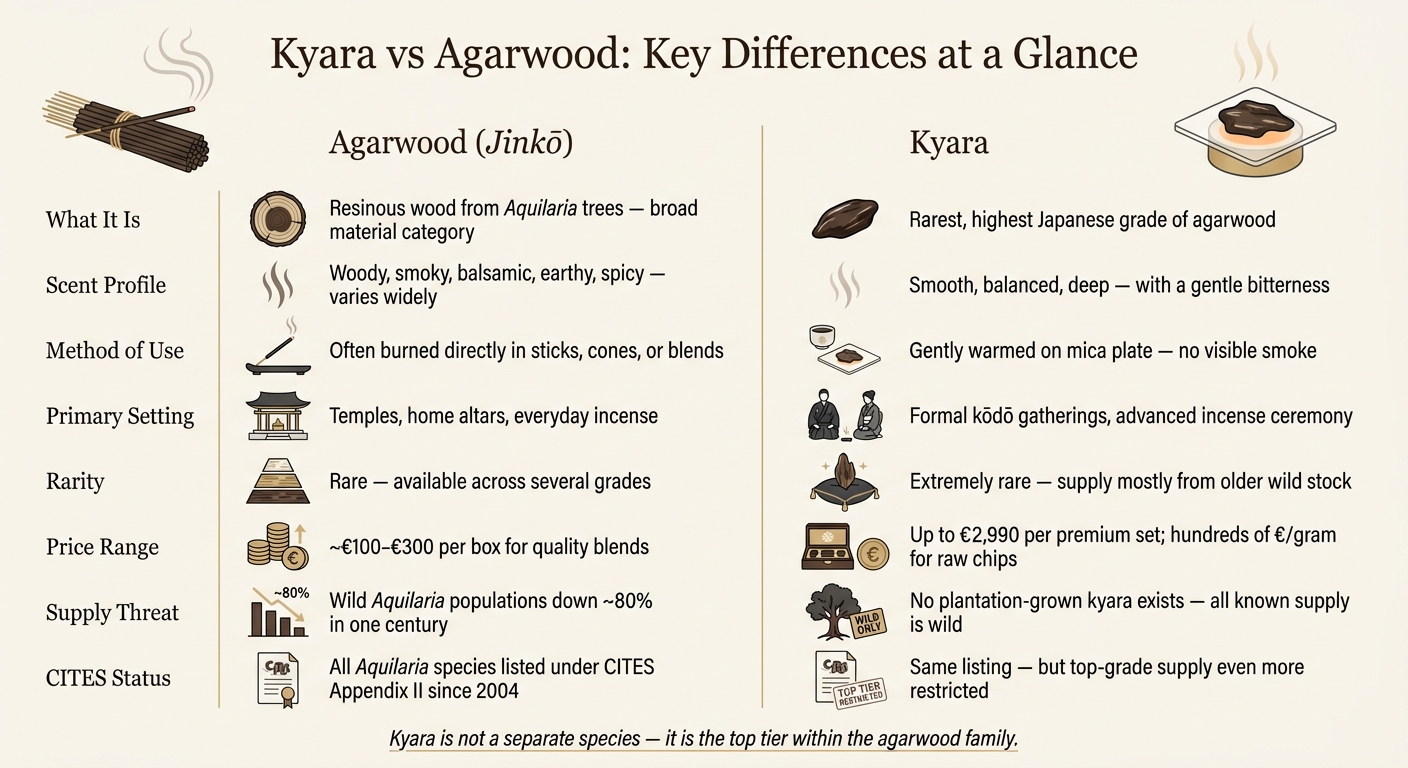
Kyara vs legno di agar: le differenze chiave in sintesi
Confronto rapido
| Punto | Legno di agar | Kyara |
|---|---|---|
| Che cos’è | Legno resinoso proveniente dagli alberi di Aquilaria | Grado giapponese più alto del legno di agar |
| Materiale | Ampia categoria | Stesso materiale, ma al livello più alto |
| Profumo | Può variare molto: legnoso, affumicato, balsamico, terroso, speziato | Più equilibrato, vellutato, profondo, con una lieve amarezza |
| Uso | Templi, incenso domestico, bastoncini, miscele | Kōdō e uso nell’incenso di alta gamma |
| Metodo | Spesso bruciato direttamente | Di solito delicatamente riscaldato su mica |
| Rarità | Raro | Molto più raro |
| Prezzo | Inferiore al kyara | Molto più alto rispetto al legno di agar comune |
Leggerei il resto dell’articolo come una guida semplice a cosa significa ciascun termine, che odore ha ciascuno, perché il kyara costa di più e dove si colloca ciascuno nell’uso dell’incenso giapponese.
Che cos’è il legno di agar e in che cosa differisce il kyara
Legno di agar: l’ampia categoria materiale
Il legno di agar è il materiale di base dietro sia l’incenso quotidiano sia il kyara. Si forma quando un albero di Aquilaria viene ferito o infettato e inizia a produrre una resina che scurisce e profuma il durame. Quel legno ricco di resina è ciò che nel mondo viene chiamato legno di agar, oud, gaharu, aloeswood o jinkō, a seconda della regione. In Giappone è apprezzato da oltre 1.400 anni.
Ancora oggi, il legno di agar svolge un ruolo centrale nell’incenso dei templi giapponesi, nell’uso domestico e nella cerimonia formale dell’incenso. Il kyara rientra in questa più ampia categoria del legno di agar, ma nella sua espressione più rara e più preziosa.
Kyara: il grado giapponese più alto
Il kyara non proviene da un albero diverso né da un materiale separato. Proviene dallo stesso genere Aquilaria e si forma attraverso lo stesso processo di infezione e resinificazione. La differenza è la qualità. Più precisamente, tutto dipende dall’estrema densità di resina e dal profumo che questa densità genera.
Nella tradizione giapponese, il kyara occupa il rango più alto nel sistema rikkoku-gomi, che classifica il legno di agar in base all’origine e al carattere olfattivo percepito. Perché un frammento di legno possa essere qualificato come kyara, deve essere densamente resinoso, di colore dal marrone scuro al quasi nero, e sprigionare un aroma profondo ed equilibrato, con strati di dolcezza, amarezza, spezia, acidità e sapidità.
È questo a rendere il kyara così raro. Non è semplicemente legno di agar che ha un buon profumo. È legno di agar al vertice assoluto della scala di classificazione giapponese. E finora nessun legno di agar coltivato in piantagione ha prodotto vero kyara. Tutto il kyara conosciuto proviene da antico legno selvatico, a lungo associato a regioni limitate dell’attuale Vietnam e delle aree vicine.
Kyara vs legno di agar: origine, profumo e rarità a confronto
Origine e qualità del materiale
Il legno di agar comune comprende molte specie e qualità di Aquilaria presenti in tutta l’Asia. Il kyara si colloca al vertice assoluto della scala di classificazione giapponese. Nella tradizione dell’incenso giapponese, è la classificazione più alta del legno di agar (jinkō), con legami storici con antico legno selvatico proveniente dal Vietnam e dalle aree circostanti.
Solo una minuscola parte di tutto il legno di agar è considerata kyara. E questo conta. Non è semplicemente un frammento di legno più bello preso dallo stesso lotto. Occupa una classe distinta all’interno della cultura giapponese dell’incenso.
Profilo olfattivo e carattere alla combustione
Il legno di agar standard può avere un odore molto diverso da un pezzo all’altro. A seconda della specie e del grado, può risultare legnoso, resinoso, affumicato, balsamico, terroso, speziato o leggermente animale. Le qualità migliori tendono a essere più ricche, più dolci e più rotonde. Le qualità inferiori possono risultare sottili, pungenti o irregolari una volta riscaldate.
Il kyara è più vellutato, più profondo e più equilibrato, con una delicata amarezza. Nel kōdō, il kyara viene delicatamente riscaldato su mica anziché bruciato, liberando un profumo morbido e penetrante. I bastoncini quotidiani di legno di agar funzionano diversamente. Di solito vengono bruciati direttamente e sono spesso mescolati con altri materiali.
Questa differenza olfattiva non è legata solo alla rarità, ma anche al modo in cui la pratica giapponese dell’incenso tratta il materiale.
Rarità e fascia di prezzo
Il divario di prezzo tra il legno di agar standard e il kyara è difficile da ignorare. Le miscele di incenso al legno di agar di buona qualità costano spesso circa €100,00-€300,00 a confezione. I frammenti grezzi di kyara selvatico possono costare centinaia di euro al grammo, e i set premium possono arrivare a circa €2.990,00.
Questa scarsità non è artificiale. Le popolazioni selvatiche di Aquilaria sono diminuite di circa 80% in poco più di un secolo a causa del sovrasfruttamento, e tutte le specie di Aquilaria sono elencate nell’Appendice II CITES dal 2004. In parole semplici: gran parte del kyara di livello più alto ancora in circolazione proviene da scorte più antiche, non da raccolti recenti.
| Caratteristica | Legno di agar (jinkō, generale) | Kyara (grado più alto) |
|---|---|---|
| Fonte / Origine | Molteplici specie di Aquilaria in tutta l’Asia | Legno antico, selvatico, altamente resinoso; storicamente legato al Vietnam e alle regioni vicine |
| Profilo olfattivo | Legnoso, affumicato, resinoso, balsamico, terroso, speziato, talvolta animale | Vellutato, equilibrato e raffinato, con una delicata amarezza |
| Carattere alla combustione | Variabile; spesso combustione diretta in bastoncini o miscele | Delicatamente riscaldato su mica; profumo morbido e penetrante |
| Rarità | Raro, ma disponibile in diversi gradi | Estremamente raro; gran parte dell’offerta di qualità più alta è storica |
| Posizionamento di prezzo | ca. €100,00-€300,00 a confezione per miscele di qualità | Fino a €2.990,00 per set premium; i frammenti grezzi possono costare centinaia di €/grammo |
Queste differenze definiscono il posto che ciascuno occupa nella pratica olfattiva giapponese.
Il tuo esperto di profumi personale ti aspetta
Fai il nostro veloce quiz olfattivo per scoprire autentici profumi di design e di nicchia scelti in base ai tuoi gusti: esplorali in decant e campioni da 2, 5, 8 e 30 ml, così puoi provarne ognuno prima di scegliere il flacone intero.
Trova il tuo profumoCome vengono usati kyara e legno di agar nella pratica olfattiva giapponese
Il legno di agar nei templi, nell’incenso e nell’uso quotidiano
Il legno di agar, noto in giapponese come jinkō - letteralmente «fragranza che affonda» - arrivò in Giappone con il Buddhismo nel 6° secolo d.C. e divenne una componente fondamentale dell’incenso dei templi. Veniva bruciato come offerta al Buddha e usato per purificare gli spazi rituali.
Durante il periodo Heian, i legni fragranti erano entrati anche nella vita aristocratica. Con il tempo, il legno di agar divenne parte sia dell’uso formale sia di quello quotidiano delle fragranze. Oggi, i produttori commerciali di incenso mescolano spesso legno di agar di qualità bassa e media con sandalo, spezie e resine per altari domestici e ambienti quotidiani.
Questo ruolo quotidiano si distingue dal posto più formale occupato dal kyara.
Il kyara nel kōdō e nella pratica formale dell’incenso
All’estremità più formale della cultura giapponese dell’incenso, il kyara viene usato in modo diverso. Nel kōdō, i praticanti “ascoltano” l’incenso invece di limitarsi ad annusarlo.
La distanza tra legno di agar e kyara non riguarda solo la rarità. Dipende anche dal contesto e dal metodo. Nel sistema Rikkoku-gomi, il kyara è il grado di riferimento, apprezzato per l’equilibrio tra note dolci, amare, speziate, acidule e salate. Nella pratica, piccoli frammenti di kyara vengono posti su una piastra di mica sopra carbone interrato e delicatamente riscaldati anziché bruciati. Questo permette alle sue note più fini di emergere senza fumo.
| Caratteristica | Legno di agar (Jinkō, generale) | Kyara (grado più alto) |
|---|---|---|
| Contesto principale | Templi, altari domestici, incenso quotidiano | Incontri formali di kōdō, pratica avanzata dell’incenso |
| Ruolo rituale | Purificazione, offerta devozionale, atmosfera contemplativa | Raffinamento sensoriale e riferimento cerimoniale |
| Accessibilità | Ampiamente disponibile in bastoncini, coni, spirali e miscele | Riservato ai conoscitori; raro in circolazione |
| Valore simbolico | Devozione, contemplazione, estetica classica | Vertice della raffinatezza, lignaggio, tesoro culturale |
| Metodo d’uso | Combustione diretta in prodotti d’incenso miscelati | Delicatamente riscaldato su mica; nessun fumo visibile |
Nel loro insieme, questi usi aiutano a spiegare perché il legno di agar appartenga alla pratica quotidiana, mentre il kyara rimanga lo standard della raffinatezza. In seguito, il kyara divenne sinonimo di qualità suprema nel Giappone Edo, il che spiega perché il termine conservi ancora oggi prestigio anche oltre l’incenso.
Conclusione: come iniziare oggi a esplorare queste fragranze
Questo divario qualitativo si riflette anche nel modo in cui questi materiali vengono utilizzati.
L’idea principale è semplice: il legno di agar è l’ampio materiale di base, mentre il kyara è il suo grado giapponese più raro. La differenza riguarda qualità, profumo, rarità e uso rituale. Il legno di agar può variare molto. Il kyara, al contrario, è apprezzato per il suo equilibrio e la sua profondità. È raro perché solo una piccolissima parte del legno di agar selvatico raggiunge quel livello. In Giappone, le qualità più comuni di legno di agar sono usate nei templi, nelle case e nelle linee di incenso più accessibili, mentre il kyara è riservato al kōdō e ad altri contesti cerimoniali formali.
Se vuoi farti un’idea di questo stile nella profumeria moderna, il modo più semplice per iniziare è con piccoli decant. Questo ti permette di testare il profilo sulla pelle prima di investire di più in una bottiglia intera. In seguito, piccole quantità di incenso jinkō o aloeswood possono aiutarti a sperimentare il materiale nella sua forma più classica.
Il kyara è un livello qualitativo all’interno della famiglia del legno di agar, non una specie separata. In parole semplici: il legno di agar è la famiglia, e il kyara è il livello più alto.
Domande frequenti
Come posso capire se un prodotto è vero kyara?
Guarda oltre la patina del marketing. Il kyara autentico è un raro grado di legno di agar vietnamita con un profilo olfattivo ricco di resina, simile all’incenso. Ma il punto chiave è semplice: le dichiarazioni contano poco senza una provenienza chiara.
Verifica la certificazione CITES e una documentazione solida, come report tracciabili della filiera, audit di terze parti o Certificati di Conformità IFRA. Se i dettagli sulla provenienza sembrano vaghi, chiedi prove della regione di raccolta e della specie botanica.
Perché il kyara viene di solito riscaldato invece che bruciato?
Le fonti non dicono perché il kyara venga riscaldato invece che bruciato.
Spiegano solo che il kyara è un raro grado di oud vietnamita ricco di resina. Non descrivono il metodo di riscaldamento né indicano una ragione per evitare la fiamma diretta.
Il legno di agar da piantagione è classificato come kyara?
No. Il legno di agar da piantagione non è classificato come kyara.
Il kyara è un raro e altamente pregiato grado di oud vietnamita con un distinto profilo resinoso, simile all’incenso. I metodi di piantagione possono innescare la formazione di resina in molti alberi, ma questo non rende kyara il legno di agar coltivato in piantagione.

