

La stratificazione dei profumi ti permette di creare una fragranza che si evolve con le stagioni, senza dover acquistare nuovi flaconi. Combinando note più leggere e rinfrescanti per i mesi caldi e note più profonde e ricche per il clima più freddo, puoi personalizzare il tuo profumo affinché si armonizzi con l’atmosfera del momento. I decant (piccoli campioni di fragranza) sono un modo conveniente per sperimentare diverse combinazioni, a partire da soli €12,90/mese con collezioni curate come Scento.
Punti Chiave:
- Perché Stratificare? Le fragranze si comportano in modo diverso con il caldo (proiezione più intensa) rispetto al freddo (proiezione più delicata).
- Note Stagionali:
- Primavera: Fiori verdi (peonia, giglio) + agrumi.
- Estate: Note acquatiche o agrumate (bergamotto, neroli).
- Autunno: Spezie calde (cannella, sandalo).
- Inverno: Basi profonde e decise (oud, ambra).
- Consigli di Applicazione: Inizia con le fragranze più intense come base, sovrapponi quelle più leggere e attendi 10–15 secondi tra una vaporizzazione e l’altra.
- Per Prolungarne la Durata: Usa pelle ben idratata o balsami profumati per ancorare la fragranza.
Vuoi affinare la tua collezione? I decant sono disponibili in formati da 2–8 ml, perfetti per testare blend diversi senza impegnarti con flaconi interi. Tieni un diario olfattivo per annotare ciò che funziona meglio per te.
Le 5 Migliori Combinazioni di Stratificazione di Fragranze per la Primavera & Estate 2025!
Perché Stratificare i Profumi nelle Diverse Stagioni
Il modo in cui il tuo profumo interagisce con la pelle cambia sensibilmente con il susseguirsi delle stagioni. Il calore accelera l’evaporazione, facendo sì che le fragranze si diffondano con maggiore intensità — ciò che i profumieri definiscono “fioritura”. In estate, un profumo che in boutique sembrava discreto può diventare rapidamente avvolgente con il caldo. Al contrario, il freddo rallenta l’evaporazione, il che significa che le note di testa e di cuore persistono più a lungo, ma la proiezione complessiva si affievolisce. Una fragranza vibrante a luglio potrebbe risultare appena percettibile a gennaio. Ecco perché adattare il proprio approccio olfattivo attraverso la stratificazione è così efficace nei cambi di stagione.
Anche l’umidità influisce sulle performance di una fragranza. Nell’aria umida, i profumi durano più a lungo, mentre l’aria secca o riscaldata ne accelera l’evaporazione. Il vento può disperdere la scia ancora più rapidamente. La stratificazione ti consente di adattarti: per esempio, puoi aggiungere una base più intensa a una fragranza estiva leggera per prolungarne la durata, oppure ravvivare un profumo invernale denso con note agrumate per renderlo più adatto alle giornate miti di primavera.
Invece di rinnovare completamente il guardaroba olfattivo a ogni stagione, la stratificazione ti permette di “reinventare” la collezione che già possiedi. Abbinare un’Eau de Toilette agrumata e vivace a un olio ambrato profondo può dare vita a una fragranza che si apre con freschezza e si evolve in un fondo caldo, perfetto per l’inverno. Anche l’uso di formati diversi — come oli, balsami o spray — può aiutarti ad adattarti. Gli oli, grazie alla loro texture più ricca, ancorano il profumo e lo fanno durare più a lungo nell’aria secca invernale, mentre le mist più leggere creano un effetto “halo” arioso, ideale per il clima umido estivo.
Caratteristiche Olfattive Stagionali
Ogni stagione possiede una propria personalità olfattiva, che può guidare le tue scelte di stratificazione. La primavera è tutta freschezza e note verdi come mughetto, peonia e agrumi, evocando rinascita. L’estate richiede composizioni leggere e rinfrescanti — pensa a sale marino, bergamotto, anguria e neroli in formati ariosi. L’autunno si orienta verso il calore, con cannella, sandalo, vaniglia e fico che creano un’atmosfera avvolgente. L’inverno esige profondità e opulenza, con oud, ambra, mirra, cuoio e tonka in forme più concentrate, capaci di offrire texture e persistenza.
Come i Decant Supportano gli Esperimenti di Stratificazione
I decant sono un modo eccellente per sperimentare con la stratificazione e perfezionare le tue combinazioni stagionali. Ti permettono di esplorare fragranze diverse senza impegnarti con flaconi interi, rendendo semplice costruire una capsule collection stagionale di 4–6 profumi in modo accessibile. Con i decant curati di Scento a partire da €12,90 al mese, puoi testare idee di layering senza eccedere nella spesa. Un flaconcino da 8 ml offre circa 120 vaporizzazioni — sufficienti per provare combinazioni per tutta una stagione e valutarne le performance in diverse condizioni di temperatura e umidità.
Come Stratificare i Profumi: Passo Dopo Passo
Stratificare i profumi non deve essere complicato se segui alcuni principi fondamentali. Si tratta di comprendere quali note si completano a vicenda e di applicarle nella giusta sequenza. Considerando le caratteristiche stagionali, puoi adattare i tuoi layer al clima.
Selezionare Note Compatibili
Inizia abbinando fragranze appartenenti alla stessa famiglia olfattiva — ad esempio due floreali o due profili legnosi. Questo approccio riduce il rischio di dissonanze e garantisce un insieme armonioso. Una volta acquisita sicurezza, sperimenta con i contrasti: per esempio, una base ricca e calda come ambra o sandalo, combinata con una nota di testa agrumata e vivace o un floreale delicato, può creare una fragranza stratificata di maggiore complessità. Pensa alla costruzione di una casa: le note agrumate possono illuminare basi resinose, mentre un iris talcato può ammorbidire accordi metallici o cuoiati più taglienti.
Se hai dubbi, restare su fragranze dello stesso brand è spesso una scelta sicura, poiché condividono di solito un’identità olfattiva coerente. Alcune combinazioni classiche da provare includono bergamotto e lavanda per un’allure fresca e contemporanea, rosa e iris per un’eleganza sofisticata, oppure vaniglia e vetiver per un contrasto dolce ma terroso. Come spiega Robin Mason, Presidente Fine Fragrance di dsm-firmenich:
Tutti i tipi di note olfattive possono completarsi a vicenda: è proprio questo il fascino e l’arte della profumeria.
Una volta scelte le note, il modo in cui le applichi è determinante per ottenere un blend equilibrato e duraturo.
Metodi di Applicazione
Inizia sempre con la fragranza più intensa, poiché costituisce la base del tuo blend. Le fragranze più corpose evaporano più lentamente grazie alle loro molecole più grandi, offrendo un fondamento stabile alle note più leggere e volatili. Dopo aver applicato la prima fragranza, attendi circa 10–15 secondi per lasciarla assestare prima di aggiungere il secondo layer. Per apprezzare pienamente il risultato, concedi alla composizione circa 30 minuti per svilupparsi.
Una buona regola generale è usare un rapporto di 3:1 — tre vaporizzazioni della fragranza più leggera per ogni vaporizzazione di quella più intensa. Adatta comunque questo rapporto ai tuoi gusti personali. Applica la base su décolleté e collo, e la fragranza più leggera sui punti di pulsazione come polsi e dietro le orecchie. Evita di strofinare la pelle dopo l’applicazione, poiché questo può alterare gli oli essenziali e modificare il profumo, talvolta rendendolo più amaro.
Usare Idratanti per Prolungare la Tenuta
Le fragranze durano più a lungo su una pelle pulita e ben idratata. Applicare una lozione o un balsamo senza profumo, oppure con la stessa profumazione, prima del profumo aiuta gli oli ad aderire meglio alla pelle. Per una scia più ancorata, usa formati più ricchi come oli o balsami direttamente sulla pelle, poi stratifica sopra spray a base alcolica per aggiungere slancio e proiezione. Questo metodo è particolarmente utile in inverno, quando l’aria secca può far svanire i profumi più rapidamente in assenza di una base idratante.
Il tuo esperto di profumi personale ti aspetta
Fai il nostro veloce quiz olfattivo per scoprire autentici profumi di design e di nicchia scelti in base ai tuoi gusti: esplorali in decant e campioni da 2–8ml, così puoi provarne ognuno prima di scegliere il flacone intero.
Trova il tuo profumoCombinazioni di Stratificazione Stagionali
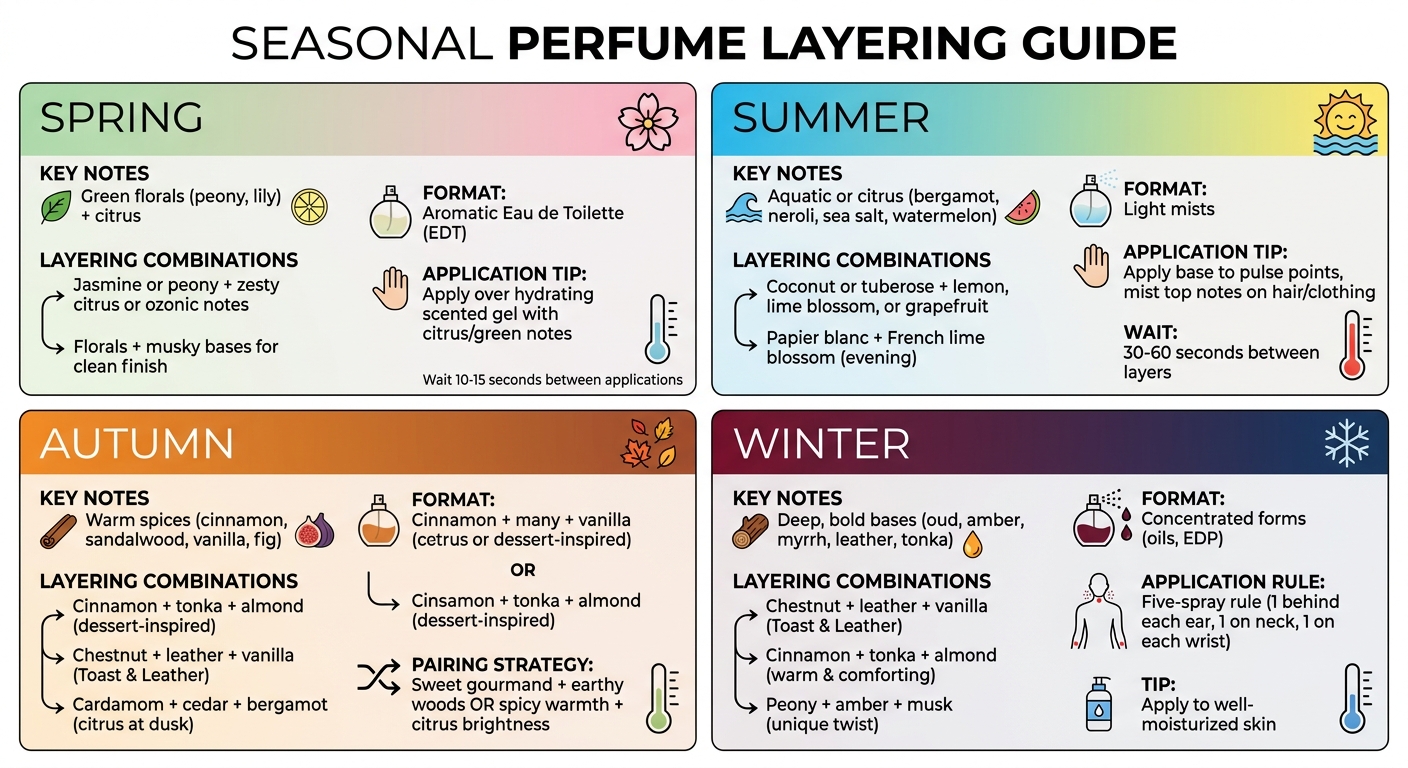
Guida alla Stratificazione dei Profumi Stagionali: Note e Combinazioni per Stagione
Adattare i layer della tua fragranza al mutare delle stagioni è un modo raffinato per mantenere il tuo profilo olfattivo fresco e in sintonia con il clima.
Primavera: Abbinamenti Freschi e Floreali
La primavera invita a combinazioni leggere e ariose. Pensa a note di cuore floreali-verdi come gelsomino o peonia, abbinate a note di testa agrumate o ozonate per una freschezza luminosa. Per bilanciare l’aumento delle temperature, prova a stratificare i floreali con basi muschiate per una finitura pulita ed elegante. Isabella Harper, Senior Fragrance Editor, sottolinea:
La stratificazione delle fragranze è un modo creativo e pratico per far evolvere la tua firma olfattiva con il clima.
Per una transizione armoniosa dal giorno alla sera, abbina peonia, ambra e muschio per aggiungere un tocco di calore quando l’aria si fa più fresca. Inizia le tue mattine con un’Eau de Toilette (EDT) aromatica — perfetta per una fragranza leggera ma ottimista, ideale per gli spostamenti e per l’ufficio. Per prolungarne la durata, applicala sopra un gel profumato idratante o una lozione corpo delicatamente profumata con note agrumate o verdi.
Ora vediamo come creare layer estivi ariosi con note luminose e acquatiche.
Estate: Combinazioni Luminose e Acquatiche
La stratificazione estiva ruota attorno a un effetto fresco e brioso. Inizia con una lozione idratante senza profumo o con un olio corpo per aiutare ad ancorare la fragranza e rallentarne l’evaporazione con il caldo. Stratifica note di base cremose come cocco o tuberosa con note di testa vivaci come limone, fiore di tiglio o pompelmo per un effetto energizzante.
Per la sera, considera un blend tra una nota pulita e simile al lino (papier blanc) e il fiore di tiglio francese, per un risultato elegante e arioso. Applica i layer di base sui punti di pulsazione e vaporizza leggermente le note di testa su capelli o abiti per creare un’aura soffusa e leggera. Per evitare contrasti sgradevoli, attendi 30–60 secondi tra l’applicazione di ogni layer.
Quando il clima si fa più fresco, passa a blend più ricchi e speziati per l’autunno.
Autunno: Layer Caldi e Speziati
L’autunno invita a combinazioni calde e confortanti. Prova a stratificare cannella, tonka e mandorla per una fragranza ispirata ai dessert, oppure scegli castagna, cuoio e vaniglia per creare un effetto Toast & Leather. Per un tocco agrumato al crepuscolo, unisci cardamomo, cedro e bergamotto.
Questa stagione è perfetta per sperimentare con i contrasti. Abbina note gourmand dolci a legni terrosi, oppure bilancia il calore speziato con un accenno di luminosità agrumata. L’aria più fresca permette a questi blend ricchi di dispiegarsi magnificamente nel tempo.
Quando arriva l’inverno, è il momento di abbracciare aromi più profondi e avvolgenti.
Inverno: Blend Ricchi e Intensi
L’inverno è la stagione delle fragranze audaci e avvolgenti. Scegli combinazioni ricche come Toast & Leather (castagna, cuoio, vaniglia) o un blend speziato con cannella, tonka e mandorla per una scia calda e rassicurante. Per aggiungere una sfumatura originale a una combinazione familiare, prova a stratificare peonia con ambra e muschio.
Per evitare che le fragranze più intense risultino eccessive, segui la regola delle cinque vaporizzazioni: una dietro ogni orecchio, una sul collo e una su ciascun polso. Applica il profumo su pelle ben idratata, poiché l’aria secca invernale può far svanire rapidamente le fragranze in assenza di una base nutriente.
Tecniche Avanzate di Stratificazione
Partendo dai metodi di base, le tecniche avanzate ti offrono un controllo ancora maggiore sul modo in cui la tua fragranza si sviluppa nel corso della giornata. Una volta padroneggiati gli abbinamenti stagionali, puoi affinare il tuo approccio sperimentando con diversi livelli di concentrazione per modellare l’evoluzione del profumo.
Combinare Diversi Livelli di Concentrazione
L’uso congiunto di concentrazioni diverse ti permette di guidare l’evoluzione della fragranza. I formati più leggeri, come l’Eau de Toilette (EDT), esaltano rapidamente le note di testa, mentre quelli più intensi, come l’Eau de Parfum (EDP) o gli oli, rivelano gradualmente le note di fondo più profonde. Isabella Harper, Senior Fragrance Editor, descrive questo effetto come un passaggio “dall’alba al focolare”, in cui note leggere e ariose si trasformano nel tempo in basi ricche e avvolgenti.
Per ottenere questo risultato, prova un rapporto di 3:1: tre vaporizzazioni di un formato più leggero per una di un formato più intenso. Applica la concentrazione più intensa sui punti di pulsazione — come polsi, petto o dietro le ginocchia — dove il calore corporeo amplifica la fragranza. Poi usa il formato più leggero su abiti o capelli da una certa distanza, per creare un delicato effetto “halo”. Lascia trascorrere 10–15 secondi tra un’applicazione e l’altra per garantire un’armonia perfetta tra le fragranze. Nelle giornate più fresche, un rapporto 1:1 può aggiungere calore e profondità. Come spiega Harper:
Gli oli ancorano la composizione e ne prolungano la durata; le mist trasparenti esaltano le note di testa senza appesantire.
Questa tecnica completa le tue competenze già acquisite nella stratificazione, aggiungendo profondità e versatilità.
| Tipo di Concentrazione | Ruolo nella Stratificazione | Velocità di Evaporazione | Migliore Applicazione |
|---|---|---|---|
| Olio Profumato / Balsamo | Ancoraggio / Fondazione | Molto Lenta | Punti di pulsazione (pelle) |
| Eau de Parfum (EDP) | Cuore / Corpo | Moderata | Punti di pulsazione o petto |
| Eau de Toilette (EDT) | Radiosità / Accento | Rapida | Abiti, capelli o sopra la base |
| Fragrance Mist | Velo Arioso / Nota di Testa | Molto Rapida | Abiti o vaporizzazione “halo” |
Testare Nuove Combinazioni
Per perfezionare il tuo approccio alla stratificazione, concentrati nel testare combinazioni che rispecchino le tue preferenze personali. I decant sono ideali per sperimentare senza impegnarti con flaconi interi. Prova sempre le fragranze sulla tua pelle, poiché la chimica cutanea individuale può influire notevolmente su come un profumo si sviluppa. Lascia trascorrere almeno 30 minuti affinché la fragranza raggiunga il suo dry down completo prima di decidere se il blend fa per te.
Tenere un diario olfattivo può essere incredibilmente utile. Annota dettagli come i rapporti utilizzati, le condizioni atmosferiche e le performance della fragranza. Questa pratica rende più semplice ricreare i blend riusciti ed evitare di ripetere combinazioni che non hanno funzionato. Per prevenire il “rumore bianco del profumo”, limita i tuoi esperimenti a due o tre fragranze complementari alla volta.
Usare i decant durante la tua routine quotidiana — ad esempio durante gli spostamenti o in occasione di eventi — ti permette di testare i blend in modo naturale e senza pressione. Se eseguita con cura, la stratificazione può prolungare la durata di una fragranza del 30%–50% rispetto all’uso di un singolo profumo.
In Conclusione
La stratificazione dei profumi per accompagnare i cambi di stagione dona nuova vita alla tua collezione olfattiva. Combinando note di fondo più intense con note di testa leggere e ariose, puoi creare fragranze che si accordano con naturalezza al tempo che cambia e al tuo stato d’animo. Il segreto? Un po’ di pazienza. Attendere 10–15 minuti tra le applicazioni consente a ogni layer di assestarsi e rivelare il suo vero carattere.
I decant sono i tuoi migliori alleati quando sperimenti. Questi formati più piccoli, da 2 ml, 5 ml o 8 ml, ti permettono di testare combinazioni in condizioni reali senza impegnarti con flaconi interi. Una piccola capsule collection stagionale apre la porta a possibilità infinite.
Inizia con semplicità. Stratifica fragranze della stessa famiglia olfattiva prima di avventurarti in combinazioni a contrasto. Tenere un diario olfattivo può aiutarti a monitorare i tuoi blend preferiti, i rapporti che hai usato e le loro performance in condizioni climatiche diverse.
Ricorda: si tratta soprattutto di una scoperta personale. La chimica della tua pelle, il clima in cui vivi e le tue abitudini quotidiane influenzano tutti il modo in cui una fragranza si sviluppa. Ciò che appare perfetto per le fresche mattine primaverili di Amburgo potrebbe richiedere qualche adattamento per le giornate estive più calde di Berlino. Questa versatilità assicura che il tuo profumo evolva magnificamente con le stagioni. Testare i decant durante la tua routine ti offre inoltre una percezione autentica di come si indosseranno.
Con il tempo e la pratica, la tua collezione di fragranze stagionali crescerà con te — senza il disordine né il costo di infiniti flaconi full-size.
FAQ
Come posso evitare che i profumi stratificati entrino in conflitto tra loro?
Quando stratifichi i profumi, punta su combinazioni con note complementari o armoniose, preferibilmente all’interno della stessa famiglia olfattiva. Inizia con un’applicazione leggera, partendo da fragranze più morbide e delicate prima di aggiungere quelle più ricche e intense. Testare prima una piccola quantità è essenziale per assicurarti che le note si fondano con naturalezza. Con una stratificazione studiata, puoi creare un profilo olfattivo equilibrato e personalizzato, evitando sgradevoli contrasti.
Posso stratificare il profumo su abiti o capelli in modo sicuro?
Sì, applicare il profumo su abiti o capelli è possibile, ma richiede attenzione. Alcune fragranze possono lasciare macchie sui tessuti o causare secchezza o irritazione se usate sui capelli. Per evitare spiacevoli sorprese, prova prima il profumo su una piccola area nascosta del tessuto o su una ciocca poco visibile. In alternativa, applicare il profumo direttamente sulla pelle è spesso una scelta più sicura. Tieni sempre conto degli ingredienti del profumo e di come potrebbero reagire con materiali diversi.
Come posso testare una nuova combinazione di layer senza esagerare?
Quando sperimenti con le fragranze, inizia con poco e aumenta gradualmente. Applica una leggera vaporizzazione sul polso o dietro l’orecchio, poi attendi qualche minuto affinché si assesti. Questa pausa ti permette di osservare come i profumi interagiscono e si sviluppano sulla pelle. Iniziando con quantità minime, puoi evitare di sovraccaricare i sensi e creare un blend più armonioso. Con il tempo, questo approccio ti aiuterà a perfezionare la tua combinazione olfattiva unica.