

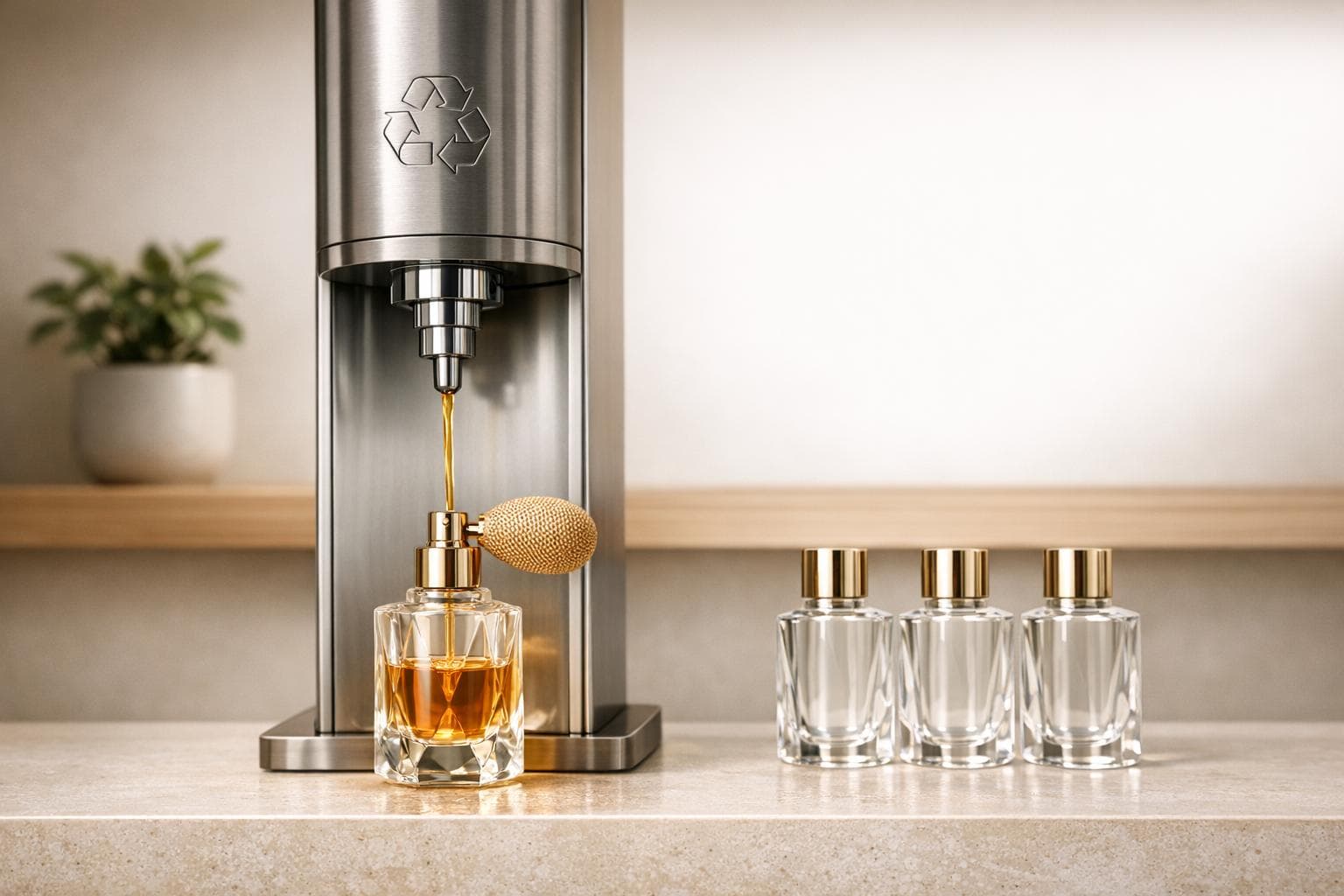
Le stazioni di ricarica per profumi stanno trasformando il modo in cui si acquistano le fragranze. Consentono di ricaricare essenze di design nei flaconi originali, risparmiando denaro e riducendo gli sprechi. Ad esempio, ricaricare un flacone da 100 ml di Maison Margiela "Replica" costa €118 invece di €160, con un risparmio di €42. Queste stazioni riducono inoltre le emissioni legate al packaging del 30-70%. Introdotte per la prima volta nel Regno Unito nel 2023, le stazioni di ricarica offrono oggi marchi di lusso come YSL, Prada e Armani. Sebbene esistano sfide come l’igiene e i costi iniziali, le stazioni di ricarica stanno guadagnando popolarità, con le fragranze ricaricabili in crescita del 23% all’anno. Entro il 2026, potrebbero diventare lo standard per l’acquisto di profumi.
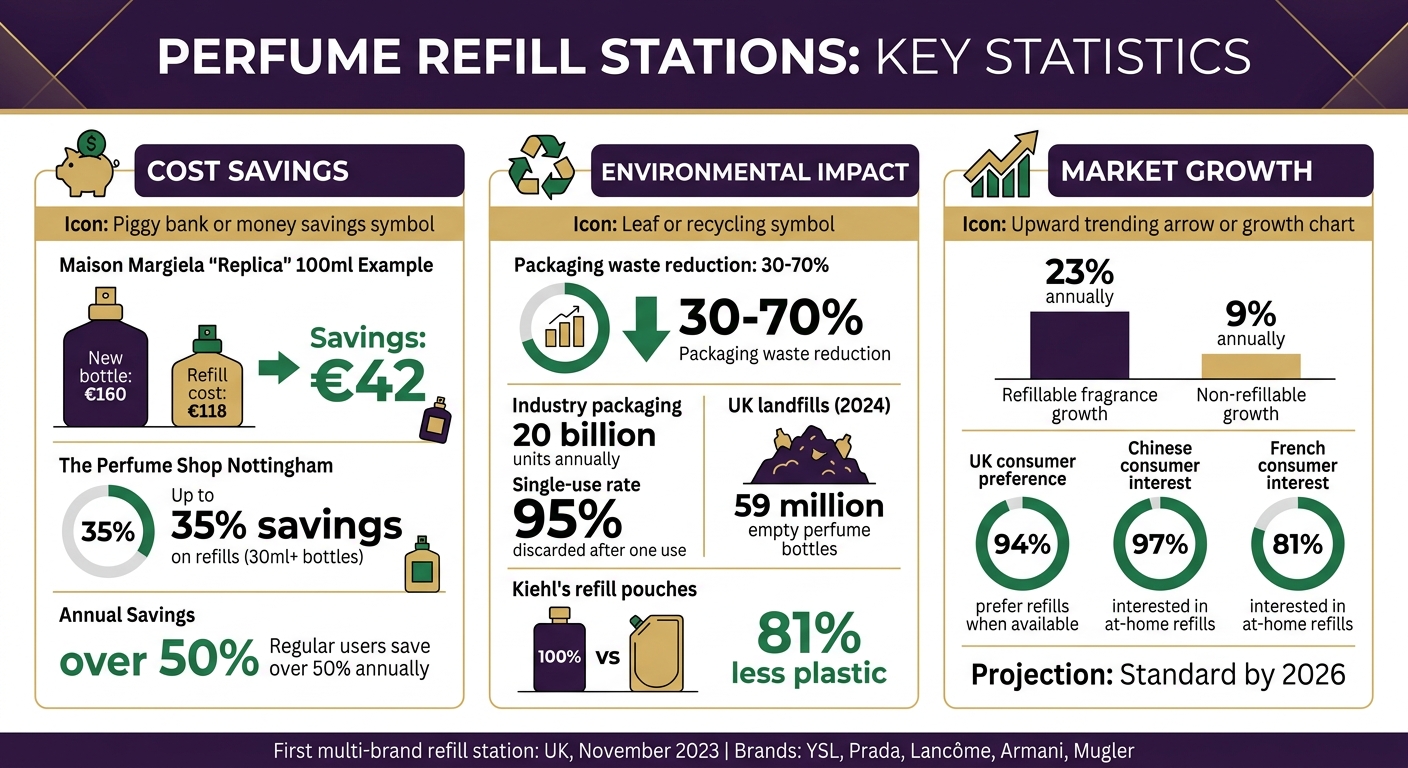
Stazioni di ricarica per profumi: statistiche su risparmio economico e impatto ambientale
Che cosa sono le stazioni di ricarica per profumi?
Le stazioni di ricarica per profumi sono installazioni che permettono di riempire nuovamente i flaconi di fragranza già in uso con essenze di design, eliminando la necessità di acquistare una confezione completamente nuova. Queste stazioni puntano sul riutilizzo dei flaconi originali, promuovendo al tempo stesso praticità e sostenibilità.
Il processo spesso prevede dispenser o cartucce di ricarica concepiti per fragranze specifiche. Negli ambienti più esclusivi, personale formato si occupa della ricarica, assicurandosi che i flaconi vengano puliti, che i meccanismi spray siano regolati e che i protocolli igienici siano rispettati per preservare la qualità della fragranza.
Come funzionano le stazioni di ricarica?
Le stazioni di ricarica sono generalmente progettate per linee specifiche di flaconi ricaricabili. Ad esempio, una stazione di ricarica multi-brand è stata inaugurata al Victoria Centre di Nottingham nel novembre 2023, offrendo ricariche per fragranze molto apprezzate come YSL MYSLF, Prada Paradoxe, Lancôme La Vie Est Belle e Mugler Alien. Per utilizzare queste stazioni, è necessario il flacone originale creato per quella fragranza, così da garantire la compatibilità.
I metodi di ricarica variano a seconda del sistema. Alcune soluzioni prevedono meccanismi sigillati in cui un flacone di ricarica si aggancia al flacone originale tramite una valvola unidirezionale, evitando l’esposizione all’aria e preservando la qualità dell’essenza. Altre utilizzano sistemi a versamento diretto, in cui il personale trasferisce il profumo da un contenitore più grande nel flacone, riducendo al minimo l’ossidazione. Le opzioni più avanzate possono persino includere pompe sostituibili o atomizzatori modulari, prolungando la vita del flacone.
Dove si possono trovare le stazioni di ricarica?
Ora che sai come funzionano, vediamo dove è possibile trovare queste stazioni di ricarica.
Le stazioni di ricarica stanno diventando sempre più diffuse in tutta Europa, in particolare nei flagship store dedicati alla bellezza. La prima stazione di ricarica per fragranze multi-brand del Regno Unito è stata lanciata presso The Perfume Shop nel Victoria Centre di Nottingham nel novembre 2023, in collaborazione con L’Oréal. Questa stazione offre ricariche per marchi di lusso come YSL, Prada, Lancôme, Armani e Mugler.
Alcuni brand guidano anche iniziative di ricarica proprie. Ad esempio, Mugler di L’Oréal gestisce il suo sistema di ricarica in boutique "Mugler Fountain" dal 1992, diventando un pioniere nelle pratiche di bellezza circolare. Con le fragranze ricaricabili in crescita del 23% all’anno, si prevede che un numero sempre maggiore di stazioni di ricarica appaia nei department store e nelle boutique dei marchi in Germania e in tutta Europa.
Vantaggi delle stazioni di ricarica per profumi
Le stazioni di ricarica sono più di una semplice soluzione pratica: offrono vantaggi evidenti in termini di costo, responsabilità ambientale e comodità d’uso.
Risparmio economico per i clienti
Uno dei benefici più rilevanti delle stazioni di ricarica è la sensibile riduzione dei costi per i clienti. Concentrandosi esclusivamente sulla fragranza ed eliminando il sovrapprezzo legato a confezioni elaborate, queste stazioni offrono un risparmio significativo. Ad esempio, quando si acquista un nuovo flacone di profumo da €160, una parte considerevole del prezzo è destinata al flacone in vetro, al branding e agli elementi decorativi, non solo alla fragranza in sé.
Jennifer Capuano, Vice President of Fragrance di Macy’s, lo ha sottolineato nel dicembre 2023, osservando che i negozi Macy’s ricaricano i flaconi Mugler Angel e Alien a una tariffa scontata quando i clienti portano i propri flaconi vuoti. Per fare un esempio, un flacone Maison Margiela "Replica" da 100 ml costa €160 da nuovo, ma ricaricarlo costa solo €118, con un risparmio di €42. Allo stesso modo, la stazione di ricarica di The Perfume Shop a Nottingham offre risparmi fino al 35% sulle ricariche per flaconi da 30 ml o più.
"Le nostre fragranze ricaricabili di lusso non portano benefici solo all’ambiente, ma anche ai nostri consumatori, perché più ricaricano le loro fragranze, più risparmiano." — James Rickards, Managing Director di L’Oréal Luxe UK & Ireland
Per chi usa profumi regolarmente, il risparmio diventa considerevole. Un cliente che di solito spende €100 per un flacone da 50 ml potrebbe risparmiare oltre il 50% all’anno scegliendo sistemi ricaricabili. Inoltre, i prezzi in formato sfuso presso le stazioni di ricarica spesso significano un costo per millilitro inferiore rispetto al packaging retail tradizionale.
Impatto ambientale
Le stazioni di ricarica svolgono anche un ruolo essenziale nella riduzione dei rifiuti e nella conservazione delle risorse nell’industria delle fragranze.
Il settore genera ogni anno oltre 20 miliardi di unità di packaging, di cui circa il 95% viene scartato dopo un solo utilizzo. Riutilizzando il flacone originale, le stazioni di ricarica affrontano direttamente questo problema, riducendo gli sprechi di imballaggio e abbattendo l’energia e i materiali necessari per nuove produzioni.
Ad esempio, quando The Perfume Shop e L’Oréal hanno introdotto la prima stazione di ricarica multi-brand del Regno Unito al Victoria Centre di Nottingham nel novembre 2023, le vendite di fragranze ricaricabili sono cresciute del 23%, superando ampiamente la crescita del 9% delle opzioni non ricaricabili. Questo cambiamento evidenzia i benefici ambientali del riutilizzo dei flaconi, che riduce sia l’impronta di carbonio sia la domanda di materie prime.
Marchi come Kiehl’s contribuiscono inoltre con pouch di ricarica che utilizzano fino all’81% di plastica in meno. Nel Regno Unito, il 94% dei consumatori dichiara di essere più incline a scegliere le ricariche invece di acquistare nuovi prodotti quando questa opzione è disponibile. Queste pratiche si allineano alla crescente domanda di soluzioni sostenibili nel consumo di fragranze, riflettendo un cambiamento nelle priorità dei consumatori.
Praticità e personalizzazione
Le stazioni di ricarica vanno oltre il risparmio e la sostenibilità: migliorano anche l’esperienza complessiva degli amanti delle fragranze.
Rendono semplice rifornire le proprie essenze preferite senza dover acquistare flaconi completamente nuovi. Le stazioni di ricarica multi-brand sono particolarmente comode, perché consentono ai clienti di ricaricare fragranze di diversi marchi come YSL, Prada, Lancôme, Armani e Mugler in un’unica visita. Questo processo ottimizzato fa risparmiare tempo e fatica.
Per chi viaggia, gli atomizzatori ricaricabili sono una vera svolta. I modelli compatti da 5 ml, ad esempio, offrono circa 77 spruzzi e rispettano le normative TSA sui liquidi, eliminando la scomodità dei flaconi da viaggio monouso. Nuove tecnologie, come il sistema Nomad Refill di Aptar Beauty, rendono il processo ancora più semplice grazie a connettori che si avvitano direttamente sui flaconi di fragranza, eliminando la necessità di imbuti o strumenti aggiuntivi.
L’interesse dei consumatori verso soluzioni di ricarica innovative è in crescita: il 97% degli utilizzatori cinesi e l’81% di quelli francesi esprimono interesse per opzioni di ricarica domestica. Alcuni brand stanno persino elevando l’esperienza offrendo elementi di personalizzazione come custodie metalliche incise, trasformando i flaconi ricaricabili in oggetti preziosi da custodire nel tempo.
Il tuo esperto di profumi personale ti aspetta
Fai il nostro veloce quiz olfattivo per scoprire autentici profumi di design e di nicchia scelti in base ai tuoi gusti: esplorali in decant e campioni da 2–8ml, così puoi provarne ognuno prima di scegliere il flacone intero.
Trova il tuo profumoStazioni di ricarica e futuro del consumo di profumi
Le stazioni di ricarica rappresentano un cambiamento significativo nel modo in cui l’industria delle fragranze gestisce packaging e consumo. Reinterpretando i flaconi come accessori durevoli anziché articoli usa e getta, questi sistemi si allineano ai principi dell’economia circolare, privilegiando il riutilizzo rispetto allo spreco.
Ridurre il packaging monouso
Le stazioni di ricarica offrono ai flaconi di profumo una seconda vita, consentendo loro di essere riutilizzati potenzialmente all’infinito. Questo approccio potrebbe ridurre drasticamente i rifiuti: basti pensare che solo nel 2024, 59 milioni di flaconi vuoti di profumo e dopobarba sono finiti nelle discariche del Regno Unito.
Anche i moderni design modulari stanno contribuendo a fare la differenza. Pompe sostituibili e raccordi standardizzati significano che, se il meccanismo spray non funziona correttamente, è possibile semplicemente ripararlo anziché gettare l’intero flacone. Alcuni marchi stanno persino introducendo paste di profumo concentrate da diluire a casa, una soluzione che non solo riduce il packaging, ma anche il peso delle spedizioni.
I benefici ambientali sono difficili da ignorare. I sistemi di ricarica hanno il potenziale di ridurre emissioni e rifiuti legati al packaging dal 30% al 70%. Inoltre, spedizioni più leggere abbassano le emissioni di carbonio dovute al trasporto, mentre il riutilizzo del vetro elimina la necessità del processo ad alta intensità energetica necessario per produrre nuovi flaconi.
Un passaggio verso opzioni ricaricabili
Questo cambiamento non riguarda solo l’innovazione: è anche trainato dalle pressioni normative e dalla crescente domanda dei consumatori. I dati di mercato mostrano che le fragranze ricaricabili stanno guadagnando terreno, superando le controparti monouso.
Gli operatori del settore ne stanno prendendo atto. In tutta Europa, i principali retailer stanno introducendo stazioni di ricarica multi-brand, offrendo ai clienti accesso a fragranze di lusso firmate da nomi come YSL, Prada, Lancôme, Armani e Mugler.
Prendendo spunto dall’elettronica ricondizionata, l’industria delle fragranze sta introducendo programmi "certified refurbished" per flaconi di alta gamma. Questi includono crediti per la permuta e garanzie sugli atomizzatori, assicurando durata e prestazioni. Entro il 2026, i brand sono pronti a lanciare sistemi di raccolta a circuito chiuso, in cui le cartucce vuote vengono restituite, sanificate e riutilizzate. Questo approccio trasforma il tradizionale ciclo "acquista-usa-getta" in un modello sostenibile, a beneficio sia dei consumatori sia del pianeta. Tali iniziative non stanno solo rimodellando le abitudini di consumo, ma stanno anche aprendo la strada a un’industria delle fragranze pienamente circolare.
Conclusione
Le stazioni di ricarica stanno ridefinendo il nostro modo di concepire il packaging dei profumi, trasformando i flaconi monouso in elementi essenziali durevoli e riutilizzabili. Questo approccio ha il potenziale di ridurre emissioni e rifiuti legati al packaging di un impressionante 30% - 70% rispetto alle opzioni usa e getta.
Detto questo, il percorso verso un’adozione su larga scala presenta alcuni ostacoli. L’igiene è una preoccupazione fondamentale: i consumatori si aspettano una sanificazione rigorosa nel processo di ricarica. Inoltre, il costo iniziale più elevato dei flaconi riutilizzabili può scoraggiare gli acquirenti orientati alla convenienza immediata piuttosto che al risparmio a lungo termine. A ciò si aggiunge il fatto che sviluppare sistemi efficienti di reverse logistics richiede investimenti significativi da parte dei retailer. Questi ostacoli evidenziano la complessità di guidare un cambiamento così profondo nel settore.
Nonostante ciò, le stazioni di ricarica offrono vantaggi innegabili. Favoriscono la fedeltà dei clienti e riducono nel tempo il costo per utilizzo, soprattutto se abbinate a design modulari che consentono agli utenti di sostituire componenti come pompe o atomizzatori invece dell’intero flacone.
Con l’aumento delle pressioni normative e l’orientamento delle preferenze dei consumatori verso la sostenibilità, il settore sembra pronto a una svolta. Entro il 2026, i formati ricaricabili passeranno probabilmente dall’essere un’opzione di nicchia a diventare la norma. Questa transizione segnala un movimento più ampio lontano dalla mentalità "acquista-usa-getta" verso un modello circolare: uno scenario in cui longevità del prodotto ed efficienza dei materiali procedono insieme, a beneficio sia dei consumatori sia del pianeta.
FAQ
Devo avere il flacone originale per ottenere una ricarica?
No, in genere non è necessario portare il flacone originale per una ricarica se il negozio offre servizi di ricarica in-store. Detto questo, alcuni marchi o negozi potrebbero avere requisiti specifici, quindi è sempre consigliabile verificare la loro policy in anticipo.
Come viene garantita l’igiene nelle stazioni di ricarica per profumi?
L’igiene nelle stazioni di ricarica per profumi viene garantita offrendo ai clienti la possibilità di portare i propri flaconi vuoti per la ricarica. Il personale o i sistemi automatizzati gestiscono pulizia e sanificazione, assicurando che il processo rispetti rigorosi standard igienici.
Il mio profumo avrà lo stesso odore dopo una ricarica?
Sì, il profumo in genere mantiene la sua fragranza originale dopo una ricarica, a condizione che la ricarica sia autentica e gestita correttamente. Il profilo olfattivo rimane coerente, ma piccoli fattori come la pulizia del flacone e il modo in cui il profumo viene conservato possono influenzarne la qualità nel tempo. Per preservare la fragranza, assicurati che il flacone sia pulito a fondo e conserva il profumo in un ambiente fresco e asciutto, lontano dalla luce solare diretta.