Il legno di sandalo, venerato per il suo significato spirituale e aromatico, è oggi allarmantemente raro. Il sandalo indiano (Santalum album), un tempo abbondante, ha subito un drammatico declino a causa del sovrasfruttamento, del bracconaggio e della perdita dell’habitat. La sua produzione è diminuita del 91% dagli anni Sessanta e i prezzi d’asta oscillano oggi tra €990.000 e €1,56 milioni per tonnellata. Questa scarsità sconvolge le cerimonie religiose, minaccia il sostentamento degli artigiani e costringe le comunità a modificare rituali antichi.
Punti chiave:
- Sandalo indiano: Aroma dolce e opulento; qualità più elevata ma costoso e in pericolo.
- Sandalo australiano: Profumo più terroso; più accessibile ma con popolazioni selvatiche in calo del 90%.
- Sandalo sintetico: Conveniente ed ecologico ma privo della profondità del sandalo naturale.
Alternative come il sandalo coltivato in piantagione e i sostituti sintetici stanno emergendo per equilibrare costo, disponibilità ed esigenze rituali. I consumatori possono contribuire a proteggere le popolazioni selvatiche scegliendo prodotti certificati, preservando al contempo l’essenza delle pratiche cerimoniali.
Come la scarsità del legno di sandalo influisce sulle cerimonie religiose
Il netto declino della disponibilità del legno di sandalo ha profondamente alterato le tradizioni religiose in India, alcune delle quali risalgono a oltre 4.000 anni fa. Dopo aver prodotto 4.000 tonnellate all’anno negli anni Sessanta, la produzione di sandalo è precipitata a sole 350 tonnellate entro il 2014: un crollo impressionante del 91%. Questa scarsità non solo ha reso il legno commercialmente estinto in molte aree, ma ha anche costretto le comunità ad abbandonare o modificare rituali tramandati nel tempo. Gli effetti si estendono oltre la sfera spirituale, minacciando i mezzi di sostentamento degli artigiani che dipendono dal sandalo per intagliare idoli religiosi, grani di preghiera e decorazioni templari.
Il tributo economico è immenso. I prezzi d’asta del durame sono aumentati di oltre il 600%, attestandosi oggi tra circa €990.000 e €1,56 milioni per tonnellata. Questa impennata ha reso quasi impossibile per gli artigiani sostenere la propria arte. Negli anni Settanta, 10 alberi maturi potevano fornire una tonnellata di durame di alta qualità. Oggi, sono necessari oltre 1.000 alberi più giovani per produrre la stessa quantità, aggravando ulteriormente costi e scarsità. Queste spese crescenti hanno rimodellato le pratiche sacre, in particolare quelle legate ai riti funebri e ad altre tradizioni cerimoniali.
L’importanza del sandalo nei rituali religiosi è profonda. Come osservato da Discover Applied Sciences:
"La fragranza del legno di sandalo e del suo olio sono componenti essenziali delle occasioni propizie e un elemento vitale durante la cremazione, poiché l’aroma del durame agisce come veicolo dell’anima verso il cielo." - Discover Applied Sciences
I rituali di cremazione, in particolare, sono stati fortemente colpiti. L’uso di ceppi di sandalo per le pire funerarie, un tempo pratica comune, è oggi un lusso riservato ai più facoltosi. Allo stesso modo, la tradizione di macinare a mano il sandalo per creare la pasta di chandanam da applicare sul Terzo Occhio è divenuta sempre più rara, poiché il durame autentico è ormai fuori dalla portata della maggior parte delle famiglie.
La crisi si estende dalle singole cerimonie al livello istituzionale. La Mysore Sandalwood Oil Factory, fondata nel 1916, ha dovuto cessare la produzione di olio a causa della carenza di legno, orientandosi invece verso la produzione di bastoncini d’incenso. In Australia, la situazione è altrettanto grave. Un calo del 90% delle popolazioni selvatiche di sandalo ha privato le comunità aborigene dell’accesso a una risorsa parte integrante delle cerimonie del fumo e della medicina del bush da migliaia di anni.
1. Sandalo indiano (Santalum album)
Qualità della fragranza
Il sandalo indiano è da tempo considerato il punto di riferimento dell’eccellenza nel mondo della profumeria. Il suo durame è apprezzato per l’elevata concentrazione di α‑santalolo - spesso superiore al 50% - che gli conferisce un aroma cremoso, dolce e legnoso. A confronto, il sandalo australiano contiene in genere solo il 20%–30% di α‑santalolo.
Storicamente, per produrre una tonnellata di durame pregiato servivano circa 10 alberi maturi. Oggi, sono necessari oltre 1.000 alberi più giovani, raccolti a 18–25 anni invece dei 50–60 anni ottimali, per ottenere la stessa quantità. L’olio risultante presenta spesso un profilo più acre e acidulo, riflesso di un evidente calo qualitativo. Questo cambiamento ha influito direttamente sul suo impiego in contesti religiosi e cerimoniali.
Accettazione nelle cerimonie religiose
La qualità in diminuzione del sandalo indiano ha portato ad adattamenti nei rituali religiosi. Da oltre 4.000 anni, questo legno riveste un significato spirituale nell’induismo, nel buddhismo, nello shintoismo e nell’islam. Noto per i suoi effetti calmanti durante la meditazione, è stato tradizionalmente utilizzato in pratiche come l’applicazione della pasta di sandalo sul "Terzo Occhio" (6° Chakra) per favorire la consapevolezza spirituale.
"La fragranza del legno di sandalo e del suo olio sono componenti essenziali delle occasioni propizie e un elemento vitale durante la cremazione, poiché l’aroma del durame agisce come veicolo dell’anima verso il cielo." - Springer Nature
A causa della scarsità, le comunità si sono rivolte ad alternative. I produttori tradizionali di incenso usano oggi il "spent charge" - un residuo lasciato dopo la distillazione dell’olio. Sebbene questo materiale offra un aroma speziato e ambrato, distinto da quello del durame puro, rappresenta un adattamento pratico per preservare le pratiche rituali di fronte al progressivo esaurimento delle risorse. Questi cambiamenti evidenziano le sfide più ampie nel mantenere vive le tradizioni culturali e spirituali.
Costo e disponibilità
La rarità del sandalo indiano ne ha spinto il prezzo a livelli vertiginosi. Il durame raggiunge circa $100–$160 al chilogrammo, con prezzi d’asta per una tonnellata compresi tra €100.000 e €160.000. L’olio di sandalo, nel frattempo, costa tra €1.750 e €2.500 al chilogrammo sui mercati legittimi, mentre sul mercato nero può arrivare a €1.200 al chilogrammo.
Le rigide normative governative limitano le esportazioni a meno del 10% dei raccolti, creando un mercato saturo di prodotti contraffatti. Sostituti a basso costo come Amyris, che non contengono α‑santalolo, vengono spesso etichettati in modo ingannevole come sandalo indiano. Syed Asif Sultan, fondatore di House of Sultan, avverte:
"Il sandalo indiano di Mysore è in pericolo e fortemente regolamentato... La maggior parte delle fonti è illegale, costituita da vecchie scorte limitate, oppure si tratta in realtà di sandalo australiano etichettato come indiano." - Syed Asif Sultan
L’Amyris, spesso venduto come "sandalo", costa solo €16–€33 al chilogrammo ma appartiene a una famiglia botanica completamente diversa. Tali distorsioni di mercato complicano ulteriormente l’accesso al sandalo autentico, compromettendone gli usi tradizionali.
Impatto ambientale
Il sandalo indiano affronta significative sfide ecologiche. Inserito tra le specie vulnerabili dal 1998, Santalum album ha visto restringersi le popolazioni selvatiche a meno del 30% del loro areale originario a causa del bracconaggio illegale e della perdita di habitat. La specie soffre inoltre della Sandal Spike Disease, che ne compromette ulteriormente la sopravvivenza.
La natura emiparassita dell’albero ne complica la coltivazione, poiché dipende da piante ospiti per i nutrienti. Questa dipendenza può danneggiare le piante ospiti: gli agrumi utilizzati come ospiti, ad esempio, registrano un tasso di mortalità del 73% entro il sesto anno. Inoltre, il sandalo indiano cresce lentamente, richiedendo da 15 a 30 anni per sviluppare un durame utilizzabile, mentre l’olio di qualità più elevata emerge soltanto dopo 50–60 anni. In molte regioni, la specie è oggi considerata commercialmente estinta, poiché non sono più disponibili alberi economicamente redditizi (quelli con un diametro superiore a 12 pollici).
2. Sandalo australiano (Santalum spicatum)
Qualità della fragranza
Il sandalo australiano offre un profilo olfattivo distinto rispetto alla controparte indiana. Risulta più tagliente e terroso, con sfumature legnose accentuate da note di cuoio e balsamo. Questa differenza deriva dalla sua composizione chimica: il sandalo australiano contiene il 15–25% di α‑santalolo, rispetto al 41–55% del sandalo indiano. I moderni produttori di incenso spesso mescolano le due varietà per ottenere un aroma equilibrato. Ad esempio, l’incenso "Zen" di Xiangqiu unisce la ricca legnosità del sandalo australiano a un tocco fruttato.
Accettazione nelle cerimonie religiose
Sebbene il sandalo indiano resti la scelta tradizionale per i rituali induisti e buddhisti, il sandalo australiano ha guadagnato terreno come valida alternativa. Gli australiani indigeni lo utilizzano da lungo tempo, e il suo aroma radicante accompagna oggi sia pratiche tradizionali sia la meditazione contemporanea. A causa della scarsità del sandalo indiano, i profumieri mescolano spesso l’olio naturale di sandalo australiano con α‑santalolo sintetico per imitare la texture cremosa necessaria a fini cerimoniali, come la pasta di Chandan usata nelle applicazioni sulla fronte. Questo cambiamento riflette non solo l’evoluzione delle preferenze rituali, ma anche il mutamento del mercato e degli sforzi di sostenibilità legati alla produzione di sandalo.
Costo e disponibilità
Il sandalo australiano è significativamente più accessibile del sandalo indiano. Il durame indiano varia da $100 a $160 al chilogrammo, mentre il suo olio è prezzato tra $1.750 e $2.500 al chilogrammo. Al contrario, il sandalo australiano beneficia di piantagioni sostenibili nell’Australia Occidentale, risultando più disponibile. Una notevole innovazione introdotta nel 2021 da Quintis Sandalwood ha visto il lancio di un impianto di distillazione continua a vapore, capace di quadruplicare la produzione di olio riducendo al contempo il consumo di acqua ed energia del 75%. Questo progresso sostiene non solo pratiche sostenibili, ma anche la crescente domanda globale di sandalo nei rituali e nelle fragranze.
Impatto ambientale
Nonostante i progressi nella coltivazione sostenibile, le popolazioni selvatiche di sandalo australiano affrontano una situazione drammatica. Oltre 175 anni di raccolta commerciale hanno ridotto le popolazioni spontanee di circa il 90%. Richard McLellan, dottorando presso la Charles Sturt University, descrive un quadro cupo:
"Oggi, entrare nella maggior parte delle comunità di sandalo è come entrare in un hospice di cure palliative. Ci sono soltanto anziani, quasi tutti in declino terminale. Non ci sono giovani e certamente non ci sono nuovi nati."
La rigenerazione naturale è stata quasi inesistente negli ultimi 60–100 anni. Il cambiamento climatico aggrava il problema, poiché i semi di sandalo richiedono tre anni consecutivi di piogge adeguate per germinare, una condizione sempre più rara. La scomparsa di animali disseminatori come il bettong scavatore ostacola ulteriormente il recupero. Alla fine del 2023, il governo australiano stava valutando se il sandalo selvatico dovesse ricevere una protezione ambientale nazionale, con decisioni attese fino al 2026.
Il tuo esperto di profumi personale ti aspetta
Fai il nostro veloce quiz olfattivo per scoprire autentici profumi di design e di nicchia scelti in base ai tuoi gusti: esplorali in decant e campioni da 2, 5, 8 e 30 ml, così puoi provarne ognuno prima di scegliere il flacone intero.
Trova il tuo profumo3. Sandalo sintetico
Qualità della fragranza
Le molecole di sandalo sintetico, come Javanol e Polysantol, mirano a replicare l’essenza cremosa e legnosa del sandalo naturale. Tuttavia, spesso non riescono a offrire la profondità e la complessità dell’olio naturale di sandalo. Un profumiere ha descritto Sandela come un valido sostituto del sandalo naturale, osservando però che "manca della complessa terrosità e del carattere dell’olio". Mentre il sandalo naturale evolve con il tempo, offrendo calore e ricche sfumature, le alternative sintetiche forniscono un aroma costante ma possono tendere al muschiato. Questa costanza può risultare utile, ma limita anche la loro capacità di catturare pienamente l’autenticità e la ricchezza del sandalo naturale. I profumieri usano spesso queste molecole sintetiche con parsimonia - tipicamente in concentrazioni inferiori allo 0,1% - per mantenere equilibrio nelle composizioni olfattive.
Accettazione nelle cerimonie religiose
Nei rituali induisti, il sandalo possiede un profondo significato simbolico, rappresentando purezza e bellezza divina. Questa essenza sacra è difficile da trasmettere per il sandalo sintetico. Il sandalo naturale è da sempre centrale nelle cerimonie religiose, e la sua risonanza spirituale è difficile da replicare con sostituti sintetici. Sebbene versioni sintetiche come il Javanol siano comunemente utilizzate in incensi e candele di largo consumo grazie al costo inferiore, molti tradizionalisti le respingono perché prive dell’autenticità spirituale e rituale dell’olio naturale di sandalo. La differenza di prezzo è notevole: l’autentico olio di sandalo indiano può costare oltre $100 per 10 ml, contro circa $15 per miscele sintetiche. Sebbene la convenienza renda i sintetici attraenti per i prodotti commerciali, spesso ciò avviene a scapito dell’integrità rituale.
Costo e disponibilità
L’accessibilità economica del sandalo sintetico lo ha reso una scelta popolare nella profumeria moderna. Rispetto all’elevato costo del sandalo naturale, i sintetici offrono una soluzione conveniente. Questo divario di prezzo ne ha favorito l’ampia adozione, in particolare nelle fragranze di design, dove costanza e vincoli di budget prevalgono spesso sui valori tradizionali.
Impatto ambientale
Il sandalo sintetico affronta inoltre urgenti preoccupazioni ambientali legate al sovrasfruttamento degli alberi di sandalo naturale. Eliminando la necessità di raccogliere alberi a crescita lenta - che possono richiedere 15–30 anni per maturare - i sintetici contribuiscono a ridurre la pressione sulle risorse naturali. Oltre 175 anni di raccolta commerciale hanno ridotto le popolazioni selvatiche di sandalo australiano di circa il 90%, mentre il sandalo indiano è oggi considerato "commercialmente estinto" in molte aree. Il mercato nero del sandalo aggrava ulteriormente il problema, con prezzi che raggiungono fino a $1.200 al chilogrammo. Alternative sintetiche come il Javanol non solo offrono una soluzione più sostenibile, ma contribuiscono anche a contrastare il disboscamento illegale e a preservare ecosistemi fragili. Offrendo un sostituto valido, il sandalo sintetico svolge un ruolo nella protezione degli alberi di sandalo naturale, sostenendo al contempo la continuità delle pratiche rituali in modo più sostenibile.
Vantaggi e svantaggi
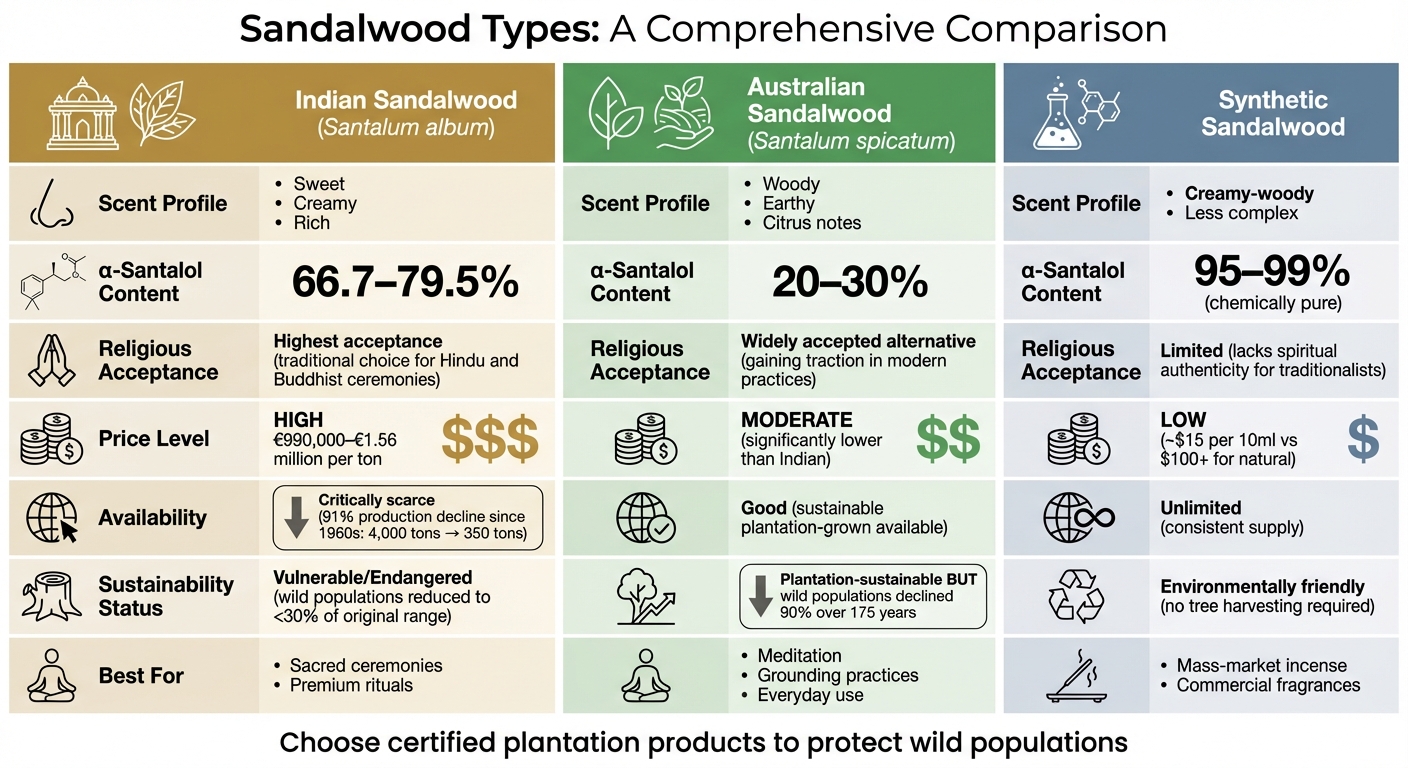
Confronto tra sandalo indiano, australiano e sintetico: profumo, costo e sostenibilità
Ogni tipo di sandalo presenta il proprio insieme di compromessi, bilanciando fattori quali aroma, costo e sostenibilità. Con i problemi di scarsità già illustrati, queste considerazioni svolgono un ruolo essenziale nel prendere decisioni consapevoli per pratiche rituali e cerimoniali.
Il sandalo indiano è celebrato per il suo aroma dolce, cremoso e ricco, che lo rende una pietra angolare nelle cerimonie induiste e buddhiste. Vanta inoltre il più alto contenuto di α-santalolo, che contribuisce al suo profumo distintivo. Tuttavia, il suo costo elevato e il drammatico declino della produzione - da 4.000 tonnellate negli anni Sessanta a sole 350 tonnellate entro il 2014 - ne rendono l’approvvigionamento sempre più difficile.
Il sandalo australiano offre un’opzione più accessibile, con un profumo più asciutto e terroso, arricchito da sfumature legnose e agrumate. Il suo aroma si presta particolarmente bene alla meditazione e alle pratiche di radicamento. Sebbene gran parte di esso sia coltivata in modo sostenibile in piantagioni, le popolazioni selvatiche hanno subito un forte declino, riducendosi del 90% negli ultimi 175 anni.
Il sandalo sintetico rappresenta un’alternativa conveniente e rispettosa dell’ambiente, alleggerendo la pressione sulle foreste naturali. Garantisce una fornitura costante, ma la sua composizione chimicamente pura manca della profondità e della complessità del sandalo naturale. Di conseguenza, è impiegato soprattutto in incensi di largo consumo e fragranze commerciali.
Ecco un confronto delle principali differenze:
| Caratteristica | Sandalo indiano | Sandalo australiano | Sandalo sintetico |
|---|---|---|---|
| Profumo | Dolce, cremoso, ricco | Legnoso, terroso, note agrumate | Cremoso-legnoso, meno complesso |
| α — Santalolo | 66,7–79,5% | 20–30% | 95–99% |
| Uso religioso | Massima accettazione | Alternativa ampiamente accettata | Limitato; manca di autenticità |
| Prezzo | Elevato | Moderato | Basso |
| Sostenibilità | Vulnerabile/in pericolo | Sostenibile in piantagione | Ecocompatibile |
Queste differenze evidenziano i punti di forza e i limiti di ciascuna opzione, aiutando praticanti e appassionati a selezionare il tipo di sandalo più adatto ai propri rituali e alle preferenze personali.
Conclusione
Il sandalo indiano (Santalum album) è stato a lungo venerato per il suo eccezionale contenuto di santalolo (66,7–79,5%) e per il suo ruolo nelle cerimonie sacre, simbolo del "veicolo dell’anima verso il cielo". Eppure, con una produzione ormai ridotta a una frazione di quella di un tempo, affidarsi esclusivamente a questa risorsa tradizionale non è più praticabile. Questa scarsità sottolinea la necessità di abbracciare alternative sostenibili coltivate in piantagione.
Iniziative come la Sandalwood Policy 2022 del Karnataka e i sussidi governativi - che coprono fino al 75% dei costi di coltivazione - stanno aprendo la strada al sandalo coltivato in piantagione come soluzione concreta. Scegliendo prodotti certificati provenienti da piantagioni, i consumatori possono contribuire a proteggere le popolazioni selvatiche garantendo al contempo una fornitura costante per le generazioni future.
Per l’uso quotidiano o per rituali informali, il sandalo australiano è un’ottima opzione. Sebbene il suo contenuto di santalolo sia inferiore (circa il 39%), offre un aroma caldo e terroso che accompagna splendidamente pratiche come meditazione e radicamento. Miscelarlo con α-santalolo sintetico può inoltre imitare la ricchezza cremosa del sandalo indiano a un prezzo più accessibile.
L’industria della profumeria sta dimostrando che tradizione e sostenibilità possono procedere di pari passo. Nel 2021, ad esempio, Quintis ha lanciato un impianto di distillazione che ha quadruplicato la produzione di olio riducendo al contempo il consumo di acqua ed energia. In modo ammirevole, il 100% dei sottoprodotti della distillazione viene riconvertito in incenso, abbracciando un modello a rifiuti zero. Innovazioni di questo tipo massimizzano il valore di ogni albero raccolto.
In ultima analisi, il potere è nelle mani dei consumatori. Scegliendo sandalo certificato da piantagione, ciascuno può onorare la tradizione sostenendo al contempo la conservazione ambientale. Riservare il pregiato sandalo indiano alle cerimonie più significative garantisce che il suo valore culturale perduri, proteggendo al tempo stesso la specie per il futuro. Come osserva con grande efficacia Richard McLellan della Charles Sturt University:
"I prodotti coltivati in piantagione sono facilmente disponibili e altrettanto dolcemente profumati. Il vostro sostegno aiuterà il settore a transitare lontano dalle piante raccolte in natura".
FAQ
Come posso distinguere il vero sandalo dalle imitazioni?
Il sandalo autentico si riconosce per il suo profumo distintivo, la texture e l’origine. Il sandalo indiano (Santalum album) è noto per il suo aroma legnoso ricco, cremoso e leggermente dolce. Tuttavia, a causa del suo stato di specie minacciata, la sua disponibilità è strettamente controllata. Al contrario, il sandalo australiano (Santalum spicatum) offre un profilo più asciutto, agrumato-legnoso, ed è coltivato secondo pratiche sostenibili. Per assicurarti di acquistare il prodotto autentico, verifica sempre la provenienza.
Il sandalo coltivato in piantagione è adatto ai rituali?
Il sandalo coltivato in piantagione è perfettamente adatto ai rituali, offrendo un’alternativa etica al sandalo selvatico, minacciato dal sovrasfruttamento. Scegliendo sandalo coltivato in modo sostenibile, contribuisci a proteggere la specie rispettandone al contempo il significato tradizionale nei rituali.
Qual è il miglior sostituto quando il sandalo è troppo costoso?
Gli scarti riciclati di sandalo indiano, comunemente provenienti da materiali utilizzati nella produzione di incenso, offrono un’alternativa ecologica ed economica al sandalo tradizionale. Riutilizzando questi residui, non solo si riducono gli sprechi, ma si preserva anche l’essenza ricca e distintiva del sandalo.

