In un mercato globale delle fragranze da 52 miliardi di euro, dove innumerevoli profumi tendono a confondersi, lo storytelling è diventato lo strumento definitivo per distinguere un marchio. Con lo shopping online che limita le esperienze sensoriali, le narrazioni trasformano i profumi in connessioni emotive, offrendo molto più di una semplice fragranza: vendono identità, ricordi e aspirazioni.
Punti chiave:
- Le storie creano identità: I profumi legati a narrazioni personali o storiche risuonano emotivamente, trasformando una fragranza in un simbolo di individualità.
- Arte prima degli ingredienti: Spiegare l’intento creativo dietro le composizioni eleva le fragranze da prodotti a opere d’arte.
- Ancore emotive: Marchi come Maison Margiela, con “Replica”, evocano ricordi, rendendo i profumi personali e indimenticabili.
- Nessun abbonamento richiesto: Scento è un rivenditore di decant e campioni di profumo, e ogni prodotto si può acquistare con un acquisto singolo, senza alcun abbonamento.
Nel marketing dei profumi, la storia persiste più a lungo della fragranza stessa.
Tecniche di storytelling nel marketing dei profumi
Storie dei profumieri e storia del marchio
Raccontare la storia dietro un profumiere può trasformare un prodotto senza volto in qualcosa di profondamente personale. Quando i consumatori scoprono il percorso del creatore, la fragranza diventa più di un semplice profumo: diventa una narrazione con cui possono entrare in connessione a livello emotivo. È come conferire all’invisibile un fascino tangibile, difficile da resistere.
Allo stesso modo, la storia di un marchio aggiunge profondità e credibilità. Una maison di profumi fondata nel 1828 possiede una risonanza completamente diversa rispetto a una start-up più recente. Questi racconti d’origine agiscono come metafore da indossare, offrendo ai consumatori la possibilità di incarnare una determinata identità o di entrare in un mondo diverso. Ma c’è un punto essenziale: l’autenticità conta. Le persone riconoscono rapidamente quando l’eredità di un marchio appare costruita.
Questi livelli personali e storici incoraggiano i consumatori a vedere i profumi non come semplici prodotti, ma come espressioni artistiche.
Presentare la composizione olfattiva come arte
In un mercato competitivo, trattare la fragranza come una forma d’arte può distinguere un marchio. Non si tratta solo di elencare gli ingredienti: si tratta di spiegare l’intento dietro ogni nota e il modo in cui esse si armonizzano per creare qualcosa di straordinario. Quando i marchi mettono in luce il processo creativo alla base della composizione, elevano il profumo da oggetto funzionale a opera d’arte che vale ogni centesimo.
Gli ingredienti inattesi svolgono qui un ruolo importante, creando ciò che viene definito Effetto Distintività. Allontanandosi dalle scelte convenzionali, i marchi mostrano la propria creatività e accendono la curiosità. Per esempio, dare a una fragranza il nome di un momento o di un luogo, come “Lazy Sunday Morning”, la trasforma in qualcosa di più di un profumo: diventa una macchina del tempo, capace di evocare ricordi ed emozioni.
Creare narrazioni emotive
Una volta che un marchio ha consolidato la propria credibilità personale e artistica, il passo successivo è radicarla emotivamente. Una grande storia di profumo non descrive soltanto una fragranza; dipinge un’immagine di chi potresti diventare. Si tratta di vendere un sogno, che sia nostalgia, avventura o romanticismo. Prendiamo Miu Miu, per esempio: non parla semplicemente di note di gelsomino. Si concentra invece sulla “ragazza Miu Miu”, posizionando la fragranza come porta d’accesso a una personalità ben precisa.
I rituali sono un altro modo per approfondire questa connessione. Marchi come Aesop trasformano il semplice gesto di applicare il profumo in una cerimonia significativa. Così facendo, convertono una routine quotidiana in un momento prezioso, facendo percepire la fragranza come parte integrante della vita, più che come un semplice prodotto sullo scaffale.
Costruire connessioni emotive attraverso le storie delle fragranze
Rendere i profumi personali
Il profumo ha un modo unico di aggirare il pensiero cosciente e raggiungere direttamente il nucleo emotivo del nostro cervello, attivando aree come l’amigdala e l’ippocampo. Ecco perché un solo accenno di fragranza può riportare immediatamente alla mente un ricordo o evocare un’emozione intensa. Questo fenomeno, noto come "codifica della memoria episodica", permette ai profumi di diventare vivide capsule del tempo, trasportandoci in momenti specifici della nostra vita.
I marchi hanno saputo attingere con intelligenza a questa connessione, presentando le loro fragranze come custodi di memorie o viaggi sensoriali. Pensiamo alla collezione "Replica" di Maison Margiela, per esempio. Ogni fragranza - come "Beach Walk" o "Lazy Sunday Morning" - è concepita per evocare un momento preciso, accendendo la nostalgia o ispirando nuove fantasticherie. Quando un profumo richiama un ricordo amato, diventa più di un semplice prodotto: diventa parte della tua identità personale.
"Il prodotto svanisce sulla nostra pelle, scompare nell’aria. Ciò che resta è la storia." – Matteo Azzolini, Autore
Questo legame emotivo non solo arricchisce l’esperienza sensoriale, ma contribuisce anche a giustificare il posizionamento premium di una fragranza. Dopotutto, non stai acquistando solo un profumo; stai investendo in una storia che risuona con te.
Sostenere prezzi premium attraverso lo storytelling
Quando una fragranza è legata a una narrazione emotiva, il suo valore va ben oltre la composizione fisica. I marchi di lusso lo comprendono perfettamente. Non vendono semplicemente profumi; vendono una visione di chi puoi diventare. Intrecciando storie evocative nel loro marketing - attraverso nomi, packaging e rituali di applicazione - trasformano un prodotto semplice in qualcosa di profondamente significativo. Una fragranza diventa non solo un accessorio quotidiano, ma un segno di identità personale e un rituale indulgente di espressione di sé.
Lo storytelling nelle piattaforme di scoperta come Scento
Le piattaforme di scoperta affrontano la sfida di creare connessioni emotive quando i clienti esplorano più fragranze contemporaneamente. Per distinguersi, queste piattaforme utilizzano lo storytelling per conferire a ogni profumo un’identità distinta. Questo approccio trasforma l’esplorazione olfattiva in un viaggio, anziché in una mera transazione.
Prendiamo Scento, per esempio. Offrendo decant curati da 8 ml, consente agli utenti di vivere l’intera narrazione di una fragranza: dalle luminose note di testa alle ricche e persistenti note di fondo. Ogni profumo diventa un capitolo di una storia più ampia, invitando gli utenti a esplorare personalità e stati d’animo diversi. Che si tratti del fascino giocoso della "ragazza Miu Miu" o dell’intrigo di note inattese come Pomodoro o Barbabietola, queste fragranze diventano strumenti di scoperta personale. Non stai semplicemente provando campioni; stai scoprendo quali metafore olfattive si allineano più intimamente alla tua storia personale.
Il tuo esperto di profumi personale ti aspetta
Fai il nostro veloce quiz olfattivo per scoprire autentici profumi di design e di nicchia scelti in base ai tuoi gusti: esplorali in decant e campioni da 2, 5, 8 e 30 ml, così puoi provarne ognuno prima di scegliere il flacone intero.
Trova il tuo profumoCome lo storytelling influisce sulle vendite e sulla fidelizzazione dei clienti
L’impatto dello storytelling sulle performance del marketing dei profumi
Misurare le performance delle campagne di marketing
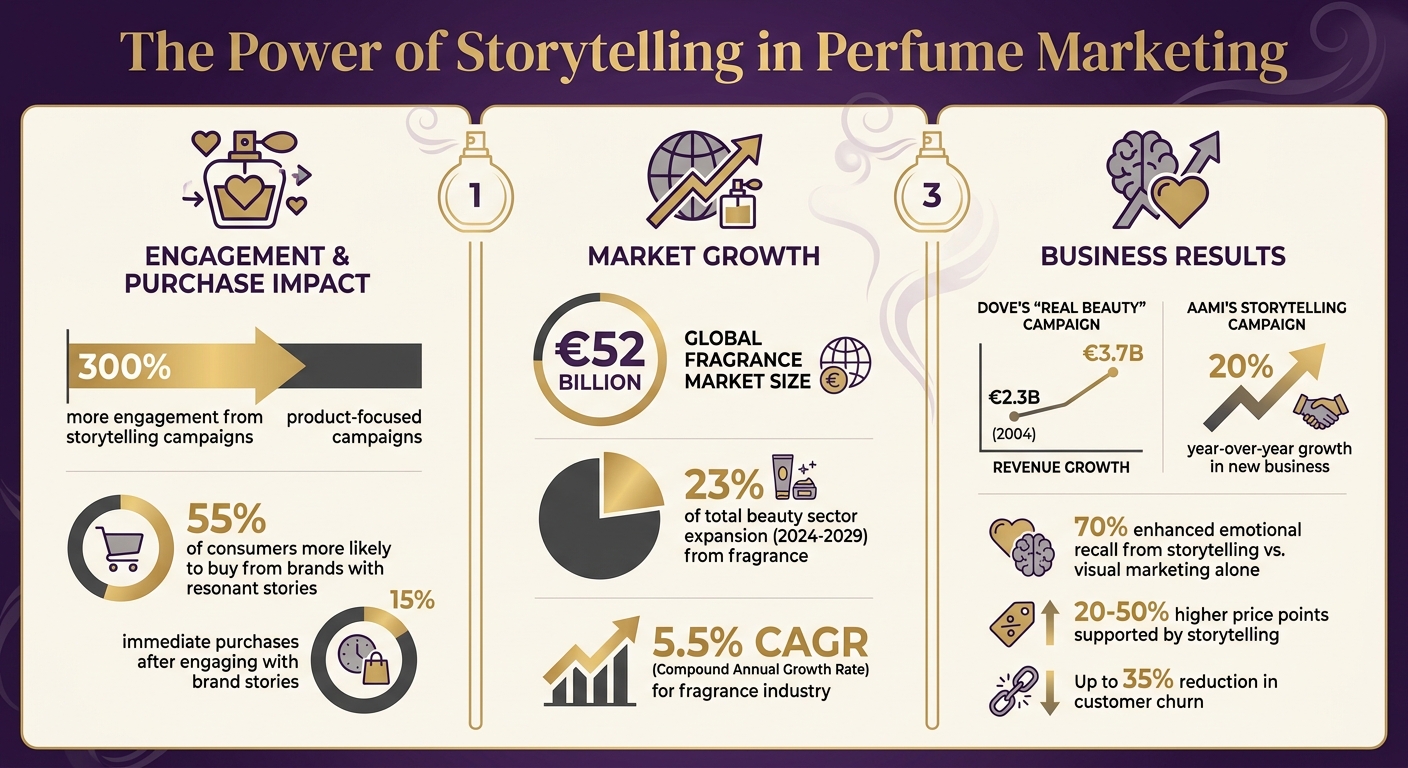
Quando i marchi intrecciano lo storytelling al proprio marketing, creano connessioni emotive che producono risultati misurabili. I numeri parlano da soli: le campagne costruite attorno a narrazioni coinvolgenti generano il 300% di engagement in più rispetto a quelle basate su semplici presentazioni di prodotto. Queste connessioni spingono all’azione: il 55% dei consumatori è più propenso ad acquistare da un marchio con una storia in cui si riconosce, e il 15% effettua un acquisto immediato. Non si tratta solo di vendite; si tratta di costruire una fedeltà destinata a durare.
Prendiamo come esempio la campagna "Real Beauty" di Dove. Sfidando le norme tradizionali della bellezza attraverso storie autentiche e sentite, il marchio ha visto i propri ricavi salire da 2,3 miliardi di euro nel 2004 a oltre 3,7 miliardi di euro. Allo stesso modo, AAMI, una compagnia australiana di assicurazioni auto, ha trasformato un servizio ordinario in una narrazione coinvolgente con la campagna "Rhonda and Ketut". Il risultato? Una crescita del 20% anno su anno nei nuovi affari, in un mercato altrimenti poco dinamico.
Anche l’industria delle fragranze è pronta a crescere, con proiezioni che indicano un contributo pari al 23% dell’espansione totale del settore beauty tra il 2024 e il 2029, trainato da un tasso di crescita annuo composto (CAGR) del 5,5%. I marchi capaci di creare narrazioni emotive legate a temi come gioia, connessione sociale o calma sono ben posizionati per cogliere questo slancio. Le storie non solo aiutano i brand a emergere in mercati affollati, ma sostengono anche il posizionamento premium e rafforzano identità di marca distintive.
Lo storytelling nei modelli in abbonamento
Lo storytelling non migliora soltanto gli acquisti una tantum: trasforma i modelli in abbonamento in esperienze continue e immersive. Questo cambiamento è particolarmente evidente nell’ascesa dello "scent wardrobing", in cui la Gen Z e altri consumatori curano collezioni su misura per i propri stati d’animo e momenti di vita. In questo contesto, ogni consegna mensile diventa un nuovo capitolo di una storia più ampia, non una semplice transazione in più.
Scento ha abbracciato questo approccio offrendo scoperte olfattive mensili da 8 ml pensate per l’esplorazione di sé. Ogni fragranza curata racconta la propria storia emotiva, dagli agrumi energizzanti agli accordi legnosi rasserenanti. Questo approccio aiuta gli abbonati a costruire un personale "guardaroba olfattivo" che evolve con la loro vita. Risponde inoltre a una frustrazione comune: spendere oltre 300 euro per flaconi full-size che spesso rimangono incompiuti. Il modello di Scento offre invece opzioni accessibili e curate, allineate alle identità individuali, favorendo nel tempo una fedeltà più profonda.
Conclusione
In un mercato delle fragranze valutato 52 miliardi di euro, distinguersi richiede molto più di un profumo gradevole. Lo storytelling è diventato la chiave per trasformare le fragranze in esperienze emotive, aiutando i marchi a giustificare prezzi premium e a creare connessioni più profonde con i propri clienti.
I decant curati di Scento - disponibili in fiale da 2 ml, 5 ml e 8 ml, e un decant in flacone da 30 ml per la maggior parte dei profumi - danno vita alle fragranze come capitoli di una storia personale. Questo approccio permette ai consumatori di esplorare i profumi con consapevolezza, costruendo nel tempo un guardaroba olfattivo su misura. Invece di sommergere gli acquirenti con opzioni infinite, le proposte attentamente selezionate di Scento, accompagnate da narrazioni coinvolgenti, creano un processo di scoperta più significativo e immersivo.
La scienza lo conferma: lo storytelling attiva il sistema limbico del cervello, migliorando il ricordo emotivo del 70% rispetto al solo marketing visivo. Questa connessione emotiva si traduce in risultati concreti per i marchi, dalla possibilità di imporre prezzi superiori del 20–50% alla riduzione dell’abbandono dei clienti fino al 35%. Che avvenga condividendo l’ispirazione del profumiere, mostrando l’arte dietro una composizione o legando una fragranza a un traguardo personale, le storie rendono i profumi indimenticabili.
Per i marchi e le piattaforme di scoperta, il messaggio è chiaro: lo storytelling dovrebbe essere intrecciato a ogni aspetto dell’esperienza cliente. Dal design degli atomizzatori stagionali come Limone di Capri o Rosso Fiore alle narrazioni dietro ogni fragranza, ogni dettaglio contribuisce a un viaggio emotivo. Questo approccio non solo rafforza la fedeltà, ma trasforma l’esplorazione olfattiva in una connessione duratura, assicurando il ritorno dei clienti mese dopo mese.
Domande frequenti
Come può la storia di un profumo risultare autentica, e non un’eredità fittizia?
La storia di un profumo risuona profondamente quando nasce da emozioni autentiche, ricordi personali o elementi culturali significativi, invece di affidarsi a storie abbellite o inventate. Il potere del profumo risiede nella sua capacità di evocare ricordi e sentimenti vividi, rendendo essenziale che la narrazione di una fragranza appaia sincera e vicina alle persone. La vera maestria artigianale, ingredienti di alta qualità e uno storytelling sincero rafforzano ulteriormente questa connessione. Le persone apprezzano l’onestà e sanno riconoscere facilmente quando una storia appare forzata o poco autentica. Allineare queste narrazioni alla vera identità del marchio aiuta a costruire fiducia e a creare un legame emotivo più forte con il pubblico.
Come si possono trasformare le note di una fragranza in una storia che le persone ricordano?
Per aiutare le note di una fragranza a imprimersi nella memoria, collega le note di testa, di cuore e di fondo a temi emotivi capaci di risuonare con i consumatori. Immagina una fragranza come una storia che si dispiega: ogni nota svolge un ruolo nella costruzione della narrazione. Usa metafore o simboli per far emergere emozioni specifiche, evocare determinati stili di vita o riflettere identità. Questo approccio trasforma la struttura tecnica del profumo in qualcosa di profondamente personale, lasciando un impatto duraturo pur rimanendo fedele al carattere del marchio.
Come si può misurare se lo storytelling aumenta le vendite di profumi?
I marchi possono valutare l’influenza dello storytelling analizzando come aumenta la probabilità d’acquisto e rafforza i legami emotivi e la memoria. Per esempio, i profumi hanno un impressionante tasso di ricordo del 65% anche dopo un anno, dimostrando come le narrazioni connesse alle fragranze possano orientare le decisioni d’acquisto e lasciare un segno duraturo.

