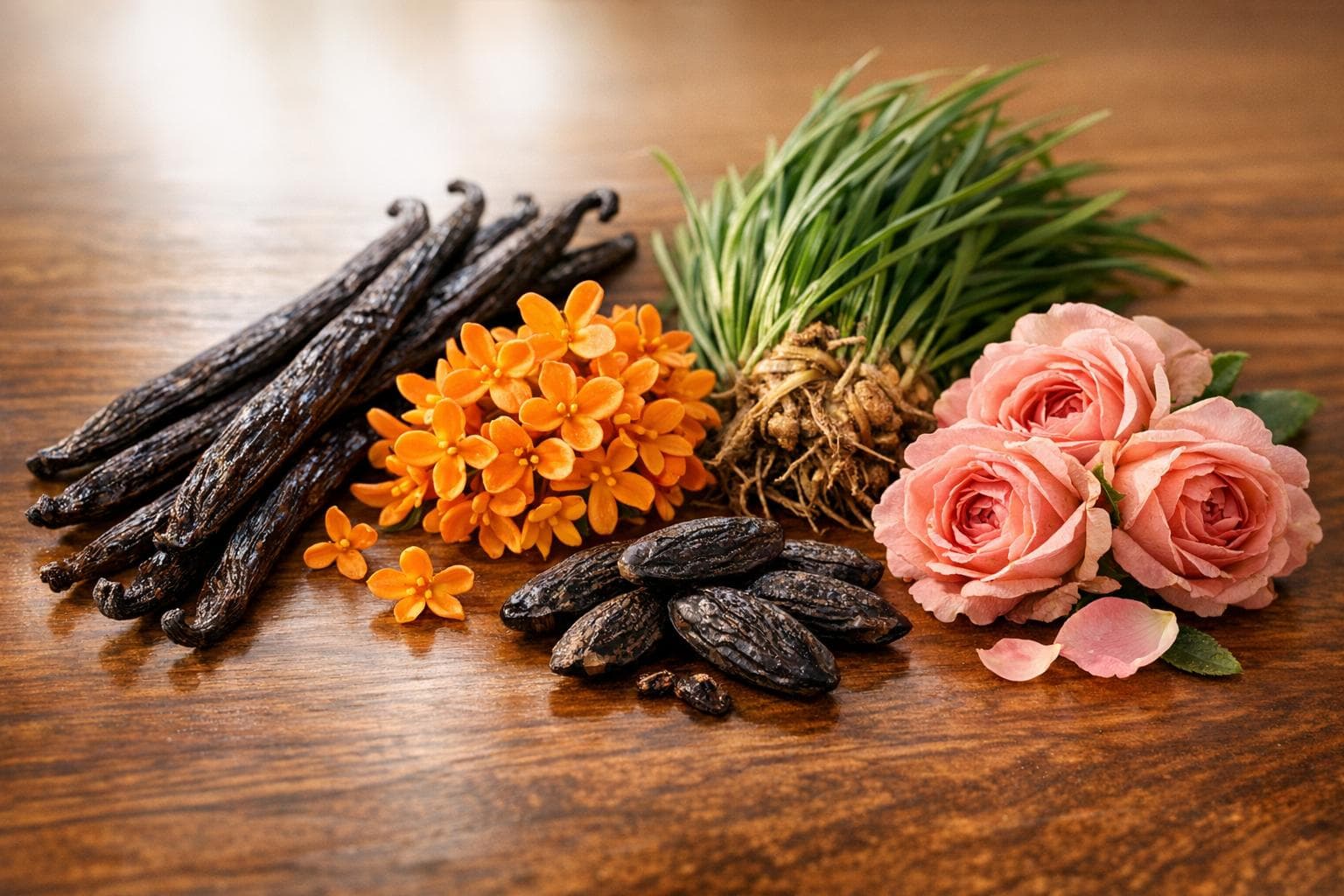
I profumi di lusso si stanno evolvendo, fondendo arte e pratiche eco-consapevoli. I consumatori di oggi richiedono trasparenza e approvvigionamento etico, spingendo i marchi a integrare scelte responsabili in materia di ingredienti. Ecco un rapido sguardo a cinque ingredienti chiave che stanno ridefinendo il mondo della fragranza:
- Bergamotto: Una nota agrumata presente nel 50% dei profumi di alta gamma, proveniente dalla Calabria, Italia. Agricoltura biologica e tecnologia blockchain garantiscono qualità e tracciabilità.
- Vetiver: Noto per il suo sentore fumé e legnoso, stabilizza il suolo e sostiene le comunità haitiane attraverso iniziative di commercio equo.
- Rosa: La "regina dei fiori" offre oltre 300 composti chimici per fragranze complesse. Coltivata in luoghi come Grasse, in Francia, con metodi biologici.
- Sandalo: Un tempo a rischio di estinzione, oggi viene coltivato in modo sostenibile in Australia ed è supportato da innovative tecniche di upcycling.
- Lavanda: Una coltura resistente alla siccità che sostiene impollinatori ed ecosistemi biodiversi, coltivata principalmente in Francia e Bulgaria.
Questi ingredienti non solo esaltano la qualità del profumo, ma promuovono anche lavoro equo, riduzione degli sprechi e tutela delle risorse naturali. Continua a leggere per scoprire come questi elementi stanno trasformando la profumeria di lusso.
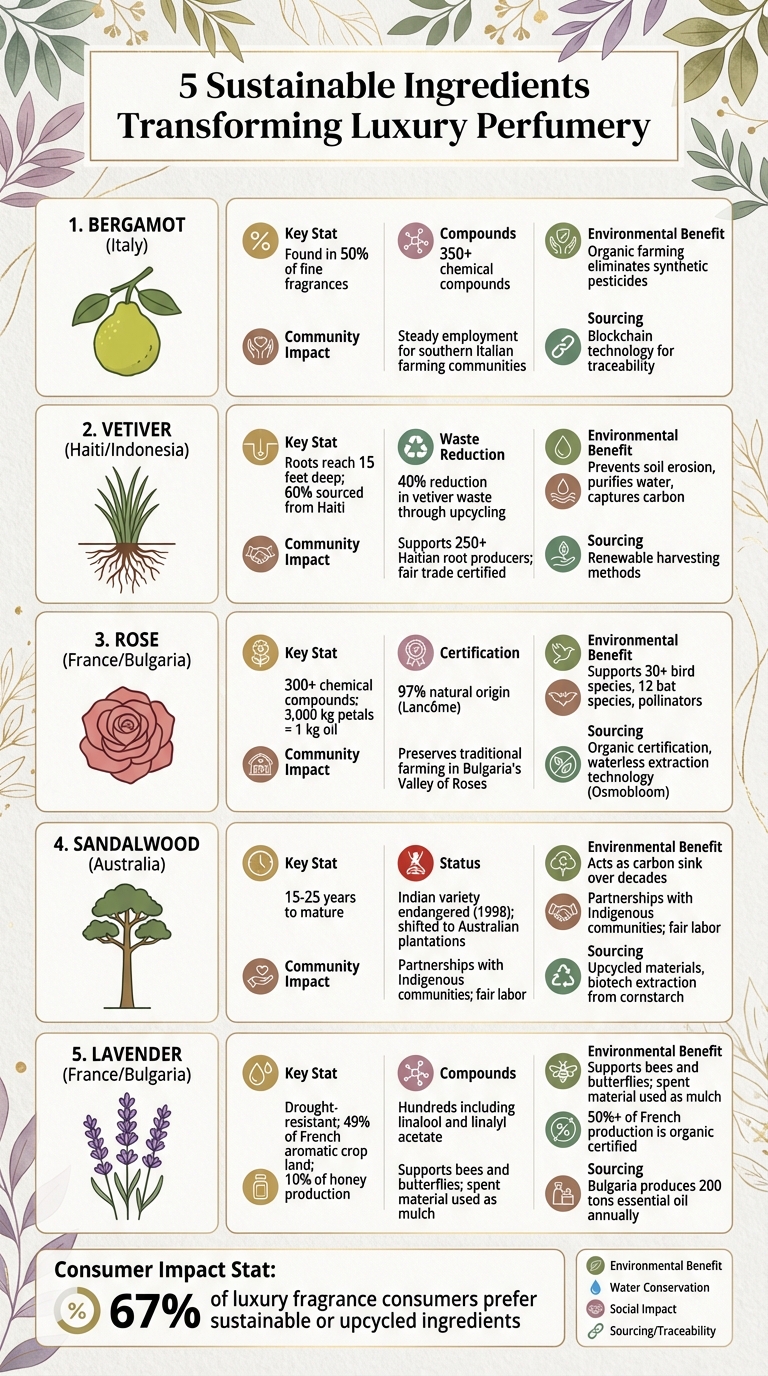
5 ingredienti sostenibili per profumi di lusso: benefici e impatto
1. Bergamot
Il bergamotto occupa un ruolo centrale nella profumeria di lusso, comparendo in circa il 50% delle fragranze di alta profumeria oggi disponibili. Questo agrume, coltivato quasi esclusivamente in Calabria, Italia, offre una vibrante nota di testa che collega con naturalezza elementi floreali e legnosi.
Contributo olfattivo
L’olio essenziale di bergamotto contiene oltre 350 composti chimici, creando una profondità e una complessità che le versioni sintetiche semplicemente non possono eguagliare. Il profumiere Rodrigo Flores-Roux ne sottolinea l’importanza: "Il bergamotto è indispensabile in profumeria, poiché è quasi sempre l’elemento principale di tutte le fragranze fresche e ricche... è il cemento di un edificio, il pilastro della profumeria". A differenza di altri agrumi, l’uso del bergamotto è in gran parte confinato alla profumeria, con l’eccezione del suo ruolo nell’aromatizzazione del tè Earl Grey, rendendolo un ingrediente davvero distintivo.
Pratiche di approvvigionamento sostenibile
In Calabria, il bergamotto viene raccolto attraverso metodi tradizionali e collaudati, che privilegiano qualità e sostenibilità. I produttori spesso aderiscono a certificazioni biologiche e utilizzano processi di distillazione efficienti dal punto di vista energetico. Molti marchi di lusso oggi indicano con orgoglio "Bergamotto di Calabria" sulle proprie creazioni, garantendo trasparenza grazie alla tecnologia blockchain o coltivando rapporti diretti con gli agricoltori per verificare l’origine dell’ingrediente e la sua produzione etica.
Benefici ambientali
I metodi di agricoltura biologica impiegati nella coltivazione del bergamotto eliminano la necessità di pesticidi e fertilizzanti sintetici, riducendo il danno ambientale. Nel clima mediterraneo della Calabria, gli agricoltori adottano strategie di conservazione dell’acqua per salvaguardare le risorse locali mantenendo l’equilibrio ecologico. Questi sforzi assicurano che la terra rimanga fertile e produttiva per le generazioni future senza esaurire le riserve naturali.
Impatto sulla comunità
L’industria del bergamotto offre occupazione stabile e stabilità economica alle comunità agricole del Sud Italia. Ciò contribuisce a preservare le pratiche agricole tradizionali e il patrimonio culturale. Sostenendo le famiglie locali che coltivano questi agrumeti da generazioni, l’industria non solo tutela i mezzi di sussistenza, ma previene anche il declino rurale. Questo approccio orientato alla comunità evidenzia come il bergamotto rappresenti un modello per altri ingredienti sostenibili che plasmano il futuro della profumeria di lusso.
2. Vetiver
Spesso definito "Guardiano della Terra", il vetiver aggiunge una ricchezza fumé e legnosa alle fragranze d’alta gamma. Questa straordinaria graminacea sviluppa radici che possono raggiungere profondità fino a 15 piedi, creando una nota di fondo celebrata per la sua complessità stratificata e la sua incredibile persistenza. Il vetiver haitiano è noto per il suo carattere fumé, mentre le varietà indonesiane tendono verso toni terrosi, simili al cioccolato. Oltre al suo fascino aromatico, il vetiver svolge un ruolo vitale nella conservazione ambientale e nello sviluppo delle comunità.
Benefici ambientali
L’esteso apparato radicale del vetiver è la risposta della natura all’erosione del suolo: stabilizza anche i pendii più ripidi e previene il degrado del territorio. Queste radici profonde catturano inoltre carbonio, contribuendo alla resilienza climatica. In aggiunta, il vetiver agisce come purificatore naturale dell’acqua, rimuovendo efficacemente le tossine dal terreno.
I progressi nell’upcycling hanno reso la produzione di vetiver più efficiente e meno dispendiosa. Tradizionalmente, durante la distillazione viene estratto solo lo 0,5%–1% dell’olio essenziale della pianta, lasciando inutilizzata una quantità significativa di materiale. Nel 2022, Firmenich ha introdotto la sua "Upcycled Ingredients Collection", che riconverte questo materiale residuo in nuovi composti aromatici. Secondo quanto riportato, questa innovazione ha ridotto del 40% gli sprechi legati al vetiver senza compromettere la qualità. Allo stesso modo, Symrise ha presentato "Symrise Upcycled Vetiver", riducendo gli scarti di produzione di circa il 15% secondo il proprio rapporto di sostenibilità 2022.
Pratiche di approvvigionamento sostenibile
Haiti è la fonte di circa il 60% del vetiver mondiale, con numerosi programmi che pongono l’accento su metodi di raccolta rinnovabili, in grado di consentire alle piante di rigenerarsi naturalmente dopo la raccolta delle radici. Dal 2012, Givaudan collabora con una cooperativa di 250 produttori di radici in tre villaggi haitiani. Questa partnership, che ha ottenuto la certificazione Fair for Life di Ecocert, ha finanziato infrastrutture essenziali come la riparazione delle strade, un migliore accesso all’assistenza sanitaria e l’elettricità in comunità remote.
"Tutte queste misure, dal lavoro in partnership con la comunità locale dei produttori al conseguimento della certificazione di commercio equo, contribuiscono a garantire il futuro a lungo termine del vetiver e generano stabilità per tutti: coltivatori, fornitori e nostri clienti." — Maxence, Head of Procurement Fine Fragrances, Givaudan
Anche Guerlain ha compiuto progressi nell’approvvigionamento etico. Dopo essere entrato a far parte dell’Union for Ethical Biotrade (UEBT) nel luglio 2021, il marchio si è impegnato a certificare tutti i suoi 40 canali di fornitura entro il 2026. Il lancio di marzo 2022, "Aqua Allegoria Nerolia Vetiver", presentava vetiver proveniente da canali certificati UEBT e alcol derivato da barbabietola biologica. Inoltre, il sito produttivo di Chartres è passato al 100% a gas biometano, riducendo di 1.000 tonnellate le emissioni di CO2 ogni anno.
Impatto sulla comunità
Le iniziative sostenibili legate al vetiver sono diventate un’ancora di salvezza per le comunità agricole di Haiti e Madagascar, offrendo reddito stabile mentre riabilitano paesaggi degradati. Gli agricoltori ricevono formazione su tecniche che minimizzano l’erosione del suolo e migliorano la qualità delle radici, garantendo benefici economici e ambientali a lungo termine. Con il 67% dei consumatori di fragranze di lusso che oggi preferisce prodotti realizzati con ingredienti sostenibili o upcycled, questi programmi non solo soddisfano la domanda del mercato, ma generano anche un significativo cambiamento sociale.
3. Rosa
Conosciuta come la "regina dei fiori", la rosa porta un connubio di complessità e raffinatezza nelle fragranze di lusso. Il suo olio naturale è una meraviglia della chimica, contenendo oltre 300 composti diversi. Tra questi vi sono geraniolo e citronellolo, che aggiungono una morbida dolcezza floreale, e acetato di benzile, che approfondisce la scia con una ricchezza seducente. Questa intricata composizione molecolare assicura che la fragranza della rosa evolva in modo unico su ogni individuo. Produrre questo olio pregiato, tuttavia, non è impresa da poco: occorrono circa 3.000 chilogrammi di petali di rosa per estrarre appena un chilogrammo di olio essenziale tramite la tradizionale distillazione a vapore.
Contributo olfattivo
Il modo in cui l’olio di rosa viene estratto svolge un ruolo fondamentale nel definirne il profumo. L’olio di rosa distillato a vapore, spesso chiamato rose otto, offre un aroma ricco e intenso. Al contrario, l’assoluta di rosa, prodotta mediante solventi o estrazione con CO₂, cattura l’essenza fresca e rugiadosa di una rosa viva. La rosa Centifolia, chiamata anche "Rosa di Maggio", è particolarmente apprezzata nei profumi d’alta gamma per la sua fragranza stratificata e in continua evoluzione. Oltre al suo profumo, gli estratti naturali di rosa sono noti anche per favorire il rilassamento e migliorare l’umore, grazie a composti fenolici ricchi di antiossidanti.
Pratiche di approvvigionamento sostenibile
Nel 2020, Lancôme ha acquisito Le Domaine de la Rose a Grasse, in Francia. Questo sito ecologico di 10 acri, che era stato un’azienda agricola biologica per cinque decenni, oggi coltiva rose Centifolia per la fragranza "Mille et une Roses" del marchio. Questo profumo è di origine naturale al 97% e certificato ECOCERT. Le rose vengono raccolte a mano all’alba per garantire il massimo contenuto di olio. Inoltre, il Gruppo L’Oréal ha presentato nel 2024 la sua tecnologia "Osmobloom". Questo metodo innovativo utilizza la circolazione dell’aria al posto della distillazione a vapore ad alta intensità di calore, offrendo un modo senz’acqua ed efficiente dal punto di vista energetico per catturare il profumo della rosa.
"All’inizio del processo di creazione di un grande profumo, c’è sempre un incontro e un’affinità eccezionale con un grande ingrediente: la sua performance tecnica ma soprattutto il suo potere emotivo."
– Karine Lebret, International Director of Fragrance Science and Fragrance Design, L’Oréal Group
Benefici ambientali e impatto sulla comunità
La coltivazione sostenibile della rosa fa molto più che produrre fragranze squisite: sostiene anche la biodiversità. Il sito di Lancôme a Grasse, per esempio, offre un rifugio sicuro a oltre 30 specie di uccelli e farfalle, 12 specie di pipistrelli e 8 tipi di libellule. I metodi di agricoltura biologica, che evitano pesticidi e fertilizzanti sintetici, contribuiscono a proteggere la qualità del suolo e i sistemi idrici locali. Alcune aziende agricole combinano persino la coltivazione delle rose con l’apicoltura, creando una relazione reciprocamente vantaggiosa. Inoltre, queste pratiche sostenibili offrono posti di lavoro stabili nelle aree rurali, in particolare in regioni come la Valle delle Rose in Bulgaria. Ciò non solo preserva le tecniche agricole tradizionali, ma garantisce anche condizioni di lavoro eque. La rosa, dunque, incarna l’armonia tra lusso e artigianalità etica.
Il tuo esperto di profumi personale ti aspetta
Fai il nostro veloce quiz olfattivo per scoprire autentici profumi di design e di nicchia scelti in base ai tuoi gusti: esplorali in decant e campioni da 2, 5, 8 e 30 ml, così puoi provarne ognuno prima di scegliere il flacone intero.
Trova il tuo profumo4. Sandalo
Il sandalo occupa un posto speciale nella profumeria di lusso, celebrato per il suo aroma caldo, cremoso e leggermente dolce. Questo profumo distintivo deriva dai santaloli, composti chiave che non solo ne definiscono il carattere ricco e vellutato, ma offrono anche benefici per la pelle. Oltre alla sua fragranza ammaliante, la storia del sandalo è legata all’innovazione e agli sforzi per assicurarne il futuro.
Curioso? Prova Acqua di Parma Sandalo in decant, da €10.90ProvaloPratiche di approvvigionamento sostenibile
La vicenda del sandalo riguarda tanto la preservazione quanto il profumo. Il sandalo indiano (Santalum album) è stato inserito come specie a rischio nella Lista Rossa IUCN nel 1998 a causa di anni di sovrasfruttamento e commercio illegale. In risposta, l’industria ha spostato l’attenzione sul sandalo australiano, coltivato in piantagioni gestite secondo rigide linee guida ambientali. Questi alberi richiedono dai 15 ai 25 anni per maturare, evidenziando l’importanza di una pianificazione a lungo termine e della cura ambientale.
Anche gli approcci innovativi contribuiscono a ridurre la necessità di abbattere nuovi alberi. I marchi si stanno orientando verso il sandalo upcycled e metodi biotecnologici, come l’estrazione del santalolo da materiali rinnovabili quali l’amido di mais. Belinda Smith, fondatrice di St. Rose, evidenzia il potenziale unico di questi metodi:
"La qualità olfattiva del sandalo upcycled è unica e rende più intense alcune sfaccettature dell’ingrediente, un modo straordinario per influenzare intenzionalmente una composizione."
Questi progressi non solo preservano l’eredità del sandalo, ma dimostrano anche come l’innovazione possa allinearsi alla responsabilità ambientale.
Impatto ambientale e sulla comunità
La coltivazione sostenibile del sandalo estende il proprio impatto oltre la fragranza. Questi alberi a crescita lenta agiscono come pozzi di carbonio, assorbendo anidride carbonica per decenni. Inoltre, le partnership con le comunità indigene garantiscono pratiche di lavoro eque e onorano le conoscenze tradizionali. La raccolta etica nelle piantagioni australiane sostiene la rigenerazione naturale, alleviando la pressione sulle specie a rischio. I programmi di certificazione rafforzano ulteriormente trasparenza ed equità lungo tutto il processo produttivo, assicurando pratiche etiche dalla coltivazione al prodotto finale.
5. Lavanda
La lavanda è diventata un elemento distintivo nel mondo del lusso eco-consapevole, seguendo le orme sostenibili del sandalo. Questo gioiello mediterraneo non è solo una pietra miliare della profumeria d’alta gamma, ma anche un modello di agricoltura sostenibile. La sua capacità di prosperare con poca acqua la rende una coltura ideale per regioni che affrontano sfide climatiche. Questa pianta resistente alla siccità consente ai produttori di raccogliere oli essenziali eccezionali senza dipendere dall’irrigazione intensiva richiesta da altre colture.
Benefici ambientali
I contributi ambientali della lavanda vanno ben oltre l’efficienza idrica. I suoi campi offrono habitat essenziali a api e farfalle, sostenendo impollinatori vitali per gli ecosistemi. Gli agricoltori che adottano metodi di coltivazione biologica evitano pesticidi e fertilizzanti sintetici, preservando la salute del suolo e proteggendo le fonti d’acqua vicine. In Francia, dove lavanda e il suo ibrido, il lavandino, coprono il 49% dei terreni destinati alle colture aromatiche, queste piante svolgono un ruolo sorprendente nella produzione di miele, rappresentando il 10% della produzione totale di miele del Paese.
Anche dopo il processo di distillazione, la lavanda non viene sprecata. Il materiale vegetale esausto viene riutilizzato come pacciamatura, arricchendo il suolo e riducendo lo stress idrico per le colture future.
"È una coltura che favorisce la biodiversità: attira molti insetti, incoraggia l’impollinazione ed è utilizzata anche per produrre miele di lavanda." – Charlotte Bringer-Guerin, Regulatory and Environmental Affairs Officer presso CIHEF.
La coltivazione eco-compatibile della lavanda è solo l’inizio. Il suo profilo olfattivo sfaccettato aggiunge un ulteriore livello di raffinatezza alle fragranze di lusso.
Contributo olfattivo
L’aroma della lavanda è il risultato di centinaia di composti molecolari naturali, come linalolo e acetato di linalile. Questi composti le conferiscono una complessità che le alternative sintetiche non possono replicare. Nei profumi d’alta gamma, la lavanda agisce spesso come un ponte, collegando con naturalezza luminose note di testa agrumate a ricche note di fondo legnose. Il profumo stesso varia in base all’altitudine: la lavanda coltivata a quote più elevate tende verso toni erbacei e canforati, mentre le varietà di quote più basse offrono sfumature più dolci e floreali.
Pratiche di approvvigionamento sostenibile
La Bulgaria è attualmente leader mondiale nella produzione di lavanda, coltivando circa 4.500 ettari che producono 200 tonnellate di olio essenziale ogni anno. Nel frattempo, oltre la metà della produzione francese di lavanda possiede oggi una certificazione biologica. Queste pratiche riflettono un impegno più ampio verso un approvvigionamento etico e sostenibile, garantendo condizioni di lavoro eque e cura dell’ambiente. Inoltre, tecniche di estrazione innovative stanno contribuendo a ridurre l’impatto ambientale mantenendo la tracciabilità degli ingredienti.
«Entro il 2030, il 95 per cento degli ingredienti delle nostre formulazioni sarà di origine biologica [e ottenuto con] processi circolari, e il 100 per cento di questi ingredienti sarà tracciabile e proveniente da fonti sostenibili». – Marie-Pia Schlumberger, direttrice dello sviluppo sostenibile di L’Oréal Luxe.
Il ruolo della lavanda nella profumeria di lusso è molto più di una semplice aggiunta fragrante: è un simbolo di come sostenibilità e raffinatezza possano procedere di pari passo.
Sfide e nuovi sviluppi nella profumeria sostenibile
Approvvigionarsi di ingredienti sostenibili per la profumeria è tutt’altro che semplice. Prendiamo l’olio essenziale di rosa, per esempio: produrne appena 2,2 libbre richiede l’incredibile quantità di 6.600 libbre di petali di rosa. Questo delicato equilibrio è ulteriormente messo sotto pressione da problemi come cambiamento climatico, scarsità d’acqua e conflitti geopolitici, tutti fattori che interrompono le catene di approvvigionamento. Queste sfide incidono direttamente sia sulla longevità delle fragranze sia sulle scelte che i profumieri compiono durante la formulazione.
I profumi naturali durano in genere 2–6 ore sulla pelle, rispetto alle 8–12+ ore che le alternative sintetiche possono raggiungere. Sebbene fissativi naturali come i semi di ambretta possano prolungare la persistenza di una fragranza, i loro costi elevati li rendono meno accessibili per un uso su larga scala. A complicare ulteriormente il quadro, i profumieri devono rispettare rigorose normative sugli allergeni. Per esempio, l’Unione Europea ha limitato in modo crescente ingredienti naturali come il muschio di quercia a causa dei loro composti potenzialmente problematici.
È interessante notare che una fragranza etichettata come "100% naturale" potrebbe non essere necessariamente più sostenibile di una che incorpora ingredienti sintetici. Devono essere considerati anche fattori come l’aumento delle emissioni di carbonio dovuto alla produzione decentralizzata e il rischio di deforestazione.
Fortunatamente, stanno emergendo soluzioni innovative per affrontare queste sfide. La tecnologia blockchain viene ora utilizzata per tracciare gli ingredienti dalla loro origine al prodotto finale, con test del DNA che verificano le specie botaniche e la loro provenienza geografica. Nel marzo 2022, Guerlain ha introdotto Aqua Allegoria Nerolia Vetiver, che presenta alcol biologico derivato dalla barbabietola. Il marchio, sotto la guida della Chief Sustainability Officer Cécile Lochard, ha inoltre convertito il proprio stabilimento di Chartres al 100% a gas biometano, riducendo le emissioni di CO₂ di una quantità stimata in 1.000 tonnellate all’anno. Guerlain si è impegnata a certificare tutti i suoi 40 canali di approvvigionamento secondo l’Union for Ethical Biotrade entro il 2026.
L’upcycling è un’altra innovazione che sta guadagnando slancio. Nel 2018, Etat Libre d’Orange ha debuttato con "I Am Trash — Les Fleurs du déchet," una fragranza realizzata interamente con materiali upcycled come petali di rosa esausti e olio di mela proveniente dagli scarti dell’industria alimentare. Questo profumo innovativo è stato creato in collaborazione con Givaudan. Allo stesso modo, Coty ha collaborato con LanzaTech per produrre fragranze carbon-negative, utilizzando etanolo ad alta purezza derivato da emissioni industriali di CO₂ catturate. Questi progressi dimostrano che lusso e sostenibilità possono coesistere senza sacrificare la qualità.
Per comprendere meglio le differenze tra ingredienti sostenibili e sintetici, ecco un rapido confronto:
| Caratteristica | Ingredienti sostenibili | Ingredienti sintetici |
|---|---|---|
| Complessità | Oltre 350 composti nel bergamotto naturale | Formulazioni spesso più semplici, a singola molecola |
| Stabilità dell’approvvigionamento | Volatile; influenzata da clima e geopolitica | Affidabile; prodotta in massa con qualità costante |
| Costo | Prezzo premium dovuto a rese ridotte | Generalmente più conveniente e stabile |
| Longevità | Tipicamente 2–6 ore sulla pelle | Tipicamente 8–12+ ore sulla pelle |
| Impatto ambientale | Elevato uso di suolo e acqua; sostiene la biodiversità | Spesso a base petrolchimica; minore impronta sul territorio |
Conclusione
Il mondo della profumeria di lusso sta attraversando una trasformazione, guidata dalla crescente domanda di trasparenza e pratiche etiche, soprattutto da parte di Millennials e Gen Z. Questo cambiamento non riguarda soltanto le tendenze, ma l’allineamento con valori che danno priorità sia all’espressione personale sia alla cura dell’ambiente.
Gli ingredienti naturali svolgono un ruolo chiave in questa evoluzione, offrendo strutture molecolari complesse che interagiscono in modo unico con la chimica della pelle di ciascuno. Ciò crea fragranze che risultano profondamente personali e distintive. Oltre all’arte, l’approvvigionamento etico di materiali come il sandalo indiano e il palissandro contribuisce a salvaguardare la biodiversità e sostiene pratiche di agricoltura rigenerativa, che contribuiscono anche al sequestro del carbonio.
Per i consumatori, sostenere marchi con certificazioni di terze parti come UEBT, COSMOS o NATRUE è una scelta di grande impatto. Queste certificazioni garantiscono un approvvigionamento sostenibile e spesso si accompagnano a innovazioni come packaging ricaricabili, che possono ridurre le emissioni fino al 60%. Inoltre, l’adozione di materiali upcycled e la trasparenza nell’origine degli ingredienti rafforzano la spinta verso un’economia circolare.
Il futuro della profumeria di lusso fonde artigianalità eccezionale e impegno per la tutela dell’ambiente. Come ha sottolineato Marie-Pia Schlumberger, Director of Sustainable Development presso L’Oréal Luxe:
«Entro il 2030, il 95 per cento degli ingredienti delle nostre formulazioni sarà di origine biologica [e ottenuto con] processi circolari, e il 100 per cento di questi ingredienti sarà tracciabile e proveniente da fonti sostenibili».
Ogni scelta che compi a favore della profumeria di lusso sostenibile contribuisce a ridefinire il settore: una fragranza straordinaria alla volta.
FAQ
Quali sono i benefici ambientali dell’utilizzo di ingredienti sostenibili nei profumi?
Gli ingredienti sostenibili nei profumi svolgono un ruolo fondamentale nel ridurre l’impatto ecologico della produzione di fragranze. Puntando su materiali provenienti da fonti responsabili o upcycled, queste pratiche aiutano a ridurre le emissioni di carbonio, proteggere la biodiversità e incoraggiare metodi di agricoltura rigenerativa.
Scegliere opzioni così eco-consapevoli riduce anche gli sprechi e sostiene un futuro più sostenibile, permettendo di apprezzare fragranze di lusso dando priorità alla salute del pianeta.
In che modo la tecnologia blockchain migliora la trasparenza negli ingredienti dei profumi?
La tecnologia blockchain svolge un ruolo chiave nel creare trasparenza all’interno dell’industria del profumo, mantenendo un registro sicuro e immutabile del percorso di ogni ingrediente. Dalla raccolta e lavorazione al trasporto e alla consegna finale, ogni fase della catena di approvvigionamento viene documentata meticolosamente su un registro digitale che non può essere manomesso.
Questo sistema garantisce che le dichiarazioni relative a ingredienti provenienti da fonti sostenibili o raccolti eticamente siano verificabili. Eliminando il rischio di frodi e di etichettature errate, la blockchain contribuisce a costruire fiducia nelle pratiche etiche e sostenibili alla base dei profumi di lusso, offrendo ai consumatori maggiore sicurezza nelle proprie scelte.
Perché il vetiver è apprezzato nei profumi di lusso e in che modo sostiene pratiche sostenibili?
Il vetiver occupa un posto speciale nel mondo della profumeria di lusso, celebrato per la sua ricchezza terrosa e legnosa che conferisce profondità e persistenza alle fragranze. Estratto dalle radici della pianta di vetiver, questo olio offre un affascinante ventaglio di aromi: dal fresco e fumé al dolce e cuoiato, rendendolo una nota di fondo versatile che completa composizioni sia maschili sia femminili.
Oltre al suo profumo ammaliante, il vetiver svolge un ruolo significativo nella vita di chi lo coltiva. In regioni come Haiti e India, dove prospera, la coltivazione del vetiver sostiene spesso pratiche agricole responsabili creando al tempo stesso opportunità economiche vitali per le comunità locali. Dando priorità all’approvvigionamento etico, il vetiver non solo esalta i profumi, ma contribuisce anche alla cura dell’ambiente e al miglioramento dei mezzi di sussistenza in queste aree.

