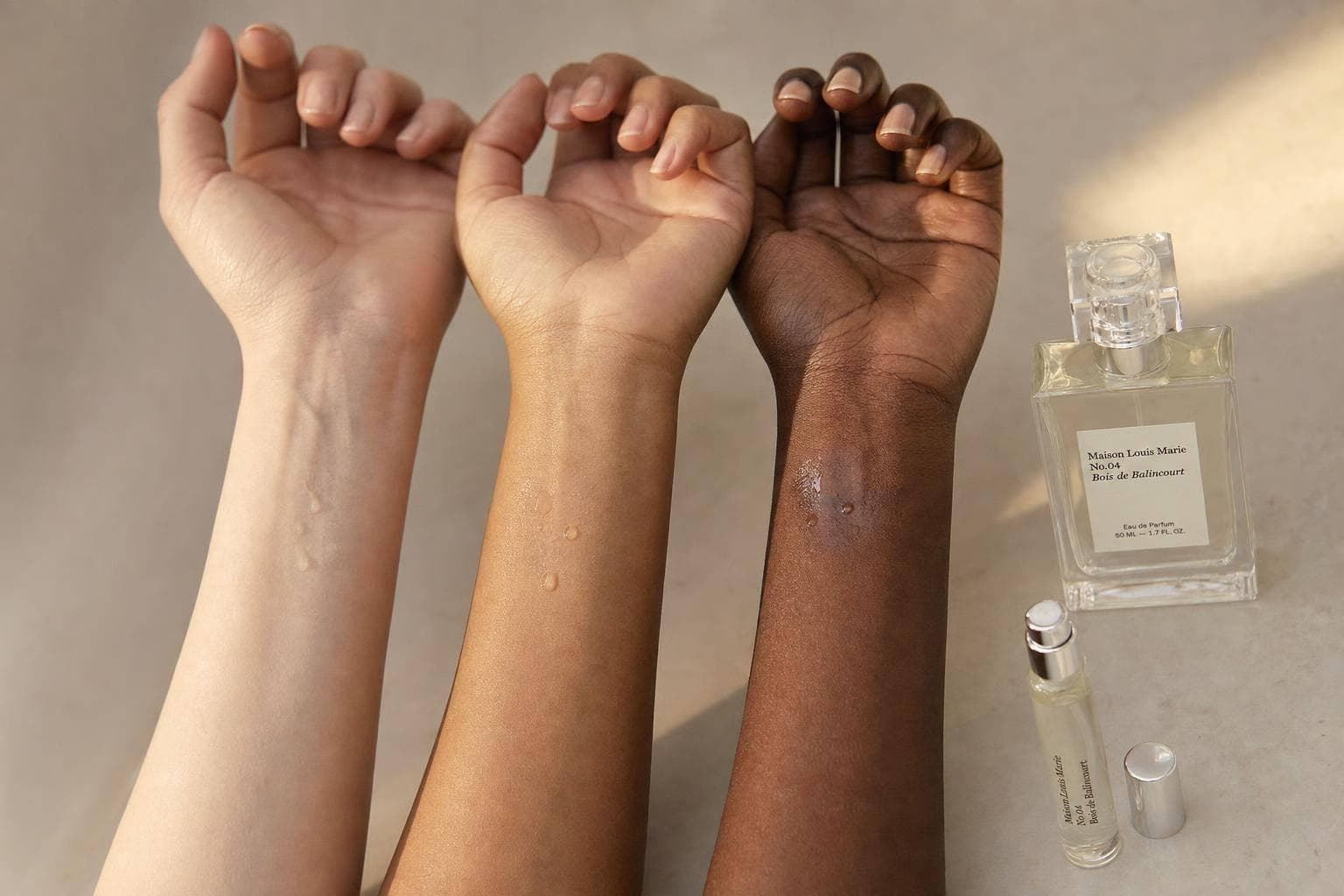
La risposta breve: lo stesso profumo può avere un odore diverso su di te perché la tua pelle ne modifica l’evoluzione, e il tuo naso cambia ciò che percepisci.
Prima di spendere 150 €-300 € per un flacone, proverei qualsiasi fragranza sulla pelle, non solo sulla mouillette. Fattori come sebo, idratazione, calore corporeo, batteri, clima, ormoni e persino memoria possono modificare il modo in cui un profumo si apre, dura e svanisce.
Ecco l’idea essenziale, in termini semplici:
- La pelle secca spesso fa svanire il profumo più rapidamente.
- La pelle più oleosa può farlo durare più a lungo.
- Il clima caldo o la pelle calda possono rendere una fragranza più intensa, ma ridurne la durata.
- L’aria fredda e secca può attenuarne la scia.
- I batteri cutanei e il pH possono modificare il fondo.
- Geni e memoria olfattiva influenzano ciò che senti e se ti piace.
Se desidero una prova accurata, vaporizzo sulla pelle pulita, aspetto 10 minuti, ricontrollo dopo 30-60 minuti e poi ancora dopo 4-8 ore. Questo mi dice molto più di quanto possa fare una striscia di carta.
Quick comparison
| Fattore | Cosa può fare |
|---|---|
| Sebo cutaneo | Aiuta la fragranza a rimanere più a lungo sulla pelle |
| Pelle secca | Può far svanire rapidamente le note di testa |
| Calore corporeo | Può aumentare la proiezione del profumo e farlo evaporare prima |
| Batteri cutanei | Possono modificare il fondo nel tempo |
| Stagione e clima | L’inverno può ammorbidire la fragranza; l’estate può farla percepire più intensa |
| Genetica e memoria | Modificano ciò che noti e quanto piacevole ti appare |
Quindi, se un profumo risulta morbido e vellutato su una persona ma pungente o debole su un’altra, è normale. Il flacone resta lo stesso. Chi lo indossa no.
Cosa cambia un profumo sulla tua pelle
I principali fattori in gioco sono sebo, idratazione, pH, temperatura e batteri cutanei.
Come tipo di pelle, idratazione e sebo influenzano intensità e durata
Il profumo si comporta in modo diverso su ogni persona perché la chimica della pelle ne modifica la velocità di evaporazione. Il sebo, l’olio naturale della pelle, rallenta questa evaporazione e aiuta la fragranza a restare più a lungo. Sulla pelle oleosa, una fragranza dura spesso diverse ore in più rispetto alla pelle secca.
La pelle secca si comporta diversamente. Le molecole odorose restano più vicine alla superficie, quindi evaporano più in fretta. Le note di testa come agrumi, fiori leggeri e accordi freschi d’apertura di solito scompaiono per prime, lasciando talvolta la fragranza più sottile o leggermente più tagliente dopo un po’.
Una soluzione semplice è usare una crema idratante non profumata prima di vaporizzare. Applicala su polsi, collo e interno dei gomiti circa 10-15 minuti prima. Quell’idratazione extra può aiutare a prolungare la tenuta in modo evidente.
Una volta avviata l’evaporazione, pH e batteri cutanei iniziano a modellare il fondo.
Come pH della pelle, microbioma e temperatura corporea modellano il fondo
Il pH della pelle conta, ma meno del sebo, del microbioma e della temperatura. Anche così, può comunque influenzare la rapidità con cui le note di testa si aprono e svaniscono. Una pelle sana è solitamente leggermente acida, spesso intorno a un pH compreso tra 4,5 e 5,5.
Il fondo è la fase successiva alla scomparsa delle note di testa, ed è di solito il momento in cui la chimica personale della pelle emerge con maggiore chiarezza. I batteri cutanei metabolizzano i composti della fragranza mentre si depositano, spiegando perché lo stesso profumo può risultare molto diverso su due persone qualche ora più tardi.
Anche il calore corporeo cambia il quadro. La pelle calda accelera l’evaporazione, e i punti di pulsazione caldi possono far proiettare di più una fragranza, accorciandone però la durata. I profumi ricchi, costruiti su note di fondo importanti, di solito gestiscono meglio il calore rispetto alle composizioni leggere e agrumate.
Come ormoni, alimentazione, farmaci e stagione modificano il comportamento del profumo
Il tuo profilo olfattivo non resta fisso. Stress, cambiamenti ormonali, alimentazione e alcuni farmaci possono tutti modificare sudore, sebo e il modo in cui una fragranza evolve sulla pelle. Con l’età, anche la produzione di sebo tende spesso a diminuire, il che può ridurre la longevità e ammorbidire la proiezione se la pelle non è ben idratata.
In Germania, le stagioni fanno una differenza evidente. L’aria fredda e secca dell’inverno spesso attenua la proiezione, mentre il caldo umido dell’estate può rendere le fragranze più intense e trasformare i profumi più opulenti in qualcosa di eccessivo, troppo rapidamente. Un orientale importante o un gourmand che in inverno appare equilibrato può diventare sovrastante con il caldo estivo.
La chimica della pelle cambia il profumo sulla tua pelle; la percezione cambia ciò che il tuo naso nota.
Il tuo esperto di profumi personale ti aspetta
Fai il nostro veloce quiz olfattivo per scoprire autentici profumi di design e di nicchia scelti in base ai tuoi gusti: esplorali in decant e campioni da 2, 5, 8 e 30 ml, così puoi provarne ognuno prima di scegliere il flacone intero.
Trova il tuo profumoPerché due persone possono percepire la stessa fragranza in modo diverso
La chimica della pelle può modificare il modo in cui una fragranza si indossa. Ma questa è solo una parte della storia. Anche i tuoi geni e la tua memoria modellano ciò che senti e ciò che provi al riguardo.
Come genetica e recettori olfattivi influenzano ciò che il tuo naso coglie
La genetica svolge un ruolo importante nel modo in cui i recettori olfattivi reagiscono alle molecole aromatiche. Per questo due persone possono sentire lo stesso profumo e concentrarsi su aspetti diversi.
Una persona può cogliere subito una nota, mentre un’altra la percepisce appena. Sulla pelle, questo può far sembrare la stessa fragranza più intensa, più morbida o semplicemente meno definita da una persona all’altra.
Le nostre statistiche sull’olfatto raccolgono i numeri pubblicati su geni dei recettori, perdita dell’olfatto e memoria olfattiva.
Come memoria olfattiva e abitudini personali determinano se una fragranza risulta piacevole
Anche la memoria conta. Una nota legata a un bel ricordo può apparire piacevole e rassicurante. La stessa identica nota può risultare sgradevole se riporta alla mente un’associazione negativa.
Ecco perché la prova sulla pelle resta fondamentale. Una fragranza non riguarda solo la formula nel flacone. Riguarda anche il modo in cui tu la percepisci, e il modo in cui la tua mente le risponde.
Come trovare profumi che si armonizzano con la tua chimica corporea
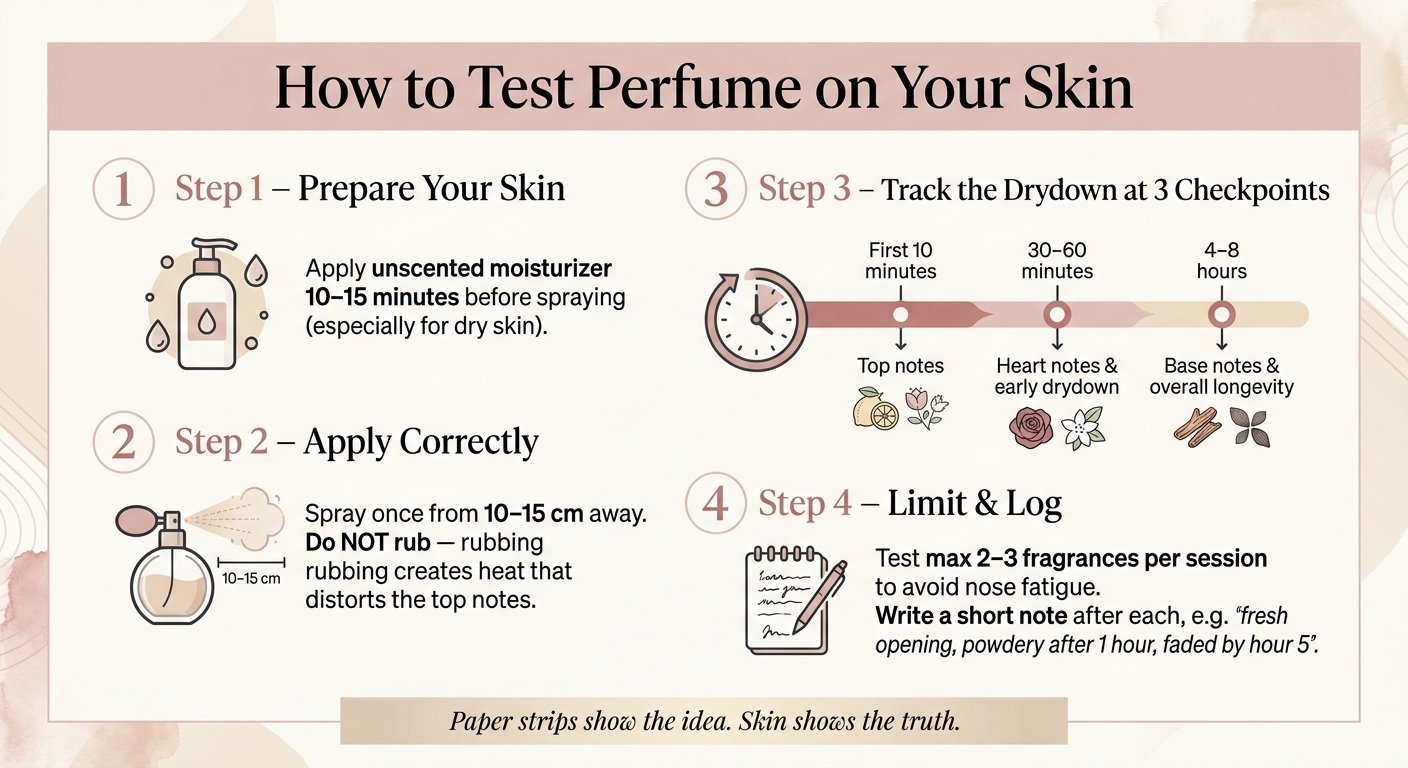
Come testare il profumo sulla pelle: una guida passo passo
Una volta capito perché il profumo cambia sulla pelle, il passo successivo è semplice: provarlo in condizioni d’uso normali.
Provalo sulla pelle, non sulla carta
Una mouillette ti dà un’idea generale dello stile di una fragranza. Ma ti dice molto poco su come profumerà su di te. La pelle è il luogo della vera prova. La carta mostra l’idea; la pelle mostra il risultato.
Vaporizza una volta sulla pelle pulita da una distanza di 10-15 cm. Non strofinare. Strofinare crea attrito e calore, che possono alterare le note di testa e rendere l’apertura più pungente o farla sparire prima del previsto.
Poi osserva la fragranza in tre momenti:
- Primi 10 minuti: note di testa
- Intorno ai 30-60 minuti: cuore e primo fondo
- Di nuovo dopo 4-8 ore: note di fondo e durata complessiva
Quest’ultimo controllo è il più importante se vuoi capire come la tua pelle gestisce la base.
Limitati a 2–3 fragranze per sessione. Se sono di più, il naso inizia ad affaticarsi. Quando succede, tutto si confonde. Prendere un breve appunto dopo ogni prova è molto utile. Basta qualcosa come "apertura fresca, talcata dopo 1 ora, svanita dopo 5 ore". Col tempo, questi appunti ti aiutano a individuare più facilmente gli schemi e inizierai a capire quali famiglie olfattive si adattano più spesso alla tua pelle.
Ciò che impari qui dovrebbe guidare anche la quantità da vaporizzare.
Adatta l’applicazione del profumo al tipo di pelle e al clima
Dopo la prova, regola la dose in base alla tua pelle e al tempo.
- Pelle secca: Applica una crema idratante non profumata 10-15 minuti prima di vaporizzare, per aiutare la fragranza a durare più a lungo.
- Pelle oleosa: Usa 1-2 spruzzi invece di 3-4. In molti casi, meno funziona meglio.
- Giornate calde (intorno ai 25-30 °C): Scegli composizioni più fresche, come agrumate, acquatiche o floreali leggere, e vaporizza con moderazione.
- Mesi più freddi di autunno e inverno: Legni più ricchi, ambre e gourmand si accordano bene con i mesi più freschi della Germania. Puoi applicarne un po’ di più, per esempio uno spruzzo extra sul petto sotto i vestiti.
Prova un campione prima di acquistare un flacone intero
Anche dopo una prova accurata in boutique, una fragranza può risultare molto diversa nell’arco di un’intera giornata in condizioni normali. La chimica corporea può modificare il modo in cui un profumo si sviluppa. Per questo un decant più piccolo è spesso il primo passo più intelligente. Ti dà il tempo di indossare la fragranza per diversi giorni e con climi differenti prima di decidere.
Scento offre decant da 2 ml, 5 ml e 8 ml, e un decant in flacone da 30 ml per la maggior parte dei profumi per test di durata più approfonditi.
Un breve campione può dirti molto più di una rapida prova in negozio.
Conclusione: cosa tenere a mente prima di acquistare il tuo prossimo profumo
Quando provi una fragranza sulla pelle e la vivi per un’intera giornata, una cosa diventa evidente: il profumo è profondamente personale.
La stessa fragranza può avere un odore diverso da una persona all’altra perché la chimica della pelle cambia il modo in cui si apre, si posa e svanisce. E quel primo spruzzo? Non racconta sempre tutta la storia. A volte una fragranza ha bisogno di qualche ora sulla pelle prima che emerga il suo vero carattere.
Ecco perché un piccolo decant ha così tanto senso prima di spendere di più per un flacone intero. Scento offre decant da 2 ml, 5 ml e 8 ml, e un decant in flacone da 30 ml per la maggior parte dei profumi, dandoti la possibilità di indossare una fragranza per diversi giorni e in situazioni diverse prima di decidere.
Punti chiave in sintesi
- Il tipo di pelle influisce sulla longevità: La pelle secca assorbe la fragranza più rapidamente, mentre la pelle oleosa o ben idratata tende a trattenere il profumo più a lungo.
- La percezione è individuale: Genetica e differenze olfattive fanno sì che due persone possano vivere la stessa fragranza in modi diversi.
- Il clima cambia le prestazioni del profumo: Una fragranza che sembra perfetta in estate può comportarsi in modo molto diverso durante un inverno tedesco.
La scelta migliore non è quella che profuma bene nel flacone. È quella che, dopo ore sulla tua pelle, continua a sembrarti giusta.
Domande frequenti
Lo stesso profumo può avere un odore diverso su di me da un giorno all’altro?
Sì. Lo stesso profumo può risultare leggermente diverso su di te da un giorno all’altro perché reagisce con la chimica della tua pelle, inclusi oli naturali, livello di pH e temperatura corporea.
Questi elementi non restano fissi. Possono cambiare con alimentazione, ormoni o ambiente, il che significa che la fragranza può aprirsi, posarsi ed evolvere in modo diverso. Il caldo, l’umidità e persino come ti senti quel giorno o dove stai andando possono influenzare il modo in cui percepisci il profumo.
Dove dovrei vaporizzare il profumo per testarlo correttamente?
Applicalo sui tuoi punti di pulsazione invece che su una striscia di carta, come polsi o interno dei gomiti. In questo modo puoi vedere come la fragranza si sviluppa con la tua personale chimica cutanea.
Poi lasciale circa 30 minuti per assestarsi prima di decidere cosa ne pensi. È utile anche indossarla in diversi momenti della giornata e in contesti differenti, così da avere un’idea chiara della sua longevità e proiezione.
Quante volte dovrei indossare un campione prima di acquistare un flacone intero?
Non esiste un numero fisso. Dipende da quanto conosci già i tuoi gusti.
Per molte persone, due settimane sono una buona finestra di prova. Ti danno abbastanza tempo per vedere come una fragranza si comporta sulla tua pelle, come cambia durante la giornata e se si adatta alla tua routine.
Un decant da 2 ml di solito offre circa 25-30 spruzzi, sufficienti per diversi utilizzi completi. Se desideri un po’ più di tempo, un decant da 8 ml offre circa 120-140 spruzzi. Può coprire fino a 30 giorni di uso quotidiano.

