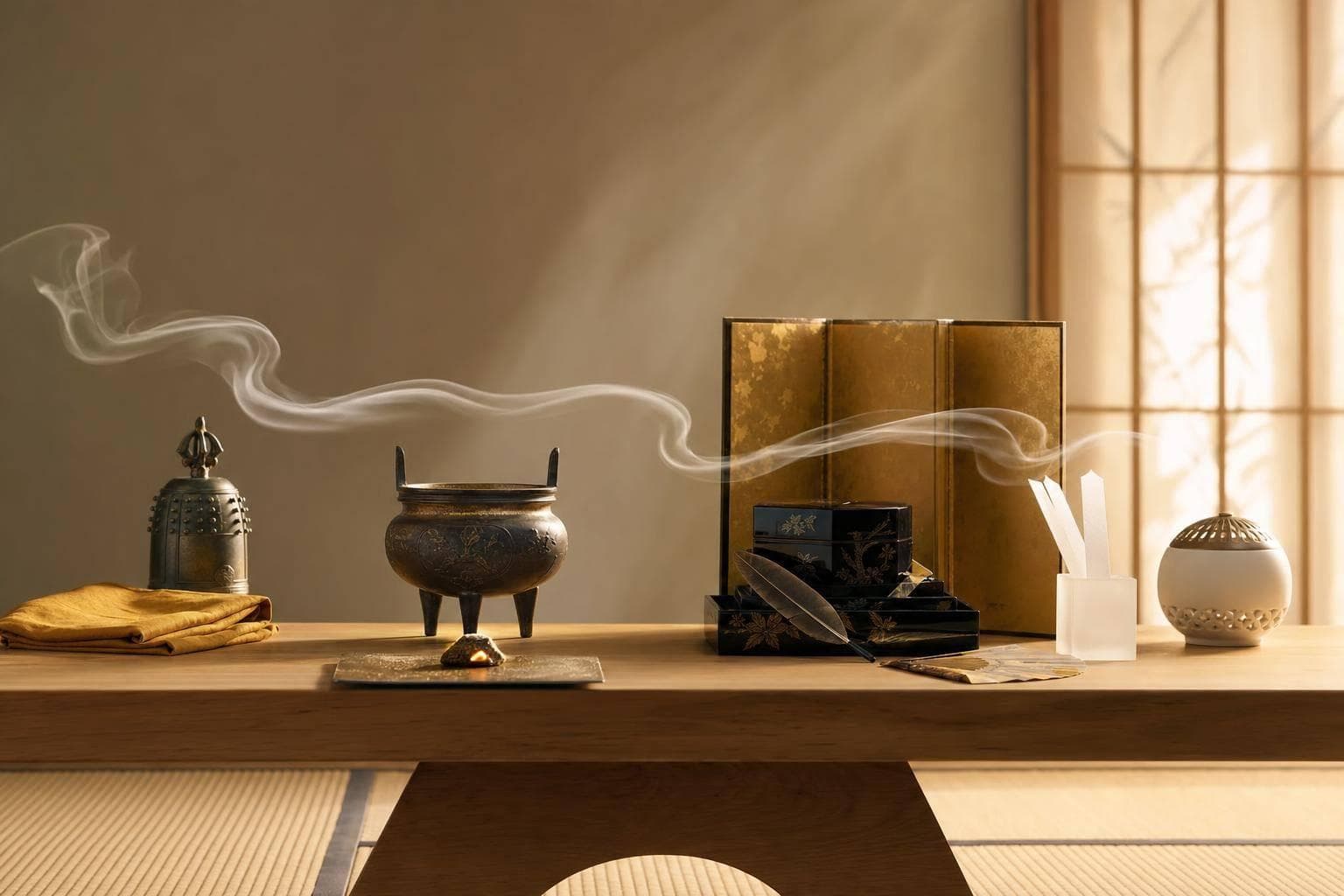
Kōdō to japońska sztuka „słuchania” kadzidła, a nie tylko jego wąchania. Jej historię można podsumować następująco: narodziła się w buddyjskich rytuałach i życiu dworskim, przybrała formę sformalizowanej praktyki w okresie Muromachi (1336–1573), a w późniejszym czasie ukształtowała literaturę, przedmioty codziennego użytku oraz pojmowanie piękna w całej Japonii.
Oto najważniejsze zagadnienia w skrócie:
- Wszystko zaczęło się od kadzidła sprowadzanego szlakami handlowymi wraz z buddyzmem
- Praktyka przeniosła się ze świątyń do elitarnego życia dworskiego
- Przekształciła się w sformalizowaną sztukę skupioną wokół drewna agarowego, w szczególności jinkō oraz kyara
- Wpłynęła na poezję, dzienniki, wyroby z laku, ceramikę i ubiór
- Jest ściśle powiązana z takimi koncepcjami, jak wabi-sabi oraz yūgen
- Pozostaje ważna do dziś, ponieważ uczy powolnego, uważnego obcowania z zapachem
Jeden fakt zasługuje na szczególną uwagę: historia ta obejmuje ponad 1000 lat, od okresu Nara (710–794) aż po współczesność. Przez cały ten długi czas fundamentalna idea pozostała niezmienna: zapach może być dyskretny, ulotny, a mimo to pozostawiać głęboki ślad.
Właśnie dlatego kōdō wciąż zasługuje na uwagę we współczesnej sztuce i perfumiarstwie.
Quick overview
| Okres | Główna przemiana |
|---|---|
| Nara (710–794) | Kadzidło dociera do Japonii poprzez religię i handel |
| Heian (794–1185) | Zapach staje się elementem życia dworskiego i literatury |
| Muromachi (1336–1573) | Kōdō nabiera kształtu jako sformalizowana praktyka |
| Od Momoyama do Edo | Zasady, materiały i gry zapachowe stają się bardziej zdefiniowane |
| Współczesność | Tradycyjne szkoły podtrzymują żywą praktykę |
Poniżej przedstawiamy krótkie spojrzenie na to, jak kōdō przekształciło się z rytuału w wyrafinowaną sztukę oraz jak jego subtelna estetyka wpłynęła na japońską sztukę i kanony piękna.
Jak Kōdō wyrosło z tradycji dworskiej, świątynnej i handlowej
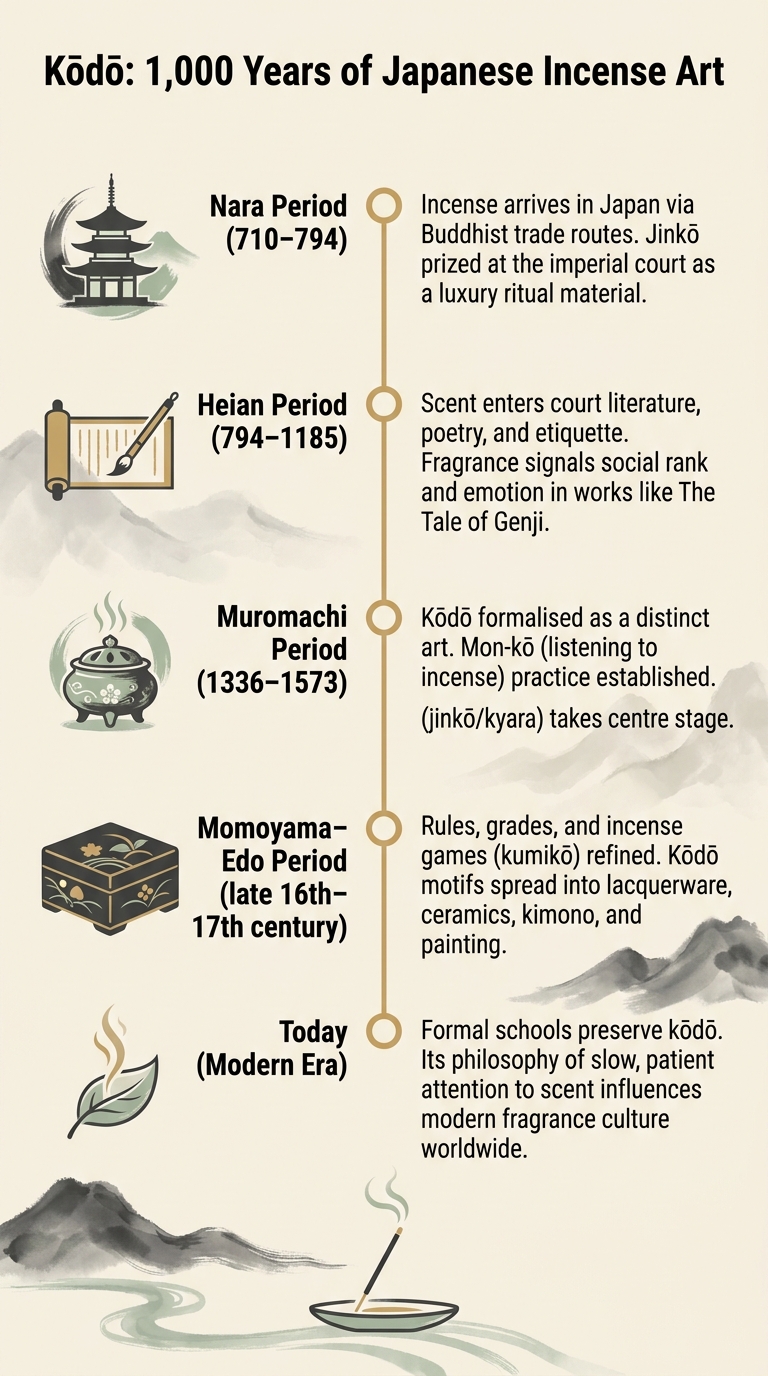
Kōdō: 1000 lat japońskiej sztuki kadzidła
Wczesne użycie kadzidła w religii i na dworze cesarskim
Kadzidło dotarło do Japonii azjatyckimi szlakami handlowymi wraz z buddyzmem. Najpierw zakorzeniło się w ceremoniach świątynnych, by następnie przeniknąć do życia na dworze cesarskim. W okresie Nara (710–794) jinkō było niezwykle cenione przez arystokrację. Kadzidło wiązało się już wtedy z wyrafinowaniem, rytuałem i prestiżem. Stamtąd wyszło poza ramy kultu religijnego i weszło do elitarnego życia towarzyskiego.
Od swobodnej kontemplacji do formalnej ceremonii
W okresie Heian obecność kadzidła na dworze stała się bardziej wyrazistym elementem codziennej kultury. Zapach pojawiał się w poezji, dziennikach i etykiecie dworskiej, co świadczy o tym, jak głęboko przeniknął życie arystokracji. W okresie Muromachi (1336–1573) kontemplacja aromatów została sformalizowana. Zaczęto praktykować mon-kō, czyli „słuchanie kadzidła”. To moment, w którym palenie kadzidła przekształciło się w kōdō.
Kluczowe momenty zwrotne w rozwoju Kōdō
| Epoka | Kluczowe osiągnięcie |
|---|---|
| Okres Nara (710–794) | Kadzidło dociera wraz z buddyzmem i zyskuje status luksusowego surowca na dworze |
| Okres Heian (794–1185) | Kadzidło staje się integralną częścią kultury dworskiej i literatury |
| Okres Muromachi (1336–1573) | Docenianie kadzidła przyjmuje sformalizowaną postać |
| Okres Momoyama–Edo (koniec 16.–17. wieku) | Kōdō nadal dojrzewało jako uznana sztuka delektowania się zapachem |
Ta kodyfikacja stworzyła fundament pod dobór gatunków drewna, narzędzi i gier, które zaczęły definiować praktykę kōdō.
Twój osobisty ekspert od zapachów już czeka
Wypełnij nasz szybki quiz zapachowy i odkryj autentyczne perfumy designerskie i niszowe dobrane do Twojego gustu – poznaj je w postaci dekantów i próbek 2, 5, 8 i 30 ml, aby przetestować każdy z nich, zanim zdecydujesz się na pełny flakon.
Znajdź swój zapachMateriały, narzędzia i gry zapachowe w sercu Kōdō
Kyara, Jinkō i inne gatunki drewna aromatycznego
W miarę jak sztuka kōdō stawała się coraz bardziej sformalizowana, punkt ciężkości przesunął się z kadzidła jako przedmiotu rytualnego ku kadzidłu jako surowcowi samemu w sobie. W centrum kōdō znajduje się jinkō, a kyara uznawana jest za jego najszlachetniejszą odmianę.
Kyara to najrzadsza i najbardziej pożądana postać jinkō. Kiedy kōdō stało się sztuką formalną, samo drewno zajęło centralne miejsce. W tradycji kōdō dany fragment ocenia się przez pryzmat jego rzadkości, pochodzenia i klasy, a cechy te determinują sposób jego percepcji.
Narzędzia służące do podgrzewania i kontemplacji kadzidła
Kōdō opiera się na precyzyjnej kontroli: drewno jest podgrzewane, a nie spalane. Delikatne ciepło uwalnia zapach bez przypalania włókien, a nawet niewielkie wahania temperatury zmieniają sposób, w jaki rozwija się aromat.
Tak uważne podejście prowadzi wprost do kumikō – ceremonii, w której uczestnicy rozpoznają zapachy poprzez pamięć olfaktoryczną i porównywanie kompozycji.
Jak Kōdō ukształtowało japońską sztukę, literaturę i myśl estetyczną
Kadzidło w poezji, dziennikach i literaturze dworskiej
Gdy kōdō zyskało wyraziste ramy, jego terminologia przeniknęła do literatury i sztuki. Klasyczni pisarze posługiwali się zapachem, by ukazać elegancję, emocje oraz pozycję społeczną. W dziele The Tale of Genji woń jest ściśle spleciona z nastrojem, pamięcią i statusem, co dowodzi, jak istotną rolę odgrywał zapach w życiu arystokracji.
Aromat nie był traktowany jako dominujący akcent. Działał raczej jak ledwie wyczuwalny ślad w powietrzu, sugerując charakter i emocje bez dosłowności. To subtelne, aluzyjne operowanie zapachem doskonale współgrało z poezją dworską, pamiętnikami i prozą, w których drobne gesty miały zazwyczaj największe znaczenie.
Ta sama powściągliwość ukształtowała również kulturę wizualną.
Motywy kadzidła w malarstwie, lace i rzemiośle artystycznym
Kōdō wpłynęło na sztuki wizualne i dekoracyjne poprzez motywy kadzideł obecne w malarstwie, wyrobach z laku, ceramice i zdobieniach kimon, przekształcając zapach w język wzornictwa kojarzony z wyrafinowaniem. Aromat wykroczył poza ramy ceremonii, stając się częścią przedmiotów, wnętrz i codziennego otoczenia.
Widać tu wyraźną ewolucję: kadzidło przestało być wyłącznie doznaniem zarezerwowanym dla przestrzeni rytuału. Stało się także ideą wyrażaną poprzez wzór, fakturę i formę. Puzdro z laku, naczynie ceramiczne czy deseń tkaniny mogły emanować tym samym dostojeństwem, które ceniono w kōdō.
Oprócz przedmiotów materialnych, kōdō wpłynęło również na japońską definicję piękna.
Wabi-Sabi, Yūgen i koncepcja dyskretnego aromatu
Kōdō odzwierciedla idee wabi-sabi i yūgen poprzez subtelność, powściągliwość i nietrwałość. Spokojne skupienie towarzyszące tej sztuce pomaga zrozumieć, dlaczego zapach zajmuje tak istotne miejsce w japońskiej myśli estetycznej.
Sens nie tkwi w nadmiarze, lecz w uważności. Ulotny aromat, uchwycony tylko przez chwilę i znikający, doskonale wpisuje się w kanony piękna ceniące niedopowiedzenie ponad ostentację oraz przemijające doświadczenie ponad trwałość. Nurt ten pozostaje żywy w kōdō do dziś.
Kōdō współcześnie i jego miejsce w nowoczesnej kulturze zapachu
Kōdō we współczesnej Japonii
Ten sam rygor wciąż definiuje sposób praktykowania kōdō. W Japonii pozostaje ono żywą sztuką, podtrzymywaną przez tradycyjne szkoły i stowarzyszenia dbające o zachowanie dziedzictwa. Skupienie na szlachetnych surowcach i głęboka kontemplacja nieustannie wyznaczają sposób, w jaki adepci poznają i doświadczają tej sztuki.
Czego Kōdō może nauczyć współczesnych koneserów perfum
U swej istoty kōdō uczy cierpliwości. Zamiast poszukiwać głośnych, dominujących kompozycji, zachęca do dostrzegania drobnych niuansów. Trenuje zmysły w śledzeniu tego, jak zapach się rozwija, ewoluuje w czasie i subtelnie przekazuje emocje, bez narzucania swojej obecności.
Ten sam sposób „słuchania” może odmienić podejście do współczesnego perfumiarstwa. Odkrywanie zapachów przestaje polegać na pobieżnym teście z atomizera, a staje się procesem obcowania z kompozycją na przestrzeni czasu. Taka cierpliwość doskonale sprawdza się również przy wyborze nowych perfum: fiolki Scento 2 ml, 5 ml i 8 ml, a przy większości perfum także odlewka we flakonie 30 ml, pozwalają wypróbować zapach w codziennym życiu przed podjęciem decyzji o zakupie całego flakonu.
Podsumowanie: Dlaczego Kōdō wciąż ma znaczenie w sztuce i kulturze
Kōdō zachowuje swoją aktualność, ponieważ traktuje zapach jako coś, w co należy się wsłuchać z cierpliwością, subtelnością i pełną uwagą.
Często zadawane pytania
Dlaczego w tradycji kōdō mówi się o „słuchaniu” kadzidła?
W kōdō używa się określenia „słuchanie” kadzidła, ponieważ doświadczenie to wykracza daleko poza zwykłe wąchanie. To wyciszająca, immersyjna praktyka, podczas której aromat odbiera się powoli i świadomie, dostrzegając drobne zmiany i finezyjne niuanse kompozycji.
Ten spokojny, pełen skupienia sposób obcowania z zapachem sprawia, że jest on postrzegany z najwyższą troską i rozumiany na głębszym poziomie. Właśnie to przekształca zwykłą chwilę w prawdziwą formę sztuki.
Jaka jest różnica między jinkō a kyara?
W tradycji kōdō jinkō to ogólne określenie najwyższej próby drewna agarowego stosowanego do kontemplacji kadzideł.
Kyara stanowi absolutny szczyt tej hierarchii. To najrzadszy i najbardziej ceniony gatunek, wyróżniający się głębszą złożonością aromatyczną oraz wyjątkową unikatowością.
Jak osoby początkujące mogą dziś doświadczyć kōdō?
Początkujący mogą zbliżyć się do kōdō poprzez spokojną, niespieszną kontemplację aromatów. Warto potraktować to jako intymny rytuał: daj sobie czas, skup uwagę i obserwuj, jak zapach ewoluuje w miarę upływu czasu, zamiast poprzestawać na jednym szybkim wdechu.
Osobom poszukującym nowoczesnego, niezobowiązującego sposobu na poznanie niuansów inspirowanych duchem kōdō, quiz AI przygotowany przez markę Scento pomoże odnaleźć właściwy kierunek. Starannie dobrane odlewki i próbki w fiolkach 2 ml, 5 ml i 8 ml, a przy większości perfum także w odlewce we flakonie 30 ml ułatwiają przetestowanie zapachu bezpośrednio na skórze przed zainwestowaniem w pełnowymiarowy flakon.

