Większość osób nie musi ponawiać aplikacji perfum tak często, jak im się wydaje. W wielu przypadkach odświeżenie zapachu w ciągu dnia wymaga zaledwie 1 psiknięcia, a niekiedy woń wciąż trwa, tyle że my przestajemy ją wyczuwać.
Oto moje najważniejsze zasady w skrócie:
- Ponowną aplikację traktuję jako drobne odświeżenie, a nie powtórzenie całego rytuału
- Zanim sięgnę po flakon, sprawdzam, czy zapach rzeczywiście wyblakł
- O kolejnym kroku decydują pora dnia, kondycja skóry, pogoda oraz intensywność kompozycji
- Dbam o to, by ponowna aplikacja była dyskretna i intymna, szczególnie w pracy
- Unikam perfumowania się w autobusach, pociągach i tramwajach
Kilka liczb pozwala spojrzeć na to z właściwej perspektywy:
- Parfum / Extrait: utrzymuje się zazwyczaj przez 8–12+ godzin
- EdP: utrzymuje się zazwyczaj przez 6–8+ godzin
- EdT: utrzymuje się zazwyczaj przez 4–6 godzin
- EdC: utrzymuje się zazwyczaj przez 1–4 godziny
- Zjawisko adaptacji węchowej może pojawić się już po około 15–30 minutach
Jeśli zapach został zaaplikowany o 07:30, odświeżenie o 13:00 powinno ograniczyć się maksymalnie do 1 psiknięcia na klatkę piersiową, szyję lub nadgarstek. Wysoka temperatura potrafi skrócić trwałość aromatu. Sucha skóra działa podobnie. Z kolei balsam nawilżający nałożony pod perfumy pozwala wydłużyć ich projekcję.
| Rodzaj zapachu | Zwykła trwałość | Popołudniowe odświeżenie |
|---|---|---|
| Parfum / Extrait | 8–12+ godzin | Zazwyczaj zbędne |
| EdP | 6–8+ godzin | 1 psiknięcie po 4–6 godzinach |
| EdT | 4–6 godzin | 1 psiknięcie po 3–4 godzinach |
| EdC | 1–4 godziny | 1 psiknięcie co 2–3 godziny w razie potrzeby |
Moja zasada: jeśli otoczenie wciąż wyczuwa zapach z bliska, nie sięgam po flakon. Dzięki temu kompozycja pozostaje intymna, czysta i taktowna.
Poniżej wyjaśniam, kiedy ponawiać aplikację, które punkty na ciele wybrać, co warto mieć przy sobie i jak odświeżyć zapach, nie naruszając strefy komfortu innych osób.
Why some fragrances fade faster than others
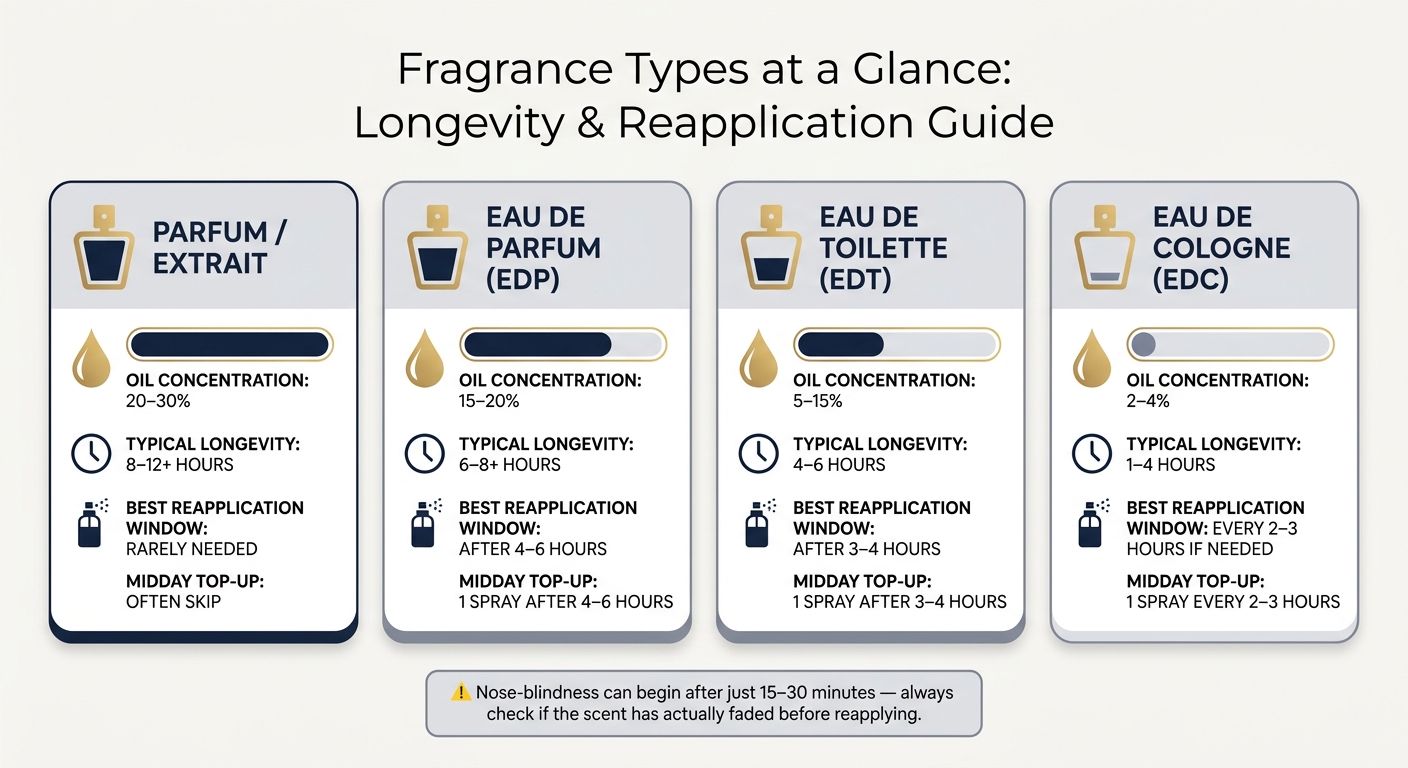
Fragrance Types: Longevity, Concentration & Reapplication Guide
Koncentracja zapachu a trwałość poszczególnych kompozycji
Trwałość zależy przede wszystkim od jednego czynnika: stężenia olejków zapachowych. Oznacza ono procentowy udział esencji zapachowej w całej formule. Mówiąc najprościej: im wyższe stężenie olejków, tym dłużej kompozycja utrzymuje się na skórze.
| Rodzaj zapachu | Stężenie olejków | Typowa trwałość |
|---|---|---|
| Parfum / Extrait | 20–30% | 8–12+ godzin |
| Eau de Parfum (EdP) | 15–20% | 6–8+ godzin |
| Eau de Toilette (EdT) | 5–15% | 4–6 godzin |
| Eau de Cologne (EdC) | 2–4% | 1–4 godziny |
Ta różnica staje się wyraźnie widoczna w codziennym użytkowaniu. EdC zaaplikowana o 07:30 może być ledwie wyczuwalna już o 09:30, podczas gdy czyste perfumy potrafią trwać na skórze aż do wieczora. Dlatego ponowna aplikacja powinna wynikać z rodzaju zapachu, a nie wyłącznie ze spojrzenia na zegarek.
Wpływ nut zapachowych, typu skóry i aury na trwałość
Nie wszystkie kompozycje ulatniają się w tym samym tempie. Świeże cytrusy oraz inne kompozycje zdominowane przez nuty głowy ulatują najszybciej. Nuty drzewne, ambra, żywice i bazy gourmand trwają znacznie dłużej. Ma to kluczowe znaczenie, ponieważ zapach może sprawiać wrażenie „nieobecnego”, gdy tylko wybrzmi jego musujące otwarcie – mimo że nuty bazy wciąż pracują na skórze.
Ogromną rolę odgrywa również sama skóra. Na suchej skórze zapach gaśnie szybciej, podczas gdy skóra dobrze nawilżona lub naturalnie bardziej tłusta znacznie lepiej zatrzymuje molekuły aromatyczne. Prostym i niezwykle skutecznym rozwiązaniem jest nałożenie bezzapachowego balsamu na punkty tętna przed rozpyleniem perfum.
Aura również dyktuje warunki. Ciepło przyspiesza parowanie, natomiast chłodne powietrze spowalnia ten proces. W upalny letni dzień jedno drobne psiknięcie odświeżające przyniesie o wiele lepszy efekt niż ponowna aplikacja pełnej dawki zapachu.
Zrozumienie czynników wpływających na ulatnianie się aromatu pozwala łatwo odróżnić kompozycję, która rzeczywiście wymaga odświeżenia, od tej, która po prostu przeszła w bardziej intymną fazę.
Adaptacja węchowa a faktyczne gaśnięcie zapachu
Zdarza się, że zapach wcale nie osłabł. Zmęczenie węchowe, powszechnie zwane adaptacją, potrafi sprawić, że przestajemy wyraźnie rejestrować kompozycję już po 15–30 minutach, podczas gdy otoczenie nadal doskonale ją czuje. Właśnie w ten sposób najłatwiej przesadzić z ilością perfum.
Wrażenie, że zapach zniknął, bywa złudne. I jest to najważniejszy powód, by nie ponawiać aplikacji zbyt pochopnie.
Warto zastosować prosty test: zaaplikować zapach na nadgarstek lub zgięcie łokcia, a następnie zapytać kogoś znajdującego się w standardowej odległości rozmowy, czy wciąż wyczuwa aromat.
Jeśli nuty są obecne, dajmy im czas. Jeśli kompozycja rzeczywiście wyblakła, kolejna część podpowiada, jak ją odświeżyć z nienaganną klasą.
Jak odświeżyć zapach z wyczuciem
Kiedy ponawiać aplikację w zależności od koncentracji
Niech to rodzaj zapachu, a nie wskazówki zegara, wyznacza rytm. Czyste perfumy niemal nigdy nie wymagają ponownej aplikacji. Eau de Parfum (EdP) doskonale reaguje na subtelne odświeżenie po 4–6 godzinach, Eau de Toilette (EdT) po 3–4 godzinach, a Eau de Cologne (EdC) – w cieplejsze dni – co 2–3 godziny, jeśli zajdzie taka potrzeba. Chłód może nieco wydłużyć te odstępy, podczas gdy wysoka temperatura zazwyczaj je skraca.
| Rodzaj zapachu | Typowa trwałość | Optymalny czas na odświeżenie |
|---|---|---|
| Parfum / Extrait | 8–12+ godzin | Rzadko potrzebne |
| Eau de Parfum (EdP) | 6–8+ godzin | Po 4–6 godzinach |
| Eau de Toilette (EdT) | 4–6 godzin | Po 3–4 godzinach |
| Eau de Cologne (EdC) | 1–4 godziny | Co 2–3 godziny w razie potrzeby |
Gdy odpowiedni moment jest już jasny, o subtelności efektu zadecyduje wybór miejsca aplikacji.
Najlepsze strefy do odświeżenia zapachu
Jeśli kompozycja potrzebuje subtelnego ożywienia, najlepiej wybrać punkty tętna, które trzymają aromat blisko ciała. Warto ograniczyć się do zaledwie jednego lub dwóch miejsc:
- Nadgarstki
- Szyja
- Miejsca za uszami
- Zgięcia łokci
- Obojczyki
Te cieplejsze punkty ciała pozwalają zapachowi wybrzmiewać w naturalny sposób, bez nadmiernego narzucania się otoczeniu.
Zimą jedno psiknięcie na klatkę piersiową lub obojczyk pod ubraniem stworzy miękką, bliskoskórną aurę. Latem idealnie sprawdzają się boki szyi oraz miejsca za uszami – rozgrzana skóra mocniej projektuje aromat, dzięki czemu wystarczy jego minimalna ilość.
Aby przedłużyć trwałość kompozycji bez konieczności zwiększania dawki, można z rozwagą sięgnąć po tkaniny. Bawełna i wełna zazwyczaj znakomicie zatrzymują woń. Lekka mgiełka rozpylona z odległości około 20–30 cm przynosi znacznie lepszy rezultat niż aplikacja ze zbyt bliska. Należy zachować szczególną ostrożność w przypadku jedwabiu, kaszmiru oraz delikatnych wełen – alkohol i niektóre składniki kompozycji zapachowych mogą spowodować odbarwienia lub uszkodzić delikatne włókna. W razie wątpliwości warto wykonać próbę na wewnętrznym szwie. Pamiętajmy też, by nie pocierać skóry po rozpyleniu perfum – niszczy to strukturę cząsteczek zapachu i może skrócić czas jego trwania.
Subtelny akcent zamiast ponownej pełnej aplikacji
Popołudniowe odświeżenie nie powinno być powtórzeniem porannej rutyny. Najlepiej ograniczyć się do połowy pierwotnej dawki lub mniej: 1–2 oszczędne psiknięcia w przypadku EdP oraz jedno mikropsiknięcie w przypadku czystych perfum. Jeśli rano użyto 2 psiknięć ekstraktu, jedno naciśnięcie atomizera podróżnego to zazwyczaj górna granica.
Zasada jest prosta: dyskretne odświeżenie, a nie budowanie nowej, ekspansywnej chmury zapachu.
Twój osobisty ekspert od zapachów już czeka
Wypełnij nasz szybki quiz zapachowy i odkryj autentyczne perfumy designerskie i niszowe dobrane do Twojego gustu – poznaj je w postaci dekantów i próbek 2, 5, 8 i 30 ml, aby przetestować każdy z nich, zanim zdecydujesz się na pełny flakon.
Znajdź swój zapachEtykieta zapachowa w pracy, wieczorem i w komunikacji miejskiej
Po opanowaniu właściwej dawki kluczowy staje się kontekst. Ilość użytych perfum ma fundamentalne znaczenie, ale miejsce, w którym ponawia się aplikację, jest równie istotne.
Jak odświeżać zapach w biurze z poszanowaniem innych
Główna reguła pozostaje niezmienna: projekcja zapachu powinna mieścić się w granicach wyciągniętej ręki – około 30–50 cm.
Najbezpieczniej zaaplikować zapach w domu przed wyjściem. Daje to wyrazistym nutom głowy czas na wyciszenie podczas drogi do pracy. Jeśli w ciągu dnia pojawi się potrzeba odświeżenia aromatu, należy zrobić to tylko raz, w toalecie lub ustronnym miejscu. Niech będzie to pojedynczy, dyskretny gest. Bezwzględnie unikajmy perfumowania się przy biurku lub w przestrzeni typu open space.
Jest to niezwykle ważne, ponieważ biura, sale konferencyjne i windy kumulują zapachy znacznie silniej niż otwarta przestrzeń. W przeciwieństwie do kawiarni czy ulicy, współpracownicy nie mogą po prostu odejść w inne miejsce.
Aplikacja przed wieczornym wyjściem, randką i wyjątkową okazją
Po godzinach pracy można pozwolić sobie na nieco więcej swobody – zachowując jednak umiar.
Wieczorne okoliczności sprzyjają nieco wyraźniejszej obecności zapachu niż środowisko biurowe, choć powściągliwość wciąż pozostaje synonimem elegancji. Najlepszym efektem jest aromat intrygujący, lecz wyczuwalny jedynie z bliskiej odległości.
Optymalny moment na odświeżenie zapachu to 30–60 minut przed wydarzeniem lub tuż przed samym wyjściem z domu. Taka przerwa pozwala kompozycji osiąść na skórze, dzięki czemu jej otwarcie staje się miękkie i harmonijne, zanim dotrzemy na miejsce. W większości przypadków wystarczy jedno wyważone psiknięcie. Jeśli poranna aplikacja była obfita, bezpieczniej zrezygnować z dokładania kolejnej warstwy i pozwolić bazie wybrzmieć do końca.
Otwarte tarasy i letnie przyjęcia w plenerze dają przestrzeń na odrobinę więcej. Gwarne restauracje i kameralne wnętrza wymagają natomiast znacznie lżejszej ręki.
Dlaczego nie należy ponawiać aplikacji w transporcie publicznym
Zamknięte środki transportu to przestrzeń wymagająca największej dyscypliny.
Pociągi, tramwaje i autobusy to ciasne miejsca, w których zapach rozchodzi się błyskawicznie, a inni pasażerowie nie mają możliwości zmiany otoczenia. Rozpylenie perfum na pokładzie – nawet najwspanialszej kompozycji – może wywołać ból głowy i dyskomfort oddechowy u osób w pobliżu. Badania naukowe nad nadwrażliwością na substancje zapachowe dowodzą, że znaczna część populacji zmaga się z bólami głowy, zaostrzeniem astmy oraz trudnościami z oddychaniem w kontakcie z intensywnymi produktami zapachowymi.
Jeśli zapach wymaga odświeżenia, najlepiej zaczekać do dotarcia do celu. Toaleta na stacji lub inne ustronne miejsce to zdecydowanie lepszy wybór, dający kompozycji czas na ułożenie się, zanim ponownie znajdziemy się wśród ludzi.
Akcesoria, rytuały i złote zasady świadomej aplikacji
Atomizery podróżne, dekanty i przemyślane odświeżanie zapachu
Najwygodniejszym sposobem na precyzyjną reaplikację jest noszenie przy sobie niewielkiego dekantu zamiast pełnowymiarowego flakonu. Podróżne atomizery, odlewki i próbki są poręczne, bezpieczne w torebce i odporne na stłuczenie. Już samo to zmienia podejście: każde psiknięcie staje się świadomym wyborem, a nie dziełem przypadku.
| Pojemność | Szacunkowa liczba psiknięć | Czas użytkowania przy 4 psiknięciach/dzień |
|---|---|---|
| 2 ml | ~20–24 | ~5–6 dni |
| 5 ml | ~50–60+ | ~12–18 dni |
| 8 ml | ~80–120 | ~20–30 dni |
Fiolka o pojemności 2 ml idealnie sprawdza się podczas krótkich testów lub kilkudniowych wyjazdów. Dekant 5 ml zapewnia pełen komfort na co dzień. Z kolei format 8 ml to doskonały wybór, gdy zapach jest już sprawdzonym elementem codzienności i chcemy mieć pod ręką zapas na kilka tygodni regularnego noszenia.
Rola Scento w przemyślanym noszeniu zapachów
W rytuale sprawdzającym się na co dzień format dekantu bywa równie istotny jak sama kompozycja zapachowa. Scento oferuje perfumy niszowe i designerskie w fiolkach 2 ml, 5 ml i 8 ml, a przy większości perfum także w odlewce we flakonie 30 ml, co pozwala bez trudu sprawdzić, jak zapach ewoluuje od rana do wieczora, oraz mieć pod ręką opcję dyskretnego odświeżenia.
To praktyczny aspekt, o którym wielu zapomina. Kompozycja może zachwycać o godzinie 08:00, lecz prawdziwym sprawdzianem jest to, jak układa się na skórze w południe, po drodze do biura, spacerze na świeżym powietrzu czy długich godzinach spędzonych w zamkniętych pomieszczeniach. Niewielki dekant pozwala to odkryć bez konieczności noszenia ze sobą ciężkiego flakonu.
Podsumowanie: zasady nienagannej kultury zapachu
Mając pod ręką odpowiedni format, cały rytuał staje się niezwykle prosty:
- Ponawiaj aplikację w oparciu o moc zapachu, typ skóry i temperaturę, a nie z samego przyzwyczajenia
- Noś przy sobie poręczny dekant, aby odświeżać woń w sposób czysty i w pełni kontrolowany
- Sprawdź stan zapachu w ciągu dnia i ponawiaj aplikację tylko wtedy, gdy rzeczywiście wyblakł
Taka postawa to esencja wyrafinowania. Zapach przestaje być dziełem przypadku. Uważność, oszczędność formy i szacunek dla kompozycji pozwalają wydobyć z wybranego aromatu to, co najpiękniejsze.
Najczęściej zadawane pytania
Skąd mam wiedzieć, czy zapach rzeczywiście wyblakł?
Oceń obecność zapachu po 30 minutach, 2 godzinach oraz 6 godzinach od aplikacji, najlepiej w neutralnym, dobrze przewietrzonym pomieszczeniu. Zwróć uwagę na to, które nuty wciąż trwają, a które zaczęły powoli cichnąć.
Jeśli kompozycja straciła swoją strukturę, nadszedł czas na delikatne odświeżenie. Czas trwania zapachu zależy od chemii skóry, temperatury ciała, wilgotności otoczenia, nawilżenia naskórka oraz samej kompozycji perfum.
Czy ponowna aplikacja powinna wyglądać inaczej latem i zimą?
Tak. Latem wyższa temperatura przyspiesza proces parowania. W efekcie zapach może początkowo wydawać się mocniejszy, by następnie szybciej wygasnąć. Może to oznaczać potrzebę częstszego, lecz bardzo oszczędnego odświeżania w ciągu dnia.
Zimą perfumy często utrzymują się dłużej, lecz projektują bliżej skóry. Suche powietrze może przyspieszać ich znikanie z naskórka, dlatego warto aplikować je na dobrze nawilżoną skórę. Rozpylenie zapachu na ubrania, na przykład wełniane szale czy swetry, również pomaga przedłużyć jego obecność.
Jaka pojemność podróżna najlepiej sprawdza się do odświeżania zapachu?
Wybór idealnego formatu zależy od częstotliwości odświeżania oraz tego, na jak długo dany zapach ma nam wystarczyć.
Dekant 2 ml doskonale sprawdza się do codziennego noszenia. Bez trudu zmieści się w kieszeni, torebce czy torbie sportowej, pozostając zawsze pod ręką.
W przypadku dłuższych podróży lub chęci posiadania większego zapasu ulubionej kompozycji idealnym wyborem będą dekanty 5 ml lub 8 ml. Oferują one znacznie więcej dozowań, pozostając w pełni zgodne z limitem 100 ml dla bagażu podręcznego.

