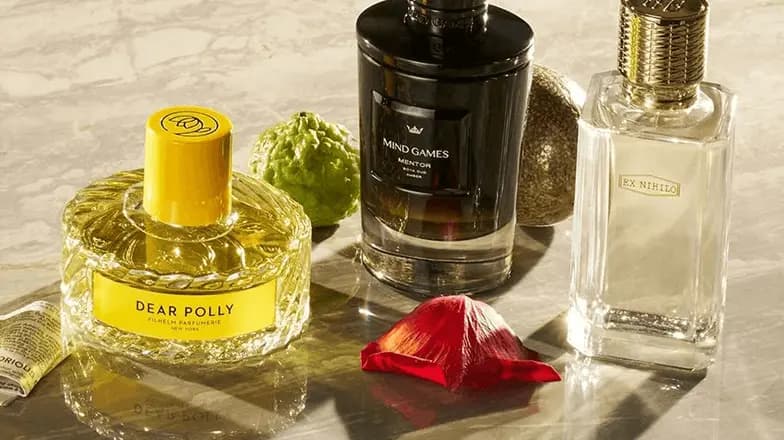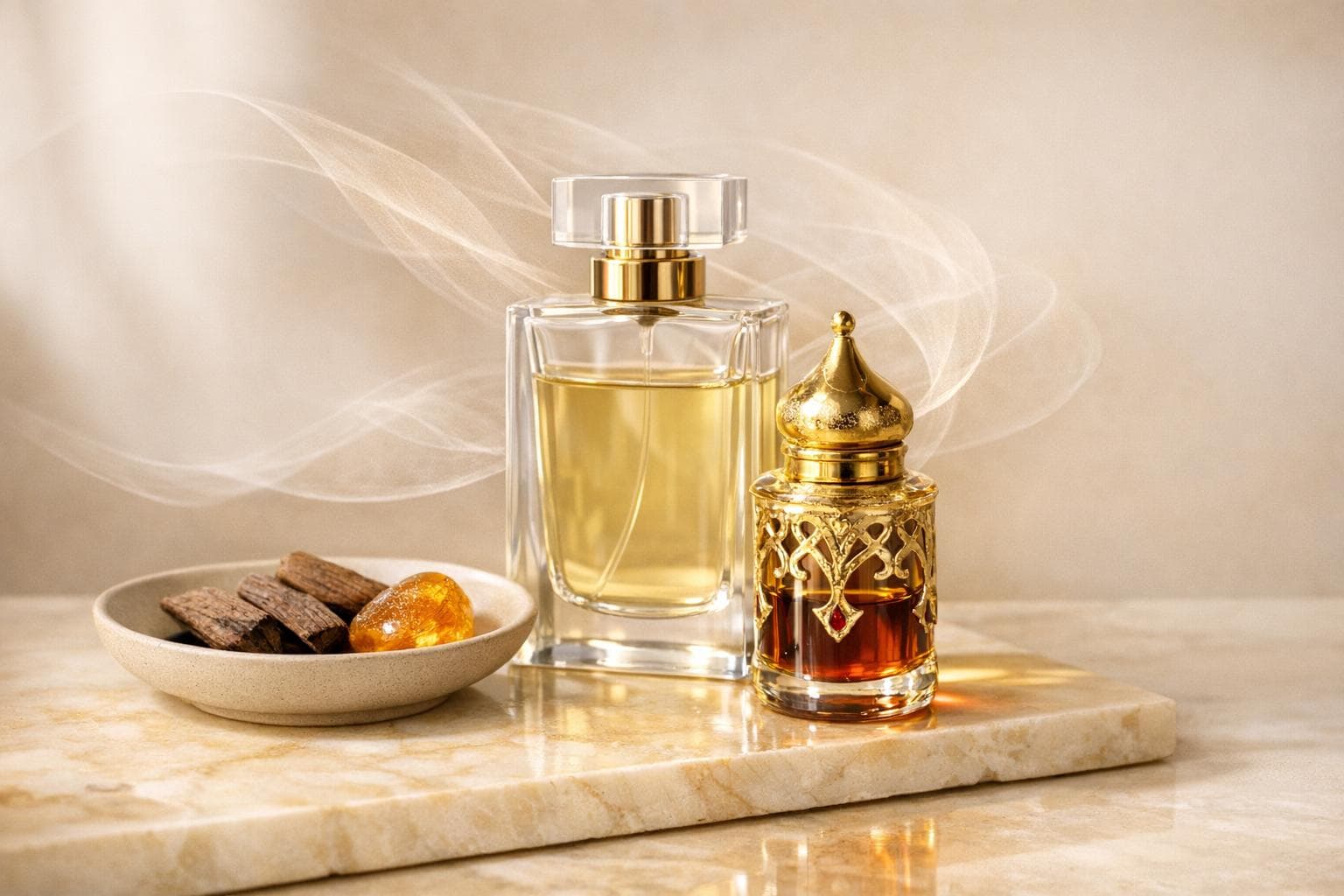
La profumeria araba ha plasmato le fragranze moderne attraverso le sue tecniche antiche, i suoi ingredienti unici e il suo impatto duraturo sulle tendenze globali. Dall’invenzione della distillazione a vapore da parte di Jabir ibn Hayyan all’uso sontuoso di oud, ambra e muschio, la sua influenza è evidente sia nei profumi tradizionali sia in quelli contemporanei. Maison del lusso occidentali come Dior e Tom Ford incorporano oggi questi elementi, fondendo le note arabe audaci e persistenti con gli stili occidentali più leggeri e a base alcolica. Questa fusione ha trasformato l’industria della profumeria, offrendo ai consumatori di tutto il mondo esperienze più ricche e personalizzate.
Punti chiave:
- Tecniche: la profumeria araba ha introdotto attar a base oleosa, rituali di stratificazione e bakhoor (fumo profumato), privilegiando persistenza e profondità.
- Ingredienti: oud, ambra, zafferano e rosa damascena sono materiali iconici della tradizione araba, oggi centrali nei marchi di lusso a livello globale.
- Tendenze di mercato: i brand occidentali stanno adottando metodi arabi, mentre la profumeria mediorientale conquista un crescente prestigio internazionale.
Confronto rapido:
| Caratteristica | Profumeria araba | Fragranze occidentali moderne |
|---|---|---|
| Base | A base oleosa (attar) | A base alcolica (eau de parfum) |
| Persistenza | 12–24+ ore | 4–8 ore |
| Ingredienti | Oud, ambra, muschio, zafferano | Agrumi, fiori, sintetici |
| Applicazione | Stratificazione, bakhoor | Spray a fragranza singola |
| Stile | Audace e opulento | Leggero ed etereo |
La ricca eredità della profumeria araba continua a ispirare il panorama olfattivo globale, unendo pratiche ancestrali e lusso contemporaneo.
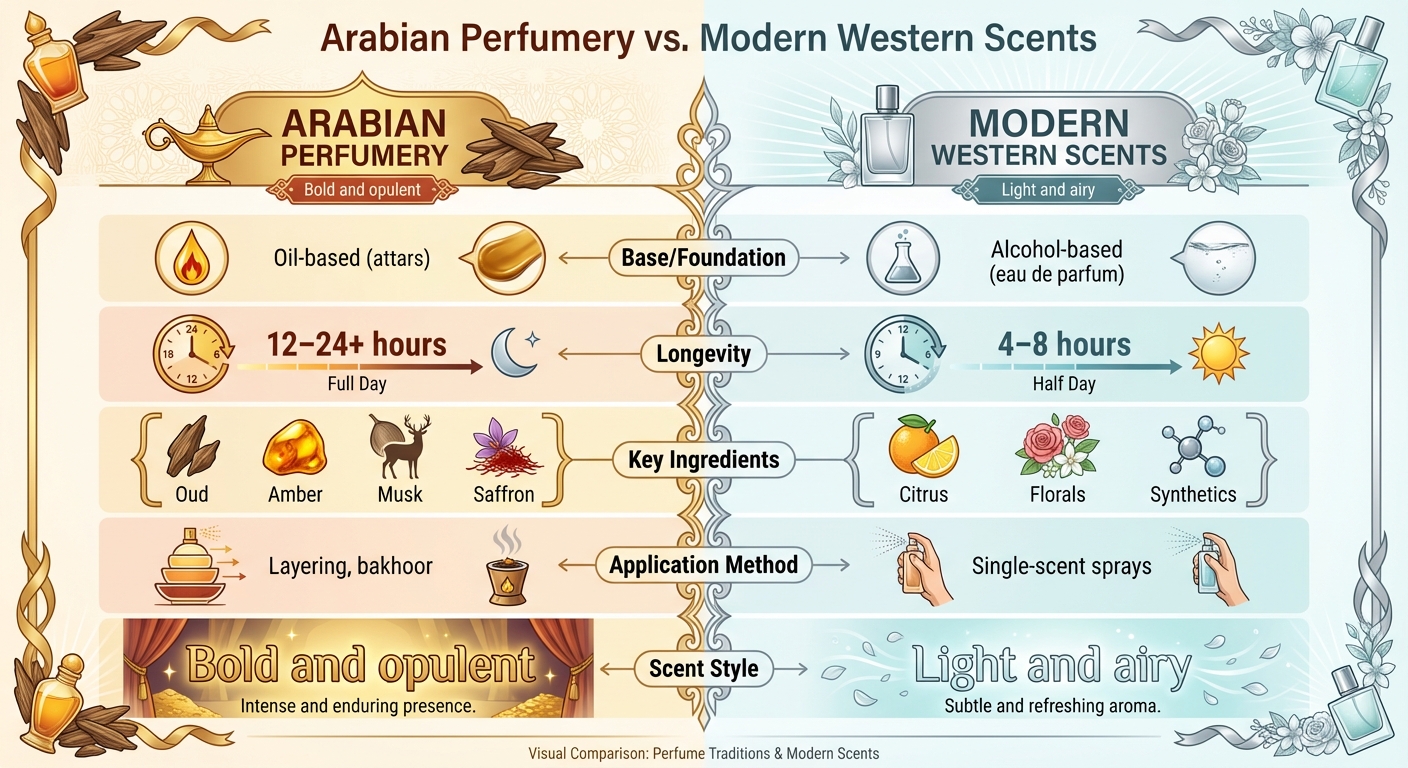
Profumeria araba vs occidentale: differenze chiave negli ingredienti, nella persistenza e nell’applicazione
1. Profumeria araba
Tecniche
La profumeria araba è profondamente radicata in tradizioni affinate nel corso dei secoli. Uno dei contributi più significativi alla profumeria moderna è l’alambicco, un apparato in rame inventato da Jabir ibn Hayyan nell’VIII secolo. Questo dispositivo utilizza la distillazione a vapore per estrarre gli oli essenziali, una tecnica ancora oggi fondamentale nell’industria del profumo.
A differenza dei profumi a base alcolica comuni nei mercati occidentali, i profumi arabi tradizionali, o attar, sono a base oleosa. Ciò crea una scia più intima, a fior di pelle, con una persistenza straordinaria. Un rituale chiave della profumeria araba è la stratificazione. Si inizia con lozioni profumate, si prosegue con oli di muschio e oud applicati sui punti di pulsazione e si conclude con un Eau de Parfum. Questo processo amplifica sia la profondità sia la tenuta della fragranza. Mona Kattan, cofondatrice di Kayali, spiega così questo approccio alla stratificazione:
Il muschio dona una sensazione di pulito e aiuta la fragranza a durare più a lungo, quindi è un’ottima base per tutto ciò che verrà dopo.
Un altro segno distintivo della profumeria araba è il bakhoor, che consiste nel bruciare scaglie di legno di oud o resine per produrre un fumo aromatico. Questo fumo viene utilizzato per profumare abiti e capelli, aggiungendo un ulteriore velo di fragranza che permane con grande eleganza. Queste pratiche riflettono una fusione armoniosa tra tecniche tramandate nel tempo e l’uso di materiali preziosi e lussuosi.
Ingredienti chiave
La ricchezza delle fragranze arabe nasce dalla loro dipendenza da alcuni ingredienti d’eccezione. Al cuore della profumeria araba si trovano oud (legno di agar), muschio, ambra e rosa damascena. L’oud, spesso definito "oro liquido", si produce quando gli alberi di agar vengono infettati da una specifica muffa, un processo che può richiedere decenni. La sua rarità e la produzione laboriosa rendono l’olio puro di oud incredibilmente costoso, con un oud di alta qualità che può arrivare a costare circa 2.650 € per soli 10 ml.
Tra gli altri ingredienti chiave figurano incenso, sandalo, zafferano, cardamomo e cannella. Questi elementi danno vita al carattere audace e opulento che definisce le fragranze arabe. Hamid Merati Kashani, profumiere di Goldfield & Banks, sottolinea la versatilità di uno di questi ingredienti:
Il sandalo, nota quintessential del Medio Oriente, aggiunge profondità alle composizioni floreali, legnose e orientali.
Persistenza e sillage
I profumi arabi sono rinomati per la loro eccezionale persistenza e il loro sillage (la scia che una fragranza lascia dietro di sé). Le loro formule a base oleosa, unite ad alte concentrazioni di oli essenziali, fanno sì che queste fragranze durino molto più a lungo rispetto agli spray occidentali a base alcolica. Le composizioni che includono ricche note di fondo come resine, legni e muschi amplificano sia la tenuta sia la proiezione. Questa performance senza eguali ha ispirato marchi di nicchia e del lusso in tutto il mondo a integrare questi elementi nelle proprie creazioni.
Tendenze di mercato
L’influenza della profumeria araba si estende ben oltre il Medio Oriente, modellando le tendenze del mercato globale delle fragranze. Maison di nicchia mediorientali come Amouage, Ajmal e Arabian Oud hanno ottenuto un prestigio internazionale. Nel frattempo, marchi occidentali del lusso come Chanel, Dior e Tom Ford hanno accolto note arabe tradizionali — oud, ambra e incenso — nelle loro collezioni più esclusive.
Una tendenza in crescita nella regione è il concetto di "guardaroba olfattivo", in cui gli individui curano una collezione di fragranze invece di affidarsi a un’unica firma olfattiva. Michaela Somerville, Beauty Editor di Vogue Arabia, osserva:
Nel Golfo, le persone sono più inclini a provare marchi diversi e a sviluppare un vero guardaroba di fragranze, invece di attenersi a un solo profumo distintivo.
Questo cambiamento evidenzia un’attenzione crescente alla personalizzazione, poiché la stratificazione dei prodotti consente a chi li indossa di creare un profilo olfattivo davvero individuale.
2. Fragranze occidentali moderne
Tecniche
La profumeria occidentale ha tradizionalmente privilegiato formule più leggere e a base alcolica per creare fragranze discrete, effetto seconda pelle. Ma i tempi stanno cambiando. Oggi i marchi occidentali adottano sempre più spesso la stratificazione delle fragranze, una pratica profondamente radicata nelle tradizioni mediorientali. Mona Kattan, fondatrice di Kayali, spiega l’ispirazione che l’ha spinta a introdurre quest’arte al pubblico occidentale:
Mi sono resa conto che molti nel mondo occidentale non avevano familiarità con l’arte della stratificazione, così con KAYALI ho voluto condividere questa tradizione in un modo moderno e accessibile.
Un altro cambiamento è l’ascesa degli Extraits de Parfum, fragranze ad alta concentrazione che offrono sillage audace e grande persistenza, riecheggiando l’intensità delle profumazioni mediorientali. Ciò segna un distacco dai minimalisti "skin-scents" un tempo prediletti nei mercati occidentali.
Ingredienti chiave
La profumeria occidentale ha a lungo privilegiato note agrumate e floreali per la loro luminosità e versatilità. Oggi, però, le maison del lusso intrecciano ingredienti arabi tradizionali come oud, ambra, muschio e rosa damascena. Per esempio, nel luglio 2022, Louis Vuitton ha lanciato Fleur du Désert, creato da Jacques Cavallier Belletrud, che presenta gelsomino, fiore d’arancio e rosa damascena come omaggio all’arte profumiera mediorientale. Allo stesso modo, Christian Louboutin con il lancio del 2021 Loubiprince, firmato dalla profumiera Fanny Bal, ha utilizzato labdano, sandalo e fava tonka per evocare un’aura egiziana.
La differenza sta nell’approccio. Mentre la profumeria mediorientale pone spesso note intense come l’oud al centro della composizione, i brand occidentali tendono a equilibrare questi ingredienti ricchi con accenti freschi o fruttati per sedurre un pubblico globale. Un esempio emblematico è dato dalle aggiunte del 2025 alla collezione Oudgasm di Kayali — Chocolate Oud e Milky Musk Oud — che rendono l’oud più accessibile abbinandolo a sfumature gourmand.
Persistenza e sillage
Anche i marchi occidentali stanno ripensando le proprie formulazioni, traendo ispirazione dalle tradizioni mediorientali. In genere, i profumi occidentali durano 4–8 ore con un sillage moderato, ma oggi si osserva una tendenza verso l’uso di accordi legnosi e balsamici per migliorarne la performance. La differenza si riduce alla formulazione: i profumi occidentali si affidano all’etanolo, che evapora rapidamente, mentre gli attar arabi utilizzano formati a base oleosa che persistono e si fondono con la pelle.
Abdulwahab AlRefai, Chief Technical Officer di CZAR Fragrances, spiega questo contrasto culturale:
A differenza di molti mercati occidentali, dove spesso dominano fragranze più leggere, effetto pelle, e il minimalismo, i consumatori mediorientali cercano profumi che sappiano affermarsi: intensi, lussuosi ed espressivi.
L’introduzione mainstream dell’oud negli anni 2010 da parte di marchi come Tom Ford e Maison Francis Kurkdjian ha portato al pubblico occidentale performance "beast mode" — fragranze a lunga tenuta e ad alta proiezione.
Tendenze di mercato
Questi cambiamenti nelle tecniche e nelle preferenze per gli ingredienti rispecchiano tendenze di mercato più ampie. Grandi maison del lusso, tra cui Dior, Chanel e Guerlain, propongono oggi collezioni esclusive con oud e ambra. La Collection Privée di Dior ne è un esempio di rilievo, pensato per soddisfare gusti sia regionali sia globali. Inoltre, colossi della profumeria come Firmenich, IFF e Givaudan hanno istituito centri creativi a Dubai, riconoscendo il ruolo della città come moderno hub dell’innovazione profumiera.
I social media hanno ulteriormente alimentato questa evoluzione. Piattaforme come TikTok e Instagram hanno reso estremamente popolari i tutorial sulla stratificazione e i "perfume hacks", introducendo il pubblico occidentale più giovane ad antiche tradizioni arabe. Per esempio, l’oud genera circa 676.600 ricerche mensili e 5,5 milioni di visualizzazioni settimanali sui social media.
Rawya Catto, General Manager di CPL Aromas, lo riassume così:
Il mondo è innamorato del profumo, e più intensità, impatto e carattere ci sono, meglio è.
Questo entusiasmo crescente mostra come le tecniche mediorientali stiano ridisegnando il panorama globale della profumeria, influenzando tutto, dalle formulazioni alle preferenze dei consumatori.
L’antica arte della profumeria araba
Il tuo esperto di profumi personale ti aspetta
Fai il nostro veloce quiz olfattivo per scoprire autentici profumi di design e di nicchia scelti in base ai tuoi gusti: esplorali in decant e campioni da 2–8ml, così puoi provarne ognuno prima di scegliere il flacone intero.
Trova il tuo profumoPro e contro
Nel confronto tra le tradizioni profumiere arabe e occidentali, ciascuna porta con sé punti di forza e sfide specifiche. Le fragranze arabe sono celebrate per la loro impareggiabile persistenza e intensità, grazie alle formule a base oleosa. Questi profumi possono durare un’impressionante 12–24+ ore, superando di gran lunga le 4–8 ore tipiche dei profumi occidentali a base alcolica. Un altro segno distintivo della profumeria araba è l’arte della stratificazione, che ha oltrepassato le proprie radici tradizionali per diventare una tendenza globale. Come spiega Rawya Catto di CPL Aromas Middle East:
Le donne e gli uomini mediorientali creano le proprie miscele sovrapponendo profumi e formati diversi e adattandoli alle stagioni e alle occasioni.
Questa pratica consente profili olfattivi altamente personalizzati e unici.
Tuttavia, la profumeria araba presenta anche alcune sfide. L’alto costo dell’oud naturale, ingrediente pregiato, rende queste fragranze inaccessibili a molti. Inoltre, l’intensità che conquista i mercati mediorientali può risultare eccessiva in spazi più piccoli o in contesti professionali. Il processo di applicazione, che spesso prevede più passaggi come l’uso di oli per il corpo, l’applicazione dell’oud sui punti di pulsazione e l’integrazione del fumo di bakhoor, richiede un livello di tempo e dedizione che non si adatta a ogni stile di vita.
D’altra parte, la profumeria occidentale eccelle per accessibilità e praticità. Le fragranze mass market sono ampiamente disponibili, relativamente convenienti e facili da applicare. Marchi iconici come Chanel e Dior sono riconosciuti in tutto il mondo per il loro prestigio, rendendo i loro profumi veri simboli di status. Tuttavia, questa universalità può anche rappresentare un limite. I profumi occidentali spesso mancano dell’individualità che deriva dalla stratificazione e dalla personalizzazione. Inoltre, le loro composizioni più leggere e a base alcolica tendono a svanire rapidamente, richiedendo nuove applicazioni nel corso della giornata.
L’interazione tra queste tradizioni sta modellando le tendenze moderne della profumeria, con le tecniche mediorientali che influenzano i mercati globali e i marchi occidentali che si adattano per rispondere alla domanda di fragranze più intense e persistenti.
Ecco un rapido confronto tra le due tradizioni:
| Caratteristica | Profumeria araba | Fragranze occidentali moderne |
|---|---|---|
| Fondamento | A base oleosa (Attar) e concentrati resinosi | A base alcolica (Eau de Toilette/Parfum) |
| Ingredienti chiave | Oud naturale, ambra, muschio, zafferano, incenso | Agrumi, fiori leggeri, molecole sintetiche |
| Metodo | Stratificazione, Bakhoor (fumo), oli sui punti di pulsazione | Applicazione spray a fragranza singola |
| Persistenza | Elevata; studiata per durare 12–24+ ore | Moderata; spesso svanisce entro 4–8 ore |
| Attrattiva di mercato | Opulenza, individualità e fascino misterioso | Pulizia, minimalismo e prestigio del marchio |
| Profilo olfattivo | Audace, fumé, cuoiato e balsamico | Fresco, etereo, "effetto pelle" e floreale |
La fusione di queste tradizioni sta rimodellando il mondo delle fragranze. I marchi occidentali stanno abbracciando le tecniche arabe per creare profumi più ricchi e intensi, mentre le profumerie mediorientali si stanno adattando per conquistare il pubblico internazionale. Che si tratti di scoprire blend di oud di nicchia o di curare una collezione che unisca la ricchezza orientale alla semplicità occidentale, questa fusione sta aprendo la strada a una nuova era della profumeria globale.
Conclusione
La profumeria araba è oggi in prima linea nelle tendenze olfattive globali. Il passaggio dal minimalismo occidentale a fragranze audaci, intense ed espressive segna un chiaro cambiamento nelle preferenze mondiali. Un tempo radicato in tradizioni regionali, questo movimento ha acquisito slancio su scala internazionale, con l’hashtag #layeringperfume che ha superato i 364 milioni di visualizzazioni su TikTok. Grandi protagonisti come IFF e Givaudan hanno persino istituito centri di innovazione in Medio Oriente per attingere a tecniche autentiche e competenze nelle materie prime.
Questi sviluppi stanno ridisegnando il mercato in modo inequivocabile. Le vendite di fragranze mediorientali crescono rapidamente, spinte da un interesse globale sempre maggiore. Allo stesso tempo, "oud" è diventato un termine tra i più ricercati nel mondo beauty, con una media di 676.600 ricerche mensili. Questa evoluzione sta ridefinendo il modo in cui le persone scoprono e indossano i profumi, fondendo tradizione e lusso moderno per creare un nuovo standard nel settore.
Guardando al futuro, questa fusione non potrà che rafforzarsi. Marchi di nicchia come Amouage e KAYALI stanno conquistando la scena globale, mentre le maison occidentali del lusso continuano a lanciare collezioni ispirate al Medio Oriente che influenzano le tendenze in tutto il mondo. Come afferma Rawya Catto di CPL Aromas:
Il mondo è innamorato del profumo, e più intensità, impatto e carattere ci sono, meglio è.
Il futuro punta verso guardaroba olfattivi personalizzati, progressi nella sostenibilità guidata dalla biotecnologia e innovazioni creative come la skincare profumata e i moderni pettini per capelli al bakhoor.
Con l’evolversi di queste tendenze, sempre più consumatori si orientano verso esperienze olfattive su misura che uniscono l’opulenza orientale alla raffinatezza occidentale. Per chi desidera immergersi in questo ricco universo di fragranze, provare campioni è essenziale. Con profumi di lusso d’ispirazione araba che vanno da 68 $ a oltre 900 $, i decant curati — disponibili in 0,03 fl oz (0,75 ml), 0,07 fl oz (2 ml) o 0,27 fl oz (8 ml) — offrono un modo pratico per esplorare e costruire un guardaroba olfattivo personalizzato senza inutili sprechi.
FAQ
Come posso iniziare a stratificare i profumi senza esagerare?
Quando stratificate le fragranze, iniziate con leggerezza: applicate una o due profumazioni sui punti di pulsazione come polsi, collo o dietro le orecchie. Scegliete profumi che si completino a vicenda, per esempio combinando note floreali con accordi legnosi o speziati, assicurandovi che si armonizzino anziché entrare in contrasto. Costruite gli strati lentamente, lasciando a ogni fragranza il tempo di assestarsi prima di aggiungere la successiva. Puntate a un’applicazione equilibrata che valorizzi il vostro stile personale senza risultare invadente.
Qual è la differenza tra olio di oud, oud nel profumo e bakhoor?
L’olio di oud è una resina altamente concentrata derivata dall’albero di Aquilaria, celebrata per il suo aroma profondo, muschiato e legnoso. Può essere utilizzato da solo oppure come ingrediente chiave nei profumi di lusso, ai quali dona complessità e ricchezza. Quando parliamo di oud nel profumo, ci riferiamo all’uso di questo olio o dei suoi accordi, capaci di apportare una profondità impareggiabile alle composizioni olfattive.
D’altra parte, il Bakhoor è un tipo di incenso composto da scaglie di legno imbevute di oli profumati. Queste scaglie vengono bruciate per sprigionare una ricca fragranza, spesso utilizzata per profumare ambienti, abiti o oggetti. A differenza dell’oud nei profumi, il Bakhoor riguarda maggiormente la creazione di un’atmosfera aromatica ed è spesso legato a pratiche spirituali o tradizionali più che all’applicazione personale della fragranza.
Come posso far durare una fragranza occidentale quanto un attar?
Per far durare più a lungo una fragranza occidentale, concentratevi sull’applicazione sui punti di pulsazione come polsi, dietro le orecchie e interno dei gomiti. Queste zone generano calore, che aiuta a rilasciare gradualmente il profumo. Preparare la pelle con una lozione o un olio senza profumazione prima di applicare la fragranza può inoltre migliorarne la tenuta. Per un effetto extra, considerate la stratificazione con una base oleosa coordinata o neutra. Al contrario, i profumi a base oleosa come gli attar tendono naturalmente a durare più a lungo perché contengono una concentrazione più elevata di oli profumati e si fondono in modo più efficace con la pelle.