
Calvin Klein’s 1994 launch of CK One changed how perfumes were marketed. Before this, fragrances were marketed strictly by gender, with luxurious and polished campaigns targeting affluent audiences. CK One broke these norms with a unisex scent, minimalist packaging, and raw black-and-white ads featuring diverse, unconventional models like Kate Moss. The campaign, backed by a €16–17 million budget, resonated with Generation X and sold €235 million in its first year.
Key shifts included:
- Unisex Design: CK One appealed to all genders, moving away from traditional gender-specific scents.
- Minimalist Aesthetic: Simple flask-inspired bottles replaced ornate designs, reflecting a modern, everyday luxury.
- Alternative Marketing: Ads rejected glamour for a raw, "heroin chic" look, while fragrances were sold in non-traditional spaces like Tower Records.
- Cultural Connection: Campaigns tapped into youth culture, aligning with music, fashion, and social movements.
This approach set a new standard for inclusivity and simplicity in the fragrance industry, influencing how perfumes are marketed to this day.
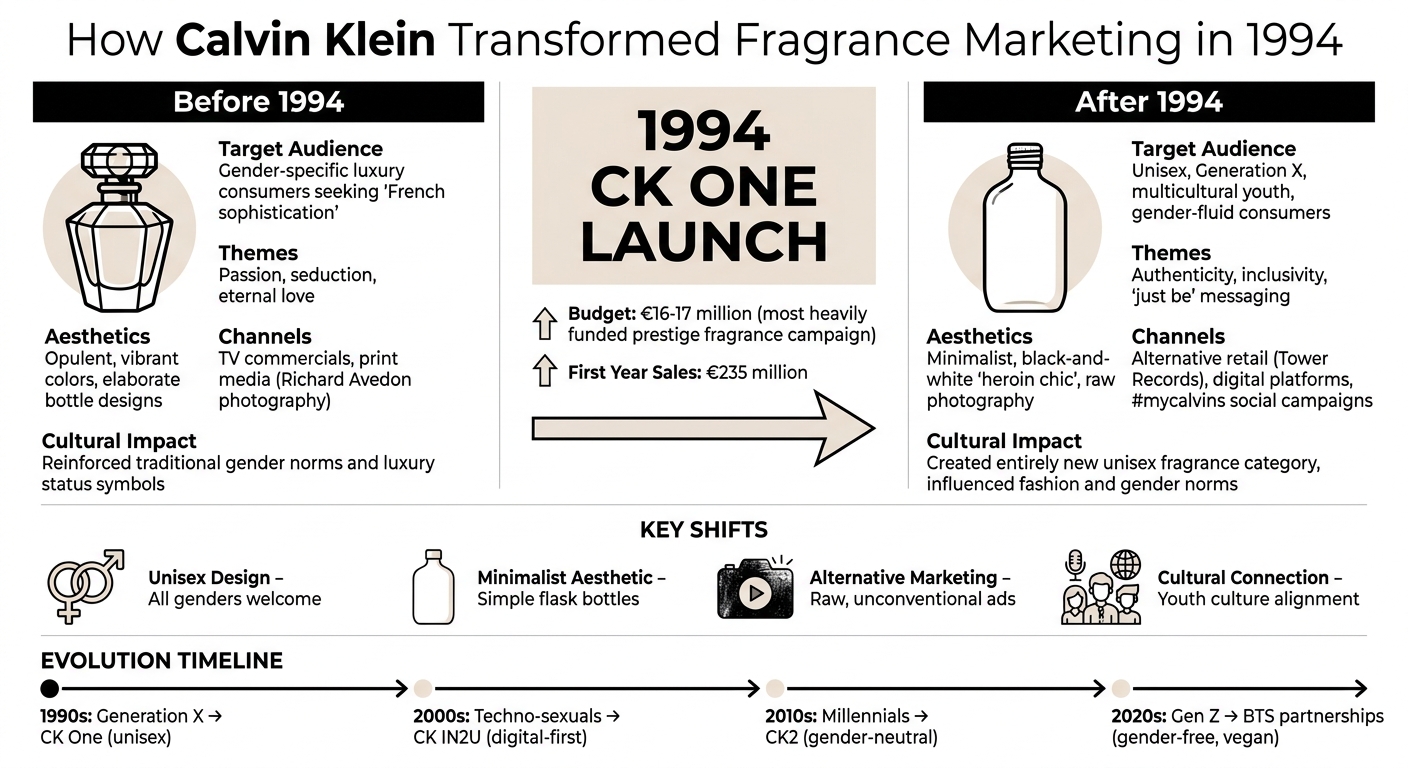
Pre-1994 vs Post-1994 Fragrance Marketing Evolution
1. Calvin Klein Fragrance Campaigns
Target Audience Approach
Calvin Klein’s fragrance campaigns have consistently evolved to align with the values and habits of different generations. In the 1990s, the brand spoke directly to Generation X, a group that rejected the materialism of the 1980s and was skeptical of polished, traditional advertising. The CK One campaign embraced this mindset with its "just be" message, featuring androgynous, multicultural models that mirrored the era’s ethos of authenticity and inclusivity.
By 2007, the focus shifted to a younger, tech-savvy audience labeled "techno-sexuals." The CK IN2U campaign embraced the digital-first lifestyle of this group, reflecting their growing reliance on technology for social interaction. In the following decade, the CK2 campaign targeted Millennials with narratives that celebrated diversity and gender neutrality, avoiding clichés and stereotypes. Most recently, Calvin Klein has turned its attention to Gen Z, leveraging partnerships with global icons like BTS’s Jungkook and creating content designed to thrive on platforms like TikTok and Instagram. This progression highlights how the brand has consistently adapted its messaging to resonate with new audiences.
Campaign Themes
Over the years, Calvin Klein has shifted its campaign themes from bold provocation to a broader message of inclusivity. In the 1980s, the Obsession campaign challenged societal norms with its raw sensuality and striking black-and-white photography. By the 1990s, the brand embraced minimalism, reflecting a new luxury aesthetic with simple, apothecary-inspired packaging and visuals that emphasized honesty.
The concept of gender fluidity became a defining feature of Calvin Klein’s identity. Starting with "unisex" fragrances in the 1990s, the brand progressed to "gender-neutral" storytelling in the 2010s and, more recently, to "gender-free" vegan formulations in the 2020s . Lori Singer, Coty’s Vice President for Global Marketing, captured this evolution perfectly:
"They don’t want to feel that they are being marketed to or spoken at. They are much more empowered, but they are unshockable".
These thematic shifts were reinforced by Calvin Klein’s innovative approach to digital engagement and product distribution.
Marketing Channels
Calvin Klein has consistently broken traditional marketing norms to connect with its target audiences. In the 1990s, the brand bypassed conventional luxury retail channels by placing its fragrances in alternative retail spaces and featuring them in publications like Ray Gun and The Face. This strategy aligned CK One with grunge culture, contributing to its impressive €235 million in first-year sales.
In the 2000s, Calvin Klein embraced digital platforms, launching a social hub for the CK IN2U campaign to engage early adopters of online culture. The 2010s marked the rise of the #mycalvins campaign, which transformed consumers into brand ambassadors by encouraging user-generated content on Instagram. Celebrities like Kendall Jenner and Justin Bieber amplified the campaign’s reach. Today, the brand focuses on creating viral content tailored for TikTok and Instagram, ensuring it stays relevant to younger audiences.
Cultural Impact
Calvin Klein’s fragrance campaigns have not just sold products - they’ve shaped cultural conversations. The "heroin chic" aesthetic of the 1990s resonated deeply with Generation X, leaving a lasting imprint on fashion and advertising. Additionally, the brand redefined how the fragrance industry approaches gender, setting new standards for inclusivity and representation .
2. Pre-1994 Fragrance Marketing
Target Audience Approach
Before 1994, the fragrance industry maintained clear gender distinctions in its products. Scents were crafted and marketed specifically for men or women, with no overlap. Traditional luxury brands catered to consumers drawn to the allure of "heady, pretentious, or French" sophistication. The overarching messaging revolved around powerful emotional archetypes such as passion, seduction, and eternal love.
Campaign Themes
This era was marked by bold, dramatic fragrances paired with equally striking marketing campaigns. Names like Eternity, Obsession, and Escape hinted at themes of sensuality, desire, and even confinement, which were vividly brought to life in television advertisements. The visual aesthetic of the 1980s embraced opulence, using vibrant colours, intricate bottle designs, and meticulously crafted advertisements. However, Calvin Klein’s Obsession broke the mold with its minimalist, black-and-white photography, redefining luxury through simplicity. By the late 1980s and early 1990s, the narrative focus began to shift. Themes of intense desire gave way to ideas of family, loyalty, and timeless love, reflecting a more grounded emotional appeal.
Marketing Channels
Before the digital age, fragrance advertising relied heavily on television and print media. High-end brands invested in TV commercials directed by celebrated photographers like Richard Avedon, often featuring whispered slogans and sultry voiceovers. Print campaigns mirrored this intensity, frequently using stark black-and-white imagery to highlight the raw emotion and physicality of their subjects. This approach was undeniably effective; Calvin Klein’s 1985 Obsession campaign, for example, was described as "impossible to ignore", solidifying the brand’s reputation as a cultural disruptor. The same provocative style extended to Calvin Klein’s underwear line, which generated around €80 million annually by 1993. Despite their success, these traditional channels would soon face disruption as the industry moved toward more inclusive and unconventional advertising strategies.
Cultural Impact
The themes and strategies of pre-1994 fragrance marketing did more than sell products - they ignited cultural conversations. Campaigns from this period often pushed boundaries, challenging societal norms surrounding sexuality and gender roles. For example, the provocative imagery of Obsession sparked debates about censorship and desire, while also reflecting the era’s conventional beauty ideals. As Karen Contrino of Tamar Bridge noted:
"Calvin Klein oriented its perfumes to be easy to obtain and exclusive at the same time, unlike many luxury houses that aimed at exclusiveness, and thus they were marketable to a wide audience."
This balance of accessibility and exclusivity not only set Calvin Klein apart but also paved the way for the transformational changes that would redefine the fragrance industry in 1994.
Your Personal Fragrance Expert Awaits
Take our quick scent quiz to discover authentic designer and niche fragrances matched to your taste — explore them as 2ml, 5ml, 8ml & 30ml decants and samples, so you can try each one before committing to a full bottle.
Find Your ScentPros and Cons
Calvin Klein’s shift in marketing strategy brought both opportunities and challenges, reshaping the fragrance industry in the process. By comparing traditional pre-1994 fragrance marketing with Calvin Klein’s post-1994 campaigns, we can better understand the impact of this transformation.
| Aspect | Pre‑1994 Fragrance Marketing | Calvin Klein Campaigns (Post‑1994) |
|---|---|---|
| Audience Reach | Focused on gender-specific luxury consumers, often with an air of "French sophistication." | Targeted a broader, unisex audience, appealing to Generation X, multicultural youth, and those rejecting traditional gender roles. |
| Creativity | Ornate, decorative bottles with polished, glamorous imagery. | Minimalist bottle design and raw, black-and-white "heroin chic" photography. |
| Market Influence | Reinforced traditional gender norms and luxury status symbols. | Introduced unisex fragrances and influenced fashion, music, and gender-fluid social attitudes. |
| Packaging | Display-worthy, elaborate bottle designs. | Functional, utilitarian flasks with minimalist aesthetics. |
| Consumer Behaviour | Relied on passive consumption through TV and print ads. | Encouraged active participation, with later digital campaigns like #mycalvins inviting self-expression. |
When Calvin Klein launched CK One in 1994, it did so with an unprecedented marketing budget of €17–18 million, making it the most heavily funded prestige fragrance campaign of that year.
However, this bold strategy wasn’t without its challenges. Calvin Klein’s campaigns often pushed boundaries, using provocative imagery that sometimes sparked controversy. For instance, the sensual Obsession ads and later "sex-forward" visuals faced criticism from religious groups and others who found the content exploitative. Additionally, the minimalist aesthetic, though revolutionary, clashed with the expectations of traditional luxury consumers who valued ornate craftsmanship and status-driven designs.
Traditional fragrance marketing, while effective in conveying exclusivity and prestige, adhered to rigid gender norms and catered primarily to affluent audiences, limiting its broader appeal. Calvin Klein, on the other hand, championed a more inclusive vision. As Alberto Morillas noted, this approach alienated some traditionalists but resonated with a younger, more diverse demographic.
Conclusion
Calvin Klein revolutionised fragrance marketing by showing that simplicity can convey sophistication and that breaking away from traditional gender norms can expand market potential. When CK One debuted in 1994, it wasn’t just a fragrance - it was the birth of a unisex category that compelled the industry to rethink its approach to product development and branding. The launch was a massive success, generating €235 million in sales during its first year and resetting expectations for what a fragrance could achieve.
Beyond the numbers, Calvin Klein left an enduring mark on the industry. By swapping elaborate bottle designs for clean, apothecary-inspired packaging and replacing traditional glamour with raw, androgynous visuals, the brand created a distinctive aesthetic that resonated deeply with younger audiences. Campaigns like #mycalvins further evolved this approach, shifting the focus from passive consumerism to active engagement - an approach now embraced by many luxury brands to connect with digital-first audiences.
"CK One didn’t just create a new fragrance - it created an entirely new category that continues to influence product development strategies throughout the industry." – Tafaseel Perfume Editorial
Calvin Klein’s campaigns captured the spirit of the times, using fragrance marketing as a medium to explore themes of identity, self-expression, and cultural shifts. This legacy has opened up a world of possibilities for today’s fragrance enthusiasts, offering more options and greater accessibility.
Modern platforms like Scento carry forward this democratized vision by offering curated designer fragrances in discovery sizes - 2 ml, 5 ml and 8 ml vials, and a 30 ml bottle decant on most perfumes - allowing users to experience cutting-edge scents without committing to full-size bottles. It’s a fitting continuation of the transformation Calvin Klein set in motion three decades ago.
FAQs
Why did CK One succeed so quickly in 1994?
CK One burst onto the scene in 1994 and quickly became a sensation, redefining the fragrance industry. As the first mass-market scent designed to be unisex, it broke away from traditional gendered marketing. Its bold campaign celebrated androgyny and individuality, perfectly aligning with the ethos of Generation X. This fresh perspective struck a chord with the era’s youth, propelling CK One to instant stardom.
What made Calvin Klein’s ads feel so different from luxury fragrance ads back then?
Calvin Klein’s advertisements made a mark with their raw, provocative, and unapologetic style. Featuring stark black-and-white visuals and stripped-down photography, these campaigns embraced sensuality and controversy. By stepping away from the polished norms of traditional luxury advertising, they reflected the spirit of their time and pushed societal boundaries.
How did CK One change gender marketing in perfumes long-term?
CK One changed the game in the fragrance world by introducing a hugely popular unisex scent. It stepped away from the usual gendered categories and embraced a neutral approach, appealing to a broader audience. This bold move reshaped how perfumes are marketed, opening the door to inclusive campaigns that connect with today’s diverse consumers.

