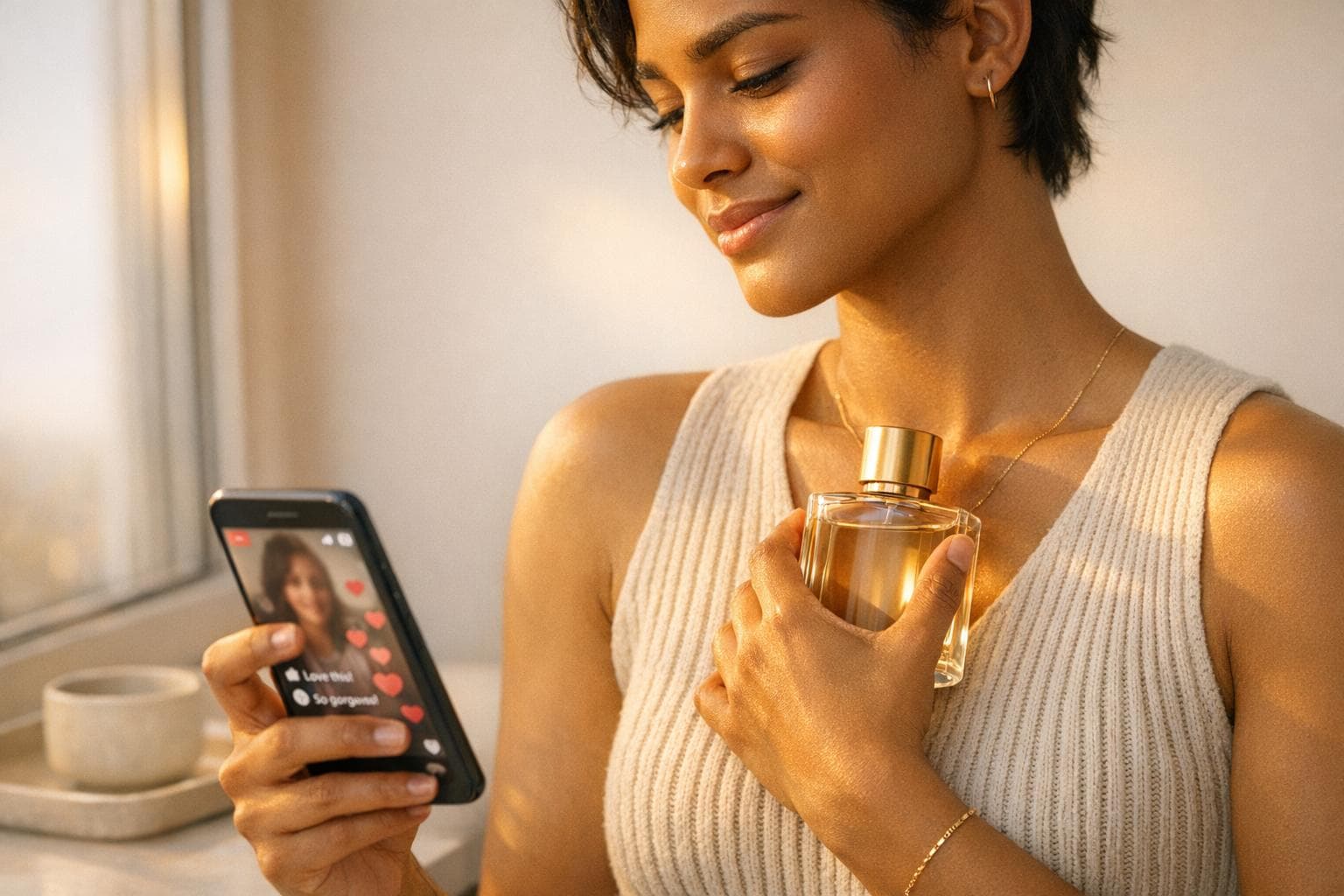
When celebrities launch fragrances, they’re not just selling scents - they’re selling stories. These products let fans connect with their favorite stars and embody traits like confidence, elegance, or boldness. Celebrity fragrances have evolved from simple endorsements to full-fledged collaborations, where stars play a hands-on role in crafting scents that reflect their personal identity.
Key points:
- Emotional appeal: Fragrances tied to celebrity lifestyles create strong consumer connections.
- Gen Z influence: 45% of Gen Z sees these scents as a form of self-expression.
- Market growth: The global perfume market is projected to jump from €54.12 billion in 2023 to €96.28 billion by 2033.
- Shifting trends: Celebrities now focus on genuine involvement, adding depth to their brands.
- Social media power: Platforms like TikTok and Instagram help stars directly engage with fans, boosting sales.
Today’s buyers want more than a name - they seek scents that tell a story and align with their values. Celebrity storytelling continues to shape how brands connect with audiences.
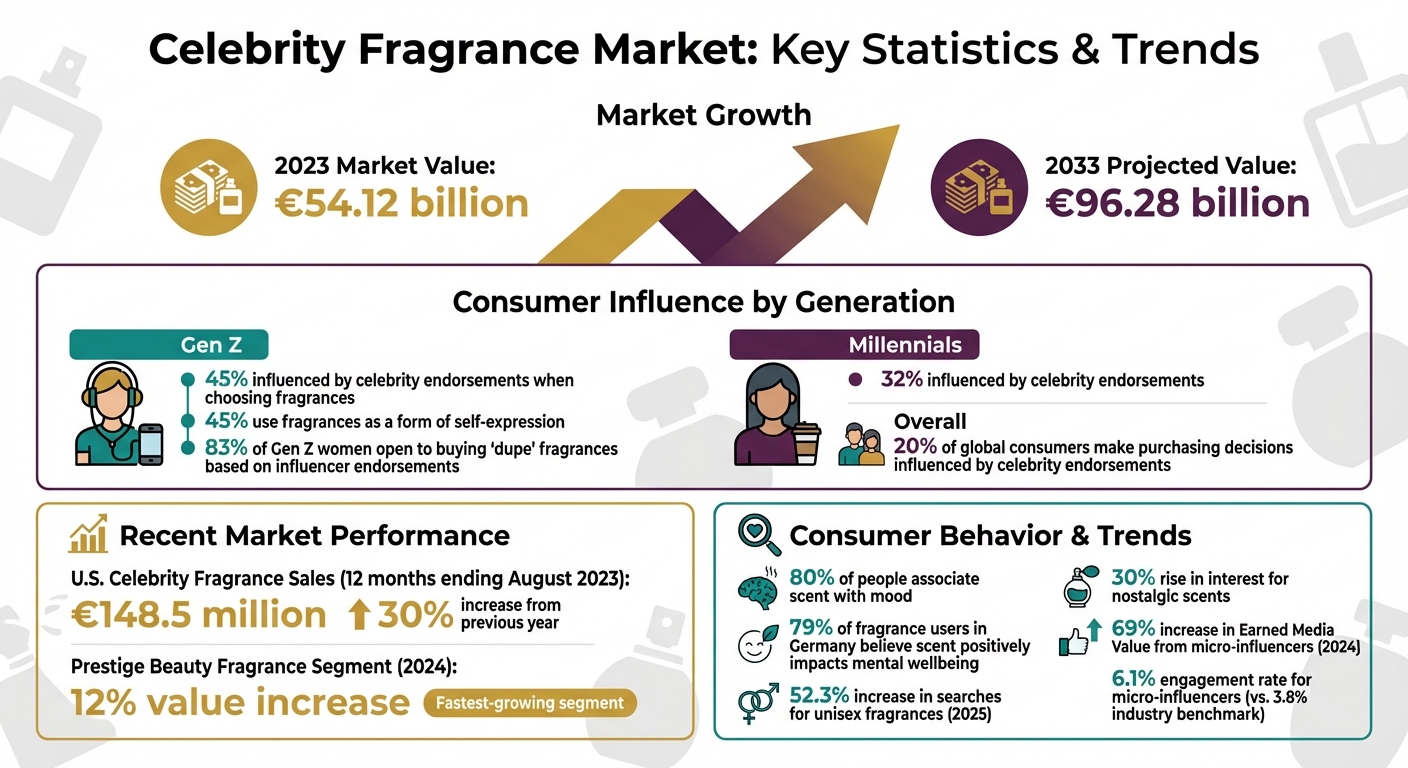
Celebrity Fragrance Market Statistics and Consumer Trends 2023-2033
Why Consumers Buy Celebrity Fragrances
Wanting to Live Like Celebrities
Celebrity fragrances offer fans more than just a scent - they provide a connection to an aspirational lifestyle. As one study puts it, they give you “a snippet into the lives of their idols”. For many, this is a way to own a piece of a world that might otherwise feel unattainable. While you may not be able to afford a celebrity’s mansion or designer wardrobe, for around $125, you can wear the same fragrance they do.
This connection resonates especially with younger generations. Among Gen Z, 45% report being influenced by celebrity endorsements when picking fragrances, compared to 32% of Millennials. For these shoppers, a celebrity scent is more than just a way to smell good; it becomes a statement of personality, status, and shared values. This aspirational pull lays the foundation for the emotional storytelling that makes these fragrances so compelling.
How Stories Create Emotional Bonds
Because you can’t smell a fragrance through a screen, brands rely on storytelling to create emotional connections. Advertising often leans into themes like rebellion, elegance, or romance, turning a physical product into something that feels personal and memorable. This approach ties into the Meaning Transfer Model, where the cultural significance of a celebrity flows into the product and, eventually, to the consumer.
“Fragrance advertising relies on visual and metaphorical cues to construct these symbolic attributes, emphasizing emotions and attraction rather than functional qualities.” - Italian Journal of Marketing
Visuals play a key role in these narratives. When celebrities post lifestyle content - like café visits, handwritten notes, or travel snapshots - these images help set expectations for the fragrance. For instance, a leather notebook in the background might suggest warm, tobacco-like notes, while a Parisian café scene could hint at powdery florals or sweet vanilla. These lifestyle cues make it easier to imagine how the scent could fit into your own life.
Scent as an Extension of Celebrity Identity
Storytelling doesn’t just build emotional connections - it also allows consumers to embody the traits they admire in their favorite celebrities. Whether it’s confidence, glamour, or boldness, wearing a celebrity’s fragrance can feel like stepping into their shoes. Studies show that many consumers use these scents to project their ideal selves.
Celebrity fragrances have also evolved significantly. Once dismissed as “cheap gimmick perfumes,” they now often feature rare ingredients and collaborations with top perfumers. Take Ariana Grande’s Cloud, for example. Since its launch in 2018, it has become a bestseller, praised as a high-quality alternative to luxury scents like Baccarat Rouge 540, which costs roughly €461. Priced at around €125, Cloud has proven that celebrity fragrances can hold their own in the prestige market.
Interestingly, consumer research highlights “freshness” and “confidence” as the top emotions people associate with their chosen scents. When a fragrance is tied to a celebrity whose public image reflects these traits, the connection becomes even stronger. The fragrance transforms into more than a product - it becomes a sensory symbol of the lifestyle and identity you aspire to embrace.
The Evolution from Endorsements to Partnerships
Paid Endorsements vs. Creative Partnerships
The fragrance industry has seen a major transformation in how celebrities engage with branding. Back in the 1990s and 2000s, the standard approach was simple: celebrities would license their names to fragrance houses, appear in advertising campaigns, and collect royalties. Their involvement rarely extended beyond being the face of the product. A classic example of this model is Elizabeth Taylor’s White Diamonds, where the star’s charisma paired with expert perfumers, but her role remained largely promotional.
Fast forward to today, and the dynamics have shifted dramatically. Celebrities are no longer just endorsers - they’re stepping into executive roles, launching their own brands, and collaborating on products with real creative input. A perfect example is Revlon’s 2026 partnership with Ice Spice. Instead of merely lending her image, Ice Spice is actively shaping a fragrance line. She shared, "I am honored to work together with them to develop my fragrance line that embodies me and inspires fans to embrace their individuality." Revlon CEO Michelle Peluso echoed this sentiment, emphasizing how the collaboration is part of Revlon’s broader growth strategy.
This new approach resonates with consumers, as evidenced by the numbers. Celebrity fragrance sales in the U.S. reached €148.5 million in the 12 months ending August 2023 - a 30% jump. With marketing now centered on social media platforms like Instagram and TikTok, celebrities can directly connect with fans, driving traffic to their personal websites and fostering a deeper sense of engagement.
This evolution not only reshapes the concept of collaboration but also strengthens consumer relationships, which we’ll delve into next.
Why Genuine Involvement Builds Trust
The move from surface-level endorsements to meaningful creative involvement has added depth to the storytelling behind fragrances. Consumers can tell the difference between a celebrity who simply poses for a campaign and one who actively participates in crafting a product. For instance, when Victoria Beckham introduced her 2023/2024 fragrance collection, she infused it with personal memories, such as a 1997 trip to Portofino, creating scents that felt deeply personal and evocative.
Modern shoppers, particularly Gen Z, value this kind of authenticity. They expect a genuine connection between a celebrity’s public persona and the products they promote. As Patti Williams from Wharton explains, "Celebrities realize that this is a way of earning money in ways that they didn’t before... That is becoming part and parcel of what it means to be a celebrity and to have a celebrity business model." Brands like Harry Styles’s Pleasing exemplify this approach, with gender-neutral formulations and a focus on sustainability - values that align with his image and resonate with audiences who prioritize inclusivity.
This authenticity also acts as a safeguard for brands during challenging times. By 2026, contracts began including clauses like "moral turpitude" and "interim suspension rights", allowing companies to pivot quickly if a celebrity partner faced public backlash. When collaborations authentically reflect a celebrity’s identity, they build lasting consumer loyalty. Even after a partnership ends, the product remains a meaningful extension of the celebrity’s story and values, creating an emotional connection that fans continue to cherish.
Celebrities Who Launch Their Own Fragrance Lines
Why Celebrities Start Fragrance Brands
In recent years, celebrities have shifted from licensing deals to launching their own fragrance brands, giving them more control over creative decisions and a larger share of the profits. As Patti Williams from the Wharton School explains:
"Celebrities realise that this is a way of earning money in ways that they didn’t before... That is becoming part and parcel of what it means to be a celebrity."
This trend highlights how stars are using their influence and built-in audiences to create businesses that reflect their personal stories. Take Selena Gomez, for instance. When she introduced Rare Beauty‘s first fragrance in August 2024, it followed two years of development and 20 scent iterations with perfumer Jérôme Epinette. Rare Beauty reported €400 million in sales for 2024, marking a 14% jump from the previous year.
Social media plays a huge role in these successes. David Schneidman, Senior Director at Alvarez & Marsal, explains:
"One of the reasons we’re seeing an uplift in celebrity brands is that it’s a lot more frictionless to drive a sale."
By leveraging platforms like Instagram and TikTok, celebrities can drive traffic directly to their online stores, cutting out intermediaries and gaining direct feedback from fans. U.S. celebrity fragrance sales reached €148.5 million in the 12 months ending August 2023 - a 30% increase from the prior year. This strategy not only increases revenue but also fosters a stronger connection between the brand and its audience.
Combining Personal Vision with Consumer Demand
Today’s celebrity fragrance lines are a mix of personal storytelling and market awareness. Selena Gomez’s Rare Eau de Parfum, priced at €75 for 1.7 oz, embodies her life at age 32, drawing inspiration from key moments like her engagement. As she describes:
"It captured a part of who I am, inviting everyone to experience it."
However, creating a fragrance isn’t just about self-expression. Celebrities work closely with their teams to ensure their products resonate with consumer preferences. Joyce Kim, Chief Product Officer at Rare Beauty, praised Selena’s dedication to the process:
"What I love about working with Selena is she wants to learn everything."
This collaborative effort is reflected in every aspect of the product, from the scent itself to the design of the bottle. Rare Beauty partnered with Casa Colina and certified hand therapists to develop packaging that’s accessible for individuals with limited dexterity.
The brand also introduced Fragrance Layering Balms, priced at €19 for 0.68 oz tubes, allowing customers to adjust their scent throughout the day. This approach acknowledges the modern consumer’s preference for versatility, offering options that match different moods and occasions. By engaging their communities in the development process, celebrities create fragrances that feel both deeply personal and widely appealing, transforming fans into loyal customers who see these products as authentic extensions of the star’s identity.
Micro — Influencers and Niche Fragrance Marketing
How Micro — Influencers Market Fragrances
Micro-influencers - those creators with smaller but highly engaged audiences - are becoming key players in niche fragrance marketing. They excel at transforming brand narratives into relatable, peer-to-peer experiences, making fragrances feel personal and approachable. This shift is evident in their ability to drive a 69% increase in Earned Media Value in 2024, with engagement rates climbing to 6.1%, significantly surpassing the 3.8% industry benchmark.
What sets micro-influencers apart is their trustworthiness. As Ryan Saydoff from Parfum Digital notes:
"Fragrance influencers have earned the trust of their followers by sharing their recommendations and thoughtful reviews."
A campaign by House of Marketers for Azha Perfumes illustrates this perfectly. Over 10 months, they created 90 influencer-led assets across TikTok, Instagram, and YouTube, generating 3.3 million video views and maintaining a 6.1% engagement rate. Influencers compensate for the inability to physically share a scent by using sensory storytelling - evoking emotions, memories, and personal rituals through their content.
The focus has shifted from technical descriptions of fragrance notes to capturing mood, identity, and emotional resonance, often through short-form videos. This approach resonates particularly with Gen Z. About 83% of Gen Z women are open to buying "dupe" fragrances based on influencer endorsements, and nearly 45% of consumers under 45 use fragrances as a form of self-expression. For these consumers, perfumes are less about luxury and more about showcasing individuality.
By creating authentic and emotionally engaging content, micro-influencers are also helping to deepen the connection between consumers and the artistry behind fragrances.
Marketing Through Ingredients and Craftsmanship
Micro-influencers don’t stop at storytelling - they also dive into the artistry of fragrance creation. By breaking down scent compositions and explaining how notes evolve, they provide a deeper understanding of the craft. This method appeals to consumers who are increasingly curious about ingredient origins and are drawn to "clean" labels.
Anabelle Holschuh from Mintel captures this shift in consumer priorities:
"Luxury in 2025 is about substance, story, and sensory experience... today’s fragrance consumers are seeking something more intimate: craftsmanship, authenticity, and emotional connection."
To align with these values, niche brands are putting a spotlight on artisanal production. Influencers amplify this by using aesthetic visuals, color symbolism, and bottle design analysis to showcase a brand’s artistic vision. Platforms like TikTok and Discord have even become spaces for fragrance swap events, fostering genuine connections within digital communities.
These trends reflect a broader movement in the fragrance industry. Between 2019 and 2023, the share of global fragrance launches boasting long-wear claims jumped from 11% to 35%. Additionally, 79% of fragrance users in Germany believe scent positively impacts mental wellbeing. For brands aiming to connect with younger, more informed audiences, partnering with micro-influencers who can articulate these values is proving to be a powerful strategy.
Your Personal Fragrance Expert Awaits
Take our quick scent quiz to discover authentic designer and niche fragrances matched to your taste — explore them as 2ml, 5ml, 8ml & 30ml decants and samples, so you can try each one before committing to a full bottle.
Find Your ScentWhere Fragrance Marketing Is Headed
Virtual Experiences and Behind-the — Scenes Content
Selling a scent online without the ability to smell it might seem like a challenge, but brands are finding creative ways to bridge the gap. Multisensory digital experiences are changing the game, increasing online purchasing intent by over 50%. AI-driven tools now tailor scent recommendations based on mood and preferred fragrance notes. Some companies are even experimenting with wearable tech, like sleep trackers and biometric wristbands, to suggest scents that align with an individual’s body chemistry and daily rhythms. Michael Nostrand, Founder of Mythologist Studio, captures this shift perfectly:
"People increasingly want fragrances that make them feel things... more than an odor, they are looking for a sensation".
These efforts go beyond just selling a product - they create a personal connection between the fragrance and the wearer. With 80% of people associating scent with mood, sharing behind-the-scenes content, like ingredient sourcing and production stories, builds trust and adds depth. For instance, showcasing antique logbooks or production notes roots a fragrance in something tangible, making the experience more relatable.
This blend of storytelling and technology aligns perfectly with the growing focus on wellness and emotional connection.
What Modern Consumers Want from Fragrance Brands
While celebrity endorsements have long been a staple in fragrance marketing, today’s buyers are looking for more. Transparency, ethical practices, and self-care are taking center stage. Consumers now want fragrances that not only smell good but also serve a purpose, blending luxury with personal well-being. For example, searches for unisex fragrances jumped by 52.3% in 2025, and nostalgic scents saw a 30% rise in interest. Fragrance also became the fastest-growing segment in prestige beauty in 2024, with a 12% increase in value as shoppers sought scents with deeper emotional meaning.
Modern consumers care about how a fragrance makes them feel. Functional fragrances designed to promote calm, focus, or energy are gaining traction, often showcased on digital wellness platforms. As Freeyourself.com puts it:
"The blend of psychology and scent is forming a new frontier in customer experience".
This evolution in consumer preferences is pushing brands to combine emotional depth with authenticity, creating a new standard for fragrance marketing.
Conclusion
Celebrity storytelling has reshaped the way fragrance brands connect with their audiences. Through the Meaning Transfer Model, qualities like glamour, confidence, or rebellion move from the celebrity to the fragrance itself, turning a simple scent into a "sensory emblem".
Today, 20% of global consumers make purchasing decisions influenced by celebrity endorsements, with that number climbing to 45% among Gen Z. However, buyers are becoming more discerning, distinguishing between basic paid endorsements and genuine creative collaborations. When celebrities engage in true creative partnerships - like Billie Eilish’s "Your Turn" fragrance, set to launch in early 2025 with notes of cardamom, peach skin, and sandalwood - the result is often deeper emotional connections, premium pricing, and stronger loyalty.
The fragrance industry is now moving beyond traditional advertising, embracing what some call "storyliving." As highlighted by the Cosmoprof Bologna Beauty Panel:
"Every single contact point - how a cap clicks, how a scent unfolds, how a name sounds - tells part of your story. You’re not selling product. You’re selling meaning in motion".
Brands are using lifestyle elements, AI-driven tools, and tactile storytelling to create immersive experiences that help consumers envision the scent. This aligns with the growing interest in micro-influencers, co-creation models, and wellness-inspired fragrances. Shoppers today want more than just a celebrity name - they crave authentic partnerships and narratives that reflect their own identities.
For brands willing to embrace these shifts, the fragrance market - expected to reach $96.28 billion by 2033 - offers a huge opportunity to build lasting connections with consumers. These evolving trends show how celebrity storytelling continues to redefine fragrance branding.
FAQs
How can you tell if a celebrity fragrance is authentic?
To confirm the authenticity of a celebrity fragrance, start by looking for verified serial numbers on the packaging or bottle. These numbers are a key indicator of a genuine product. Additionally, examine the quality of the bottle and labeling - authentic perfumes typically have precise, high-quality finishes without any noticeable flaws. To be absolutely certain, purchase from reputable sources or authorized retailers. Counterfeit perfumes often skip serial numbers or display obvious imperfections in their packaging and labeling.
Why is storytelling so important when you can’t smell online?
Storytelling plays a key role in online fragrance branding, helping to overcome the challenge of not being able to experience scents firsthand. Much like a fragrance unfolds through its top, middle, and base notes, a well-crafted story can evoke emotions and memories, making the scent more relatable and unforgettable. Since our sense of smell is deeply linked to memory, a thoughtful narrative allows consumers to form a personal connection with a fragrance, encouraging loyalty and ensuring the experience feels meaningful even without direct interaction.
Why does Gen Z buy celebrity fragrances more than other groups?
Gen Z gravitates toward celebrity fragrances because they tap into emotional storytelling and a sense of connection. Celebrities often share narratives centered on themes like empowerment, mental health, and self-care, aligning closely with the values this generation holds dear. Platforms like TikTok play a huge role in amplifying these stories, turning them into viral moments and fueling endorsements. For a generation that prizes transparency and individuality, fragrances linked to genuine celebrity stories become even more enticing.

