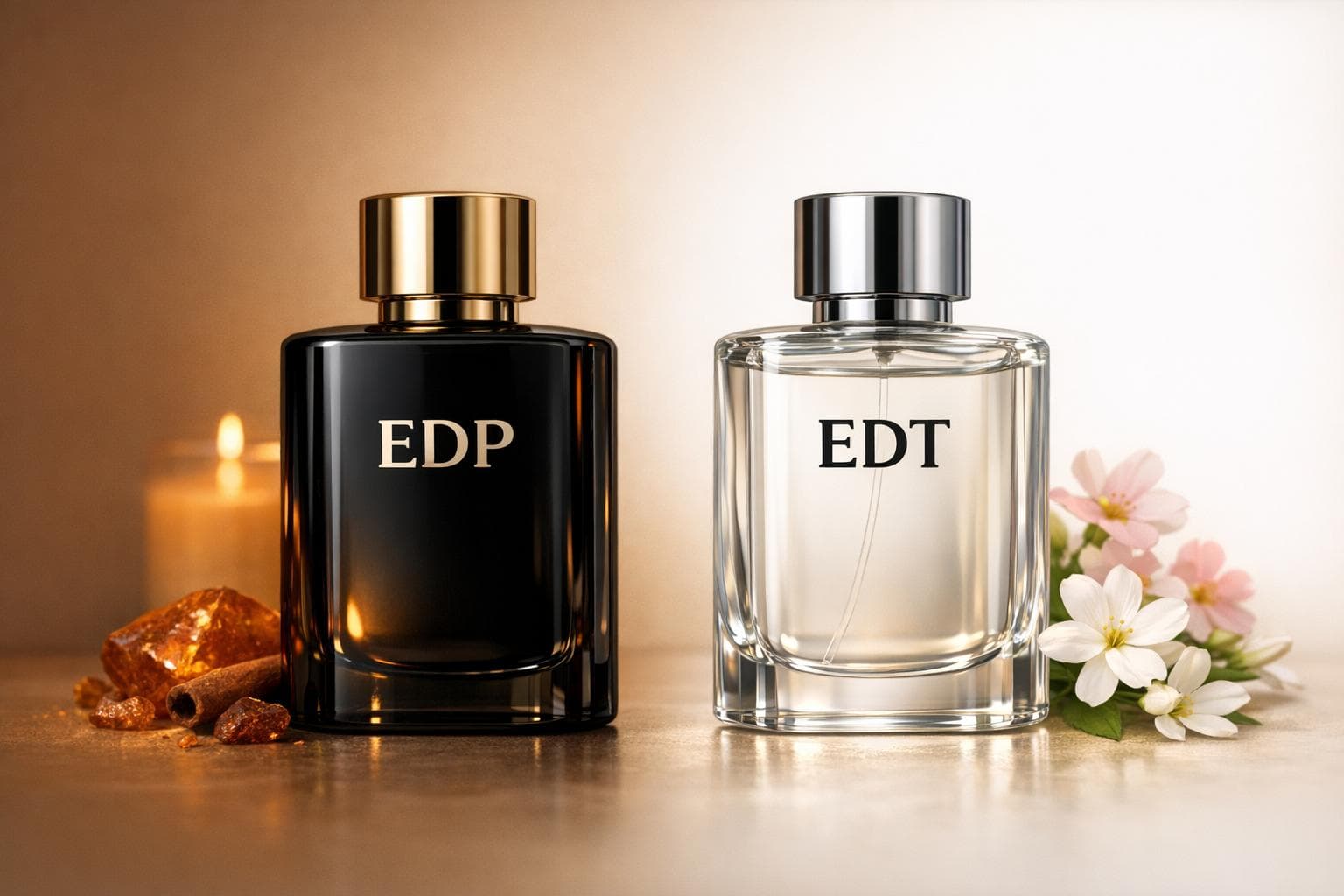
Yes: eau de parfum holds more fragrance oil, which is why it usually lasts longer. Floris puts eau de parfum at around 15–20% and eau de toilette at around 5–15%, and this guide estimates 6–8 hours of wear for EDP against about 3–5 hours for EDT.
When choosing between Eau de Parfum (EDP) and Eau de Toilette (EDT), it boils down to strength, longevity, and occasion. EDP offers 15–20% fragrance oil, lasting 4–8 hours, with richer, deeper notes that evolve over time. It’s ideal for evenings, cooler weather, or when you need a longer-lasting scent. EDT, with 5–15% fragrance oil, lasts 3–5 hours and emphasizes lighter, fresher top notes, making it perfect for daytime wear, warmer climates, or casual settings.
Key Differences:
- EDP: Richer, longer-lasting, intimate projection, higher price.
- EDT: Lighter, shorter-lasting, bold initial burst, budget-friendly.
Both serve distinct purposes: EDP is great for formal or evening occasions, while EDT shines for everyday use. To decide, consider your routine, skin type, and climate. Test both to see how they interact with your skin chemistry before committing to a full bottle.
Quick Comparison:
| Feature | EDP | EDT |
|---|---|---|
| Fragrance Oil % | 15–20% | 5–15% |
| Longevity | 4–8 hours | 3–5 hours |
| Projection | Subtle, close to skin | Stronger initial burst |
| Best For | Evenings, cool weather | Daytime, warm weather |
| Price | Higher | Lower |
Choose wisely based on your needs and preferences.
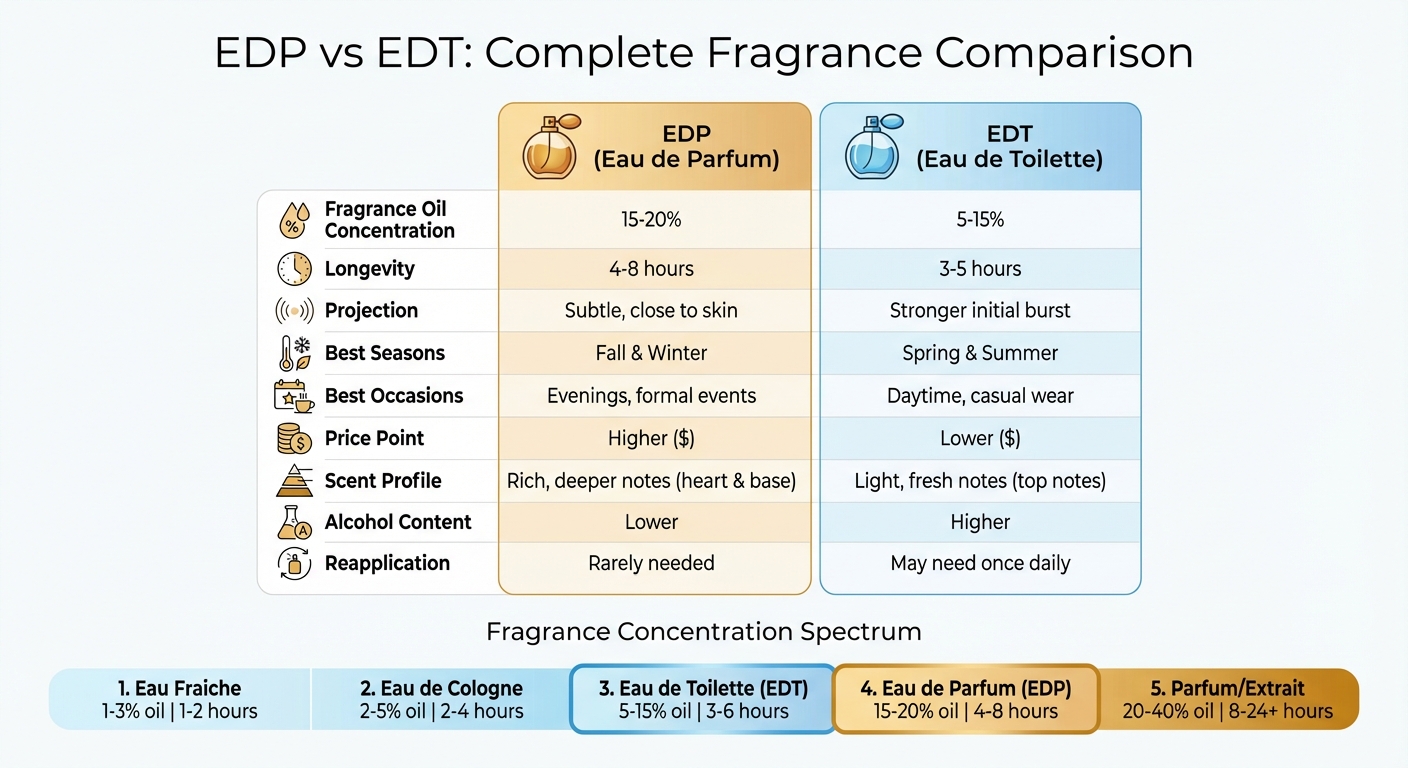
EDP vs EDT Fragrance Concentration Comparison Chart
How Fragrance Concentrations Work
What Fragrance Concentration Means
Fragrance concentration refers to the proportion of perfume oil blended with a solvent - typically alcohol and water. The higher the oil content, the richer and longer-lasting the scent. For instance, a bottle with a 15% concentration means 15% of its content is fragrance oil, while the rest is alcohol and water. Generally, a higher concentration results in a more intense aroma that lingers longer on the skin.
Alcohol plays a crucial role as the carrier, helping the scent disperse into the air. Formulations like Eau de Toilette (EDT), which have a higher alcohol ratio, evaporate quickly, delivering a strong, immediate burst of fragrance. On the other hand, Eau de Parfum (EDP) contains more oil, slowing evaporation and allowing the scent to stay closer to the skin for a longer duration.
Next, let’s see how EDP and EDT fit into the broader concentration spectrum.
The Fragrance Concentration Spectrum
EDP and EDT are just two points on a wide spectrum of fragrance concentrations. Here’s a breakdown of the main categories:
| Fragrance Type | Oil Concentration | Typical Longevity | Best For |
|---|---|---|---|
| Eau Fraiche | 1%–3% | 1–2 hours | A quick, refreshing spritz |
| Eau de Cologne | 2%–5% | 2–4 hours | Light, casual summer wear |
| Eau de Toilette | 5%–15% | 3–6 hours | Daytime, office, or casual use |
| Eau de Parfum | 15%–20% | 4–8 hours | Evening or all-day wear |
| Parfum/Extrait | 20%–40% | 8–24+ hours | Special occasions and luxury |
This spectrum helps explain how each formulation caters to different preferences and lifestyles.
Yvan Jacqueline, Managing Director of Parfums de Marly, notes: "When there is a higher fragrance oil concentration, there is more focus on the smell of the oil and fragrances generally last longer".
It’s worth mentioning that these categories aren’t regulated by universal standards. What one brand labels as EDT might be as potent as another’s EDP. Because of this variability, it’s always a good idea to test a fragrance before purchasing a full bottle.
How Concentration Changes Your Experience
Fragrance concentration not only impacts how long a scent lasts but also influences its overall character. EDPs, with their higher oil content, tend to highlight heart and base notes, creating a gradual, evolving scent experience. In contrast, EDTs focus on top notes, delivering an immediate burst of freshness that fades more quickly.
Alberto Morillas, Master Perfumer at Firmenich, explains: "Less concentrated doesn’t mean it won’t last, but it often means it will be a little bit less powerful".
These concentration differences shape the unique profiles of EDP and EDT, offering distinct experiences tailored to various occasions and preferences.
Eau de Parfum (EDP) Explained
EDP Concentration Range
Eau de Parfum, or EDP, typically contains 15–20% fragrance oil. This concentration places it between Eau de Toilette and pure Parfum or Extrait, striking a balance that allows the scent to disperse effectively while maintaining depth.
The higher oil content in EDP creates a richer scent profile, often highlighting deeper notes such as warm amber, earthy patchouli, or creamy sandalwood. These elements not only shape the fragrance’s character but also contribute to its staying power.
"Eau de parfum is the most common type of fragrance you’ll find at beauty retailers. Known for having both a powerful trail and long-lasting fragrance, EDP also has one of the highest concentrations of perfume oil." — Refinery29
How Long EDP Lasts
On average, EDP lasts 6–8 hours on the skin. In some cases, certain formulations can extend this longevity to as much as 12 hours. This endurance is thanks to the higher concentration of fragrance oil, which slows evaporation. The specific ingredients in the fragrance also play a role - base notes like sandalwood can linger for over 60 hours on a test strip, while lighter, fresher notes, such as citrus, tend to dissipate more quickly.
Skin type also impacts how long EDP lasts. Fragrance clings better to oily skin, while dry skin may cause it to fade faster. Typically, two to three sprays on pulse points - like the wrists or neck - are sufficient to carry you through an evening without needing a touch-up. Knowing how long EDP performs can help you decide when and where it’s most effective to wear.
When to Wear EDP
EDP shines in cooler weather and evening settings. Its richer concentration ensures the fragrance cuts through colder temperatures, making it a go-to choice for fall and winter months. It’s equally well-suited for formal occasions, romantic dinners, and events where you want a scent with noticeable presence.
For those with sensitive skin, EDP can be a gentler option compared to lighter concentrations. Its higher oil content means it contains less alcohol, which can be drying or irritating for some skin types. Whether for a special night out or a seasonal signature, EDP offers versatility and elegance in one bottle.
Eau de Toilette (EDT) Explained
EDT Concentration Range
Eau de Toilette (EDT) typically features a fragrance oil concentration of 5–15%. This balance makes it a fantastic choice for everyday use, offering a lighter, more casual scent profile.
With its lower oil content, EDT leans on higher alcohol levels, giving it a stronger initial burst of fragrance. However, this also means the scent fades more quickly compared to its higher-concentration counterparts. This trade-off is what makes EDT an appealing and practical option for daily wear.
How Long EDT Lasts
On average, EDT lasts about 3–5 hours. Its formula highlights fresh, fleeting top notes like citrus and aquatic elements, which evaporate faster than heavier base notes. The higher alcohol content ensures a noticeable initial projection but also contributes to its quicker dissipation. Because of this, you may find yourself reapplying EDT at least once during the day to keep the scent noticeable.
"Eau de Toilette make a good daytime, wear-in-the-office perfume strength and of course can be reapplied to suit. With a cheaper price tag, the EDT is a good daytime concentration to opt for." — Olentium
When to Wear EDT
The light and airy nature of EDT makes it perfect for specific occasions and settings. Its moderate longevity and subtle scent trail are ideal for daytime use, warmer weather, and professional environments. Whether you’re heading to the office or enjoying a casual outing, EDT’s understated presence ensures it won’t overwhelm those around you.
That said, the higher alcohol content in EDT might dry out sensitive skin. If you have delicate skin, this is something to keep in mind when deciding between EDT and Eau de Parfum (EDP) formulations.
PERFUME CONCENTRATIONS EXPLAINED | EDP vs EDT | Soki London

Your Personal Fragrance Expert Awaits
Take our quick scent quiz to discover authentic designer and niche fragrances matched to your taste — explore them as 2ml, 5ml, 8ml & 30ml decants and samples, so you can try each one before committing to a full bottle.
Find Your ScentEDP vs EDT: Side-by-Side Comparison
Let’s dive into how Eau de Parfum (EDP) and Eau de Toilette (EDT) differ, and how those differences influence your fragrance experience.
Oil Concentration Differences
The key distinction lies in their oil concentration: EDP contains 15–20% fragrance oil, while EDT has 5–15%. This difference impacts both the scent’s intensity and its development. With less oil, EDT relies on a higher mix of alcohol and water, delivering an immediate burst of freshness when applied. EDP, with its richer oil content, unfolds more gradually, revealing deeper, more layered base notes over time.
Perfumers often craft EDTs to emphasize light, airy notes, making them feel crisp and refreshing. EDP versions, however, lean into richer, often darker elements. Take Dior Sauvage as an example: the EDT version highlights bright bergamot and ambroxan for a vibrant, energetic feel, while the EDP introduces vanilla and star anise for a warmer, more sensual twist. The Parfum version takes it further, adding sandalwood and tonka bean for extra depth.
Longevity and Scent Projection
When it comes to staying power, EDP lasts 4–8 hours, while EDT fades after 3–5 hours. EDT is known for a strong initial projection, thanks to its higher alcohol content, which causes the scent to evaporate faster. However, this bold opening softens quickly, making EDT a great choice for situations where a lighter presence is preferred.
EDP, on the other hand, tends to stay closer to the skin. It creates a more subtle yet enduring scent trail, ideal for moments where you want a fragrance that lingers without overwhelming. Think of EDT as a lively introduction and EDP as a quiet, lasting impression.
Best Seasons and Occasions
EDT thrives in spring and summer. Its lighter, fresher notes work beautifully in warm weather and are perfect for casual, daytime settings like the office, outdoor gatherings, or even the gym.
EDP, however, shines in fall and winter. Its richer, more concentrated profile cuts through the chill of colder months and pairs well with heavier fabrics. It’s an excellent choice for evening events, formal occasions, or a cozy date night.
Price and Value Comparison
EDP typically comes with a higher price tag due to its concentrated oils, but it often provides better value over time since its longevity reduces the need for reapplication. EDT, with its lower upfront cost, is a more budget-friendly option for those who don’t mind refreshing their scent throughout the day.
For many fragrance lovers, the best approach is to own both. Use EDT for casual, everyday wear and save EDP for moments when you want a more lasting and impactful presence. This balance ensures you’re prepared for any occasion, whether it’s a sunny afternoon or an elegant evening out.
The same perfume as EDT, EDP and parfum: Scento decant prices
Scento sells several perfumes in more than one concentration, which lets you compare them side by side on the same skin.
| Perfume | House | 2 ml | 8 ml | Per ml (8 ml) |
|---|---|---|---|---|
| Y Eau de Toilette | Yves Saint Laurent | €6.90 | €22.90 | €2.86 |
| Y Eau de Parfum | Yves Saint Laurent | €7.90 | €22.90 | €2.86 |
| Y Le Parfum | Yves Saint Laurent | €7.90 | €23.90 | €2.99 |
| L’Interdit Eau de Toilette | Givenchy | €6.95 | €20.90 | €2.61 |
| L’Interdit Eau de Parfum | Givenchy | €6.95 | €20.90 | €2.61 |
| Boss Bottled Eau de Parfum | Hugo Boss | €6.90 | €20.90 | €2.61 |
| Boss Bottled Parfum | Hugo Boss | €6.90 | €23.90 | €2.99 |
On Scento’s retail prices, Y costs €22.90 for 8 ml as an eau de toilette and the same €22.90 as an eau de parfum, and L’Interdit costs €20.90 for 8 ml in both. The parfum adds €1 for Y and €3 for Boss Bottled at 8 ml. At decant size, then, the choice can rest on how the scent wears rather than on price.
For the next step up, read how eau de parfum compares with parfum, or see every perfume concentration explained.
How to Choose Between EDP and EDT
Match Your Lifestyle and Climate
Your daily routine and the environment you live in play a big role in deciding between Eau de Parfum (EDP) and Eau de Toilette (EDT). For example, if you spend most of your time in an office, EDT is a great choice because of its lighter, more understated presence. On the other hand, if you’re constantly on the go and need a scent that lasts, EDP’s stronger staying power might be a better fit.
Climate also matters. In hot, humid weather, EDT’s lighter and fresher profile feels more comfortable, while EDP’s deeper, richer notes shine in colder conditions. For special evening events like weddings or formal dinners, the bold and long-lasting nature of EDP makes it the ideal choice. Meanwhile, EDT is perfect for low-key daytime activities, like running errands or catching up with friends over lunch.
Factor in Your Skin Type
Your skin type significantly influences how a fragrance performs. If you have dry skin, it tends to absorb scent more quickly, making EDP - with its higher oil concentration of 15–20% - a better option for lasting aroma. Oily skin, however, naturally holds onto lighter EDT formulations longer. To make any fragrance last longer, applying an unscented moisturizer beforehand can create an ideal base.
Another consideration is alcohol content. EDP generally contains less alcohol than EDT, which can be gentler on sensitive skin, reducing the risk of dryness or irritation. Knowing how your skin reacts to fragrance can help you make a more informed choice.
Test Before Committing
Always try a fragrance on your skin before purchasing a full bottle. Your body chemistry and pH levels can dramatically affect how a scent evolves. What smells amazing on a paper strip might not translate the same way on your skin. Give the fragrance at least 30 minutes to settle so you can experience its full development - from the initial top notes to the deeper heart and base layers.
To avoid committing to an expensive full bottle too soon, consider starting with smaller decants. For example, Scento offers decants in 2 ml, 5 ml and 8 ml vials, and a 30 ml bottle decant on most perfumes, allowing you to test both EDP and EDT versions without the financial risk of a $300+ bottle. This approach also lets you see how the fragrance performs in various conditions and settings before making a long-term investment.
Conclusion
The main difference between Eau de Parfum (EDP) and Eau de Toilette (EDT) comes down to their fragrance oil concentration, which directly impacts how long they last and how strongly they project. EDT typically contains 5% to 15% fragrance oil, offering a lighter, fresher scent that lasts about 3 to 5 hours - perfect for daytime wear or warmer weather. On the other hand, EDP has a higher concentration of 15% to 20%, giving it a richer and more layered profile that lingers for 4 to 8 hours, making it a great choice for evenings or colder seasons. This difference in concentration plays a key role in shaping how a fragrance performs and feels.
Neither option is inherently superior - it all depends on your preferences, lifestyle, and the occasion. EDT is a practical choice for daily wear, while EDP shines when you need a scent with staying power.
"The potency of a perfume can shape the essence of our presence, leaving a lasting impression on those around us." – Decanted.uk
Your body chemistry, skin type, and environment also influence how a fragrance evolves throughout the day. For instance, brands like Scento offer sample sizes of 2 ml, 5 ml and 8 ml vials, and a 30 ml bottle decant on most perfumes, allowing you to explore scents without committing to a full bottle priced at $300 or more.
Understanding fragrance concentration helps you tailor your scent to your needs. Whether you gravitate toward the breezy lightness of EDT or the deeper allure of EDP, picking the right concentration ensures your fragrance complements your skin, schedule, and style with every spray.
Your questions, answered
- Is EDP stronger than EDT?
- Yes, in oil content. Floris puts eau de parfum at around 15–20% fragrance oil and eau de toilette at around 5–15%. Labels are not standardised, though, so one brand's eau de toilette can be as potent as another brand's eau de parfum, and Fragrantica confirms that any brand can label a liquid as it likes. The most reliable test is to wear both on your own skin.
- Which lasts longer, EDP or EDT?
- Eau de parfum, usually. Floris gives eau de parfum 6–8 hours on the skin and eau de toilette 4–6 hours. Your skin, the climate and the materials in the formula all shift those figures, so treat them as a guide to what you can expect rather than a fixed number.
- Does skin type impact how long EDP and EDT last?
Eau de Parfum (EDP) generally contains 15%–20% fragrance oils, giving it a wear time of around 6 hours or more. In contrast, Eau de Toilette (EDT) has a lower concentration of oils and typically lasts about 3–4 hours. That said, how long either lasts can depend on your skin type.
For instance, if you have oily skin, fragrances may linger longer since the natural oils help the scent adhere better. On the flip side, dry skin might make a fragrance fade more quickly due to its lack of moisture. To extend the life of your scent, try moisturizing your skin before applying the fragrance, and focus on pulse points like your wrists and neck, where the scent can develop and diffuse more effectively.
- When should you wear Eau de Parfum (EDP) versus Eau de Toilette (EDT)?
Eau de Parfum (EDP) shines during evenings, cooler seasons, and formal events like weddings or romantic dinners. Its deeper, more enduring aroma makes it a great choice when you want a fragrance that lingers and leaves an impression.
In contrast, Eau de Toilette (EDT) is your go-to for daytime, warmer weather, and casual or office environments. Its lighter, more refreshing profile feels effortless and perfectly suited for everyday moments.
The choice between EDP and EDT often comes down to the occasion and mood — EDP brings elegance and depth, while EDT offers an easygoing, airy charm.
- How can I try a fragrance without buying a full bottle?
Testing out a fragrance before committing to a full bottle is a smart and budget-friendly move. Small sample sizes, like 2 ml, 5 ml and 8 ml vials, and a 30 ml bottle decant on most perfumes, let you explore a scent without a big investment. Simply apply a dab to pulse points - such as your wrists, neck, or inner elbows - and allow the fragrance to unfold on your skin.
Observe how the scent changes over time, from the bright top notes you notice first to the richer heart and base notes that emerge hours later. Take note of how long it lasts and how far it projects to see if it matches your style and preferences. Sampling in this way gives you the confidence to choose the right fragrance without splurging on a full-sized bottle upfront.

