Fragrance Layering ist die Kunst, mehrere duftende Produkte – wie Parfums, Lotionen oder Öle – zu kombinieren, um einen ganz persönlichen Duft zu kreieren. Diese Methode ermöglicht es Ihnen, Ihre Duftsignatur individuell zu gestalten, indem Sie harmonische oder kontrastierende Noten miteinander verbinden. Hier ist ein kompakter Leitfaden für den Einstieg:
- So funktioniert es: Tragen Sie Düfte in der richtigen Reihenfolge auf – Basisnoten (z. B. Amber, Vanille), Herznoten (z. B. florale Noten, Gewürze) und Kopfnoten (z. B. Zitrus, Lavendel). Lassen Sie jede Schicht kurz auf der Haut ruhen, bevor Sie die nächste auftragen.
- Warum es so beliebt ist: Es verleiht Ihrem Duft mehr Tiefe, verbessert seine Haltbarkeit und macht ihn einzigartig im Zusammenspiel mit Ihrer Hautchemie.
- Tipps für Einsteiger: Beginnen Sie mit zwei harmonierenden Düften aus derselben Duftfamilie (z. B. floral oder holzig). Nutzen Sie Pulspunkte wie Handgelenke oder Hals für eine schönere Duftentfaltung.
- Häufige Fehler: Vermeiden Sie es, Ihre Handgelenke aneinander zu reiben, zu dominante Düfte zu kombinieren oder zu viel auf einmal aufzutragen.
Diese Praxis ist in Traditionen wie der nahöstlichen Parfümeriekunst verwurzelt und ideal für alle, die ihre Duftmöglichkeiten erweitern möchten, ohne zusätzliche Produkte kaufen zu müssen. Experimentieren Sie mit kleinen Abfüllungen, um Ihre Kompositionen zu verfeinern und herauszufinden, was am besten mit Ihrer Hautchemie harmoniert.
Layering 101 | Wie man Düfte layered & Empfehlungen für Duftkombinationen
Duftnoten erklärt
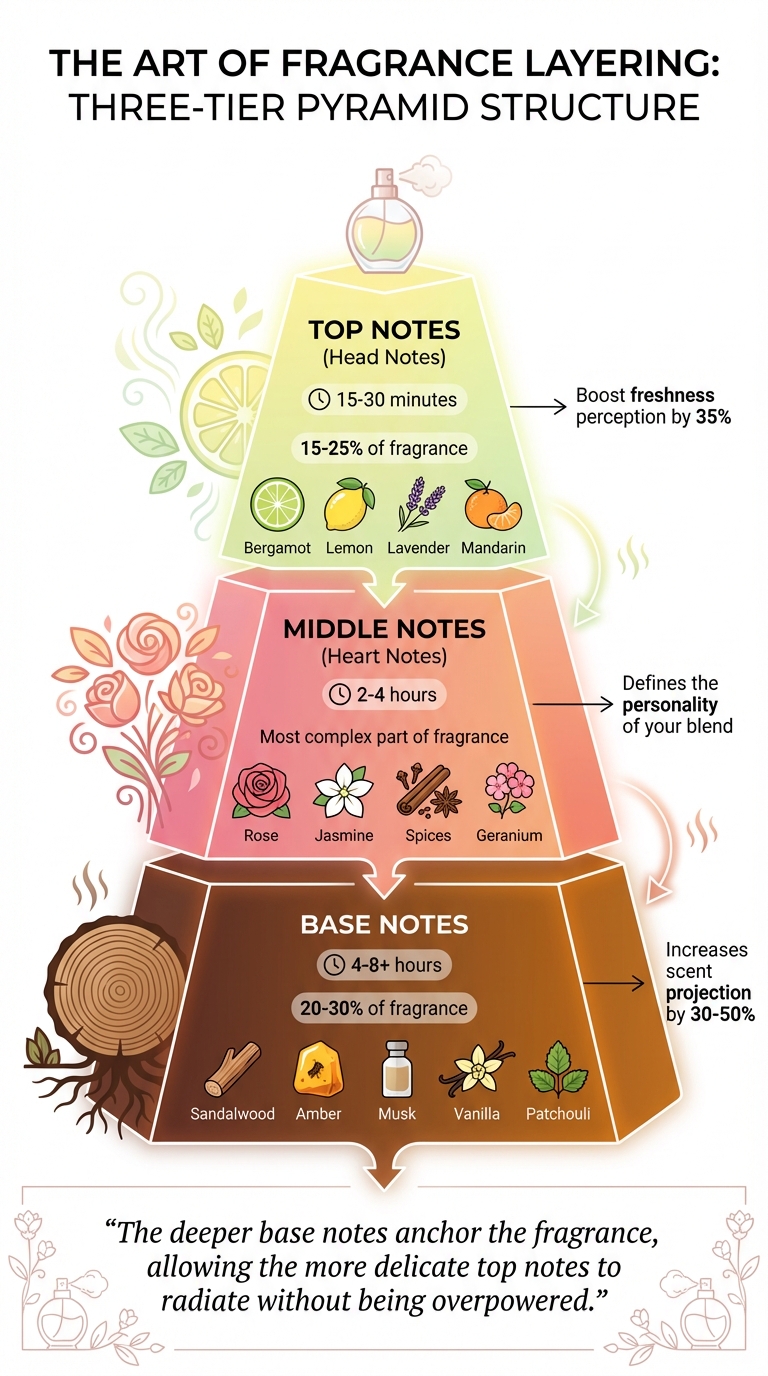
Duftpyramide: Kopf-, Herz- und Basisnoten erklärt
Zu verstehen, wie Parfums aufgebaut sind, kann ein echter Wendepunkt sein – besonders beim Layering von Düften. Die meisten Duftkompositionen basieren auf einem dreistufigen System, das als Duftpyramide bekannt ist und bestimmt, wie sich ein Duft im Laufe der Zeit auf Ihrer Haut entfaltet.
Jede Ebene dieser Pyramide erfüllt eine eigene Funktion. Die Kopfnoten schenken den ersten Dufteindruck, die Herznoten bilden das Herzstück der Komposition, und die Basisnoten verleihen Tiefe und Haltbarkeit. Beim Layering verschmelzen Sie im Grunde mehrere dieser Pyramiden zu etwas vollkommen Eigenem. Zu verstehen, wie lange jede Note anhält und wie sie mit Ihrer Haut interagiert, ist entscheidend, um eine harmonische Duftkomposition zu erschaffen.
Kopfnoten
Kopfnoten sind die lebendigen, flüchtigen Komponenten eines Duftes. Sie sind die ersten Nuancen, die Sie direkt nach dem Auftragen eines Parfums wahrnehmen, bleiben jedoch nicht lange – in der Regel 15 bis 30 Minuten, bevor sie verfliegen. Typische Kopfnoten sind Bergamotte, Zitrone, Lavendel und Mandarine.
Beim Layering verleihen Kopfnoten Ihrer Komposition Frische und Energie. Eine Studie aus dem Jahr 2021 im Journal of Sensory Studies zeigte, dass zitrusbetonte Kopfnoten die Wahrnehmung von Frische um 35 % steigern können. Obwohl diese Noten nur 15–25 % des anfänglichen Duftprofils ausmachen, spielen sie eine zentrale Rolle dabei, den Ton anzugeben, ohne die gesamte Komposition zu dominieren. Dieses Wissen hilft Ihnen, ergänzende Kopfnoten zu wählen, die Ihr Layering raffiniert unterstreichen.
Herznoten
Herznoten, oft auch als Herz des Duftes bezeichnet, rücken in den Mittelpunkt, sobald die Kopfnoten verblassen. Sie sind der komplexeste Teil einer Komposition und halten in der Regel 2 bis 4 Stunden an. Beliebte Herznoten sind Rose, Jasmin, Gewürze und Geranie.
Beim Layering geschieht hier die eigentliche Magie – Herznoten definieren den Charakter Ihrer Komposition und fungieren als Brücke zwischen Kopf- und Basisnoten. Es ist entscheidend, Kombinationen direkt auf Ihrer Haut zu testen, da die individuelle Hautchemie und der pH — Wert maßgeblich beeinflussen können, wie diese Noten miteinander interagieren. So stellen Sie sicher, dass das Herz Ihres geschichteten Duftes vollkommen harmonisch wirkt.
Basisnoten
Basisnoten sind das Rückgrat eines jeden Parfums und sorgen für Tiefe und Beständigkeit. Sie machen in der Regel 20–30 % der Duftkomposition aus und können 4 bis 8 Stunden oder länger wahrnehmbar bleiben. Zu den wichtigsten Basisnoten zählen Sandelholz, Amber, Moschus, Vanille und Patchouli.
"Die tieferen Basisnoten verankern den Duft und ermöglichen es den feineren Kopfnoten, sich zu entfalten, ohne überlagert zu werden." – Touchland
Basisnoten zeigen ihre ganze Schönheit während des Dry-downs, der letzten Phase eines Duftes, wenn Kopf- und Herznoten weitgehend verflogen sind und die Basis in den Vordergrund tritt. Eine Studie von Interparfums aus dem Jahr 2022 ergab, dass Layering die Duftausstrahlung um 30–50 % steigern kann, wodurch Basisnoten noch eindrucksvoller wirken. Hier erhält Ihr Duft seine bleibende Präsenz – daher ist die Wahl harmonierender Basisnoten essenziell für eine langanhaltende und elegante Komposition.
Düfte auswählen, die harmonieren
Beginnen Sie beim Layering idealerweise mit Düften aus derselben Familie. Kombinieren Sie zum Beispiel ein rosiges Parfum mit einem Duft, der Jasmin in den Mittelpunkt stellt. So bleibt die Komposition ausgewogen und das Risiko kollidierender Noten wird minimiert.
Sobald Sie sich sicherer fühlen, können Sie mithilfe des Duftkreises den nächsten Schritt gehen und komplementäre Familien entdecken. Dieses Instrument hilft Ihnen, natürliche Kombinationen anhand von drei einfachen Ansätzen zu finden: benachbarte Familien (z. B. Zitrus mit Aquatisch oder Aromatisch), Gegensätze ziehen sich an (wie Zitrus mit Soft Amber auf der gegenüberliegenden Seite des Kreises) oder die Dreierharmonie (drei Düfte, die ein Dreieck bilden, etwa Zitrus, Floral und Hölzer).
"Fragrance Layering bietet die ultimative Freiheit. Es ermöglicht Ihnen, einen Duft zu kreieren, der Ihrer einzigartigen Stimmung entspricht und ausdrückt, was Sie an einem bestimmten Tag der Welt vermitteln möchten." – Jean Madar, CEO und Chairman von Interparfums.
Ein weiterer Tipp für das Layering: Tragen Sie Düfte nach ihrer Schwere auf. Beginnen Sie mit den intensiveren Kompositionen – jenen mit Basisnoten wie Holz, Amber oder Moschus – und vollenden Sie das Ritual mit leichteren Optionen wie Zitrus oder floralen Nuancen. So wird sichergestellt, dass die zarten Kopfnoten nicht von reichhaltigeren Kompositionen überlagert werden.
Testen Sie Ihre Kombinationen stets mindestens 30 Minuten lang auf Ihrer Haut. Düfte können sich im Zusammenspiel mit Ihren natürlichen Hautölen und Ihrem pH — Wert stark verändern – was im Flakon wunderbar duftet, kann sich auf Ihrer Haut ganz anders entwickeln.
Zum Experimentieren sind die 2-ml- und 8-ml — Abfüllungen von Scento ideal. Die 2-ml — Größe reicht für mehrere Testläufe, während die 8-ml — Option (ungefähr 120 Sprühstöße) es Ihnen ermöglicht, Ihre Lieblingskombinationen über Wochen zu genießen, bevor Sie sich für einen Flakon in Originalgröße entscheiden. Diese Formate machen es besonders einfach, Ihre Layering — Kunst zu verfeinern, bevor Sie sich im nächsten Abschnitt fortgeschritteneren Auftragetechniken widmen.
Ihr persönlicher Duftexperte erwartet Sie
Machen Sie unser kurzes Duftquiz und entdecken Sie authentische Designer- und Nischenparfums, die zu Ihrem Geschmack passen – als 2–8ml Dekants und Proben, damit Sie jeden Duft testen können, bevor Sie sich für einen ganzen Flakon entscheiden.
Finden Sie Ihren DuftWie man Düfte layered
Bereiten Sie Ihre Haut vor
Um das Beste aus Ihrem Duft — Layering herauszuholen, konzentrieren Sie sich darauf, Düfte auf Ihre Pulspunkte aufzutragen – etwa auf Handgelenke, Hals, hinter die Ohren, in die Armbeugen und hinter die Knie. Diese Bereiche geben auf natürliche Weise Wärme ab und helfen dem Duft, sich besonders schön zu entfalten.
Düfte in der richtigen Reihenfolge auftragen
Sobald Ihre Haut vorbereitet ist, beginnen Sie damit, Ihren Duft Schicht für Schicht aufzubauen. Starten Sie mit den intensivsten Basisnoten – etwa Oud, Amber, Vanille oder Moschus – direkt auf Ihren Pulspunkten. Diese opulenten, erdenden Düfte bilden das Fundament Ihrer Komposition. Anschließend folgen Herznoten wie florale Nuancen oder Gewürze, die Sie über die Basis legen oder auf Bereiche wie die Armbeugen auftragen können. Den Abschluss bilden die leichtesten Kopfnoten – etwa Zitrus, aquatische Akzente oder grüner Tee –, damit diese frischen Facetten klar wahrnehmbar bleiben.
Zwischen den Anwendungen warten
Geduld ist beim Layering von Düften essenziell. Lassen Sie jede Schicht sich setzen, bevor Sie die nächste auftragen. So bewahrt jeder Duft seinen Charakter und verschmilzt nicht zu einer undefinierbaren Mischung.
"Lassen Sie jede Schicht sich setzen, bevor Sie die nächste hinzufügen, sodass jede Lage sich ein wenig entfalten kann, bevor die nächste aufgetragen wird." – Olentium
Wenn Sie dieser Methode folgen, entsteht ein harmonisches Duftprofil, das sich im Laufe des Tages elegant weiterentwickelt.
Empfehlungen zum Aufsprühen
| Layering — Schritt | Dufttyp | Empfohlene Auftragsbereiche |
|---|---|---|
| Grundlage | Schwere Basis (Oud, Amber, Vanille, Moschus) | Pulspunkte |
| Herz | Herznoten (Florales, Gewürze) | Über der Basisschicht oder in den Armbeugen |
| Top | Leichte Düfte (Zitrus, Aquatisch, Frisch) | Pulspunkte oder als feiner Hauch auf der Kleidung |
Fehler, die Sie vermeiden sollten
Handgelenke aneinander reiben
Widerstehen Sie dem Impuls, Ihre Handgelenke nach dem Auftragen des Duftes aneinander zu reiben. Auch wenn es harmlos erscheinen mag, stört diese weit verbreitete Gewohnheit die natürliche Entwicklung des Duftes – insbesondere der feinen Kopfnoten – und hindert sie daran, sich vollständig zu entfalten. Lassen Sie den Duft stattdessen ganz natürlich auf Ihrer Haut trocknen, damit sich jede Schicht so entwickeln kann, wie sie gedacht ist.
Unvereinbare Düfte mischen
Nicht jeder Duft eignet sich zum Layering. Wenn Düfte nicht harmonieren, konkurrieren sie miteinander, statt miteinander zu verschmelzen, und es entsteht das, was manche Experten als eine "verwaschene Mischung" bezeichnen, bei der die einzelnen Noten ihren Charakter verlieren. Zwei schwere Kompositionen – etwa intensive Gourmand — Düfte oder Oud — Kreationen – zusammenzutragen, kann schnell überwältigend wirken und subtilere Schichten unterdrücken.
Um dies zu vermeiden, nutzen Sie Hilfsmittel wie den Duftkreis, um kompatible Kombinationen zu finden. Zum Beispiel:
- Benachbarte Noten: Kombinieren Sie Düfte aus angrenzenden Unterfamilien, etwa Zitrus und Aquatisch.
- Kontrastierende Noten: Verbinden Sie komplementäre Gegensätze, wie Zitrus mit Soft Amber.
"Ein Zitrusduft kann etwas Tiefes und Harziges aufhellen, während sanfte florale Noten markantere Hölzer oder Gewürze abmildern können. Die faszinierendsten Kombinationen kontrastieren oder ergänzen sich, ohne zu kollidieren." – Nick Smart
Lassen Sie beim Layering einen Duft die Hauptrolle übernehmen und den anderen ihn elegant ergänzen. So kann beispielsweise eine scharfe Komposition mit Vanille oder Sandelholz weicher gemacht werden, während ein allzu süßer Duft durch grüne Noten wie Galbanum oder frische Zitrusnuancen ausbalanciert wird.
Zu viel auftragen
Beim Layering gilt: Weniger ist mehr. Beschränken Sie sich auf zwei oder drei harmonierende Düfte, damit die Gesamtkomposition klar und raffiniert bleibt. Zu viele konkurrierende Noten können zu olfaktorischer Ermüdung führen – Ihr Gehirn blendet die Düfte gewissermaßen aus, wenn es ihnen zu intensiv ausgesetzt ist. Beginnen Sie mit weniger Sprühstößen, als Sie zunächst für nötig halten; mehr hinzufügen können Sie später immer noch. Für ein ausgewogenes Ergebnis tragen Sie die Schichten auf unterschiedliche Pulspunkte auf, damit sich die Düfte natürlich in der Luft um Sie herum vermischen.
Den Prozess überstürzen
Geduld ist beim Layering von Düften unerlässlich. Wenn Sie die angemessene Wartezeit zwischen den Anwendungen auslassen, ist eine chaotische Mischung nahezu vorprogrammiert. Jede Schicht benötigt mindestens ein bis zwei Minuten, um sich zu setzen und mit Ihrer Haut zu interagieren, bevor die nächste hinzukommt. Wenn Sie sich diese Zeit nehmen, wirkt das Endergebnis harmonisch und stilvoll – statt übereilt und unzusammenhängend.
Fazit
Fragrance Layering muss nicht kompliziert sein. Beginnen Sie mit den Grundlagen: Verstehen Sie Duftnoten, nutzen Sie den Duftkreis, um komplementäre oder kontrastierende Duftfamilien zu erkennen, und tragen Sie schwerere Düfte vor leichteren auf. Lassen Sie jede Schicht sich auf natürliche Weise auf Ihrer Haut entfalten und widerstehen Sie der Versuchung, Ihre Handgelenke zu reiben oder zu viele Düfte gleichzeitig aufzutragen.
Dieser Prozess lebt ebenso sehr vom Experimentieren wie vom persönlichen Geschmack. Was für die eine Person funktioniert, muss nicht zwangsläufig für eine andere passen – und das ist vollkommen in Ordnung. Beginnen Sie mit einfachen Kombinationen, etwa einer parfümierten Bodylotion zusammen mit einem einzelnen Parfum, bevor Sie sich an komplexere Duftkompositionen wagen.
Um das Entdecken noch einfacher zu machen, bietet Scento Abfüllungen in den Größen 0,75 ml, 2 ml und 8 ml an. Mit diesen kleineren Proben können Sie eine Vielzahl an Designer — Düften ausprobieren, ohne sich direkt auf Flakons in Originalgröße festlegen zu müssen. Es ist eine elegante und kosteneffiziente Möglichkeit, zu kombinieren und zu variieren, die Noten zu finden, die mit Ihrer Hautchemie harmonieren, und Ihr ganz persönliches Duftprofil zu verfeinern.
Da 70 % der Amerikaner empfindliche Haut haben, ist ein Patch — Test beim Ausprobieren neuer Kombinationen unverzichtbar. Bleiben Sie bei höchstens zwei oder drei Düften im Layering, um eine sensorische Überforderung zu vermeiden – sowohl für sich selbst als auch für Ihr Umfeld. Mit Zeit und Übung entwickeln Sie ein feines Gespür dafür, welche Düfte wunderbar miteinander verschmelzen und welche nicht. Diese Schritte vollenden Ihre Reise in die Kunst des Fragrance Layering.
FAQs
Woran erkenne ich, ob sich zwei Düfte gut layern lassen?
Um zu prüfen, ob zwei Düfte gut zusammenwirken, achten Sie auf ihre komplementären Noten und darauf, wie sie miteinander verschmelzen. Beginnen Sie mit einem Duft, den Sie bereits lieben, und kombinieren Sie ihn mit einem, der kompatible Eigenschaften besitzt – etwa floral mit fruchtig oder holzig mit würzig. Gemeinsame Basisnoten wie Vanille oder Moschus können für eine besonders geschmeidige Verbindung sorgen. Tragen Sie kleine Mengen beider Düfte auf Ihre Haut auf, um zu beobachten, wie sie sich im Laufe der Zeit entwickeln, und ob die Kombination ausgewogen und angenehm wirkt.
Wie lange sollte ich zwischen den einzelnen Schichten warten?
Für optimale Layering — Ergebnisse sollten Sie jedem Duft etwa 15 Minuten Zeit geben, sich zu entfalten, bevor Sie den nächsten auftragen. Diese Wartezeit ermöglicht es den Noten, sich vollständig zu entwickeln, sodass sie sanft miteinander verschmelzen und ein nuancierteres, langanhaltenderes Dufterlebnis schaffen.
Wie kann ich dafür sorgen, dass ein geschichteter Duft länger hält?
Damit Ihr geschichteter Duft länger anhält, beginnen Sie mit sauberer, gut mit Feuchtigkeit versorgter Haut. Duft haftet besser auf hydratisierter Haut und bleibt so über den Tag hinweg präsenter. Eine unparfümierte Lotion als Basis vor dem Auftragen Ihrer Düfte kann die Haltbarkeit zusätzlich intensivieren.