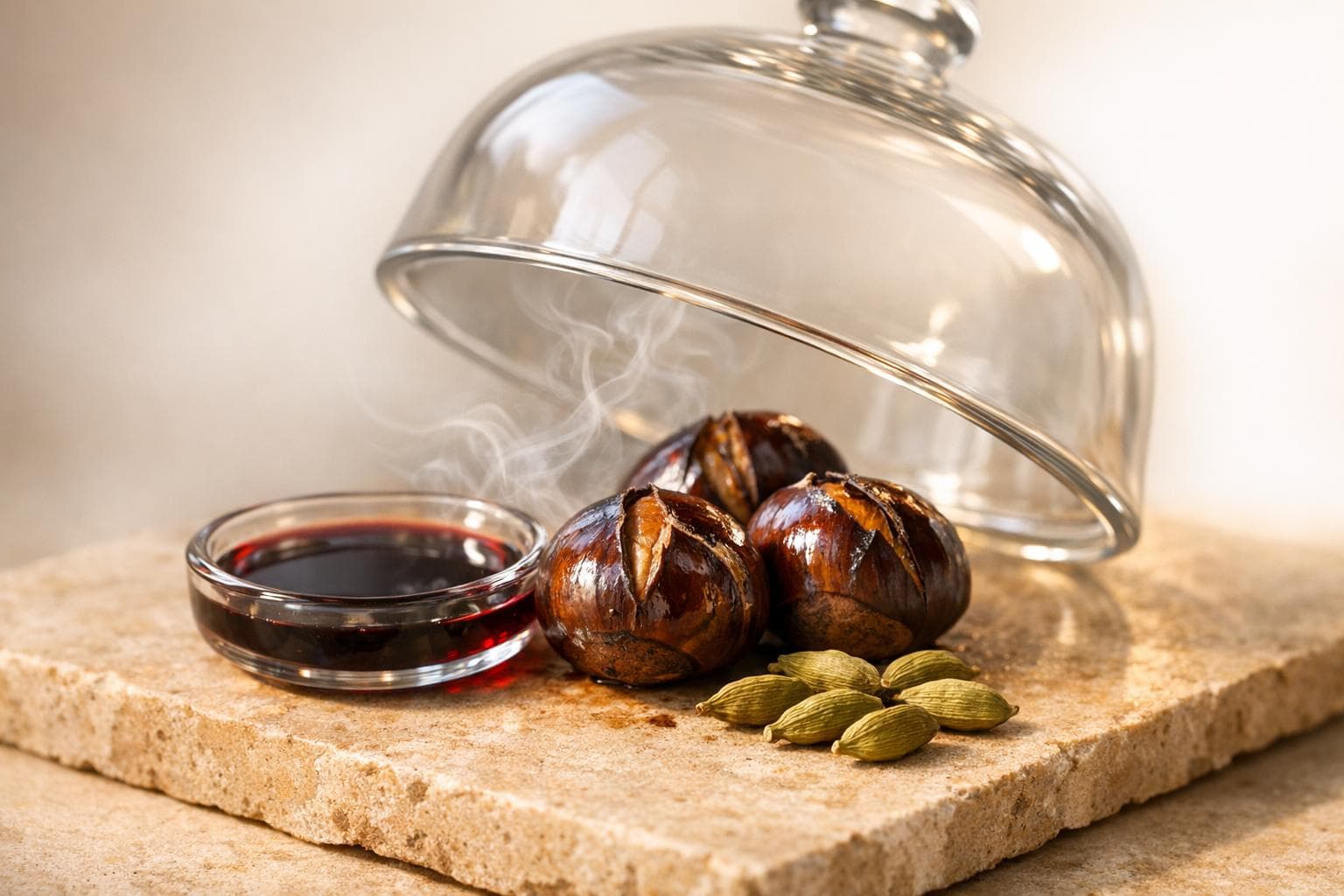
European harvest festivals offer a sensory journey through the unique aromas of the season. From the smoky warmth of Nordic bonfires to the sweet must of Italian vineyards, each region tells its story through scent. Here’s what you’ll experience:
- Germany: Beer hops, roasted meats, onion garlands, and earthy pumpkin aromas dominate Oktoberfest and Erntedankfest. Local touches like onion pie and pumpkin-spice beer add depth.
- Italy: The grape harvest fills the air with sweet must, fermentation notes, and truffle earthiness. Tuscany and Piedmont shine with Sangiovese and Nebbiolo grapes.
- France: Normandy’s cider apples, Champagne’s limestone freshness, and Grasse’s rose fields highlight harvest time. Chestnuts and Menton lemons add seasonal richness.
- UK/Celtic: Spiced apples, bonfire smoke, and damp earth define Mabon celebrations. Heritage fruits and cider-making traditions are central.
- Iberia: Roasted chestnuts, smoky magostos, and fermenting wine are key. Almond-based treats and olive oil aromas add regional variety.
- Nordic: Cardamom, apples, birch tar, and pine create a crisp autumn profile. Foraged berries and herring reflect northern resilience.
Modern perfumery draws inspiration from these festivals, blending traditional scents with contemporary notes. From smoky bonfires to fruity wines, these aromas connect us to Europe’s harvest heritage.
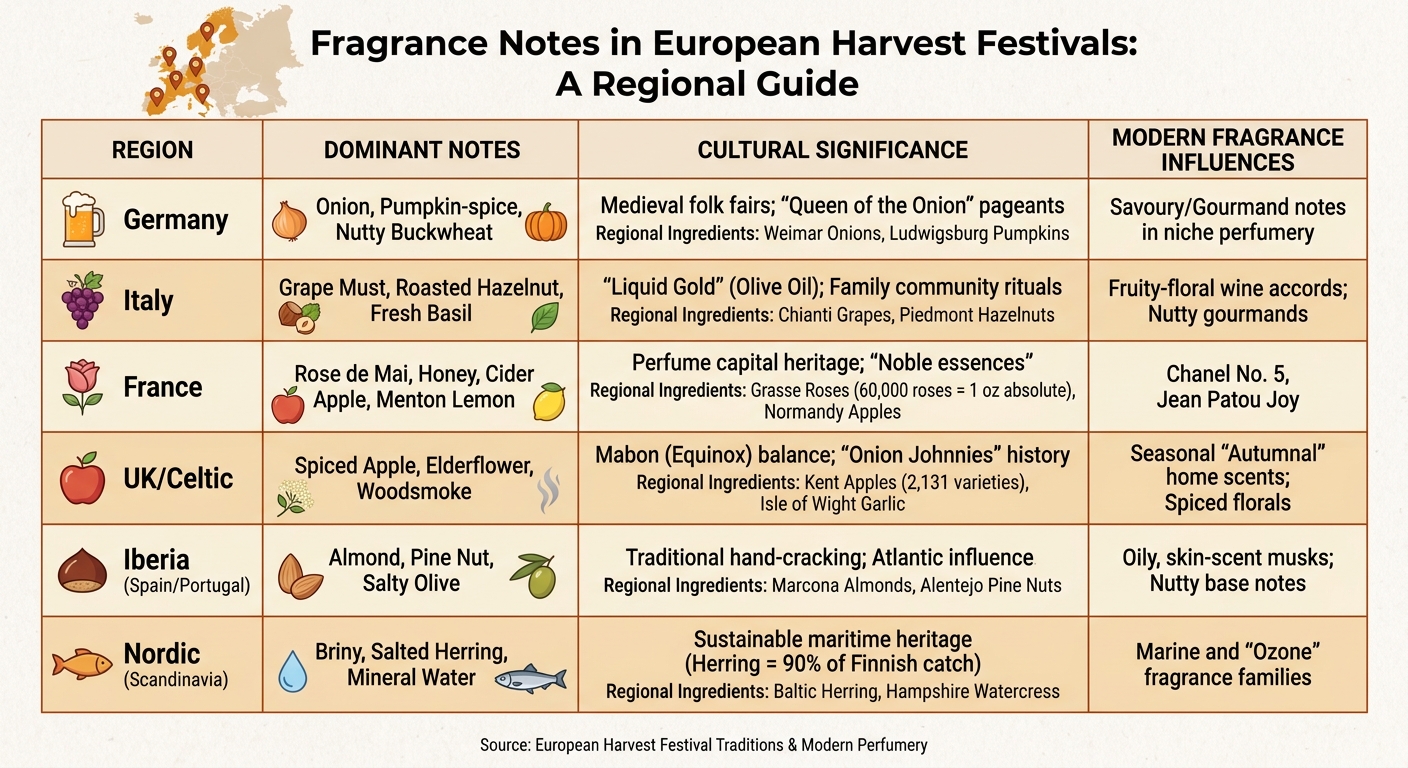
European Harvest Festival Fragrance Notes by Region
1. German Oktoberfest and Erntedankfest
Dominant Notes
Germany’s harvest celebrations offer two distinct scent landscapes. Oktoberfest and similar Volksfeste are dominated by the hearty aroma of hops and malt wafting from beer tents, complemented by the smell of roasted meats and freshly baked bread. In contrast, Erntedankfest (Harvest Thanksgiving) carries earthy tones - wheat, rye, straw, and hay - echoing the traditional Erntekrone (harvest crown) and Erntepuppe (harvest dolls).
Churches further enhance the sensory experience with Ernteteppich (harvest carpets), intricate displays of fruits, vegetables, nuts, and wine that collectively symbolize "God’s bounty". As Abi Carter, Editor in Chief at IamExpat Media, notes:
"The harvest crown (Erntekrone) is a tradition that has carried through from pagan times... constructed from four ears of grain - symbolising hope, faith, concern and gratitude".
These festivals, rich in tradition, create a sensory tapestry that varies by region.
Regional Ingredients
Regional celebrations add their own unique touches. The Weimar Onion Market (Zwiebelmarkt), which dates back to 1653, is famous for its artisanal onion garlands and the warm, inviting aroma of onion pie. Meanwhile, the Ludwigsburg Pumpkin Festival - the largest of its kind globally - introduces the earthy scent of pumpkins, combined with modern twists like pumpkin-spice beer.
These localized traditions not only preserve the past but also inspire contemporary interpretations of seasonal aromas.
Modern Fragrance Influences
Today’s festivals blend traditional scents with modern influences. For example, the Ludwigsburg Pumpkin Festival’s 25th anniversary in 2024 highlighted this evolution by combining historic displays with contemporary aromatic products. In Erntedankfest celebrations, American elements such as roasted turkey and cranberries have started to appear, occasionally replacing the more traditional roasted goose. Modern "Harvest" fragrance oils now capture these festive atmospheres, layering sugar pie pumpkin top notes with apple cider and maple butter, rounded out by a base of cardamom, cinnamon, and clove.
2. Italian Festa dell’Uva: Sage and Grape Harvests
Dominant Notes
Italy’s grape harvest, known as La Vendemmia, ushers in an aromatic season stretching from late August to October. The journey begins in Sicily and moves northward, ending in Piedmont as Nebbiolo grapes reach their peak. During this period, the air fills with the sweetness of freshly picked grapes, the tang of pressed must, and the complex scents of fermentation. In Piedmont, Nebbiolo is celebrated for its "haunting perfume", which lingers in the atmosphere and becomes a defining feature of the region’s sensory experience [3, 14].
Cultural Significance
The grape harvest isn’t just about agriculture - it’s a collective celebration deeply rooted in tradition. Communities unite through hard work and shared festivities, creating a bond between people and their land. As Valeria Padalka of Into the Vineyard puts it:
"October in Piedmont is extraordinary: truffles, Nebbiolo, golden hillsides."
One of the most cherished traditions is the pranzo di Vendemmia, a communal feast enjoyed amidst the vineyards. In Tuscany’s Chianti region, the town of Impruneta hosts the annual Festa dell’Uva each September. This event showcases massive grape-themed floats, some over 9 metres tall, honouring a 2,000-year-old winemaking heritage. Each region adds its own twist to these celebrations, reflecting local flavours and customs.
Regional Ingredients
Italy’s diverse terroirs contribute a rich tapestry of aromas and flavours during the harvest season. In Tuscany, Sangiovese grapes pair with hearty, rustic feasts, while Piedmont’s Nebbiolo harmonises with the earthy aroma of white truffles. In Veneto, the appassimento method - drying grapes on straw mats for Amarone - introduces a distinct olfactory profile. Meanwhile, Sicily’s volcanic soils on Mount Etna impart mineral-rich notes to varieties like Nerello Mascalese and Carricante. Beyond grapes, autumn brings the scent of freshly pressed olive oil, the comforting smokiness of roasting chestnuts, and the herbaceous touch of sage in local dishes [1, 3, 14]. Together, these elements weave a sensory narrative tied to the land and its traditions.
Modern Fragrance Influences
Today’s festivals seamlessly blend age-old practices with modern approaches. The traditional assaggio dell’acino - where winemakers assess grape ripeness by crushing the skins and pulp - still releases a burst of fresh, fruity aromas. This sensory ritual continues to captivate both locals and visitors. With the rise of slow travel, more people are drawn to vineyards to experience these enchanting scents firsthand, immersing themselves in the timeless beauty of the harvest season.
3. French Vendanges and Fête des Vendanges
Dominant Notes
The grape harvest in France brings a unique mix of aromas that reflect the land and tradition. Maison Puyvalin describes the scent as a blend of sweet grape must, dark fruits like blackcurrant (cassis) and blackberry, and the woody, resinous character of oak barrels used during aging. In Champagne, the harvest offers a different olfactory experience, with notes evoking freshly baked bread and wet limestone, as noted by CandleScience. The overall atmosphere combines sticky, sweet must with the earthy dampness of vineyard soil, creating a sensory connection to the harvest season.
Cultural Significance
Harvest time in France is steeped in tradition and celebration. Rituals like the Cochelet in Champagne, the Paulée in Burgundy, the R’voule in Beaujolais, and the Gerbaude in Bordeaux highlight the importance of this season. Even the French Republican calendar once marked "Vendémiaire" as a dedicated harvest month, underscoring its historic significance. A long-standing rule suggests harvest begins 100 days after the vine flowers, but the process cannot start until the ban des vendanges - a legal decree - is lifted for each region. These customs tie the French harvest to broader European traditions, where the season is marked by communal festivities. Paris, for instance, celebrates the Fête des Vendanges in Montmartre every October, with wine stalls and local foods surrounding the city’s historic urban vineyard.
Regional Ingredients
France’s diverse regions offer distinct ingredients that enrich the sensory tapestry of the harvest. Normandy, for example, is known for its cider apples, producing around 60% of the country’s bittersweet varieties. Provence celebrates its roasted chestnuts during the Fête de la Chataîgne, while Champagne highlights delicate local flora like apple blossoms, violets, white peaches, and strawberries. The Menton Lemon Festival, famous for its massive citrus sculptures, fills the air with the bold aroma of oranges and lemons. Menton lemons, with their thick pith and mild flavor, are particularly prized for caramelization. In Champagne, the tradition of hand-picking grapes ensures quality and preserves the subtle influences of these regional ingredients in the wine.
Modern Fragrance Influences
While rooted in tradition, modern practices are bringing new dimensions to the harvest’s aromatic landscape. In warmer regions like Provence, night harvesting has gained popularity. Picking grapes at night or early morning helps preserve the delicate fragrances of white and rosé varieties by reducing oxidation. Climate changes have also shifted harvest timelines, with scenes once typical of October now occurring as early as August or September. Today, fragrance collections draw inspiration from these harvest elements, incorporating notes of must, damp earth, and cassis to evoke the essence of the season. These sensory experiences extend beyond the vineyards into urban celebrations, where wine stalls and regional markets keep the aromatic traditions alive. This blend of heritage and modernity reflects the evolving story of European harvests.
4. British and Celtic Harvest Homes with Mabon
Dominant Notes
The aromas of British and Celtic harvest traditions are unmistakable. Apples - both fresh and baked - stand out, accompanied by spices like cinnamon, clove, nutmeg, ginger, and allspice. Add to that the smoky scent of bonfires, damp earth, and fallen leaves, and you’ve got the quintessential fragrance of the season. Herbs such as sage, rosemary, chamomile, and bay laurel add another layer to this rich tapestry of scents. Together, these elements perfectly encapsulate Mabon, the Autumn Equinox, which symbolises a balance between light and dark. These fragrances naturally tie into the communal celebrations and rituals marking the harvest.
Cultural Significance
Mabon is more than just a seasonal marker; it’s a celebration of abundance and gratitude. Often referred to as the "Pagan Thanksgiving", it honours the second harvest, focusing on fruits like apples and gourds. Historically, British Harvest Home customs included rituals like "crying the neck", where the final sheaf of grain was ceremonially cut, followed by communal feasts. As Brigid Trading Company puts it:
"Mabon is your invitation to slow down, gather indoors, and celebrate the fruits, vegetables, and grains of your hard work and your community’s efforts together".
Bonfires lit during these celebrations don’t just warm the body - they also forge a deeper sense of connection among participants. Apples, a symbol of knowledge and immortality in British folklore, often take centre stage in traditional games like bobbing for apples, adding a touch of whimsy and tradition to the festivities.
Regional Ingredients
The UK’s rich agricultural history shines through its harvest. The National Fruit Collection alone boasts 2,131 varieties of apples and 523 varieties of pears. However, since 1900, 80% of small orchards have disappeared. Heritage fruits like the "Flower of Kent" apple and the "Conference" pear dominate the harvest season, which runs from August to November. These fruits are not just for eating - they’re central to British harvest customs and even cider production, with the UK leading the world as the largest cider market. In fact, half of the apples grown in the country are destined for cider-making. Other regional specialties include forced rhubarb from Yorkshire’s Rhubarb Triangle and watercress from Hampshire and Dorset, both of which add unique local flavours to the season.
Modern Fragrance Influences
Today, brands draw inspiration from these ancient traditions when crafting seasonal fragrances. Artisan candles often mimic the comforting aromas of campfire smoke, mesquite, and cedarwood. Mabon-inspired fragrances also incorporate aromatherapy elements, such as rosemary to enhance memory and chamomile to promote peace, reflecting the equinox’s theme of balance. As Alkemia Perfumes notes:
"The scent of burning wood connects with something primal within us. It draws us back to our ancestors who would gather around fires for warmth and community".
Kitchen-inspired scents - molasses, gingerbread, and mulled wine - further evoke the warmth and richness of a Harvest Home feast. These modern interpretations not only honour the past but also bring the spirit of Mabon into contemporary homes.
Your Personal Fragrance Expert Awaits
Take our quick scent quiz to discover authentic designer and niche fragrances matched to your taste — explore them as 2ml, 5ml, 8ml & 30ml decants and samples, so you can try each one before committing to a full bottle.
Find Your Scent5. Spanish and Portuguese Chestnut and Wine Festivals
Dominant Notes
The scent of Iberian harvest festivals is unforgettable. Roasted chestnuts take center stage, their nutty, starchy aroma enriched by the wood smoke of communal bonfires, known locally as magostos. This subtle sweetness evolves into warm, smoky tones with hints of vanilla. Alongside, the tangy, fruity aroma of fermenting wine fills the air, reflecting the heart of the celebration. As autumn fades into winter, earthy scents of damp forest floors, drying leaves, and even mushrooms emerge. In Catalonia and Andalusia, the air is further enriched by the sweet notes of anise, honeyed panellets, and roasted sweet potatoes, while high-proof spirits like aguardiente and orujo contribute fiery, herbal undertones.
Cultural Significance
These festivals — Magosto in Galicia, Magusto in Portugal, Castanyada in Catalonia, and Tostón in Andalusia - celebrate the arrival of winter. Before the 17th century, chestnuts were a dietary cornerstone, often referred to as the "bread of the poor" in Mediterranean Europe. A Portuguese proverb aptly captures the spirit of these gatherings:
"No dia de São Martinho, comem-se castanhas e prova-se o vinho"
Their roots trace back to ancient Celtic traditions, similar to Samhain, blending with the cult of the dead around All Saints’ Day. In Iberia, these celebrations uniquely combine remembrance with seasonal abundance. Fires burn through the night as families honor their ancestors. In Catalonia, the Castanyada began in the 18th century as part of funeral meals, where chestnuts roasted as prayers were offered for the departed. Writer Kimberley Silverthorne describes the sensory experience beautifully:
"The aromas and flavours of a Spanish autumn are roasted chestnuts, tongue curling new wine, olives and thick freshly pressed olive oil on freshly baked bread, cured pork and earthy paprika chorizo..."
Regional Ingredients
Each region infuses its own character into these harvest festivities. In Galicia and Portugal, chestnuts are roasted over pine needle fires and paired with young wine and chorizo, reflecting seasonal pig slaughters. Catalonia’s Castanyada features panellets - almond-based treats coated in pine nuts - served with roasted sweet potatoes and sweet Moscatell wine. Andalusia’s Tostón celebrations highlight bacon, sultanas, and local brandies. In Alcaucin, chestnuts and sweet potatoes are handed out alongside shortbreads and anise. Meanwhile, Jaén, home to millions of olive trees, contributes the fresh, vibrant aroma of newly pressed olive oil - often called "green gold" - to the seasonal atmosphere. These regional elements not only define the celebrations but also inspire modern interpretations.
Modern Fragrance Influences
Today, perfumers draw from these age-old traditions to recreate the essence of Iberian harvests. The "chestnut ember" note has become a popular choice for middle or base layers in fragrances, offering a sense of warmth and nostalgia. As Pura explains:
"The combination of the nut’s natural aroma with the charred notes from the embers creates an unforgettable fragrance that many associate with winter holidays and cosy nights."
Artisans have embraced this inspiration, crafting soy candles and diffuser oils that evoke the smoky warmth of campfires, paired with seasonal spices like clove and allspice. Some even incorporate the earthy paprika of chorizo or the herbal complexity of orujo, capturing the rich, agrarian essence of Iberian autumn traditions.
6. Scandinavian and Nordic Mid-Autumn Customs
Dominant Notes
Autumn in the Nordic regions is a sensory experience defined by crisp apple orchards and sprawling forests. The season, known as "äppelsäsong", brings a medley of aromas from traditional baking, where apple, cardamom, cinnamon, and vanilla take center stage. Unlike other parts of Europe, where cinnamon dominates, Nordic desserts lean on the complexity of cardamom, creating a deeper and more layered aromatic profile.
Nature also plays a significant role in shaping the seasonal scent palette. Birch, pine, and cedar reflect the cooling air, while wood smoke, birch tar, and vetiver evoke the comforting warmth of hearth-side evenings. As Björk and Berries describes their September fragrance:
"The scent of September captures the first day of fall at the farm. The stacks of hay are warm in the afternoon sun and blend together with the scent of harvested fruits and a blue sky, crisp with promises of new beginnings."
Foraging traditions add another layer of complexity, with notes of arctic bramble, blackcurrant, angelica, and violet showcasing the resilience of northern flora. These rich scents are celebrated in local markets and cultural rituals.
Cultural Significance
The importance of harvest scents is deeply rooted in Nordic culture. A prime example is the Kivik Apple Market in Skåne, Sweden, where around 35,000 apples are transformed into massive mosaic murals each September, creating a feast for the senses with both visual and olfactory appeal. In northern Norway, the Sámi people uphold the ancient practice of collecting and braiding Hierochloë odorata (Sweetgrass). This grass, rich in coumarin, releases a sweet, freshly-cut hay aroma when dried. English botanist James Backhouse once noted that the Lapps braided this grass for use as a natural perfume.
In North Sámi, sweetgrass is called háisuoidni or njálggasuoidni, meaning "pleasant grass", highlighting its fragrant and cultural importance. Meanwhile, the fika tradition revolves around cardamom-scented apple cakes (äppelkaka), with the famous skånsk äppelkaka earning the endearing nickname Änglamat, or "angel’s food." This preference for cardamom over cinnamon sets Nordic baking apart from other European styles.
Regional Ingredients
Each Nordic country adds its own twist to the autumn harvest. In Sweden, apple crumbles (äppelsmulpaj) are elevated with cardamom and toasted rye (kavring). Norway offers tilslørte bondepiker ("veiled farm girls"), a parfait of cinnamon apples and breadcrumbs, while Denmark incorporates dark chocolate and toasted oats into its gammeldags æblekage. Finland often uses rye flour or flakes, lending a nutty, earthy depth to its desserts.
Modern Fragrance Influences
Nordic fragrance houses have taken these traditional harvest aromas and turned them into sophisticated scent profiles. Modern blends often feature vibrant top notes like pomelo and kumquat, paired with classic heart notes such as apple blossom, jasmine, and arctic bramble. Brands like Björk and Berries craft their fragrances using organic, locally sourced ingredients, combining base notes like vetiver, guaiac wood, and patchouli to create what they call "ecoluxury" scents.
For instance, Fishersund No. 101 captures "herbal snow and rain" through a mix of smoke, pine, and wild angelica, while Björk and Berries’ "White Forest" brings together birch, pine, and violet to evoke the feeling of wandering through frozen woods. As Caitlyn Richardson describes it:
"White forest... is both fresh and stoic, like the inside of a wooden cabin deep in the scandinavian wilderness."
Comparison: Strengths and Limitations
Expanding on the rich regional traditions previously discussed, this section highlights the distinct strengths and challenges that shape Europe’s diverse harvest fragrance practices. Each region’s climate, history, and agricultural heritage play a defining role in its aromatic contributions.
Southern Europe, particularly Italy and France, excels in transforming agricultural produce into refined aromatic experiences. For example, Grasse, often referred to as the perfume capital of the world, requires approximately 60,000 roses to create a single ounce of rose absolute. Meanwhile, Italy’s wide variety of olive types brings fruity and intense aromas into modern fragrance creation.
In contrast, Northern Europe emphasizes simplicity and resilience. Scandinavian and German traditions showcase this beautifully. For instance, in Finland, herring accounts for nearly 90% of the total fish catch, reflecting a maritime heritage that influences their aromatic profiles. Similarly, Germany’s Weimar Onion Market blends folk traditions with contemporary festival culture, highlighting the enduring appeal of regional scents.
However, environmental and agricultural limitations present challenges. The United Kingdom, for example, has lost 80% of its small orchards since 1900, threatening the availability of crisp apple and elderflower notes central to Celtic harvest celebrations. France faces similar challenges, as the Île de Noirmoutier produces only 100 tonnes of La Bonnotte potatoes annually, making such traditional ingredients increasingly rare. In Spain and Portugal, while hand-harvesting techniques preserve authentic aromas like nutty and earthy tones, these methods lack the scalability of mechanized farming.
Modern adaptations have allowed regions to innovate within these constraints. Germany and the UK have incorporated harvest scents into beverages like pumpkin-spice beers and elderflower-infused drinks. Meanwhile, Nordic countries draw on their maritime roots, inspiring fragrances with marine and ozone notes that evoke their coastal environments.
Here’s a closer look at how different regions balance their heritage with contemporary influences:
| Region | Dominant Notes | Cultural Significance | Regional Ingredients | Modern Fragrance Influences |
|---|---|---|---|---|
| Germany | Onion, Pumpkin-spice, Nutty Buckwheat | Medieval folk fairs; "Queen of the Onion" pageants | Weimar Onions, Ludwigsburg Pumpkins | Savoury/Gourmand notes in niche perfumery |
| Italy | Grape Must, Roasted Hazelnut, Fresh Basil | "Liquid Gold" (Olive Oil); Family community rituals | Chianti Grapes, Piedmont Hazelnuts | Fruity-floral wine accords; Nutty gourmands |
| France | Rose de Mai, Honey, Cider Apple, Menton Lemon | Perfume capital heritage; "Noble essences" | Grasse Roses, Normandy Apples | Chanel No. 5, Jean Patou Joy |
| UK/Celtic | Spiced Apple, Elderflower, Woodsmoke | Mabon (Equinox) balance; "Onion Johnnies" history | Kent Apples, Isle of Wight Garlic | Seasonal "Autumnal" home scents; Spiced florals |
| Iberia | Almond, Pine Nut, Salty Olive | Traditional hand-cracking; Atlantic influence | Marcona Almonds, Alentejo Pine Nuts | Oily, skin-scent musks; Nutty base notes |
| Nordic | Briny, Salted Herring, Mineral Water | Sustainable maritime heritage | Baltic Herring, Hampshire Watercress | Marine and "Ozone" fragrance families |
As perfumer Rodrigo Flores-Roux eloquently puts it:
"When you smell a flower, a fruit, anything, it touches emotion, it touches pleasure or displeasure, motivation and memory".
This sentiment beautifully captures the essence of Europe’s harvest traditions, uniting them through the shared power of scent to evoke memory and emotion.
Conclusion
Europe’s harvest festivals beautifully blend shared traditions with distinct regional touches, each telling its own aromatic story. Picture the salty tang of Finland’s Baltic herring markets - where herring makes up about 90% of the catch - or the sweet, nutty fragrance of roasted Croatian chestnuts. These celebrations not only honor the land but also embody centuries of agricultural wisdom. As the Brigid Trading Company aptly puts it:
"Mabon is your invitation to slow down, gather indoors, and celebrate the fruits, vegetables, and grains of your hard work".
This connection to the land has found its way into modern perfumery. Drawing inspiration from these festive notes, today’s scents incorporate warming spices, smoky bonfire nuances, and the sweetness of orchard fruits. Florence Robson captures this sentiment:
"The Christmas season is rich with fresh, spicy and woody fragrances, all of which bring comfort and a healthy dose of nostalgia".
These fragrances, rooted in seasonal traditions, echo the enduring bond between people and the earth - a connection that predates organized religion and continues to thrive today.
Bringing this heritage into modern life, Scento offers a way to explore these harvest-inspired aromas through curated decants (2 ml, 5 ml and 8 ml vials, and a 30 ml bottle decant on most perfumes), allowing you to experience regional specialties without committing to a full €300+ bottle. From Normandy’s bittersweet cider apple notes to Atlantic pine nut accords, their collection celebrates Europe’s rich olfactory heritage. With over 1,000 authentic perfumes, all sold as one-time decant purchases, Scento makes it easy to curate a scent wardrobe that connects the past with the present.
FAQs
Which harvest notes suit smoky vs fruity preferences?
Smoky fragrances thrive on woody, spicy, and smoky notes, creating a sense of warmth that mirrors the cozy charm of autumn celebrations. Think smoked wood, rich spices, and amber - these elements come together to craft a scent that’s both deep and comforting.
Meanwhile, fruity scents lean towards fresh, sweet, and citrusy notes. Picture juicy oranges, crisp apples, and ripe berries - these fragrances capture the lively spirit of harvest time, bringing a burst of brightness and energy to the season.
How can I layer harvest scents to match autumn weather?
To craft an autumn-inspired layered scent, focus on blending warm, earthy, and spicy elements that reflect the cozy essence of the season. Begin with a foundation of woody notes like sandalwood or cashmeran for depth. Add a touch of spice, such as cinnamon or black pepper, to capture the warmth of autumn. For a comforting twist, incorporate gourmand notes like vanilla or caramel. Finally, introduce a hint of freshness with bergamot to balance the richness and create a well-rounded, seasonal fragrance.
How do perfumers recreate grape must and bonfire smoke?
Perfumers craft the essence of grape must and bonfire smoke by carefully blending specific fragrance notes that mirror their distinctive aromas. To capture the character of grape must, fruity, sweet, and fermented accords are combined, evoking its rich and tangy profile. For bonfire smoke, smoky, woody, and charred notes come together, recreating the warm, smoldering feel of a crackling fire. These thoughtful combinations bring these scents to life while staying true to their origins.

