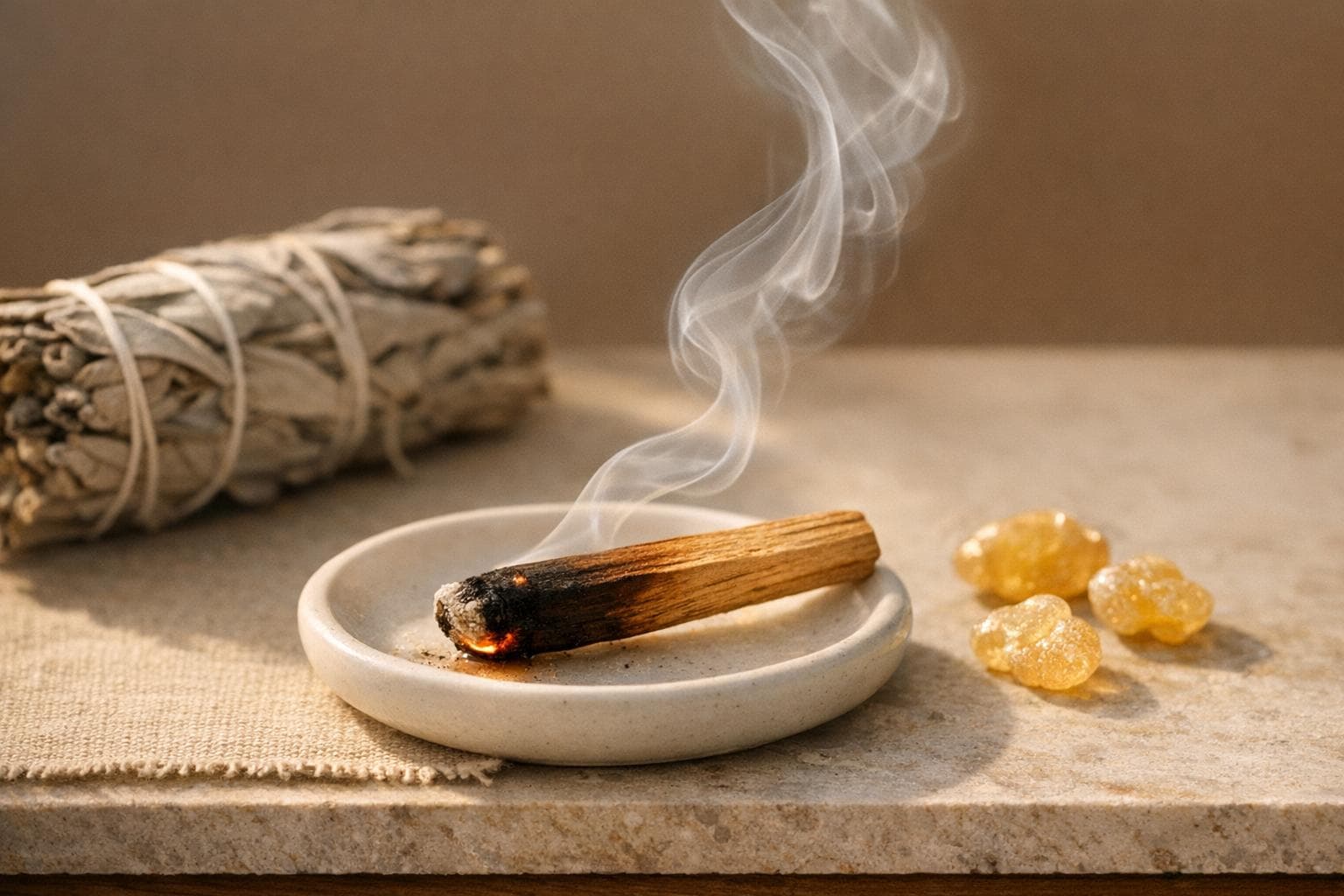
Fragrances have been used for centuries to cleanse spaces, shift energy, and promote emotional clarity. From white sage and Palo Santo to frankincense and myrrh, these scents serve as tools for resetting environments and mindsets. They connect to our emotions through the limbic system, while their symbolic meanings amplify intentions during rituals. Whether through incense, essential oils, or modern tools like sprays, these practices help create focused, calming spaces. However, ethical sourcing and respect for origins are essential when incorporating these materials into your personal rituals.
- Key Scents: Sage (purification), Palo Santo (healing), Frankincense (sacred focus), Myrrh (grounding).
- Methods: Smoke cleansing, essential oils, candles, and sprays.
- Benefits: Emotional clarity, energy renewal, and deeper mindfulness.
- Ethical Use: Support suppliers who work with Indigenous communities and choose sustainable alternatives like rosemary or lavender.
Fragrance is more than just a scent - it’s a bridge to mindfulness and intentional living.
How Fragrance Works in Spiritual Cleansing
Effects of Fragrance on Mind and Spirit
Fragrance plays a dual role in spiritual cleansing, influencing both the body and the energy around us. On a physiological level, burning herbs like sage or frankincense releases aromatic compounds - such as terpenes and ketones - that travel through the olfactory system to activate the limbic system. This part of the brain governs emotions, memory, and mood, meaning these scents can directly impact how we feel, enhancing mood, focus, or emotional balance.
On a more symbolic level, many traditions view fragrant smoke as a tool for energetic cleansing. The belief is that the smoke binds to heavy or stagnant energy in a space, carrying it away as the smoke disperses. This process is often described as "clearing what water cannot", leaving behind a sense of lightness and harmony.
Interestingly, some of these aromatic plants also have physical purifying properties. For instance, studies show that burning Salvia species, such as white sage, can significantly reduce airborne bacteria in enclosed spaces. White sage is particularly noted for its antimicrobial effects. Similarly, frankincense has been studied for its potential to boost mood and reduce inflammation.
While these physical and neurological effects are important, the symbolic and ritualistic roles of fragrances add another layer of meaning.
Symbolic Meaning of Fragrances in Rituals
Each fragrance carries its own symbolic weight in spiritual practices, complementing its physical properties. White sage is often used to clear negativity and create a neutral, open space. Palo Santo, on the other hand, not only removes negative energy but also invites healing and positivity. Frankincense is revered for elevating consciousness and creating a sacred atmosphere, while myrrh is known for its grounding qualities and its ability to remove emotional blockages.
"Think of sage as clearing the canvas and incense as painting on it." – Mallory Rose
The power of these fragrances is heightened through intention. Practitioners often set a specific purpose before lighting the herb or resin, such as "I welcome peace into this space" or "I release what no longer serves me." This deliberate focus allows the smoke to act as a carrier for those intentions, amplifying their impact.
In Middle Eastern rituals, bakhour serves not only as a source of fragrance but also as a way to uphold social and spiritual values. It is used to maintain sensory purity, honor guests, and create an inviting atmosphere. Across cultures, scent serves as a bridge between the physical and spiritual, fostering a sacred connection and preparing individuals for practices like prayer or meditation.
Common Fragrances in Spiritual Cleansing
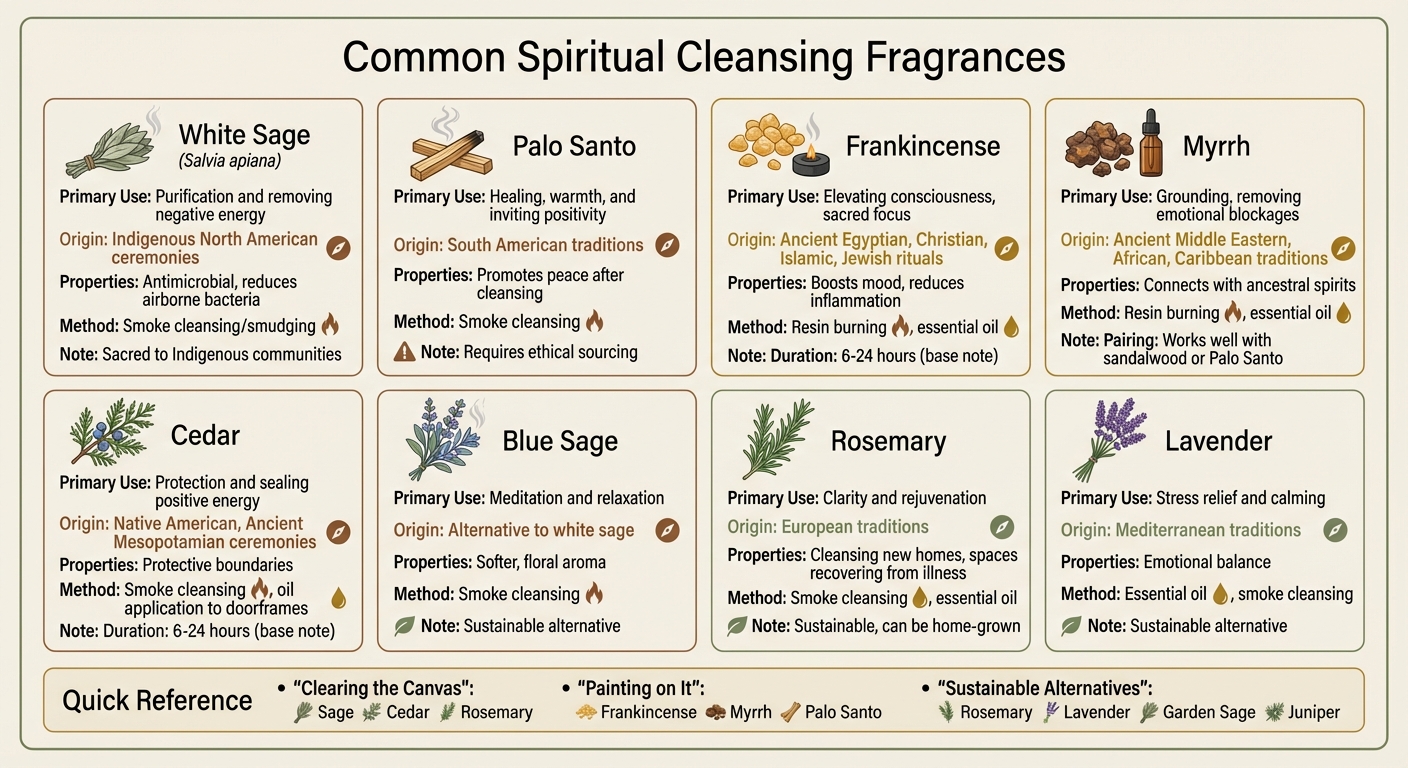
Common Spiritual Cleansing Fragrances: Properties, Methods, and Uses
When exploring how fragrances influence the mind and spirit, some scents stand out as powerful tools for energetic cleansing.
Sage and Smoke Cleansing Traditions
White sage (Salvia apiana) has been used for centuries in Indigenous ceremonies to purify and refresh energy [16, 17]. This practice, often referred to as smudging in Native American traditions, focuses on removing stagnant or negative energy. Interestingly, studies suggest that burning white sage may also help reduce airborne bacteria [13, 18].
It’s important to note that the term "smudging" is specific to sacred Indigenous North American rituals, while "smoke cleansing" is a broader term for burning herbs for purification. For those seeking alternatives, blue sage offers a softer, floral aroma ideal for meditation, while black sage (associated with mugwort) is known to enhance dreamwork and inner clarity. Other herbs like rosemary, lavender, and garden sage provide sustainable options for cleansing.
Shifting from herbs to resins, ancient substances like frankincense and myrrh bring their own sacred qualities to the table.
Frankincense and Myrrh in Spiritual Ceremonies
The ancient Egyptians regarded incense as divine, and this reverence continues today with frankincense and myrrh playing key roles in Christian, Islamic, and Jewish rituals [2, 13, 17]. In African and Caribbean traditions, these resins are used to ward off illness and connect with ancestral spirits. Pairing myrrh with sandalwood or Palo Santo can deepen feelings of grounding and promote relaxation.
In addition to these resins, other herbal scents also play a significant role in cleansing rituals worldwide.
Palo Santo, Cedarwood, and Other Herbal Scents
Much like sage and frankincense, Palo Santo carries a symbolic weight in spiritual practices. Traditionally used in South America, it is known for its ability to promote healing, warmth, and peace following a cleansing ritual [16, 18].
Cedar, celebrated for its protective properties, has been used in various traditions, from Native American ceremonies to ancient Mesopotamian rituals where priests burned it before entering sacred spaces [16, 17]. Applying cedarwood oil to doorframes is another way to seal in positive energy.
Other scents like sweetgrass, often braided and burned in Indigenous traditions, are believed to attract kind spirits and foster goodwill. In Scotland and Ireland, juniper was historically burned during "saining" rituals to protect and renew spaces. Meanwhile, rosemary is frequently used for clarity and rejuvenation, making it particularly suitable for cleansing new homes or spaces recovering from illness.
How to Use Fragrances in Cleansing Practices
Now that we’ve covered sacred scents, let’s explore how to use them effectively for cleansing your space. While knowing which fragrances to use is important, applying them safely and thoughtfully is key. Your approach will depend on your surroundings, personal preferences, and the level of clearing you’re aiming for.
Burning Incense and Smudging
Start by opening a window or door in every room. This allows the energy - and the smoke - to flow out freely. Stand at your main entrance, set a clear intention, and vocalize what you want to clear and what you hope to invite into your space, such as peace or clarity.
Light your smudge bundle by holding it at a 45-degree angle. Let the flame catch for about 10–20 seconds, then gently blow it out to create a steady stream of smoke. Begin by cleansing yourself - direct the smoke upward from your feet to your head. Then, move through your home in a clockwise direction, starting at the main entrance. Focus on areas where energy tends to linger, like corners, closets, doorways, and windows.
When you’re done, extinguish the smudge stick by pressing the tip into a fireproof dish filled with sand or ash. Avoid using water unless you plan to discard the bundle, as it can make relighting difficult. If you’re sensitive to smoke, consider alternatives like herbal sprays or essential oil diffusers, which achieve similar effects without the smoke.
"The smoke does more than scent the air; it carries prayer, clears heaviness, and restores balance." – Original Botanica
Using Essential Oils and Diffusers
Essential oils provide a smoke-free way to purify your space. Before you begin, take a moment to set a clear intention. Add a few drops of oils like frankincense, cedarwood, or lavender to a diffuser to cleanse the air during meditation or after conflict. For personal cleansing, apply diluted essential oil blends to your pulse points - such as your wrists, temples, or behind your ears. As you do so, take three deep breaths and visualize any negative energy leaving your body.
You can also use cedarwood oil to "seal" your space after cleansing. Apply it to doorframes and windowsills to anchor positive energy and create a protective boundary.
Candles, Sprays, and Modern Methods
Modern tools can complement traditional practices when used thoughtfully. Scented candles, for example, provide a slow, steady release of fragrance, helping to maintain a purified atmosphere for hours. Cleansing sprays, made with distilled water, essential oils, and a touch of alcohol, offer a quick and smoke-free way to refresh a room.
To consecrate a modern fragrance tool, light a candle in a color that matches your intention, hold the item, and state its purpose (e.g., "I dedicate this to bringing prosperity").
"It is not enough to buy a spiritual perfume and begin using it. To get the most benefit from them, they need to be consecrated." – Original Botanica
Cleansing sprays can also be added to floor washes or sprinkled around your home’s perimeter, front door, or workspace to strengthen energetic boundaries. For a portable option, "incense perfumes" allow you to carry grounding scents like Palo Santo or frankincense throughout your day, offering the benefits of cleansing without the need for smoke.
Your Personal Fragrance Expert Awaits
Take our quick scent quiz to discover authentic designer and niche fragrances matched to your taste — explore them as 2ml, 5ml, 8ml & 30ml decants and samples, so you can try each one before committing to a full bottle.
Find Your ScentBenefits of Fragrance in Spiritual Cleansing
Improving Emotional and Mental Clarity
Fragrances interact directly with the limbic system in the brain, which governs emotions and memory. This connection helps shift mood, reduce stress, and alleviate anxiety. Scents like sandalwood, Palo Santo, and myrrh are particularly grounding for the nervous system. Meanwhile, options such as frankincense and white sage can sharpen mental focus, making them ideal for deep meditation or spiritual practices.
Certain scents also create "scent anchors", a term used by experts to describe how fragrances train the mind to quickly enter a state of calm. For instance, lighting incense or applying aromatic oils can signal your brain to relax and focus. James Thompson highlights this process:
"Simply focusing upon the rising smoke can create a meditative focus to quiet your busy mind".
This mental clarity helps transform your surroundings into a haven for mindfulness and peace.
Creating Sacred and Focused Spaces
Using fragrance can signal a shift from the everyday hustle to a more sacred and intentional space. Scents like sage, palo santo, and cedar are often used to clear and reset the energy in a room, creating the perfect foundation for spiritual work. Base notes such as sandalwood and cedarwood provide lasting effects, anchoring the space for 6 to 24 hours, while lighter top notes like bergamot offer an immediate, short-lived shift lasting 15–30 minutes.
"Sacred Space brings instant grounding and calm to your environment. I spray it in my car to keep me focused and to prevent any bad energies from following me." – K.J.H., Verified Customer
Deepening Spiritual Connections
Fragrances not only promote clarity and focus but also enhance spiritual engagement. By triggering memories and encouraging deeper meditative states, they create what practitioners often describe as a "protective shield" around one’s aura. Scents like frankincense and myrrh are known for invoking divine energies and fostering an atmosphere of reverence. Lighting incense, for example, can signal to your subconscious that it’s time to enter a state of openness and concentration.
Modern incense-inspired perfumes offer a way to carry these benefits throughout your day. Greta Fitz, founder of ASCENTION Parfums, explains:
"Incense smoke is believed to clear negative energy from spaces and people. When you wear an incense perfume, you’re creating that same energetic clearing effect around your body".
This modern approach provides the grounding effects of traditional smoke cleansing without requiring fire or ventilation, making it a practical option for daily use.
Respecting Cultural Origins and Ethical Sourcing
When incorporating sacred fragrances into your cleansing rituals, it’s important to respect their cultural origins. Many of these practices stem from living cultures that have preserved their traditions through centuries of challenges. Using materials like white sage, Palo Santo, or frankincense connects you to practices that Indigenous and traditional communities hold sacred.
The commercial popularity of smudging supplies, particularly white sage bundles, gained momentum in the 1990s alongside the rise of the New Age movement. However, this has led to tensions, as sacred traditions are often commodified without acknowledgment or benefit to the originating communities. As the Thalira Research Team explains:
"This commercialisation has created significant tensions with Indigenous communities who see their sacred practices being appropriated and commercialised without benefit or acknowledgment. Understanding this history is part of practicing smudging with integrity."
High demand has ecological consequences. White sage (Salvia apiana), native to California’s coastal regions and the American Southwest, and Palo Santo, sourced from South America, are increasingly overharvested. To ensure ethical use, it’s vital to purchase from suppliers who collaborate directly with Indigenous farmers and reinvest in their communities. Brands like Anima Mundi Apothecary, Sacred Wood Essence, and Ecuadorian Hands are examples of companies that prioritise these relationships. By making informed choices, you can honour these materials while supporting their cultural and ecological origins.
For those seeking sustainable alternatives, consider options that align with your heritage. For example, juniper, used in Scottish and Irish "saining" rituals, or herbs like rosemary and lavender, offer similar cleansing properties. Growing your own herbs - such as garden sage, mint, or lavender - ensures ethical and organic production while preserving the intention behind these practices. Nicole Peters-Devis of SaFiSpa advises:
"Borrow traditions with respect. The goal isn’t to imitate cultures, but to adopt the underlying principles - presence, consistency, community, and sensory grounding."
It’s also essential to research the specific protocols of each tradition. For instance, Plains communities use sweetgrass differently than Southwestern communities use white sage. Taking the time to learn about these differences avoids oversimplification and demonstrates genuine respect for the practices’ origins. By embracing these ethical approaches, you can enhance the spiritual depth and integrity of your cleansing rituals.
Conclusion: Adding Fragrance to Your Spiritual Practice
Fragrance has a unique ability to cleanse and ground, creating profound shifts in both spaces and mindsets. The secret lies in intention. As the Thalira Research Team puts it:
"Intention is the heart of smudging: The smoke carries and amplifies your intention".
Before lighting incense or applying perfume, take a moment to focus on your goal - whether it’s cultivating peace, fostering protection, or gaining emotional clarity. This thoughtful approach helps transform fragrance into a meaningful part of your daily rituals.
Selecting scents that align with your purpose is essential. For example, frankincense and myrrh are excellent for meditation, while lavender can help ease stress. If traditional smoke-based methods don’t suit your lifestyle, incense-inspired perfumes offer a modern alternative. Greta Fitz, Founder of ASCENTION Parfums, highlights this benefit:
"Wearing an incense perfume transfers these sacred benefits with you".
This approach allows you to incorporate spiritual cleansing effortlessly into your everyday life.
For those new to exploring scents, discovery sets are a practical way to experiment. These sets, available in 2 ml, 5 ml and 8 ml vials, and a 30 ml bottle decant on most perfumes, let you try various fragrances - like the woody warmth of Palo Santo or the resinous depth of frankincense - before committing to a full bottle. Scento’s extensive collection includes over 1,000 designer options, with free shipping on orders over €75, making it easier to find scents that resonate with your energy and intentions.
FAQs
What’s the difference between smudging and smoke cleansing?
Smudging is a deeply spiritual practice rooted in Indigenous traditions, where herbs such as sage, cedar, or sweetgrass are burned to purify spaces and foster a spiritual connection. In contrast, smoke cleansing is a more general practice found in various cultures worldwide. While it also involves burning herbs to clear energy or spaces, it emphasizes personal intention and thoughtfully acknowledges the cultural origins of such rituals.
Which scent should I choose for my intention (protection, clarity, grounding)?
To align with your goals, consider scents historically associated with energy cleansing and protection. Incense made from sacred resins like frankincense or myrrh works well for promoting grounding, mental clarity, and a sense of protection. These resins have been cherished for centuries in spiritual traditions for their ability to purify and uplift.
How can I cleanse my space without using smoke?
For a smoke-free way to cleanse your space, opt for scent-based methods. Incense perfumes crafted with purifying ingredients like frankincense, myrrh, or sandalwood can help create a serene and protective environment. Another great choice is using essential oils or aromatic sprays - either diffuse them or lightly spritz around the area. These methods effectively clear the energy while encouraging a sense of grounding, making them perfect for rituals without smoke.

