Ancient Greek perfumes were more than just fragrances - they symbolized life, health, and spirituality. Their use spanned from rituals to daily routines, offering insights for modern perfume lovers. Key takeaways include:
- Natural Ingredients: Olive oil, saffron, sage, and myrrh were core components, combining scent with skincare benefits.
- Layering Scents: Greeks mastered blending light and rich notes, a practice that personalizes modern fragrance routines.
- Storage and Longevity: Perfumes were stored in ceramic vessels to protect delicate ingredients, mirroring today’s focus on proper storage.
- Wellness Benefits: Fragrances like sage and saffron were used for physical and emotional well-being, echoing aromatherapy principles.
- Intentional Curation: Small, high-quality batches were crafted for specific moments - an approach reflected in today’s discovery-sized options.
The Greeks’ thoughtful methods - using oil bases, portable containers, and meaningful blends - continue to inspire how we select and enjoy fragrances today.
Perfume in Pylos: Recreating a Bronze Age Scent
Core Ingredients and Methods in Greek Perfume — Making
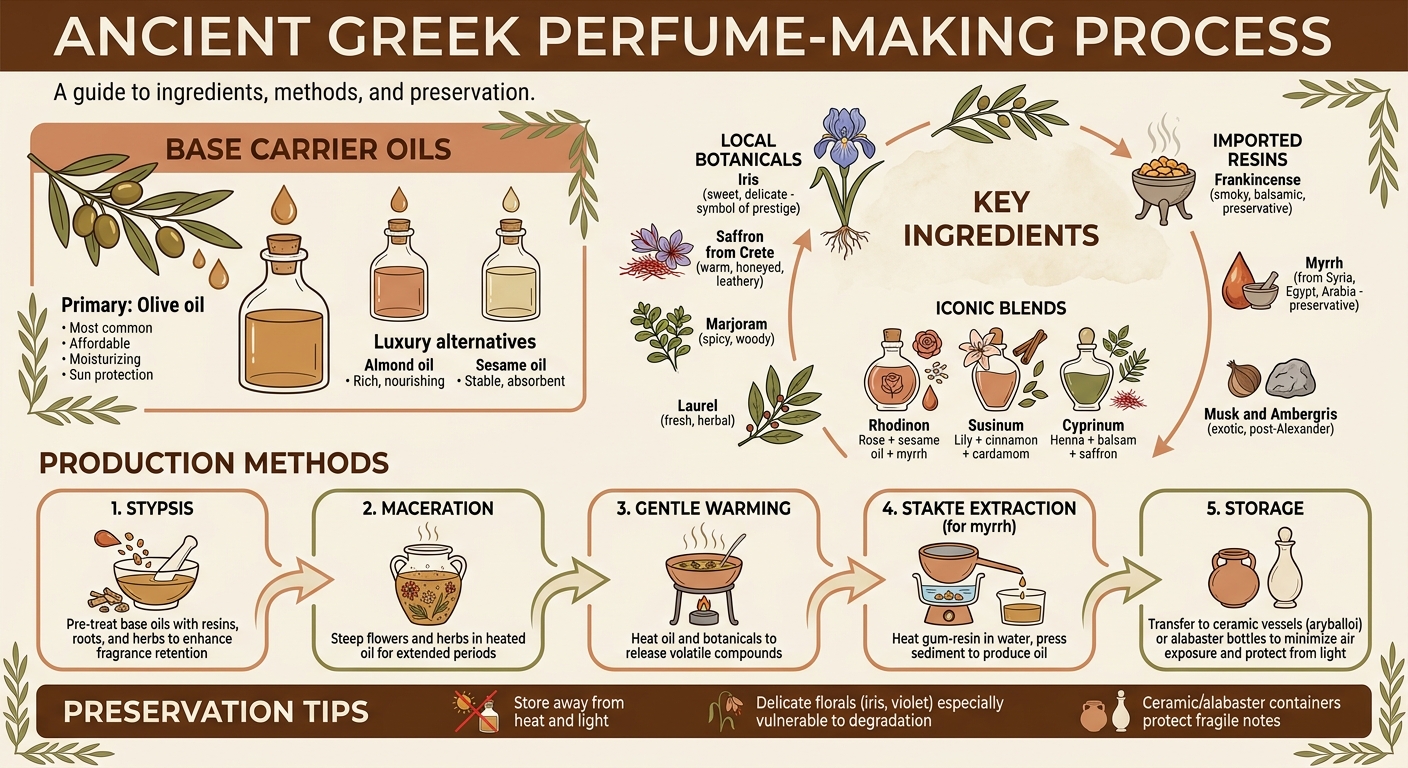
Ancient Greek Perfume Making Process and Key Ingredients
Olive Oil as a Fragrance Carrier
Greek perfumers built their craft around olive oil, which served as the primary carrier for fragrances. Unlike modern alcohol-based perfumes that evaporate quickly, olive oil absorbed aromatic compounds and allowed scents to linger on the skin for hours. Greece’s abundant olive groves provided a steady and affordable supply, making this approach practical and widely accessible. Beyond its role in perfumery, olive oil also offered added benefits like moisturising the skin and providing a layer of sun protection. For more luxurious blends, perfumers sometimes turned to almond or sesame oils. A notable example is Rhodinon, a rose-based perfume where sesame oil was combined with myrrh to stabilise the scent and enhance its richness. This emphasis on oil-based formulations became a defining feature of Greek perfumery.
Common Ingredients: Herbs, Flowers, and Spices
Greek perfumes were a harmonious mix of local and imported botanicals, creating complex and layered scents. Iris, known for its sweet and delicate aroma, symbolised social prestige. Saffron from Crete added a warm, honeyed depth with leathery undertones, while marjoram contributed a spicy, woody character. Laurel, with its fresh herbal brightness, rounded out many blends. Resins like frankincense and myrrh, imported from regions such as Syria, Egypt, and Arabia, not only added smoky, balsamic notes but also acted as natural preservatives.
The expansion of trade routes after Alexander the Great‘s conquests introduced even more exotic materials, such as musk and ambergris, into Greek perfumery. Iconic blends from this era include Susinum, a mix of lily, cinnamon, and cardamom, and Cyprinum, which combined henna leaves with balsam and saffron for use in rituals. These ingredients highlighted the Greeks’ ability to seamlessly blend local resources with rare imports, creating perfumes that were both practical and luxurious.
Production Methods: Extraction and Preservation
The Greeks paired their sophisticated ingredient choices with advanced extraction techniques to ensure maximum fragrance potency. Maceration was the primary method, where flowers and herbs were steeped in heated oil for extended periods, allowing the botanical oils to infuse deeply. To speed up the process, perfumers gently warmed the oil and botanicals, releasing the volatile compounds more effectively. For materials like myrrh, they employed a specialised method called stakte extraction, which involved heating the gum-resin in water and pressing the resulting sediment to produce a high-quality oil.
Before introducing aromatic ingredients, base oils underwent a process known as stypsis. This involved treating the oils with resins, roots, and herbs to enhance their ability to retain fragrances.
"Theophrastus later documented storage, ageing, and seasonal blending - warning that heat and light degraded delicate florals such as iris and violet."
To preserve their creations, Greek perfumers stored perfumes in intricately painted ceramic vessels like aryballoi or alabaster bottles. These containers minimised air exposure and shielded fragile floral notes from light, ensuring the longevity of the scents.
How Greeks Used Perfumes in Daily Life and Ceremonies
Perfumes in ancient Greece were far more than mere adornments; they were deeply woven into the fabric of both sacred and everyday life. These fragrances bridged the mortal and divine, marking significant life events while also addressing practical needs. Whether in rituals, milestones, or daily routines, the Greeks used scent in ways that continue to inspire modern fragrance lovers.
Perfumes in Religious Offerings
Greek temples were often filled with the rich aroma of incense and perfumed oils, used during rituals to honour and connect with the gods. These fragrant offerings were more than symbolic gestures - they were tangible gifts believed to carry divine essence. Aromatic plants were seen as sacred gifts from the gods, and their use in rituals helped transform ordinary spaces into sanctified grounds. By burning incense or anointing altars with perfumed oils, worshippers created an atmosphere of reverence and spiritual connection.
Fragrance in Weddings, Births, and Funerals
Perfumes played a central role in life’s most profound transitions. At births, fragrant oils were used to welcome and bless the newborn, marking their arrival with a sense of purity and celebration. Weddings also embraced the use of perfumes, with aromatic ointments symbolising the sanctity of the union and the start of a new chapter.
Death rituals, however, showcased the most elaborate applications of perfumes. Bodies were wrapped in scented shrouds infused with flowers like roses, lilies, and violets, along with myrrh and incense. These choices weren’t just for their pleasant aromas but also for their symbolic representation of eternity. Families often included lekythoi - small perfume flasks - in burials, believing these fragrances would comfort the deceased on their journey to the afterlife and preserve their memory.
Daily Hygiene and Health Applications
Fragrance was not reserved solely for ceremonies; it was also a key part of daily life. After bathing, men and women alike would apply scented oils, signifying cleanliness, elegance, and vitality. Public baths, popular social spaces of the time, were often adorned with garlands and filled with natural scents, enhancing the experience of purification and community.
Perfumes also had medicinal purposes. Hippocrates, regarded as the father of medicine, recommended specific scents like saffron vapours and sage fumigations to promote physical and mental well-being. Greek warriors, too, relied on perfumed oils - not just for their fragrance but for their practical benefits. These oils protected their skin from the sun, masked unpleasant odours, and even served as healing balms for wounds. Hospitality traditions also embraced perfume, with hosts offering guests perfumed foot baths and aromatic oils as a gesture of refinement and care.
Your Personal Fragrance Expert Awaits
Take our quick scent quiz to discover authentic designer and niche fragrances matched to your taste — explore them as 2–8ml decants and samples, so you can try each one before committing to a full bottle.
Find Your ScentApplying Greek Perfume Practices Today
Ancient Greek perfumery offers timeless ideas for creating a deliberate and thoughtful fragrance routine that aligns with modern sensibilities.
Using Natural Ingredients
The Greeks’ reliance on natural carriers and botanicals continues to influence today’s perfume-making. Oil-based fragrances, for instance, echo ancient practices by providing longer-lasting scents while moisturizing the skin. Look for perfumes that feature ingredients like rose, iris, lily, laurel, rosemary, or sage to connect with this Mediterranean heritage. Examples such as Tom Ford‘s Costa Azzurra - with its herbal and citrus notes reminiscent of Greek gardens - and Acqua di Parma‘s Colonia, which blends citrus with floral and woody undertones, carry this tradition forward.
Layering Scents Like the Greeks
The art of layering, inspired by ancient Greek blending techniques, allows for a unique and personalised fragrance experience. Start by pairing heavier, woodsy, or oriental notes with lighter florals or citrus for a balanced result. Applying a scented body oil before your perfume helps the fragrance adhere better to moisturized skin. Small decants, such as 2 ml or 8 ml sizes, are perfect for experimenting with combinations without committing to full bottles.
"Layering ensures that you are the most important part of the formula... [It’s about] your individual taste and the way your body responds to combinations." – Robin Mason, president of Fine Fragrance at dsm-firmenich
Choosing Fragrances for Wellness
For the Greeks, beauty and health were intertwined. Hippocrates himself recommended fragrant remedies like sage fumigations and saffron vapors for both physical and emotional well-being. When curating your collection, consider scents with laurel for its protective symbolism, sage for its therapeutic properties, or rosemary, believed to enhance memory and alertness. Beyond aroma, these ingredients can uplift your mood and promote a sense of wellness. To maintain their quality, store your perfumes properly to ensure they retain their full effect.
Portable Containers for Modern Use
The ancient Greeks carried their perfumed oils in small, portable aryballoi made of terracotta or glass. Today, travel-sized atomizers serve the same purpose, protecting fragrances from heat and light while offering convenience. Brands like Scento offer compact designs such as Limone di Capri or Blue d’Azur, bringing this ancient practicality into the modern world. Always store your fragrances away from direct sunlight and high temperatures to preserve their delicate compositions.
Building a Fragrance Collection Responsibly
The Greeks were intentional in crafting small batches of perfume for specific moments, prioritizing quality over quantity. Modern perfume lovers can adopt this approach by starting with curated trial-sized decants, such as 8 ml selections available for €12,90. This allows you to explore a variety of scents - light florals for summer, richer resins and spices for cooler weather - without committing to full bottles that might go unused. By experimenting with different options, you can discover what suits your skin chemistry and create a collection that truly reflects your personal style, all while minimizing waste.
Conclusion
Ancient Greek perfume traditions provide a practical framework for modern fragrance lovers. The Greeks valued quality over quantity, embraced natural ingredients for their emotional depth, and practiced thoughtful curation to create meaningful scent experiences. Their use of olive oil as a base, portable aryballoi vessels, and layering techniques addressed challenges that still resonate with today’s fragrance routines. These age-old insights continue to inspire how we approach and curate perfumes in the present day.
One standout lesson from Greek perfumery is their focus on smaller, concentrated formats. Instead of producing in excess, they crafted perfumes in limited, fully cherished quantities. This idea aligns perfectly with today’s discovery formats, such as 2 ml or 8 ml decants, which allow you to explore a variety of scents - from Mediterranean florals to rich, warm spices - without the waste or long-term commitment of full-sized bottles. Starting with an €12,90 8 ml decant is an excellent way to experiment, find your signature scent, and build a collection that’s uniquely yours.
Theophrastus, writing in the 3rd century BCE, warned that "heat and light degraded delicate florals such as iris and violet". His advice remains crucial for maintaining your perfumes: proper storage and careful selection ensure longevity and quality. Today, fragrance curators like Scento embrace these ancient principles by offering carefully curated discovery formats. This blend of historical wisdom and modern convenience makes it easier than ever to prioritize quality and sustainability in your fragrance journey - values that have endured for thousands of years.
FAQs
What’s the easiest way to try an oil-based fragrance routine today?
To explore an oil-based fragrance routine, begin with natural, high-quality perfumed oils - a nod to the traditions of ancient Greek perfumery. Apply a tiny amount to pulse points such as your wrists, neck, or behind the ears. These areas naturally emit warmth, helping the scent linger longer and stay more concentrated.
For a touch of creativity, try blending different oils or incorporating herbs and flowers, taking inspiration from age-old techniques. Whether you opt for small, pre-made bottles or experiment with crafting your own blends, this approach offers a personal and immersive way to enjoy fragrance.
How can I layer citrus, florals, and resins without the scent turning heavy?
To keep a layered scent balanced and avoid it feeling overly heavy, begin with the lightest notes - such as citrus. Follow this by adding florals, and complete the composition with resins to create depth. This sequence ensures the weightier resins don’t overwhelm the more delicate elements. Additionally, being mindful of how different notes evolve over time can help maintain a fresh and well-rounded fragrance experience.
What’s the best way to store perfumes so they last longer?
To keep your perfumes in top condition for longer, opt for storage in non-porous containers such as stone, glass, or metal. These materials are excellent at minimising evaporation and shielding the fragrance from elements that could cause it to deteriorate.

