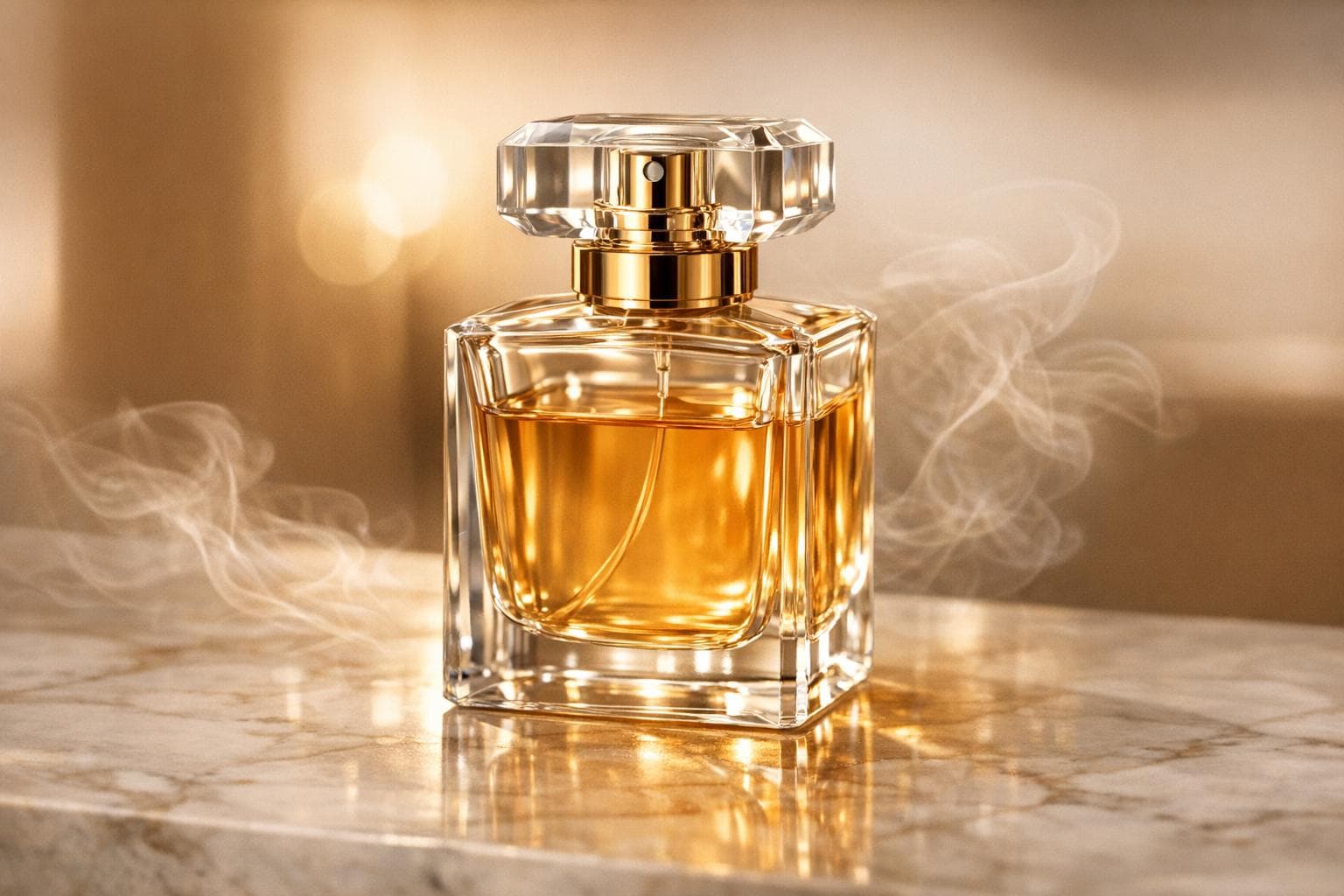
Perfume oxidation happens when fragrance molecules react with oxygen, light, and heat, altering the scent, color, and texture. This process starts once air enters the bottle and accelerates with exposure to UV rays and high temperatures. Signs of oxidation include sour or metallic scents, darkened or cloudy liquid, and weaker projection. Proper storage is key to slowing this process and maintaining your perfume’s quality. Here’s how to protect your fragrances:
- Store in cool, dark places: Keep perfumes between 60–70°F and away from sunlight or heat.
- Use airtight, opaque bottles: Limit air and light exposure to preserve the scent.
- Minimize air space: Transfer leftover perfume into smaller containers to reduce oxygen contact.
- Avoid temperature swings: Bathrooms are a poor choice due to heat and humidity fluctuations.
What Causes Perfume Oxidation?
Knowing what leads to oxidation can help you preserve your favorite fragrances for longer. Oxidation is mainly influenced by exposure to oxygen, light, and heat - each of which impacts the perfume’s molecular structure in different ways.
Oxygen Exposure and Air Interaction
Every time you spray your perfume, oxygen sneaks into the bottle, setting off the oxidation process. This oxygen reacts with fragrance molecules, forming new compounds like peroxides, which can convert ethanol into acetaldehyde and diethylacetal (up to 0.08% during aging). Aldehydes, especially those in floral and citrus notes, are particularly susceptible. For instance, after three months at 98.6°F (37°C), up to 40% of these aldehydes may convert into acetals.
Air exposure also leads to acidification, creating acidic byproducts that degrade the scent. On top of that, free radicals formed during oxidation can trigger chain reactions, rapidly altering the fragrance’s molecular balance. While oxygen plays a big role, light exposure can speed up these changes even more.
Light Exposure and UV Damage
Light, particularly UV rays, can wreak havoc on perfume molecules through photo-oxidation, breaking their bonds and altering their structure. Cosmetic chemists explain:
"[Fragrances] are fickle - they are made of up to 100 different tiny components - and those components can be very sensitive... because [most bottles] are clear, don’t keep it in direct sunlight."
UV radiation not only accelerates oxidation but also drives processes like acetalization and stereoisomerization. For example, transisoeugenol can convert up to 58% into its cis isomer after just three months of daylight exposure. Citrus-based top notes are especially vulnerable, losing up to 80% of their brightness in just one month under light exposure.
Even opaque bottles don’t fully block UV rays, which is why many perfumes come with packaging designed to shield against light. However, light isn’t the only culprit - heat also plays a major role in destabilizing fragrances.
Heat and Temperature Changes
Heat speeds up oxidation by increasing molecular activity. For every 10°C (18°F) increase, chemical reaction rates double, leading to faster evaporation of volatile compounds and an unbalanced scent. Temperature swings can stress delicate aromatic compounds, causing premature evaporation and degradation.
High temperatures also amplify peroxide formation and acetalization. For instance, after three months at 98.6°F (37°C), up to 10% of transisoeugenol may convert into a different isomer, permanently altering the scent. Additionally, heat causes top notes - often the most volatile - to evaporate more quickly, leaving heavier base notes to dominate the fragrance.
To keep your perfume stable, aim to store it at a consistent temperature between 54–59°F (12–15°C). Avoid places like bathrooms, where rapid temperature changes and high humidity can accelerate degradation. Consistency is key to preserving your fragrance’s integrity.
How to Identify an Oxidized Perfume
Spotting the early signs of perfume oxidation is easier than you might think.
Changes in Scent
One of the biggest giveaways is the scent itself. If you notice a sour or vinegary note, it’s likely that aldehydes in the fragrance are breaking down into acids. Similarly, a metallic or "ozonic" edge could mean the molecular structure of the perfume has started to degrade.
Pay attention to the first spray - it can reveal a lot. If the bright, crisp top notes you remember now seem muted or flat, the perfume is likely oxidized. Citrus and light floral notes are especially prone to losing their brightness. You might also find the fragrance feels weaker overall, with less projection and a distorted dry-down. This lingering scent, which usually deepens over hours, may now feel stale or off. Noticing these changes early can help you protect your collection from further deterioration.
| Feature | Fresh Perfume | Oxidized Perfume |
|---|---|---|
| Initial Spray | Bright, crisp, familiar top notes | Dull, flat, or sour/vinegary |
| Scent Character | Balanced layers (top, heart, base) | Distorted, metallic, or "off" notes |
| Potency | Strong projection and lasting power | Weak scent that fades quickly |
| Dry-Down | Deep, rich, well-rounded base notes | Altered or stale base notes |
But scent isn’t the only sign - oxidation also reveals itself in the perfume’s appearance and feel.
Color Changes
Your perfume’s color can tell you a lot. A darkening liquid - shifting to yellow, amber, or brown - is a classic indicator of oxidation. As Iberchem explains:
"The most obvious variation usually happens with the colour... the perfume takes on a darker colour."
You might also notice the liquid losing its clarity, becoming cloudy or murky. This is especially common in perfumes with high concentrations of vanillin or citrus oils. If the liquid looks more opaque or even "juice-like", compare it to your memory or a photo of its original color to confirm the change.
Texture Changes
Texture changes are another red flag. A perfume that was once crystal-clear but now appears cloudy suggests advanced oxidation. Opaqueness can also develop as chemical bonds break down over time.
Heat exposure can make things worse. As Mixer & Pack notes:
"Excessive heat, for example, from a radiator can change not only the color and smell of the fragrance but also the texture of the liquid"
Unexpected drops in volume might point to evaporation, which could mean the bottle’s seal is compromised, accelerating the oxidation process. Before using an older or altered perfume, consider doing a 24-hour patch test to ensure it won’t irritate your skin.
Your Personal Fragrance Expert Awaits
Take our quick scent quiz to discover authentic designer and niche fragrances matched to your taste — explore them as 2ml, 5ml, 8ml & 30ml decants and samples, so you can try each one before committing to a full bottle.
Find Your ScentHow to Prevent Perfume Oxidation
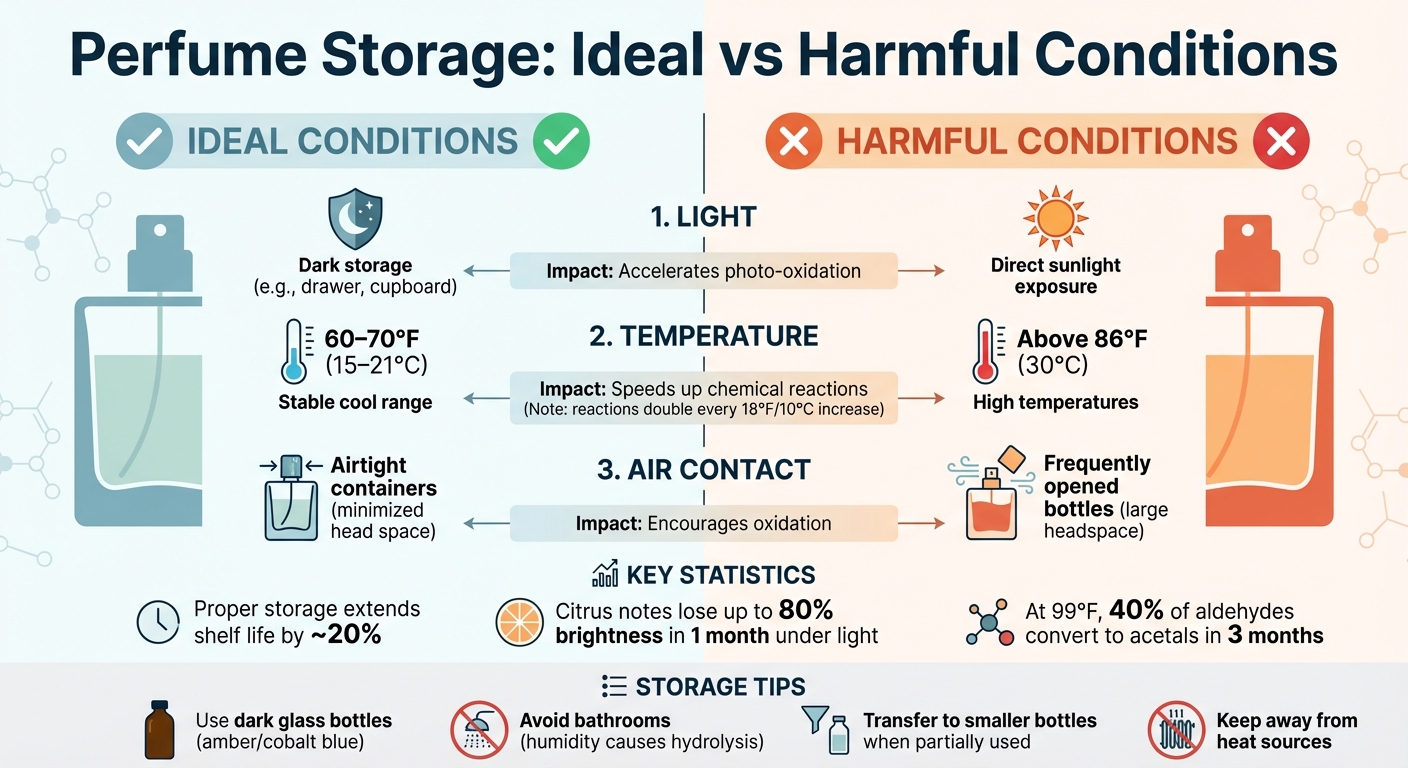
Perfume Oxidation Storage Guide: Ideal vs Harmful Conditions
Proper storage can extend the shelf life of your fragrances by about 20%. Here’s how to protect them from oxidation and keep their scent intact.
Use Opaque and Airtight Bottles
The bottle your perfume is stored in plays a huge role in preventing oxidation. Dark glass bottles - like amber or cobalt blue - are especially effective because they filter out UV radiation, which can break down fragrance molecules. As nyc.ph explains:
"Light energy, particularly UV radiation, can break chemical bonds in fragrance molecules through a process called photo-oxidation."
Glass is also a better choice than plastic since it’s non-permeable and chemically stable. Plastic, on the other hand, can allow air to seep in and might even leach chemicals into the perfume. If your fragrance comes in a clear bottle, transferring it to a dark glass one can provide extra protection.
The seal of the bottle is equally important. Atomizer sprays are ideal because they limit oxygen exposure, unlike splash bottles, which expose the liquid to air every time they’re opened. Always replace the cap promptly after use, and avoid shaking the bottle, as this can introduce oxygen bubbles that speed up the degradation process.
Store Perfumes in the Right Conditions
Where you store your perfumes is just as important as the bottle itself. Temperature fluctuations can stress the molecular structure of fragrances. For instance, chemical reactions double in speed with every 18°F (10°C) increase. At 99°F (37°C), nearly 40% of some aldehydes can transform into acetals in just three months.
To protect your fragrances, keep them in a cool, dark place away from heat sources and direct sunlight. Bathrooms are a poor choice due to their high humidity, which can trigger hydrolysis - a reaction where water molecules break down fragrance compounds, often creating a sour smell.
| Factor | Ideal Condition | Harmful Condition | Impact on Oxidation |
|---|---|---|---|
| Light | Dark storage | Direct sunlight exposure | Accelerates photo-oxidation |
| Temperature | 60–70°F (15–21°C) | Above 86°F (30°C) | Speeds up chemical reactions |
| Air Contact | Airtight containers | Frequently opened bottles | Encourages oxidation |
Reduce Air Space in Partially Used Bottles
As you use up a fragrance, the air space - or headspace - in the bottle increases. This extra air speeds up oxidation. To slow this process, transfer the remaining liquid into a smaller dark glass container using a clean pipette or narrow funnel. This reduces the air-to-perfume ratio and helps preserve the scent. Avoid using plastic containers, as they allow more air to pass through, which can compromise the fragrance.
If you have high-value fragrances, you might want to invest in wine preservation systems. These use inert gases like argon to replace oxygen in the bottle without disturbing the liquid, offering an extra layer of protection.
Conclusion
Proper storage is key to maintaining the integrity of your favorite fragrances. To limit oxidation, keep perfumes in cool, dark, and airtight conditions - ideally between 60°F and 70°F - and always secure the cap tightly after use. As Gabrielle Richens from The Perfume Shop emphasizes:
"Sunlight – A.K.A. a fragrance’s sworn enemy!"
Another factor to consider is headspace. When a bottle is partially empty, the increased air inside speeds up oxidation. To counter this, transfer any leftover fragrance into a smaller, dark container to reduce oxygen exposure.
These practices not only help preserve the scent’s quality but also make fragrances more practical to use. Opting for smaller decants, such as 2 ml, 5 ml and 8 ml vials, or a 30 ml bottle decant on most perfumes, minimizes air exposure. This approach is especially useful for natural perfumes, which tend to have a shorter shelf life of 12 to 24 months once opened. For instance, citrus-based top notes can lose up to 80% of their vibrancy after just a month of daily light exposure. Smaller decants allow you to enjoy each fragrance at its peak freshness.
While most perfumes remain usable for 3 to 5 years after opening, controlling exposure to light, heat, and air is essential to slow down oxidation and extend their lifespan. By following these storage tips, you can ensure your fragrances stay as captivating as the day you first opened them.
FAQs
How do I know if my perfume has oxidized?
You can spot an oxidized perfume by a few telltale signs. The liquid might darken, take on a yellow hue, or appear cloudy. The scent itself could shift - smelling sour, metallic, or noticeably weaker than it once did. Another clear indicator is the formation of sediment at the bottom of the bottle.
To keep your perfume from oxidizing, proper storage is key. Place it in a cool, dry spot, away from direct sunlight and sudden temperature changes. Also, make sure the cap is securely closed to limit air exposure, which speeds up oxidation.
How can I store my perfume to prevent oxidation?
To maintain the quality and longevity of your perfume, proper storage is key. Keep it in a cool, dark place, away from heat, direct light, and humidity. These elements can accelerate the breakdown of the fragrance, dulling its scent over time. Always ensure the bottle is tightly sealed to limit air exposure, which can also affect the perfume’s freshness.
The ideal temperature range for storing perfume is 59–68°F. If your home often exceeds this range, consider refrigerating your fragrance. However, avoid storing it in places like bathrooms or kitchens, as the high humidity and frequent temperature changes in these areas can speed up oxidation. For added protection, you can store the bottle in its original box or an airtight container to shield it from light and moisture. With these precautions, your perfume can retain its scent and charm for years to come.
Why is light more harmful to perfume than heat?
Exposure to light can set off chemical reactions within perfume ingredients, leading to oxidation. This not only darkens the liquid but can also change its scent over time. While heat primarily speeds up evaporation, light accelerates chemical breakdown, posing a greater threat to the fragrance’s integrity.
To keep your perfume at its best, store it in a cool, dark spot, away from direct sunlight or bright artificial lighting.

