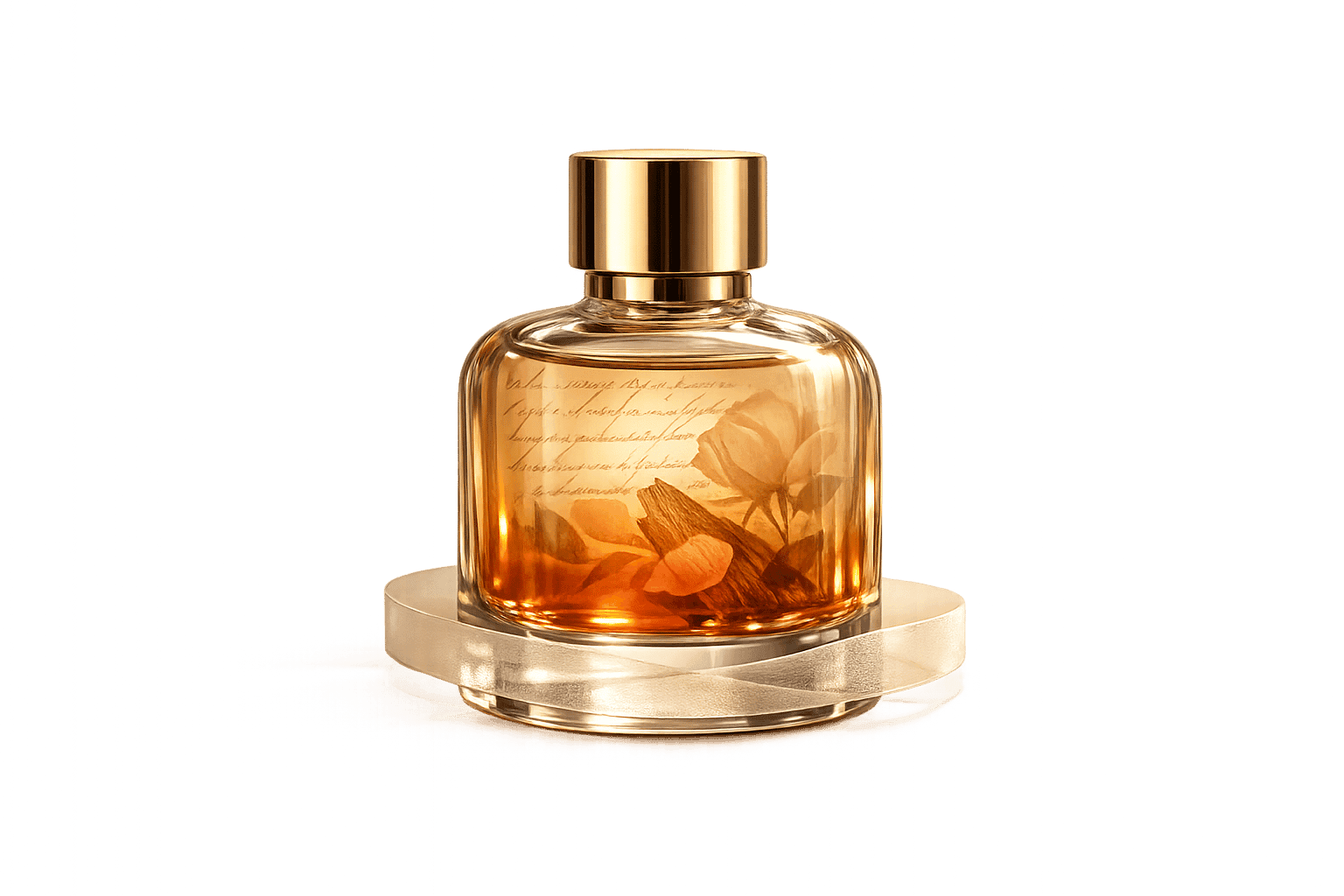
Luxury fragrances go beyond scent - they tell stories that connect emotionally, evoke memories, and reflect identity. Why? Our sense of smell is directly tied to emotions and memory, making fragrances powerful tools for self-expression and personal transformation. Successful brands use storytelling to elevate their products, creating deeper connections with consumers. Here’s how they do it:
- Emotional Connections: Fragrances like Maison Margiela’s "Replica" act as "memory capsules", with scents designed to evoke specific moments like "Lazy Sunday Morning."
- Heritage and Craftsmanship: Brands like Aesop and Mugler weave historical and cultural narratives into their products, adding depth and exclusivity.
- Lifestyle and Identity: Campaigns like Miu Miu’s "Miutine" highlight personal expression, while unisex fragrances (up 52.3% in 2025 searches) reflect modern identity preferences.
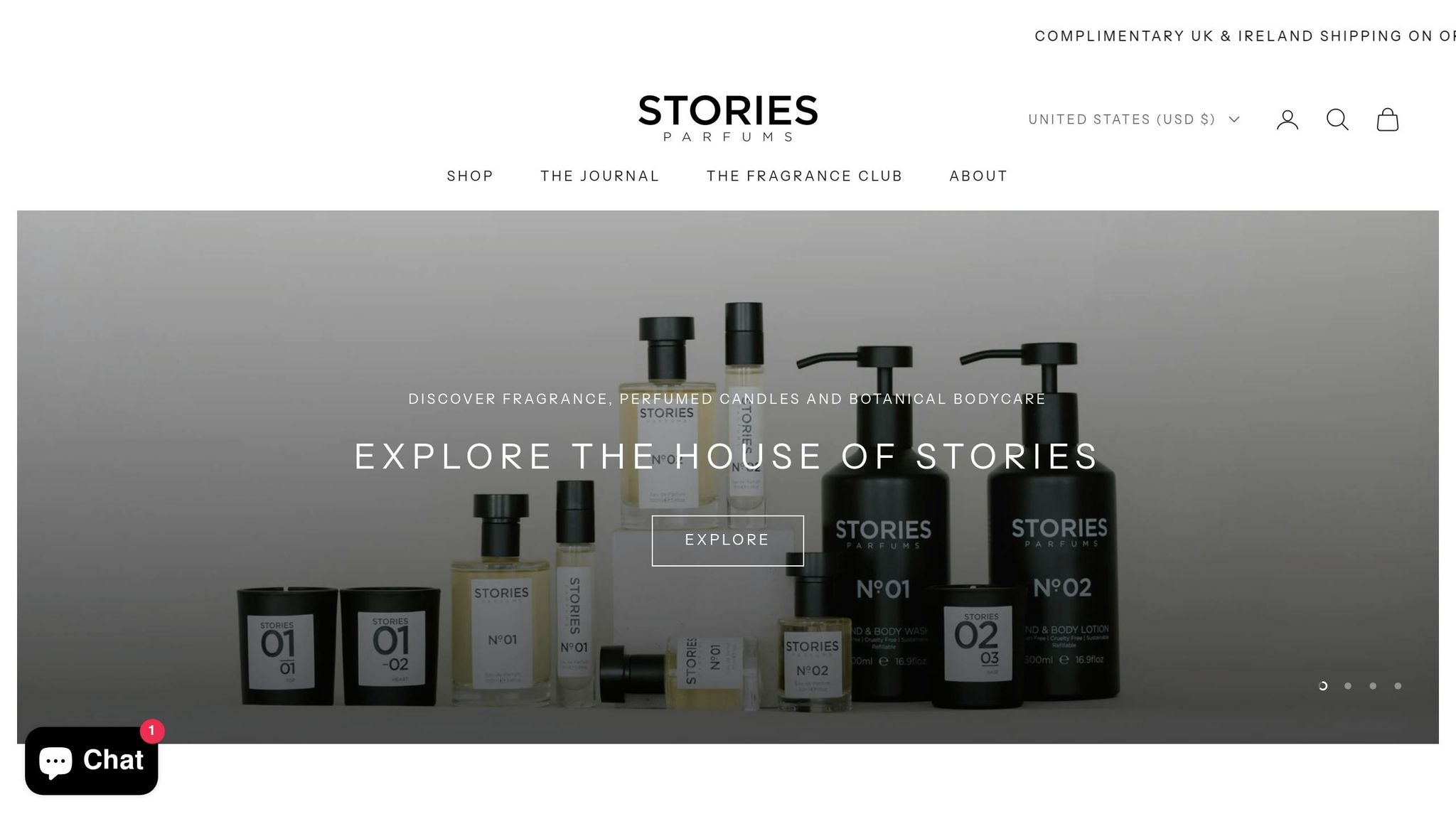
- Packaging as Storytelling: From the weight of the bottle to its design, packaging sets the tone, with brands like Diptyque and STORIES Parfums creating tactile and visual experiences.
Storytelling transforms fragrances into more than just a product - they become emotional journeys, tools for self-discovery, and reflections of who we are.
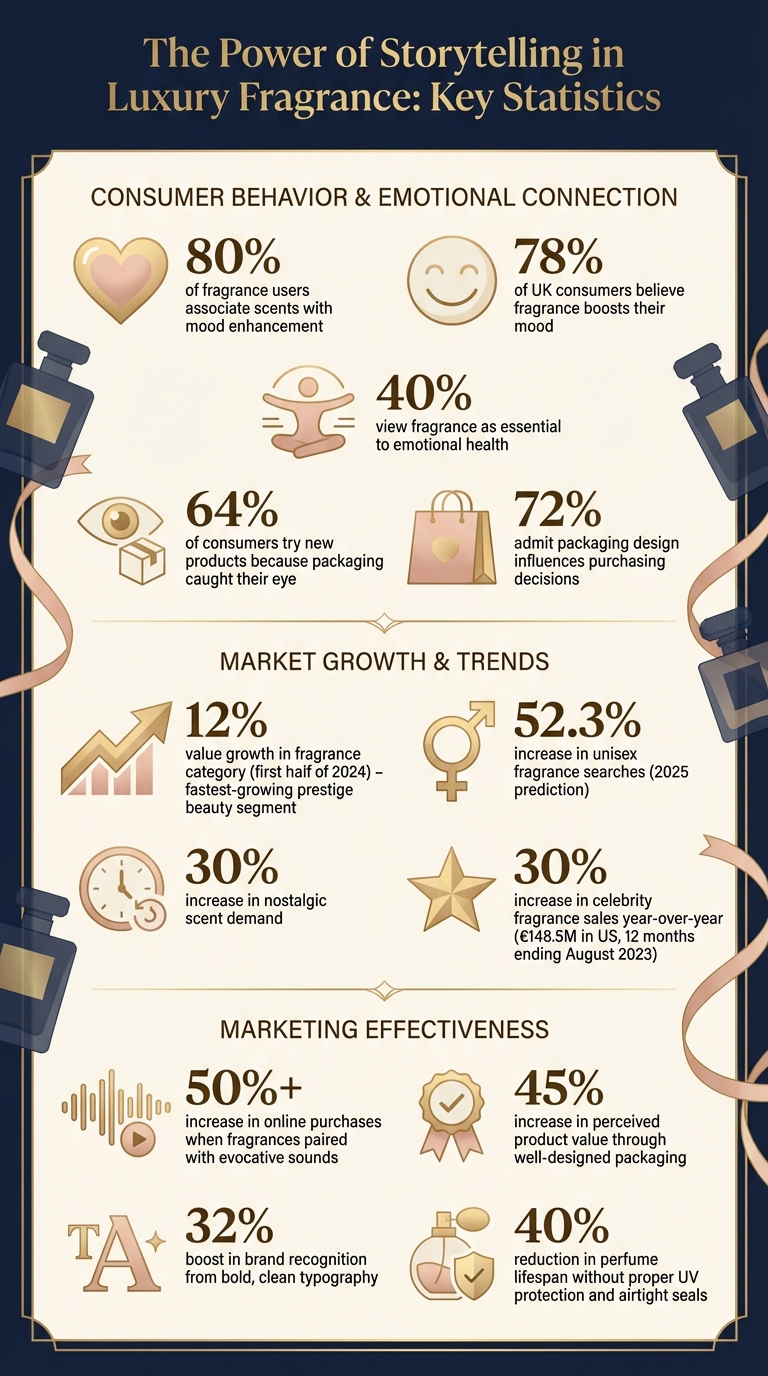
Luxury Fragrance Storytelling Impact: Key Statistics and Consumer Trends
From Two Bottles to a Global Fragrance Brand | STORIES Parfums Founder Journey (Chapter 8)
How Storytelling Builds Luxury Fragrance Brands
Luxury fragrance brands go beyond selling scents - they craft experiences that resonate on a personal level. These stories transform perfumes into emotional touchpoints, making consumers feel connected to the brand. Ravouth Keuky, Partner and Head of Deloitte Digital France, puts it succinctly:
"In luxury marketing, storytelling is more than a strategy - it’s a way to craft meaningful connections that resonate deeply with consumers."
Because scent is intangible, successful brands use storytelling to create metaphors and immersive worlds around their products. Matteo Azzolini, author of Why You Should Care, captures this idea perfectly:
"The product vanishes on our skin, it disappears in the air. What remains is the story."
This narrative-driven approach helps brands tap into emotions, heritage, and lifestyle aspirations, shaping how consumers perceive and engage with their products.
Creating Emotional Connections Through Narratives
Brands use storytelling to evoke emotions and memories, often through tailored campaigns and product lines. Maison Margiela’s "Replica" collection, for instance, is designed to act as "memory capsules", with fragrances like "Lazy Sunday Morning" and "Beach Walk" evoking specific moments and sensations. Even the structure of a fragrance - its top, middle, and base notes - unfolds like chapters in a story.
This strategy is highly effective. Research shows that 80% of fragrance users associate scents with mood enhancement, and pairing fragrances with evocative sounds can increase online purchases by over 50%. The fragrance category itself grew by 12% in value during the first half of 2024, making it the fastest-growing segment in prestige beauty.
Sharing Brand Heritage and History
Luxury brands often draw on their history and craftsmanship to create narratives of authenticity and exclusivity. For example, Aesop incorporates mythological tales like the story of Narcissus to elevate the act of using their products into a "choreographed ceremony". Similarly, in November 2025, Mugler’s "Angel" campaign starring Hunter Schafer referenced Thierry Mugler’s 1998 Crystal Dress, using this iconic fashion piece to anchor a futuristic narrative.
These heritage-driven stories serve as what Azzolini calls "portals to alternate worlds", allowing consumers to enter immersive brand universes simply by wearing the fragrance. Beyond celebrating their past, brands are increasingly weaving modern lifestyles and evolving identities into their storytelling.
Portraying Desirable Lifestyles
Luxury fragrances sell more than just products - they sell identity. Take Miu Miu’s "Miutine" campaign with Emma Corrin. Instead of focusing on scent notes, the campaign presents Corrin as "the quiet storm in a room full of people", embodying independence and rebellion. Azzolini explains this dynamic:
"In luxury, we don’t just buy craftsmanship - we buy metaphors. Futures. Versions of ourselves we haven’t quite become yet."
This reflects a shift in consumer preferences. By 2025, searches for unisex fragrances had surged by 52.3%, signaling a desire for scents that align with personal identity rather than traditional gender norms. Brands are responding by creating what some experts call "identity delivery systems" - fragrances designed to help consumers embody an aspirational version of themselves.
The focus is no longer on product features but on the experiences and values these products represent. For instance, Patek Philippe’s "Modern Fatherhood" campaign, photographed by Samuel Bradley, captures intimate moments between fathers and children, appealing to a younger, family-oriented luxury audience. These narrative strategies strengthen emotional bonds with consumers, ensuring the brand remains both relevant and desirable in the competitive luxury market.
Storytelling Methods in Fragrance Marketing
Luxury fragrance brands have mastered the art of turning invisible scents into vivid, desirable experiences. By weaving emotional connections and rich heritage into their narratives, they make their products feel tangible and alluring long before a single spray is experienced.
Origin Stories and Rare Ingredients
One popular strategy is highlighting the rarity and labor-intensive processes behind key ingredients. For instance, saffron - known as the "golden spice" - requires roughly 75,000 blossoms to produce just one pound. Similarly, oud (agarwood) is prized for its scarcity, as it forms only when heartwood interacts with specific molds. These stories often include intricate extraction techniques, like hand-harvesting vetiver roots or the natural ocean aging of ambergris, often called "floating gold." Such details create an aura of exclusivity and craftsmanship that justifies premium pricing and elevates the product’s desirability.
Modern brands are also experimenting with unconventional ingredients like tomato, beetroot, or even industrial materials like "concrete." This approach, often referred to as the "Distinctiveness Effect", helps fragrances stand out in a crowded market. With the rise of ethical consumerism, many companies now incorporate synthetic or vegan alternatives to traditional animal-derived ingredients like musk and ambergris. This shift allows them to maintain the allure of rarity while appealing to modern values around sustainability.
While rare ingredients establish a sense of exclusivity, celebrity collaborations bring a personal and relatable dimension to fragrance marketing.
Celebrity and Designer Partnerships
Celebrity partnerships have evolved far beyond simple endorsement deals. Today, stars often take active roles in shaping their fragrance brands, adding personal narratives that resonate with consumers. For example, Victoria Beckham ties her fragrance story to meaningful moments, like a 1997 trip to Portofino, which gives her brand a more intimate and distinctive identity compared to mass-market competitors.
Such collaborations have proven lucrative. In the U.S., celebrity fragrance sales hit €148.5 million in the 12 months ending August 2023, representing a 30% increase from the previous year. These partnerships thrive because celebrities and designers bring the visual storytelling and cultural relevance needed to make intangible scents feel real. Younger stars like Billie Eilish and Harry Styles use their platforms to highlight values like climate awareness, inclusivity, and gender fluidity, enabling luxury brands to connect with Gen Z audiences on a deeper level.
Beyond personal endorsements and ingredient stories, brands also delve into abstract themes to evoke powerful emotions.
Abstract Themes: Passion, Mystery, and Romance
While origin stories and celebrity endorsements ground fragrances in tangible narratives, abstract themes allow brands to explore deeper emotional territory. Luxury campaigns often use surrealist imagery and high-tech fantasies - think celestial journeys or woman-star hybrids - to position perfumes as gateways to confidence and a touch of magic. Instead of focusing solely on ingredients, these brands sell personas, such as the "mischievous spirit" or the "quiet storm in a room", offering consumers the chance to embody these identities by wearing the scent.
Emerging trends reflect contrasting aesthetics. On one hand, brutalist designs featuring raw textures and minimalist packaging appeal to those seeking authenticity and rebellion, with fragrances named "Concrete" or "Tar". On the other hand, the "romantic nostalgia" movement emphasizes themes of intimacy and slow craftsmanship, celebrating familial artistry and emotional warmth. Some brands even host multi-sensory events, like the "Perfumus Affair", where visual art and fragrance creation intertwine, showing how abstract concepts can evoke emotions similar to those inspired by a scent.
Through these imaginative narratives, luxury fragrance brands transform the intangible nature of scent into a rich emotional journey, connecting with consumers in ways that go far beyond the physical product itself.
Packaging as a Story Element
Before you even spritz a fragrance, the packaging sets the tone. Think of it as the "opening note" of the brand experience - a way to translate an invisible scent into something tangible. Research backs this up: 64% of consumers are drawn to try a new product simply because the packaging caught their eye, while 72% admit that packaging design influences their purchasing decisions. Even more striking, well-designed packaging can elevate a product’s perceived value by up to 45%.
Communicating Through Bottle Design
The story continues in the details of the bottle itself. Every curve, angle, and label tells a silent tale. Sharp, angular designs with solid bases suggest stability and timelessness, while softer, rounded shapes evoke sensuality and a connection to nature. Take Diptyque, for instance: their iconic oval label, inspired by 18th-century medallions and Roman shields, creates a visual "portal" into the fragrance’s narrative. The transparent bottle allows the liquid inside to magnify the label’s intricate illustration, drawing the consumer deeper into the story.
Typography also plays a crucial role. Serif fonts often convey tradition and heritage, while sans-serif fonts lean into modernity and simplicity. Byredo’s custom typeface is a perfect example - it blends modernist aesthetics with gothic elements from the 19th century, reflecting the brand’s avant-garde yet grounded ethos. Studies even show that bold, clean typography can boost brand recognition by up to 32%.
"Packaging serves as the ‘opening note,’ translating abstract olfactory experiences into a tangible visual and tactile identity." — Emma, RichPack
Beyond the visual, the materials themselves contribute significantly to the overall luxury experience.
Using Materials and Textures to Create Feeling
The way a perfume bottle feels in your hand matters just as much as how it looks. Weight is often synonymous with quality in luxury design. Brands achieve this with thick glass bases and zinc alloy caps, which provide a sense of premium craftsmanship that plastic simply can’t replicate. Even the satisfying click of a magnetic closure speaks to precision and attention to detail.
Stories Parfums offers a great example of how texture can tell a story. Founder Tonya Kidd-Beggs shared in March 2024 how her brand’s packaging pays homage to her Northern Irish roots. The Eau de Parfum boxes mimic the texture of Irish linen, a nod to the region’s historic linen industry and her ancestors’ livelihoods. The caps, made from a specialized zinc alloy called Zamac, add a luxurious weight while being fully recyclable. Even the labels are crafted from a blend of 80% marble mining waste and 20% recycled HDPE, showing how sustainability can coexist with elegance.
"The feel of Irish linen recalls the texture of the material on our Eau de Parfum boxes and they are an ode to the history of Irish linen and some of my ancestors’ livelihoods." — Tonya Kidd-Beggs, Founder, STORIES Parfums
Luxury brands are increasingly incorporating eco-conscious practices into their designs without compromising on prestige. Refillable glass bottles, for instance, turn packaging into a lasting brand asset. FSC-certified wood, post-consumer recycled glass, and biodegradable secondary packaging align with the values of today’s consumers. These choices aren’t just visually appealing - they also serve a functional purpose. Premium glass prevents chemical reactions, preserving the fragrance’s integrity. UV-protective coatings and airtight seals further guard against oxidation and light exposure, which can shorten a perfume’s lifespan by as much as 40%. In this way, packaging doesn’t just protect the scent - it strengthens the emotional connection between the brand and its audience.
Your Personal Fragrance Expert Awaits
Take our quick scent quiz to discover authentic designer and niche fragrances matched to your taste — explore them as 2ml, 5ml, 8ml & 30ml decants and samples, so you can try each one before committing to a full bottle.
Find Your ScentCase Studies: How Leading Brands Use Storytelling
Luxury fragrance brands have a knack for turning their creations into more than just scents - they become symbols, stories, and even cultural touchstones. Let’s explore how three renowned fragrance houses master the art of storytelling to create lasting emotional connections.
Dior: French Heritage and Timeless Design

Dior’s storytelling begins in Grasse, the historic epicenter of fine fragrance and French craftsmanship. Instead of merely listing ingredients, Dior crafts narratives that tie its scents to historical figures and cherished cultural traditions. Each bottle becomes a piece of French elegance, embodying a romanticized vision of France.
This focus on heritage and timelessness defines Dior’s approach. But while Dior leans on tradition, YSL takes a bold, modern route.
YSL: Individuality and Creative Expression
YSL celebrates freedom and individuality, blending technology with storytelling. A standout example is the Libre fragrance, whose name itself means "freedom". To amplify this message, YSL launched an augmented reality campaign, embedding QR codes in magazines like Vogue. These codes transported readers into an immersive digital experience showcasing three iconic architectural landmarks in Mexico City.
The brand further extended its narrative with the "Push the Boundaries" docuseries, which highlights dancers and musicians who challenge societal norms. Stephan Bezy, International General Manager at Yves Saint Laurent Beauté, explained:
Push The Boundaries has been created to empower & support daring people who are surpassing society’s limits in order to create change. We want to support these daring code-breakers by empowering their creativity...
YSL’s choice of ambassadors, such as Dua Lipa and Kaia Gerber, reinforces this rebellious and creative spirit. Marketing researcher Eva Khanpara noted:
By having [Dua Lipa] as the face of the campaign, YSL was able to reach a wider audience and appeal to younger women who are looking for a fragrance that embodies their own sense of freedom and femininity
While YSL emphasizes innovation and self-expression, Tom Ford takes a different path, weaving mystery and sensuality into its storytelling.
Tom Ford: Mystery and Sensuality
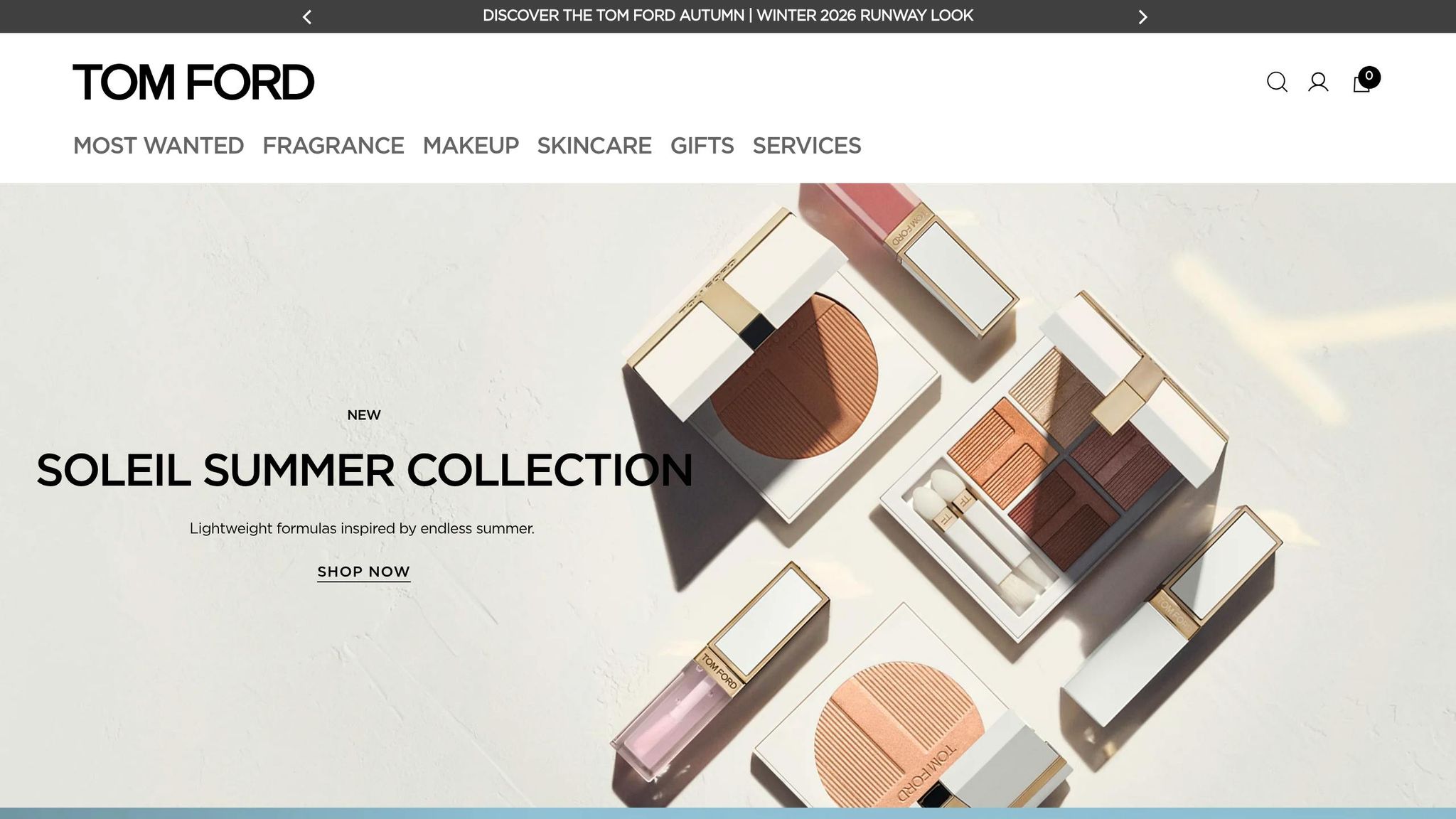
Tom Ford’s approach is unapologetically bold, using provocative names and intricate scent profiles to create allure. Fragrances like "Fucking Fabulous" and "Vanilla Sex" exemplify this daring strategy. When asked about the directness of the names, Tom Ford remarked:
It’s undeniably the most straightforward name for such a beautiful scent. Why make it complicated?
Each composition tells a story of sensuality and boldness. For instance, Black Orchid combines black truffle with ylang-ylang, while Vanilla Sex layers vanilla, tobacco, and coffee for a rich, complex profile. Speaking about Velvet Orchid, Ford shared:
To this day, velvet is my favorite fabric. The woman who wears this is not a wildflower. She’s an urban flower, she’s a hothouse flower, she’s an Orchid
Through their distinct approaches - heritage, freedom, and mystery — Dior, YSL, and Tom Ford demonstrate the power of storytelling in creating fragrances that resonate deeply with their audiences.
Building Consumer Connections Through Stories
In the world of luxury fragrance, success goes beyond selling scents - it’s about creating deep emotional connections that resonate with customers. Storytelling plays a crucial role in turning a fleeting sensory encounter into a lasting and meaningful experience, transforming occasional buyers into devoted followers.
Personal Scent Memories and Experiences
Fragrance has a remarkable ability to evoke memories, thanks to its unique connection to the brain’s limbic system, which governs emotions and long-term memory. Unlike other senses, smell bypasses the thalamus and connects directly to the amygdala and hippocampus, giving it unparalleled access to our emotional core. This is why a single whiff can instantly transport us to a cherished moment or place.
Luxury brands are tapping into this powerful link to craft narratives that resonate on a deeply personal level. For instance, 80% of fragrance users associate scent with enhancing their mood, making it a tool for emotional well-being. In the UK alone, 78% of consumers believe fragrance boosts their mood, while 40% in certain markets view it as essential to their emotional health.
Rather than focusing solely on ingredients, successful brands sell stories. These narratives become the essence of the product, lingering long after the scent fades. Some even take a minimalist approach, using numbered bottles to strip away preconceived notions and allow wearers to form entirely personal connections. As Tonya Kidd-Beggs, Founder of STORIES Parfums, eloquently explains:
Scent memory could be a powerful tool for healing and self-discovery
This intimate relationship between scent and memory invites consumers to embark on new olfactory adventures, making fragrance a deeply personal journey.
Encouraging Fragrance Exploration
By tapping into the emotional resonance of scent memories, brands inspire consumers to explore new fragrances. Shifting the narrative from specific scent notes to the emotions they evoke transforms fragrance from a simple commodity into a journey of self-discovery. This approach empowers individuals to see fragrance as a tool for personal growth and reflection, encouraging them to experiment with scents that align with their evolving stories.
The numbers back this up: searches for unisex fragrances are predicted to rise by 52.3% in 2025, while demand for nostalgic scents has already increased by over 30%. This growing interest reflects a desire for fragrances that speak to individuality and personal experiences.
Services like Scento make this exploration accessible. By offering smaller decant sizes - 2 ml, 5 ml and 8 ml vials, and a 30 ml bottle decant on most perfumes - Scento eliminates the financial risk of committing to a full bottle before forming a connection with a fragrance. The 8ml vials, providing roughly 120 sprays, allow ample time to build an emotional bond and decide if a scent fits into your personal narrative. Instead of spending over €300 on a full bottle, you can explore a curated selection of over 1,000 designer and niche fragrances, building a wardrobe that truly reflects your identity.
Conclusion
Storytelling lies at the heart of how luxury fragrance brands connect with their audience. Since a scent itself is intangible, brands rely on narratives to spark desire and create emotional resonance. As Matteo Azzolini insightfully puts it:
When the product disappears into air, all that’s left is the story. And the story, it turns out, is what we were buying the entire time.
This fusion of sensory experience and compelling storytelling shapes how we perceive and remember a fragrance. When brands excel at weaving these narratives, they don’t just sell a product - they invite consumers into an ongoing journey. This connection fosters loyalty and sets them apart in a fiercely competitive market.
From celebrating rich heritage and using rare ingredients to designing packaging that feels like an experience in itself, every detail contributes to the story a fragrance tells. These stories spark our imagination and reflect the aspirations we hold for ourselves.
Today’s fragrance exploration goes beyond mere scent - it’s about personal discovery. It invites individuals to uncover the inspirations behind each creation and craft their own olfactory journeys. Every element, from history to design, strengthens the narrative that defines what makes a luxury fragrance truly special.
FAQs
Why does scent trigger memories so strongly?
Scent has a powerful ability to evoke memories because it connects directly to the brain’s limbic system - an area responsible for managing both emotions and memory. This direct pathway often makes scent-related memories feel more vivid and emotionally charged than those sparked by visuals or sounds.
How does packaging change how a fragrance feels?
Packaging plays a crucial role in shaping how a fragrance is perceived, elevating its emotional and sensory appeal. Details like rich textures, substantial weight, and premium materials can create a sense of refinement and exclusivity. It also serves as a visual storyteller, emphasizing elements like craftsmanship, heritage, or a sense of intimacy. By combining these visual and tactile elements, packaging turns a fragrance into a multi-dimensional experience, making it feel more personal and meaningful while strengthening the emotional bond with the brand.
How can I find a fragrance story that fits me?
To discover a fragrance that truly speaks to you, start by focusing on scents that stir personal memories or emotions. Many high-end brands weave storytelling into their creations, crafting perfumes that carry narratives meant to evoke connection. By diving into these stories, you can find fragrances that align with your personality or cherished moments, making your choice feel deeply personal and meaningful.

