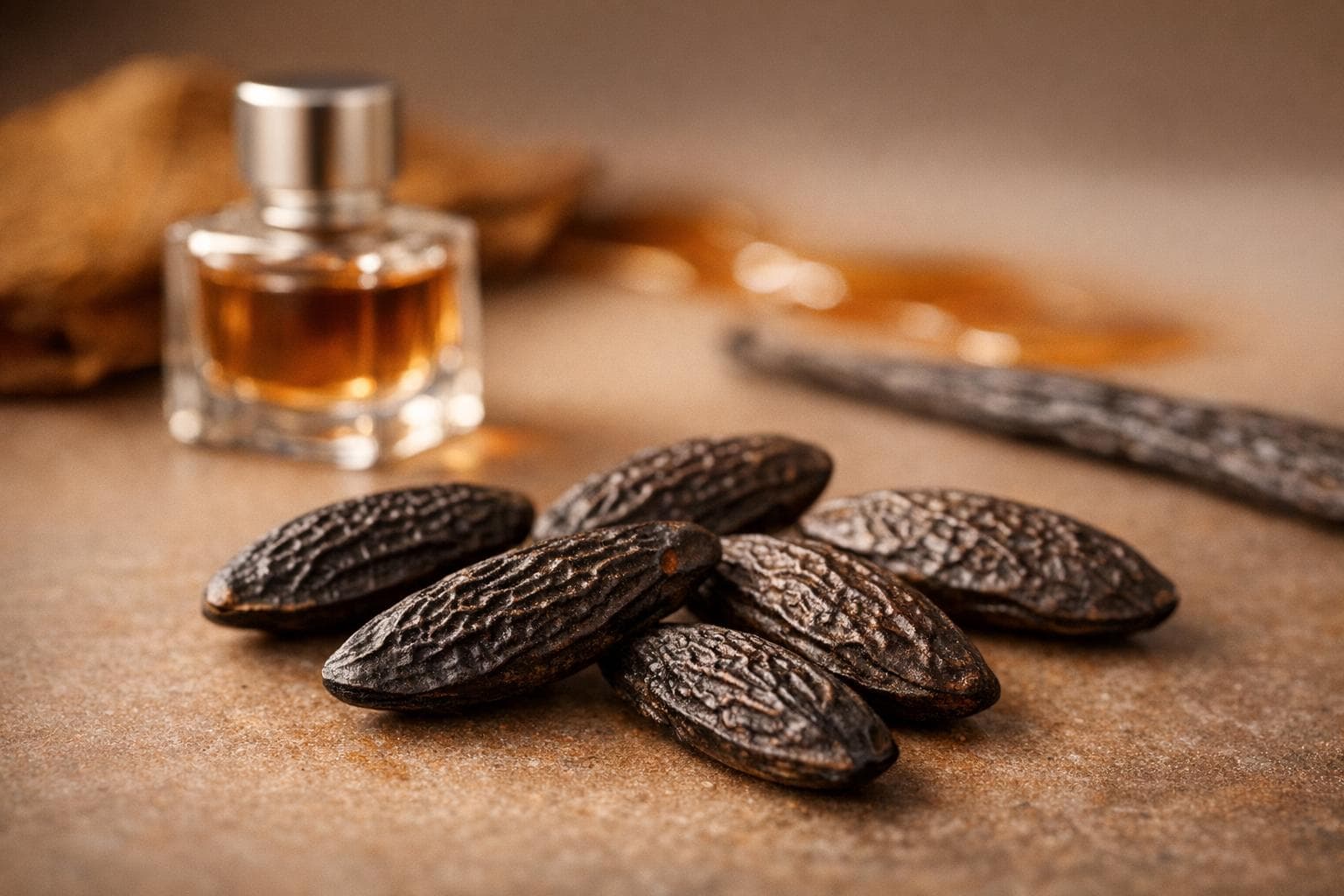
Tonka bean is the quiet star of 2026’s fragrance world, offering a warm, layered alternative to vanilla. Its scent combines notes of hay, almond, caramel, and tobacco, giving perfumes depth and longevity. Key to its charm is coumarin, the molecule responsible for its rich aroma and ability to anchor other notes for up to 400 hours on fabric.
Tonka works across styles - from nutty gourmands to earthy tobacco blends - making it a versatile choice for cooler months in Germany (October–February). Whether paired with florals or spices, tonka enhances fragrances without overwhelming. For those seeking a more textured, long-lasting scent that’s less sweet than vanilla, tonka-forward perfumes are worth exploring.
Quick Takeaways:
- Scent Profile: Warm, dry, with almond, hay, and tobacco nuances.
- Best For: Autumn/winter; cozy, sophisticated occasions.
- Longevity: Up to 400 hours on fabric.
- Layering Tips: Combine with citrus, florals, or spices for unique blends.
- Try Before You Buy: Decants (5–8 ml) are ideal for testing.
Tonka bean transforms fragrances into something richer and more enduring, making it a must-try for anyone ready to move beyond vanilla.
The Best Tonka Fragrances
What Tonka Bean Is and How It Smells
The tonka bean comes from the Dipteryx odorata tree, a tropical legume native to South America. After harvesting, the seeds undergo fermentation and drying, forming a crystalline layer of coumarin. This distinctive coating hints at the bean’s unique aromatic qualities. Let’s take a closer look at tonka bean’s multi-layered scent profile.
The Scent of Tonka Bean
Tonka starts with a faint green bitterness, which unfolds into notes of dried hay, warm almond, soft caramel, and cured tobacco. A creamy, milky undertone ties everything together, giving it a smooth finish. This complexity allows tonka to work across a wide range of fragrance styles, from gourmand to dry aromatic blends. François Demachy, Perfumer — Creator at Dior, describes its allure perfectly:
"The tonka bean is a concentrate of sensations and aromas. It is dual, it has a multifarious seduction. Its milky sweetness invariably attracts. But it also reveals a soft yet surprising bitterness."
Coumarin: The Key Molecule Behind Tonka’s Scent
At the heart of tonka’s aroma is coumarin (C₉H₆O₂), the compound responsible for its signature character. Raw tonka beans typically contain 1–10% coumarin by dry weight, while the absolute used in fine perfumery can range between 20–50%. Venezuelan beans, often considered the gold standard, deliver coumarin levels of 3–10%.
Tonka absolute also includes other molecules that add depth to its aroma. Dihydrocoumarin contributes a creamy, coconut-like sweetness, eugenol brings a spicy warmth reminiscent of clove, and furaneol enhances its gourmand appeal with a cooked-fruit nuance. Synthetic coumarin, on the other hand, offers a cleaner, more straightforward almond-hay note, which is why niche perfumers often prefer the richness of natural tonka absolute.
Historically, coumarin holds a special place in perfumery. It was the first synthetic aromatic compound introduced in fine fragrance, debuting in Guerlain‘s Jicky in 1889. Today, it’s estimated that around 30% of all fragrances on the market feature coumarin.
Tonka Bean vs. Vanilla: What Sets Them Apart
Both tonka and vanilla add warmth and sweetness to fragrances, but they behave differently on the skin. Vanilla, dominated by vanillin, creates a creamy, smooth sweetness with a custard-like softness. Tonka, in contrast, is drier, more textured, and layered in complexity. While vanilla rounds out compositions by softening harsh edges, tonka provides balance, bridging citrus, woods, and resins. Matt Ruggieri, Co-founder of Onekind, highlights this dynamic:
"Tonka absolute is the featured material. The vanilla supports it, not the other way around."
Tonka also excels as a fixative. Its low vapour pressure allows its scent to linger on fabrics for over 400 hours.
How Tonka Bean Is Used in Modern Perfumes
Tonka bean’s rich and multifaceted aroma makes it a staple in modern perfumery, seamlessly fitting into a variety of fragrance families. Whether in amber, gourmand, or unisex creations, it adapts beautifully, offering something unique to each.
Tonka in Amber and Oriental Fragrances
In amber and oriental scents, tonka bean acts as a key connector, linking sweet notes like vanilla with deeper, resinous ingredients such as labdanum or benzoin. This interplay helps maintain balance and depth, creating fragrances that feel both atmospheric and long-lasting. Its fixative qualities are particularly valuable, anchoring fleeting top and heart notes to ensure the scent lingers on the skin. Much like vanilla, tonka supports these compositions by adding warmth and harmony.
Tonka in Gourmand Perfumes
Gourmand fragrances often rely on tonka bean to bring a sense of indulgent warmth. Its baked, slightly toasted sweetness pairs well with notes like coffee, caramel, and chocolate, enriching the blend without becoming overly sweet. Tonka’s dry yet comforting sweetness provides a refined edge, enhancing the complexity of these dessert-like scents. Thanks to its furaneol content, tonka can even introduce a hint of cooked-fruit nuance, mimicking the textures of desserts. In recent years, perfumers have explored tonka’s ability to evoke hot beverage accords - think creamy vanilla lattes, hazelnut coffee, or rich hot chocolate - capturing the cozy essence of a warm drink.
Tonka in Unisex and Niche Perfumes
In niche and unisex fragrances, tonka bean’s adaptability takes center stage. Its neutral warmth allows it to lean feminine when paired with florals or lactones, while combinations with tobacco, woods, or leather give it a more grounded, earthy character. Arthur Peace highlights this versatility:
"Tonka bean is one of the most genuinely unisex notes in perfumery - its warmth and sweetness read as feminine in some compositions and more grounded and earthy in others."
This ability to shift between profiles makes tonka a favorite for creating sophisticated, gender-neutral scents. It also serves a practical purpose in vegan formulations, where its smooth, skin-like warmth can replace traditional animal-derived ingredients like ambergris or musk. Perfumes such as Le Labo Tonka 25 (€235) and Byredo Eleventh Hour (€214) showcase how niche brands use tonka to craft intricate, well-rounded fragrances that evolve beautifully from the first spray to the dry-down.
Your Personal Fragrance Expert Awaits
Take our quick scent quiz to discover authentic designer and niche fragrances matched to your taste — explore them as 2–8ml decants and samples, so you can try each one before committing to a full bottle.
Find Your ScentHow to Pick a Tonka — Forward Fragrance
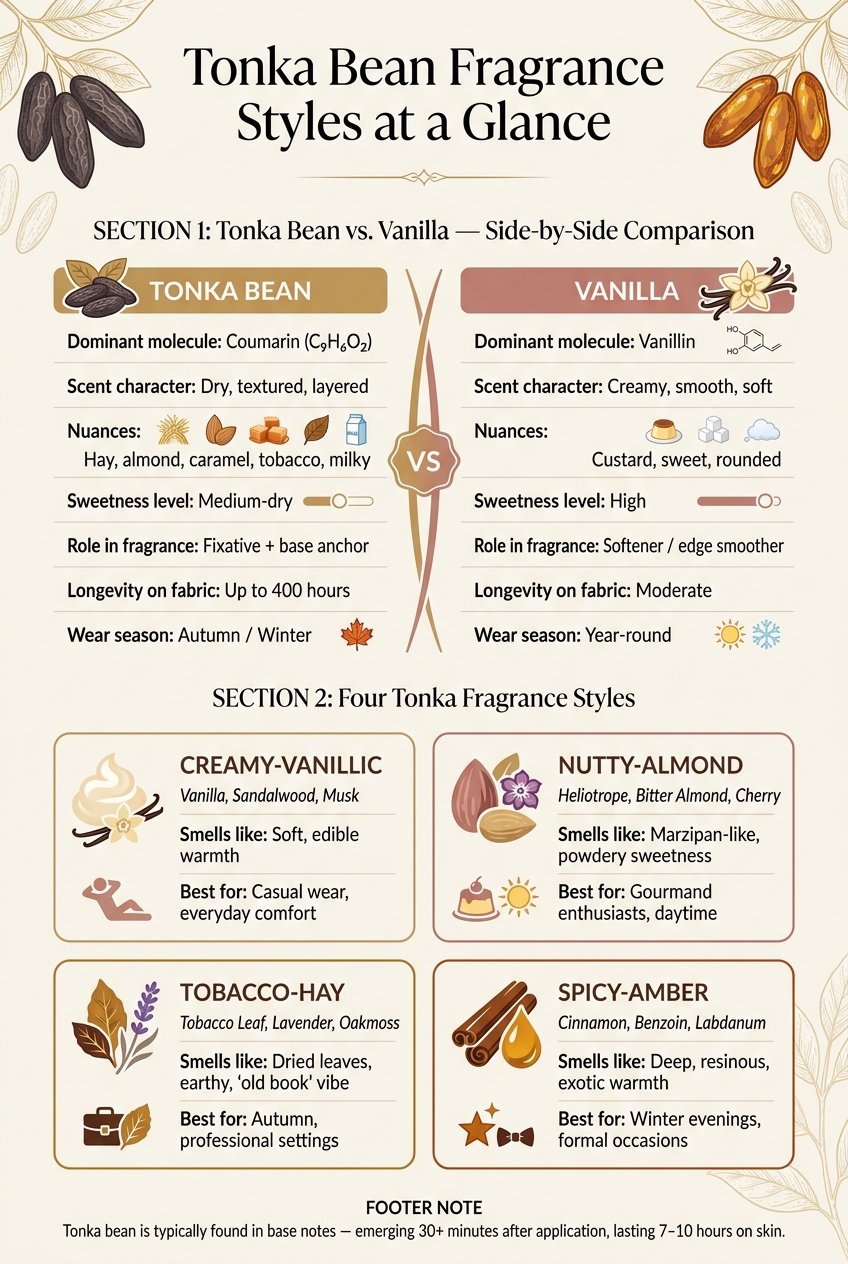
Tonka Bean vs. Vanilla: Fragrance Styles & Scent Profiles Compared
Tonka bean’s warmth and depth make it a standout note in perfumery. Here’s how to identify the right tonka-forward fragrance for your style and the season.
Tonka Fragrance Styles at a Glance
Tonka’s versatility shines through its pairing with other notes, creating a variety of scent profiles. From creamy and sweet to earthy and rich, tonka can adapt to different moods and occasions. Below are four main styles to consider:
| Tonka Style | Key Supporting Notes | What It Smells Like | Best For |
|---|---|---|---|
| Creamy — Vanillic | Vanilla, Sandalwood, Musk | Soft, edible warmth | Casual wear, everyday comfort |
| Nutty — Almond | Heliotrope, Bitter Almond, Cherry | Marzipan-like, powdery sweetness | Gourmand enthusiasts, daytime |
| Tobacco — Hay | Tobacco Leaf, Lavender, Oakmoss | Dried leaves, earthy, "old book" vibe | Autumn, professional settings |
| Spicy — Amber | Cinnamon, Benzoin, Labdanum | Deep, resinous, exotic warmth | Winter evenings, formal occasions |
For those who prefer a subdued warmth, the tobacco-hay category offers a refined, earthy profile. On the other hand, the creamy-vanillic and nutty-almond styles provide a more comforting, gourmand-like experience. Each style highlights tonka’s versatility while catering to different preferences.
How to Read a Fragrance Note Pyramid
Tonka bean is often found in the base notes of a fragrance. These are the notes that emerge after the initial top and heart notes fade, typically around 30 minutes after application. This is when tonka reveals its true character, adding depth and coherence to the scent.
"Tonka bean is the note that makes good fragrances feel finished, coherent, and irresistibly wearable." - Fragrenza
When scanning a fragrance’s note pyramid, look for tonka bean paired with ingredients like sandalwood, benzoin, or vanilla. These combinations enhance its warm, long-lasting qualities. Descriptions such as "baked", "powdery", or "marzipan" often indicate a strong tonka presence, while its fixative properties contribute to impressive longevity - typically 7 to 10 hours.
Choosing Tonka Scents by Season and Occasion
Tonka-forward fragrances thrive in autumn and winter, especially in cooler climates like Germany’s from October to February. The crisp, dry air enhances tonka’s warmth, making it feel inviting rather than overpowering.
"In cold weather, a tonka bean fragrance becomes something extraordinary - the contrast between the cool air and the warm note on skin is one of the most beautiful things in perfumery." - Arthur Peace, Founder, Beguile
For a chilly November afternoon in Munich or a festive December night in Berlin, opt for a spicy-amber or tobacco-hay Eau de Parfum. These styles complement the season beautifully. During spring or summer, switch to lighter concentrations like Eau de Toilette, applying sparingly to avoid overwhelming the senses. Trying a small decant (5 ml or 8 ml) is a smart way to test how a tonka-forward scent evolves across different seasons before committing to a full-size bottle.
Layering Tonka Fragrances to Build Your Own Scent
How Fragrance Layering Works with Tonka
Tonka bean, known for its role as a grounding note in many modern perfumes, is also a standout choice for fragrance layering. Its fixative properties slow down the evaporation of lighter, more volatile notes, creating a stable foundation for other scents to shine.
To get the most out of tonka in layering, start by applying the heavier tonka-based fragrance as a base. This ensures that lighter notes - like citrus, floral, or herbal - stay noticeable, anchored by the depth and warmth of tonka rather than fading too quickly.
"Vanilla lifts the scent and tonka keeps it grounded. When both are used, the end fragrance has body without excess sweetness." - Eden Perfumes
Tonka Layering Combinations Worth Trying
Once you’ve established tonka as your base, you can experiment with a variety of combinations to create unique, versatile scents. Here are some pairings to try:
| Pairing Partner | Result | Best For |
|---|---|---|
| Citrus (bergamot, yuzu) | A fresh, bright opening with a warm, lasting dry-down | Daytime, spring/summer |
| Sandalwood | Creamy, luxurious warmth that stays close to the skin | Evening, luxury wear |
| Florals (jasmine, rose) | Adds soft heat, balancing the coolness of florals | Romantic occasions |
| Spices (cinnamon, cardamom) | Smooths sharp edges, offering cozy, wearable warmth | Autumn, winter evenings |
| Vetiver | A sweet-creamy balance with a touch of sour-spicy complexity | Unisex, unique blends |
Matt Ruggieri, Co-founder of Onekind, highlights the appeal of pairing tonka with citrus:
"The citrus gives you a bright, fresh opening; the tonka gives you a warm, lasting dry-down. The combination smells significantly more expensive than either component."
For a more romantic touch, Arthur Peace of Beguile suggests combining tonka with florals. He explains, "Tonka strips away the coolness that some florals can carry and replaces it with a soft, intimate heat."
These combinations offer a variety of scent profiles to explore, making tonka an incredibly versatile choice for layering.
Everyday Layering Tips for Tonka Scents
Incorporating tonka into your daily fragrance routine can be both simple and effective, especially with a few practical tips tailored for everyday wear in Germany.
- Pulse Points Matter: Apply tonka-forward fragrances to areas like the inner wrists, base of the neck, and inner elbows. The natural warmth of these spots helps amplify the scent. Avoid rubbing your wrists together, as this can disrupt the delicate top notes and alter the fragrance’s development.
- Opt for Oil — Based Scents in Professional Settings: In shared spaces like offices, oil-based tonka fragrances are ideal. They stay close to the skin, offering a polished yet subtle presence without overwhelming others. Just one or two applications can maintain a refined, understated scent.
- Cold Weather Advantage: During the colder months (October–February), tonka develops slowly in cool air, creating a comforting and cozy aroma without feeling heavy.
If you’re hesitant to commit to full bottles, start small. Decants in sizes like 5 ml or 8 ml allow you to test different tonka combinations on various occasions and see how they perform throughout the day. This way, you can confidently find the blends that suit your style and mood.
Why Tonka Bean Deserves a Place in Your Fragrance Wardrobe
Tonka bean has become a standout ingredient in 2026, reflecting the trend toward scents that balance sophistication with a sense of comfort. As Fragrenza aptly describes, "the note that makes good fragrances feel finished, coherent, and irresistibly wearable." This ability to tie a fragrance together without overpowering it is what makes tonka bean so intriguing.
What sets tonka apart is how it transforms familiar warmth into something richer. It takes the sweetness of vanilla and enhances it, adding depth and complexity. Whether in amber compositions or gourmand blends, tonka bean brings a refined touch to every fragrance family.
Another key feature of tonka is its impressive longevity. It stays with you, whether on skin or fabric, offering a sense of confidence throughout the day. This staying power makes it a vital component in a fragrance’s structure, creating an intimate and lasting experience.
The current shift toward personal, skin-close scents and sophisticated gourmand profiles highlights tonka’s strengths. Its warm, rounded character makes it an excellent choice for those looking to move beyond vanilla-forward fragrances and explore something more layered and nuanced.
If you’re curious about tonka, start small. Try a decant and wear it during cooler weather to experience how its complexity unfolds over time. Once you’ve had a chance to explore its depth, consider transitioning to a fragrance where tonka takes center stage. It’s a journey worth taking.
FAQs
Is tonka bean safe in perfume if it contains coumarin?
Yes, tonka bean is safe for use in perfumes. Its key aromatic compound, coumarin, has stirred some concerns when consumed in high doses through food. However, in the world of fragrances, it’s a different story. Regulatory organisations like the International Fragrance Association (IFRA) set strict guidelines on coumarin levels in perfumes, ensuring they remain within safe limits. As long as perfumes comply with these regulations, they are perfectly safe for regular use on the skin.
Why does tonka smell different on skin versus on clothing?
Tonka bean behaves uniquely depending on whether it’s applied to skin or fabric, influenced by its chemical makeup and surrounding conditions. On skin, the warmth of your body and individual skin chemistry amplify its cozy, powdery facets, evolving into a richer, more personal aroma as the hours pass. On clothing, however, without the influence of body heat, the scent remains more consistent, often settling into a dry-down reminiscent of tobacco leaves and aged books - a subtle yet long-lasting fragrance that can linger for days.
How can I tell if a perfume uses natural tonka absolute or synthetic coumarin?
Distinguishing between natural tonka absolute and synthetic coumarin can be challenging since both revolve around the same primary aromatic molecule. Synthetic coumarin delivers a straightforward scent - clean, sweet, and reminiscent of freshly cut hay. Natural tonka absolute, on the other hand, offers a much deeper and more layered profile. It combines creamy, coconut-like undertones with a touch of almond-skin bitterness, tobacco-like warmth, and delicate herbal hints. If a fragrance feels especially rich and multi-dimensional, there’s a good chance it features natural tonka absolute.

