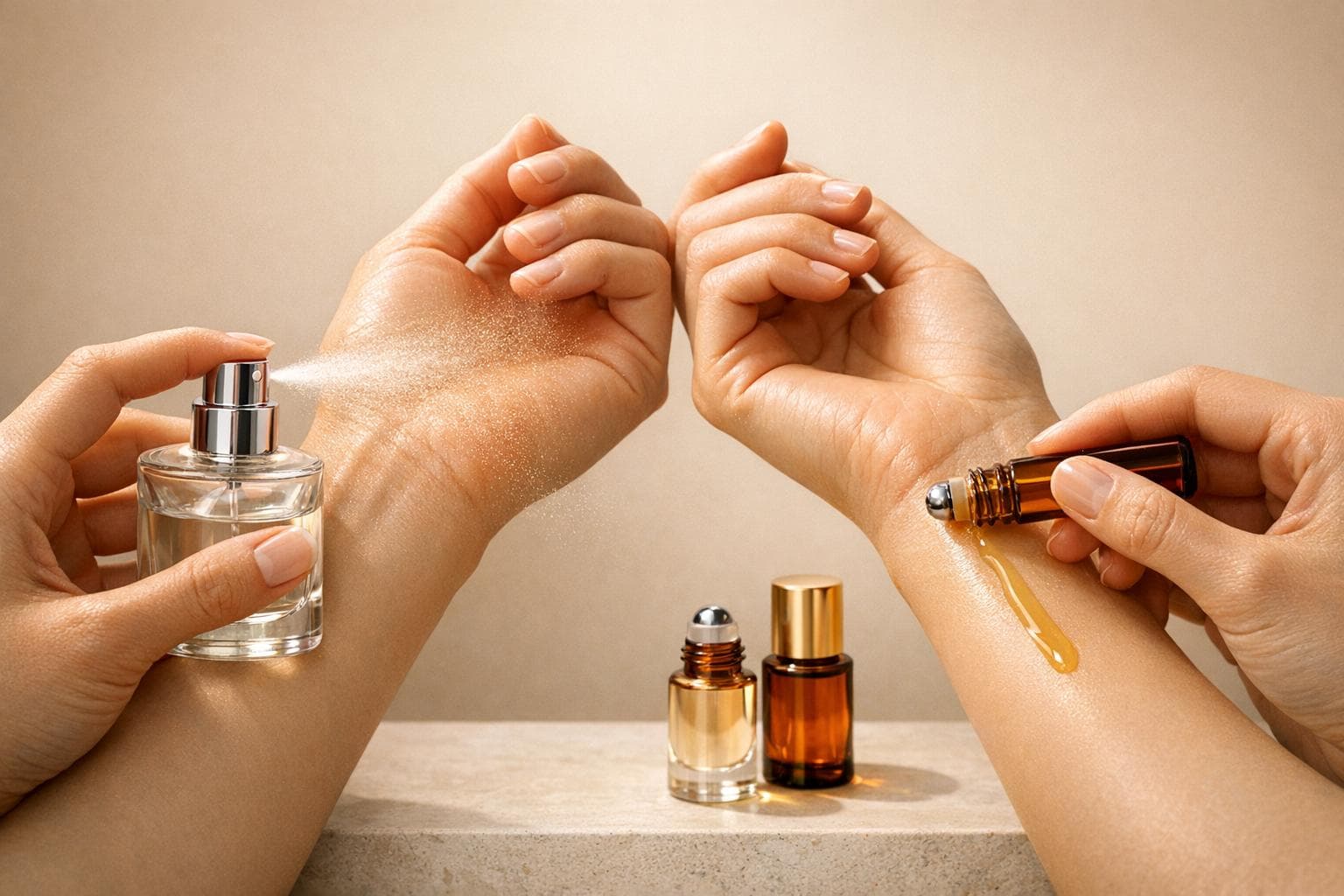
Bei der Wahl zwischen Parfums auf Alkohol- und Ölbasis hängt die Entscheidung maßgeblich von Ihren Vorlieben bezüglich Duftintensität, Haltbarkeit und Anwendungsart ab. Hier ist ein kurzer Überblick:
- Parfums auf Alkoholbasis: Bieten eine ausdrucksstarke, raumgreifende Projektion und eignen sich hervorragend für gesellschaftliche Anlässe. Sie verflüchtigen sich schneller, halten 3–6 Stunden an, können jedoch die Haut austrocknen. Ideal für alle, die lebendige, auffällige Düfte bevorzugen.
- Parfums auf Ölbasis: Schenken einen subtilen, intimen Duft, der länger anhält (6–12 Stunden) und die Haut pflegt. Perfekt für den Alltag, empfindliche Haut oder für diejenigen, die ein hautnahes Dufterlebnis schätzen.
Kurzer Vergleich im Überblick:
| Eigenschaft | Parfums auf Alkoholbasis | Parfums auf Ölbasis |
|---|---|---|
| Haltbarkeit | 3–6 Stunden | 6–12 Stunden |
| Projektion | Stark, raumfüllend | Intim, bleibt hautnah |
| Hautgefühl | Kann austrocknend wirken | Pflegend und feuchtigkeitsspendend |
| Anwendung | Zerstäuber (Spray) | Rollerball oder Tupfen |
| Kosten | Oft günstiger in der Anschaffung | Höherer Anschaffungspreis, aber ergiebiger |
| Ideal für | Gesellschaftliche Anlässe, markanter Auftritt | Tägliches Tragen, empfindliche Haut |
Für ein vielschichtiges Dufterlebnis können Sie ein Parfum auf Ölbasis als Basis auftragen und mit einem alkoholbasierten Spray überlagern, um außergewöhnliche Haltbarkeit mit starker Projektion zu verbinden.
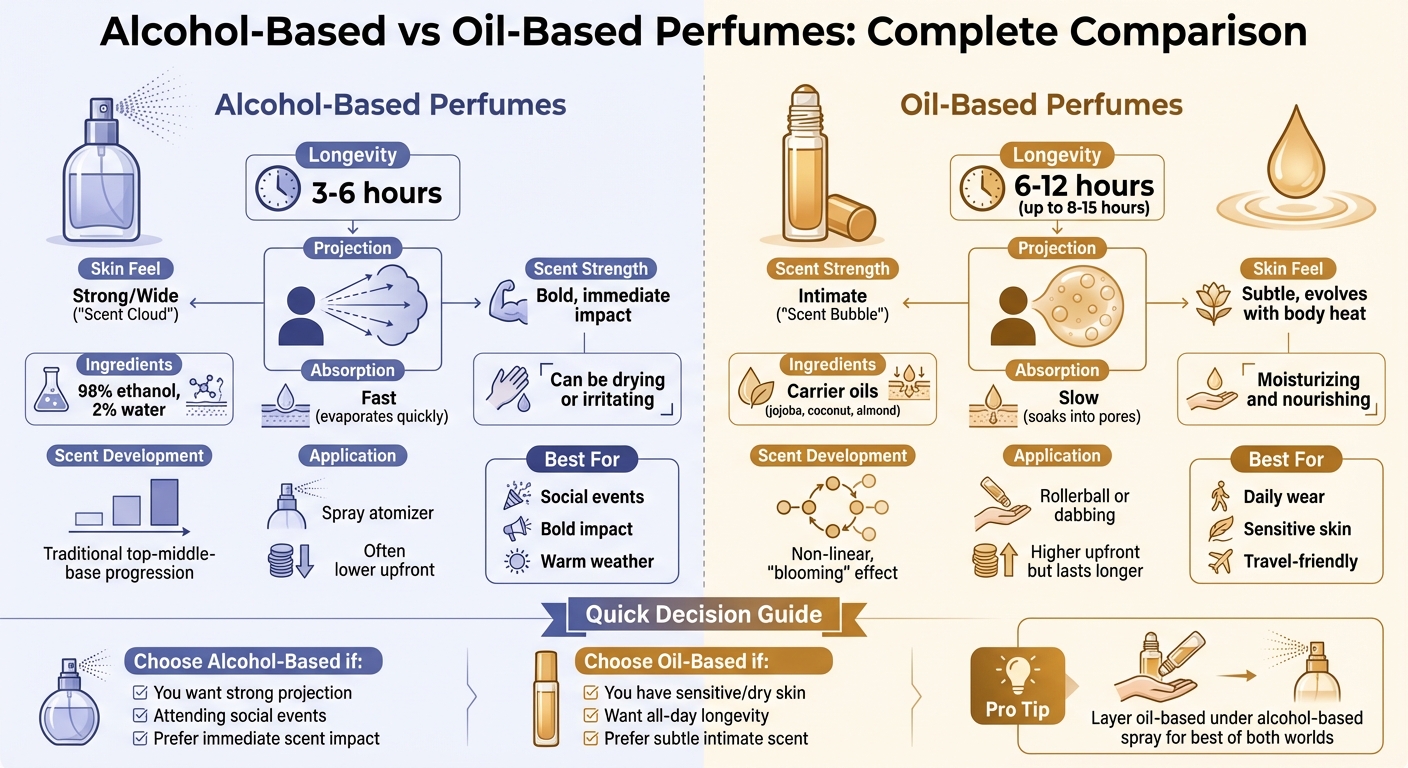
Vergleichstabelle: Parfums auf Alkoholbasis vs. Ölbasis
Main Differences Between Alcohol-Based and Oil-Based Perfumes
Wie ein Parfum seinen Duft entfaltet, hängt maßgeblich davon ab, ob es auf Alkohol oder Öl basiert. Alkohol fungiert als flüchtiges Lösungsmittel, das bei Raumtemperatur rasch verdunstet und den Duftmolekülen ermöglicht, sich weiträumig in der Luft zu verteilen. Dies erzeugt eine beachtliche Projektion. Wie Vetiver Aromatics treffend formuliert:
„Alkohol beflügelt einen Duft. Während der Alkohol verdunstet, strahlt der Duft nach außen und hüllt Sie in eine Aura des Wohlgeruchs.“
Diese schnelle Verdunstung verstärkt nicht nur die Reichweite des Parfums, sondern prägt auch den ersten Eindruck. Parfums auf Ölbasis hingegen setzen auf Trägeröle wie Jojoba- oder fraktioniertes Kokosöl. Diese Öle setzen die Duftnoten erst durch Körperwärme frei, wodurch das Aroma nah an der Haut bleibt, anstatt intensiv in den Raum zu strahlen.
Dieser grundlegende Unterschied beeinflusst das Verhalten des Parfums in puncto Projektion, Haltbarkeit und Duftentwicklung. Alkoholbasierte Parfums sind bekannt für ihre ausdrucksstarken, unmittelbaren Kopfnoten, die einen ganzen Raum erfüllen können. Parfums auf Ölbasis schaffen dagegen ein intimeres Erlebnis und bilden eine dezente „Duftblase“, die den Träger eng umgibt. Anders als alkoholbasierte Düfte, die sofort wahrnehmbar sind, benötigen ölbasierte Kompositionen oft etwa 30 Minuten, um ihre volle Intensität zu entfalten.
Auch die Zusammensetzung unterscheidet sich wesentlich. Parfums auf Alkoholbasis bestehen typischerweise zu 98 % aus Ethanol und zu 2 % aus Wasser; ihre Intensität wird durch die Konzentration der Riechstoffe bestimmt. Diese Konzentrationen reichen von 15–30 % bei Parfum bis zu 2–5 % bei Eau de Cologne. Parfums auf Ölbasis verwenden Trägeröle anstelle von Alkohol zur Verdünnung der Duftstoffe, was eine langsamere Aufnahme und eine allmähliche Entfaltung des Duftes ermöglicht.
Vergleichstabelle: Parfums auf Alkoholbasis vs. Ölbasis
| Eigenschaft | Parfums auf Alkoholbasis | Parfums auf Ölbasis |
|---|---|---|
| Haltbarkeit | 3–6 Stunden | 6–12 Stunden |
| Projektion | Stark/Weit („Duftwolke“) | Intim („Duftblase“) |
| Duftintensität | Ausdrucksstark, sofortige Wirkung | Subtil, entfaltet sich mit der Wärme |
| Hautverträglichkeit | Kann austrocknend oder reizend wirken | Feuchtigkeitsspendend und nährend |
| Inhaltsstoffe | 98 % Ethanol, 2 % Wasser | Trägeröle (z. B. Jojoba, Kokos) |
| Einziehzeit | Schnell (verdunstet rasch) | Langsam (zieht in die Haut ein) |
| Duftentwicklung | Klassischer Verlauf von Kopf-, Herz- und Basisnote | Nicht-linear, facettenreich aufblühend |
| Auftragsmethode | Zerstäuber (Spray) | Typischerweise per Rollerball oder durch Betupfen |
Diese Besonderheiten machen jeden Dufttyp perfekt für unterschiedliche Vorlieben und Anlässe – ganz gleich, ob Sie die Blicke auf sich ziehen oder ein privates, intimes Dufterlebnis genießen möchten.
Parfums auf Alkoholbasis: Definition, Vor- und Nachteile
Was sind Parfums auf Alkoholbasis?
Parfums auf Alkoholbasis nutzen Ethanol als Trägerstoff für Duftkompositionen. Die Rezeptur umfasst üblicherweise Parfümöle, Alkohol und gelegentlich Fixateure. Sie setzt auf eine zügige Verdunstung, um die Duftmoleküle in die Umgebung abzugeben. Diese rasche Verdunstung erzeugt die unverwechselbare Duftspur – die Sillage –, die Sie begleitet. Parfümeurin und Dufthistorikerin Marissa Zappas erklärt:
„Die Kombination aus Alkohol und einem Zerstäuber verleiht dem Parfum sein Volumen und seine Sillage.“
Diese Kreationen sind in verschiedenen Konzentrationen erhältlich, darunter Eau de Cologne (2–4 % Ölanteil), Eau de Toilette (5–15 % Ölanteil), Eau de Parfum (15–20 % Ölanteil) und Parfum/Extrait (20–30 % Ölanteil). Jede Konzentrationsstufe zeichnet sich durch ein eigenes Maß an Intensität und Beständigkeit aus.
Vorteile von Parfums auf Alkoholbasis
Zu den herausragenden Eigenschaften von Parfums auf Alkoholbasis zählen ihre kraftvolle Projektion und die strahlenden Kopfnoten, die sie zur perfekten Wahl für gesellschaftliche Anlässe machen. Die schnell trocknende Formulierung hinterlässt keinen öligen Film, was sich besonders bei warmem Wetter angenehm erfrischend anfühlt.
Auf der Haut hält der Duft typischerweise 3–6 Stunden an, auf Kleidung oder im Haar oft noch deutlich länger. Interessanterweise können die natürlichen Hautöle – insbesondere bei öligeren Hauttypen – dazu beitragen, die Haltbarkeit des Duftes spürbar zu verlängern.
Nachteile von Parfums auf Alkoholbasis
Trotz ihrer Vorzüge bringen alkoholbasierte Parfums auch gewisse Nachteile mit sich. Der Alkoholgehalt kann der Haut Feuchtigkeit entziehen, was insbesondere bei Personen mit Hauterkrankungen wie Ekzemen oder Dermatitis zu Reizungen führen kann. Dermatologe Dr. Alan Rogers betont:
„Menschen mit Ekzemen oder trockenen Hautstellen vertragen ölbasierte Alternativen oft besser, da Alkohol brennen oder die Haut austrocknen kann.“
Ein weiterer Aspekt ist die rasche Verdunstung, die dazu führen kann, dass der Duft schneller verfliegt und gelegentlich nachgelegt werden muss. Zudem kann der erste Sprühstoß von einem scharfen Alkoholton begleitet sein, der die feineren Kopfnoten kurzzeitig überdeckt. In bestimmten Umgebungen – wie Büros, Fitnessstudios oder Flugzeugen – kann die intensive Projektion zudem als aufdringlich empfunden werden.
Nicht zuletzt enthalten diese Parfums im Vergleich zu ölbasierten Formulierungen häufig mehr synthetische Inhaltsstoffe, Stabilisatoren und Konservierungsmittel. Für empfindliche Haut empfiehlt sich daher stets ein kleiner Verträglichkeitstest. Alternativ kann der Duft auch auf Kleidung oder Haar aufgetragen werden, um das Risiko von Hautirritationen zu minimieren.
Parfums auf Ölbasis: Definition, Vor- und Nachteile
Was sind Parfums auf Ölbasis?
Parfums auf Ölbasis werden komponiert, indem Duftkonzentrate mit Trägerölen wie Jojoba-, fraktioniertem Kokos- oder Süßmandelöl verblendet werden – gänzlich ohne den Einsatz von Ethanol. Diese Düfte weisen meist eine Duftkonzentration von 15–30 % auf und werden in Rollerballs, Tropfflaschen oder Tiegeln dargeboten, um ein präzises Auftragen auf die Pulspunkte zu ermöglichen. Im Gegensatz zu alkoholbasierten Parfums verdunsten die Öle in diesen Kreationen nur sehr langsam. So entsteht ein subtiler, hautnaher Duft, anstatt den gesamten Raum zu erfüllen. Fraktioniertes Kokosöl ist dank seines neutralen Geruchs, seiner klaren Farbe und seiner langen Haltbarkeit eine besonders geschätzte Basis.
Vorteile von Parfums auf Ölbasis
Ein wesentlicher Vorzug von Parfums auf Ölbasis ist ihre Langlebigkeit. Durchschnittlich verweilen sie 8–15 Stunden auf der Haut – deutlich länger als die 3–7 Stunden, die für alkoholbasierte Varianten typisch sind. Ihre langsame Verdunstung gewährleistet eine kontinuierliche, harmonische Freisetzung der Duftmoleküle. Darüber hinaus spenden die enthaltenen Trägeröle Feuchtigkeit, was sie zu einer hervorragenden Wahl für Personen mit Ekzemen, trockener Haut oder Sensibilitäten macht. Diese Verbindung aus Pflege und Duft vermittelt ein besonders natürliches Tragegefühl, bei dem Sie die Duftintensität präzise dosieren können.
Parfums auf Ölbasis sind zudem ideale Reisebegleiter. Dank ihrer kompakten Flakons und der nicht brennbaren Formulierung lassen sie sich mühelos mitführen – ohne Sorge vor dem Auslaufen oder vor Sicherheitsbeschränkungen im Reisegepäck.
Nachteile von Parfums auf Ölbasis
Dennoch weisen ölbasierte Düfte auch gewisse Einschränkungen auf. Eine der auffälligsten ist ihre dezente Projektion: Diese Düfte verweilen nah am Körper und werden in größeren Räumen weniger intensiv wahrgenommen. Zudem können die Trägeröle auf feinen Stoffen wie Seide Flecken hinterlassen. Um dies zu vermeiden, sollte das Parfum direkt auf die Pulspunkte aufgetragen werden und ausreichend Zeit zum Einziehen erhalten.
Auch das Dufterlebnis selbst verläuft anders. Da sich Parfums auf Ölbasis langsamer entfalten, entfällt der unmittelbare, strahlende Auftakt der Kopfnoten, den ein Spray bietet. Zudem bedeutet die Verwendung natürlicher Inhaltsstoffe nicht automatisch absolute Verträglichkeit. Parfümeurin Marissa Zappas erläutert:
„Natürliche Inhaltsstoffe sind für die Haut nicht immer unbedenklicher... auch Pflanzenextrakte in ölbasierten Düften können Reizungen hervorrufen.“
Bei sensibler Haut empfiehlt sich daher vorab ein Test an einer kleinen Hautstelle. Durch die höhere Konzentration an Duftölen sind ölbasierte Parfums im Anschaffungspreis oft etwas höher angesetzt. Da pro Anwendung jedoch nur kleinste Mengen benötigt werden, sind sie außergewöhnlich ergiebig und gleichen die Investition über die Zeit hinweg aus.
Ihr persönlicher Duftexperte erwartet Sie
Machen Sie unser kurzes Duftquiz und entdecken Sie authentische Designer- und Nischenparfums, die zu Ihrem Geschmack passen – als 2, 5, 8 & 30 ml Dekants und Proben, damit Sie jeden Duft testen können, bevor Sie sich für einen ganzen Flakon entscheiden.
Finden Sie Ihren DuftWann Sie Parfums auf Alkohol- oder Ölbasis wählen sollten
Wann Sie zu Parfums auf Alkoholbasis greifen sollten
Parfums auf Alkoholbasis sind die ideale Wahl, wenn Sie möchten, dass Ihr Duft wahrgenommen wird. Der enthaltene Alkohol verflüchtigt sich rasch und kreiert eine markante Sillage mit starker Ausstrahlung – perfekt für festliche Anlässe wie Hochzeiten, Galas oder Abendveranstaltungen. Parfümeurin Marissa Zappas bringt es auf den Punkt:
„Die Kombination aus Alkohol und einem Zerstäuber verleiht dem Parfum sein Volumen und seine Sillage.“
Aufgrund ihres leichten, nicht fettenden Hautgefühls wirken diese Parfums bei warmen Temperaturen besonders belebend.
Im professionellen Umfeld empfiehlt es sich jedoch, leichtere Konzentrationen wie ein Eau de Cologne (2–5 % Riechstoffanteil) zu wählen. So bleibt Ihr Duft dezent und dominiert gemeinsame Räume nicht. Studien weisen sogar darauf hin, dass allzu schwere Düfte bei Vorstellungsgesprächen einen nachteiligen Eindruck hinterlassen können.
Parfums auf Ölbasis eröffnen hingegen eine ganz andere Erfahrung – persönlicher, intimer und von beständiger Eleganz.
Wann Sie zu Parfums auf Ölbasis greifen sollten
Parfums auf Ölbasis eignen sich ideal, wenn Sie einen Duft suchen, der hautnah bleibt und Sie über den gesamten Tag hinweg begleitet. Da Öle nur langsam verdunsten, bleibt das Aroma wesentlich länger präsent. Das macht sie zur perfekten Wahl für lange Arbeitstage, Reisen oder den alltäglichen Gebrauch, wenn Sie eine feine, aber ausdauernde Duftnote bevorzugen.
Diese Düfte sind zudem eine Wohltat für empfindliche oder trockene Haut. Trägeröle wie Jojoba- oder fraktioniertes Kokosöl fungieren nicht nur als Träger der Duftstoffe, sondern verwöhnen die Haut zugleich mit Feuchtigkeit – ein Vorzug, der sich besonders in den kühleren Monaten auszahlt.
In privaten, intimen Momenten entfalten Parfums auf Ölbasis ihr Bouquet sanft bei jeder Bewegung. Dank kompakter Formate wie Rollerballs, Pipettenfläschchen oder festen Tiegeldüften sind sie unkompliziert mitzuführen und handgepäcktauglich nach der EU-Regel für Flüssigkeiten bis 100 ml – optimal für Reisen oder ein dezentes Auffrischen unterwegs.
DIY-Parfumrezepte für Anfänger: Auf Alkohol- und Ölbasis
Nachdem Sie die Eigenheiten beider Varianten kennengelernt haben: Warum kreieren Sie nicht Ihr eigenes Parfum? Diese einfachen Rezepte leiten Sie Schritt für Schritt an, um einen ganz persönlichen Duft nach Ihrem Geschmack zu erschaffen.
Rezept: Parfum auf Alkoholbasis selbst herstellen
Zu Beginn benötigst du Alkohol in Lebensmittelqualität als Basis, zum Beispiel Everclear mit 190 Proof oder einen hochwertigen Wodka. Halte eine kleine Glassprühflasche, ätherische Öle deiner Wahl (für Kopf-, Herz- und Basisnoten) sowie optional 2 Esslöffel destilliertes Wasser für später bereit.
So bauen Sie die Duftnoten harmonisch auf:
- Beginnen Sie mit den Basisnoten wie Zedernholz oder Vanille.
- Fügen Sie die Herznoten hinzu, beispielsweise Lavendel oder Geranie.
- Vollenden Sie die Mischung mit Kopfnoten wie Bergamotte oder Zitrone.
Ein bewährtes Mischungsverhältnis liegt bei 20 % Basisnoten, 50 % Herznoten und 30 % Kopfnoten. Für die Intensität eines Eau de Toilette empfiehlt sich ein Verhältnis von 10 % Duftölen zu 90 % Alkohol. Nachdem Sie die Öle hinzugefügt haben, füllen Sie den Flakon mit Alkohol auf, verschließen ihn und schütteln ihn sanft.
Lassen Sie das Parfum für 2–6 Wochen ruhen, damit sich die Nuancen harmonisch verbinden und die anfängliche Schärfe des Alkohols weicht. Nach der Reifezeit können Sie nach Wunsch destilliertes Wasser hinzugeben und das Parfum durch einen Kaffeefilter filtern, bevor Sie es in den finalen Flakon abfüllen. Bewahren Sie Ihre Kreation lichtgeschützt in dunklem Glas auf; so bleibt sie 2 bis 5 Jahre haltbar.
Rezept: Parfum auf Ölbasis selbst herstellen
Für dieses Rezept benötigen Sie ein geruchsneutrales Trägeröl wie Jojoba-, Süßmandel- oder fraktioniertes Kokosöl – herkömmliches Olivenöl sollten Sie meiden, da sein Eigengeruch die feine Komposition überdecken würde. Außerdem benötigen Sie einen 10-ml-Glas-Rollerball, ätherische Öle sowie eine Vitamin-E-Kapsel zur Konservierung.
Folgen Sie diesen Schritten:
- Geben Sie 10 bis 15 Tropfen ätherische Öle in das Fläschchen (eine 1–2 %ige Verdünnung gewährleistet gute Hautverträglichkeit). Schichten Sie die Öle in der gewohnten Reihenfolge: Basis-, Herz- und Kopfnoten.
- Öffnen Sie die Vitamin-E-Kapsel vorsichtig und geben Sie den Inhalt als natürliches Antioxidationsmittel hinzu.
- Füllen Sie den Flakon mit dem gewünschten Trägeröl auf, sodass am oberen Rand etwas Platz bleibt. Verschließen Sie das Fläschchen fest und rollen Sie es zwischen den Handflächen, um die Inhaltsstoffe sanft zu verbinden.
Obwohl Sie Ihr Parfumöl sofort verwenden können, gewinnen die Duftnoten nach etwa zwei Wochen Ruhezeit zusätzlich an Tiefe. Da Trägeröle mit der Zeit oxidieren können, haben diese Parfums meist eine Haltbarkeit von bis zu einem Jahr. In Braunglasfläschchen kühl und dunkel gelagert, bleibt die Frische optimal erhalten.
Fazit
Bei der Wahl zwischen Parfums auf Alkohol- und Ölbasis entscheiden der persönliche Geschmack und der Anlass. Sprays auf Alkoholbasis begeistern durch ihre raumgreifende Projektion und ihren unmittelbaren olfaktorischen Eindruck – perfekt für Feierlichkeiten oder Momente, in denen Sie eine unverwechselbare Duftaura hinterlassen möchten. Parfums auf Ölbasis bieten dagegen ein intimeres Dufterlebnis: Sie begleiten Sie 6–12 Stunden lang und verwöhnen die Haut zusätzlich mit Feuchtigkeit – ideal für jeden Tag.
Auch Ihr Hauttyp spielt eine entscheidende Rolle. Wie Dermatologe Dr. Alan Rogers erläutert:
„Menschen mit Ekzemen oder trockenen Hautstellen vertragen ölbasierte Alternativen oft besser, da Alkohol brennen oder die Haut austrocknen kann.“
Für ein vollendetes Ergebnis empfiehlt sich das Duft-Layering: Tragen Sie zunächst ein Parfumöl als nährende Basis auf und setzen Sie mit einem alkoholbasierten Spray strahlende Akzente. So verbinden Sie die herausragende Haltbarkeit der Öle mit der brillanten Strahlkraft eines Zerstäubers. Kleinere Duftproben sind zudem ein hervorragender Weg, um zu erkunden, wie sich eine Kreation über die Stunden hinweg auf Ihrer Haut entwickelt, bevor Sie sich für einen ganzen Flakon entscheiden.
Häufig gestellte Fragen (FAQs)
Wie kombiniert man Parfums auf Alkohol- und Ölbasis am besten?
Um Parfums auf Alkohol- und Ölbasis harmonisch miteinander zu verbinden, tragen Sie das Parfumöl zunächst auf Ihre Pulspunkte wie Handgelenke oder Hals auf. Dort kann das Öl optimal in die Haut einziehen und sein langanhaltendes, tiefes Aroma entfalten. Sobald das Öl eingezogen ist, sprühen oder tupfen Sie das alkoholbasierte Parfum auf dieselben Stellen oder in deren unmittelbare Nähe auf. Dies verleiht dem Duft Lebendigkeit und vergrößert seine Ausstrahlung.
Achten Sie beim Layering auf Duftnoten, die einander geschmackvoll ergänzen – wie die Liaison eines warmen, holzigen Öls mit einem spritzigen, zitrischen EdP. Um die Haltbarkeit noch weiter zu verlängern, können Sie die Haut vorab mit einer unparfümierten Lotion oder einem leichten Körperöl vorbereiten. Das Finden Ihrer persönlichen Signatur-Kombination lädt zum Experimentieren ein und schafft ein Dufterlebnis, das so einzigartig ist wie Sie selbst.
Wann sollte man sich für ein Parfum auf Ölbasis entscheiden?
Parfums auf Ölbasis sind die vollendete Wahl, wenn Sie einen sanften und dennoch außergewöhnlich langanhaltenden Duft schätzen. Sie brillieren in intimen Momenten wie romantischen Abenden oder kleineren Zusammenkünften, bei denen eine zarte Aura den Raum bereichert, ohne ihn zu dominieren.
Dank ihrer langsamen Verdunstung eignen sich diese Düfte hervorragend für längere Anlässe – etwa mehrgängige Abendessen, Empfänge im Freien oder lange Festlichkeiten –, bei denen ein Nachsprühen unpassend wäre. Zudem ist ihre hautfreundliche Zusammensetzung eine Wohltat für empfindliche Haut und schenkt ein diskretes, luxuriöses Tragegefühl im Berufsalltag.
Zusammenfassend vereinen Parfums auf Ölbasis feine Subtilität mit bemerkenswerter Beständigkeit – ideal für persönliche, intime und lang anhaltende Momente.
Sind Parfums auf Ölbasis besser für Personen mit empfindlicher Haut geeignet?
Für empfindliche Haut sind Parfums auf Ölbasis häufig die deutlich schonendere Wahl. Während alkoholbasierte Düfte bisweilen Trockenheit oder Rötungen hervorrufen können, basieren diese Rezepturen auf pflegenden Naturölen, die der Haut Feuchtigkeit schenken und den Duft sanft binden.
Da sie gänzlich ohne Alkohol auskommen, gelten ölbasierte Formulierungen als besonders mild und reizarm. Sie eignen sich daher vorzüglich für zarte Haut oder Personen mit Neigung zu Allergien. Wenn Sie einen Duft suchen, der Ihre Haut respektiert und pflegt, sind Parfums auf Ölbasis eine exquisite Wahl.

