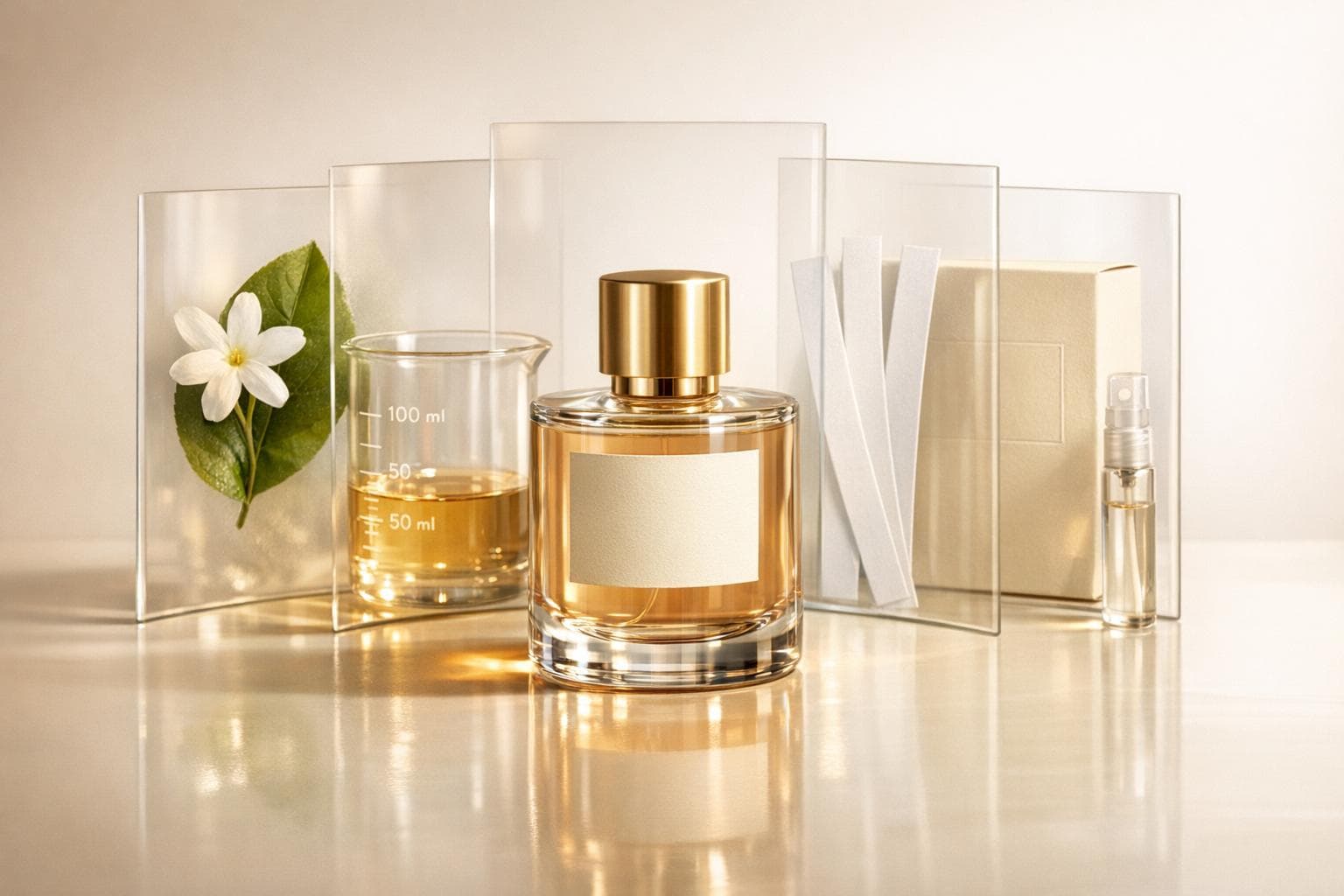
Die Komposition eines Duftes ist Kunst und Wissenschaft zugleich. Sie beginnt mit einer Idee – häufig inspiriert von der Natur, von Erinnerungen oder Emotionen – und entwickelt sich zu einem strukturierten Prozess, der Chemie, Auswahl der Ingredienzen und Design umfasst. Parfümeure, auch als "Die Nase" bekannt, verwenden eine Mischung aus natürlichen Extrakten und synthetischen Molekülen, um Düfte zu erschaffen, die Emotionen wecken und Geschichten erzählen. Dieser Prozess umfasst die Definition eines Duft — Briefings, die Beschaffung der Materialien, das Mischen, Testen und die finale Gestaltung der Verpackung.
Wichtige Erkenntnisse:
- Inspiration: Natur, Erinnerungen und Kunst prägen häufig das erste Konzept.
- Duft — Briefing: Ein strukturiertes Dokument beschreibt Vision, Zielgruppe und technische Anforderungen.
- Inhaltsstoffe: Moderne Parfums bestehen zu 70–90 % aus synthetischen Materialien, um Beständigkeit und Sicherheit zu gewährleisten.
- Prozess: Das Testen und Verfeinern kann Monate oder Jahre dauern, bis das finale Produkt vollendet ist.
- Verpackung: Design und Nachhaltigkeit sind entscheidend, wobei Flakons oft 40–60 % der Produktionskosten ausmachen.
Marken wie Scento machen Luxusdüfte zugänglicher, indem sie kleinere Größen anbieten (z. B. 8-ml — Flakons für €12,90/Monat) und es Konsumenten ermöglichen, Düfte zu entdecken, ohne sich direkt für einen großen Flakon zu entscheiden. Dieser Ansatz entspricht den sich wandelnden Vorlieben und betont Flexibilität sowie Entdeckungsfreude in der Welt der Düfte.
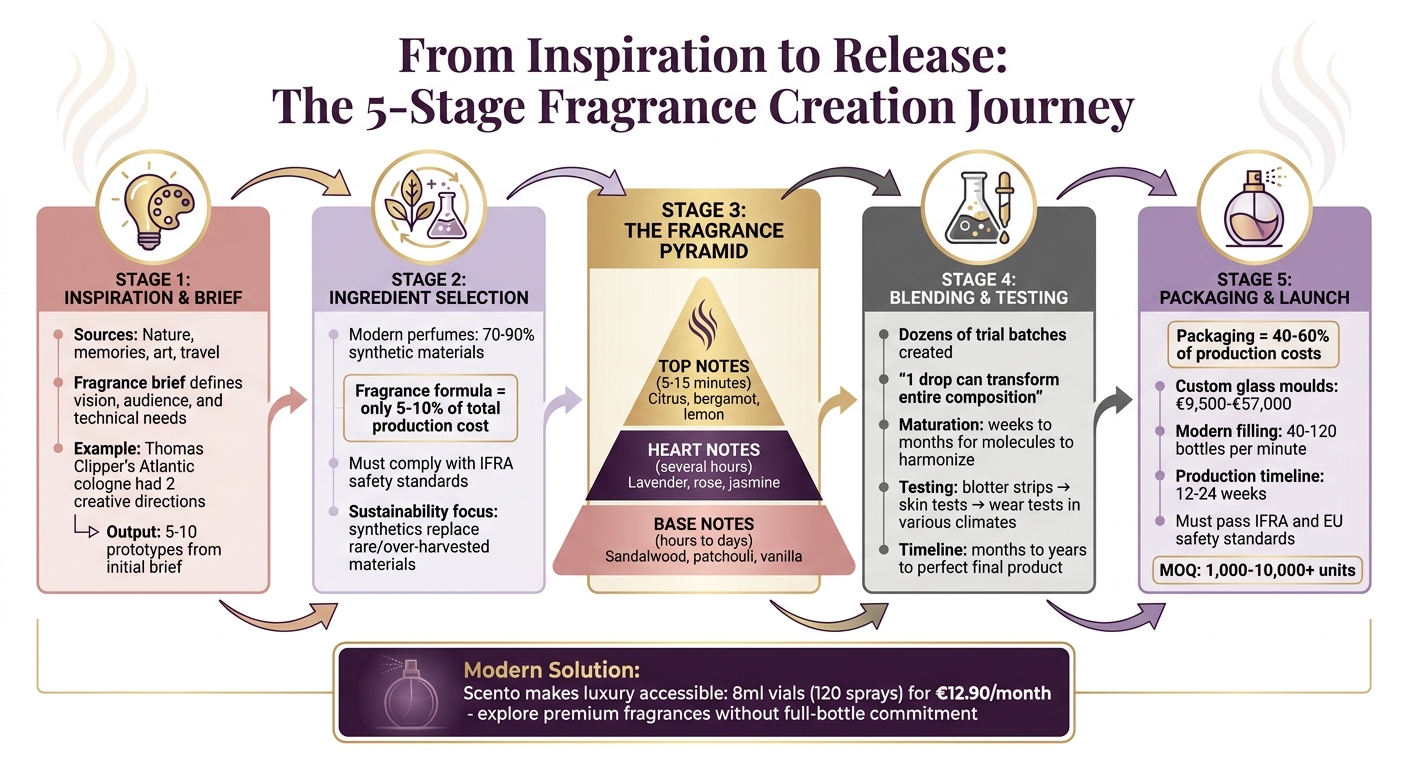
Der fünfstufige Prozess der Duftkreation: Von der Inspiration bis zur Markteinführung
Inspiration und Duft — Briefing
Woher Inspiration entsteht
Jeder Duft beginnt mit einem Funken – einer Idee, verwurzelt in einem Moment, einer Erinnerung oder einem Ort. Oft bereitet die Natur die Bühne: blühende Rosengärten, Zitrushaine in Süditalien oder dichte Sandelholzwälder erzählen ihre Geschichten durch Duft. Parfümeure bezeichnen dies häufig als ihre "poetische Sprache" und nutzen botanische Ingredienzen, um lebendige Bilder hervorzurufen.
Erinnerungen und Emotionen verwandeln diese natürlichen Inspirationen in etwas zutiefst Persönliches. Das tröstliche Aroma frisch gebackenen Brotes oder die prickelnde Atmosphäre eines romantischen Abends kann in einen Duft destilliert werden. Auch Reisen sind eine kraftvolle Muse – ob die pulsierende Energie eines Gewürzmarktes, die Stille eines Tempels oder die raue Schönheit von Küstenklippen: Solche Erlebnisse werden häufig in Duftkompositionen übersetzt, die den Träger in eine andere Welt entführen.
Auch Kunst, Musik, Literatur und Mode beeinflussen, welche Gestalt ein Duft annimmt. Die Farbpalette eines Gemäldes kann eine bestimmte Akkordmischung inspirieren, oder ein Musikstück kann vorgeben, wie sich die Noten entfalten und dem Duft einen eigenen Rhythmus verleihen. Diese vielfältigen Quellen der Kreativität leiten den Parfümeur bei der Auswahl der Ingredienzen und beim Ausbalancieren von Kopf-, Herz- und Basisnoten. All diese Inspirationen finden schließlich in einem sorgfältig ausgearbeiteten Duft — Briefing zusammen.
Das Duft — Briefing verfassen
Im Duft — Briefing trifft Inspiration auf Struktur. Dieses Dokument dient allen Beteiligten im Kreationsprozess als Wegweiser – vom Parfümeur, oft "Nase" genannt, bis hin zu Chemikern und Marketingteams. Hilda Rodriguez von Fragrance Market beschreibt seine Bedeutung so:
"Das Duft — Briefing ... ist der kreative Bauplan des Duftes. Es beschreibt Stimmung, Zielgruppe, Duftfamilie und Erzählung".
Ein gut formuliertes Briefing enthält mehrere zentrale Elemente. Es definiert den Zielkunden und beschreibt dessen Lebensstil und Vorlieben. Es hebt außerdem die emotionalen Auslöser hervor und legt fest, welche Erinnerungen oder Gefühle der Duft hervorrufen soll. Darüber hinaus enthält es technische Details wie Duftfamilie, Dosierung und regulatorische Anforderungen sowie einen klaren Zeitplan.
So entwickelte die Marke Thomas Clipper im August 2025 ihr fünftes Cologne, Atlantic, indem sie ihrem Parfümeur in Grasse, Frankreich, zwei unterschiedliche kreative Richtungen vorgab. Ein Konzept zielte auf eine "tiefes Wasser mitten im Atlantik" — Stimmung mit salzigen, rauen Noten, verankert in Amber, während das andere ein "frisches, sonniges und zitrisches" Profil mit Neroli in den Mittelpunkt stellte. Dieser strukturierte Ansatz führte zu einer Vorauswahl von 5 bis 10 Prototypen, die anschließend verfeinert wurden.
Über die kreativen Aspekte hinaus berücksichtigt das Briefing auch praktische Fragen wie Verpackungsdesign, Vertriebskanäle, Launch — Märkte und die Einordnung des neuen Duftes in das bestehende Portfolio der Marke. Indem olfaktorische, technische und marketingbezogene Anforderungen von Beginn an geteilt werden, können Marken den Entwicklungsprozess straffen und die Zeit bis zur Markteinführung verkürzen. Im Kern verwandelt das Duft — Briefing flüchtige Inspiration in klare Vorgaben, die den gesamten Weg vom Konzept bis zum Flakon leiten.
Wie man Parfum von Anfang bis Ende herstellt – (von einem Parfümeur)
Auswahl und Beschaffung der Ingredienzen
Nachdem das Duft — Briefing finalisiert wurde, tauchen Parfümeure in den komplexen Prozess der Auswahl und Beschaffung von Materialien ein. Dieser Schritt ist ein Balanceakt: Die Ingredienzen müssen der kreativen Vision entsprechen, technische Anforderungen erfüllen und Sicherheitsstandards einhalten – und gleichzeitig zuverlässig verfügbar sein. Moderne Düfte kombinieren häufig präzise entwickelte synthetische Stoffe mit sorgfältig ausgewählten natürlichen Extrakten, um Tiefe und Komplexität zu erreichen.
Mehrere Faktoren bestimmen die Auswahl der Ingredienzen. Verdunstungsraten und chemische Kompatibilität spielen eine zentrale Rolle dabei, wo eine Zutat innerhalb der Duftpyramide platziert wird, damit die Moleküle einander ergänzen statt miteinander zu konkurrieren. Zudem müssen Parfümeure die Standards der International Fragrance Association (IFRA) einhalten, die Allergenschwellen und Phototoxizitätswerte regulieren. Auch praktische Aspekte sind entscheidend. Da die Duftformel in der Regel weniger als 5–10 % der gesamten Produktionskosten ausmacht, können Verfügbarkeit der Inhaltsstoffe und Mindestbestellmengen die Produktionszeitpläne erheblich beeinflussen.
Nachhaltigkeit gewinnt bei der Auswahl der Inhaltsstoffe zunehmend an Bedeutung. Synthetische Stoffe ersetzen häufig seltene oder übermäßig geerntete natürliche Materialien und tragen so dazu bei, gefährdete Arten zu schützen, ohne die olfaktorische Qualität zu beeinträchtigen. Im März 2026 hob beispielsweise IFF sein Sustainable Vanilla Programme in Madagaskar hervor. Diese dreijährige Partnerschaft mit der Union for Ethical BioTrade (UEBT) und zwei Lieferanten unterstützt über 1.400 Landwirte durch technische Schulungen und sozioökonomische Investitionen. Die Initiative sichert eine rückverfolgbare, hochwertige Vanilleversorgung, schützt zugleich die Biodiversität und verbessert die Lebensgrundlagen der Landwirte. Sobald die Ingredienzen nachhaltig beschafft sind, ordnen Parfümeure sie innerhalb der Duftpyramide an.
Die Duftpyramide: Kopf-, Herz- und Basisnoten
Die Duftpyramide veranschaulicht, wie sich ein Duft im Laufe der Zeit entwickelt. Kopfnoten treten zuerst hervor und hinterlassen einen flüchtigen Eindruck, der typischerweise 5 bis 15 Minuten anhält. Dazu gehören häufig strahlende, zitrische Öle wie Bergamotte und Zitrone, die durch Kaltpressung gewonnen werden. Wenn die Kopfnoten verfliegen, treten die Herznoten in den Mittelpunkt und prägen über mehrere Stunden den Kerncharakter des Duftes. Ingredienzen wie Lavendel, Rose und Jasmin – oft durch Wasserdampfdestillation oder Lösungsmittelextraktion gewonnen – sind in dieser Ebene verbreitet.
Basisnoten bilden das Fundament des Duftes und verweilen Stunden oder sogar Tage auf der Haut. Ingredienzen wie Mysore — Sandelholz, indonesisches Patchouli und madagassische Vanille verankern diese Ebene. Fixateure wie natürliche Weihrauchharze oder synthetisches Ambroxan spielen eine wesentliche Rolle dabei, die Verdunstung zu verlangsamen und die Haltbarkeit des Duftes zu verlängern. Die Pyramide ist sorgfältig so konzipiert, dass ein nahtloser Verlauf entsteht, bei dem jede Ebene harmonisch in die nächste übergeht. Nach dem Mischen durchläuft der Duft über Wochen oder Monate eine Mazeration, damit sich die Moleküle verbinden und verfeinern können.
Extraktions- und Beschaffungsmethoden
Die Extraktionsmethode beeinflusst das Duftprofil einer Ingredienz erheblich. Die Wasserdampfdestillation, die am häufigsten verwendete Technik, nutzt Hitze und Druck, um flüchtige Verbindungen aus robusten Materialien wie Lavendel, Sandelholz und Patchouli zu lösen. Für zarte Blüten wie Jasmin und Rose wird die Lösungsmittelextraktion bevorzugt. Dieses Verfahren erzeugt ein wachsartiges Concrete, das weiter zu einem opulenten Absolue veredelt wird.
Die CO₂ — Extraktion bietet eine moderne, umweltbewusste Alternative. Da sie bei niedrigen Temperaturen arbeitet, bewahrt sie das vollständige chemische Spektrum der Rohstoffe und erzeugt Extrakte, die ihrer Quelle besonders treu bleiben. Ähnlich wird die Kaltpressung für Zitrusschalen eingesetzt, wobei Öle mechanisch und ohne Hitze extrahiert werden, um ihren frischen, spritzigen Charakter zu bewahren – auch wenn diese Öle anfällig für Oxidation sein können.
Die Entscheidung zwischen natürlichen und synthetischen Ingredienzen ist oft mit Kompromissen verbunden. Natürliche Materialien bringen Komplexität und eine besondere emotionale Tiefe mit, doch ihre Qualität kann je nach Klima und Bodenbeschaffenheit variieren. Synthetische Stoffe hingegen bieten Präzision, Konstanz und Zugang zu Düften, die sich aus der Natur nicht extrahieren lassen, etwa Maiglöckchen oder ozeanische Brisen. Sourcify bringt es treffend auf den Punkt: "Moderne Duftkunst wird konstruiert, nicht destilliert". Parfümeure nutzen zudem zunehmend fraktionierte Destillation, um spezifische Moleküle aus natürlichen Quellen zu isolieren und so "natürliche Isolate" zu schaffen, die die Authentizität natürlicher Stoffe mit der Verlässlichkeit synthetischer Materialien verbinden.
Mischen, Testen und Verfeinern
Nach der Beschaffung der Ingredienzen besteht der nächste Schritt darin, den Duft durch sorgfältiges Mischen und präzise Verfeinerung zum Leben zu erwecken.
Die erste Mischung aufbauen
Die Kreation eines Duftes beginnt mit dem Schichten der Noten von der Basis bis zur Spitze, um eine tragfähige Struktur zu schaffen. Die größte Herausforderung liegt darin, die Verdunstungsraten auszubalancieren: Leichtere Noten wie Zitrus und Blüten verflüchtigen sich innerhalb von 15–60 Minuten, während schwerere Noten wie Hölzer und Moschus bis zu sechs Stunden nachklingen können. Wie Hilda Rodriguez von Fragrance Market erklärt: "Ein Parfum zu kreieren ist wie das Komponieren einer Symphonie, bei der der Duft die Musik ist".
Parfümeure durchlaufen häufig Dutzende von Testansätzen, um die perfekte Balance zu finden. Präzision ist entscheidend – schon ein einziger Tropfen einer kraftvollen Ingredienz kann das gesamte Profil verändern, wie Alexandria UK betont: "Ein einzelner Tropfen einer intensiven Ingredienz kann eine ganze Komposition verwandeln". Jede Anpassung wird in Labornotizen minutiös festgehalten, damit die Formel beim Hochskalieren für die Produktion exakt reproduziert werden kann. Diese erste Mischung wird anschließend strengen Tests unterzogen, um ihre Entwicklung zu verfeinern.
Testen und Reifung
Der Testprozess beginnt mit Duftstreifen, die den Duft in seiner reinsten Form erfassen. Anschließend folgen Hauttests, um zu verstehen, wie der Duft mit der individuellen Körperchemie interagiert. Tragetests in verschiedenen Klimazonen und bei unterschiedlichen Aktivitäten helfen sicherzustellen, dass der Duft unter verschiedensten Bedingungen konstant performt.
Die Reifung ist eine entscheidende Phase, in der das Konzentrat über Wochen oder sogar Monate ruhen darf. Dadurch können sich chemische Wechselwirkungen stabilisieren und scharfe Kanten geglättet werden. In dieser Zeit bewerten Parfümeure besonders den Drydown – also die Art und Weise, wie sich der Duft über Stunden entwickelt –, um einen nahtlosen Übergang von den Kopf- zu den Basisnoten sicherzustellen. Zusätzlich werden Stabilitätstests durchgeführt, um zu prüfen, ob der Duft unter verschiedenen Lagerbedingungen Farbe, Duftbild und chemische Stabilität bewahrt.
Verfeinerung und Qualitätskontrolle
Die Verfeinerung umfasst das präzise Justieren von Elementen wie Fixateuren, etwa Ambroxan, in winzigen Schritten von 0,1–0,3 %, um Haltbarkeit und Gesamtbalance des Duftes zu optimieren. Während dieses gesamten Prozesses dient das Duft — Briefing als Leitfaden und stellt sicher, dass das finale Produkt mit dem ursprünglichen Konzept übereinstimmt.
Die Qualitätskontrolle ist der letzte Prüfpunkt und kombiniert olfaktorische Bewertungen mit chemischen Tests, um mögliche Verunreinigungen zu erkennen. Viele Marken halten sich heute an strenge EU — Standards, die nicht nur Sicherheit gewährleisten, sondern auch kostspielige spätere Reformulierungen vermeiden helfen. Sourcify formuliert es treffend: "Es ist kein Launch. Es ist Langlebigkeit". Sobald die Formel alle Tests besteht und die IFRA — Sicherheitsstandards erfüllt, ist sie bereit für die Produktion.
Ihr persönlicher Duftexperte erwartet Sie
Machen Sie unser kurzes Duftquiz und entdecken Sie authentische Designer- und Nischenparfums, die zu Ihrem Geschmack passen – als 2–8ml Dekants und Proben, damit Sie jeden Duft testen können, bevor Sie sich für einen ganzen Flakon entscheiden.
Finden Sie Ihren DuftAbfüllung, Verpackung und Markteinführung
Nachdem die Formel perfektioniert wurde, geht es im nächsten Schritt darum, das Konzept in ein greifbares Produkt zu verwandeln. Dabei verbinden sich Design, Präzision und Logistik, um den Duft zum Leben zu erwecken und in die Regale zu bringen.
Flakondesign und Abfüllung
Der Flakon ist nicht nur ein Behälter – er ist Ausdruck der Essenz einer Marke und oft selbst ein Sammlerstück. Materialien wie hochwertiges Glas, Kristall und Metalle werden nicht nur wegen ihrer ästhetischen Wirkung ausgewählt, sondern auch, um die Stabilität des Duftes zu sichern. Das Design – ob elegant und minimalistisch, vintage-inspiriert mit kunstvollen Kristallverschlüssen oder mutig und skulptural – muss zur Persönlichkeit des Duftes passen. Bemerkenswerterweise entfallen bei luxuriösen Düften 40–60 % der gesamten Produktionskosten auf die Verpackung. Individuelle Glasformen allein können zwischen €9.500 und €57.000 kosten, mit Produktionszeiten von 12 bis 24 Wochen.
In der Produktion arbeiten moderne Abfülllinien mit beeindruckender Präzision. Servomotorsysteme gewährleisten eine Dosiergenauigkeit innerhalb einer Abweichung von 1 % und füllen 40 bis 120 Flakons pro Minute. Automatisierte Bildverarbeitungssysteme kontrollieren alles – vom Füllstand über die Platzierung der Kappe bis zur Ausrichtung des Etiketts. Auch Nachhaltigkeit gewinnt in diesem Bereich an Bedeutung. So reduzierte das Nachfüllprogramm von Jean Paul Gaultier im Jahr 2025 den Glasverbrauch um 59 % und den Kunststoffverbrauch um 46 %, während die Nachfüllinitiativen von Mugler jährlich 1,5 Millionen Flakons und 380 Tonnen Glas einsparen. Weltweit wird alle 25 Sekunden ein Mugler — Flakon nachgefüllt.
Sobald die Flakons gefüllt und versiegelt sind, richtet sich der Fokus auf die letzten Vorbereitungen für die Lancierung.
Vorbereitung der Lancierung
Bevor der Duft auf den Markt kommt, muss er strenge Prüfungen bestehen, um den IFRA- und EU — Sicherheitsstandards zu entsprechen. Wie Eliza von Sourcify betont:
"Verpackungsentscheidungen bestimmen Ihre Mindestbestellmenge, Ihren Cash Burn und Ihr Launch — Datum – nicht Ihr Duft".
Mindestbestellmengen (MOQs) variieren stark: von 1.000 Einheiten für kleinere Chargen bis zu über 10.000 Einheiten für Luxusmarken.
Da die meisten Konsumenten Düfte nicht ohne vorheriges Testen kaufen, hängt eine erfolgreiche Lancierung von einer starken Sampling — Strategie ab. Discovery — Sets, Tester und Influencer — Outreach sind essenziell – nicht nur als Marketingmaßnahmen, sondern als praktische Werkzeuge, die Kunden ermöglichen, den Duft zu erleben, bevor sie sich für einen großen Flakon entscheiden. Auch die Vertriebslogistik spielt hier eine Rolle: Sie stellt sicher, dass Produkte in den Einzelhandel gelangen und dass Marketingkampagnen das Design des Flakons mit der Geschichte hinter dem Duft verbinden.
Diese Phase schlägt die Brücke zwischen kreativer Vision und Konsument und verwandelt eine verfeinerte Formel in ein sinnliches Erlebnis, das seine künstlerischen Wurzeln widerspiegelt.
Duftentdeckung mit Scento

Sobald ein Duft mit größter Sorgfalt komponiert und wunderschön verpackt ist, besteht die nächste Herausforderung darin, sicherzustellen, dass Kunden ihn auf eine Weise genießen können, die zugänglich und praktisch ist.
Wie Scento das Dilemma des großen Flakons löst
Die Duftbranche steht vor einer besonderen Herausforderung: Die Verpackung macht häufig einen erheblichen Teil des Parfumpreises aus. Individuelle Glasformen können beispielsweise zwischen €9.500 und €57.000 kosten, während Kappen und Zerstäuber zusätzliche €3 bis €10 pro Einheit ausmachen. Entsprechend spiegelt ein großer Anteil des Preises eines €300 — Flakons Verpackung und Design wider – nicht allein den Duft im Inneren.
Scento bietet eine erfrischende Alternative, indem authentische Designer- und Nischendüfte in kleineren Größen erhältlich sind – 0,75 ml, 2 ml und 8 ml. Diese kompakten Optionen sind ideal für den täglichen Gebrauch: Ein 8-ml — Flakon liefert rund 120 Sprühstöße – genug für einen ganzen Monat. Dieses Modell ermöglicht es Konsumenten, mehrere Düfte zum Preis eines einzigen großen Flakons zu entdecken. Es fügt sich zudem nahtlos in die wachsende "Decant Culture" ein, in der Duftliebhaber kleinere Proben und Community — Einblicke riskanten Blindkäufen vorziehen. Indem Scento Luxusdüfte zugänglicher macht, sorgt die Marke dafür, dass die Kunstfertigkeit hinter jedem Duft ein breiteres Publikum erreicht.
Dieser Wandel hin zu kleineren Größen ist bereits deutlich sichtbar. In Nordamerika und Europa machen Flakons unter 50 ml inzwischen über 25 % der Verkäufe im Premium — Parfumsegment aus, wobei kleinere Decants 68 % der Nachfrage nach personalisierten Dufterlebnissen antreiben. Scento greift diesen Trend mit Abonnementplänen ab €12,90 pro Monat für einen 8-ml — Flakon auf. Dieser Ansatz definiert neu, wie Konsumenten Düfte entdecken und genießen.
Die Scento Discovery Journey
Scento bietet Zugang zu über 1.000 Designer- und Nischendüften, darunter renommierte Marken wie Amouage, Creed und Tom Ford. Das Tool "Find My Scent" liefert maßgeschneiderte Empfehlungen, während der "Fragrance Calendar" Mitgliedern ermöglicht, ihre monatlichen Auswahlen im Voraus zu planen.
Der Versand innerhalb Europas ist schnell und dauert nur 1–2 Tage, und jedes neue Abonnement enthält ein kostenloses Premium — Atomizer — Etui. Zusätzlich gibt es eine 30-tägige Zufriedenheitsgarantie auf Erstbestellungen – wenn ein Duft nicht den Erwartungen entspricht, können Kunden ihn umtauschen oder eine Gutschrift erhalten. Mitglieder genießen außerdem maximale Flexibilität und können ihr Abonnement mit einem einzigen Klick tauschen, pausieren oder kündigen. Linda Levy, Präsidentin der Fragrance Foundation, bringt es perfekt auf den Punkt:
"In einer Welt, in der Menschen mit einem Duft leben möchten, bevor sie sich zu ihm bekennen, ergibt das vollkommen Sinn".
Mit Blick auf die Zukunft plant Scento die Einführung von 30-ml — Flakons, um Kunden den Übergang vom Sampling zum Aufbau einer vollständigen Duftgarderobe zu erleichtern. Mit einer wachsenden Community von über 85.000 Mitgliedern und einer beeindruckenden App — Store — Bewertung von 4,5 von 5 bei 2.400 Rezensionen verändert Scento die Art und Weise, wie europäische Konsumenten Düfte entdecken und genießen – Decant für Decant.
Fazit
Die Kreation eines Duftes ist ein feines Zusammenspiel von Kunstfertigkeit und Präzision, bei dem jeder Schritt von Emotion und Expertise geleitet wird. Alles beginnt mit einer Idee – einer eindrucksvollen Erinnerung, einem besonderen Ort oder sogar einem flüchtigen Gefühl –, die sich zu einem strukturierten kreativen Briefing entwickelt. Von dort übernehmen Parfümeure, die zugleich Künstler und Chemiker sind, und arbeiten mit einer komplexen Palette von Ingredienzen, während sie verstehen, wie jede einzelne mit der Haut interagiert.
Dieser akribische Prozess erstreckt sich über jede Produktionsphase. Vom nächtlichen Ernten von Jasmin, um seine volle Kraft zu bewahren, bis zur Anpassung von Formeln in winzigsten Schritten – jedes Detail zählt. Mischungen dürfen oft Wochen oder Monate reifen, damit der Duft seinen vollen Charakter entfalten kann. Moderne Parfümerie setzt zudem auf eine sorgfältige Balance aus natürlichen Extrakten und synthetischen Stoffen, um Konsistenz, Sicherheit und Zugang zu Duftprofilen zu gewährleisten, die die Natur allein nicht liefern kann.
Doch selbst die exquisitesten Düfte stehen vor einer Herausforderung: Erschwinglichkeit. Da die Verpackung die Kosten luxuriöser Parfums häufig deutlich erhöht, bleiben viele dieser Düfte für viele unerreichbar. Hier setzt Scento an. Durch Designer — Düfte in kleineren Formaten – 0,75 ml, 2 ml und 8 ml – sowie ein flexibles Abonnement ab nur €12,90 pro Monat macht Scento es leicht, diese Kreationen zu genießen, ohne sich auf einen großen Flakon für €300 festlegen zu müssen.
Dieser Ansatz definiert neu, wie wir luxuriöse Düfte erleben. Ob Sie nach Ihrem nächsten Signature — Duft suchen oder Düfte gerne mit den Jahreszeiten wechseln – Sampling ist der Schlüssel. Vom ersten Inspirationsfunken bis zum finalen Produkt zelebriert die Duftkreation handwerkliche Meisterschaft, und mit Scento ist diese Kunst heute zugänglicher denn je.
FAQs
Wie lange dauert es, ein Parfum zu kreieren?
Die Kreation eines Parfums ist eine vielschichtige Reise, die je nach Detailgrad des Duftes Monate oder sogar Jahre dauern kann. Der Prozess umfasst mehrere wesentliche Schritte: die Konzeptentwicklung, die Beschaffung der Ingredienzen, das Mischen der Formel, die Reifung der Mischung und strenge Tests. Parfümeure passen ihre Formulierungen sorgfältig an und verfeinern sie, während die Mischungen altern und reifen dürfen, um das ideale Duftprofil zu entwickeln. So werden sowohl die Qualität des Duftes als auch seine Stabilität sichergestellt, bevor er auf den Markt kommt. Jeder Schritt unterstreicht die Handwerkskunst und Präzision, die in jedem Flakon Parfum steckt.
Warum verwenden Parfums so viele synthetische Inhaltsstoffe?
Parfums enthalten häufig synthetische Inhaltsstoffe, weil sie Parfümeuren ermöglichen, unverwechselbare und konsistente Düfte zu erschaffen, die mit natürlichen Materialien allein nicht erreichbar wären. Diese synthetischen Komponenten sorgen für Stabilität und verlängern die Haltbarkeit von Düften, während sie zugleich globale Sicherheitsvorschriften erfüllen. Außerdem ermöglichen sie die Herstellung von Düften in größerem Maßstab mit verlässlicher Konstanz und gleichen die Schwankungen natürlicher Ingredienzen aus, die durch Faktoren wie Klima und Erntebedingungen entstehen. So eröffnen sie Parfümeuren die Möglichkeit, komplexe und vielfältige Duftprofile zu gestalten.
Was ist der Unterschied zwischen Kopf-, Herz- und Basisnoten?
Kopfnoten vermitteln den ersten, flüchtigen Eindruck eines Duftes – das, was Sie unmittelbar nach dem Auftragen wahrnehmen. Wenn diese leichteren Noten verfliegen, treten die Herznoten hervor und prägen die zentrale Identität sowie den Charakter des Duftes. Schließlich übernehmen die Basisnoten: Sie verleihen Tiefe und Langlebigkeit und erden die Komposition mit ihren reichen, anhaltenden Qualitäten.

