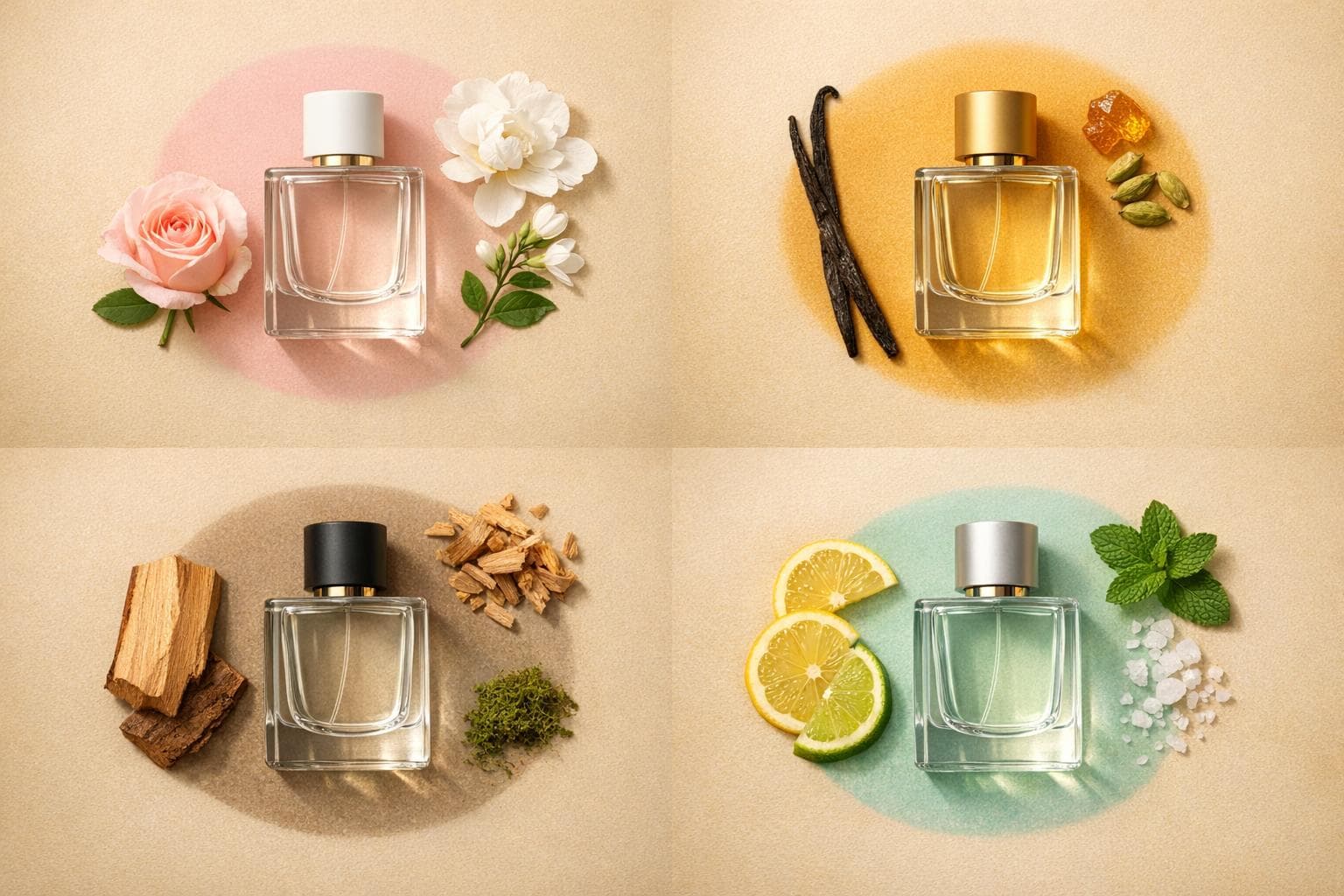
Duftfamilien sind der Schlüssel zum Verständnis von Parfums. Sie fassen Düfte nach dominanten Merkmalen zusammen und helfen Ihnen dabei, das perfekte Parfum für Ihren Stil, Ihre Stimmung oder einen bestimmten Anlass auszuwählen. Die vier Hauptfamilien – Floral, Holzig, Orientalisch und Frisch – bieten unendliche Möglichkeiten für den persönlichen Ausdruck. Hier ist eine kurze Übersicht:
- Floral: Romantisch und sanft, ideal für den Tag oder den Frühling. Denken Sie an Rose und Jasmin.
- Holzig: Erdig und raffiniert, perfekt für den Herbst oder das geschäftliche Umfeld. Sandelholz und Zedernholz dominieren.
- Orientalisch: Warm und sinnlich, hervorragend für den Abend oder den Winter. Noten wie Vanille und Amber glänzen hier besonders.
- Frisch: Sauber und belebend, wie geschaffen für den Sommer oder den Alltag. Zitrus- und Meeresnoten stechen hervor.
Das Verständnis dieser Familien hilft Ihnen, Düfte zu finden, die zu Ihrer Persönlichkeit, der Jahreszeit oder einem besonderen Event passen. Ob Sie nach einem dezenten Duft für das Büro oder einer ausdrucksstarken Kreation für den Abend suchen: Wenn Sie die Grundlagen der Duftfamilien kennen, wird die Suche einfacher und inspirierender.
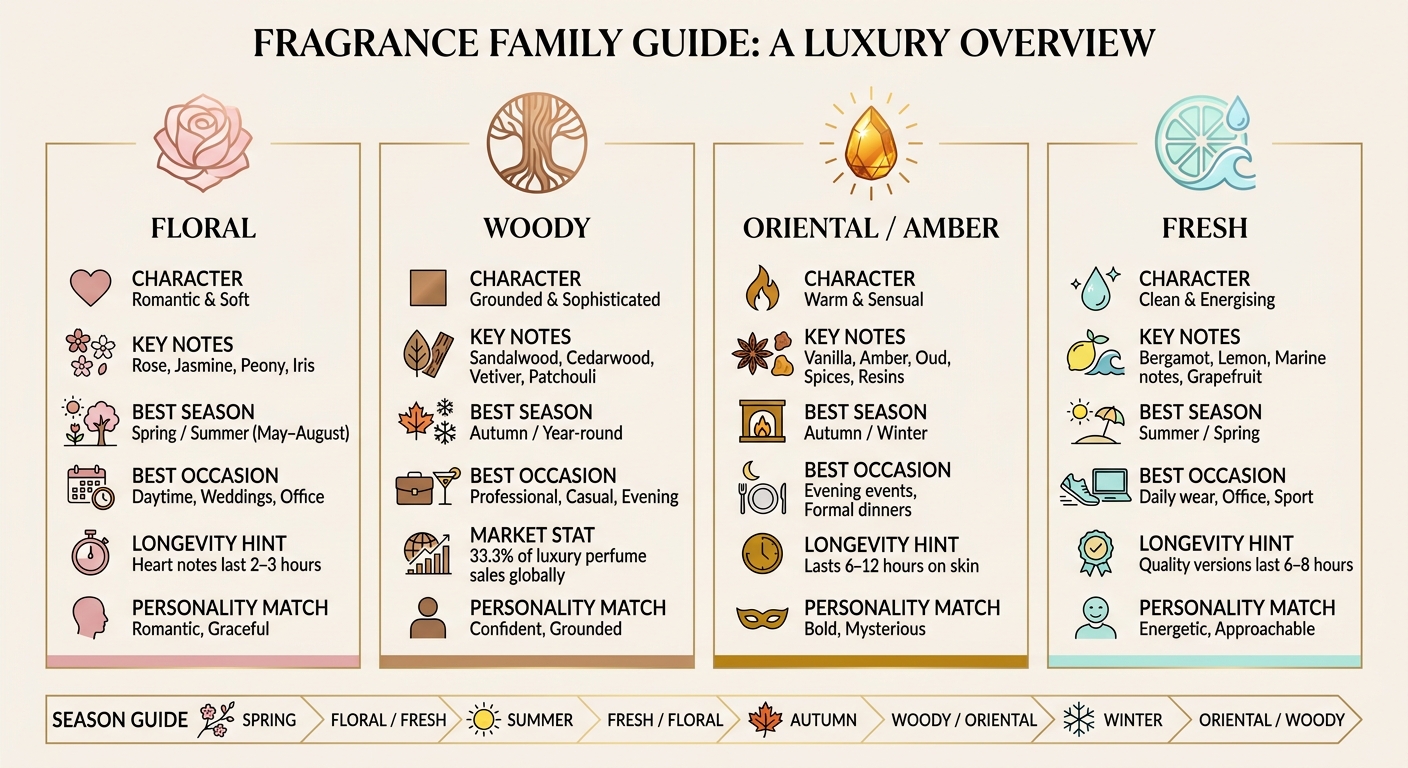
4 Fragrance Families: Floral, Woody, Oriental & Fresh Compared
Florale Düfte: Eleganz in voller Blüte
Was einen floralen Duft ausmacht
Florale Düfte basieren auf floral inspirierten Herznoten. Diese Noten machen in der Regel 40–80 % der Komposition eines Parfums aus und verweilen etwa 2–3 Stunden, bevor sie sanft in die Basisnoten übergehen.
Interessanterweise geben einige der beliebtesten Blumendüfte – wie Pfingstrose, Maiglöckchen, Veilchen und Gardenie – von Natur aus keine extrahierbaren Öle ab. Diese sogenannten „stummen“ Blüten erfordern vom Parfumeur, ihre Aromen im Labor mithilfe synthetischer Moleküle kunstvoll nachzubilden. Die Rose hingegen wird trotz ihrer beträchtlichen Kosten fast immer in ihrer natürlichen Form verwendet: Um nur 1 Kilogramm Rosenessenz zu gewinnen, werden etwa 4 Tonnen Rosenblätter benötigt. Weiße Blüten wie Jasmin und Tuberose enthalten häufig Indol, eine Verbindung, die ihren sonst süßen und cremigen Profilen eine subtile, animalische Tiefe verleiht.
Florale Unterfamilien und wann man sie trägt
Die florale Familie ist bemerkenswert facettenreich und hält für jede Stimmung und jeden Anlass die passende Unterfamilie bereit. Hier ist eine Übersicht zur Orientierung:
| Unterfamilie | Hauptnoten | Charakter | Ideal für |
|---|---|---|---|
| Sanft Floral | Iris, Moschus, Pudrige Noten | Zart, rein | Büro, Alltag |
| Weiß Floral | Jasmin, Tuberose, Gardenie | Berauschend, cremig | Hochzeiten, Abendveranstaltungen |
| Fruchtig Floral | Pfirsich, Beeren, Apfel, Rose | Jugendlich, verspielt | Tagsüber, entspannte Unternehmungen |
| Grün Floral | Veilchenblatt, Galbanum, Gras | Taufrisch, raffiniert | Frühling, professionelles Umfeld |
| Floral — Amber | Gewürze, Vanille, Amber, Rose | Warm, exotisch | Winter, formelle Dinners |
Für den Alltag, wie etwa den deutschen Büroalltag, sind sanfte und grüne florale Noten eine ausgezeichnete Wahl. Sie bieten eine feine Präsenz, die in Gemeinschaftsräumen dezent im Hintergrund bleibt. Weißblüher und florale Amberdüfte eignen sich dank ihrer Ausdruckskraft und ihrer lang anhaltenden Sillage hingegen perfekt für den Abend oder besondere Festlichkeiten.
Mit Blick auf die Jahreszeiten sind fruchtige und grüne Blütennoten ideal für die wärmeren Monate, meist von Mai bis August, während reichhaltige florale Ambertöne mit würzigen oder vanilligen Nuancen wunderbar in die kältere Jahreszeit ab Oktober passen. Parfumeur JK DeLapp bringt es treffend auf den Punkt:
„In den wärmeren Monaten wird man sich eher für leichtere Düfte entscheiden. In den kälteren Monaten greift man lieber zu gehaltvolleren Kompositionen.“
Sehen wir uns nun an, wie orientalische Düfte Ihrer Duftgarderobe Wärme und Tiefe schenken können.
So wählen und testen Sie florale Düfte
Beurteilen Sie einen floralen Duft nicht ausschließlich nach seinen Kopfnoten. Sie sind der erste olfaktorische Eindruck nach dem Aufsprühen, verfliegen jedoch schnell – zumeist innerhalb von 10 bis 30 Minuten. Das wahre Wesen eines Duftes liegt in seinen Herznoten, die sich entfalten, während sich das Parfum setzt. Diese Entwicklung zu verstehen, ist entscheidend für die richtige Wahl.
„Die Kopfnote zählt, doch ein Parfum allein danach zu beurteilen, ist wie ein Menü nur nach der Gestaltung der Speisekarte zu bewerten.“ – Aysire
Um einen floralen Duft fundiert zu beurteilen, sprühen Sie ihn auf Ihr Handgelenk und warten Sie mindestens 15 Minuten, bevor Sie ihn erneut wahrnehmen. Idealerweise geben Sie ihm bis zu 2 Stunden Zeit, um seine gesamte Entwicklung zu erleben. Testen Sie stets auf der Haut statt auf Papierstreifen, da Ihre Körperwärme und die individuelle Hautchemie maßgeblich beeinflussen, wie sich der Duft entfaltet und nachklingt.
Bedenken Sie bei der Auswahl eines floralen Parfums auch dessen Projektion. Für das Büro eignen sich Düfte mit hautnaher Sillage – Orangenblüte ist hier eine dezente, elegante Option. Für Hochzeiten oder Abendevents setzen weiße Blüten wie Tuberose oder Jasmin elegante und unvergessliche Akzente. Im Jahr 2026 zeigt sich zudem ein klares Interesse an Unisex — Blütendüften, die moschusartige und holzige Elemente vereinen, sowie an frischen, taufrischen Kompositionen, die an die natürliche Anmut eines blühenden Gartens erinnern.
„Fragrance Families Explained: The Ultimate Scent Guide for Beginners (With Examples!)“
Orientalische Düfte: Wärme und Tiefe
Im Kontrast zu den leichteren, floral dominierten Nuancen bieten orientalische Düfte eine Fülle an opulenter Wärme und samtiger Tiefe.
Was einen orientalischen Duft auszeichnet
In der modernen Parfümerie häufig als Amber oder amberartig bezeichnet, basieren orientalische Düfte auf Ingredienzen wie Harzen, Balsamen, Vanille und Moschus. Gewürze wie Zimt, Gewürznelke, Safran und rosa Pfeffer verleihen ihnen vielschichtige Wärme und Komplexität, während Basisnoten wie Oud, Sandelholz und Patchouli einen langanhaltenden Drydown schaffen, der 6–12 Stunden auf der Haut verweilen kann.
Diese Komponenten zeichnen sich durch ein hohes Molekulargewicht und eine geringe Flüchtigkeit aus, wodurch sie über viele Stunden mit der Körperwärme interagieren und ein dynamisches Duftprofil entfalten. Das Herzstück dieser Duftfamilie ist der Amber — Akkord – eine harmonische Komposition aus Labdanum (für ledrige Wärme), Benzoeharz (für balsamische Süße) und Vanille (für pudrige Weichheit). Wie CA Perfume Editorial treffend beschreibt:
„Amber ist eine Fantasienote der modernen Parfümerie – eine kunstvolle Komposition aus Harzen, Balsamen, vanilligen Tönen und Moschusakzenten, kreiert, um ein Gefühl von Wärme, Fülle und exotischer Tiefe hervorzurufen.“
Bemerkenswert ist auch der Wandel der Begrifflichkeiten in den letzten Jahren. Buchart Colbert erläutert dazu:
„Der Begriff ‚orientalisch‘ wurde in der Parfümerie über Jahrzehnte hinweg verwendet, ist jedoch in den Hintergrund getreten, da er heute als überholt und kulturell unsensibel wahrgenommen werden kann... Heutzutage bevorzugen viele Parfumeure Bezeichnungen wie ‚Amber‘ oder ‚amberartig‘.“
Orientalische Unterfamilien und die besten Anlässe
Die orientalische Duftfamilie begeistert durch ihre Vielseitigkeit, die von behaglich-süß bis hin zu kühn und dramatisch reicht. Hier ein Einblick in die wichtigsten Unterfamilien:
| Unterfamilie | Hauptnoten | Charakter | Bester Anlass |
|---|---|---|---|
| Würzig Orientalisch | Zimt, Gewürznelke, Safran, Rosa Pfeffer | Kühn, energetisch, dramatisch | Winterabende, formelle Events |
| Holzig Orientalisch | Sandelholz, Patchouli, Oud | Geerdet, erdig, cremig | Business — Kontext, kühlere Tage |
| Floral Orientalisch (Floriental) | Rose, Jasmin, Orangenblüte | Romantisch, weich, nahbar | Tagsüber, Dates, vom Tag in den Abend |
| Gourmand | Vanille, Karamell, Tonkabohne, Salz | Süß, einhüllend, wärmend | Entspannte Wintertage, Ausgehabende |
Für Einsteiger sind Florientals die perfekte Wahl. Ihre floralen Komponenten mildern die gehaltvollen Harznoten sanft ab, was sie hervorragend für den Tag oder ein entspanntes Abendessen im Kreis von Freunden macht. Würzig-orientalische Parfums setzen hingegen bei besonderen Abendevents ein unverwechselbares Statement.
Ein bemerkenswerter Trend für 2026 ist die Zitrus — Oud — Fusion, die ein strahlendes Zitrus — Opening (wie Bergamotte oder Grapefruit) mit einer traditionellen orientalischen Basis vereint. Diese Kombination schenkt dem Duft eine frische Leichtigkeit, die sich ideal im Tagesverlauf tragen lässt.
Tipps zum Tragen orientalischer Düfte
Die Außentemperatur hat einen wesentlichen Einfluss darauf, wie sich orientalische Parfums entfalten. Im Sommer kann Hitze die Intensität schwerer Harze und Gewürze verstärken und den Duft mitunter zu dominant wirken lassen. In den kühleren deutschen Herbst- und Wintermonaten verlangsamt die kalte Luft hingegen die Verdampfung, sodass der Duft hautnäher bleibt und sich sanfter entwickelt. Maison Potion Paris betont:
„In den kühleren Monaten darf man gern großzügiger dosieren; die kühle Luft fängt die Opulenz elegant ein und lässt den Duft wunderbar harmonisch zur Geltung kommen.“
Wählen Sie für den Tag oder das Büro sanfte Orientals oder Florientals und tragen Sie diese dezent auf – zwei bis drei Sprühstöße auf die Brust oder in die Armbeugen genügen. Für den Abend sind fünf bis sechs Sprühstöße ideal; auch ein feiner Sprühnebel auf einen Wollschal oder Kaschmirpullover wirkt zauberhaft. Solche Naturfasern binden schwere Basisnoten wie Amber und Oud besonders gut und verlängern die Haltbarkeit auf bis zu 10 Stunden.
Bedenken Sie, dass orientalische Düfte oft 2–4 Stunden benötigen, um ihr volles Profil zu entfalten. Der Drydown belohnt die Geduld mit tiefen balsamischen, vanilligen und holzigen Nuancen, die weit über das erste Aufblitzen der Gewürze oder Zitrusnoten hinausreichen.
Holzige Düfte: Geerdet und anspruchsvoll
Holzige Düfte verleihen der Welt der Haute Parfumerie eine souveräne Tiefe und leise Eleganz. Sie strahlen Selbstsicherheit und Substanz aus – kein Wunder, dass holzige Düfte beeindruckende 33,3 % des weltweiten Luxusparfum — Marktes ausmachen.
Was einen holzigen Duft ausmacht
Holzige Kompositionen werden aus natürlichen Elementen wie Baumrinden, Wurzeln und Harzen geschaffen. Ihr Fundament ruht auf vier zeitlosen Ingredienzen: Sandelholz, Zedernholz, Vetiver und Patchouli. Jede dieser Noten besitzt eine unverkennbare Handschrift:
- Sandelholz: Cremig und weich, mit einer samtigen, milchigen Hautnähe.
- Zedernholz: Trocken und klar, oft an den feinen Duft frisch gespitzter Bleistifte erinnernd.
- Vetiver: Rauchig und erdig, durchzogen von herber, grüner Frische.
- Patchouli: Dunkel, erdig und geheimnisvoll, wie die kühle Luft eines Waldbodens.
Aufgrund ihres hohen Molekulargewichts und ihrer langsamen Verflüchtigung zeichnen sich diese Noten durch eine außergewöhnliche Langlebigkeit aus. Frank Voelkl, Principal Perfumer bei DSM — Firmenich, erklärt:
„Menschen schätzen holzige Düfte, weil sie natürlich, elegant und beständig wirken – fernab von kurzlebigen Trends. Sie schenken ein Gefühl von Ruhe, Souveränität und innerer Gelassenheit.“
Die zeitgenössische Parfümerie ergänzt diese Klassiker gerne um synthetische Moleküle wie Iso E Super und Cashmeran, die dem Duft eine samtige, intime Textur verleihen.
Die holzige Familie: Unterfamilien und Stilrichtungen
Holzige Düfte decken ein breites Spektrum ab – von puristisch-klar bis hin zu reichhaltig-harzig. Hier sind die wichtigsten Unterfamilien im Überblick:
| Holzige Unterfamilie | Duftprofil | Bester Anlass | Hauptnoten |
|---|---|---|---|
| Trockene Hölzer | Klar und minimalistisch | Büro / Business | Zedernholz |
| Cremige Hölzer | Sanft, warm, hautnah | Alltag / Intime Momente | Sandelholz, Cashmeran |
| Holzig Aromatisch | Frisch, krautig, naturnah | Tagsüber / Frühling–Sommer | Lavendel, Rosmarin, Wacholder |
| Holzig Würzig | Präsent, intensiv, selbstbewusst | Abend / Formelle Anlässe | Zimt, Muskat, Kardamom |
| Erdige Hölzer | Rauchig, grün, geerdet | Freizeit / Outdoor | Vetiver, Patchouli |
Zu den modernen Trends zählen Holzige Gourmands, die klassische Hölzer mit edlen Genussnoten wie Vanille, Chai oder Erdbeermilch verbinden. Ebenfalls geschätzt werden zugängliche Oud — Interpretationen, bei denen die typisch harzige Kraft des Ouds durch Honig oder Vanille abgerundet wird – ideal für den stilvollen Alltag.
Holzige Düfte für verschiedene Anlässe auswählen
Holzige Noten brauchen auf der Haut Zeit zur Entfaltung – Geduld zahlt sich hier aus. Ein häufiger Fehler ist das voreilige Urteil; schenken Sie dem Duft mindestens 20–30 Minuten, damit er seine Komplexität voll entfalten kann.
Für das berufliche Parkett sind Trockene Hölzer oder Holzig — Aromatische Kompositionen die ideale Wahl. Diese puren, zurückhaltenden Düfte – oft getragen von Zedernholz mit Lavendel oder einer Nuance Zitrus – eignen sich perfekt fürs Büro. Am Abend oder bei formellen Veranstaltungen brillieren Holzig — Würzige oder Holzig — Orientalische Profile. Noten wie Oud, Patchouli und Amber verleihen eine erlesene, unvergessliche Aura.
Tragen Sie holzige Düfte gerne mit einem Sprühstoß auf das Handgelenk und einem weiteren auf die Kleidung auf. Textilien halten Basisnoten besonders lange fest und unterstreichen so die Langlebigkeit der Kreation.
Wenn Sie bereits einen Favoriten auf Sandelholzbasis besitzen, bereichern Sie Ihre Sammlung um ein trockenes Zedernholz oder einen rauchigen Vetiver. Für die warme Jahreszeit bieten holzig-aromatische Kompositionen mit Rosmarin oder Wacholder eine geerdete und zugleich erfrischende Alternative, die wunderbar mit dem mitteleuropäischen Sommer harmoniert.
Ihr persönlicher Duftexperte erwartet Sie
Machen Sie unser kurzes Duftquiz und entdecken Sie authentische Designer- und Nischenparfums, die zu Ihrem Geschmack passen – als 2–8ml Dekants und Proben, damit Sie jeden Duft testen können, bevor Sie sich für einen ganzen Flakon entscheiden.
Finden Sie Ihren DuftFrische Düfte: Leicht und belebend
Was einen frischen Duft auszeichnet
Frische Düfte stehen für unbeschwerte Leichtigkeit und eine belebende Aura. Wo holzige und orientalische Nuancen auf Tiefe und Opulenz setzen, bringen frische Düfte Weite, Helligkeit und Klarheit. Im Zentrum stehen zumeist strahlende Zitrusnoten wie Bergamotte, Zitrone, Limette und Grapefruit, die mit krautigen, grünen oder aquatischen Facetten verwoben werden, um eine vitale Frische einzufangen. Genau diese Leuchtkraft macht ihren besonderen Reiz aus.
Ein historisches Vorbild schuf Johann Maria Farina, der 1709 das originale Eau de Cologne kreierte. Er beschrieb sein Werk mit den Worten:
„Mein Duft ist wie ein italienischer Frühlingsmorgen nach dem Regen: Orangen, Pomelo, Zitronen, Bergamotte, Cedrat, Limette und die Blüten und Kräuter meiner Heimat.“
Diese poetischen Zeilen erfassen das Wesen frischer Düfte bis heute vollkommen. Auch Dufthistoriker Dr. Laurent Beaumont verweist auf moderne Interpretationen dieses Stils wie Chanel Chance Eau Fraîche:
„Chance Eau Fraîche... wurde wie ein Hauch frischer Luft konzipiert – eine Abkehr von schwereren, traditionellen Kompositionen, jedoch mit jener unverwechselbaren Chanel — Signatur.“
Frische Unterfamilien und wann man sie trägt
Die Familie der frischen Düfte entfaltet sich in mehreren Unterkategorien, von denen jede ihre ganz eigene Interpretation von Leichtigkeit zelebriert.
| Frische Unterfamilie | Duftprofil | Bester Anlass | Hauptnoten |
|---|---|---|---|
| Zitrisch Aromatisch | Spritzig, krautig, rein | Alltag / Büro / Frühling | Bergamotte, Zitrone, Neroli, Jasmin |
| Aquatisch / Ozeanisch | Kühl, wässrig, weit | Sommer / Freizeit / Sport | Meeresnoten, Veilchen, Iris |
| Frisch Floral | Lichtdurchflutet, zart floral | Tagsüber / Warmes Wetter | Freesie, Veilchen, Moschus |
| Zitrisch Holzig | Belebende Zitrusfrische auf erdiger Basis | Unisex / Übergangszeiten | Mandarine, Zedernholz, Vetiver |
In den warmen Sommermonaten in Deutschland erweisen sich zitrisch-aromatische und aquatische Düfte als exzellente Begleiter. Ihre erfrischende, wandelbare Art passt gleichermaßen zu entspannten Wochenenden wie zu anspruchsvollen Geschäftsterminen.
So wählen und testen Sie frische Düfte
Geduld ist auch beim Entdecken frischer Düfte von unschätzbarem Wert. Das spritzige Zitrus — Opening geht nach und nach in eine feinere Basis über; lassen Sie dem Parfum daher Zeit, sich auf Ihrer Haut zu setzen. Trotz ihrer federleichten Anmutung ruhen hochwertige frische Kompositionen oft auf beständigen Basisnoten wie Teakholz, Vetiver oder weißem Moschus, die mühelos eine Haltbarkeit von 6 bis 8 Stunden ermöglichen.
Chanel Chance Eau Fraîche dient hier als Paradebeispiel: Mit einer Community — Bewertung von 4,1/5 erzielt es 4,0/5 für Langlebigkeit und 4,3/5 für die Duftqualität. Das harmonische Zusammenspiel aquatischer und zitrischer Noten bewahrt über den ganzen Tag hinweg eine schwerelose Transparenz, ohne jemals aufdringlich zu wirken.
Um die Verweildauer frischer Parfums zu verlängern, empfiehlt sich das Layering mit zurückhaltenden Noten wie weißem Moschus oder feinem Zedernholz. Dies schenkt dem Duft Standfestigkeit, ohne seinen Charakter zu verändern. Discovery Kits sind überdies eine elegante Möglichkeit, das Zusammenspiel einzelner Unterfamilien mit Ihrer Hautchemie zu testen, bevor Sie sich für den vollen Flakon entscheiden.
Duftfamilien abgestimmt auf Persönlichkeit und Anlässe
Welche Duftfamilie zu Ihrer Persönlichkeit passt
Duftfamilien lassen sich wunderbar mit musikalischen Genres vergleichen, wie Morreale Paris treffend bemerkt:
„Stellen Sie sich Duftfamilien wie Musikgenres vor. Manche Parfums wirken klassisch und sanft, andere kühn und elektrisierend.“
Für Persönlichkeiten mit romantischem, anmutigem Wesen sind florale Kompositionen mit Rose, Jasmin und Pfingstrose ideal. Wer souveräne Ruhe und Beständigkeit ausstrahlt, findet sich oft in holzigen Noten wieder. Ggema Paris bringt dies auf den Punkt:
„Einen holzigen Duft zu tragen, fühlt sich an, wie sich in einen edlen Kaschmirpullover zu hüllen – er schenkt Geborgenheit und Luxus, ohne laut nach Aufmerksamkeit zu rufen.“
Kühne und geheimnisvolle Charaktere neigen oft zu orientalischen bzw. amberartigen Kompositionen, während vitale und unkomplizierte Naturen ihr Pendant in der frischen Duftfamilie finden.
| Persönlichkeitstyp | Empfohlene Familie | Hauptnoten |
|---|---|---|
| Romantisch, Anmutig | Floral | Rose, Jasmin, Pfingstrose |
| Souverän, Geerdet | Holzig | Sandelholz, Zeder, Vetiver |
| Kühn, Geheimnisvoll | Orientalisch / Amber | Vanille, Gewürze, Harze |
| Lebendig, Nahbar | Frisch | Bergamotte, Zitrone, Marine Noten |
Wenn Sie Ihre persönliche Duftsignatur gefunden haben, können Sie Ihre Auswahl harmonisch an den Wechsel der Jahreszeiten anpassen.
Düfte nach Jahreszeit und Event wählen
Die ausgeprägten Jahreszeiten in Deutschland und das feine Gespür für stilvolle Zurückhaltung bieten den idealen Rahmen für Düfte, die Subtilität mit Beständigkeit vereinen. Im Frühling und Sommer begleiten leichtere Zitrus- und Blütennuancen die Wärme und die langen Tage. Im professionellen Umfeld hinterlassen frische Zitrusdüfte stets einen gepflegten, klaren Eindruck.
Mit dem Einzug von Herbst und Winter wendet sich die Aufmerksamkeit holzigen und würzigen Kreationen zu, die wunderbar mit der kühlen Luft und gemütlichen Stunden harmonieren. Für festliche Winteranlässe wie Galas oder ein feines Dinner entfalten orientalische Amberdüfte – veredelt mit Weihrauch, Vanille und Patchouli – jene wohlige Tiefe, nach der die kalte Jahreszeit verlangt.
Düfte im Jahresverlauf kombinieren und wechseln
Um den Wandel der Jahreszeiten und wechselnde Anlässe zu zelebrieren, lohnt sich eine saisonale Duftrotation. Eine wohlüberlegte Kollektion von drei bis fünf Düften reicht vollkommen aus, um facettenreich durch das ganze Jahr zu navigieren.
Auch die Duftkonzentration spielt eine wesentliche Rolle:
- Eau de Toilette (EDT): Mit einer Duftölkonzentration von 5–15 % und einer Haltbarkeit von 3–5 Stunden die ideale Wahl für milde Sommertage.
- Eau de Parfum (EDP): Mit 15–20 % Konzentration und 6–8 Stunden Verweildauer perfekt für kühlere Wintertage, an denen leichtere Noten zu rasch verfliegen würden.
Sollte Ihnen Ihr liebstes Frühlingsparfum im Herbst etwas zu leicht erscheinen, probieren Sie das Layering mit einer warmen Basisnote wie Vanille oder Amber. Das vorherige Auftragen einer solchen Basis verbindet die Jahreszeiten und schenkt Ihrem Signaturduft eine ganzjährige Präsenz.
Aufbau Ihrer Duftkollektion mit Scento

Nachdem Sie die Duftfamilien kennengelernt haben, geht es nun ans Testen und Finden jener Noten, die Ihre Persönlichkeit wahrhaft widerspiegeln. Hier bietet Scento die perfekte Möglichkeit, diese Reise stilvoll und unkompliziert zu gestalten.
Warum das Testen mit Scento — Abfüllungen die klügste Wahl ist
Der Blindkauf eines großen Parfumflakons ohne ausgiebigen Test auf der Haut birgt immer ein gewisses Risiko. Fast die Hälfte aller Parfumbegeisterten gibt an, schon mindestens einen Spontankauf bereut zu haben. Wenn man bedenkt, dass Designer- und Nischendüfte von etwa 105 € für 60 ml Dior Sauvage EDT bis zu 310 € für 70 ml Maison Francis Kurkdjian Baccarat Rouge 540 EDP kosten können, wird deutlich, wie sinnvoll ein vorheriger Test ist.
Scento bietet hierfür eine elegante Lösung: Exklusive Abfüllungen in den Größen 2 ml, 5 ml und 8 ml ermöglichen es Ihnen, eine Kreation im eigenen Rhythmus kennenzulernen. Eine 2-ml — Abfüllung, erhältlich ab 5,90 €, reicht für etwa 20–30 Sprühstöße – ideal für mehrtägige Tests. Die 5-ml — Größe ab 9,90 € bietet über 75 Sprühstöße für eine ausführliche Erprobung. Wie unsere verifizierte Kundin Elena R. treffend beschreibt:
„Früher kaufte ich ganze Flakons und bereute es nach einer Woche. Jetzt kann ich den Duft erst kennenlernen, bevor ich mich fest binde.“ – Elena R., Verifizierte Kundin
Wichtig ist vor allem, das Parfum direkt auf Ihrer Haut zu erleben und dessen Wandel im Tagesverlauf zu beobachten. Dieser persönliche Ansatz stellt sicher, dass ein Duft wirklich mit Ihrer eigenen Hautchemie harmoniert.
Neue Favoriten entdecken mit dem monatlichen Abonnement von Scento
Wer seine Duftgarderobe mit System erweitern möchte, findet im 8-ml — Abonnement von Scento die perfekte Begleitung. Ab 12,90 € pro Monat liefert jeder Zerstäuber rund 120 Sprühstöße – ausreichend für einen vollen Monat täglicher Freude. So können Sie ausgiebig erleben, wie sich der Duft über Wochen hinweg in Ihrem Leben bewährt.
Das Duft — Abo orientiert sich harmonisch an den Jahreszeiten:
- Warme Holz- und Ambernoten schenken wohlige Akzente an kühlen Tagen.
- Der Frühling bringt zarte Blüten und grün-taufrische Noten mit sich.
- Der Sommer begeistert mit belebend frischen Zitrusakkorden.
- Im Herbst und zur Festtagszeit setzen erlesene Gourmandnoten stimmungsvolle Highlights.
Mit Zugang zu über 1.000 authentischen Designer- und Nischenparfums bietet Scento zudem ein 5-minütiges Duftquiz, um passende Empfehlungen für Ihren Stil zu finden. Volle Flexibilität gehört dazu: Das Abonnement lässt sich jederzeit pausieren, anpassen oder kündigen – für ein vollkommen entspanntes Dufterlebnis.
Vom Zerstäuber zum Originalflakon
Durch die Proben und das Abonnement kristallisieren sich rasch persönliche Lieblingsdüfte heraus. Bevor Sie in einen vollen Flakon investieren, beobachten Sie, ob Sie über einen Zeitraum von vier bis sechs Wochen immer wieder intuitiv zu derselben Kreation greifen. Wenn ein Duft Ihren Alltag mühelos bereichert – ob bei der Arbeit, beim Ausgehen oder am Wochenende –, ist der richtige Moment für den großen Flakon gekommen.
Für eine vollendete Kollektion empfehlen sich drei bis fünf bewusst gewählte Parfums, die die Familien Frisch, Floral, Holzig und Orientalisch abdecken. Ergänzend plant Scento die Einführung von Flakongrößen ab 30 ml, sodass Sie direkt von Ihrem liebsten 8-ml — Zerstäuber zur größeren Version wechseln können. So wird der Aufbau Ihrer persönlichen Duftsammlung zu einer rundum gelungenen Erfahrung.
Fazit
Die Duftfamilien zu kennen, verändert die Art und Weise, wie Sie Parfums auswählen, von Grund auf. Jede Familie – ob floral, holzig, amberartig oder frisch – besitzt ihre ganz eigene Poesie: Florale Düfte verströmen Romantik und Grazie, holzige Noten strahlen erlesene Souveränität aus, Ambernoten schenken sinnliche Wärme, und frische Düfte beleben den Tag mit Klarheit. Mit diesem Wissen finden Sie intuitiv Parfums, die Ihre Stimmung unterstreichen und perfekt zur Saison passen.
Unser Tipp: Bauen Sie sich eine fein kuratierte Duftgarderobe aus drei bis fünf Kreationen auf, die diese unterschiedlichen Welten abdecken. So sind Sie für jede Gelegenheit bestens gerüstet – ob an einem klaren Winterabend oder einem sonnigen Sommertag. Wie Parfumeur JK DeLapp betont: „In den wärmeren Monaten wird man sich eher für leichtere Düfte entscheiden. In den kälteren Monaten greift man lieber zu gehaltvolleren Kompositionen.“ Diese Philosophie lässt sich perfekt mit den hiesigen Jahreszeiten in Einklang bringen.
Und bedenken Sie: Guter Duft braucht Zeit. Geben Sie jeder Komposition mindestens 30 Minuten auf der Haut, bevor Sie Ihr Urteil fällen.
„Tatsächlich ist das Verstehen dieser Duftfamilien überraschend leicht, sobald man den roten Faden kennt – und genau das ist der Schlüssel, um Parfums zu finden, die man von Herzen liebt.“ – Ggema Paris
Häufig gestellte Fragen (FAQs)
Wie finde ich meine Duftfamilie, wenn ich neu in der Welt der Parfums bin?
Wenn Sie Ihre Reise in die Welt der feinen Düfte gerade erst beginnen, verschaffen Sie sich am besten einen ersten Überblick über die vier Hauptkategorien: Floral, Holzig, Orientalisch und Frisch. Jede Familie zeichnet sich durch eigene Nuancen aus – florale Düfte heben Rose oder Jasmin hervor, holzige basieren oft auf Sandelholz oder Zeder, orientalische schenken würzige oder harzige Wärme, und frische Kompositionen überzeugen mit spritzigen Zitrus- oder Meeresnoten.
Eine hervorragende visuelle Orientierung bietet das Fragrance Wheel, das die Übergänge zwischen den Familien veranschaulicht. Lassen Sie sich beim Ausprobieren einfach von Ihrem persönlichen Empfinden leiten – die meisten zeitgemäßen Düfte vereinen Elemente verschiedener Familien, das eigene Wohlgefühl steht daher immer an erster Stelle.
Warum riecht dasselbe Parfum an mir anders als an anderen Personen?
Jedes Parfum interagiert unmittelbar mit der individuellen Hautchemie. Faktoren wie der pH — Wert der Haut, der natürliche Lipidgehalt, die Feuchtigkeitsbalance und das Mikrobiom beeinflussen die Duftentwicklung maßgeblich. Auf öligerer Haut halten Duftmoleküle beispielsweise oft länger, während sie sich auf trockener Haut schneller verflüchtigen können. Das persönliche Testen auf der eigenen Haut ist daher der einzig verlässliche Weg, um zu erleben, wie sich ein Parfum wirklich entfaltet.
Wie sorge ich dafür, dass ein frischer Duft im Sommer länger hält?
Um die Haltbarkeit frischer Düfte an warmen Sommertagen zu verlängern, tragen Sie vor dem Aufsprühen eine parfümfreie oder sehr dezent duftende Feuchtigkeitscreme auf Ihre Pulspunkte auf. Gut durchblutete Stellen wie die Brust oder die Partie hinter den Ohren eignen sich besonders gut. Leichte Duftnoten wie Zitrus oder Aquatik harmonieren exzellent mit warmen Temperaturen. Setzen Sie gerne auf höhere Konzentrationen wie ein Eau de Parfum, dosieren Sie dieses jedoch feinfühlig, da Sommerwärme sowohl die Projektion als auch die Verdampfung intensiviert.

