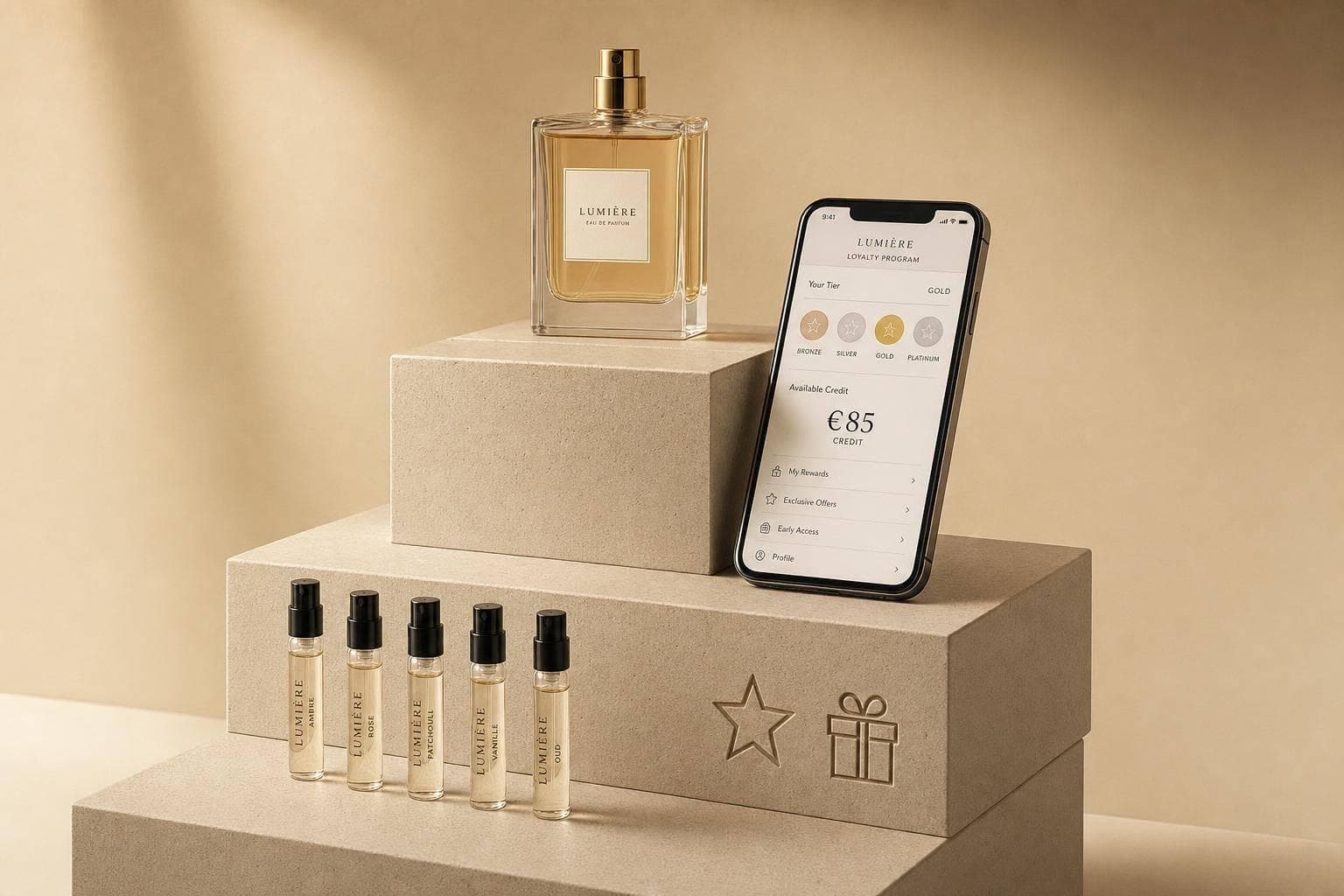
If I’m paying €100 to €300+ for a bottle, I want more than points. I want a loyalty programme that helps me test scents first, track value in €, and make better bottle decisions with less risk.
Here’s the short version: the best fragrance programmes now mix tiered status, €-based credit, sample rewards, mobile access, early access, personalised picks, automated perks, and subscription-led discovery. They work best when terms are plain, dates are shown like 07.08.2026, and data use is explained clearly under GDPR/DSGVO.
The 10 features covered are:
- Tiered status levels
- Flexible points currencies
- Personalised fragrance recommendations
- Sample and decant rewards
- Try-before-you-buy credits
- Omnichannel and mobile-first access
- VIP events and early access
- Gamified scent-discovery challenges
- Automated trigger-based rewards
- Subscription-led wardrobe building
What stood out to me most:
- 68 % of online perfume shoppers want to try a scent before buying a full bottle
- Sample options can help cut returns by about 25 %
- A monthly fee like €19,90 works better when it becomes €19,90 in store credit
- 2 ml, 5 ml, and 8 ml formats fit how people test, wear, and then commit
Quick Comparison
| Feature | What it does for me | Best use in fragrance |
|---|---|---|
| Tiered status | Rewards repeat buying | Moves me from first order to bottle loyalty |
| Flexible credit | Keeps value easy to use | Lets me spend in €, not vague points |
| Personalised picks | Cuts choice overload | Suggests scents from my taste and wear history |
| Sample rewards | Lowers bottle risk | Gives me wear time before I commit |
| Try-before-you-buy credit | Links testing to buying | Turns discovery into later bottle spend |
| Mobile access | Makes rewards easy to use | Lets me track credit, orders, and picks on the go |
| VIP access | Gives earlier entry | Helps with limited launches and previews |
| Gamified challenges | Keeps me active between orders | Uses ratings and quizzes to shape future picks |
| Trigger-based rewards | Sends perks at the right time | Ties gifts or credit to renewals and activity |
| Subscription wardrobe building | Builds buying habits over time | Moves me from decants to 30 ml+ bottles |
For me, the main takeaway is simple: a fragrance loyalty programme should not just reward spend after checkout. It should make scent discovery easier before I spend the big money.
Why These Features Matter for Fragrance Shoppers
A full bottle can cost €150 to €350, so a loyalty programme needs to do more than hand out points. It should lower the pressure of a big purchase and make discovery feel easier.
That’s the whole point of modern loyalty features.
A 2 ml, 5 ml, or 8 ml wear test tells you far more than a 90-second in-store spritz. You get time to see how a scent opens, settles, and wears through the day. That brings more confidence than a quick sniff at the counter.
Modern programmes also reward curiosity, not only spend. That shift matters. Fragrance is personal, and most shoppers don’t want to commit to a full bottle after a rushed first impression.
Clarity plays a big part too. Offer periods should be easy to spot, like 01.10.2026–31.10.2026. When the details are plain, the reward feels easier to trust and easier to use. The next features turn that idea into rewards shoppers can use straight away.
1. Tiered Status Levels
Tiered status levels give shoppers a clear reason to stay active. Every purchase moves them closer to better rewards, which makes the programme feel like a journey instead of a one-off transaction.
These programmes reward repeat shoppers with stronger perks as they move up. That can mean higher points rates, access to samples, and exclusive drops.
At the upper levels, members may unlock complimentary 2 ml samples with each order, along with price reductions on eligible items, such as the 10 % reduction available to qualifying members at Scento.
What matters here isn’t only the status itself. It’s also how brands make those rewards easy to use and easy to want.
2. Flexible Points Currencies
Fragrance loyalty points now work more like spendable credit than a simple discount. In fragrance loyalty programmes, that means members can put their value toward the scents they actually want to try.
Scento+ costs €19,90 per month and turns that fee into €19,90 in store credit, usable across more than 2.000 fragrances. That shift matters most when the credit is easy to see, easy to track, and simple to apply at checkout.
On the digital side, modern programmes keep the process clean. The monthly fee becomes spendable credit with no manual steps, while automatic credit conversion keeps redemption friction low. When credit works this smoothly, the next move is making sure it leads people to the right scent.
3. Personalised Fragrance Recommendations
Once credit becomes easy to use, the next move is simple: help shoppers pick well.
Modern loyalty programmes do this by looking at purchase history, saved preferences, and browsing behaviour. Instead of showing the same bottles to everyone, they tailor suggestions to each person’s taste.
Machine-learning models can pull together scent-family preferences, note profiles, and preferred strength to bring forward fragrances a shopper is more likely to enjoy. Over time, the system starts to spot patterns. Then it can suggest trial sizes or full bottles that feel closer to the shopper’s current style, not just a random best-seller.
At Scento, recommendations get sharper because they’re based on real sampling behaviour. That matters. Trying a scent tells you far more than a quick click or casual browse, so each suggestion becomes more in tune with where a shopper’s taste actually is.
When recommendations mirror real behaviour, they cut down guesswork and make discovery faster. The same behavioural data can also support sample and decant rewards.
4. Sample and Decant Rewards
Once recommendations narrow the shortlist, sample rewards make the final choice easier. The behaviour data is pretty clear: 68 % of online perfume shoppers want to try a scent before buying a full bottle, and giving them that option can cut return rates by about 25 %. That makes sample and decant rewards directly useful, not just nice to have.
Unlike a voucher, a sample reward gives shoppers a chance to test how a fragrance opens, settles, and wears on their own skin before paying full-bottle prices. That’s the whole point: low-risk discovery. Three 2 ml samples, worth up to 15,00 €, give enough wear to move past a first impression. An 8 ml decant offers around 120 sprays, which is enough for about a month of daily use. At that point, the reward stops feeling like a coupon and starts feeling like a proper trial.
Tiering matters here. Smaller rewards can sit at entry level, while larger decants can be reserved for members with more spend or activity.
- Early tiers can unlock a 2 ml vial
- Higher tiers can unlock 5 ml or 8 ml decants on a fixed schedule
For Scento, this works as a bridge between discovery and later 30 ml+ bottles.
The experience also needs to be simple. Show reward choices in the account dashboard with € values, ml sizes, and scent images. Let eligible samples appear at checkout in one clear module. Then send a push alert when a member earns a new decant. For German shoppers, be explicit about shipping fees, redemption terms, and dates in DD.MM.YYYY format.
5. Try — Before — You — Buy Credits
Try-before-you-buy credits take sampling one step further. They turn discovery into money members can actually spend. So the credit isn’t just a perk. It becomes the last push between “I like this” and “I’ll buy it.”
The main setup is simple. Members get €19,90 in usable credit linked to their subscription balance. There’s nothing to figure out. €1 earned means €1 spent. That matters because a full bottle can cost €150–€350+, yet the buying decision often comes down to a 90-second in-store spritz. A credit model gives shoppers about 30 days and roughly 120 sprays to make up their mind. That’s a very different experience. It gives people room to live with a scent before they commit to a full bottle.
On the account side, newer programmes keep things clear. Members can check a live credit balance and redeem it in one click on 8 ml decants or sample sizes. Saved scent preferences can then steer that credit toward fragrances that fit each member’s taste a bit better. From there, the job is simple: make the credit easy to see and easy to use wherever members shop.
6. Omnichannel and Mobile — First Access
Once members earn rewards, the next hurdle is simple: can they use them right away on mobile? If access feels slow or clunky, the whole loyalty programme starts to lose its shine. The best fragrance programmes now put mobile first.
Members want to check credit, browse their queue, and redeem rewards in just a few taps. That part matters. Scento’s app has a 4,5/5 rating from more than 10.000 customers.
Mobile access starts to matter even more when account activity and delivery move in sync. Looking at a scent profile on your phone is one thing. Getting an authenticated 8 ml decant delivered to your door, sourced from an ISO-certified decanting facility, is something else. Scento now serves 85.000 active members across 27 European markets through one centralised platform.
The experience should feel the same on every device. Members should see the same balance, the same recommendations, and the same checkout flow whether they’re on mobile, tablet, or desktop.
Ihr persönlicher Duftexperte erwartet Sie
Machen Sie unser kurzes Duftquiz und entdecken Sie authentische Designer- und Nischenparfums, die zu Ihrem Geschmack passen – als 2–8ml Dekants und Proben, damit Sie jeden Duft testen können, bevor Sie sich für einen ganzen Flakon entscheiden.
Finden Sie Ihren Duft7. VIP Events and Early Access
Once members can redeem rewards, the next step is access. Points and discounts matter, but VIP access is what makes a loyalty programme feel premium. It gives members more time, a sense of exclusivity, and a better chance to get limited releases before everyone else.
For fragrance shoppers, that might mean early notice of a limited launch or a free 2 ml sample ahead of the public release. That shifts loyalty from a simple savings tool into a discovery channel. Instead of just collecting points, members get a first look at what’s next.
These perks can be delivered through mobile alerts and account dashboards, with recommendations shaped by past preferences and seasonal timing. VIP events can also include invite-only brand previews, launch access, or small member-only tastings.
8. Gamified Scent — Discovery Challenges
After early access, the next loyalty layer is steady member activity. Gamified challenges help keep people involved between purchases. Members can earn rewards for rating samples, taking scent quizzes, or tagging fragrances by mood. And each of those actions helps shape better recommendations later.
The strongest mechanics do more than hand out points. AI scent quizzes can turn fuzzy descriptions into data a brand can use. When shoppers rate samples for longevity, sillage, and occasion fit, each interaction becomes more useful. Loyalty programmes can also reward people for stepping outside their usual taste - from florals into woody or aromatic families, for example - so scent discovery feels broader and more personal.
For discovery-first models like Scento, a subscription queue mechanic adds one more reason to stay involved. Members can plan which fragrances they want to receive in the coming months, which makes discovery feel more deliberate and more like a ritual than a random shipment. Those habits keep members active and ready for the next reward layer.
9. Automated Trigger — Based Rewards
Building on gamified engagement, automation turns member activity into instant rewards. It keeps members involved between purchases by sending the right perk at the right moment. Modern loyalty platforms use consented purchase data, stated preferences, and subscription activity to match each reward to the moment.
For subscription-based discovery models, these triggers can sit right inside the membership cycle. A membership renewal, for example, can automatically trigger a complimentary 2 ml discovery fragrance as a gift with every order.
This only works if the setup stays GDPR-conscious. Use consented data only, such as purchase history, stated preferences, and subscription activity. That same layer of automation also supports the next stage of loyalty: subscription-led wardrobe building.
10. Subscription — Led Wardrobe Building
Subscription-led loyalty turns monthly discovery into a clear path to a full fragrance wardrobe. The monthly cycle starts to feel like progress, not just another purchase.
With Scento+, each 19,90 € month becomes store credit for future purchases, including 30 ml+ bottles. That changes the value of the model. Members aren’t only paying for what lands in their hands now. They’re also building toward something bigger over time.
AI profiling should sharpen note preferences, fragrance families, and strength choices with every order.
Each monthly order adds another signal, which helps shape the next recommendation. That naturally leads to the next issue: how brands should set up tiers, credit, and reward thresholds.
Example Tier and Reward Structures
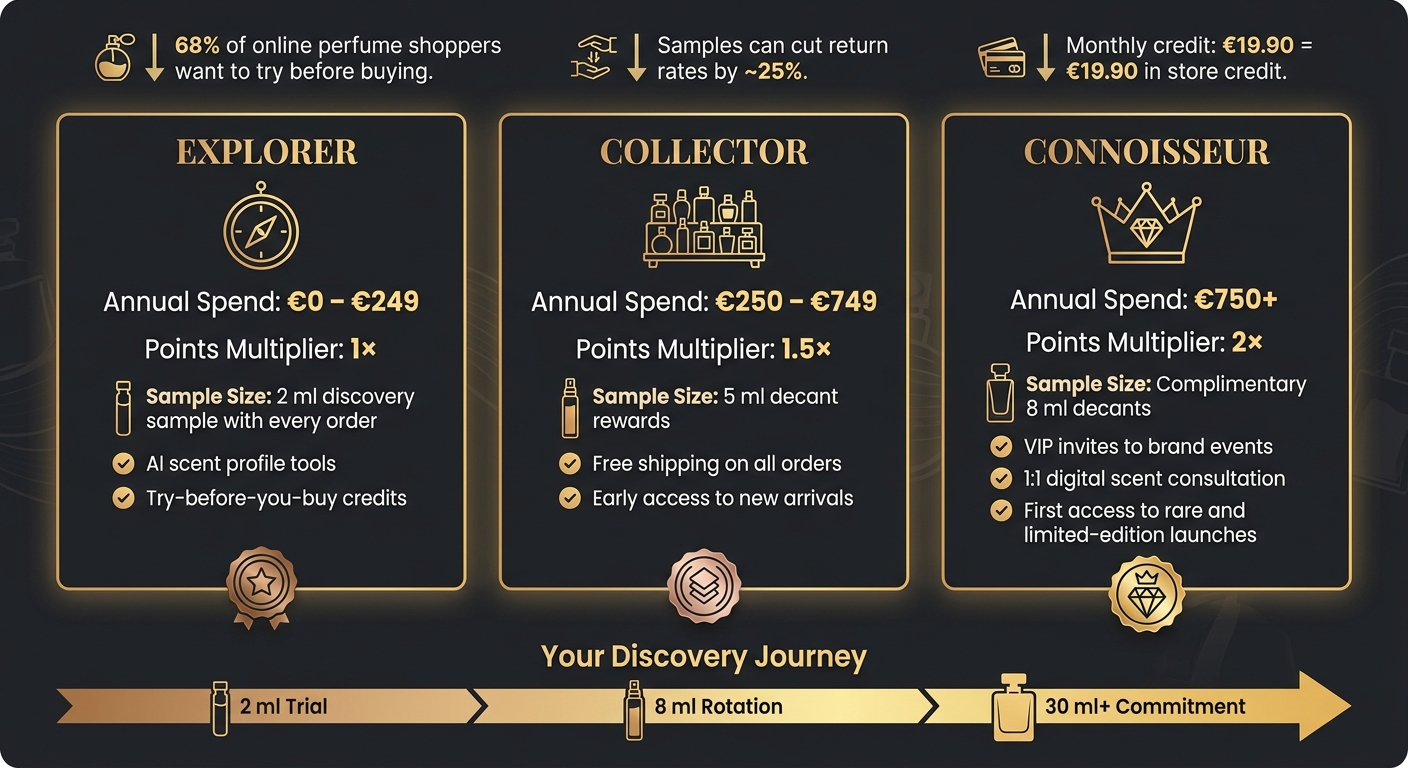
Fragrance Loyalty Program Tiers: Explorer vs Collector vs Connoisseur
These tiers are built to move shoppers from a first sample to a full bottle. The smartest setups reward sampling first, then gently lead members toward larger formats. In practice, they work best when they support discovery, not just spending.
| Tier | Annual Spend | Points Multiplier | Key Perks |
|---|---|---|---|
| Explorer | €0 – €249 | 1× | 2 ml discovery sample with every order; AI scent profile tools; try-before-you-buy credits |
| Collector | €250 – €749 | 1,5× | Free shipping on all orders; 5 ml decant rewards; early access to new arrivals |
| Connoisseur | €750+ | 2× | Complimentary 8 ml decants; VIP invites to brand events; 1:1 digital scent consultation; first access to rare and limited-edition launches |
The point isn’t just to hand out perks. It’s to match each tier with the right kind of reward.
- Explorer should feel easy to reach after a first order.
- Collector should reward people who come back and buy again.
- Connoisseur should stay reserved for top spenders.
For German shoppers, exact euro thresholds and plain benefit rules help build trust. If the structure feels fuzzy, people hesitate. If it feels clear, they know what they get and what they need to do next.
A simple way to shape the journey: start with trial-focused perks at entry level, then shift toward access-focused perks at the top. That means samples, credits, and tools first. Later, it becomes early access, private consultations, rare launches, and event invites.
Next, turn these tiers into a working loyalty structure for your brand.
How Discovery — First Brands Can Use These Features
Discovery-first brands can use the same loyalty mechanics, but the reward system needs to match how people actually buy fragrance. The path usually starts with discovery, then moves to repeat wear, and only later to a full bottle. That setup matters most for brands that sell discovery first, not full bottles first.
Scento already works this way through decants and subscription-based discovery. So the loyalty layer should support each step of that journey, not sit beside it.
Reward the journey by format:
- 2 ml for trial
- 8 ml for rotation
- 30 ml+ for commitment
That’s the key shift. Discovery-first brands shouldn’t reward spend alone. They should reward movement across formats, because that’s how interest turns into habit.
Credit, recommendations, and upgrade nudges can help move members from a first test to a second purchase, then from repeat sampling to a bottle they’ll keep in regular wear. When these mechanics are set up well, sampling leads to repeat buying, and repeat buying starts to look like a personal fragrance wardrobe.
Conclusion
Taken together, these features move loyalty away from simple discounts and toward guided discovery. In fragrance, that shift makes sense. The programmes that work best cut down risk, tailor discovery, and run well on both mobile and desktop.
German shoppers should look at three things:
- clear pricing in €
- flexible redemption
- real try-before-you-buy value
That matters most in fragrance, where testing before buying can change the whole decision.
If you buy a scent without testing it first, pre-purchase testing matters more than rewards you get after checkout. A programme built around 2 ml, 5 ml, or 8 ml formats deals with that head-on. It lets shoppers test before they commit, instead of only earning points after the fact.
Scento’s model follows that same idea: discovery first, commitment later. Discovery-first loyalty programmes work because they cut risk before purchase. For fragrance shoppers, the best loyalty programme does not reward spending alone - it rewards smarter discovery.
FAQs
How do try-before-you-buy credits work?
Try-before-you-buy credits give you a simple way to test fragrances in smaller sizes, like 2 ml, 5 ml, or 8 ml decants, before you commit to a full bottle. That matters because a scent can smell one way on paper and another way on your skin. Wearing it for a day or two lets you see how it opens, settles, and lingers, without taking a chance on an expensive bottle you may never reach for again.
With Scento, your membership fee turns into store credit that you can use toward your fragrance picks.
Which reward format suits each stage of discovery?
It depends on where you are in the discovery process.
For an initial test, 0,75 ml samples are a smart place to start. They give you enough for a quick first impression without asking for a bigger commitment.
If you want to wear a scent over a weekend or short stretch, 2 ml decants are usually the sweet spot. You get a better feel for how it wears, how it shifts, and whether you still want it after more than one spray.
For a month-long daily trial, 8 ml decants or monthly subscriptions give you the most room to test properly. That slower, step-by-step route lowers the chance of buying a full bottle too early.
What should I check in the loyalty terms first?
First, check the cancellation policy. You want to know if you can pause or cancel your membership at any time in your account settings, without emailing support or jumping through hoops.
Then look at how rewards or store credit work. Check how they’re earned, how they’re applied, and where they don’t apply. Common exclusions include bundles, sale items, full bottles, and promotional lines.
Also, confirm whether shipping is included. In many cases, it isn’t.

