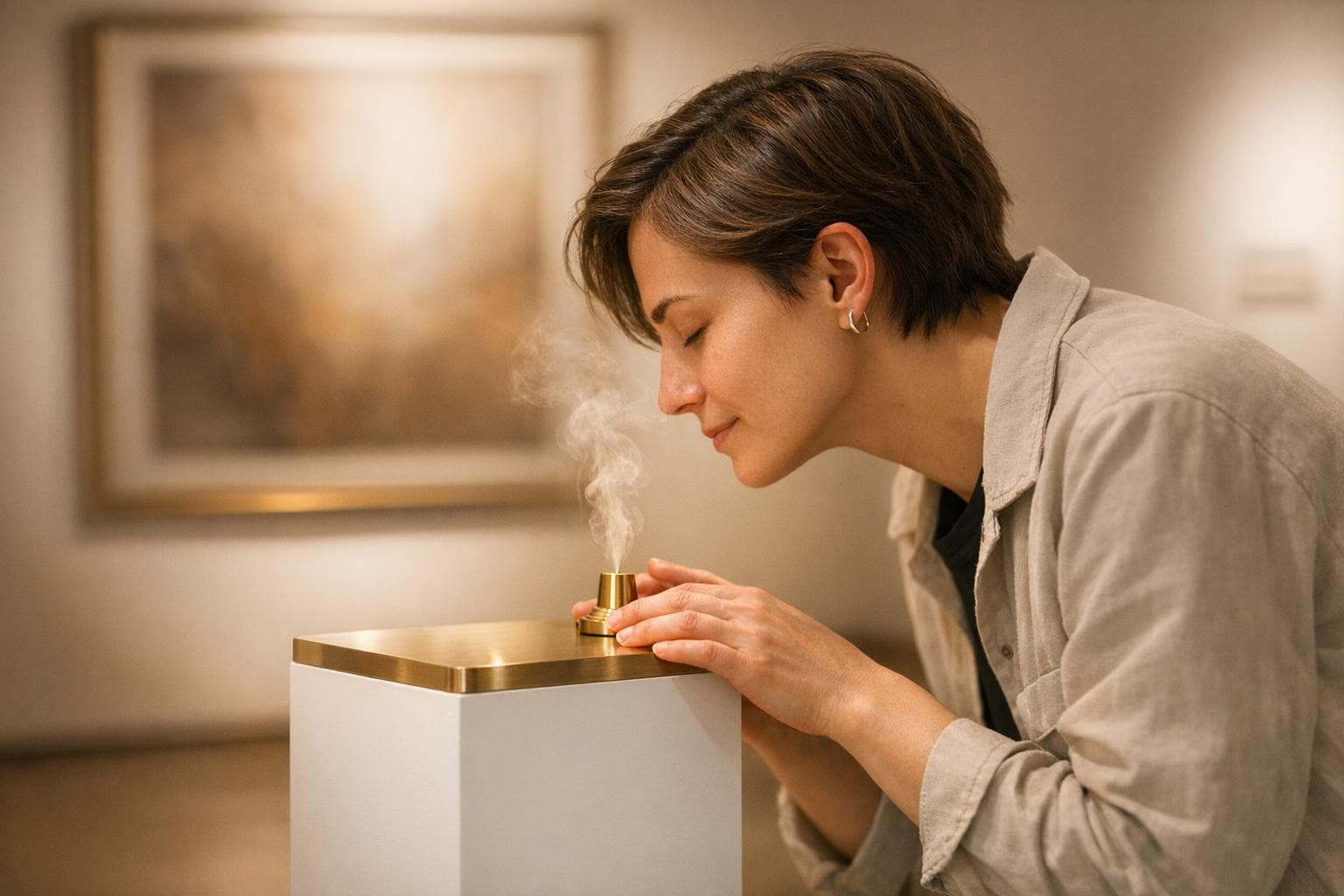
Interaktive Duftausstellungen revolutionieren die Art und Weise, wie wir Kunst und Geschichte erleben, indem sie Düfte in Museen und Galerien integrieren. Diese Ausstellungen verbinden olfaktorische Reize mit visuellen und akustischen Elementen und schaffen so multisensorische Erlebnisse, die einen bleibenden emotionalen Eindruck hinterlassen. Stellen Sie sich vor, der Duft des mittelalterlichen Paris oder das Aroma eines Gemäldes aus dem 17. Jahrhundert erwachten zu neuem Leben.
Die wichtigsten Erkenntnisse im Überblick:
- Was sie sind: Ausstellungen, die Düfte nutzen, um die Auseinandersetzung mit Kunst und Geschichte zu vertiefen.
- Warum sie faszinieren: Gerüche sind direkt mit Erinnerungen und Emotionen verknüpft und eröffnen einen neuen Zugang zur Vergangenheit.
- Wie sie funktionieren: Technologien wie berührungsaktivierte Diffusoren, Duftaufzüge und Rubbel — Karten verströmen gezielt dosierte Aromen.
- Interaktion der Besucher: Die Optionen reichen von persönlichen Diffusoren bis hin zur Beduftung des gesamten Raumes – für ein zugängliches und angenehmes Erlebnis.
- Beispiele: Zu den herausragenden Ausstellungen zählen „The Essence of a Painting“ in Madrid und „The Secret Power of Scents“ in Düsseldorf.
Diese Ausstellungen sind darauf ausgelegt, Emotionen zu wecken, Erinnerungen wachzurufen und eine tiefere Verbindung zu den Geschichten hinter den Kunstwerken herzustellen. Ob Sie ein passionierter Parfüm — Liebhaber sind oder einfach nur neugierig – sie bieten eine unvergleichliche Entdeckungsreise der Sinne.
Wie interaktive Duftausstellungen funktionieren
Methoden der Duftvermittlung
Museen haben innovative Wege entwickelt, um Düfte einzusetzen, ohne die Sinne der Besucher zu überfordern. Eine beliebte Methode ist die Aktivierung per Touchscreen, bei der Gerüche erst dann freigesetzt werden, wenn der Besucher sich aktiv dafür entscheidet. So ermöglichten beispielsweise im Prado Museum in Madrid vier über Touchscreens gesteuerte Diffusoren mit AirParfum — Technologie den Besuchern, 80 in Jan Brueghel d. Ä.s Meisterwerk dargestellte Pflanzenarten über 10 ausgewählte Düfte nachzuvollziehen.
Ein weiterer Ansatz setzt auf lokale Abgabesysteme, um die Aromen räumlich zu begrenzen. Im Kunstpalast in Düsseldorf luden „Duftaufzüge“ die Besucher ein, ihren Kopf hineinzustecken, um von der NASA gesammelte Gerüche aus dem Weltall zu erleben – wodurch verhindert wurde, dass die unverwechselbaren Noten in benachbarte Bereiche entweichen. Ebenso schaffen individuelle Duftproben und Riechstationen gezielte Anlaufpunkte, sodass nicht ganze Ausstellungshallen beduftet werden müssen.
Diese Verfahren verdeutlichen, wie Museen moderne Technologien nutzen, um das vollständige Eintauchen in die Duftwelt mit dem Wohlbefinden der Besucher in Einklang zu bringen.
Technologien in Duftausstellungen
Duftausstellungen stützen sich auf eine Symbiose aus chemischer Expertise und wegweisenden digitalen Werkzeugen. Im Museum Ulm nutzten Gäste handgehaltene Zerstäuber, um während der Betrachtung von Martin Schaffners Gemälde „Christus in der Vorhölle“ aus dem 16. Jahrhundert Aromen wie Rauch und Schwefel wahrzunehmen. Diese von International Flavors and Fragrances (IFF) komponierten Düfte wurden so formuliert, dass sie authentisch wirken und zugleich das Kunstwerk nicht gefährden. Ein weiteres Beispiel ist das Musée du Parfum Fragonard, in dem eine „Parfümorgel“ Besuchern erlaubt, durch das Betätigen von Tasten 46 einzigartige Duftnoten freizusetzen.
Fortschrittlichere Systeme synchronisieren Düfte harmonisch mit visuellen und akustischen Eindrücken. So reagieren beispielsweise 360 — Grad — Projektionen auf die Bewegungen der Besucher und lassen immersive Welten entstehen, in denen Noten die visuellen und akustischen Reize kunstvoll unterstreichen. Auf analogerer Ebene nutzte der Rundgang „City Sniffers“ des Amsterdam Museum im Jahr 2022 Rubbelkarten, um Besucher entlang historischer Duftpfade zu leiten – darunter Aromen, die an die duftenden Pomander der Pestzeit erinnern.
Diese Technologien vertiefen nicht nur die Interaktion, sondern bereichern auch die emotionale und sensorische Erfahrung der Betrachter.
Wie Besucher mit den Ausstellungen interagieren
Die Art der Interaktion wird individuell auf die Ausstellungsarchitektur abgestimmt und eröffnet vielfältige Möglichkeiten der Annäherung. In der Ausstellung „Secret Power of Scents“ des Kunstpalasts konnten die Besucher an 30 Duftstationen auf 5.000 m² insgesamt 81 Nuancen in ihrem eigenen Tempo entdecken. Manche Stationen erforderten ein aktives Mitwirken – wie das Drücken von Knöpfen oder das Anheben von Abdeckungen –, während andere auf eine sanfte Raumbeduftung setzten, um die Atmosphäre subtil zu veredeln.
Robert Müller — Grünow, Kurator und Experte für Dufttechnologie, beschreibt die unverwechselbare Kraft der Aromen wie folgt:
Düfte sind reine Emotion, der einzige Sinnesreiz, der nicht rational gefiltert werden kann. Er gelangt direkt in das limbische System.
Diese direkte Verknüpfung mit den Emotionen macht Duftausstellungen besonders wertvoll für sehbehinderte Menschen, die sich Kunst und Geschichte so über den Geruchssinn erschließen können. Zugleich steuern Museen Intensität und Ausbreitung der Aromen mit äußerster Präzision, damit das Erlebnis für alle Besucher – auch für jene mit einer ausgeprägten Duftsensibilität – stets angenehm bleibt.
Die sensorische und emotionale Wirkung von Düften
Wie Düfte Erinnerungen wecken
Düfte besitzen die faszinierende Eigenschaft, Erinnerungen augenblicklich wachzurufen, da sie unmittelbar das limbische System ansprechen – jenen Teil des Gehirns, der Emotionen und Erinnerungen steuert. Im Gegensatz zu Reizen des Sehens oder Hörens umgeht der Geruchssinn jede logische Filterung und berührt uns direkt im tiefsten Inneren. Aus diesem Grund vermag ein einziger Atemzug uns unmittelbar in einen ganz bestimmten Moment zurückzuversetzen – sei es das warme, vertraute Aroma einer heimatlichen Küche oder der betörende Duft eines Urlaubs in fernen Ländern.
In Museen und Ausstellungen wird dieses Phänomen zu einem eindrucksvollen Instrument des Storytellings. Düfte fungieren gleichsam als „Zeitmaschine“, die es den Betrachtern ermöglicht, Geschichte hautnah und mit allen Sinnen zu spüren, anstatt sie nur intellektuell zu erfassen. So ließ eine Ausstellung die Atmosphäre einer Frontlinie des Ersten Weltkriegs durch eine Komposition aus Noten von Blut, Schießpulver und Schwefel auferstehen und rief damit unmittelbare, intensive Reaktionen hervor. Ein anderes Beispiel verband den beruhigenden Duft von Myrrhe mit mittelalterlichen christlichen Holzschnitzereien und versetzte die Besucher in die sakrale Aura alter Kapellen. Solche olfaktorischen Impulse schlagen eine emotionale Brücke zur Vergangenheit und verschmelzen Erinnerungen mit den visuellen und akustischen Eindrücken des Raumes.
Multisensorische Immersion
Die Fähigkeit von Düften, Erinnerungen wachzurufen, entfaltet ihre größte Kraft, wenn sie mit anderen Sinnen kombiniert wird – so entsteht ein vollkommen immersives Gesamterlebnis. Ein Duft wirkt niemals isoliert; er verstärkt und vertieft die Wirkung visueller und auditiver Elemente und verwandelt statische Kunst in dynamische, vielschichtige Dimensionen. Dieser Ansatz spricht nicht nur das klassische Museumspublikum an, sondern eröffnet auch Menschen mit Sehbeeinträchtigungen oder einer Vorliebe für interaktive Konzepte einen völlig neuen Zugang.
Ein eindrucksvolles Beispiel hierfür bot die Ausstellung im Kunstpalast, bei der 30 eigens entwickelte Duftstationen mit visuellen Exponaten verschmolzen, um Gemälde lebendig werden zu lassen. Durch den Einsatz besonderer Moleküle wie Iso E Super – oft als Duft der Träume umschrieben – verlieh die Ausstellung den Werken atmosphärische Tiefe, die die Wahrnehmung der Betrachter auf subtile Weise prägte. Wie Generaldirektor Felix Kraemer treffend formulierte:
Diese Ausstellung ist ein Experiment – und eine Einladung an unser Publikum, die Geschichte der Düfte mit der eigenen Nase zu entdecken.
Beispiele für interaktive Duftausstellungen
Mauritshuis: Ausstellung über vergängliche Düfte
Die Ausstellung „Smell the Art: Fleeting — Scents in Colour“ im Jahr 2021 im Mauritshuis in Den Haag bot einen außergewöhnlichen Zugang zur Kunst. Neben Meisterwerken des 17. Jahrhunderts platzierte Duftspender mit Fußpedalen luden die Besucher ein, beim Betrachten der Gemälde ganz in die Aromenwelt des niederländischen Lebens jener Epoche einzutauchen.
Ihr persönlicher Duftexperte erwartet Sie
Machen Sie unser kurzes Duftquiz und entdecken Sie authentische Designer- und Nischenparfums, die zu Ihrem Geschmack passen – als 2–8ml Dekants und Proben, damit Sie jeden Duft testen können, bevor Sie sich für einen ganzen Flakon entscheiden.
Finden Sie Ihren DuftDeutsches Museum eröffnet Ausstellung, die Kunst und Geschichte anhand von 81 verschiedenen Düften erkundet
Warum sich der Besuch lohnt und was Sie erwartet
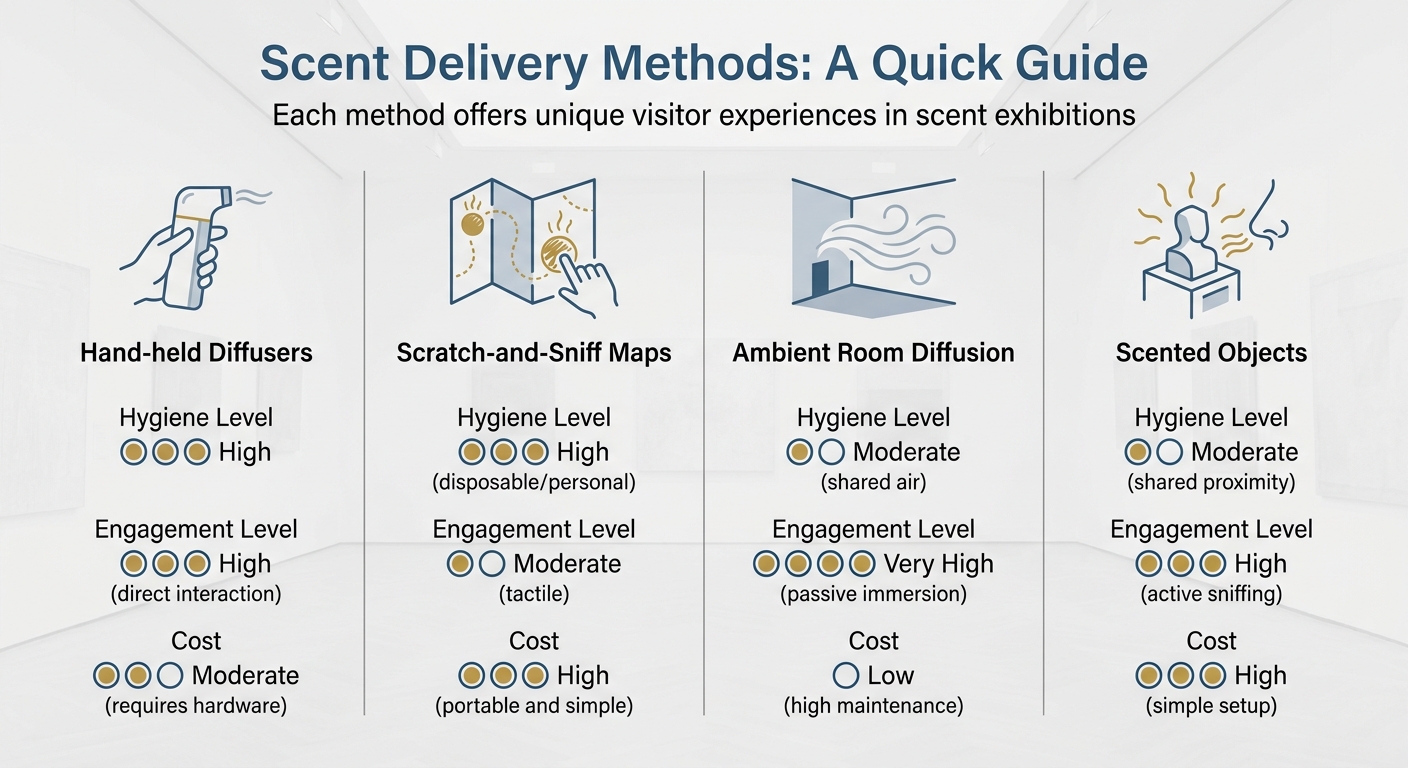
Vergleich der Methoden zur Duftvermittlung in interaktiven Museumsausstellungen
Warum Sie eine Duftausstellung besuchen sollten
Interaktive Duftausstellungen eröffnen einen faszinierenden Weg, Geschichte und Kunst auf einer tieferen Ebene zu begreifen. Im Gegensatz zu klassischen Museen, die primär auf das Auge setzen, nutzen diese Konzepte die suggestive Kraft der Düfte, um unmittelbare, emotionale Verbindungen herzustellen. Düfte umgehen den Verstand und rufen tief empfundene Reaktionen hervor, die vergangene Epochen überraschend greifbar machen.
Stellen Sie sich vor, Sie könnten Geschichte riechen – das pulsierende Treiben im mittelalterlichen Paris oder die Schützengräben des Ersten Weltkriegs. Solche Eindrücke gehen weit über Worte oder Bilder hinaus; sie bieten eine sinnliche Erfahrung, die kein Geschichtsbuch je vermitteln könnte. Ob passionierter Duftkenner oder kunstinteressierter Entdecker: Diese Ausstellungen eröffnen einen frischen Blick auf Kunstwerke und rufen oft lang vergessene Erinnerungen oder unerwartete Einsichten wach.
Was Sie vor Ort erwartet
Moderne Duftausstellungen vereinen kreative Vision mit höchster Funktionalität. Sie setzen auf fortschrittliche, hygienische Systeme, um auch großen Besuchergruppen ein makelloses Erlebnis zu bieten. Es erwarten Sie handliche Diffusoren, Rubbelkarten oder ganze Räume, deren feine Beduftung mit eindrucksvollen 360° — Projektionen verschmilzt.
Viele Ausstellungen setzen zudem auf spielerische Interaktion. Einige präsentieren „Parfümorgeln“, an denen Sie Tasten drücken, um bestimmte Nuancen freizusetzen; andere binden Fußpedale oder digitale Stationen ein. Die olfaktorische Bandbreite reicht von historischen Essenzen wie Weihrauch und Myrrhe bis hin zu Meilensteinen der modernen Parfümerie wie Chanel N°5. Ob im Rahmen einer Führung oder auf eigene Faust: Für jeden Besucher gibt es die passende Möglichkeit der Entdeckung.
Für Menschen mit Allergien oder empfindlichen Atemwegen empfiehlt sich eine kurze Vorabinformation. Manche Ausstellungen arbeiten bewusst mit intensiven Akkorden wie Schwefel oder Rauch, die sensible Besucher als fordernd empfinden könnten.
Methoden der Duftvermittlung: Ein Überblick
Verschiedene Ausstellungen nutzen unterschiedliche Systeme der Duftübertragung, die jeweils ein ganz eigenes Erlebnis schaffen. Hier ist ein kurzer Überblick:
| Methode der Duftvermittlung | Hygienestandard | Grad der Interaktion | Kostenaufwand |
|---|---|---|---|
| Handgehaltene Diffusoren | Hoch (persönliche Nutzung) | Hoch (direkte Interaktion) | Moderat (erfordert Hardware) |
| Rubbelkarten | Hoch (individuell/Einweg) | Moderat (haptisch) | Hoch (handlich und unkompliziert) |
| Raumbeduftung | Moderat (gemeinsame Raumluft) | Sehr hoch (passive Immersion) | Niedrig (hoher Wartungsaufwand) |
| Beduftete Objekte | Moderat (gemeinsame Annäherung) | Hoch (aktives Riechen) | Hoch (einfache Installation) |
Jedes Verfahren hat seine spezifischen Vorzüge. Handgehaltene Zerstäuber eignen sich ideal, um feinste Noten isoliert wahrzunehmen, ohne den umgebenden Raum zu beeinflussen. Eine atmosphärische Raumbeduftung hingegen verwandelt ganze Säle in stimmungsvolle Klang- und Duftwelten. Dank dieser Vielfalt findet jeder Besucher die Form des Erlebens, die seinen Vorlieben entspricht – eine harmonische Verbindung aus moderner Technik und der zeitlosen Faszination edler Aromen.
Fazit
Interaktive Duftausstellungen verändern unseren Dialog mit Kunst und Kultur grundlegend, indem sie den Geruchssinn ansprechen – jene sensorische Brücke, die direkt zu unseren tiefsten Emotionen führt. Wie Robert Müller — Grünow treffend beschreibt, besitzt ein Duft die seltene Gabe, uns auf einer unmittelbar emotionalen Ebene zu berühren.
Die Ausstellung „Secret Power of Scents“ im Kunstpalast veranschaulicht diesen Wandel hin zu multisensorischen Erlebnissen par excellence. Diese Schauen erzählen Geschichte nicht nur nach – sie machen sie mit jedem Atemzug erlebbar. Stellen Sie sich vor, den herben Pulverdampf des Ersten Weltkriegs oder das sakrale Harz antiker Weihrauchrituale einzuatmen: So wird Historie auf eindrucksvolle Weise gegenwärtig.
Was diese Erlebnisse so außergewöhnlich macht, ist ihr Zusammenspiel aus persönlichen Reminiszenzen und neuen Horizonten. Durch modernste Zerstäubungstechnik und fein abgestimmte Duftkompositionen fühlen sich die Gäste direkt in die porträtierte Epoche versetzt.
Letztlich gehen interaktive Duftausstellungen weit über konventionelle Galeriekonzepte hinaus. Sie bieten eine sinnliche Entdeckungsreise, die Kenner der hohen Parfümkunst ebenso begeistert wie kunstinteressierte Flaneure. Indem sie dem Duft eine Bühne geben, eröffnen diese Ausstellungen neue Dimensionen unseres kulturellen Erbes – Atemzug für Atemzug.
Häufig gestellte Fragen (FAQs)
Sind die Düfte für Menschen mit Allergien oder Asthma unbedenklich?
Besucher mit Allergien oder Asthma sollten beim Besuch von Ausstellungen mit Duftstationen achtsam sein. Die verwendeten Aromen und Duftstoffe können in manchen Fällen allergische Reaktionen oder Atembeschwerden hervorrufen. Bei entsprechender Empfindlichkeit empfiehlt es sich, vorab entsprechende Vorkehrungen zu treffen und gegebenenfalls ärztlichen Rat einzuholen.
Wie verhindern Museen, dass sich die Düfte verschiedener Räume vermischen?
Museen setzen häufig auf gezielte Duftstationen oder strategisch positionierte Zerstäuber, um Noten auf klar definierte Zonen zu beschränken. Auf diese Weise entsteht in jedem Bereich ein eigenständiges Duftbild, ohne dass sich benachbarte Aromen unerwünscht vermengen. Diese präzise Steuerung ist insbesondere bei Ausstellungen mit mehreren maßgeschneiderten Nuancen unerlässlich, um das angedachte olfaktorische Konzept rein und unverfälscht erlebbar zu machen.
Kann ich die Duftstationen auslassen und die Ausstellung dennoch genießen?
Ja, Sie können interaktive Duftausstellungen selbstverständlich auch ohne die olfaktorischen Elemente vollumfänglich genießen. Viele Schauen bieten visuelle Werke und andere Sinnesreize, die für sich allein stehen und ihre eigene Faszination entfalten. Das bewusste Wahrnehmen der Düfte verleiht dem Gesamterlebnis jedoch eine zusätzliche Dimension und lässt Sie noch tiefer in das Konzept eintauchen.

