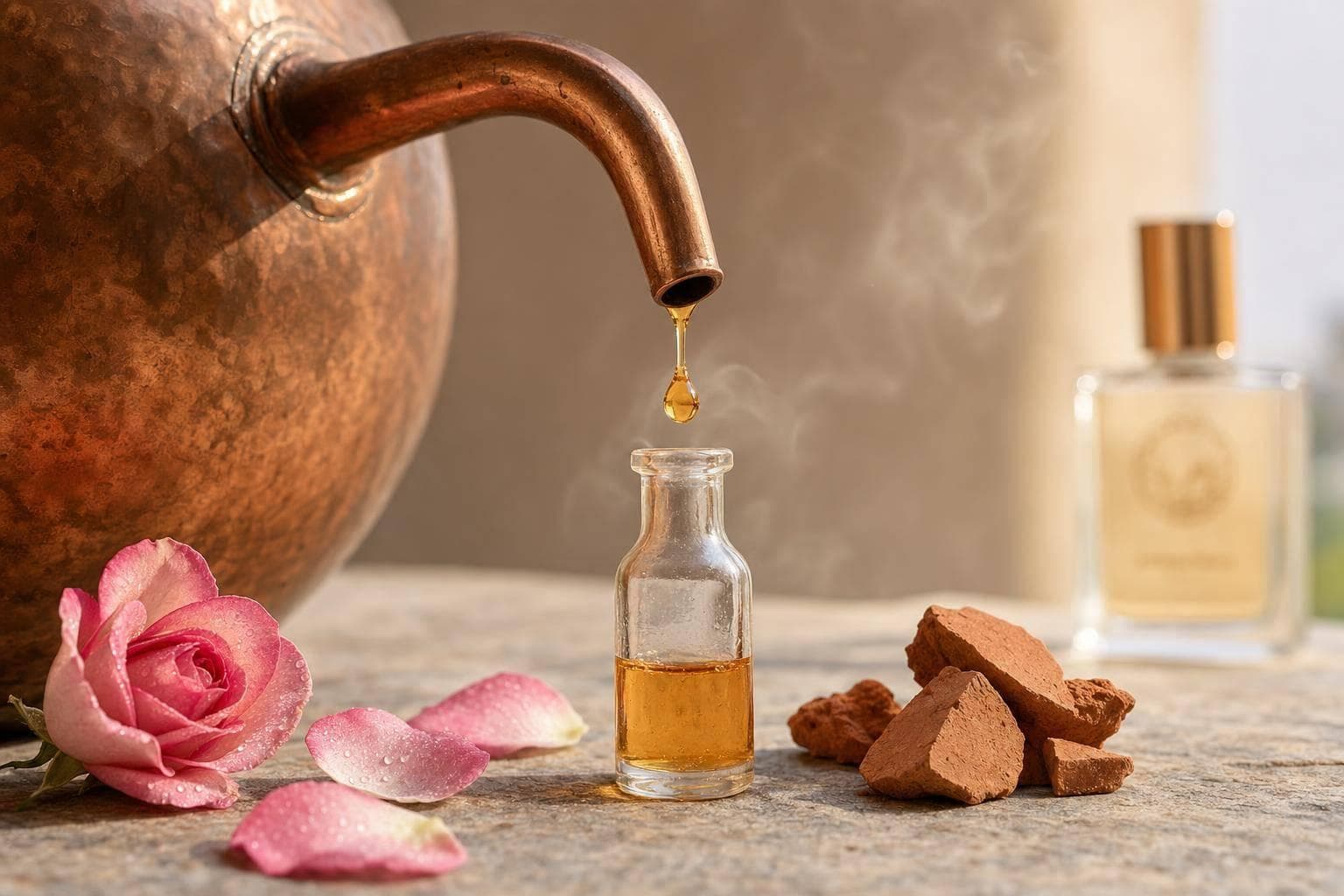
Kannauj ist von herausragender Bedeutung, da die Stadt das Herz des indischen Attar — Handels bildet und der einzige Ort ist, der für die Herstellung von Mitti attar bekannt ist – dem Duft von Regen auf trockener Erde.
Die Quintessenz im Überblick:
- Ich würde Kannauj als das Epizentrum der indischen Ölparfümerie bezeichnen.
- Zu den bekanntesten Kreationen zählen rose, jasmine, kewra, khus, kesar und Mitti attar.
- In der Stadt kommt bis heute das deg-bhapka — Verfahren zum Einsatz, bei dem pflanzliche Rohstoffe direkt in sandalwood oil destilliert werden.
- Die Destillation einer einzigen Charge Ruh Gulab kann 12 to 15 hours in Anspruch nehmen.
- Attars werden typischerweise körpernah getragen, halten many hours an und duften weicher als alkoholbasierte Sprays.
- Nach einem Nachfragerückgang während der britischen Kolonialzeit und dem späteren Aufkommen von Aerosol — Deodorants erwacht das Interesse heute dank jüngerer Käufer und Online — Parfummarken zu neuem Leben.
Was mich besonders fasziniert, ist ganz einfach: Bei Kannauj geht es nicht nur um eine historische Parfumkunst. Die Stadt prägt bis heute die Art und Weise, wie viele Menschen Düfte tragen – entschleunigt, hautnah und zutiefst persönlich.
Hier finden Sie eine Übersicht der wichtigsten Attars, die untrennbar mit Kannauj verbunden sind:
| Attar | Duftcharakter | Klassischer Anlass |
|---|---|---|
| Gulab | Süß, floral, kühlend | Hochzeiten, Gastfreundschaft |
| Motia | Opulent, weiß-floral | Abendgarderobe, feierliche Anlässe |
| Kewra | Süß, grün, erfrischend | Heiße Tage |
| Mitti | Regen auf trockener Erde | Momente der Ruhe und Reflexion |
| Khus | Grün, rauchig | Tagesgarderobe |
| Kesar | Warm, würzig | Elegante Abende |
Für mich ist Kannauj eine Parfumstadt mit tiefen historischen Wurzeln und weltweiter Ausstrahlungskraft. Genau deshalb besitzt ihr Name für Duftliebhaber weit über die Grenzen Indiens hinaus unverändert großes Gewicht.
Wie Kannauj zu einem Zentrum der Parfümerie wurde
Antike Wurzeln und höfisches Leben
Der Aufstieg von Kannauj zum Zentrum des Dufthandels beruhte auf einem simplen Zusammenspiel von Ressourcen und Nachfrage: Königshöfe verlangten nach kostbaren Duftölen, während florierende Handelsrouten deren Transport über weite Strecken ermöglichten. Dies bot den Parfümeuren vor Ort einen stabilen Markt und den Freiraum, ihr Handwerk über Generationen hinweg zu verfeinern.
Die Gunst der Mughal — Herrscher und der Aufstieg des Rosen — Attars
Unter dem Hof der Mughal — Dynastie entwickelte sich die Rosendestillation zu einem der prägenden Handwerke der Stadt. Ruh Gulab folgt noch immer einem entschleunigten Prozess, bei dem jede einzelne Charge 12 to 15 hours lang destilliert wird. Diese außergewöhnliche Hingabe prägt die Attars, für die Kannauj bis heute berühmt ist.
Niedergang und modernes Revival
Später wandelten sich die Vorlieben. Während der britischen Ära gewannen europäische, alkoholbasierte Parfums an Popularität, was die Nachfrage nach traditionellen Attars dämpfte. In der Folge verdrängten massengefertigte Aerosol — Deodorants das Attar noch weiter aus dem städtischen Alltag.
Heute wendet sich das Blatt erneut. Eine jüngere Generation und moderne Online — Marken haben dazu beigetragen, Attars wieder ins Rampenlicht zu rücken – oft inszeniert auf Instagram und veredelt durch zeitlos elegantes Packaging als zeitgemäße Duftalternative. Dieses neu entfachte Interesse eröffnet dem traditionsreichen Handwerk eine völlig neue Zielgruppe.
Wie wird das berühmte Attar aus Kannauj hergestellt? | The Hindu

Die Herstellung der Attars aus Kannauj
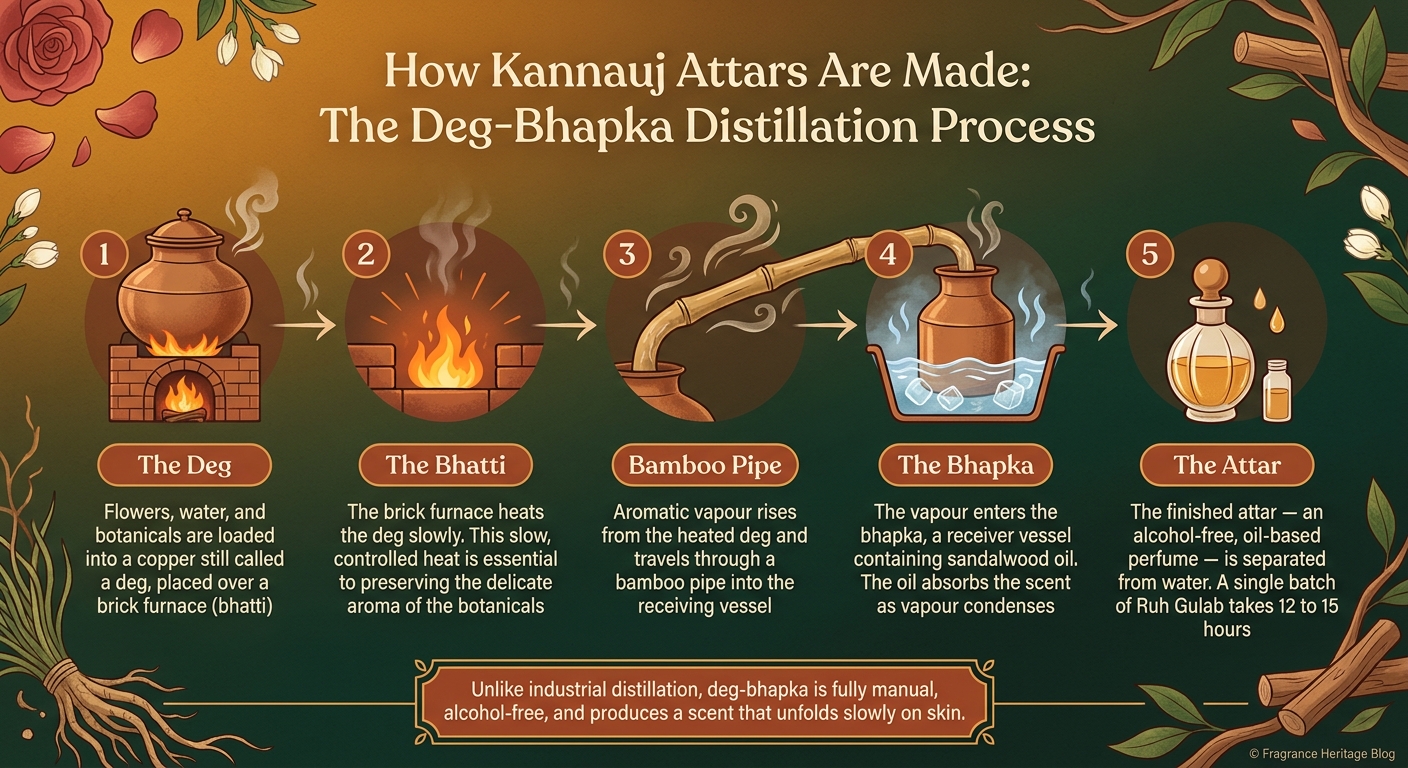
Die Kunst der Attar — Herstellung in Kannauj: Das Deg — Bhapka — Destillationsverfahren
Die Deg — Bhapka — Destillationsmethode
Die Entstehung der Attars von Kannauj beginnt in einer kupfernen Brennblase, dem sogenannten deg. Dieser wird mit Blüten, Wasser und weiteren pflanzlichen Ingredienzen befüllt und über einem traditionellen gemauerten Ofen, dem bhatti, erhitzt. Beim Verdampfen wandern die Essenzen durch ein Bambusrohr direkt in die bhapka, den Receiver. Dort nimmt feinstes Sandelholzöl die Duftstoffe auf und vollendet die Verwandlung zum Attar.
Dieses bedächtige, traditionelle Handwerk erklärt, warum die Duftöle aus Kannauj so viel mehr Tiefe besitzen und sich auf der Haut nur schrittweise entfalten. Sie überwältigen nicht im ersten Moment. Sie setzen sich behutsam, wandeln sich und offenbaren ihren wahren Charakter erst im Laufe der Zeit.
Kostbare Rohstoffe: Blüten, Hölzer, Gewürze und gebrannte Erde
Die Parfümeure aus Kannauj greifen auf eine erlesene Auswahl an Rohstoffen zurück, von denen jede Zutat ihre ganz eigene Facette beisteuert:
- Jasmine (motia) verleiht eine süße, cremige Nuance.
- Sandelholzöl (chandan) ruht in der Bhapka und dient als natürliches Fixativ, das die destillierten Aromen bindet.
- Vetiver — Wurzel, lokal als khus geschätzt, genießt in Kannauj seit jeher ein hohes Ansehen.
- Mitti attar entsteht durch die kunstvolle Destillation sonnengetrockneter Erde in reines Sandelholzöl.
Auf dem Papier eine puristische Komposition, offenbart das Ergebnis auf der Haut eine faszinierende Opulenz und Vielschichtigkeit.
Deg — Bhapka im Vergleich zur industriellen Destillation
Im Vergleich zu modernen industriellen Verfahren ist das Deg — Bhapka — Verfahren deutlich langsamer und verlangt meisterhafte Handarbeit. Es bewahrt die reine Ölbasis des Parfums – ganz ohne Alkohol –, was einer der Gründe dafür ist, dass sich das Bouquet auf der Haut so viel sanfter entwickelt. Industrielle Prozesse sind zwar schneller, das Ergebnis wirkt im Vergleich jedoch oft flacher und weniger nuanciert.
Die traditionelle Methode wird für ihren ausschließlichen Einsatz natürlicher Essenzen und den unnachahmlichen Manufakturcharakter geschätzt, den Maschinen niemals replizieren können. Diese unverfälschten Rohstoffe definieren die legendärsten Attars von Kannauj – allen voran die Noten von Rose, Jasmin, Vetiver und mineralischer Erde.
Ihr persönlicher Duftexperte erwartet Sie
Machen Sie unser kurzes Duftquiz und entdecken Sie authentische Designer- und Nischenparfums, die zu Ihrem Geschmack passen – als 2–8ml Dekants und Proben, damit Sie jeden Duft testen können, bevor Sie sich für einen ganzen Flakon entscheiden.
Finden Sie Ihren DuftDie berühmtesten Attars aus Kannauj und ihre Verwendung
Über die handwerkliche Perfektion hinaus ist Kannauj für eine Reihe charakteristischer Meisterwerke bekannt, die den Ruf der Stadt in der Parfümeriewelt bis heute prägen.
Rose, Jasmin und Kewra
Gulab (Rosen — Attar) gehört zu den edelsten Essenzen aus Kannauj. Sein Bukett ist süß, floral und kühlend, mit einer sanften Sillage, die intim am Körper verweilt. In Indien wird der Duft seit jeher traditionell mit prachtvollen Hochzeiten und vollendeter Gastfreundschaft verbunden.
Motia (Jasmin) zeigt sich satter und opulenter. Es ist ein tiefes, weiß-florales Attar, das vor allem zu festlichen Anlässen und am Abend getragen wird. Kewra, gewonnen aus den Blüten der Pandanus — Palme, ist in Europa noch ein Geheimtipp, verzaubert jedoch auf Anhieb: Ein Dufterlebnis von süßem, grünem und erfrischendem Charakter.
Doch Kannauj fasziniert keineswegs nur durch florale Noten. Die Stadt ist ebenso berühmt für Kompositionen von unvergleichlicher Tiefe und Dichte.
Mitti attar und Kompositionen auf Sandelholzbasis
Mitti attar zählt zu den unvergesslichsten Schöpfungen aus Kannauj. Es fängt die Poesie des Petrichors ein – den unverwechselbaren Duft von ersten Regentropfen auf trockener Erde. Seine Wirkung ist erdig, beruhigend und weckt vertraute Erinnerungen. Dieses einzigartige Profil hat ihm eine treue Anhängerschaft unter Liebhabern exklusiver Nischendüfte eingebracht.
Sandelholz bildet das Herzstück vieler Mischungen aus Kannauj. Es verleiht floralen Akkorden eine samtige Harmonie, schenkt ihnen geschmeidige Tiefe und sorgt dafür, dass der Duft außergewöhnlich lange auf der Haut nachklingt.
Ein Leitfaden für moderne Parfumkenner
Ein wesentlicher Aspekt ist entscheidend, wenn Sie bisher vor allem alkoholbasierte Sprühparfums gewohnt sind: Reine Attars wirken unaufdringlicher. Anstatt einen ganzen Raum zu füllen, schaffen sie eine private, intime Duftaura und zeichnen sich durch eine bemerkenswerte Haltbarkeit von vielen Stunden aus.
| Attar | Duftcharakter | Klassischer Anlass | Haltbarkeit |
|---|---|---|---|
| Gulab (Rose) | Süß, floral, kühlend | Hochzeiten, festliche Gastlichkeit | Hoch |
| Motia (Jasmine) | Opulent, weiß-floral | Festtage, elegante Abendveranstaltungen | Hoch |
| Kewra (Pandanus) | Süß, grün, kühlend | Erfrischung bei hochsommerlichen Temperaturen | Moderat |
| Mitti | Regen auf trockener Erde | Erdend, meditative Momente | Moderat bis Hoch |
| Khus (Vetiver) | Grün, rauchig, belebend | Kühlend, elegantes Tages- und Business — Tragen | Sehr hoch |
| Kesar (Saffron) | Warm, würzig, luxuriös | Exklusive Events, Abendgarderobe | Hoch |
Diese noble Zurückhaltung ist ein Hauptgrund dafür, warum Kannauj in der zeitgenössischen Haute Parfumerie eine so wichtige Rolle spielt. In einem Markt voller lauter Neuerscheinungen setzen diese Attars ein Zeichen: Sie bleiben intim, entschleunigt und tiefgründig berührend.
Kannaujs Bedeutung in der modernen Parfümerie
Warum Attars aus Kannauj Connaisseure in Europa faszinieren
Kannauj behauptet einen festen Platz in der modernen Duftkultur. Das Geheimnis liegt auf der Hand: Seine Attars verschmelzen mit der Haut und offenbaren ihr Bouquet in vollkommener Ruhe. Dieser sanfte, intime Stil entspricht exakt dem Wunsch vieler europäischer Duftliebhaber nach Raffinesse und Authentizität.
Ihre Faszination verdanken diese Essenzen nicht zuletzt ihrer meisterlichen Entstehung. Attars aus Kannauj sind das Ergebnis einer überaus geduldigen Handwerkskunst, die sich im Trageerlebnis widerspiegelt. Statt in den ersten Minuten mit einer lauten Kopfnote zu dominieren, ruhen sie auf der Haut und entwickeln sich ganz im eigenen Tempo. Für Liebhaber von Düften mit wahrer Tiefe und außergewöhnlicher Langlebigkeit wirkt dies unvergleichlich persönlicher als ein vordergründiges Parfumspray.
Attar — Kreationen in kompakten Größen entdecken
Für diese Entdeckungsreise bieten sich kleinere Formate ideal an: Wer die Welt der Attars für sich erkunden möchte, muss sich nicht gleich für einen vollständigen Flakon entscheiden.
Edle Abfüllungen in 2 ml, 5 ml und 8 ml machen es mühelos möglich, diesen Stil ganz in Ruhe kennenzulernen. Tragen Sie den Duft über mehrere Tage, erleben Sie seine Entwicklung auf Ihrer Haut und finden Sie heraus, ob diese entschleunigte, intime Art des Dufttragens zu Ihrer Persönlichkeit passt.
Fazit: Eine lebendige Dufttradition von weltweiter Relevanz
Kannauj verliert nie an Aktualität, weil seine traditionellen, alkoholfreien Attars perfekt zu dem passen, was anspruchsvolle Parfumliebhaber heute suchen: Nähe, Beständigkeit und einen unverwechselbaren Charakter. Ein uraltes Erbe der Parfümkunst, das sich moderner und tragbarer anfühlt denn je.
Häufig gestellte Fragen (FAQs)
Warum wird Kannauj als die Parfumhauptstadt Indiens bezeichnet?
Kannauj trägt den Titel Indiens Parfumhauptstadt aus gutem Grund. Seit Jahrhunderten ist die Stadt das Herz der traditionellen Parfüm- und Attar — Herstellung des Subkontinents. Die fruchtbaren Böden und idealen Wasserressourcen der Region lassen aromareiche Blüten wie Rose, Jasmin und Vetiver in bester Qualität gedeihen – ein unvergleichlicher Vorteil für die ansässigen Meisterdestillateure, die edelste Ingredienzen direkt vor Ort ernten können.
Ihre herausragende Stellung festigte die Stadt bereits im 7. Jahrhundert unter der Herrschaft von Kaiser Harshavardhana, bevor sie während der Epoche des Mughal — Reiches ihre vollste Blüte erlebte. Diese jahrhundertealte Tradition ist bis heute lebendig: Über 500 Manufakturen führen das alte Destillationshandwerk in Kannauj unverändert fort und halten die Duftkultur für die Welt lebendig.
Was macht Mitti attar so besonders?
Mitti attar besticht durch ein ganz einzigartiges olfaktorisches Profil: Es duftet exakt wie erfrischender Sommerregen auf sonnentrockener Erde.
Dieses in Kannauj gewonnene Attar entsteht, indem sonnengebrannter Ton traditionell in reifendes Sandelholzöl destilliert wird. Durch diesen Prozess entsteht eine Komposition, die ungemein erdend, besonnen und zutiefst naturverbunden wirkt.
Das Resultat ist ein erdig-mineralischer Duft, der sich gänzlich von klassischen floralen Parfums oder synthetischen Laborkreationen unterscheidet. Connaisseure schätzen ihn für seine berührende Nähe zu Erinnerungen an den ersten Monsunregen, an warme Erde nach einem Schauer und das unverfälschte Gefühl purer Natur.
Wie unterscheiden sich Attars von herkömmlichen Sprühparfums?
Attars heben sich vor allem in zwei Aspekten von Sprühparfums ab: in ihrer Komposition und in der Anwendung.
Klassische Sprühparfums basieren überwiegend auf Duftölen, die in einer großen Menge Alkohol gelöst werden. Traditionelle Attars hingegen sind reine, hochkonzentrierte Naturöle – vollkommen frei von Alkohol oder synthetischen Trägerstoffen.
Das beeinflusst auch die Art des Auftragens: Aufgrund der hohen Konzentration genügt ein einziger winziger Tropfen direkt auf den Pulspunkten, anstatt den Duft großflächig auf Haut oder Kleidung aufzusprühen.
Auch das Hautgefühl ist unvergleichlich: Während alkoholbasierte Formulierungen austrocknend wirken können, pflegen reine Attars die Haut auf natürliche, geschmeidige Weise.

