Das Layering von Düften ist eine elegante und unkomplizierte Möglichkeit, Ihren Duft länger anhalten zu lassen und ihm zugleich eine persönliche Signatur zu verleihen. So gehen Sie vor:
- Beginnen Sie mit gepflegter, hydratisierter Haut: Gut durchfeuchtete Haut hält Duftnoten besser fest. Tragen Sie direkt nach dem Duschen eine Lotion oder ein Öl auf, um die Feuchtigkeit einzuschließen.
- Verwenden Sie aufeinander abgestimmte Produkte: Kombinieren Sie Ihr Parfum mit passenden oder unparfümierten Körperpflegeprodukten wie Duschgels oder Lotionen, um die Duftwirkung zu intensivieren.
- Beachten Sie die richtige Reihenfolge: Beginnen Sie mit einem duftenden Duschgel, tragen Sie anschließend Lotion oder Öl auf und vollenden Sie das Ritual mit Parfum auf den Pulspunkten.
- Kombinieren Sie Düfte mit Bedacht: Verbinden Sie Kompositionen aus derselben Duftfamilie oder vereinen Sie kontrastierende Noten (z. B. Vanille mit Zitrus), um Tiefe und Haltbarkeit zu schaffen.
- Frischen Sie den Duft tagsüber dezent auf: Nutzen Sie Reisegrößen oder Rollerballs für kleine Auffrischungen, ohne den Duft zu überladen.
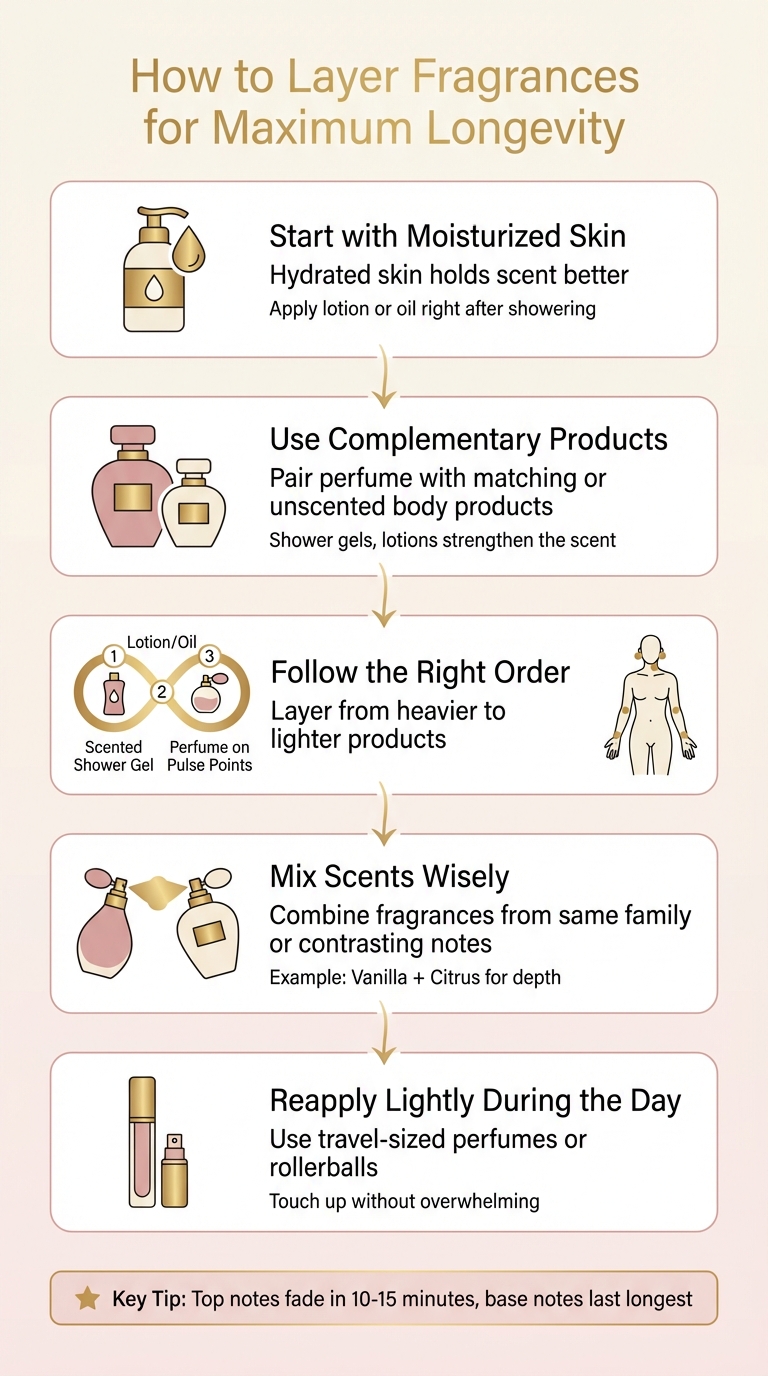
5-Schritte-Duft-Layering-Prozess für maximale Haltbarkeit
Preparing Your Skin Before Applying Fragrance
Hydratisierte Haut ist die perfekte Leinwand für einen Duft. Ist die Haut trocken, kann sie Duftmoleküle schlechter festhalten, wodurch der Alkohol rasch verdunstet und der Duft schneller verfliegt. Gepflegte, mit Feuchtigkeit versorgte Haut hingegen hilft dem Duft, sich wunderbar zu entfalten und länger zu haften. Wie Hiba E von Sensei Fragrance erklärt:
"Trockene Haut hält einen Duft nicht so gut wie hydratisierte Haut, weil der Duft weniger hat, woran er haften kann."
Ist Ihre Haut optimal mit Feuchtigkeit versorgt, können Sie weitere Schritte unternehmen, um die Haltbarkeit Ihres Duftes zusätzlich zu verlängern.
Feuchtigkeitspflege und grundlegende Hautpflege
Der ideale Zeitpunkt zum Eincremen ist direkt nach dem Duschen, solange die Haut noch leicht feucht ist. So wird Feuchtigkeit eingeschlossen, bevor sie entweichen kann. Beginnen Sie mit einem Feuchtigkeitsspender wie Glycerin oder Hyaluronsäure, der Wasser in die Haut zieht, und versiegeln Sie ihn anschließend mit einer okklusiven Pflege wie Vaseline oder einer reichhaltigen Creme.
Tragen Sie eine Lotion mit feuchtigkeitsbindenden Inhaltsstoffen auf die noch feuchte Haut auf, um eine geschmeidige, feuchtigkeitsreiche Oberfläche zu schaffen, die Duft besser hält. Nachdem Sie Ihr Parfum aufgetragen haben, kann eine feine Schicht eines okklusiven Produkts über den besprühten Stellen helfen, den Duft gewissermaßen einzuschließen und die Verdunstung zu verlangsamen. Leila Zagwolsky, CEO & Mitgründerin von LUXSB, betont:
"Feuchtigkeitspflege und Layering sind der Schlüssel zu einem länger anhaltenden Duft. Je trockener die Haut, desto geringer die Haltbarkeit."
Sobald Ihre Haut vorbereitet und hydratisiert ist, lohnt es sich zu überlegen, wie ergänzende Körperpflegeprodukte Ihren Duft unterstützen können.
Körperpflegeprodukte auswählen, die mit Ihrem Duft harmonieren
Um den wahren Charakter Ihres Parfums zu bewahren, wählen Sie am besten unparfümierte oder duftfreie Lotionen. Sie schenken der Haut die nötige Feuchtigkeit, ohne den Duft Ihres Parfums zu verändern – besonders wichtig bei komplexen Duftkompositionen.
Wenn Sie Ihren Duft intensivieren möchten, können Sie Körperpflegeprodukte aus derselben Duftlinie verwenden. Viele Marken bieten passende Duschgele, Lotionen und Öle an, die eigens dazu entwickelt wurden, ihre Parfums zu ergänzen. Das Layering dieser Produkte verstärkt nicht nur den Duft, sondern verlängert auch seine Haltbarkeit. Ganz gleich, wofür Sie sich entscheiden – entscheidend ist, mit gut hydratisierter Haut zu beginnen, bevor Sie Ihren Duft auftragen.
Die richtige Reihenfolge beim Duft-Layering
Damit Ihr Duft länger anhält, ist die Reihenfolge, in der Sie Ihre Produkte auftragen, entscheidend. Durch strategisches Layering können Sie den Duft in jedem Schritt einschließen. Colin Minter, National Education & Events Manager Designer Fragrances bei Narciso Rodriguez, erklärt es so:
"Wenn Sie Ihren Duft mit einem passenden Körperpflegeprodukt kombinieren, reinigen Sie sich zunächst mit Bade- oder Duschgel, tragen dann großzügig Bodylotion, Creme oder Öl auf und sprühen anschließend Ihren Duft auf die Pulspunkte."
Diese Abfolge stellt sicher, dass jede Schicht die nächste veredelt und eine lang anhaltende Wirkung entsteht.
Beginnen Sie mit duftenden Duschprodukten
Starten Sie Ihr Ritual mit einem duftenden Duschgel, um eine solide Basis für Ihren Duft zu schaffen. Ein Duschgel aus derselben Duftlinie wie Ihr Parfum sorgt für ein stimmiges Dufterlebnis, das den ganzen Tag anhält. Robin Mason, President of Fine Fragrance bei dsm-firmenich, hebt hervor, warum dieser Schritt so wichtig ist:
"Layern Sie Ihr Parfum über begleitende Produkte wie ein duftendes Duschgel und eine Bodylotion. Das schafft eine gute Basis, damit Ihr Duft länger anhält."
Ist kein passendes Duschgel erhältlich, wählen Sie eines mit ergänzenden Basisnoten wie Vanille oder Sandelholz. Diese subtilen Duftnuancen verleihen Tiefe, ohne mit Ihrem gewählten Parfum zu konkurrieren.
Anschließend Bodylotions oder Öle auftragen
Nach der Reinigung tragen Sie eine Lotion oder ein Öl auf die noch feuchte Haut auf. Dieser Schritt schließt Feuchtigkeit ein und verlangsamt die Verdunstung, sodass Ihr Duft länger präsent bleibt. Gustavo Romero, Parfümeur und Gründer von Fragrance Alliance Network, empfiehlt, mit reichhaltigeren Produkten zu beginnen:
"Beginnen Sie mit schwereren oder intensiver duftenden Produkten wie Lotionen oder Ölen, um eine lang anhaltende Basis zu schaffen, und layern Sie anschließend leichtere Sprays wie EDTs oder Bodysprays darüber."
Für das schönste Ergebnis verwenden Sie eine passende Bodylotion aus der Linie Ihres Parfums, um dessen Noten zu unterstreichen. Wenn Sie gerne zwischen verschiedenen Düften wechseln, eignet sich auch eine unparfümierte Lotion hervorragend, da sie Feuchtigkeit spendet, ohne Ihren Duft zu beeinflussen. Manche Duftliebhaber schwören sogar darauf, vor dem Parfum eine feine Schicht unparfümierter Vaseline auf die Pulspunkte aufzutragen. Das Gel wirkt wie eine Barriere und hält den Duft länger als bloße Haut.
Mit Parfum auf den Pulspunkten vollenden
Der letzte Schritt besteht darin, das Parfum auf die Pulspunkte aufzutragen – etwa auf Handgelenke, Hals, hinter die Ohren und in die Armbeugen. Diese Bereiche erzeugen Wärme, wodurch sich der Duft im Laufe des Tages schöner entfalten kann. Wenn Sie mehrere Parfums layern, beginnen Sie mit dem schwereren oder konzentrierteren Duft. Colin Minter erklärt:
"Wenn ich zwei verschiedene Düfte kombiniere, würde ich empfehlen, zuerst den konzentrierteren/schwereren Duft zu sprühen, damit die leichtere Variante nicht überdeckt wird."
Vermeiden Sie es, die Handgelenke nach dem Auftragen aneinander zu reiben, da dies die Duftmoleküle zersetzen und die Haltbarkeit verkürzen kann. Lassen Sie das Parfum auf natürliche Weise trocknen, damit alle Schichten harmonisch ineinandergreifen und ein Duft entsteht, der Sie den ganzen Tag begleitet. Dieser durchdachte Ansatz schafft zugleich die perfekte Grundlage, um mit Duftkombinationen zu experimentieren.
Ihr persönlicher Duftexperte erwartet Sie
Machen Sie unser kurzes Duftquiz und entdecken Sie authentische Designer- und Nischenparfums, die zu Ihrem Geschmack passen – als 2, 5, 8 & 30 ml Dekants und Proben, damit Sie jeden Duft testen können, bevor Sie sich für einen ganzen Flakon entscheiden.
Finden Sie Ihren DuftDüfte mischen für ein länger anhaltendes Dufterlebnis
Wenn Sie Duft-Layering auf das nächste Niveau heben möchten, eröffnet das Mischen von Parfums die Möglichkeit, einen Duft zu kreieren, der vollkommen Ihrer Persönlichkeit entspricht und zugleich länger anhält. Das Geheimnis liegt darin zu verstehen, wie unterschiedliche Noten miteinander interagieren – manche verschmelzen wunderbar, andere können kollidieren.
Duftfamilien und Duftnoten verstehen
Jedes Parfum gehört zu einer Duftfamilie – etwa floral, holzig, zitrisch, orientalisch, gourmand oder moschusartig. Innerhalb jedes Duftes finden sich verschiedene Notenschichten: Kopfnote, die Sie zuerst wahrnehmen, Herznote, die sich im Verlauf entfaltet, und Basisnote, die am längsten anhält. Wenn Sie Düfte kombinieren, treten diese Schichten miteinander in Wechselwirkung, schaffen Tiefe und verlängern die Tragedauer.
Für Einsteiger ist es eine elegante und sichere Wahl, bei Düften derselben Familie zu bleiben. Colin Minter, National Education & Events Manager bei Narciso Rodriguez, erklärt, warum dieser Ansatz so gut funktioniert:
"Wenn man zwei Düfte aus derselben Familie kombiniert, ist es wahrscheinlich, dass sie ähnliche oder sich ergänzende Noten teilen, sodass die Gefahr eines Fehlgriffs geringer ist."
So harmonieren beispielsweise florale Düfte wie Rose und Jasmin oft mühelos, da sie sich von Natur aus wunderbar ergänzen. Sobald Sie sich damit wohlfühlen, können Sie auch kontrastierende Familien erkunden. Die Kombination von Zitrus und orientalischen Noten schafft ein spannendes Gleichgewicht aus frischer Strahlkraft und warmer Tiefe, während die Verbindung von floralen und holzigen Düften leichteren Kompositionen Raffinesse und Halt verleiht. Fühlt sich ein Duft zu süß an, können markante Zitrusnoten wie Bergamotte oder grüne Akkorde wie Veilchenblatt diese Süße aufbrechen. Wirkt ein Duft hingegen zu streng, sorgen Vanille, Tonkabohne oder Sandelholz für ein weicheres, runderes Finish.
Wie man Düfte wirkungsvoll kombiniert
Denken Sie beim Mischen an die Stimmung oder Wirkung, die Sie erzielen möchten. Einige Kombinationen sind zeitlos und bewährt. Vanille mit Zitrus schafft einen warmen und zugleich spritzigen Kontrast, während Rose mit Oud zarte Blüten in etwas Rauchiges und Opulentes verwandelt. Lavendel und Sandelholz ergeben ein klares, cremiges Profil, während Kokosnuss mit Amber eine sinnliche, tropische Aura evoziert.
Als gute Faustregel gilt: Beginnen Sie mit dem schwereren Duft mit ausgeprägten Basisnoten – etwa Holz, Moschus oder Amber – und ergänzen Sie anschließend leichtere, strahlendere Nuancen. Für ein subtiles Layering können Sie beispielsweise einen Duft auf die Handgelenke und einen anderen auf den Hals auftragen. Vermeiden Sie jedoch, zwei schwere, komplexe Düfte miteinander zu mischen, etwa zwei Oud-basierte Parfums, da dies schnell überwältigend wirken kann.
Einige Parfumlinien sind eigens für das Layering konzipiert. So entwarf Sonia Constant Narciso Rodriguez’ Pure Musc For Her als Ergänzung zu anderen Düften der "for her"-Kollektion, etwa Musc Noir For Her. Gemeinsam ergeben sie eine harmonische Komposition, die als Gleichgewicht aus "Licht und Schatten" beschrieben wird. Dieses bewusst durchdachte Design zeigt, wie selbst eine einzige gemeinsame Note zwei Düfte auf elegante Weise verbinden kann, ohne dass sie miteinander konkurrieren.
Ihren gelayerten Duft im Laufe des Tages auffrischen
Nachdem Sie am Morgen Ihre perfekte Duftkomposition kreiert haben, sorgt eine dezente Auffrischung im Tagesverlauf dafür, dass Sie ihre volle Wirkung genießen können. Selbst ein meisterhaft gelayerter Duft profitiert mitunter von einer eleganten Auffrischung zur Mittagszeit. Kopfnoten wie Zitrus- oder grüne Akzente sind flüchtig und verblassen oft schon nach 10 bis 15 Minuten, während Basisnoten deutlich länger präsent bleiben. Der Schlüssel? Ihren Duft zu beleben, ohne ihn zu dominant werden zu lassen.
Portable Duftlösungen für unterwegs
Reiseformate zur Hand zu haben, kann einen großen Unterschied machen, wenn Sie Ihren Duft schnell auffrischen möchten. Kompakte Formate wie Rollerballs, feste Parfums oder kleine Vials sind diskret und leicht anzuwenden. Die 8-ml-Vials von Scento, die etwa 120 Sprühstöße bieten, passen beispielsweise perfekt in die Handtasche. Wenn Sie Flexibilität bevorzugen, ermöglichen nachfüllbare Zerstäuber, Ihren Lieblingsduft stilvoll und platzsparend mitzunehmen.
Kate Evans von Angela Flanders Perfumery unterstreicht die Praktikabilität dieses Ansatzes:
"Wenn nötig, nehmen Sie einen kleineren Flakon mit, um den Duft später am Tag aufzufrischen – insbesondere wenn Sie abends ausgehen – so werden die Kopfnoten wieder belebt."
Als Nächstes schauen wir uns an, wie Sie Ihren Duft mit Fingerspitzengefühl erneut auftragen, ohne Ihr Umfeld zu überfordern.
Ihren Duft auf die richtige Weise erneut auftragen
Wenn es Zeit ist, den Duft aufzufrischen, ist Zurückhaltung entscheidend. Tragen Sie ihn sparsam auf die Pulspunkte auf und tupfen Sie ihn sanft ein, statt zu reiben, um die Integrität des Duftes zu bewahren. Fühlt sich Ihre Haut trocken an, kann eine feine Schicht unparfümierter Lotion helfen, damit der Duft vor dem erneuten Auftragen besser haftet.
Für eine weichere Wirkung können Sie Ihren Duft auch leicht auf Stoff oder Haar nebeln, sodass er sich ganz natürlich entfaltet. Wenn Sie von Tag zu Abend wechseln, können Sie strategisch weiter layern. Nina Friede, Gründerin von Friedemodin, schlägt einen innovativen Ansatz vor:
"Eine Möglichkeit besteht darin, morgens ein Parfum zu sprühen und es später am Tag mit einem anderen aufzufrischen – die Inhaltsstoffe beginnen wieder zu erwachen und harmonisieren miteinander."
Für den Abend können Sie Ihre Basis etwa mit einem reichhaltigeren Duft wie Patchouli oder Vetiver vertiefen. Denken Sie daran: Olfaktorische Ermüdung – wenn sich Ihre Nase an einen Duft gewöhnt – kann dazu führen, dass Ihr Parfum Ihnen selbst schwächer erscheint, obwohl andere es noch deutlich wahrnehmen. Suzy Nightingale gibt dazu diesen weisen Rat:
"Versuchen Sie, weniger aufzutragen, als Sie zu brauchen glauben, denn mehr hinzuzufügen ist immer leichter, als etwas wieder zurückzunehmen – und schon eine kleine Menge kann viel bewirken!"
Fazit
Das Layering von Düften ist eine einfache und zugleich wirkungsvolle Methode, Ihren Duft länger anhalten zu lassen und eine Komposition zu erschaffen, die sich unverwechselbar nach Ihnen anfühlt. Beginnen Sie mit hydratisierter Haut, schichten Sie von reichhaltigeren zu leichteren Düften und konzentrieren Sie sich auf die Pulspunkte, um eine edle Grundlage für Ihr Parfum zu schaffen. Denken Sie daran: Gut durchfeuchtete Haut hält Duft deutlich besser als trockene Haut.
Was Layering so besonders macht, ist seine Vielseitigkeit. Sie können einen markanten Duft mit einem Hauch Vanille weicher gestalten, Zitrusnoten mit Amber erwärmen oder floralen Kompositionen mit Sandelholz mehr Tiefe verleihen. Wie Hilda Rodriguez von Fragrance Market so schön sagt:
"Parfum zu layern bedeutet nicht, fünfzig Flakons zu besitzen ... Es ist die Kunst, einen Duft zu erschaffen, der sich so persönlich anfühlt wie Ihre Handschrift und so unvergesslich ist wie Ihr Lachen".
Diese Technik verwandelt eine einzelne Note in Ihre persönliche Duftsignatur und verleiht ihr eine individuelle Note, die in Erinnerung bleibt. Entscheidend ist, im kleinen Rahmen zu experimentieren, um jene Kombinationen zu entdecken, die wirklich mit Ihnen harmonieren.
Discovery Sets eignen sich ideal für diese Art der Erkundung. Mit Optionen wie den 8-ml-Vials von Scento können Sie verschiedene Mischungen ausprobieren, ohne sich gleich auf einen Flakon in Originalgröße festzulegen. Ob Sie eine holzige Basis mit einer leuchtenden Zitrus-Kopfnote layern oder mit einer gourmandigen Komposition experimentieren – klein anzufangen gibt Ihnen die Freiheit, Ihre perfekte Duftkombination zu finden.
FAQs
Warum hilft Feuchtigkeitspflege dabei, dass Ihr Duft länger anhält?
Gut gepflegte, mit Feuchtigkeit versorgte Haut bildet die perfekte Basis für Ihren Duft und hilft ihm, länger anzuhalten. Trockene Haut nimmt Parfum schneller auf und lässt es rascher verblassen, während hydratisierte Haut den Duft besser festhält und seine Präsenz über den Tag verlängert.
Um diesen Effekt zu maximieren, verwenden Sie vor dem Auftragen Ihres Parfums eine unparfümierte oder passend duftende Feuchtigkeitspflege. Dieser schnelle und einfache Schritt kann deutlich verbessern, wie lange Ihr Lieblingsduft auf Ihrer Haut nachklingt.
Welche Duftkombinationen eignen sich für Einsteiger am besten?
Für alle, die neu im Duft-Layering sind, ist es ein idealer Ausgangspunkt, einen Duft, den Sie bereits lieben, mit einem weiteren zu kombinieren, der seine Persönlichkeit ergänzt oder veredelt. Beginnen Sie mit etwas Unkompliziertem: Verbinden Sie einen frischen, luftigen Duft – etwa mit Zitrus- oder grünen Noten – mit einer tieferen Basis wie Vanille, Amber oder sanften Hölzern. Dieser Ansatz schafft ein harmonisches Gleichgewicht und hilft zugleich, den Duft länger anhalten zu lassen.
Damit der Duft beständig bleibt, wählen Sie als zweiten Duft am besten eine Komposition mit reichen, lang anhaltenden Basisnoten, die den leichteren Duft verankert. So lässt sich beispielsweise ein spritziges Zitrus-Eau de Toilette wunderbar mit einem weichen, vanille- oder amberbasierten Parfum kombinieren: Die leuchtenden Kopfnoten treten hervor, während sich die Gesamttragbarkeit verlängert. Kleinere Abfüllungen wie Scentos Fläschchen mit 2 ml, 5 ml und 8 ml sowie bei den meisten Düften eine Flakon-Abfüllung mit 30 ml machen das Experimentieren mühelos und budgetfreundlich. So können Sie unterschiedliche Kombinationen entdecken und Ihren perfekten Match finden, ohne sich sofort auf einen ganzen Flakon festlegen zu müssen.
Wie kann ich meinen Duft tagsüber auffrischen, ohne dass er zu intensiv wirkt?
Um Ihrem Duft einen sanften Frischeimpuls zu verleihen, ohne dass er zu intensiv wird, probieren Sie diese einfachen Schritte:
- Beginnen Sie mit hydratisierter Haut. Tupfen Sie eine unparfümierte oder harmonisch abgestimmte Lotion auf Ihre Pulspunkte, bevor Sie Parfum auftragen. Gepflegte Haut hält den Duft länger, sodass bereits eine kleine Menge genügt.
- Besprühe die Pulspunkte leicht. Richte den Sprühnebel auf warme Stellen wie deine Handgelenke oder den Bereich hinter den Ohren und halte die Flasche 6–8 inches entfernt. Ein paar Sprühstöße reichen aus, um den Duft aufzufrischen, ohne dass er zu intensiv wird.
- Setzen Sie einen Hauch im Haar. Sprühen Sie etwas Parfum auf eine saubere Haarbürste und gleiten Sie damit durch Ihr Haar. Haare halten Düfte besonders schön und hinterlassen bei jeder Bewegung eine zarte, frische Spur.
Wenn Sie sich auf diese einfachen Techniken konzentrieren, bleibt Ihr Duft den ganzen Tag über ausgewogen und lebendig.

