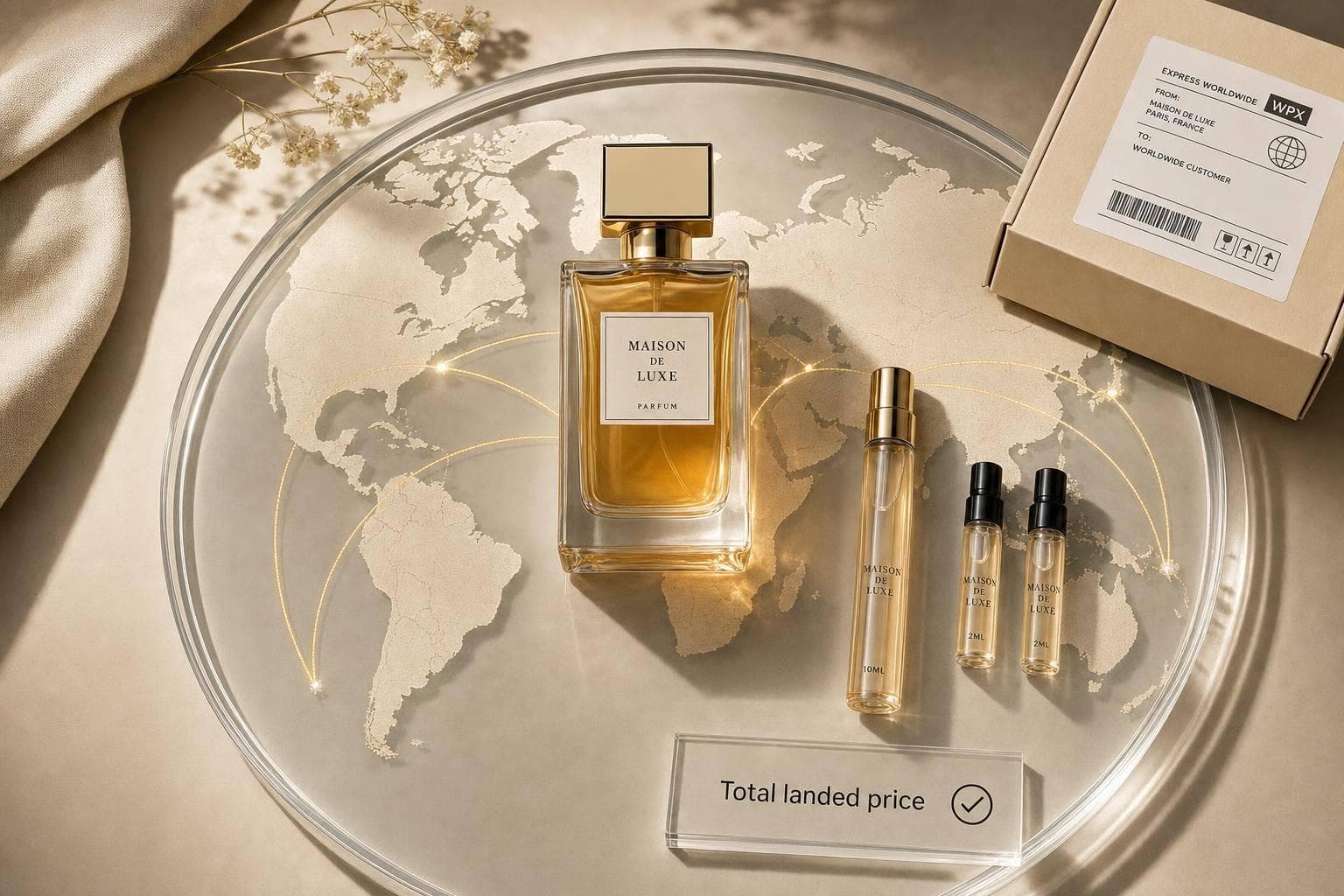
Grenzüberschreitende Verkäufe von Luxusparfum wachsen, weil Käufer mehr Auswahl, risikoärmere Möglichkeiten zum Testen von Düften und klare Lieferbedingungen wünschen, bevor sie kaufen.
Wenn ich den Artikel auf den Punkt bringe, ist die Geschichte einfach: Kleine Formate treiben die Online-Entdeckung von Düften voran, Deutschland sticht durch seinen Fokus auf Inhaltsstoffe und Hautverträglichkeit hervor, und Shops gewinnen, wenn Preise, Mehrwertsteuer, Zölle, Rückgaben und Versand von Anfang an transparent sind. In einem Markt mit einem Wert von rund €54,6 Milliarden bis €81,7 Milliarden sollen die Online-Verkäufe von Premiumparfum in Europa bis 2034 um 14,3 % pro Jahr wachsen.
Hier ist die Kurzfassung:
- Der Online-Duftmarkt wächst: Bis 2026 dürften digitale Verkäufe 35 % des globalen Marktes ausmachen.
- Blindkäufe sind ein Problem: Unbenutzte Flakons in Europa werden mit etwa 780 € Millionen an Verschwendung in Verbindung gebracht.
- Proben helfen: Ein probeorientierter Kaufansatz kann Kaufreue um 86 % senken und Wiederholungskäufe um mehr als das 3-Fache steigern.
- Deutsche Käufer prüfen Details besonders genau: Inhaltsstoffe, Allergenhinweise, Hautverträglichkeit und zuverlässige Lieferung sind entscheidend.
- Grenzüberschreitende Shops brauchen klare Checkout-Bedingungen: Preise in €, früh ausgewiesene Mehrwertsteuer, erklärte Zölle und Lieferfenster wie 1–5 Werktage.
Am wichtigsten ist nicht nur, Parfum über Grenzen hinweg zu verkaufen. Entscheidend ist, die Entdeckung sicherer, einfacher und fundierter zu machen – für Menschen, die einen Duft vor dem Kauf nicht riechen können.
Das ist die Perspektive, aus der ich den weiteren Beitrag betrachten würde: Zugang, Vertrauen und ein Trial-first-Einkaufserlebnis prägen am 31. August 2026 den grenzüberschreitenden Luxusduftmarkt in Europa.
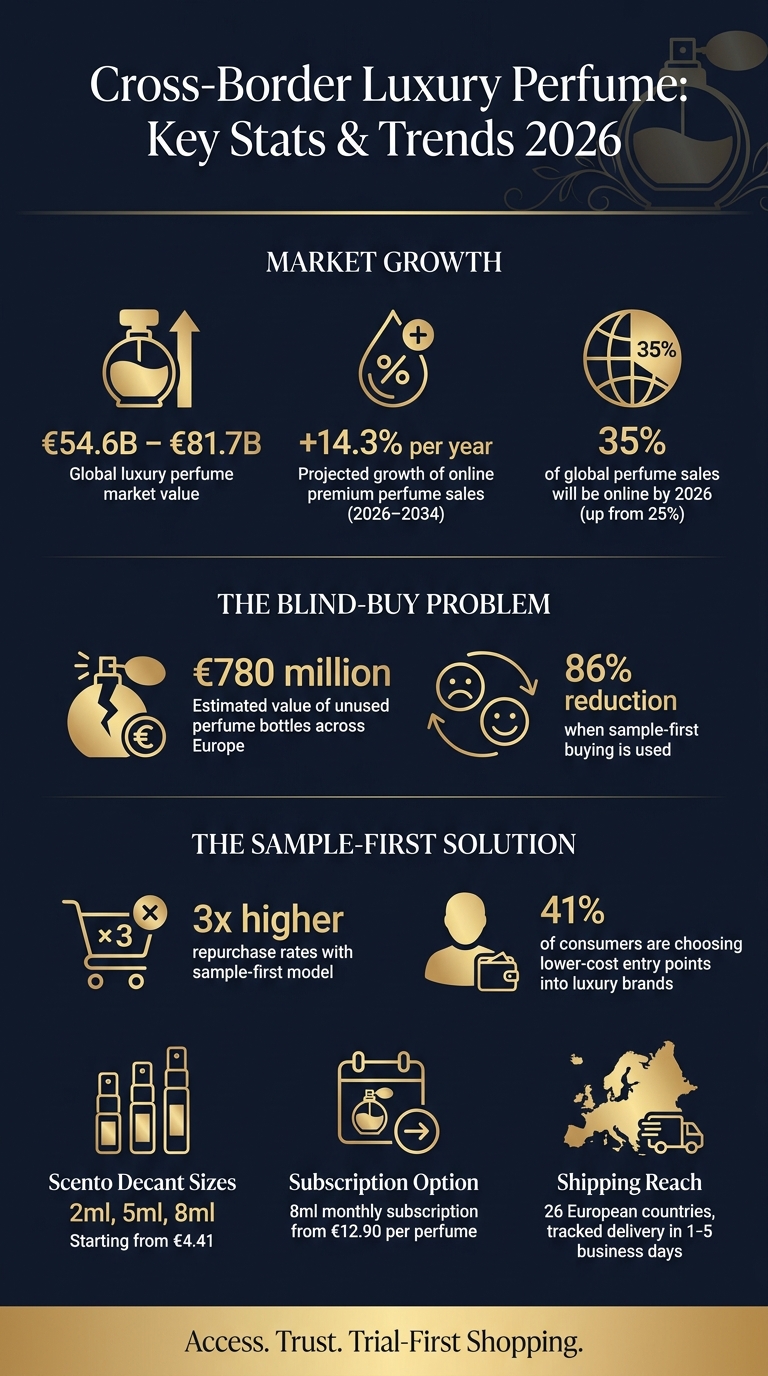
Grenzüberschreitendes Luxusparfum: Zentrale Statistiken & Trends 2026
Markttrends im grenzüberschreitenden Verkauf von Luxusduft
Grenzüberschreitendes Wachstum in Beauty und Duft
Duft eignet sich aus einem einfachen Grund gut für den grenzüberschreitenden E-Commerce: Er bündelt viel Wert in einem kleinen Format. Selbst mit Vorschriften für den Versand alkoholhaltiger Produkte bleiben Luxusflakons finanziell sinnvoll für den Versand über Grenzen hinweg. Das ist heute noch wichtiger, da die Online-Nachfrage weiter wächst.
Bis 2026 dürften digitale Parfümverkäufe 35 % des globalen Marktes ausmachen, gegenüber 25 % nur wenige Jahre zuvor. Darüber hinaus dürften die Online-Verkäufe von Premiumparfüm zwischen 2026 und 2034 jährlich um 14,3 % wachsen. Doch bei diesem Wandel geht es nicht nur darum, dass Menschen online ganze Flakons kaufen. Immer häufiger zeigt er sich darin, wie Kundinnen und Kunden Düfte testen, vergleichen und anschließend entscheiden, was sie kaufen.
Luxuspreispunkte und der Wandel hin zu kleineren, risikoärmeren Formaten
Mit steigenden Flakonpreisen verändern sich die Kaufgewohnheiten. Immer mehr Käufer wenden sich kleineren, risikoärmeren Formaten wie 2-ml- bis 8-ml-Abfüllungen und Discovery Sets zu. Es ist eine bewusstere Art einzukaufen – besonders im Luxussegment, wo ein falscher Flakon sich schnell wie ungenutztes Kapital im Regal anfühlt.
Diese Vorsicht ist leicht nachvollziehbar. Blindkäufe haben in Europa schätzungsweise unbenutzte Flakons im Wert von 780 € Millionen hinterlassen. Das Sample-first-Modell spricht genau dieses Problem an: Studien zeigen, dass es Kaufreue um 86 % senkt und Wiederkaufsraten mehr als verdreifacht.
Deutschland, die EU und externe Nachfragezentren im Vergleich
Diese Bewegung hin zu kleineren Einstiegspunkten passt zu einem größeren Ausgabenmuster. 41 % der Verbraucher achten stärker auf den Preis und wählen günstigere Wege in aspirative Markenwelten. In der Praxis bedeutet das oft Proben, Reisegrößen und kuratierte Discovery-Formate, statt direkt zu einem ganzen Flakon zu greifen.
In Deutschland fällt ein weiterer Faktor besonders auf. Hautgesundheitsorientierte Formeln – Düfte, die Hautpflegeinhaltsstoffe einbeziehen und Hautgesundheit in den Mittelpunkt stellen – haben zusätzliches Gewicht.
Diese Signale erklären, warum die grenzüberschreitende Nachfrage nach Duft weiter zunimmt und warum Käufer beim Kauf über ihren Heimatmarkt hinausblicken.
Warum Verbraucher Luxusparfum grenzüberschreitend kaufen
Die grenzüberschreitende Nachfrage nach Luxusparfum ist nicht nur eine Frage des Marktwachstums. In der Praxis kaufen Menschen aus drei einfachen Gründen über Grenzen hinweg: besserer Zugang, mehr Vertrauen und eine sicherere Art, neue Düfte zu entdecken.
Auswahl, Exklusivität und Wert
Viele Käufer gehen online ins Ausland, weil lokale Regale begrenzt wirken. Sie suchen Nischenhäuser, limitierte Drops und Düfte, die zu Hause schwer zu finden sind. Und wenn sie von Wert sprechen, meinen sie nicht nur den Preis. Sie meinen auch das Gefühl, etwas Besonderes zu finden – etwas, das ein wenig weniger offensichtlich ist.
Vertrauen, Authentizität und Liefersicherheit
Vertrauen bleibt eine der größten Hürden beim grenzüberschreitenden Duftkauf. Menschen wollen den Nachweis, dass ein Parfum echt ist. Sie wünschen außerdem Endpreise in €, klare Angaben zu Zöllen und Mehrwertsteuer, einfache Rückgaben und eine Lieferung, auf die sie sich verlassen können.
Rückgaben bei Duft werden häufig durch eine Diskrepanz im Dufterlebnis ausgelöst; deshalb sind transparente Endkosten und eine klare Rückgaberichtlinie besonders wichtig.
Diese Vertrauensprüfungen beeinflussen, wie grenzüberschreitende Duftseiten Preise, Versand und Rückgaben darstellen müssen.
Discovery-orientiertes Kaufen und kleinere Formate
Eine klare Antwort auf das Risiko von Blindkäufen ist, klein anzufangen und mit der Zeit eine Kollektion aufzubauen. Statt den vollen Preis im Voraus zu zahlen, können Käufer Luxusmarken in kleineren Formaten ausprobieren und das Risiko mit jedem Kauf senken.
Scento ist ein Händler für Parfümabfüllungen und -proben, und jedes Produkt ist als einmaliger Kauf ganz ohne Abonnement erhältlich. Scento+ ist die optionale Mitgliedschaft von Scento: Der Monatsbeitrag kommt vollständig als Guthaben zurück, einlösbar auf jedes Parfum, Mitglieder erhalten 10 % Rabatt, eine Gratisprobe zu jeder Bestellung, alle sechs Monate ein kostenloses Parfum und ein Geburtstagsgeschenk, und pausieren können Sie jederzeit; zum Kündigen kontaktieren Sie unser Team. Die Idee ist nicht nur intuitiv. Sie wird durch Evidenz gestützt: Das Angebot von Proben reduziert Kaufreue um bis zu 86 % und kann Wiederkaufsraten mehr als verdreifachen.
Diese Erwartungen prägen die Storefront-, Preis- und Fulfilment-Entscheidungen, die als Nächstes behandelt werden.
Ihr persönlicher Duftexperte erwartet Sie
Machen Sie unser kurzes Duftquiz und entdecken Sie authentische Designer- und Nischenparfums, die zu Ihrem Geschmack passen – als 2, 5, 8 & 30 ml Dekants und Proben, damit Sie jeden Duft testen können, bevor Sie sich für einen ganzen Flakon entscheiden.
Finden Sie Ihren DuftDigitale und logistische Ansätze, die grenzüberschreitende Verkäufe unterstützen
Diese Käufererwartungen formen drei klare Prioritäten: Lokalisierung, Discovery-Inhalte und Fulfilment.
Lokalisierte Storefronts, Preise und klare Checkout-Prozesse
Für deutsche Käufer muss Lokalisierung praktisch sein, nicht dekorativ. Das bedeutet Preise in €, deutsche Zahlenformatierung, vor der Zahlung ausgewiesene Mehrwertsteuer sowie alle Zölle und Versandkosten klar im Voraus. Ein Lieferfenster wie 1–5 Werktage wirkt deutlich konkreter als ein vages internationales Versandversprechen. Eine klare 30-tägige Zufriedenheitsgarantie hilft, Zögern zu reduzieren. INCI-Listen, Allergenhinweise und Sicherheitsdetails sollten neben dem Produktpreis stehen und sich nicht hinter zusätzlichen Klicks verbergen.
Sobald Preise und Lieferung klar sind, ist die nächste Aufgabe einfach: den letzten Rest Zweifel beseitigen.
Inhalte, die den Duftcounter im Geschäft ersetzen
Online-Duftinhalte müssen die Arbeit übernehmen, die normalerweise am Counter stattfindet. Käufer benötigen klare Aufschlüsselungen der Duftnoten, Angaben zur Konzentration, Kontext zum Parfümeur und Orientierung dazu, wann ein Duft sinnvoll getragen werden kann. KI-Empfehlungen können helfen, indem sie Düfte nach Stimmung, Saison oder Anlass sortieren – nicht nur nach Duftnotenpyramide. In Verbindung mit redaktionellen Inhalten und Creator-Content wird die Online-Entdeckung spezifischer und konversionsbereiter.
Das ist dieselbe operative Logik hinter dem Modell von Scento.
Wie Scento zum aktuellen grenzüberschreitenden Kaufverhalten passt
Das Unternehmen liefert in 26 europäische Länder mit Sendungsverfolgung in 1–5 Werktagen. Außerdem gibt es kostenlosen Versand für Bestellungen über 75 €. Darüber hinaus umfasst die Roadmap 30-ml+-Flakons, wodurch Kunden einen klaren Weg vom ersten Test zu einer umfassenderen Duftgarderobe erhalten.
Grenzen, Chancen und zentrale Erkenntnisse
Regulatorische und logistische Grenzen, die die Kategorie prägen
Sobald Preise und Checkout leicht verständlich sind, liegen die nächsten Druckpunkte bei Compliance und Fulfilment. Grenzüberschreitende Duftverkäufe unterliegen strengen Regeln, und Abfüllungen sind ein gutes Beispiel. Markenbezogene Kennzeichnungsvorgaben sind wichtig, und in der EU müssen Abfüllungen aus authentischen Originalflakons stammen.
Damit rückt die Kontrolle der Lieferkette in den Mittelpunkt. Wenn die Beschaffung unsicher ist, bricht Vertrauen schnell weg. Verifizierte Lieferketten helfen, die Authentizität während des Abfüllprozesses zu schützen.
Duft ist aus einem einfachen Grund auch ein anspruchsvolles Produkt für den Online-Verkauf: Menschen können ihn vor dem Kauf nicht riechen. Das macht sorgfältige Beschaffung und kleinere Discovery-Formate noch wichtiger. In der Praxis helfen Proben und Abfüllungen nicht nur dabei, im Voraus weniger auszugeben. Sie reduzieren auch das Zögern.
Woher das Wachstum kommen wird
Trotz dieser Grenzen wirken discovery-orientierte Formate weiterhin wie der stärkste Wachstumspfad. Die klarste Chance liegt bei Proben und Abfüllungen, bei denen Käufer einen Duft testen können, bevor sie sich für einen ganzen Flakon entscheiden.
Gleichzeitig verändert KI-gestützte Discovery die Art, wie Menschen suchen. Statt nur nach Duftnotenpyramiden zu suchen, bewegen sich Käufer hin zu Prompts auf Basis von Stimmung, Saison und Anlass. Das ist ein großer Wandel. Er macht die Duftsuche zu etwas, das sich näher an persönlichem Geschmack anfühlt als an Produktfilterung.
Fazit: Zentrale Erkenntnisse für Marken und Käufer
Im grenzüberschreitenden Duftgeschäft schützt Compliance das Produkt, Fulfilment schützt Vertrauen, und Abfüllungen senken die Kaufbarriere.
FAQs
Warum wachsen Parfumproben im grenzüberschreitenden Verkauf?
Parfumproben verzeichnen aus einem einfachen Grund mehr grenzüberschreitende Verkäufe: Sie machen es einfacher, Luxus- und Nischendüfte auszuprobieren, ohne einen großen finanziellen Sprung zu wagen. Wenn ein Flakon in Originalgröße zwischen €150,00 und €400,00 kosten kann, möchten viele Käufer lieber zuerst testen, statt blind zu kaufen.
Genau hier ergeben Proben viel Sinn. Sie geben Menschen Zeit, einen Duft auf der eigenen Haut zu tragen und zu sehen, wie er sich im Laufe des Tages verändert. Das ist wichtig, denn die Hautchemie kann verändern, wie ein Duft wirkt – ebenso wie Wetter, Stimmung und Umgebung.
Sie helfen auch, Verschwendung zu reduzieren. Statt am Ende einen ganzen Flakon zu besitzen, der kaum genutzt wird, können Käufer einen Duft zunächst in einem kleineren Format testen, bevor sie entscheiden, ob er einen Platz in ihrer Auswahl verdient. Für Menschen, die Vielfalt schätzen, passen Proben außerdem elegant zur Idee einer flexibleren Duftgarderobe.
Was prüfen deutsche Käufer, bevor sie Parfum online bestellen?
Deutsche Käufer neigen dazu, zuerst mit dem Kopf zu kaufen. Wenn ein Premiumflakon 300 € oder mehr kosten kann, wollen sie Leistung und Nachweise, bevor sie sich festlegen.
Das bedeutet in der Regel, Tragetests zu prüfen, zu sehen, wie lange ein Duft hält, und zu beurteilen, wie er sich im Alltag entfaltet. Es geht nicht nur um die Noten auf dem Papier. Es geht darum, wie der Duft im echten Leben wirkt und wie er sich über die Zeit verhält.
Auch ein risikoarmer Test ist wichtig. Viele Käufer beginnen lieber mit kleinen Abfüllungen, häufig 2 ml, bevor sie sich für einen ganzen Flakon entscheiden. So haben sie Zeit zu sehen, wie der Duft auf ihrer Haut sitzt, wie er sich im Laufe des Tages verändert und ob er sich auch nach einigen Anwendungen noch richtig anfühlt.
Wie können Shops das Risiko von Blindkäufen in Europa reduzieren?
Käufer können sowohl das finanzielle als auch das persönliche Risiko beim Blindkauf von Luxusdüften senken, indem sie ausprobieren, bevor sie sich festlegen. Das ist wichtig, wenn ein Flakon in Originalgröße €300,00 oder mehr kosten kann.
Kleinere, authentifizierte Abfüllungen wie 2 ml, 5 ml oder 8 ml geben Menschen Raum, einen Duft über 60 Tage hinweg richtig zu testen. Und genau das ist der Schlüssel. Ein Duft kann auf einem Teststreifen anders riechen als auf der Haut. Er kann sich mit der eigenen Körperchemie, dem Wetter und sogar dem Tempo des Tages verändern.
Statt einen großen Sprung zu wagen, bekommen Käufer Zeit, mit dem Duft zu leben und zu entscheiden, ob er zu ihrer Routine passt, bevor sie einen ganzen Flakon kaufen.

