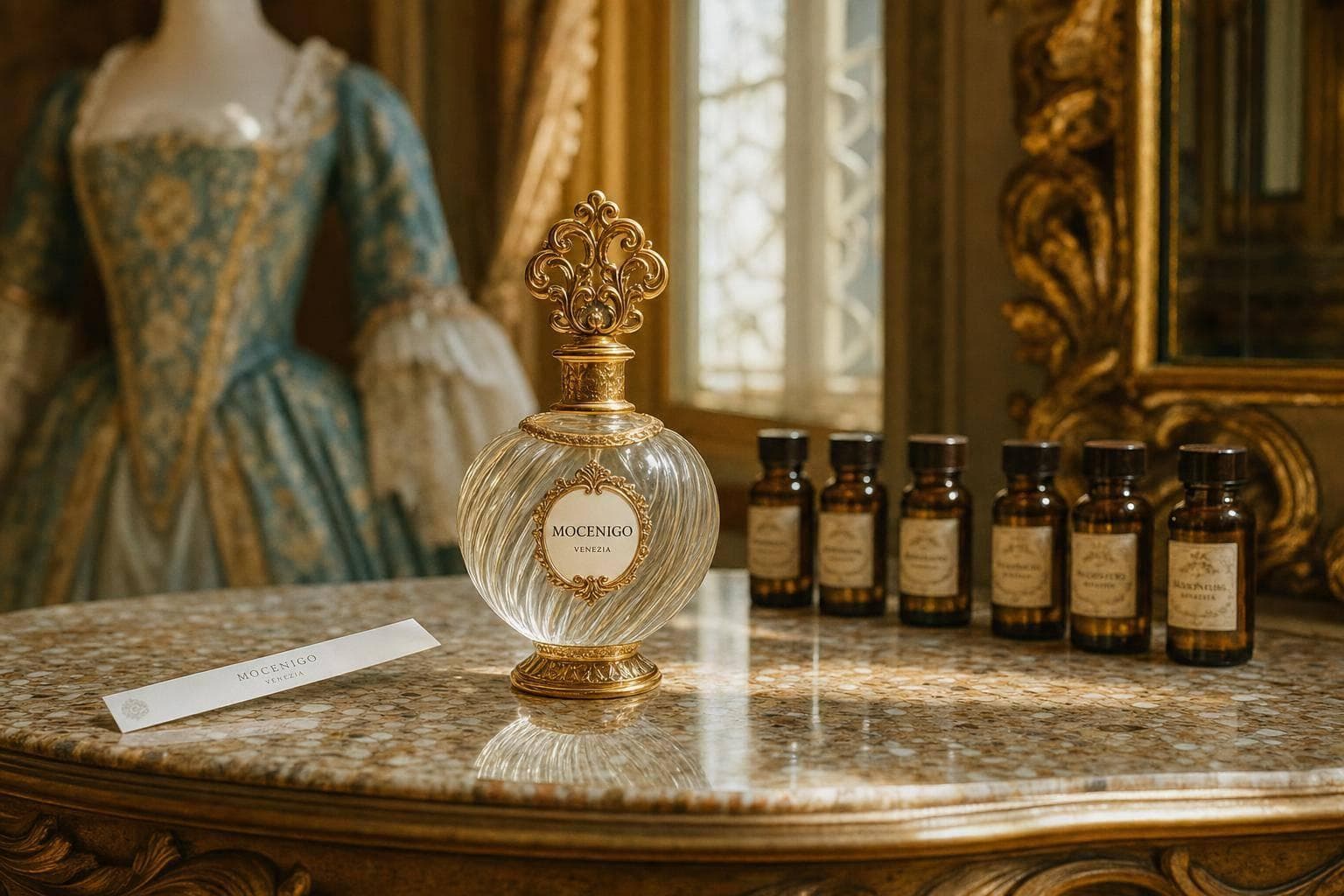
Wenn ich in Venedig ein einziges Museum zur Geschichte des Parfums auswählen wollte, wäre dies meine erste Wahl. Palazzo Mocenigo vereint 6 Parfumräume, ein Labor mit über 200 Essenzen und rund 20 Palasträume mit Kostüm- und Textilausstellungen.
Vor meinem Besuch würde ich vier Dinge im Blick behalten:
- Wo: Santa Croce 1992, nahe der Vaporetto-Haltestelle San Stae
- Benötigte Zeit: meist 60–90 Minuten
- Tickets: €15,00 regulär, €7,50 ermäßigt
- Zugang: die Hauptebene ist nur über Treppen erreichbar, es gibt keinen Aufzug
Ich würde zunächst wegen der Parfumroute kommen, doch auch die Palasträume sind wesentlich. Das Museum erläutert, wie Venedig durch den Handel mit Gewürzen, Harzen, Ölen und Weihrauch zu einer bedeutenden Stadt der Duftkunst wurde. Im Inneren würde ich historische Flakons, Destillationsgeräte, Duftstationen und Workshops erwarten, die Kopf-, Herz- und Basisnoten vermitteln.
Einige praktische Punkte können den Besuch prägen. Das Museum ist montags geschlossen. Im Sommer sind die Öffnungszeiten in der Regel 10:00–18:00, mit Abendöffnungszeiten freitags und samstags bis 20:00 bis zum 26.09.2026. Große Taschen und Koffer sind nicht erlaubt; ich würde also vermeiden, direkt vom Bahnhof mit Gepäck zu kommen.
Was mir am meisten gefällt, ist die Mischung: Parfumgeschichte, Kleidung und Palastinterieurs an einem Ort. Wenn ich ein Museum suche, das sich eng mit Venedigs altem Dufthandel verbunden anfühlt, behandelt dieser Leitfaden die wichtigsten Aspekte.
Palazzo Mocenigo und sein Parfummuseum
Der Palazzo Mocenigo ist eine ehemalige Adelsresidenz im venezianischen Stadtteil Santa Croce, nahe der Vaporetto-Haltestelle San Stae. 1945 der Stadt geschenkt, wurde er 1985 als Studienzentrum für die Geschichte von Textilien, Kostüm und Parfum eröffnet, eine Abteilung der Fondazione Musei Civici di Venezia.
Im Palazzo Mocenigo steht Parfum aus gutem Grund neben Textilien. Im venezianischen Leben waren Duft, Kleidung und gesellschaftlicher Rang eng miteinander verwoben. Diese Verbindung spürt man am deutlichsten in den Parfumräumen, wo Duft nicht als Randnotiz behandelt wird, sondern als Teil der Art, wie Menschen sich präsentierten.
Was die Parfumabteilung so besonders macht
Nach einer Neugestaltung im Jahr 2013 eröffnete der Palazzo Mocenigo Italiens erste Museumsroute, die der Geschichte des Duftes gewidmet ist. Das piano nobile umfasst rund zwanzig Räume, von denen sechs dem Parfum gewidmet sind, mit historischen Flakons, Rohstoffen, multimedialen Präsentationen und Duftstationen.
Auch im Erdgeschoss gibt es mehr zu entdecken. Dort beherbergt das Parfumlabor mehr als 200 Essenzen und bietet Parfümeriekurse an. Diese Verbindung aus Objekten, Duftpunkten und praktischem Lernen verleiht dem Ort ein lebendigeres Gefühl als einer klassischen Ausstellung hinter Glas.
Wie Venedig zu einem Zentrum der Parfumgeschichte wurde
Venedigs Parfumgeschichte erwuchs aus dem Seehandel. Kaufleute brachten Gewürze, Harze, aromatische Öle und Weihrauch aus dem Nahen Osten, Nordafrika und Asien zurück. Apotheker und Kunsthandwerker verwandelten diese Materialien anschließend in Parfums, Kosmetika, Seifen und Arzneien für eine erlesene Kundschaft.
Dieser Warenstrom füllte nicht nur Regale. Er förderte die über lange Zeit gewachsene Fertigkeit der Stadt in der Duftkomposition und machte Venedig zu einem Schlüsselzentrum der europäischen Parfumgeschichte.
Diese Geschichte lässt sich leichter nachvollziehen, sobald man Lage, Öffnungszeiten und Ticketregeln des Museums kennt.
Lage, Öffnungszeiten und Tickets
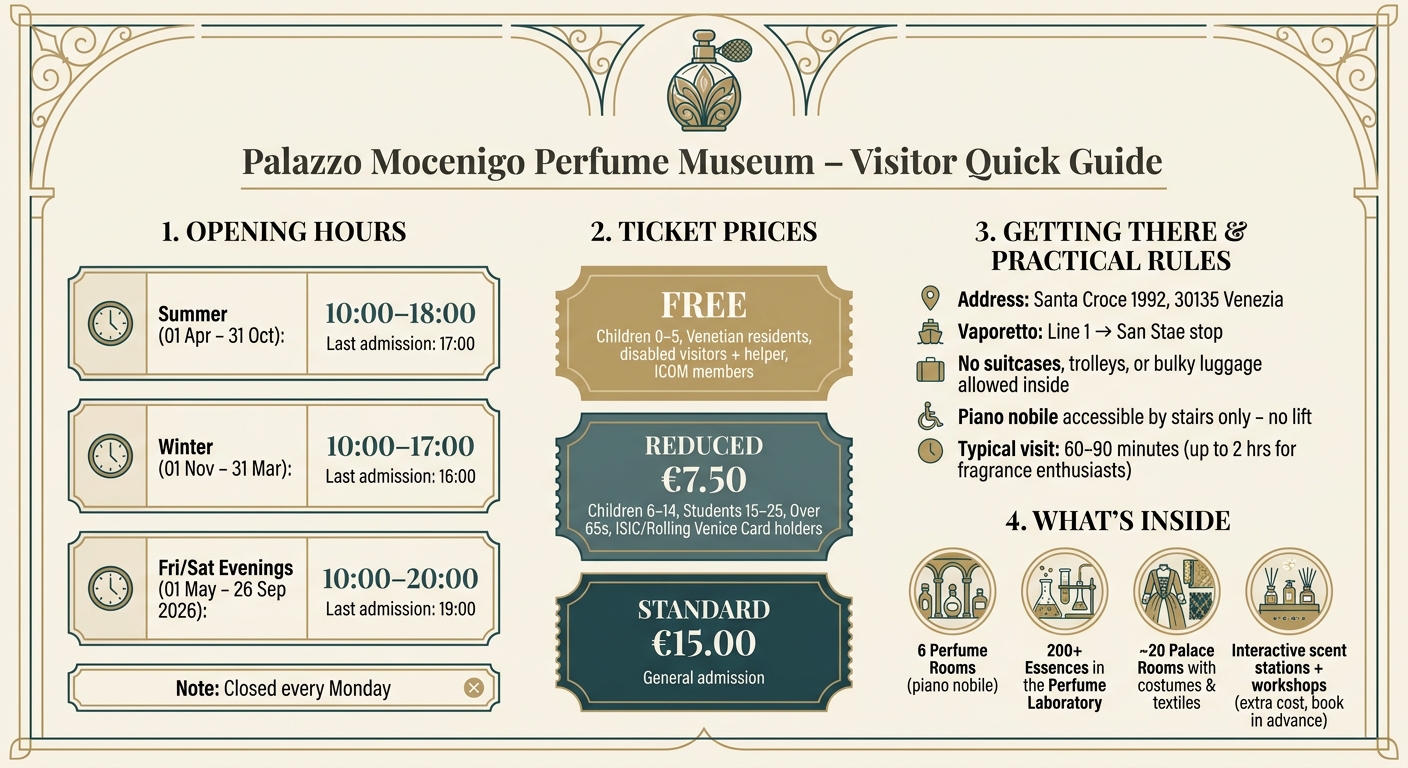
Palazzo Mocenigo Museum: Tickets, Öffnungszeiten & Besucherinformationen auf einen Blick
Der Palazzo Mocenigo befindet sich in Santa Croce 1992, 30135 Venezia, nahe dem Canal Grande.
So gelangen Sie zum Palazzo Mocenigo
Am einfachsten erreichen Sie ihn mit der Vaporetto-Linie 1 bis San Stae. Von dort folgen Sie den Schildern durch die nahegelegenen Gassen zum Palazzo Mocenigo.
Öffnungszeiten und Eintrittspreise
Der Palazzo Mocenigo arbeitet mit zwei saisonalen Zeitplänen. Vom 01.04. bis 31.10. ist das Museum 10:00–18:00 geöffnet. Vom 01.11. bis 31.03. öffnet es 10:00–17:00. Es ist das ganze Jahr über montags geschlossen.
Im Sommer 2026 bietet das Museum außerdem verlängerte Abendöffnungszeiten jeden Freitag und Samstag vom 01.05. bis 26.09.2026, mit Schließung um 20:00.
| Zeitplan | Öffnungszeiten | Letzter Einlass |
|---|---|---|
| Sommer (01.04.–31.10.) | 10:00–18:00 | 17:00 |
| Winter (01.11.–31.03.) | 10:00–17:00 | 16:00 |
| Fr/Sa-Abende (01.05.–26.09.2026) | 10:00–20:00 | 19:00 |
Der reguläre Eintritt beträgt €15,00, der ermäßigte Eintritt €7,50. Ermäßigte Tickets gelten für:
- Kinder im Alter von 6–14
- Studierende im Alter von 15–25
- Besucher über 65
- Inhaber einer ISIC oder Rolling Venice Card
Freier Eintritt wird Kindern im Alter von 0–5, Einwohnern Venedigs, Besuchern mit Behinderung samt Begleitperson sowie ICOM-Mitgliedern gewährt. Viele ermäßigte und freie Eintrittskategorien werden an der Kasse geprüft; daher ist es ratsam, einen gültigen Ausweis oder einen anderen Nachweis der Berechtigung mitzubringen.
Buchung, Zugang und Besucherregeln
Sie können im Voraus über die offiziellen Plattformen VisitMUVE und Venezia Unica buchen. Wenn Sie einen Besuch außerhalb der regulären Öffnungszeiten wünschen, nimmt das Museum Anfragen für Sonderöffnungen entgegen, die mindestens fünf Werktage im Voraus eingereicht werden.
Einige Besucherregeln sind wichtiger, als sie auf den ersten Blick erscheinen. Koffer, Trolleys und sperriges Gepäck sind im Inneren nicht erlaubt. Wenn Sie also direkt vom Bahnhof oder Flughafen anreisen, nutzen Sie die Gepäckaufbewahrung bei Venezia Santa Lucia oder Piazzale Roma, bevor Sie sich auf den Weg nach Santa Croce machen.
Der Zugang zur Hauptexhibitionsebene, dem piano nobile, erfolgt ausschließlich über eine Treppe, ohne Aufzug. Das kann für Rollstuhlnutzer und Besucher mit eingeschränkter Mobilität ein echtes Hindernis sein. Wenn Barrierefreiheit ein Anliegen ist, kontaktieren Sie das Museum am besten vor Ihrer Reise und fragen Sie, welche Unterstützung verfügbar sein könnte.
Sobald diese praktischen Punkte geklärt sind, sind die Parfumräume und das Labor das, weswegen die meisten Besucher kommen.
Ihr persönlicher Duftexperte erwartet Sie
Machen Sie unser kurzes Duftquiz und entdecken Sie authentische Designer- und Nischenparfums, die zu Ihrem Geschmack passen – als 2, 5, 8 & 30 ml Dekants und Proben, damit Sie jeden Duft testen können, bevor Sie sich für einen ganzen Flakon entscheiden.
Finden Sie Ihren DuftWas es im Inneren zu sehen gibt
Parfumräume, Duftstationen und das Labor
Die Parfumroute erstreckt sich über zwei Etagen des Palastes und bleibt eng in die historischen Interieurs eingebettet. Auf dem piano nobile konzentrieren sich sechs Räume auf Parfum als Teil der Textil- und Kostümgalerien des Palastes.
Hier steht Venedigs Rolle in den Handelsrouten im Mittelpunkt, ebenso die Rohstoffe alter Parfumrezepturen und die Bedeutung des Duftes im patrizischen Leben. Sie begegnen multimedialen Tafeln, historischen Flakons, Destillationsgeräten und interaktiven Duftstationen. Ein Raum stellt das Labor eines Parfümeurs nach, vollständig mit Alembiken, Glaswaren und Destillationsausrüstung, und vermittelt so eindrucksvoll das Gefühl einer Werkstatt des 18. Jahrhunderts. An den Duftstationen können Besucher Essenzen wie Bergamotte, Rose, Amber und Moschus riechen.
Im Erdgeschoss veranstaltet das Parfumlabor Workshops, in denen die Teilnehmer die Struktur eines Duftes kennenlernen - Kopf-, Herz- und Basisnoten - und unter fachkundiger Anleitung einen eigenen Duft komponieren. Das Labor arbeitet mit mehr als 200 Essenzen. Workshops müssen im Voraus gebucht werden und sind mit zusätzlichen Kosten verbunden.
Von diesen Dufträumen führt der Rundgang direkt weiter in die Kostümgalerien des Palastes.
Textilien, Kostüme und Palastinterieurs
Parfum ist hier nicht die ganze Geschichte. Das Museum zeigt auch, wie Duft im venezianischen Leben neben Kleidung und sozialem Rang stand. Textilien und Kostüme bleiben weiterhin im Zentrum: In rund 20 Räumen finden Sie antike Seidenstoffe, Brokate, venezianische Spitze, bestickte Roben und zeremonielle Herrenmäntel, alle präsentiert in den original dekorierten Salons.
Diese Kulisse verändert das Gefühl des Besuchs. Mit freskengeschmückten Decken, Kronleuchtern, geschnitzten Möbeln und Spiegeln wirkt der Palast weniger wie ein klassisches Museum und mehr wie ein bewahrtes aristokratisches Zuhause.
Auch durch diese Räume zieht sich die Verbindung zum Duft. Duftende Handschuhe, parfümierte Puder und die Rituale des Ankleidens für das öffentliche Leben gehören alle zu derselben gesellschaftlichen Welt, die das Museum wieder lebendig werden lässt.
Wie viel Zeit Sie einplanen sollten und wem es am meisten gefallen wird
Da der Rundgang Palasträume, Kostümausstellungen und das Parfumlabor verbindet, kann die Besuchsdauer variieren. Die meisten Menschen verbringen 60–90 Minuten im Inneren, genug für einen entspannten Besuch der Parfumabteilung, Kostümgalerien und Prunkräume.
Besucher mit besonderem Interesse an Duft oder Mode bleiben oft eher 1,5–2 Stunden, besonders wenn sie an den Duftstationen verweilen und sich Zeit für die multimedialen Tafeln nehmen. Wenn Sie an einem Labor-Workshop teilnehmen, ist es sinnvoll, mindestens einen halben Tag einzuplanen.
Dieses Museum spricht vor allem Duftliebhaber, Modebegeisterte und Reisende an, die Stimmung und Charakter mehr schätzen als große Blockbuster-Kunst.
Venezianisches Dufterbe und was Sie nach Ihrem Besuch kaufen können
The Merchant of Venice und die Verbindung zum Museum
Nach den Parfumräumen ist der Museumsshop die letzte Station, wenn Sie einen Duft mit nach Hause nehmen möchten. The Merchant of Venice ist die offizielle Duftmarke des Parfummuseums Palazzo Mocenigo; der Kauf eines ihrer Parfums fühlt sich daher wie eine natürliche Fortsetzung des Besuchs an.
Es ist nicht einfach irgendeine Auswahl aus dem Geschenkeladen. Die Verbindung zum Museum verleiht der Marke ein stärkeres Gefühl von Ort und Herkunft, was sie zu einem klugen Souvenir für alle macht, die etwas Persönlicheres als eine Postkarte suchen.
Museumsshop
Der Museumsshop verkauft Düfte von The Merchant of Venice sowie Bücher und Ausstellungskataloge mit Schwerpunkt auf venezianischem Parfum und Textilien.
Wenn Sie gern etwas mit nach Hause nehmen, das die Atmosphäre eines Ortes weiterträgt, gelingt diesem Shop genau das. Ein Duft kann, was Fotos oft nicht können: den ganzen Besuch in einem einzigen Augenblick zurückbringen.
Fazit
Der Palazzo Mocenigo vereint Parfumgeschichte, Kostüm und Palastinterieurs in einem einzigen Besuch. Diese Mischung macht ihn besonders reizvoll, wenn Sie sich für Duft, Mode oder venezianische Geschichte interessieren.
Prüfen Sie vor Ihrem Besuch die aktuellen Öffnungszeiten und Ticketpreise des Museums, da sich diese je nach Saison ändern können.
FAQs
Lohnt sich der Besuch des Palazzo Mocenigo, wenn ich mich nicht für Parfum interessiere?
Vielleicht nicht. Palazzo Mocenigo dreht sich sehr stark um venezianische Parfumgeschichte, daher ergibt der Besuch am meisten Sinn, wenn Sie tiefer in die Welt der Düfte eintauchen möchten.
Dennoch kann er als Museumsstopp funktionieren, wenn Sie Geschichte, Design und historische Kultur schätzen. Gehen Sie nur mit dem Wissen hinein, dass Parfum im Zentrum des Besuchs steht.
Kann ich das Parfumlabor besuchen, ohne einen Workshop zu buchen?
Das erfordert in der Regel etwas Vorausplanung, da sich der Zugang zum Parfumlabor, zu Workshops und Führungen von Termin zu Termin ändern kann.
Prüfen Sie die offizielle Museumswebsite, um zu sehen, ob Ihr gewünschter Termin im Voraus gebucht werden muss oder ob spontane Besuche möglich sind.
Was sollte ich tun, wenn ich Gepäck habe oder in meiner Mobilität eingeschränkt bin?
Wenn Ihre Mobilität eingeschränkt ist, hilft es, ein wenig im Voraus zu planen. Einige Aktivitäten erfordern eine vorherige Online-Buchung. Der Zugang zum Garten ist zum Beispiel nicht ohne Voranmeldung möglich.
Allgemeine Führungen können eventuell ohne Buchung verfügbar sein, wenn Sie etwa 15 Minuten früher zum Check-in erscheinen. Workshops benötigen normalerweise eine Reservierung, und der Transport von nahegelegenen Stationen kann je nach Veranstaltungsort Shuttle-Services oder lokale Busse umfassen.

