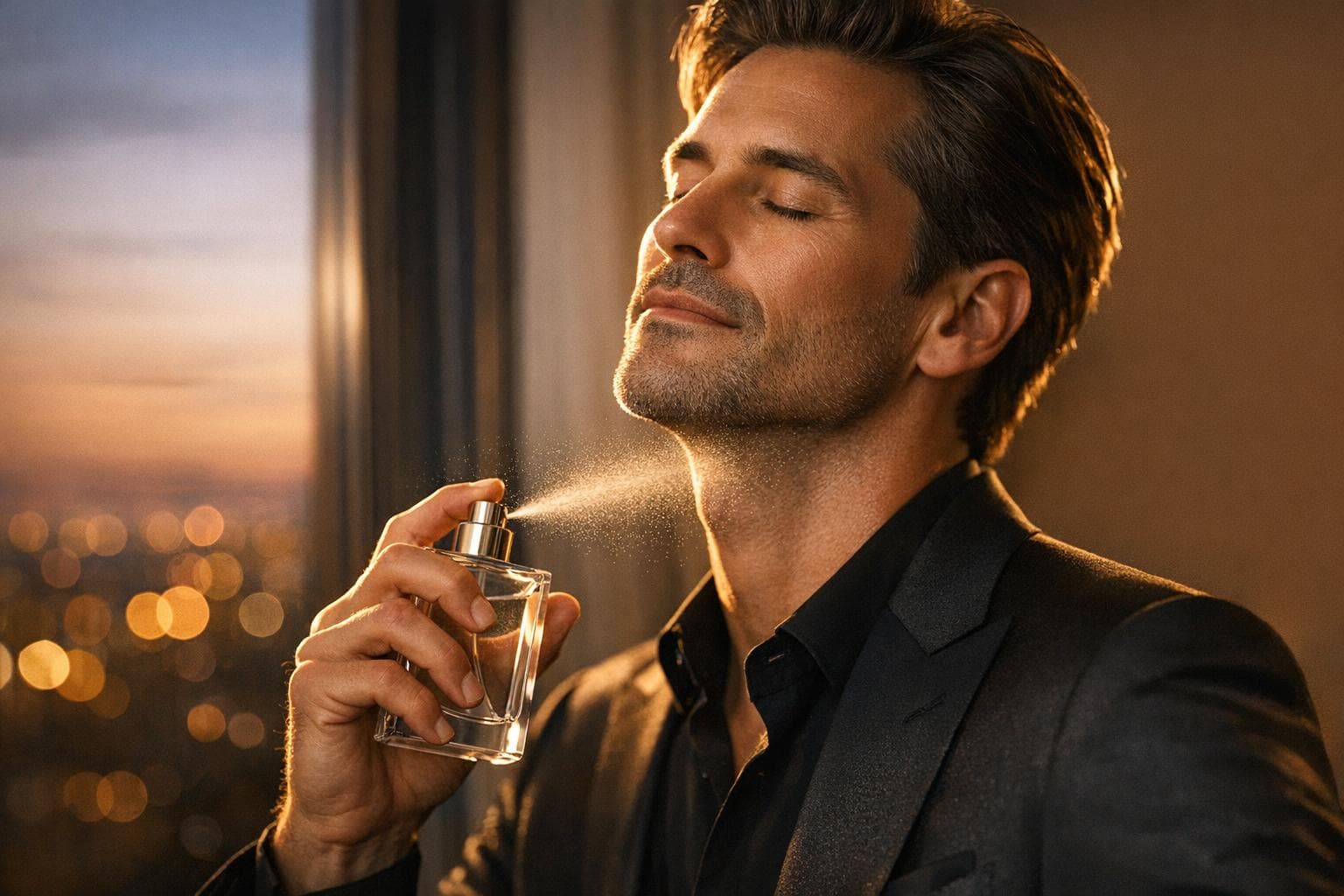
Parfumwerbung stützt sich auf Storytelling, um ein Produkt zu verkaufen, das man weder sehen noch berühren kann. Indem sie emotionale Erzählungen erschafft, lässt sie Düfte persönlich und begehrenswert wirken und hilft Konsumenten, sich vorzustellen, wie ein Duft sie fühlen lässt. Obwohl nur 6 % der Verbraucher Anzeigen als Hauptgrund für den Parfümkauf nennen, investieren Marken stark in Kampagnen, um emotionale Verbindungen und langfristige Loyalität aufzubauen.
Zu den wichtigsten Techniken gehören:
- Fantastische Kulissen wie Wüsten oder verwunschene Wälder, um ein Gefühl von Eskapismus hervorzurufen.
- Romantische Themen, die Intimität und Verlangen betonen.
- Prominente Testimonials, um einprägsame Assoziationen zu schaffen.
- Kinematografische Bilder und Klangwelten, um die Fantasie anzuregen, da Duft nicht direkt gezeigt werden kann.
Parfumwerbung konzentriert sich auf Emotionen, Identität und Lebensstil und verwandelt Düfte in Symbole persönlicher Ausdruckskraft. Sie soll Neugier wecken und Konsumenten dazu ermutigen, mehrere Düfte zu entdecken, statt sich nur auf einen einzigen festzulegen. Dieser Ansatz verschiebt die Erzählung von „gut für andere riechen“ hin zu „sich selbst gut fühlen“.
Why Emotional Stories Work for Fragrance Brands
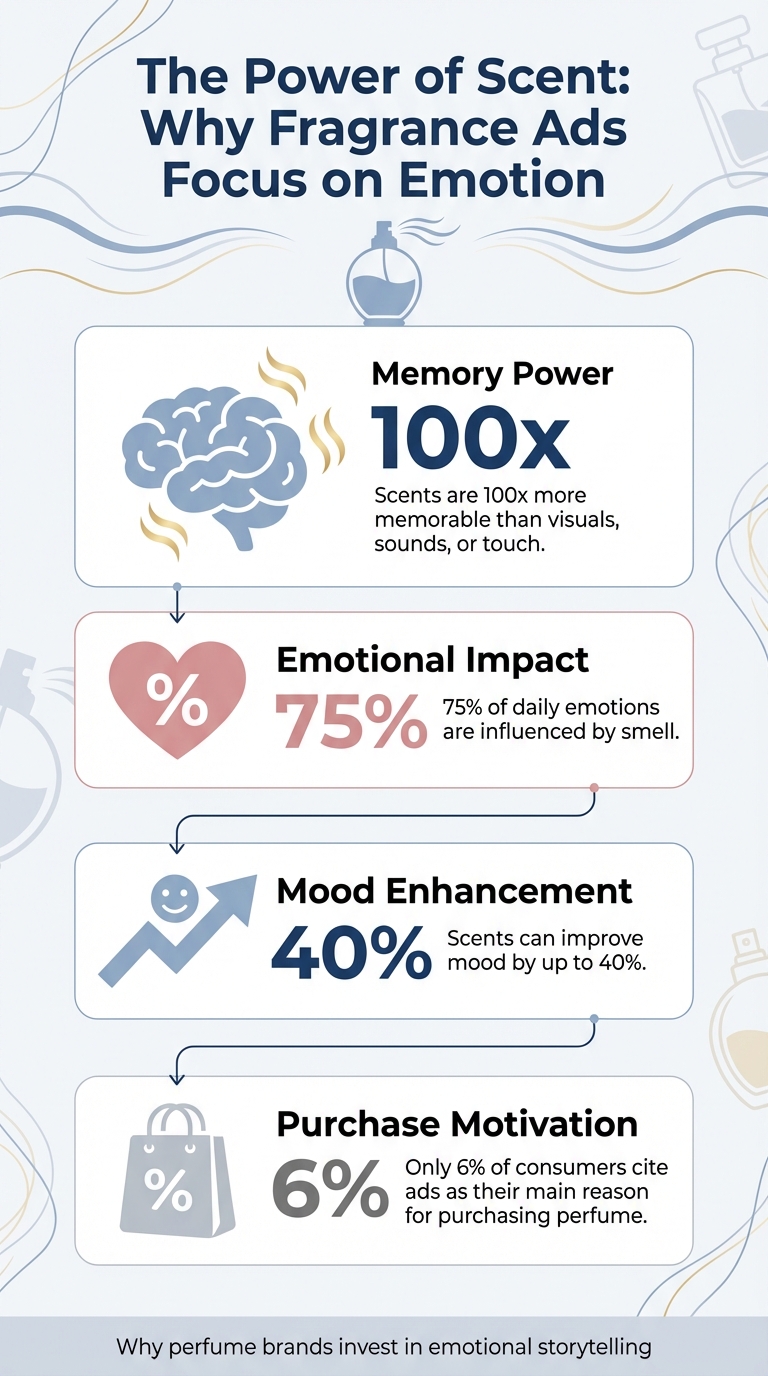
Wie Duft Emotionen und Erinnerungen beeinflusst: Zentrale Statistiken
Wie Emotionen Kaufentscheidungen steuern
Parfum ist ein Produkt, das von Emotionen lebt und nicht von Praktikabilität. Anders als bei Artikeln mit klaren, greifbaren Vorteilen liegt seine Anziehungskraft in den Gefühlen, die es hervorruft. Beschreibungen wie "Kopfnoten aus Bergamotte mit einem Herzen aus Jasmin" mögen technisch klingen, doch ohne eine Geschichte berühren sie Konsumenten kaum.
Genau hier kommt emotionales Storytelling ins Spiel. Duft ist direkt mit den Gedächtnis- und Emotionszentren des Gehirns verbunden und schafft so eine kraftvolle Verbindung, die Marken für sich nutzen können. Indem sie Erzählungen rund um ihre Düfte gestalten, verwandeln sie eine Liste von Inhaltsstoffen in etwas weitaus Eindringlicheres – eine sinnliche Reise. So wird aus "Bergamotte und Jasmin" etwa "ein sonnenbeschienener Morgen in einem italienischen Garten" oder "das stille Selbstbewusstsein beim Betreten eines Raumes".
Untersuchungen zeigen, dass Gerüche 100-mal einprägsamer sind als Bilder, Geräusche oder Berührung. Düfte können die Stimmung um bis zu 40 % verbessern, und 75 % der täglichen Emotionen werden vom Geruch beeinflusst. Duftmarken verstehen das sehr genau. Sie verkaufen nicht nur eine Flüssigkeit in einem Flakon – sie verkaufen Romantik, Nostalgie oder den Traum von Luxus. Diese emotionalen Verbindungen lassen Düfte persönlich erscheinen und machen sie zu Erweiterungen unserer Erfahrungen und Sehnsüchte.
Düfte mit persönlicher Identität und Lebensstil verbinden
Emotionales Storytelling endet nicht beim Hervorrufen von Gefühlen – es verknüpft Duft auch mit Identität. Heute positionieren Marken Düfte als Ausdruck persönlicher Werte und individueller Selbstentfaltung. Ob es darum geht, Authentizität zu leben, ethische Praktiken zu unterstützen oder mit traditionellen Geschlechternormen zu brechen – Düfte werden heute als integraler Bestandteil dessen vermarktet, wer man ist.
Luxusmarken nutzen eine Technik namens Narrative Transportation, die Menschen tief in eine erzählte Welt eintauchen lässt. Denken Sie an eine Parfumkampagne in einer weiten Wüste oder in einer stillen, leeren Stadt. Diese minimalistischen Kulissen laden dazu ein, eigene Erinnerungen und Sehnsüchte auf den Duft zu projizieren. Ein holziger Moschus kann beispielsweise für einen ruhigen, auf Wohlbefinden ausgerichteten Lebensstil stehen, während eine gourmandige Vanille Geborgenheit und Nostalgie hervorrufen kann. Durch solche Geschichten wird der Duft zu mehr als nur einem Produkt – er wird Teil Ihrer Identität oder ein Ausdruck dessen, wer Sie sein möchten.
Gängige Storytelling-Techniken in der Parfumwerbung
Fantasiewelten und imaginäre Fluchten
Parfumwerbung entführt Sie oft in "liminale Welten" – ätherische, beinahe magische Räume, die weit vom Alltag entfernt scheinen. Denken Sie an stille Strände, verwunschene Wälder oder endlose Wüsten. Diese Schauplätze handeln nicht von Geografie, sondern von Emotionen. Die Bildsprache ruft Gefühle von Freiheit, Verwandlung oder gesteigerter Anziehungskraft hervor. Wenn Sie jemanden durch ein Feld aus Wildblumen laufen oder allein in einer weiten, unberührten Landschaft stehen sehen, malt die Anzeige nicht nur ein Bild – sie verspricht eine Flucht. Der Duft wird zu Ihrem Pass in dieses traumhafte Reich und lädt Sie ein, Ihre eigenen Fantasien und Erinnerungen auf ihn zu legen.
Sinnliche und romantische Themen
Romantik und Verführung stehen im Zentrum der Parfumwerbung, weil Duft eng mit Intimität verknüpft ist. Wie Professor Leena-Maija Ross von der Swedish School of Social Science erklärt:
"Man kann ihn nur wahrnehmen/riechen, wenn man der Person, die ihn trägt, nahe genug ist, daher ist er mit Intimität verbunden".
Diese physische Nähe macht Duft von Natur aus persönlich, und Anzeigen greifen das oft auf, indem sie romantische Momente oder sinnliche Bildwelten zeigen. Sie suggerieren, dass das Tragen dieses Parfums Sie unvergesslich macht und Verlangen sowie Verbundenheit hervorruft. Diese Themen schaffen eine vielschichtige, multisensorische Erzählung, in der Emotion und visuelles Storytelling nahtlos verschmelzen.
Prominente Testimonials und persönliche Erzählungen
Prominente fügen diesen emotionalen und sinnlichen Themen eine weitere Dimension hinzu und verstärken die Ausstrahlung eines Duftes. Helena Fitzgerald, Mitgründerin von The Dry Down, erklärt:
"Das Promi-Element ist entscheidend, weil Menschen etwas allein deshalb kaufen, weil sie sich daran erinnern, und Prominente machen Dinge einprägsamer".
Ihr persönlicher Duftexperte erwartet Sie
Machen Sie unser kurzes Duftquiz und entdecken Sie authentische Designer- und Nischenparfums, die zu Ihrem Geschmack passen – als 2, 5, 8 & 30 ml Dekants und Proben, damit Sie jeden Duft testen können, bevor Sie sich für einen ganzen Flakon entscheiden.
Finden Sie Ihren DuftVisuelle und sinnliche Elemente im Storytelling
Filmische Kampagnen und hochwertige Bildwelten
Parfummarken betrachten ihre Werbung als Miniaturfilme und verpflichten oft renommierte Regisseure, um ihre Vision zum Leben zu erwecken. Diese Spots, die bis zu drei Minuten dauern können, nutzen Techniken wie dramatische Lichtführung, Zeitlupeneffekte und eine sorgfältige künstlerische Inszenierung, um rund um das Produkt regelrechte "Mythen" zu weben.
Um Stärke und Haltbarkeit eines Duftes zu vermitteln, arbeiten Marken mit angedeuteter Bewegung – man denke an spritzende Flüssigkeiten oder dynamische, fließende Bilder. Die Kulissen zeigen häufig weite, ehrfurchtgebietende Landschaften wie Wüsten oder Wildblumenwiesen, die als "liminale Welten" fungieren. Diese Räume dienen als leere Leinwand und laden Konsumenten ein, ihre persönlichen Wünsche und Träume auf die Bildsprache zu projizieren. Wie Autorin Lauren O’Neill erklärt:
"Parfumwerbung hat ausschließlich die Aufgabe, Gefühle hervorzurufen; sie kann Ihnen die Mechanik nicht zeigen, sie kann den Duft (noch) nicht durch den Bildschirm leiten. Sie muss Empfindung auslösen".
Durch die Verbindung dieser eindrucksvollen Bildwelten mit Klang und anderen sensorischen Elementen schaffen Marken ein vollständig immersives Erlebnis für das Publikum.
Multisensorische Integration: über das Visuelle hinaus
Da Duft nicht über Bildschirme übertragen werden kann, stützt sich Parfumwerbung stark auf akustisches und visuelles Storytelling, um die Fantasie zu entfachen. Sounddesign wird zu einem entscheidenden Werkzeug: Flüstern, Seufzer und sorgfältig ausgewählte Musik ersetzen verbale Erklärungen, um Intimität und Emotion hervorzurufen. Gleichzeitig helfen hochauflösende Bilder roher Ingredienzen wie Jasminblüten oder Bergamottenscheiben dabei, die Essenz des Duftes lebendig werden zu lassen.
Dieser Ansatz greift auf das Konzept der "embodied cognition" zurück, bei dem visuelle und semantische Reize körperliche Empfindungen im Geist des Betrachters stimulieren und so die Illusion erzeugen, den Duft durch den Bildschirm hindurch zu "riechen". Das Ziel ist nicht nur, unmittelbare Verkäufe anzukurbeln, sondern dauerhafte Markenassoziationen aufzubauen, die noch lange nachwirken, nachdem die Anzeige aus dem Blickfeld verschwunden ist.
Wie Storytelling Kundenloyalität aufbaut
Unvergessliche Markenerlebnisse schaffen
Anzeigen führen nicht immer sofort zu Käufen, doch ihre emotionalen Erzählungen hinterlassen einen bleibenden Eindruck. Sie verankern Marken im Gedächtnis der Konsumenten und sorgen mit der Zeit für einen starken Wiedererkennungswert. Denken Sie zum Beispiel an die unvergessliche Kampagne von Chanel aus dem Jahr 2012 – sie verwandelte gelegentliche Käufer in loyale Fürsprecher. Wenn die Geschichte eines Duftes emotional berührt, sei es durch die Reise eines Gründers oder durch Themen wie Selbstfindung, entsteht bei Konsumenten eine tiefere Bindung. Diese Verbindung macht aus Einmalkäufern oft Wiederholungskunden, die ihre Erfahrungen mit anderen teilen.
Entdeckung und Erkundung durch narrative Elemente fördern
Das beste Duft-Storytelling beschränkt Konsumenten nicht auf einen einzigen "Signature-Duft". Stattdessen eröffnet es das Konzept einer "Duftgarderobe" und ermutigt Menschen, Düfte für unterschiedliche Stimmungen und Anlässe zu entdecken. Dieser Ansatz weckt ganz natürlich Neugier auf mehrere Produkte, statt bei nur einem zu bleiben.
Von Gründern geprägte Geschichten finden bei heutigen Konsumenten besonders starken Anklang. Tonya Kidd-Beggs von STORIES Parfums sagt:
"STORIES Nº.01 ist meine Geschichte von in Schönheit verwandelter Trauer, von Dunkelheit, die dem Licht weicht. Es trägt Fragmente vergessener Erinnerungen, Kindheitsträume und die Wiederentdeckung der Hoffnung in sich."
Solche Erzählungen geben Konsumenten die emotionale Erlaubnis, zu experimentieren. Wenn jeder Duft seine eigene Geschichte erzählt, warum sollte man bei nur einem bleiben? Dieser Wandel spiegelt zudem einen breiteren Trend wider: Düfte drehen sich nicht länger nur darum, "für andere gut zu riechen", sondern darum, "sich selbst gut zu fühlen". Indem Marken Düfte als Werkzeuge für Selbstfürsorge und emotionales Wohlbefinden inszenieren, ermutigen sie Konsumenten, Produkte zu entdecken, die zu verschiedenen Facetten ihrer Identität passen. Plattformen wie Scento bereichern diese Reise zusätzlich und lassen Entdeckung mühelos und einladend erscheinen.
Wie Scento Duftentdeckung ermöglicht
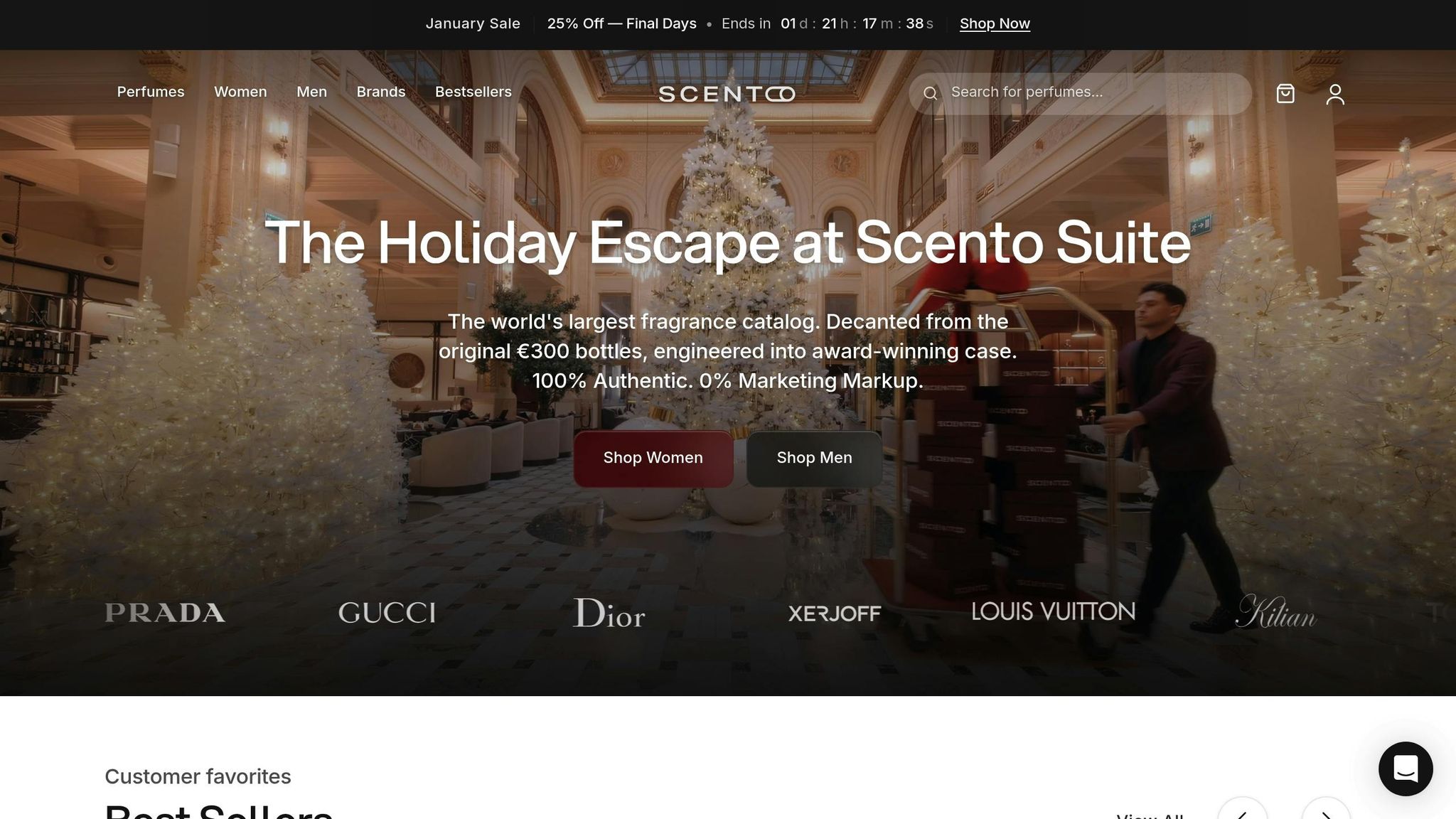
Scento greift die Idee narrativ geprägter Entdeckung auf und macht sie mit kuratierten Dekants in Probiergröße praktisch erlebbar. Der traditionelle Duftkauf erfordert oft eine hohe Anfangsinvestition – etwa 300 € für einen Flakon, den man womöglich nicht einmal liebt. Scento beseitigt dieses Risiko, indem es Dekants in Fläschchen mit 2 ml, 5 ml und 8 ml sowie bei den meisten Düften als Flakon-Abfüllung mit 30 ml anbietet und Duftentdeckung so zu einem erschwinglichen und genussvollen Erlebnis macht.
Dieses "Erst erleben, dann mit Vertrauen entscheiden"-Modell passt perfekt zu einer auf Storytelling basierenden Entdeckungsreise. Ein 8-ml-Vial (etwa 120 Sprühstöße) ermöglicht es beispielsweise, einen Duft in unterschiedlichen Situationen und Stimmungen vollständig zu erleben, ohne den Druck, sofort einen ganzen Flakon kaufen zu müssen. Scento ist ein Händler für Parfümabfüllungen und -proben, und jedes Produkt ist als einmaliger Kauf ganz ohne Abonnement erhältlich. Scento+ ist die optionale Mitgliedschaft von Scento: Der Monatsbeitrag kommt vollständig als Guthaben zurück, einlösbar auf jedes Parfum, Mitglieder erhalten 10 % Rabatt, eine Gratisprobe zu jeder Bestellung, alle sechs Monate ein kostenloses Parfum und ein Geburtstagsgeschenk, und pausieren können Sie jederzeit; zum Kündigen kontaktieren Sie unser Team.
Fazit
Parfumwerbung zeigt, wie Storytelling ein immaterielles Produkt – Duft – mit Emotionen verbindet, die Loyalität inspirieren. Diese Geschichten tun mehr, als nur Düfte zu verkaufen; sie machen sie unvergesslich und fördern ein Gefühl von Gemeinschaft. Indem Marken diese emotionale Verbindung schaffen, verwandeln sie einen einfachen Duft in ein bedeutungsvolles Erlebnis und vertiefen die Bindung zu ihren Kunden.
Die wirkungsvollsten Kampagnen laden Konsumenten zum Entdecken ein und verschieben die Erzählung von "für andere gut riechen" hin zu "sich selbst gut fühlen". Das heutige Duftmarketing ermutigt dazu, eine Duftgarderobe aufzubauen, statt sich auf nur einen Signature-Duft zu beschränken. Dieser Wandel macht die Entdeckung neuer Düfte zu einer spannenden Reise der Selbstentfaltung – statt zu einer einschüchternden oder riskanten Entscheidung.
Marken, die Geschichten rund um Fantasie, persönliche Identität oder die Authentizität ihrer Gründer verweben, verkaufen nicht einfach nur Parfums – sie inspirieren Neugier und Entdeckergeist. Kampagnen werden zu Kapiteln in der persönlichen Duftgeschichte eines Konsumenten. Mit Hilfsmitteln wie Dekants in Probiergröße machen Marken es Menschen leichter, ohne Verpflichtung zu experimentieren.
FAQs
Warum stützt sich Parfumwerbung so stark auf Storytelling?
Parfumwerbung geht weit über das bloße Auflisten von Duftnoten hinaus – sie erzählt Geschichten, die Emotionen wecken und die Fantasie beflügeln. Diese Erzählungen laden Konsumenten dazu ein, den Duft als mehr als nur ein Produkt zu sehen; er wird Teil ihrer Identität oder Spiegel ihres Lebensstils.
Häufige Themen wie Empowerment, Romantik oder Geheimnis stehen im Mittelpunkt und werden durch eindrucksvolle Bildsprache und symbolische Elemente zum Leben erweckt. Dieser Ansatz verwandelt den Duft in ein Symbol für Schönheit, Verwandlung oder Sehnsucht. Indem Parfummarken solch eindrucksvolle Geschichten erschaffen, hinterlassen sie bleibende Eindrücke und bauen eine stärkere emotionale Bindung zu ihrem Publikum auf.
Wie schafft Storytelling in der Parfumwerbung emotionale Verbindungen zu Konsumenten?
Storytelling in der Parfumwerbung spricht Emotionen an und verwandelt Düfte in Erlebnisse, die auf persönlicher Ebene nachhallen. Indem Marken Erzählungen rund um Themen wie Liebe, Nostalgie, Abenteuer oder Eleganz gestalten, erheben sie ihre Düfte über bloße Produkte hinaus – sie werden zu Ausdrucksformen von Identität und Gefühl.
Diese Geschichten schaffen ein Gefühl von Verbundenheit, indem sie Konsumenten mit der Vision und den Werten einer Marke in Einklang bringen. Eine fesselnde Erzählung lässt einen Duft nicht nur herausragen, sondern baut auch Loyalität auf, fördert Wiederholungskäufe und regt Gespräche an. Durch Storytelling verleihen Parfumanzeigen ihren Produkten Bedeutung und machen sie einprägsam und zutiefst persönlich.
Wie bereichern Fantasiekulissen die Parfumwerbung?
Fantasiekulissen spielen in der Parfumwerbung eine zentrale Rolle, indem sie traumähnliche Welten erschaffen, die Emotionen wecken und die Fantasie entfachen. Diese surrealen Hintergründe zeigen oft Szenarien, die die Grenzen der Realität überschreiten – etwa mühelos durch Wolken zu gleiten oder auf einem Pferd durch eine verlassene Stadt zu reiten. Solche Bilder sind darauf ausgelegt, die Essenz und Stimmung eines Duftes auf eine Weise einzufangen, die Worte allein nicht leisten können.
Durch diese bezaubernden Bildwelten schaffen Marken ein Gefühl von Geheimnis, Verwandlung oder Flucht. Das Parfum wird zu mehr als nur einem Duft; es entwickelt sich zu einem Tor zu Selbstentfaltung, Verlangen und Imagination. Diese emotional aufgeladenen Erzählungen machen den Duft unvergesslich und schaffen eine tiefe, persönliche Verbindung zum Publikum.

