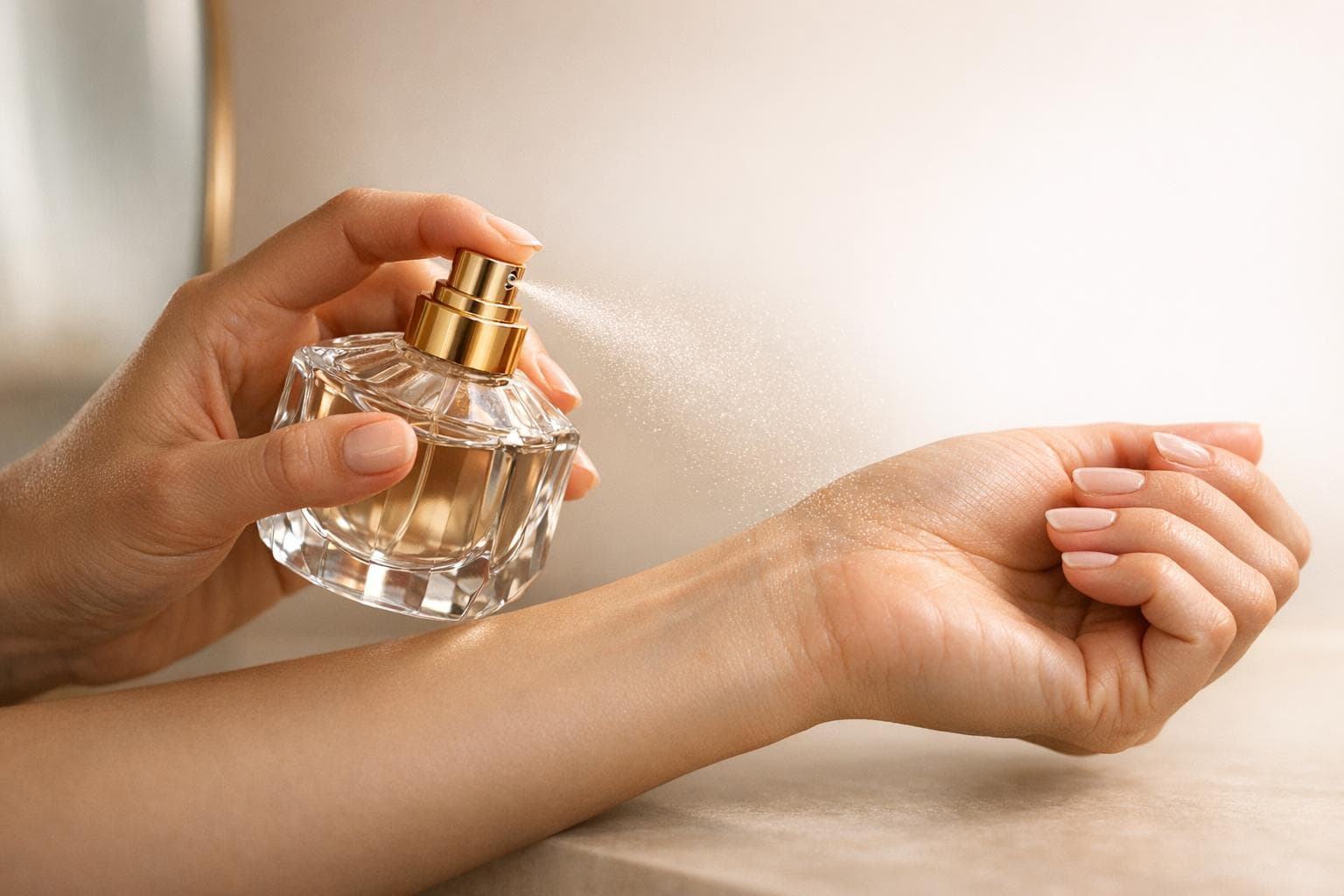
Wenn es um das Tragen von Parfum geht, können kleine Fehler die Wirkung und Haltbarkeit eines Duftes beeinträchtigen. Von falscher Anwendung bis hin zu ungeeigneter Aufbewahrung können diese Missgriffe selbst die feinste Komposition blass wirken lassen. Hier erfahren Sie, was Sie wissen sollten, um das Beste aus Ihrem Parfum herauszuholen:
- Reiben Sie Ihre Handgelenke nicht aneinander: Dadurch wird die natürliche Duftentwicklung gestört, weil die Kopfnote schneller abgebaut wird.
- Vermeiden Sie zu viel oder zu wenig Aufsprühen: Verwenden Sie die passende Menge entsprechend der Duftkonzentration.
- Bereiten Sie Ihre Haut vor: Parfum hält länger auf gepflegter, mit Feuchtigkeit versorgter Haut – hydratisieren Sie daher zuerst.
- Auf Pulspunkte auftragen: Konzentrieren Sie sich auf Bereiche wie Handgelenke, Hals und Armbeugen; vermeiden Sie das Sprühen auf Kleidung.
- Stimmen Sie den Duft auf Anlass und Wetter ab: Leichtere Düfte für den Sommer, gehaltvollere für kühlere Monate.
- Seien Sie beim Layering behutsam: Kombinieren Sie harmonierende Düfte und übertreiben Sie es nicht.
- Parfum richtig aufbewahren: Kühl, trocken und lichtgeschützt lagern, um die Qualität zu bewahren.
- Vor dem Kauf testen: Die Hautchemie kann verändern, wie ein Duft riecht – probieren Sie ihn daher immer zuerst auf Ihrer Haut aus.
Verschwenden Sie Ihr Parfum nicht! Die besten Tipps + häufige Fehler
1. Parfum in die Haut einreiben
Die Handgelenke nach dem Auftragen von Parfum aneinanderzureiben mag harmlos erscheinen, kann jedoch tatsächlich stören, wie sich der Duft entfaltet. Diese Bewegung erzeugt Wärme, die die Verdunstung der Kopfnoten beschleunigt – jener feinen ersten Eindrücke wie Zitrus, zarte Blüten oder frische Früchte. In der Folge verschwinden diese flüchtigen Noten zu schnell, wodurch der Duft unvollständig und unausgewogen wirken kann.
Ohne die Kopfnoten können Herz- und Basisnoten zwar weiterhin hervortreten, doch die gesamte Duftwirkung kann matter und weniger lang anhaltend erscheinen. Parfumeur Francis Kurkdjian hebt dieses Problem hervor:
"Bei einem floralen Duft zum Beispiel erwärmt [Hitze] alles und führt letztlich dazu, dass er seine Frische verliert."
Statt zu reiben, sprühen Sie Ihr Parfum aus einer Entfernung von 13–18 cm auf Pulspunkte wie Handgelenke, Hals oder Armbeugen. Lassen Sie es natürlich an der Luft trocknen, um die beabsichtigte Komposition vollständig zu genießen. Als Nächstes: das richtige Gleichgewicht bei der Anwendung finden.
2. Zu viel oder zu wenig aufsprühen
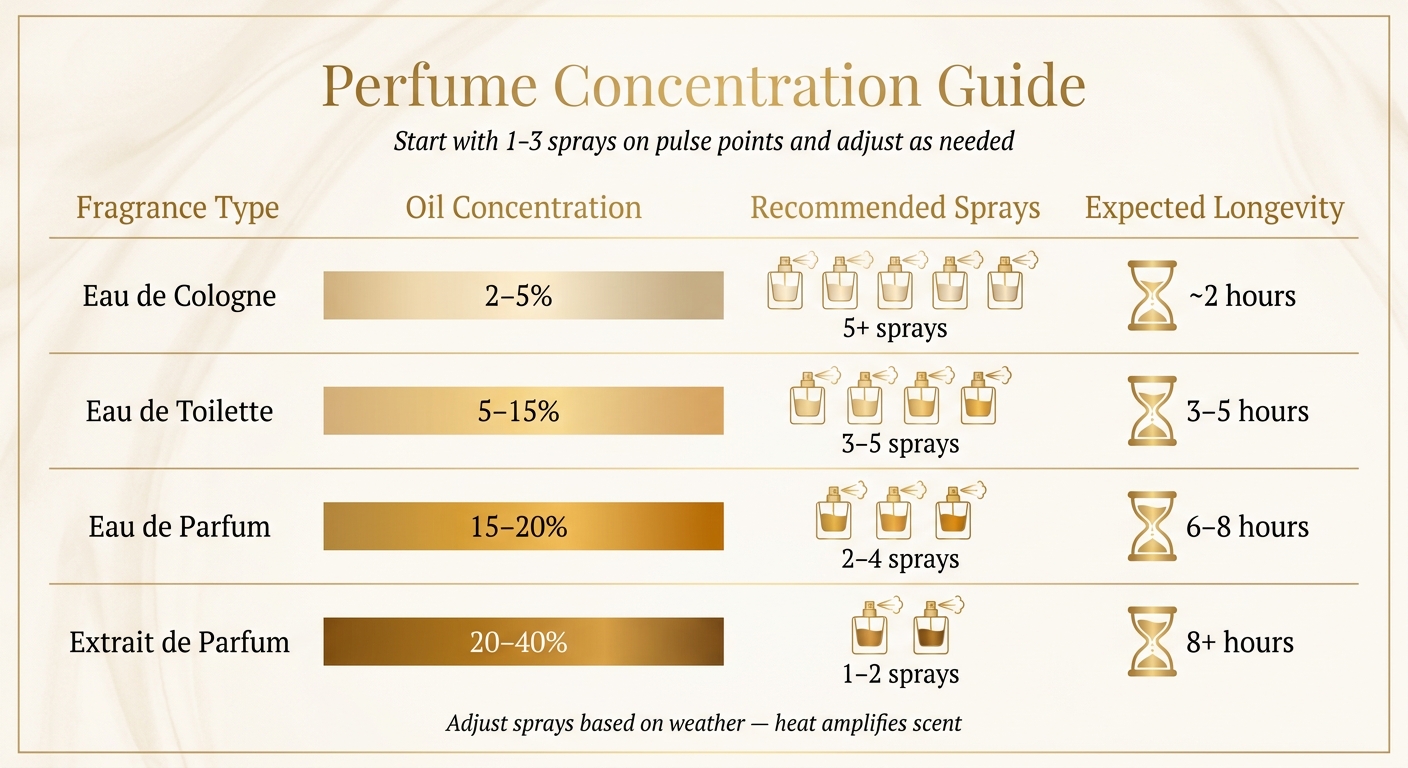
Leitfaden zur Parfumkonzentration: Sprühstöße, Haltbarkeit & Ölanteile
Beim Auftragen von Duft ist das richtige Maß entscheidend. Zu viel davon lässt ihn nicht länger halten – es kann Menschen in Ihrer Nähe überwältigen. Zu wenig hingegen, besonders auf trockener Haut, kann dazu führen, dass der Duft rasch verfliegt. Hier ist eine Übersicht, wie Sie je nach Dufttyp die richtige Dosierung finden.
Die Anzahl der Sprühstöße sollte zur Konzentration Ihres Duftes passen. Jacques Huclier, Senior Perfumer bei Givaudan, rät:
"Nachdem man sich an ein neues Parfum gewöhnt hat, reichen zwei oder drei Sprühstöße aus, damit es hält."
Hier eine kurze Orientierungstabelle:
| Dufttyp | Ölkonzentration | Empfohlene Sprühstöße | Erwartete Haltbarkeit |
|---|---|---|---|
| Eau de Cologne | 2–5% | 5+ Sprühstöße | ~2 Stunden |
| Eau de Toilette | 5–15% | 3–5 Sprühstöße | 3–5 Stunden |
| Eau de Parfum | 15–20% | 2–4 Sprühstöße | 6–8 Stunden |
| Extrait de Parfum | 20–40% | 1–2 Sprühstöße | 8+ Stunden |
Clement Gavarry, Principal Perfumer bei DSM — Firmenich, betont, dass Eau de Parfums eine hervorragende Mischung aus Intensität und Haltbarkeit bieten und nur wenige Sprühstöße für eine nachhaltige Wirkung benötigen.
Als Faustregel gilt: Beginnen Sie mit 1–3 Sprühstößen auf Pulspunkten wie Handgelenken oder Hals und passen Sie die Menge bei Bedarf an. Bei warmem Wetter sollten Sie die Anzahl der Sprühstöße reduzieren, da Wärme den Duft auf natürliche Weise verstärkt.
3. Parfum auf trockene oder unvorbereitete Haut auftragen
Wenn Sie die Sprühtechnik beherrschen, ist es an der Zeit, sich der Vorbereitung Ihrer Haut zu widmen, um das Beste aus Ihrem Duft herauszuholen.
Trockene Haut und Parfum sind nicht die besten Freunde. Ohne ausreichende Feuchtigkeit kann Ihre Haut den Duft viel zu schnell aufnehmen und verdunsten lassen. Francis Kurkdjian, einer der renommiertesten Parfumeure, erklärt:
"Parfum hält auf trockener Haut nicht lange."
Gut mit Feuchtigkeit versorgte Haut hingegen bietet die perfekte Leinwand. Sie hilft Duftmolekülen, besser zu haften und sich harmonisch durch Kopf-, Herz- und Basisnoten zu entfalten.
Um konkurrierende Duftnoten zu vermeiden, wählen Sie eine unparfümierte Feuchtigkeitspflege. Tragen Sie sie auf Ihre Pulspunkte auf – etwa Handgelenke, Hals und Armbeugen –, bevor Sie Ihr Parfum aufsprühen. Der beste Zeitpunkt dafür ist innerhalb von drei Minuten nach dem Duschen, während Ihre Haut noch leicht feucht ist. Das verbessert die Aufnahme und verlängert die Lebensdauer des Duftes. Wenn es zu Ihrem Parfum eine passende Bodylotion gibt, ist das eine noch elegantere Wahl. Jacques Huclier, Senior Perfumer bei Givaudan, hebt die Vorteile hervor:
"Die Kombination eines Duftes mit seiner ergänzenden Pflege ermöglicht eine zusätzliche Aufnahme in die Haut und maximiert die Ausstrahlung des Duftes."
4. Auf die falschen Stellen sprühen
Wo Sie Ihr Parfum auftragen, kann seine Wirkung entscheidend beeinflussen. Der Schlüssel liegt darin, sich auf Pulspunkte zu konzentrieren – jene Körperstellen, an denen die Blutgefäße nahe an der Haut liegen. Diese Bereiche, etwa Handgelenke, Hals, hinter den Ohren, Armbeugen, Kniekehlen und Dekolleté, geben von Natur aus Wärme ab, die dem Duft hilft, sich zu entfalten und weiterzuentwickeln.
Jacques Huclier, Senior Perfumer bei Givaudan, erklärt:
"Die Pulspunkte Ihres Körpers – Handgelenke, Hals und Dekolleté – sind die Stellen, an denen Ihr Körper Wärme abgibt, was den Duftnoten helfen kann, sich schneller zu entwickeln."
Diese Wärme ermöglicht es dem Duft, sanft von seinen spritzigen Kopfnoten zu den reicheren Basisnoten überzugehen und die vollständige Komposition so zu zeigen, wie der Parfumeur sie vorgesehen hat.
Vermeiden Sie es, direkt auf Kleidung oder Schmuck zu sprühen. Der Grund: Auf Stoff bleibt der Duft statisch und kann nicht mit der Chemie Ihrer Haut interagieren, was für seine vollständige Entwicklung wesentlich ist. Zudem können Parfumöle und Farbstoffe Textilien verfärben, und Waschmittelrückstände können den Duft beeinträchtigen. Bei Schmuck können Alkohol und Öle in Parfums mit Metallen und Steinen reagieren, was mit der Zeit zu Anlaufen oder Schäden führen kann.
Für optimale Ergebnisse halten Sie den Flakon etwa 15 cm von Ihrer Haut entfernt und sprühen Sie den Duft gleichmäßig auf freiliegende Pulspunkte. Offene Bereiche wie ein unbedeckter Hals oder ein freies Handgelenk sorgen dafür, dass der Duft deutlich wirkungsvoller ausstrahlt als Pulspunkte, die unter Kleidungsschichten verborgen sind.
Als Nächstes betrachten wir, wie Faktoren wie Umgebung und Layering — Techniken Ihr Dufterlebnis zusätzlich veredeln können.
Ihr persönlicher Duftexperte erwartet Sie
Machen Sie unser kurzes Duftquiz und entdecken Sie authentische Designer- und Nischenparfums, die zu Ihrem Geschmack passen – als 2–8ml Dekants und Proben, damit Sie jeden Duft testen können, bevor Sie sich für einen ganzen Flakon entscheiden.
Finden Sie Ihren Duft5. Anlass, Umgebung und Wetter ignorieren
Die Wahl eines Duftes ist nicht nur eine Frage persönlicher Vorlieben – er sollte auch zum Anlass, zur Umgebung und sogar zum Wetter passen. Betrachten Sie ihn als letzten Schliff Ihres Outfits, als Akzent, der sowohl Ihr Umfeld als auch Ihren Stil ergänzt.
Wie Francis Kurkdjian erklärt:
"Die richtige Platzierung Ihres bevorzugten Eau de Parfum hängt ganz von der Umgebung ab, in der es getragen wird, und vom Outfit, das es ergänzt."
Die Temperatur spielt eine enorme Rolle dabei, wie ein Duft wirkt. Warmes Wetter verstärkt Düfte beispielsweise, sodass ein reiches Amber oder Oud, das an einem klaren Herbstabend behaglich wirkt, an einem heißen Sommertag überwältigend sein kann. Umgekehrt können helle Zitrusnoten oder zarte Blütenakkorde, die in sommerlicher Wärme strahlen, in der Kälte gedämpft erscheinen. Ihren Duft an die Jahreszeit anzupassen, ist nicht nur eine aufmerksame Geste – es ist auch ausgesprochen praktisch.
| Umgebung | Was funktioniert |
|---|---|
| Sommer / warme Tage | Strahlende Zitrusnoten, luftige Blüten (wie Freesie oder Pfingstrose), sanfte holzige Noten |
| Herbst / Winter | Tiefe Harze, Amber, würzige Akkorde, Oud oder süßer Tabak |
| Beruflich / Büro | Neutrale, subtile Düfte; ein einzelner Sprühstoß unter der Kleidung |
| Formelle Abendveranstaltungen | Raffinierte, konzentrierte Extraits, sparsam auf Pulspunkte aufgetragen |
| Geschlossene Räume | Minimale Anwendung; schwere oder pudrige Düfte vermeiden |
Neben saisonalen Überlegungen ist die Umgebung ebenso entscheidend. In beruflichen Umfeldern – besonders in Krankenhäusern, Kliniken oder Großraumbüros – kann ein starker Duft Menschen in Ihrer Nähe schnell überwältigen. Ein diskreter Sprühstoß auf die Brust, unter der Kleidung getragen, schafft eine feine persönliche Aura, ohne sich anderen aufzudrängen.
Ein letzter Punkt, den Sie bedenken sollten: olfaktorische Ermüdung. Ihre Nase gewöhnt sich schnell an Ihren Duft, oft innerhalb weniger Minuten, sodass es wirken kann, als sei er verschwunden. Das kann dazu verleiten, zu viel nachzulegen – widerstehen Sie diesem Impuls. Was Ihnen schwach erscheint, kann für andere noch deutlich wahrnehmbar (oder sogar stark) sein, besonders in enger Umgebung oder bei formellen Anlässen.
6. Falsch layern oder zu häufig auffrischen
Die Kunst des Layerings zu beherrschen, kann Ihr Dufterlebnis auf ein neues Niveau heben – doch falsch angewendet kann sie die Sinne schnell überfordern. Ein häufiger Fehler ist das Kombinieren zweier markanter, schwerer Düfte. Wie Parfumeur Dominique Ropion erklärt:
"Zu viele Schichten verzerren die Balance des Duftes, also lassen Sie jedes Molekül atmen."
Ein kluger Ansatz ist die Methode Anker und Akzent. Beginnen Sie mit einer reichen Basis wie Oud, Amber oder Sandelholz und kombinieren Sie sie mit einer leichteren Note wie Zitrus oder zarter Blüte. Parfumeurin Ayala Moriel gibt dazu folgenden Einblick:
"Der Duft, der zuerst aufgetragen wird, ist zu Beginn des Tragens weniger wahrnehmbar, entfaltet sich jedoch mit der Zeit und zeigt sich als die ‘Basisnoten’ des Duftes."
Beschränken Sie sich auf höchstens zwei oder drei Schichten. Lassen Sie zwischen den Anwendungen 30–60 Sekunden verstreichen, damit sich jeder Duft setzen kann. Sie können auch Zoning ausprobieren: Tragen Sie den Anker auf Bereiche wie Hals oder Brust auf und den Akzent auf einen Pulspunkt wie das Handgelenk. So entsteht ein leichter, luftiger Effekt statt einer dichten, überwältigenden Duftwolke.
Bei Auffrischungen gilt: Weniger ist mehr. Ein einzelner leichter Sprühstoß auf einen Pulspunkt genügt. Wenn Sie nachlegen, wählen Sie den leichteren Duft, statt mehr von der schwereren Basis aufzutragen. So bleibt die Balance erhalten. Ein kleiner Decant ist eine praktische Möglichkeit, den Duft diskret aufzufrischen, ohne zu übertreiben.
Bevor Sie sich für eine Kombination entscheiden, testen Sie sie auf einem Duftstreifen, um zu sehen, wie die Düfte miteinander interagieren. Was in der Luft großartig riecht, funktioniert auf Ihrer Haut möglicherweise nicht auf dieselbe Weise.
7. Parfum am falschen Ort aufbewahren
Wenn Sie die Anwendung Ihres Duftes beherrschen, ist die richtige Aufbewahrung der nächste Schritt, um ihn in Bestform zu bewahren. Überraschenderweise kann es seine Haltbarkeit und Qualität deutlich beeinflussen, wo und wie Sie Ihr Parfum lagern. Wärme, Licht und Feuchtigkeit sind die größten Ursachen für Duftverfall, dennoch setzen viele ihre Flakons unwissentlich genau diesen schädlichen Bedingungen aus.
Nehmen wir zum Beispiel das Badezimmer – oft der bevorzugte Ort zur Aufbewahrung von Parfums, aber wohl die schlechteste Wahl. Duschen erzeugen hohe Luftfeuchtigkeit, oft 60–80% rF, und die Temperaturen können um 10–15°C schwanken. Wie Premiere Peau erklärt:
"Das Badezimmer ist der schlechteste Ort in jedem Zuhause zur Aufbewahrung von Parfum. Es vereint alle Abbaukräfte in konzentrierter Form."
Lichteinwirkung ist ebenso schädlich. UV — Strahlen brechen die chemischen Bindungen in flüchtigen Verbindungen wie Terpenen auf, die für die strahlenden Noten in Zitrus- und Blumendüften verantwortlich sind. Selbst sichtbares Licht kann erhebliche Schäden verursachen und bestimmte Noten innerhalb von sechs Monaten um bis zu 30% abbauen. Parfumeur Francis Kurkdjian vergleicht es damit, Champagner in der Sonne stehen zu lassen:
"Man würde niemals eine Flasche Champagner in der Sonne stehen lassen ... Ultraviolette Strahlen verändern die Farbe von Parfum und lassen Amber — Töne ins Grüne kippen."
Temperaturschwankungen sind ein weiterer Feind. Schon ein Anstieg um 10°C kann die Geschwindigkeit chemischer Reaktionen verdoppeln. Ein Parfum, das auf einer sonnigen Fensterbank bei 40°C steht, altert beispielsweise viermal schneller als eines, das stabil bei 20°C gelagert wird. Häufige Temperaturschwankungen führen außerdem dazu, dass der Flakon "atmet", wodurch Luft und Feuchtigkeit durch winzige Spalten in der Versiegelung eindringen und den Duft zusätzlich beeinträchtigen.
Wie schützen Sie also Ihre Parfums? Die Lösung ist einfach: Bewahren Sie sie kühl, dunkel und trocken auf. Eine Schlafzimmerschublade, ein Wäscheschrank oder ein geschlossener Schrank eignet sich gut. Die Flakons in ihren Originalverpackungen zu lassen, bietet zusätzlichen Schutz vor UV — Licht und Temperaturschwankungen. Für größere oder besonders wertvolle Sammlungen können ein Weinkühlschrank oder ein Kosmetikkühler bei 12–15°C sinnvoll sein. Achten Sie stets darauf, den Verschluss fest zu schließen, um Sauerstoffkontakt zu begrenzen, der Oxidation beschleunigt. Zudem können kleinere Decants helfen, das Luft — Flüssigkeits — Verhältnis zu reduzieren und die Integrität des Duftes länger zu bewahren.
8. Kaufen, ohne vorher auf der Haut zu testen
Testen Sie Parfum immer auf Ihrer Haut, bevor Sie es kaufen, um kostspielige Enttäuschungen zu vermeiden. Ein Duft, der auf einem Duftstreifen oder an einer anderen Person wunderbar riecht, kann sich auf Ihrer Haut ganz anders verhalten. Das liegt daran, dass Ihr individueller pH — Wert, natürliche Hautöle, Ernährung und sogar Hormone beeinflussen, wie sich ein Parfum entwickelt.
Wie My Perfumes erklärt:
"Der pH — Wert Ihrer Haut, Ihre Ernährung und sogar Hormone beeinflussen, wie Parfum riecht. Was an jemand anderem berauschend wirkt, kann auf Ihnen schnell verblassen."
Wichtig ist, daran zu denken, dass die Eröffnungsnoten nur der Anfang sind. Hannah Toporoff weist darauf hin:
"Der Duft, der jetzt auf Ihrer Haut ist, ist nicht der Duft, den Sie in zwei Stunden tragen werden."
Um einen Duft wirklich zu erleben, geben Sie ihm 20–30 Minuten, damit er sich in Herz- und Basisnoten setzen kann. Seien Sie vorsichtig, nicht zu viele Düfte auf einmal zu testen, da dies Ihren Geruchssinn überfordern und zu olfaktorischer Ermüdung führen kann. Wenn Sie dem Duft Zeit geben, sich zu entfalten, können Sie sicherstellen, dass er Ihren Erwartungen entspricht.
Wenn Sie zögern, sofort in einen ganzen Flakon zu investieren, probieren Sie den Duft zunächst über den Tag hinweg aus. Anbieter wie Scento bieten Decants von Designer — Düften an und geben Ihnen die Möglichkeit zu erleben, wie ein Duft auf Ihrer Haut wirkt, ohne sich direkt auf einen Flakon für über 300 € festlegen zu müssen, der am Ende vielleicht nicht zu Ihnen passt.
Fazit
Wenn Sie diese acht häufigen Fehler vermeiden, können Sie Ihr Dufterlebnis deutlich verbessern. Kleine Fehltritte – etwa das Aneinanderreiben der Handgelenke oder die Aufbewahrung von Parfum in einem sonnigen Badezimmer – können Haltbarkeit und Qualität eines Duftes mindern.
Kleine Anpassungen, wie das Eincremen vor dem Auftragen, das Lufttrocknenlassen des Duftes, das Konzentrieren auf Pulspunkte und die richtige Lagerung der Flakons (bei etwa 21°C), können einen spürbaren Unterschied machen. Wie Francis Kurkdjian treffend sagt: "Duft ist ein Dialog zwischen Temperatur und Haut". Diese Gewohnheiten bedeuten, dieses feine Gleichgewicht zu respektieren und sicherzustellen, dass der Duft seine beste Wirkung entfaltet.
Für die Anwendung genügen je nach Situation in der Regel 1–3 Sprühstöße. Ob Sie sich durch ein geschäftiges Büro in München bewegen oder ein intimes Dinner genießen – eine sparsame Verwendung von Duft hilft, eine subtile und zugleich unvergessliche Signatur zu schaffen. Acqua Alpes bringt es perfekt auf den Punkt: "High-quality scents reveal their full elegance when used consciously and with care. Less is more – but when properly placed, your scent becomes a stylish signature statement." Duft mit Bedacht zu tragen, stellt sicher, dass er veredelt, statt zu überwältigen.
Wenn Sie nicht sicher sind, womit Sie beginnen sollen, lohnt es sich, mit Scentos Decants zu experimentieren, erhältlich in den Größen 0,75 ml, 2 ml und 8 ml. Diese kleineren Optionen ermöglichen es Ihnen, verschiedene Düfte zu erkunden und Ihren idealen Duft zu finden, bevor Sie sich für einen ganzen Flakon entscheiden. Dieser durchdachte Ansatz macht den Aufbau einer raffinierten Duftgarderobe sowohl praktisch als auch genussvoll.
FAQs
Woran erkenne ich, dass ich zu viel Parfum aufgetragen habe?
Möglicherweise tragen Sie zu viel Parfum, wenn Menschen in Ihrer Umgebung den Duft als überwältigend empfinden oder wenn Sie selbst geruchsblind werden – also den Duft nicht mehr wahrnehmen können. Um dies zu vermeiden, tragen Sie ihn sparsam auf Ihre Pulspunkte auf und lassen Sie ihn sich natürlich entwickeln. Vermeiden Sie übermäßiges Aufsprühen oder Einreiben, da dies seinen Charakter verändern kann.
Was kann ich tun, wenn mein Parfum auf meiner Haut schnell verschwindet?
Damit Ihr Parfum länger hält, tragen Sie es zunächst auf mit Feuchtigkeit versorgte Haut auf. Verwenden Sie eine duftfreie Lotion oder, falls verfügbar, eine passende Feuchtigkeitspflege, bevor Sie den Duft aufsprühen. Konzentrieren Sie sich auf Pulspunkte wie Handgelenke, Hals oder die Stellen hinter den Ohren, da diese Bereiche Wärme abgeben, die den Duft verstärkt. Vermeiden Sie es, Parfum in die Haut einzureiben, da dies Duftmoleküle aufbrechen und die Haltbarkeit verringern kann. Für einen zusätzlichen Effekt können Sie später am Tag einen leichten Sprühstoß nachlegen oder mit einer duftenden Lotion beziehungsweise einem Öl layern, damit das Aroma länger nachklingt.
Wie erkenne ich, ob mein Parfum durch schlechte Lagerung gekippt ist?
Um festzustellen, ob Ihr Parfum verdorben ist, achten Sie auf deutliche Veränderungen bei Duft, Farbe oder Textur. Ein Duft, der unangenehm oder anders als gewohnt riecht, ist ein klares Anzeichen für Qualitätsverlust. Faktoren wie die Einwirkung von Licht, Wärme und Feuchtigkeit können diesen Prozess beschleunigen, weshalb die richtige Aufbewahrung entscheidend ist, um seine Qualität zu bewahren.

