Der rumänische Duftmarkt bewegt sich im Jahr 2026 zunehmend in Richtung Premium — Produkte und spiegelt damit einen breiteren europäischen Trend wider. Die wichtigsten Highlights sind:
- Marktwachstum: Für Rumäniens Parfümsektor wird ein Wachstum von 3,8 % CAGR (2025–2035) prognostiziert, womit er bis 2035 ein Volumen von 3,14 Mrd. € erreichen soll. Premium — Düfte dominieren und spiegeln Europas Premium — Marktanteil von 58,5 % im Jahr 2024 wider.
- Konsumentenpräferenzen: Käufer legen den Fokus auf Qualität, Transparenz und Markenvertrauen, wobei jüngere Zielgruppen die Nachfrage nach Nischen- und Luxusparfums antreiben.
- Einfluss des E — Commerce: Digitale Plattformen, Sampling — Services und KI — Tools verändern grundlegend, wie Rumänen Düfte entdecken und kaufen.
- Wichtige Marken: Globale Namen wie Dior, Tom Ford und Creed florieren ebenso wie Nischenanbieter. Abonnement — Services wie Scento machen Premium — Düfte leichter zugänglich.
- Herausforderungen: Mehrwertsteuererhöhungen (21 % seit August 2025) und steigende Produktionskosten beeinflussen die Preisgestaltung, wirken sich jedoch auf das High — End — Segment weniger stark aus.
Der rumänische Parfümmarkt steht für eine Entwicklung hin zu Luxus, Nachhaltigkeit und personalisierten Erlebnissen, wobei Premium — Düfte das zukünftige Wachstum anführen werden.
Statistiken zum rumänischen Parfümmarkt 2026–2035: Wachstum, Handel & Premium — Trends
Kontext des rumänischen Parfümmarkts im Jahr 2026
Marktgröße und globales Ranking
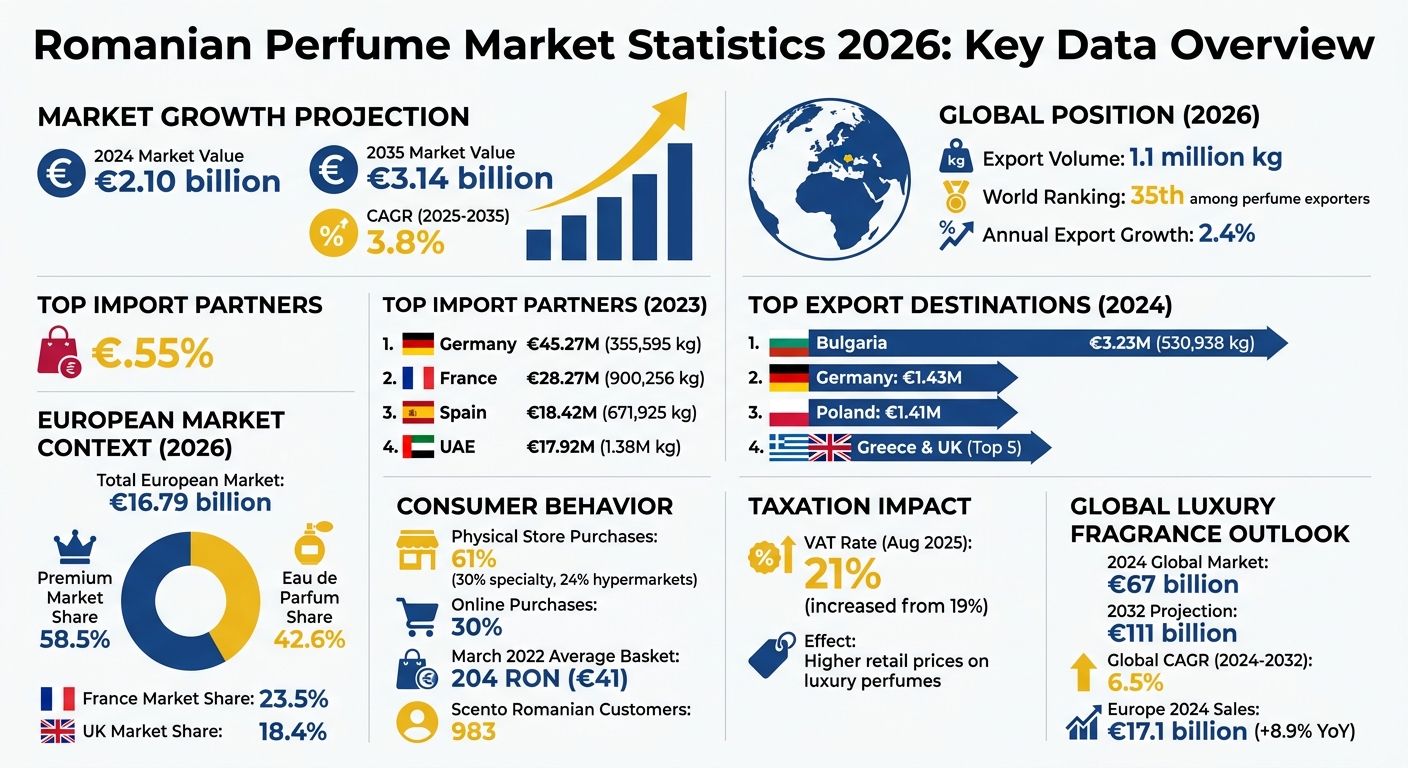
Rumänien hat sich im globalen Dufthandel eine wachsende Präsenz erarbeitet. Bis 2026 exportierte das Land 1,1 Millionen kg Parfümprodukte und belegte damit weltweit Rang 35 unter den Parfümexporteuren. Dies entspricht einer jährlichen Wachstumsrate von 2,4 % und weist auf stetige Fortschritte auf internationaler Ebene hin. Unterstützt wird dieser Trend durch Erkenntnisse von Scento, die Rumäniens maßvolle, aber konstante Expansion auf den globalen Märkten hervorheben.
Der breitere Kosmetiksektor in Rumänien, der im Jahr 2025 auf 2,19 Mrd. € geschätzt wird, spielt bei diesem Wachstum eine entscheidende Rolle. Obwohl das Wachstum der rumänischen Parfümexporte hinter der jährlichen Wachstumsrate von 4,77 % des europäischen Marktes zurückbleibt, richtet sich das Land zunehmend auf wertorientierte Strategien aus, mit einem besonderen Fokus auf Premium — Produkte statt auf bloße Exportmengen.
Wichtige Import- und Exportpartner
Deutschland sticht als wichtigster Importpartner Rumäniens hervor und steuerte im Jahr 2023 45,27 Mio. € an Importen von Parfüm und Toilettenwasser bei, bei einem Gesamtvolumen von 355.595 kg. Frankreich folgt mit Importen im Wert von 28,27 Mio. € (900.256 kg) und unterstreicht damit Rumäniens Abhängigkeit von etablierten Luxusduft — Zentren. Auch Spanien spielt eine bedeutende Rolle und liefert Produkte im Wert von 18,42 Mio. € (671.925 kg). Gleichzeitig haben sich die Vereinigten Arabischen Emirate als wichtiger Lieferant etabliert und lieferten 1,38 Millionen kg an Produkten im Wert von 17,92 Mio. €, getragen vom wachsenden Interesse an orientalischen Düften.
Auf der Exportseite bedient Rumänien vor allem Nachbarländer. Bulgarien ist das wichtigste Zielland und importierte 2024 Parfümerie- und Kosmetikprodukte im Wert von 3,23 Mio. € (530.938 kg). Deutschland und Polen folgen dicht dahinter mit Exporten im Wert von 1,43 Mio. € beziehungsweise 1,41 Mio. €. Griechenland und das Vereinigte Königreich vervollständigen die Liste der fünf wichtigsten Exportziele. Diese Handelsströme verdeutlichen Rumäniens sich wandelnde Rolle sowohl auf regionalen als auch auf internationalen Märkten.
Vergleich mit dem europäischen Parfümmarkt
Rumänien agiert innerhalb eines europäischen Parfümmarkts, der 2026 voraussichtlich 16,79 Mrd. € erreichen wird. Frankreich dominiert diesen Markt mit einem Marktanteil von 23,5 %, gefolgt vom Vereinigten Königreich mit 18,4 %. Rumäniens CAGR von 3,8 % im Kosmetiksektor steht im Einklang mit dem breiteren Premiumisierungstrend in ganz Europa. Innerhalb des europäischen Marktes entfallen auf Eau de Parfum 42,6 % des Umsatzes, während Premium — Düfte 58,5 % ausmachen – ein Spiegelbild ähnlicher Präferenzen, wie sie Scento in Rumänien beobachtet. Diese wachsende Begeisterung rumänischer Konsumenten für Premium — Düfte entspricht den größeren regionalen Verschiebungen und unterstreicht die steigende Nachfrage nach hochwertigeren Kompositionen.
Konsumtrends in Rumänien
Historische Trends und Pro — Kopf — Entwicklung
Rumänische Käufer entdecken zunehmend die Idee einer „Duftgarderobe“ für sich und wählen Düfte, die zu ihrer Stimmung, den Jahreszeiten und unterschiedlichen gesellschaftlichen Anlässen passen. Anfang 2022 zeigte sich dieser Trend deutlich während der Märztage, als 40 % der Care & Beauty — Käufer Parfüms erwarben. Die durchschnittlichen Ausgaben pro Warenkorb lagen bei 204 RON (rund 41 €), wobei Männer für Geschenke zum Frauentag etwas mehr ausgaben (185 RON gegenüber 170 RON).
Dieser Wandel spiegelt eine breitere europäische Vorliebe für hochwertigere, ausdrucksstärkere Düfte wider. Europa machte im Jahr 2025 35,35 % des globalen Parfümmarktes aus. Diese veränderten Gewohnheiten verdeutlichen die wachsende Bedeutung digitaler Entdeckungsmethoden, die das Konsumentenverhalten beim Duftkauf grundlegend verändern.
Duftentdeckung und Nachfragesignale
Mit der Entwicklung der Konsumgewohnheiten wenden sich rumänische Verbraucher zunehmend digitalen Kanälen zu, um Düfte zu erkunden, bevor sie sich für Flakons in Originalgröße entscheiden. Laut Scento bevorzugen inzwischen 983 Konsumenten einen „Discovery-first“ — Ansatz und testen Premium- und Nischendüfte, bevor sie kaufen. Dieses Verhalten entspricht einem breiteren europäischen Trend, bei dem Käufer vermeiden möchten, in kostspielige Flakons zu investieren, die am Ende ungenutzt bleiben könnten.
Während die Online — Entdeckung an Dynamik gewinnt, dominiert der stationäre Handel weiterhin. Etwa 61 % der rumänischen Verbraucher kaufen Beauty — Produkte in physischen Geschäften (30 % in Fachgeschäften und 24 % in Hypermärkten), während 30 % für Parfüms und Geschenke auf Online — Plattformen setzen. Unter den beliebtesten Händlern halten Avon und Douglas jeweils einen Marktanteil von 12,1 %, während eMAG 11,2 % erreicht, insbesondere bei männlichen Käufern.
„Consumer Trends.Live... entstand aus dem Wunsch heraus, so weit wie möglich in Echtzeit zu sehen, was auf dem Markt geschieht... denn wenn man den Markt, auf dem man aktiv ist, nur einmal im Jahr analysiert, kann man Aspekte der Saisonalität oder feine Nuancen übersehen.“
- Corina Cimpoca, Gründerin, MKOR Consulting
Auch wellness-inspirierte Düfte gewinnen an Beliebtheit, mit wachsendem Interesse an Kompositionen mit Inhaltsstoffen wie Lavendel, Jasmin und Bergamotte, die häufig mit Stimmungsaufhellung und Stressabbau assoziiert werden. Jüngere Zielgruppen, insbesondere Gen Z und Millennials, treiben den Trend zur „Duftgarderobe“ voran und wechseln ihre Düfte häufig, um ihren persönlichen Stil zu unterstreichen. Obwohl Unisex — Düfte an Popularität gewinnen, liegt ihre Akzeptanz in Rumänien noch hinter anderen europäischen Ländern zurück.
Der Wandel hin zu Premium — Düften
Wachstumsindikatoren des Premium — Marktes
Rumänische Konsumenten wenden sich zunehmend von Massenmarkt — Parfüms ab und orientieren sich stattdessen an Premium — Optionen. Dieser Trend entspricht einem breiteren europäischen Wandel, bei dem das Premium — Segment im Jahr 2024 58,5 % des gesamten Marktanteils ausmachte. Es ist ein klares Zeichen dafür, dass sich die Prioritäten verändern.
Der europäische Duftmarkt erreichte 2025 ein Volumen von 16,03 Mrd. € und soll bis 2026 auf 16,79 Mrd. € wachsen. Gleichzeitig expandiert die ultra-premium „Pure Perfume“ — Kategorie rasant, mit einer durchschnittlichen jährlichen Wachstumsrate (CAGR) von 9,3 % von 2025 bis 2033.
Eau de Parfum hat sich als bevorzugte Konzentration etabliert und hielt 2024 42,6 % des europäischen Marktanteils. Rumänische Verbraucher fühlen sich insbesondere von diesen höher konzentrierten Formeln wegen ihrer Haltbarkeit und Intensität angezogen. Düfte, die den ganzen Tag über präsent bleiben, werden zunehmend jenen vorgezogen, die rasch verfliegen. Diese Zahlen schaffen eine solide Grundlage, um zu verstehen, was diesen Wandel in den Konsumentenpräferenzen antreibt.
Treiber des Verhaltens von Premium — Käufern
Das Wachstum des Premium — Marktes ist eng mit sich wandelnden Konsumverhalten verknüpft. Laut Scentos früherer Analyse haben steigende verfügbare Einkommen und die Rolle digitaler Plattformen die Duftpräferenzen erheblich beeinflusst. Mit steigenden Einkommen in urbanen Räumen wechseln viele Verbraucher von Basisprodukten zu Premium — Düften, bei denen Qualität, Transparenz der Inhaltsstoffe und Vertrauenswürdigkeit der Marke stärker zählen als niedrige Preise.
Generation Z ist zu einem zentralen Treiber dieses Wandels geworden. Da sie weniger finanzielle Verpflichtungen hat als ältere Generationen, profitieren jüngere Rumänen von höheren frei verfügbaren Einkommen und sind damit eine entscheidende Zielgruppe für Premium — Marken. Auch ihre Entdeckungswege unterscheiden sich – Plattformen wie TikTok und Instagram haben klassische Werbung als wichtigste Inspirationsquellen für Düfte abgelöst. Darüber hinaus ist Nachhaltigkeit in den Fokus gerückt: Merkmale wie nachfüllbare Verpackungen und Clean — Beauty — Standards werden zunehmend zu einer selbstverständlichen Erwartung statt zu Nischenthemen.
Exklusivität ist ein weiterer wesentlicher Faktor, der den Duftmarkt neu formt. Viele Konsumenten suchen heute nach Nischen- und handwerklich kreierten Düften, die sich abheben und mit einer fesselnden Markenstory einhergehen. Diese Präferenz hat den Aufstieg einer Kategorie des „erschwinglichen Premiums“ befeuert, die hochwertige Düfte zu Preisen bietet, welche die Lücke zwischen Massenmarkt und Ultra — Luxus schließen.
Top — Marken und Produkte auf dem rumänischen Markt
Führende Importmarken
Rumäniens High — End — Duftmarkt floriert unter dem Einfluss globaler Luxusgiganten wie LVMH, The Estée Lauder Companies, Coty Inc. und Puig. Diese Unternehmen bringen ikonische Namen zum rumänischen Publikum – LVMH mit Dior, Guerlain und Givenchy; The Estée Lauder Companies mit Tom Ford, Jo Malone und Frédéric Malle; Coty Inc. mit Gucci, Burberry und Calvin Klein; sowie Puig mit Carolina Herrera, Paco Rabanne und Jean Paul Gaultier. Weltweit wird erwartet, dass der Duftmarkt bis 2026 die Marke von 60 Mrd. € überschreitet – ein Beleg für die anhaltende Anziehungskraft dieser Marken.
Einige einzelne Düfte sind zu festen Größen im Markt geworden. So ist Tom Ford Black Orchid (rund 105,00 €) bekannt für seine opulenten Noten von schwarzem Trüffel und Ylang — Ylang. Dior Sauvage, mit einem Preis von etwa 97,95 €, bietet eine markante Verbindung aus Bergamotte und Pfeffer. Creed Aventus wiederum, ein Symbol des Luxus zu 241,50 €, begeistert mit schwarzer Johannisbeere und Bergamotte als herausragenden Noten. Frankreich, Spanien und Deutschland dominieren als wichtigste Importpartner Rumäniens, wobei allein Frankreich bis 2024 voraussichtlich 23,5 % des europäischen Parfümmarktanteils halten wird.
Auch das Segment der Nischendüfte sorgt für Aufsehen. Rumänien war Gastgeber der Art Niche Expo 2026 in Timișoara vom 8. bis 10. Mai und präsentierte internationale Nischenmarken wie Kinetic Perfumes, The Gate Paris und Lorenzo Pazzaglia. Auch lokale Kunsthandwerker treten zunehmend hervor – etwa Adi ale Van mit handgefertigten Kreationen wie „Cozonac – Winter Potion“ (250,00 €) und „Find Me“ (550,00 €). Im Ultra — Premium — Bereich richten sich Marken wie Roja Parfums (von 280,00 € bis über 560,00 €) und Amouage Guidance 46 (280,00–355,00 €) an die anspruchsvollsten Käufer. Diese lebendige Mischung aus Mainstream- und Nischenmarken bietet einen idealen Nährboden für Scentos einzigartige Herangehensweise an die Duftentdeckung.
Scentos Rolle bei der Entdeckung von Premium — Düften
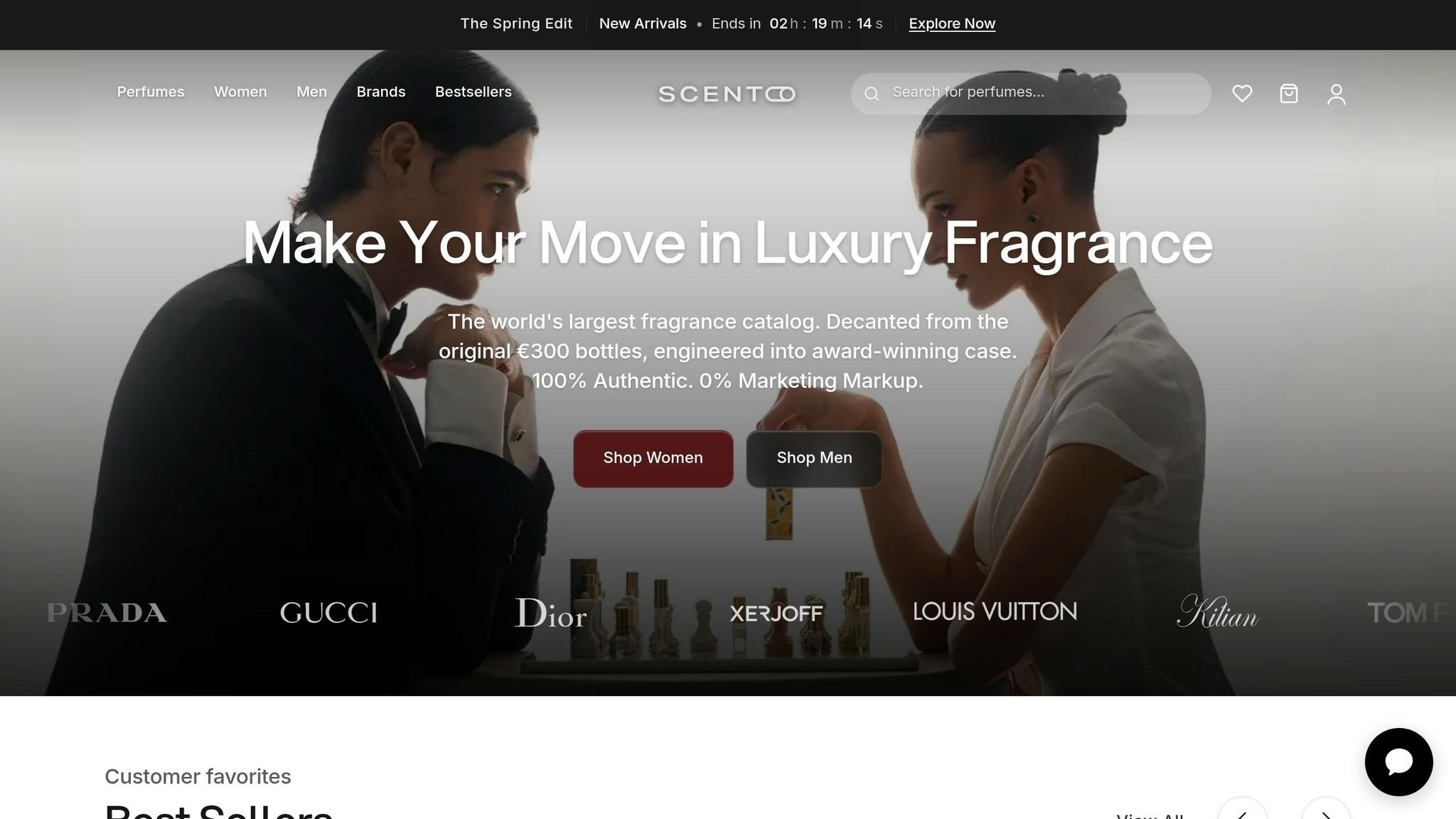
Scento nutzt die Stärke dieser etablierten Marken, indem es Konsumenten ermöglicht, Premium — Düfte zu erleben, ohne sich sofort auf Flakons in Originalgröße festlegen zu müssen. Dieses Modell ist ein echter Gamechanger für Rumäniens wachsenden Duftmarkt, auf dem Käufer oft zögern, in große Flakons zu investieren, die möglicherweise nicht aufgebraucht werden. Mit über 1.000 Designer — Düften in Größen von 2 ml, 5 ml und 8 ml können Kunden Parfums von Marken wie Tom Ford, Dior und Creed auf praktische und kosteneffiziente Weise entdecken. Jedes 8-ml — Vial bietet bis zu 120 Sprühstöße und ermöglicht damit ein authentisches Testerlebnis statt nur einer flüchtigen Probe.
Scentos optionaler Abonnement — Service beginnt bei 12,90 € pro Duft, wobei die Preisgestaltung individuell auf den Duft abgestimmt ist und nicht auf einer Pauschale basiert. Dieses flexible Modell entspricht der Vorliebe des Premium — Publikums für Qualität und Transparenz. Darüber hinaus machen Vorteile wie kostenloser Versand ab einem Bestellwert von 75,00 € und eine 30-tägige Geld-zurück — Garantie den Entdeckungsprozess noch zugänglicher. Für all jene, die sich in die Welt der Nischen- oder Artisanal — Düfte vorwagen, schlägt Scento eine elegante Brücke zwischen Mainstream — Komfort und der Exklusivität hochwertiger Duftkreationen.
E — Commerce — Wachstum und sein Einfluss auf den Zugang zu Premium — Düften
E — Commerce — Trends in Rumänien
In Rumänien hat der Aufstieg des Online — Shoppings die Art und Weise, wie Verbraucher Premium — Düfte entdecken und kaufen, grundlegend verändert. Digitale Plattformen haben die Vertriebswege erweitert und sind zu einer treibenden Kraft hinter dem Wachstum des Premium — Beauty- und Duftmarktes geworden. Ein klar erkennbarer Trend ist der Aufstieg von Marken im Bereich „erschwingliches Premium“, die besonders stark mit der Generation Z resonieren. Diese Zielgruppe, gestützt durch höhere frei verfügbare Einkommen und eine Vorliebe für digitale Erlebnisse, prägt die Zukunft des Marktes. Premium — Düfte übertreffen andere Beauty — Kategorien und die Prognosen zeigen ein starkes Wachstum bis 2029, getragen von neuen Markenlaunches. Gleichzeitig wird Nachhaltigkeit immer wichtiger, und von Luxusmarken wird erwartet, dass sie nachfüllbare Verpackungen einführen, um umweltbewusste Käufer anzusprechen. Diese Veränderungen im Konsumentenverhalten und in der Marktdynamik schaffen eine starke Grundlage für Scentos innovatives Abo — Angebot, das im Folgenden erläutert wird.
Scentos Abonnement — Modell und Zugänglichkeit
Scento hat sich an diese sich wandelnden E — Commerce — Trends angepasst, indem es eine zentrale Herausforderung des Premium — Duftmarktes adressiert: die Kosten und die Verpflichtung, Flakons in Originalgröße zu kaufen, die oft ungenutzt bleiben. Die Plattform bietet authentische Designer — Düfte in kuratierten Decants an und ermöglicht es rumänischen Konsumenten, hochwertige Kompositionen zu entdecken, ohne den stattlichen Preis von über 300 € für einen vollen Flakon zahlen zu müssen. Dieser Ansatz gewährleistet ein authentisches und risikofreies Testerlebnis.
Das Abonnement beginnt bei 12,90 € pro Duft, wobei der Preis je nach spezifischem Duft und nicht pauschal festgelegt wird. Dieses flexible Modell passt perfekt zum Trend des „erschwinglichen Premiums“ und eröffnet Zugang zu über 1.000 Designer — Düften ohne erhebliches finanzielles Risiko. Zusätzliche Vorteile wie kostenloser Versand ab 75,00 € Bestellwert und eine 30-tägige Geld-zurück — Garantie vereinfachen den Prozess der Entdeckung von Premium — Düften zusätzlich. Indem Scento die Präferenzen der digital versierten Generation Z bedient, macht es die Erkundung hochwertiger Düfte zugleich zugänglich und komfortabel.
Your Personal Fragrance Expert Awaits
Take our quick scent quiz to discover authentic designer and niche fragrances matched to your taste — explore them as 2–8ml decants and samples, so you can try each one before committing to a full bottle.
Find Your ScentAuswirkungen von Besteuerung und Mehrwertsteuer auf den Parfümmarkt
Auswirkungen auf Importpreise
Rumäniens Steuerpolitik beeinflusst die Preisgestaltung von Premium — Düften erheblich. Am 1. August 2025 stieg der reguläre Mehrwertsteuersatz von 19 % auf 21 %, was zu höheren Einzelhandelspreisen für Luxusparfüms führte, die nicht für reduzierte Sätze in Frage kommen. Für Düfte, die aus EU — Ländern wie Frankreich, Spanien und Deutschland importiert werden, gilt das Reverse — Charge — Verfahren. Das bedeutet, dass die Transaktion im Exportland mit null besteuert wird, während die 21 % Mehrwertsteuer lokal in Rumänien anfallen, wodurch Preisparität zwischen importierten und inländischen Luxusparfüms sichergestellt wird.
Zusätzlich zu den Änderungen bei der Mehrwertsteuer wurden im August 2025 auch die Verbrauchsteuern auf Alkohol und Energieprodukte erhöht, was aufgrund des Alkoholgehalts von Parfüms die Einstandskosten für Importeure weiter steigen ließ. Für Nicht — EU — Importe unter 150 € vereinfacht der Import One — Stop Shop (IOSS) den Prozess, indem Verkäufer die 21 % Mehrwertsteuer direkt am Verkaufsort erheben können, was die Zollabfertigung beschleunigt. Ebenso müssen E — Commerce — Plattformen, die den One — Stop Shop (OSS) nutzen, bei Verkäufen an Verbraucher 21 % Mehrwertsteuer anwenden, sobald ihre EU-weiten Verkäufe 10.000 € überschreiten. Diese Änderungen wirken sich unmittelbar auf die Preisgestaltung aus und deuten zugleich auf mögliche zukünftige Marktanpassungen hin, die durch Steuerpolitik beeinflusst werden.
Zukünftige Auswirkungen der Mehrwertsteuer
Die Mehrwertsteuererhöhung von 2025, eingeführt durch Gesetz Nr. 141/2025, war Teil von Rumäniens breiterer fiskalischer Strategie zur Bewältigung seines Haushaltsdefizits. Das rumänische Steuerumfeld ist jedoch häufig unvorhersehbar, mit regelmäßigen Änderungen, was darauf schließen lässt, dass strenge steuerliche Maßnahmen voraussichtlich mindestens bis 2030 bestehen bleiben. Trotz dieser Herausforderungen zeigt sich der Markt für Premium — Düfte widerstandsfähig, getragen von einem wachsenden Käufersegment, das luxuriöse Erlebnisse sucht. Premium — Düfte übertreffen den Massenmarkt weiterhin beim Wertwachstum – dank starker Markentreue und hoher Anziehungskraft.
Die Preissteigerungen im Jahr 2025 veranlassten manche Verbraucher dazu, Käufe aufzuschieben und auf Rabatte oder Aktionsangebote zu warten. Plattformen wie Scento, die kuratierte Decants ab 12,90 € statt Flakons in Originalgröße für 300 € oder mehr anbieten, verzeichneten einen geringeren proportionalen Einfluss durch den Anstieg der Mehrwertsteuer. Dieses Modell bleibt attraktiv für Verbraucher, die Premium — Düfte erkunden möchten, ohne sich auf hohe Anfangskosten festzulegen.
Mit Blick nach vorn werden sich etwaige weitere Mehrwertsteuererhöhungen oder höhere Verbrauchsteuern auf Alkohol direkt auf Produktions- und Importkosten auswirken. Marken, die auf flexible Preisgestaltung, geringere Kaufverpflichtungen und klare Kostenstrukturen setzen, werden besser gerüstet sein, sich an Rumäniens wandelnde Steuerpolitik anzupassen. Diese Strategien sind entscheidend, um die Herausforderungen des Premium — Duftmarktes auf dem Weg bis 2030 souverän zu meistern. Die fortlaufenden steuerlichen Anpassungen unterstreichen die Notwendigkeit von Anpassungsfähigkeit, um den Ansprüchen von Rumäniens wachsendem Premium — Käufersegment gerecht zu werden.
Ausblick 2030: Die Zukunft des rumänischen Parfümmarkts
Wachstumsprognosen für den rumänischen Markt
Rumäniens Kosmetikmarkt, zu dem auch Düfte gehören, soll zwischen 2025 und 2035 mit einer durchschnittlichen jährlichen Wachstumsrate (CAGR) von 3,8 % wachsen. Dadurch würde der Markt von 2,10 Mrd. € im Jahr 2024 auf 3,14 Mrd. € bis 2035 anwachsen, im Einklang mit der Wachstumsrate des breiteren europäischen Parfümmarkts.
Es wird erwartet, dass Premium — Düfte Massenmarkt — Produkte übertreffen und damit einen Wandel hin zu Qualität statt Quantität signalisieren. Bereits 2024 entfielen auf Premium — Produkte 66,98 % des Umsatzanteils des europäischen Parfümmarktes. Dieser Trend spiegelt das wachsende Interesse rumänischer Verbraucher an Transparenz bei Inhaltsstoffen und an Markenwürdigkeit wider und ebnet den Weg für nachhaltiges, wertorientiertes Wachstum.
Diese nationalen Trends stehen im Einklang mit globalen Bewegungen und stärken den Aufwärtstrend des Premium — Marktes zusätzlich.
Globale Trends im Luxusduftmarkt
Weltweit übertrifft der Sektor der Luxusparfüms den allgemeinen Duftmarkt, mit einer prognostizierten CAGR von 6,5 % von 2024 bis 2032. Der Markt soll von 67 Mrd. € im Jahr 2024 auf nahezu 111 Mrd. € bis 2032 wachsen. Allein in Europa erzielte das Segment Duft- und Parfümprodukte im Einzelhandel 17,1 Mrd. € Umsatz im Jahr 2024, was einer jährlichen Wachstumsrate von 8,9 % entspricht. Unternehmen wie Coty Inc. meldeten im Geschäftsjahr 2024 einen Anstieg der Prestige — Duftumsätze um 13 %, was den globalen Wandel hin zu Premium — Produkten unterstreicht.
Mehrere Trends prägen dieses Wachstum:
- Nachhaltigkeit: Nachfüllbare Verpackungen und ökozertifizierte Extrakte werden zum Standard.
- Unisex — Düfte: Die Nachfrage nach geschlechtsneutralen Optionen steigt.
- KI-gestützte Personalisierung: Tools, die die Duftentdeckung individuell anpassen, gewinnen an Bedeutung.
Diese Veränderungen finden bereits Resonanz bei rumänischen Konsumenten und spiegeln breitere globale Muster wider.
„Die verstärkte regulatorische Prüfung von Duftformeln kann die Produktionskosten erhöhen und die Flexibilität der Hersteller bei der Auswahl von Inhaltsstoffen einschränken.“ – MarkSpark Solutions
Strengere europäische Sicherheits- und Umweltvorschriften treiben die Produktionskosten in die Höhe, was wiederum die Einzelhandelspreise im Premium — Segment steigen lässt. Premium — Düfte zeigen jedoch im Vergleich zu ihren Pendants aus dem Massenmarkt tendenziell eine geringere Preissensibilität und erweisen sich damit als widerstandsfähiger gegenüber diesen wirtschaftlichen und regulatorischen Belastungen.
Scentos Rolle bei der Gestaltung der Zukunft
Scento ist bestens positioniert, eine Schlüsselrolle auf Rumäniens sich entwickelndem Luxusduftmarkt zu spielen. Indem die Plattform die hohen Kosten der Entdeckung von Luxusparfüms adressiert, ermöglicht sie Konsumenten, kuratierte Decants zu erkunden und sich eine Duftgarderobe aufzubauen, ohne sich sofort auf Flakons in Originalgröße festzulegen. Das wachsende Interesse zeigt sich deutlich in Scentos 983 rumänischen Kunden und unterstreicht die Nachfrage nach zugänglichen Premium — Optionen.
Mit Blick auf die Zukunft plant Scento die Einführung von 30 ml+ Designer — Flakons, um Kunden anzusprechen, die bereit sind, vom Entdecken zum vollständigen Besitz überzugehen. Dies entspricht Rumäniens Wandel hin zu wertorientiertem Konsum und der steigenden Nachfrage nach Transparenz bei Inhaltsstoffen. Darüber hinaus spiegeln der Aufstieg des E — Commerce unter jüngeren Konsumenten und die stärkere Fokussierung auf nachfüllbare Verpackungen breitere Trends wider, denen Scentos flexibles Modell mit geringer Einstiegshürde ideal begegnet.
Trends in der Parfümerie | Nischenparfums, arabische Parfums oder Duftzwillinge
Fazit
Auf Basis der Marktanalyse, der sich wandelnden Konsumtrends und der Auswirkungen der digitalen Transformation steuert Rumäniens Duftindustrie bis 2026 klar auf Premium — Angebote zu. Rumänische Verbraucher zeigen eine wachsende Vorliebe für Exklusivität, Handwerkskunst und Nischendüfte, die eigenständige olfaktorische Identitäten widerspiegeln.
Digitale Plattformen spielen bei diesem Wandel eine zentrale Rolle, überholen den traditionellen Einzelhandel und fordern die Dominanz des stationären Vertriebs heraus. Käufer im Premium — Segment fühlen sich zunehmend von umweltbewussten Praktiken und personalisierten Erlebnissen angezogen, wobei nachfüllbare Verpackungen und KI-gestützte Empfehlungen zu zentralen Erwartungen werden. Gleichzeitig sind Unisex — Düfte, auch wenn sie sich noch im Aufbau befinden, im späteren Verlauf des Jahrzehnts ein vielversprechendes Wachstumsfeld.
Scento greift diese Trends auf, indem es Premium — Düfte in kleineren Größen – 2 ml, 5 ml und 8 ml – für die Entdeckung anbietet, mit Plänen zur Einführung von 30 ml+ Flakons, um die Lücke zwischen Sampling und vollständigem Besitz zu schließen. Diese Strategie entspricht Rumäniens Vorliebe für wertorientierten Luxus und spiegelt den breiteren europäischen Wunsch nach flexiblen Premium — Erlebnissen mit geringer Bindung wider.
Mit wachsender Kaufkraft, zunehmendem digitalen Zugang und sich wandelnden Konsumentenwerten wird sich die Bewegung hin zu Premium — Düften weiter verstärken. Plattformen, die Zugänglichkeit, Vertrauen und Umweltbewusstsein vereinen, werden künftig prägen, wie Rumänen mit luxuriösen Duftwelten in Berührung kommen.
FAQs
Was treibt Rumäniens Wandel hin zu Premium — Parfüms an?
Rumänien erlebt eine deutlich spürbare Bewegung hin zu Premium — Parfüms, geprägt von sich wandelnden Konsumentenvorlieben und einem wachsenden Appetit auf luxuriöse Duftkreationen. Mehrere Faktoren tragen zu diesem Trend bei: ein gesteigertes Bewusstsein für renommierte Marken, zunehmende Begeisterung für hochwertige Beauty — Produkte und der allgegenwärtige Einfluss sozialer Medien. Jüngere Generationen, insbesondere die Gen Z, wenden sich exklusiven Düften zu, um ihre Individualität auszudrücken. Gleichzeitig verleihen globale Entwicklungen – etwa der Fokus auf natürliche Inhaltsstoffe und innovative Duftdesigns – diesem Wandel zusätzlichen Schwung.
Wie kann ich Luxusdüfte testen, ohne einen ganzen Flakon zu kaufen?
Das Testen von Luxusdüften ist heute einfacher denn je – mit Parfümproben oder Decants. Viele Marken und Händler bieten kleine Vials oder Probiergrößen an, sodass Sie einen Duft erleben können, bevor Sie in einen Flakon in Originalgröße investieren. Eine weitere hervorragende Möglichkeit sind Discovery Sets, mit denen sich mehrere Düfte zu einem zugänglicheren Preis entdecken lassen. Diese Optionen spiegeln die steigende Nachfrage nach personalisierten und testbasierten Erlebnissen in der Welt luxuriöser Parfüms wider.
Werden Mehrwertsteuer und Importabgaben Parfüms deutlich teurer machen?
Ja, Mehrwertsteuer und Importabgaben werden die Parfümpreise in Rumänien bis 2026 voraussichtlich spürbar erhöhen. Infolgedessen dürfte der Fokus noch stärker auf höherpreisigen Düften in Premium — Qualität liegen. Diese steuerlichen Anpassungen spielen eine zentrale Rolle bei der Gestaltung der Preisdynamik des Marktes.