Von Sebastian Dobrincu, Gründer & Branchenanalyst bei Scento
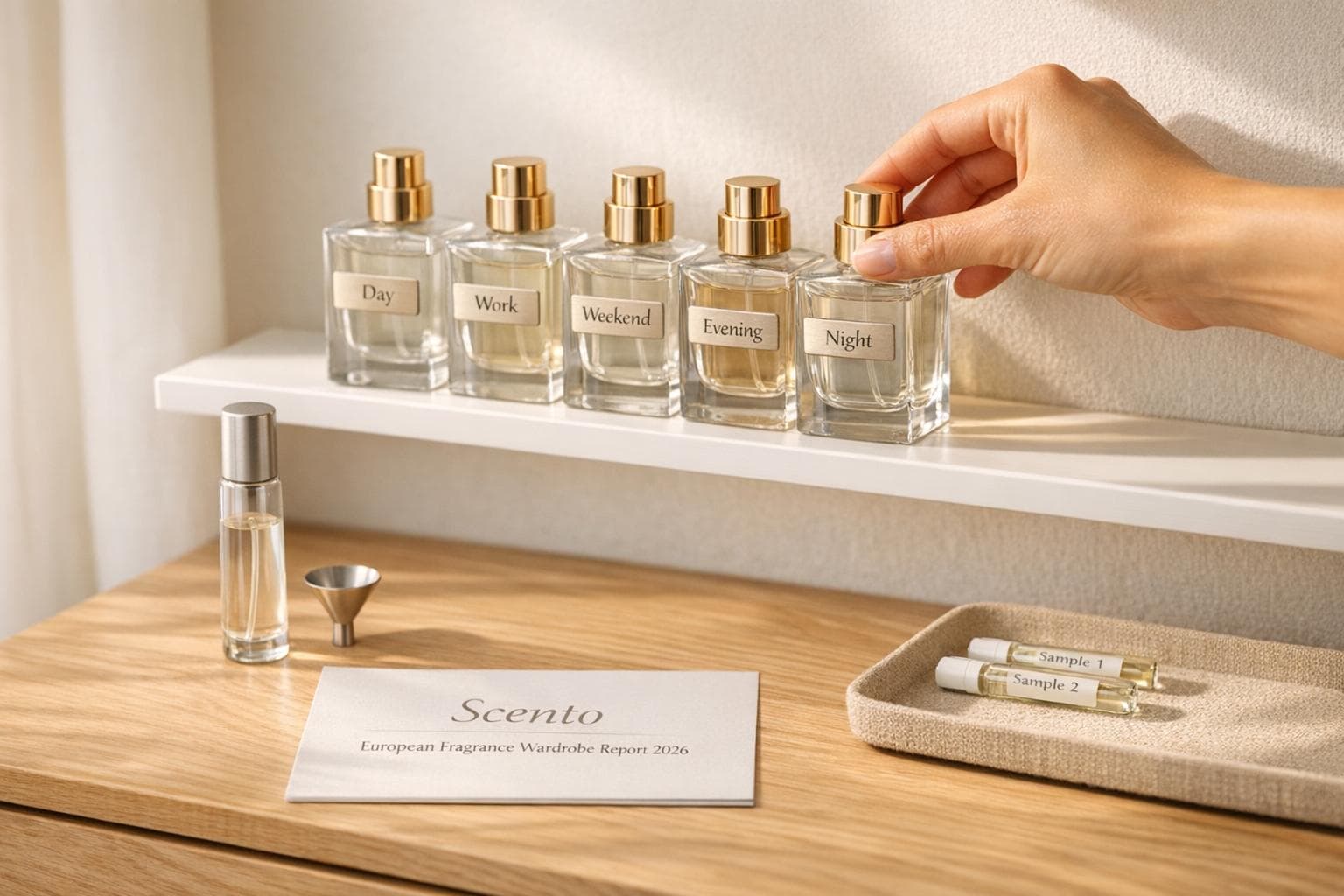
Die europäische Duftkäuferschaft des Jahres 2026 besitzt keinen Signature — Duft mehr. Sie besitzt eine Duftgarderobe. Er besitzt eine Duftgarderobe. Sie alle besitzen eine Duftgarderobe. Der einzelne Flakon, der einst eine ganze Generation prägte, hat strukturell ausgedient. An seine Stelle tritt ein rotierendes Regal mit mehreren Flakons im aktiven Einsatz, einigen weiteren im Ruhestand und ein Konsumverhalten, das weniger einem jährlichen Kauf ähnelt als vielmehr einer dezenten, kontinuierlichen Routine. Das Regal ist kein Regal mehr. Es ist eine Architektur.
Im November 2025 veröffentlichte Scento eine Studie, die die Kosten ungenutzter Düfte erfasste: 67 % der europäischen Haushalte besitzen mindestens einen Flakon, den sie nicht mehr tragen; der durchschnittliche Haushalt bewahrt mehrere ungetragene Flakons auf, und der Gesamtwert dieser Fehlkäufe übersteigt in der Europäischen Union 780 Millionen Euro. Zwölf Monate später, nachdem dieses Garderoben — Verhalten umfassender analysiert wurde, erweitert dieser Bericht die Ausgangslage: von der Frage, was ungenutzt bleibt, hin zu dem, was tatsächlich getragen wird. Er zeichnet die Architektur, die Geografie, die Geschlechtergrenzen und die Generationenunterschiede der europäischen Duftgarderobe im Jahr 2026 nach.
Drei zentrale Erkenntnisse bilden den Rahmen für die folgenden Ausführungen. Erstens: Die durchschnittliche europäische Garderobe umfasst mehrere Flakons im aktiven Einsatz und mehrere im Ruhestand. Zweitens: Abonnement — Käufer tätigen innerhalb ihrer ersten 90 Tage weitaus häufiger Wiederkäufe als Einmalkäufer. Drittens: Unisex macht mittlerweile den größten Anteil an der europäischen Abfüllungsnachfrage aus – mehr als die geschlechtsspezifischen Käufe von Damen- und Herrendüften zusammen. Jede dieser Erkenntnisse bringt strukturelle Konsequenzen für Einzelhändler, Marken und die Art und Weise der Duftentdeckung selbst mit sich. Sie werden im Folgenden näher beleuchtet.
Methodik & Umfang
Dieser Bericht kombiniert Scentos Auswertung führender europäischer Duftmarktstudien mit anonymisierten, aggregierten Verhaltenssignalen der hauseigenen Entdeckungs- und Abonnementplattform von Scento im Zeitraum von Oktober 2025 bis April 2026. Die unternehmenseigenen Plattformdaten werden durchgängig als richtungsweisende Muster und nicht als absolute Volumina ausgewiesen; Angaben auf Kunden-, Bestell- oder Umsatzebene werden bewusst nicht offengelegt. Ziel des Berichts ist es, den Wandel der europäischen Duftgarderobe zu beschreiben, nicht die internen Kennzahlen eines einzelnen Händlers offenzulegen.
Die Beobachtungen zur Garderobengröße basieren auf der Erkenntnis der Basisstudie vom November 2025, wonach europäische Haushalte einen beträchtlichen Teil der erworbenen Flakons nicht mehr nutzen. Das Abonnement — Verhalten wird anhand eines Vergleichs der Wiederkaufsmuster von Kundinnen und Kunden analysiert, die mit einem Scento — Abonnement gestartet sind, gegenüber jenen, die einen einmaligen Kauf getätigt haben – jeweils über ein festes Zeitfenster ab dem Erstkauf. Die Beobachtungen zu den Generationskohorten wurden explizit aus Scentos Analyse führender europäischer Studien zum Konsumverhalten im selben Zeitraum synthetisiert und mit den auf der Plattform beobachteten Kaufmustern abgeglichen; Scento erfasst das Alter der Käufer nicht. Der Betrag von 780 Millionen Euro an ungenutzten Werten in Europa stammt aus der Scento — Studie vom November 2025 und dient als veröffentlichter Richtwert, an dem das Garderoben — Verhalten von 2026 gemessen wird. Ein detailliertes Methodik — Dokument ist für akkreditierte Pressevertreter auf Anfrage unter [email protected] erhältlich.
Die europäische Duftgarderobe im Jahr 2026: Größenverteilung
Die europäische Duftgarderobe hat sich strukturell vergrößert. Die Käuferschaft, die vor einem Jahrzehnt zwei oder drei Flakons besaß, repräsentiert längst nicht mehr den europäischen Durchschnitt. Branchenstudien beziffern die durchschnittliche aktive Garderobe deutlich über dem langjährigen Richtwert von zwei bis drei Düften, der das Segment bis in die frühen 2010er — Jahre bestimmte. Marktforschungen aus dem Vereinigten Königreich für das Jahr 2025 setzen die getragene Garderobe noch höher an: Mehr als die Hälfte der Duftnutzer im Vereinigten Königreich besitzt mittlerweile fünf oder mehr Flakons in aktiver Rotation. Die vielseitige Garderobe ist die neue Norm, nicht die Ausnahme.
Die Signale von Scentos eigener Plattform bestätigen diese Tendenz. Typische Käufer entdecken über wenige Monate hinweg mehrere verschiedene Parfums aus dem Scento — Katalog, und die aktivsten unter ihnen stellen beachtlich umfangreiche Rotationen zusammen. Die Plattformdaten bilden die vollständige Garderobe naturgemäß nur zurückhaltend ab, da sie ausschließlich Käufe über einen einzelnen Händler erfassen; die richtungsweisende Erkenntnis bleibt jedoch bestehen: Die Mehrheit der europäischen Kundschaft erwirbt Parfums kontinuierlich und trifft nicht bloß eine einzige jährliche Kaufentscheidung. Zieht man parallele Einkäufe im stationären Handel, Geschenke und Käufe bei anderen Online — Händlern heran, deckt sich die aus mehreren Flakons bestehende Garderobe vollkommen mit dem von Scento beobachteten Verhalten.
Die Zusammenführung beider Perspektiven bildet die Kernbotschaft dieses Berichts. Eine Handvoll Flakons in aktiver Rotation, ergänzt durch einige ausgemusterte Exemplare, ergibt das typische europäische Badezimmerregal mit acht Flakons. Die Scento — Studie vom November 2025 ergab, dass 67 % der europäischen Haushalte mindestens einen Flakon besitzen, den sie nicht mehr verwenden – ein Gesamtwert von 780 Millionen Euro an bereuten Ausgaben. Die „aktive Garderobe“ überlagert die „ausgemusterte Garderobe“. Käufe werden fortgesetzt, selbst wenn ältere Flakons aus der Rotation gleiten. In einem wesentlichen Sinne besteht die zeitgenössische europäische Duftgarderobe aus zwei Kollektionen: jener in aktiver Verwendung und jener, die ihren festen Platz verloren hat, aber niemals entsorgt wurde.
Das Konzept der Duftgarderobe hat sich zu einem Generationsverhalten im strukturellen, nicht bloß im trendbezogenen Sinne entwickelt. Wer sein Leben lang einem einzigen Signature — Duft treu bleibt, gehört heute zu einer strukturellen Minderheit. Im gesamten europäischen Markt wechselt die Mehrheit der Kundschaft nach Saison, Anlass, Stimmung und zunehmend nach algorithmischen Empfehlungen sozialer Plattformen. Layering – die Kunst, zwei oder mehr Düfte gleichzeitig zu tragen – wird mittlerweile von mehr als zwei Dritteln der europäischen Duftnutzer praktiziert und ist längst kein Nischenphänomen mehr. Scentos KI-gestütztes Duft — Quiz verdankt seine Existenz nicht zuletzt dem Umstand, dass die durchschnittliche europäische Kundin nicht mehr nach dem einen, perfekten Duft sucht, sondern eine harmonische Rotation zusammenstellen möchte. Das Produkt des Jahres 2026 ist die Rotation selbst. Wer eine solche aufbauen möchte, ohne sich direkt auf Originalflakons festzulegen, wählt zunehmend Scentos Duftabfüllungen; das gesamte Sortiment lässt sich über den vollständigen Scento — Parfumkatalog entdecken.
Dieser strukturelle Wandel zeigt sich auch in der Geschwindigkeit, mit der Neuerscheinungen ausprobiert werden. Jüngste Neuheiten finden schneller ihren Weg in die Rotation als noch vor drei Jahren; die Zeitspanne von der Erstveröffentlichung bis zum Einzug in die persönliche Garderobe hat sich messbar verkürzt. Während man 2018 unter Umständen viele Monate wartete, bevor man eine Neuerscheinung kaufte, testen die Konsumenten des Jahres 2026 Neuheiten unmittelbar zum Launch über Abfüllungen und integrieren sie zügig, sofern der Duft beim ersten Tragen überzeugt. Die Garderobe ist nicht nur umfangreicher geworden – sie ist schneller geworden. Insbesondere von Amber getragene Kompositionen steigen heute in Rekordzeit in die obersten Ränge auf, wenn die Resonanz auf den sozialen Plattformen stimmt.
Länderspezifische Muster: Deutschland, Italien, Frankreich, Rumänien und Griechenland
Die länderspezifischen Garderobenmuster liefern den deutlichsten Beweis dafür, dass der europäische Duftmarkt keineswegs homogen agiert. Kundinnen und Kunden in verschiedenen Märkten stellen ihre Duftgarderoben unterschiedlich zusammen, bevorzugen andere Dufthäuser, setzen individuelle Schwerpunkte bei den Duftfamilien und wechseln in bemerkenswert unterschiedlichem Tempo in höhere Preissegmente. Fünf Märkte heben sich in den Daten der Plattform besonders hervor – jeder mit einer unverwechselbaren Duftsignatur.
Deutschland. Weist eine der umfangreichsten Garderoben auf, die Scento verzeichnet. Die deutsche Kundschaft tendiert stark zu Nischenhäusern, getragen von der hohen Marktpräsenz von Amouage, Parfums de Marly und Creed. Sie pflegt größere Rotationskollektionen als der europäische Durchschnitt und probiert neue Lancierungen engagierter aus. Die deutsche Garderobe präsentiert sich zudem am stärksten international diversifiziert und schöpft aus einem breiteren geografischen Spektrum an Parfumhäusern als jeder andere Markt unserer Datenbasis. Von Patchouli dominierte Kompositionen sind im Vergleich zum europäischen Durchschnitt überrepräsentiert, insbesondere im Kauffenster des vierten Quartals.
Italien. Ein bedeutender Marktbeitrag. Die italienische Garderobe konzentriert sich auf traditionsreiche einheimische Häuser und italienisch geprägte Nischendüfte, mit einem merklich fokussierteren Notenspektrum als in Deutschland. In Italien bevorzugt man zitrisch fundierte Herzakkorde und von Bergamotte geprägte Kopfnoten. Xerjoff erzielt in Italien einen höheren Pro — Kopf — Anteil als in jedem anderen beobachteten Markt. Im Vergleich zu Deutschland erweist sich die italienische Kundschaft hierbei als deutlich markentreuer.
Frankreich. Kleinere direkte Käuferbasis in unseren Daten, dafür eine umso größere kulturelle Strahlkraft. Die französische Käuferschaft agiert konservativ: kleinere Garderoben, längere Treue zum Signature — Duft, stabilere Notenpräferenzen. Die strukturelle Ironie des französischen Marktes ist hinlänglich bekannt: Frankreich bleibt zwar gemessen an Produktion, Export und redaktionellem Einfluss die weltweite Welthauptstadt der Parfümerie, doch die heimische Kundschaft zählt zu den garderobereserviertesten überhaupt. Der französische Markt exportiert seinen Geschmack und importiert vergleichsweise wenig. Maison Francis Kurkdjian verzeichnet in Frankreich starke Wiederkaufsmuster, doch die Garderobe insgesamt neigt zu klassischen floralen und Chypre — Strukturen, die seit Jahrzehnten unverändert Bestand haben.
Rumänien. Die rumänische Kundschaft investiert zunehmend in das Premiumsegment. Der Anteil an Premiummarken wächst hier schneller als in jedem anderen erfassten Markt, und das Tempo des Garderobenaufbaus ist entsprechend hoch. Die rumänische Duftgarderobe des Jahres 2026 ähnelt eher der deutschen Garderobe von 2018 als der rumänischen desselben Jahres. Die Aufholdynamik verläuft steiler als in jedem anderen Markt unserer Erhebung.
Griechenland. Die griechische Garderobe folgt dem Muster einer „Entdeckergarderobe“: Es wird ausgiebig getestet, verbunden mit einer hohen Bereitschaft, nach der Probe den vollen Flakon zu erwerben. Auffallend hoch ist der Anteil moderner, von Moschus dominierter Kompositionen sowie leichterer, frisch-aromatischer Strukturen, die zum mediterranen Klima passen. Byredo und Le Labo verzeichnen in Griechenland pro Kopf höhere Testraten als in den meisten anderen beobachteten Märkten.
Vereinigtes Königreich. Öffentliche Marktstudien prognostizieren für das Vereinigte Königreich bis 2029 ein Duftmarktvolumen von 2 Milliarden Pfund, getragen von einem rasant wachsenden Dupe — Segment bei gleichzeitigem Wiedererstarken der Nische. Mehr als die Hälfte der Duftnutzer besitzt fünf oder mehr Flakons; die durchschnittliche britische Garderobe fällt merklich größer aus als das europäische Mittel. Die strukturelle Dynamik im Vereinigten Königreich ist von einer Bifurkation geprägt: Der Markt wächst sowohl im obersten Preissegment (Wiedererstarken der Nische) als auch im Einstiegsbereich (Beschleunigung bei Dupes), während das mittlere Preissegment zunehmend verdrängt wird.
Die vorstehenden Länderanalysen veranschaulichen die geschmacklichen und verhaltensbezogenen Unterschiede zwischen den Märkten. Sie dienen als Illustration für die Vielfalt des europäischen Konsumverhaltens, nicht als Offenlegung des kommerziellen Umfangs einzelner Märkte.
Geschlechterverteilung: Unisex, Herren, Damen
Die wohl am meisten unterschätzte Entwicklung in der europäischen Duftgarderobe des Jahres 2026 ist, dass „Unisex“ längst keine bloße Unterkategorie mehr darstellt. Nach Scentos Analysen machen Unisex — Düfte den größten Einzelanteil an den erworbenen Abfüllungen aus – noch vor traditionellen Herren- und Damendüften. Das binäre „Für Sie und Ihn“ — Konzept, das den Duft — Einzelhandel drei Jahrzehnte lang dominierte, ist strukturell einem Gefüge aus „Unseres, Meines, gelegentlich Deines“ gewichen. Der Anteil von Unisex — Kompositionen an den Abfüllungsverkäufen erreicht mittlerweile das Niveau von Damen- und Herrendüften zusammen.
Das Preisgefüge zeichnet ein ähnliches Bild. Unisex — Kompositionen neigen überproportional zu Nischenhäusern und einem höheren Preissegment als der geschlechtsspezifische Designer — Mainstream – passend dazu, dass sich die Ästhetik von Nischenhäusern traditionell im Unisex — Segment konzentriert. Die Nische dominiert Unisex; Designer — Marken dominieren das klassisch getrennte Damen- und Herrenangebot. Wer Unisex wählt, greift systematisch zu höherpreisigen Produkten, was den Trend wiederum verstärkt: Die Nischengarderobe ist strukturell eine Unisex — Garderobe – ganz im Gegensatz zur traditionellen Designer — Garderobe.
Öffentliche Studien zum Schenkverhalten bei Düften in Europa ergänzen diesen Befund. Rund drei Viertel aller Duftgeschenke im Vereinigten Königreich gingen 2023 an Frauen; das Verschenken von Parfums bleibt in den europäischen Märkten ein strukturell weiblich dominiertes Segment. Das geschlechtsspezifische Marketing der 1990er- und 2000er — Jahre deckt sich jedoch längst nicht mehr mit dem tatsächlichen Nutzungsverhalten bei der aktiven Garderobe. Frauen erhalten zwar überproportional viele Düfte geschenkt, ihre aktiv gepflegte Garderobe tendiert jedoch immer deutlicher zu Unisex — Kompositionen. Dies ist einer der seltenen Fälle, in denen die angebotsseitige Kategorisierung der realen Nachfrage spürbar hinterherhinkt. Die Regale mit der Aufschrift „Damen“ existieren im Handel noch immer – in den privaten Duftgarderoben Europas haben sie ihre Gültigkeit weitgehend verloren.
Drei strukturelle Treiber stützen diesen Wandel hin zu Unisex. Erstens die Ästhetik der Nischenparfümerie: Nischenhäuser verzichten schon seit jeher darauf, ihre Kreationen einem binären Geschlechterbild zuzuordnen. Mit den wachsenden europäischen Marktanteilen der Nische hat sich auch deren Unisex — Verständnis durchgesetzt. Zweitens die Inspiration über soziale Plattformen: TikTok und Instagram unterteilen Empfehlungen nicht nach Geschlechtern, wie es der klassische Kaufhaus — Counter tut. Drittens der Generationswechsel: Die Generation Z lehnt geschlechtsspezifische Kategorisierungen aus Prinzip ab. Da diese Kohorte nun das Alter erreicht, in dem Duftkäufe ihren Höhepunkt finden, lässt sich diese Abkehr von der Binarität auf der Nachfrageseite kaum mehr ignorieren.
Für Marken und Einzelhändler liegt die Konsequenz auf der Hand: Die klassische Trennung der Verkaufsflächen in „Herrenwand“ und „Damenwand“ geht zunehmend an den Wünschen der Kundschaft vorbei. Düfte für Herren und Düfte für Damen bleiben nützliche Orientierungshilfen bei der Navigation, doch die stärkste Dynamik entfaltet sich in unseren Daten jenseits traditioneller Geschlechtergrenzen. Unisex — Schlüsselnoten wie Moschus, Sandelholz, Ambroxan und Oud generieren das größte einzelne Testvolumen innerhalb unseres europäischen Datenpools. Die Garderobe von 2026 fragt nicht nach „für ihn“ oder „für sie“. Sie fragt: „Was trage ich heute?“ – und die Antwort kümmert sich immer seltener um die geschlechtsspezifische Ordnung des Regals, aus dem der Duft stammt.
Generationskohorten: Gen Z, Millennials, Gen X
Die Plattform von Scento erfasst das Alter der Käuferschaft nicht. Die nachfolgenden Kohorten — Beobachtungen wurden aus Scentos Analyse öffentlich zugänglicher europäischer Studien zum Konsumverhalten im selben Zeitraum abgeleitet und mit den beobachteten Kaufmustern abgeglichen. Sie bilden den demografischen Kontext der Garderobenanalyse, stellen jedoch keine direkte Messung dar.
Gen Z (geboren 1997 bis 2012, Alter 13 bis 28 im Jahr 2026). Marktstudien belegen, dass 73 % der Duftnutzer aus der Gen Z mindestens dreimal pro Woche Parfum tragen; 66 % nennen TikTok als wichtigste Inspirationsquelle. Mit durchschnittlich 204 US — Dollar pro Jahr gibt die Gen Z mehr für Düfte aus als jede andere Generation im vergleichbaren Alter. Garderobengröße: die umfangreichste aller Kohorten, strukturell fragmentiert und getrieben von Abfüllungen. Die Garderobe der Gen Z ist zudem die erste, in der Gourmand- und „essbare“ Noten regelmäßig die floral-aldehydische Duftarchitektur überflügeln, die noch die 1990er — Jahre prägte. Von Vanille dominierte Gourmand — Düfte, Tonkabohne und Pistazie führen die Favoritenlisten der Gen Z an. Bei der Gen Z ist die Anschaffungsgeschwindigkeit am höchsten, ebenso die Frequenz des Ausmusterns; ein einzelner Flakon verbleibt hier über die kürzeste Zeitspanne in der aktiven Rotation.
Millennials (geboren 1981 bis 1996, Alter 30 bis 45). Die „Garderoben — Maximalisten“. Nach Ausgaben einer der stärksten Pfeiler des europäischen Duftmarktes. Die Garderobe der Millennials entspricht dem typischen Badezimmerregal mit acht Flakons – einige in Gebrauch, einige im Ruhestand – und stellt die Kohorte dar, die am unmittelbarsten für die 780 Millionen Euro an ungenutzten Werten verantwortlich ist. Millennials besitzen die tiefsten Garderoben, die höchste durchschnittliche Flakonanzahl und das am breitesten gefächerte Notenspektrum.
Gen X (geboren 1965 bis 1980, Alter 46 bis 61). Kleinere Garderoben, längere Nutzungsdauern, ausgeprägte Treue zum Signature — Duft. Die Kohorte, die einen Flakon am ehesten über fünf Jahre oder länger nutzt. Die Gen X ist zudem am wenigsten empfänglich für Dufttrends auf sozialen Plattformen und kauft bevorzugt am klassischen Kaufhaus — Counter oder im Travel — Retail. Die Garderoben der Gen X tendieren zu klassischem Chypre, traditionellen orientalischen Kompositionen sowie etablierten italienischen und französischen Häusern. Das Test — Tempo ist hier am niedrigsten, ebenso die Ausmusterungsrate. Die Gen X bildet den strukturellen Anker für das Lebenskonzept des einen „Signature — Dufts“ – weshalb ihr Rückzug den folgenreichsten demografischen Wandel im gesamten europäischen Markt markiert.
Der Trend zur „essbaren“ Duftgarderobe. Das Suchvolumen nach Gourmand — Noten in den sozialen Medien hat sich im Jahresvergleich um ein Vielfaches gesteigert. Kulinarisch inspirierte Düfte – Vanille, Tonka, Pistazie, Meersalz — Akkorde, Marshmallow, Mandel, Karamell – bilden heute die am schnellsten wachsende Duftfamilie im Sortiment von Scento. Die Gen Z führt diesen Trend an, gefolgt von den Millennials, während die Gen X sich zurückhaltend zeigt. Diese Entwicklung liefert einen der deutlichsten empirischen Belege dafür, dass sich die Duftvorlieben endgültig von den floral-aldehydischen Kompositionen der 1990er — Jahre abgewandt haben.
Der Rückzug des Signature — Dufts. Über alle Generationen hinweg ist der Anteil der europäischen Kundschaft, die einem einzigen Duft über drei Jahre oder länger treu bleibt, von einer einst soliden Mehrheit auf eine klare Minderheit geschrumpft. Die Daten von Scento bestätigen dies: Aktive Duftliebhaber erwerben im Laufe eines Jahres zahlreiche verschiedene Düfte – ein Verhalten, das mit dem Konzept eines einzigen Signature — Dufts unvereinbar ist. Der Signature — Duft ist nicht verschwunden; er wurde lediglich vom Status „die Garderobe“ zu einem „Anker innerhalb der Garderobe“ herabgestuft.
Die Erschwinglichkeitslücke. 67 % der europäischen Duftkäufer gaben 2025 an, dass Luxusparfums im stationären Handel für sie unerschwinglich geworden sind; dies hat zu gleichen Teilen den Markt für Abfüllungen wie auch das Dupe — Segment beflügelt. Abfüllungen schließen diese Lücke, indem sie die finanzielle Einstiegshürde für das Ausprobieren senken. Der Dupe — Markt begegnet ihr, indem er den Stückpreis des gesamten Flakons reduziert. Scento positioniert sich unmissverständlich im ersten Ansatz: erst testen, dann entscheiden. Das Entdecken der Bestseller dieser Saison über Scentos Duftabfüllungen ist strukturell die Antwort auf die Erschwinglichkeitslücke, die den Aufbau echter Duftgarderoben fördert, anstatt sie durch Kompromisse zu ersetzen.
Abonnement vs. Einmalkauf: Das Nutzerverhalten im Vergleich
Abonnement — Kunden kaufen innerhalb ihrer ersten 90 Tage weitaus häufiger erneut als Einmalkäufer. Dies ist der markanteste Verhaltensunterschied in unseren Daten für 2026. Die Duftgarderobe im Abonnement wächst dynamisch; jene des Einmalkäufers bleibt weitgehend statisch. Dieser Unterschied ist kein Marketing — Artefakt, sondern spiegelt strukturell wider, wie die jeweilige Käufergruppe an den Aufbau einer Duftgarderobe herangeht.
Bemerkenswert ist das Verhalten hinter dieser Divergenz. Abonnenten entdecken im Laufe ihres ersten Jahres kontinuierlich eine Reihe unterschiedlicher Düfte und bauen sich so eine rotierende Kollektion auf; Einmalkäufer fügen meist nur ein oder zwei Exemplare hinzu. Das Abonnement — Modell führt ganz natürlich zum Aufbau einer vielseitigen Garderobe; der Blindkauf ganzer Flakons führt dagegen meist zum Stillstand.
Die Verteilung der Abonnement — Stufen liefert die zweite wesentliche Erkenntnis. Die überwältigende Mehrheit der Abonnements umfasst Formate mit mehreren Düften anstelle von Einzeldüften. Dieses Muster widerspricht der branchenüblichen Annahme eines Signature — Dufts: Wer ein Abonnement abschließt, entscheidet sich bewusst für Abwechslung – die mit Abstand beliebteste Konfiguration ist eine monatliche Auswahl mehrerer Parfums. Abonnenten nutzen den Service als Werkzeug zur Erweiterung ihrer Kollektion und nicht als Ersatz für einen einzelnen Duft, was sich nahtlos in das Gesamtbild dieses Berichts einfügt.
Die These des systematischen Garderobenaufbaus spiegelt sich greifbar im Kaufverlauf wider. Abonnenten stellen im ersten Jahr auf der Plattform eine Rotation aus mehreren Düften zusammen; Einmalkäufer bauen ihre Garderobe dagegen meist nur Duft für Duft auf und pausieren das Vorhaben häufig schon nach der ersten oder zweiten Entscheidung. Das Abonnement fungiert somit faktisch als Kuratierungs — Service: eine durchdachte Duftrotation, die innerhalb von zwölf Monaten zu einer vollwertigen Garderobe anwächst.
Für Marken bedeutet dies: Der Weg des Garderobenaufbaus über Scentos KI-gestütztes Duft — Quiz und das Scento — Abfüllungssortiment übertrifft den traditionellen Ansatz des Flakon — Neukaufs bei den Wiederkaufsraten deutlich und führt binnen zwölf Monaten zu einer umfassenderen Kollektion. Unter den Bestsellern dieser Saison finden sich immer mehr Düfte, die ursprünglich über ein Abonnement entdeckt wurden, und Scentos Zerstäuber — Zubehör wurde unter anderem dafür konzipiert, die flexible Duftrotation der Abonnenten im Alltag zu unterstützen. Eine vertiefte Betrachtung dieser Dynamik bietet Scentos detaillierte Analyse zum europäischen Parfum — Abonnement — Verhalten.
Die Realität von 780 Mio. € an Duft — Fehlkäufen: Warum so viel ungenutzt bleibt
Im November 2025 veröffentlichte Scento eine Untersuchung, der zufolge 67 % der europäischen Haushalte mindestens einen Parfumflakon besitzen, den sie nicht mehr nutzen; der Gesamtwert dieser ungetragenen Düfte beläuft sich in der Europäischen Union auf über 780 Millionen Euro. Zwölf Monate später, nach vertiefter Erforschung des Garderoben — Verhaltens, lautet die Frage nicht mehr, wie viel ausgemustert wird, sondern warum dies überhaupt in solchem Umfang geschieht. Scentos Analyse für 2026 identifiziert drei zentrale Ursachen, die jede für sich wirken und sich in der Kombination gegenseitig verstärken.
Die Blindkauf-Ökonomie. Der gängigste Weg zu einem neuen Parfum führt in Europa nach wie vor über den Blindkauf eines ganzen Flakons – eine Entscheidung, die auf einem kurzen Teststreifen im Geschäft, einem Instagram — Reel oder einer TikTok — Empfehlung basiert. Ein 100-ml — Flakon eines exklusiven Nischendufts ist eine Wette von 120 bis 350 Euro auf die Harmonie mit der eigenen Hautchemie – eingegangen für einen Duft, den man noch nie im Alltag getragen hat. Die Wette geht auf, wenn die Chemie stimmt und der Duft zur Garderobe passt; sie scheitert, sobald eine dieser Bedingungen fehlt. Wer Düfte regelmäßig in Größen von 2 ml oder 5 ml testet, bevor er sich für den Kauf eines ganzen Flakons entscheidet, minimiert sein Fehlkaufrisiko über mehrere Jahre hinweg erheblich. Die Summe an ungenutzten Düften ist kein Zeichen schlechten Geschmacks, sondern die Konsequenz unzureichender Testmöglichkeiten. Wer ohne ausgiebigen Test kauft, bezahlt den Preis später im Badezimmerregal.
Die Garderoben — Dissonanz. Das Problem liegt nicht darin, dass Konsumenten „schlechte“ Parfums kaufen. Die meisten Flakons, die später im Schrank verstauben, gefielen beim Kauf durchaus. Sie wurden schlicht für den falschen Moment erworben: Ein sommerlicher Strandduft, der im Februar für eine Hochzeit gekauft wurde, gerät bis Juli in Vergessenheit. Ein schwerer Oud — Duft, gedacht für die Festtage, wird im folgenden Frühjahr nicht mehr angerührt. Der Anlass, für den der Flakon gedacht war, entfällt oder existierte nie wirklich – der Duft bleibt ohne Verwendung. Unsere Daten zeigen, dass Garderoben zunehmend nach Stimmungen und Momenten statt nach Geschlechterrollen aufgebaut werden. Der klassische Handel hingegen ist noch immer strikt in Damen- und Herrenabteilungen gegliedert, was den Anforderungen moderner Kollektionen nicht mehr gerecht wird. Garderobe und Verkaufsfläche passen nicht mehr zusammen – der ungenutzte Flakon ist das Resultat dieser Diskrepanz.
Das Ende des Signature — Dufts. Die Generation, die einen einzigen Duft erwarb und ihn über ein Jahrzehnt hinweg trug, zieht sich strukturell zurück. Gen Z und Millennials wechseln zwischen zahlreichen Düften im Jahr, je nach Stimmung und Saison. Flakons im Ruhestand sind keineswegs schlechte Parfums; sie passen schlicht nicht mehr in die aktuelle Rotation. Das Tempo, mit dem Düfte ausgemustert werden, hat sich beschleunigt, während das Handelsformat unverändert geblieben ist. Dadurch wächst die Zahl der ungenutzten Flakons schneller, als Handel, Marken oder Recycling — Systeme sie auffangen können. Die 780 Millionen Euro sind das sichtbare Ergebnis auf den Badezimmerablagen; die treibende Kraft dahinter ist die gestiegene Rotationsgeschwindigkeit.
Die europäische Duftgarderobe des Jahres 2026 ist facettenreicher, wandelbarer, stimmungsorientierter und zunehmend von Abonnements geprägt. Die Zahl von 780 Millionen Euro ist kein Versäumnis der Käuferschaft. Sie ist der Preis für ein Handelsmodell, das noch immer auf die Kundschaft des Jahres 1995 mit ihrem einen Signature — Duft zugeschnitten ist – in einem Markt, der sich längst weiterentwickelt hat. Die Duftabfüllung, das KI-gestützte Duft — Quiz und das Duft — Abonnement sind drei strukturelle Antworten auf diese Herausforderung: Erst testen, dann entscheiden. Rotieren, dann ruhen lassen. Bewusst aufbauen statt blind kaufen. Scento agiert gezielt innerhalb dieses Lösungsansatzes: Scentos Duftabfüllungen senken das finanzielle Risiko beim Testen, das KI-gestützte Duft — Quiz erleichtert die passende Wahl für die eigene Garderobe, das Abonnement fördert ein organisches Duftportfolio, und die Scento — Geschenkauswahl nutzt das Abfüllungsprinzip, um Fehlkäufe beim Schenken zu vermeiden. Der vollständige Scento — Parfumkatalog, die Bestseller der Saison und Scentos Zerstäuber — Zubehör bilden die Schnittstellen zu diesem Angebot; der Wandel, den die Daten belegen, ist das veränderte Bewusstsein der Duftliebhaber dahinter.
Ausblick 2027: Die Duftgarderobe, Flakon für Flakon aufgebaut
Die europäische Duftgarderobe wird sich 2027 weiter vergrößern. Die aktive Auswahl wird sich eher in die Breite als in die Tiefe entwickeln: mehr Vielfalt im Alltag, statt höherer Ausgaben für den einzelnen Flakon. Der Treiber ist weder das Schenken noch eine allgemeine Ausgabensteigerung, sondern die Freude an der duftenden Abwechslung.
Unisex — Düfte werden in absehbarer Zeit die absolute Mehrheit aller gekauften Abfüllungen ausmachen. Die klassische Einteilung in Damen- und Herrendüfte wird bis zum Ende des Jahrzehnts als Verkaufsflächenkonzept ausgedient haben. Auf der Nachfrageseite hat sich dieser Wandel bereits vollzogen; der Einzelhandel vollzieht ihn lediglich nach. Marken, die ihre Präsentation und ihr Entdeckungserlebnis an Stimmungen, Momenten und Duftfamilien statt an Geschlechtern ausrichten, werden sich langfristig durchsetzen.
Das Segment der Duftabfüllungen und Abonnements wird dem klassischen Blindkauf ganzer Flakons weiterhin Marktanteile abnehmen. Marktforschungen prognostizieren für den europäischen Markt für Abfüllungen und Duftproben ein jährliches Wachstum von 13 bis 15 % bis 2030 – deutlich über den 5 % des gesamten Duftmarkts. Diese Entwicklung wirkt dem Fehlkauf — Volumen direkt entgegen: Jeder Euro, der in Abfüllungen investiert wird, fließt nicht in unüberlegte Spontankäufe großer Flakons und reduziert so die jährlichen Fehlkäufe im Wert von 780 Millionen Euro.
Die Duftpräferenzen der Gen Z – Gourmand — Akkorde, köstliche Noten, Meersalz auf warmer Haut, harzig-holzige Töne – werden die floral-aldehydische Duftarchitektur der 1990er — Jahre weiter zurückdrängen. Die Nischenparfümerie wird diesem Trend folgen. In den Veröffentlichungsplänen europäischer Häuser für 2027 zeichnet sich dieser ästhetische Wandel bereits deutlich ab.
Die entscheidende Frage für die europäische Duftbranche im Jahr 2027 lautet nicht mehr, wie die Duftgarderobe wachsen kann – diese Antwort hat der Markt bereits gefunden. Sie lautet vielmehr: Wie lassen sich ungenutzte Flakons stilvoll, nachhaltig und ohne die jährlichen Verluste von 780 Millionen Euro weitergeben? Nachfüllsysteme, Rücknahmeprogramme, Recycling — Initiativen und der Wiederverkauf ungetragener Flakons sind denkbare Ansätze; noch fehlt es jedoch an der nötigen Reichweite. Scentos Ansatz setzt früher an: Wer seine Duftgarderobe über Abfüllungen aufbaut, vermeidet Fehlkäufe von Beginn an. Das KI-gestützte Duft — Quiz, das Sortiment an Duftabfüllungen, der vollständige Parfumkatalog und die Bestseller der Saison eröffnen der europäischen Duft — Community diesen zeitgemäßen Weg. Die Duftgarderobe des Jahres 2027 entsteht Probe für Probe. Das ist das zentrale Ergebnis dieses Berichts.
Diese Analyse basiert auf Scentos Auswertung europäischer Duftmarktdaten von Oktober 2025 bis April 2026. Eine ausführliche Methodik ist für Medienvertreter auf Anfrage unter [email protected] verfügbar.
Frequently asked questions
- How many perfume bottles does the average European own in 2026?
- Scento's review of European fragrance market data places the active wardrobe at roughly five bottles per buyer in 2026, meaningfully larger than the two-to-three-bottle baseline of a decade ago. Crucially, that figure counts the bottles in active rotation. Once retired bottles are included, the typical European household owns closer to eight bottles in total. Scento's November 2025 study found 67% of households keep at least one bottle they no longer wear, with an average of 4.3 retired bottles per home.
- What's the average value of unworn perfume in a European home?
- Scento's analysis estimates that European households collectively hold more than €780 million in retired fragrance — bottles purchased, partially worn, and now sitting unused on bathroom shelves. Per household, the average lifetime spend on bottles that ultimately get retired is in the range of €340. The figure is driven primarily by the persistent dominance of the blind-buy economy: full-bottle purchases made without prior in-skin sampling, where roughly 40 to 60% of the buyer's budget over a five-year horizon ends up retired.
- Are men or women buying more fragrance in Europe in 2026?
- Neither. The largest single category of decanted purchases in Scento's analysis is unisex fragrance, ahead of both men's-coded and women's-coded purchases. The collapse of the gendered category binary is one of the structural shifts of the European wardrobe in 2026, driven by niche-house aesthetics, social-platform discovery, and Gen Z's category-rejection. The 'his and hers' sales-floor architecture no longer matches buyer behaviour.
- How does Gen Z buy fragrance differently from Millennials?
- Gen Z buyers wear fragrance more often, with 73% wearing scent three or more times per week and 66% reporting TikTok as a primary discovery channel. They spend more annually on fragrance than any prior generation at the same age, averaging $204 per year. Their wardrobes are larger, more fragmented, and more decant-led. Gen Z is also the first cohort in which gourmand and 'edible' notes — vanilla, tonka, pistachio — routinely outsell the floral-aldehyde architecture that dominated the wardrobes of the 1990s.
- How big is the average French vs German vs Italian perfume wardrobe?
- In Scento's platform signal, German buyers build some of the deepest rotating wardrobes in Europe and trial new launches aggressively, indexing towards niche houses. Italian wardrobes concentrate around domestic heritage houses and Italian-coded niche. French buyers, despite the country's role as the global perfumery capital, behave more conservatively — smaller, more retained wardrobes. Romanian buyers trade up the fastest of any market we cover. These are directional taste patterns; commercial magnitudes are not disclosed.
- What percentage of perfume buyers wear more than one fragrance?
- The signature-scent buyer — one bottle, worn for years — is now a structural minority in Europe. The majority of fragrance users practice some form of wardrobe rotation: by season, by mood, or by occasion. Scento's analysis finds the typical buyer keeps several wearable bottles in active rotation, and subscription buyers in particular build a multi-fragrance rotation within their first year. Single-fragrance loyalty is now a Gen X-skewed behaviour.
- Are subscription buyers different from one-time fragrance buyers?
- Substantially so. In Scento's data, subscription buyers repurchase far more often than one-time buyers within ninety days — the sharpest behavioural divergence in our 2026 data set. Subscription buyers steadily build a multi-fragrance rotation within their first year, while one-time buyers typically add only one or two. The subscription model produces wardrobe-building behaviour by default; the full-bottle blind-buy model produces wardrobe-static behaviour.
- Why do so many perfumes go unworn in European homes?
- Three structural reasons: the persistent dominance of the full-bottle blind-buy (a €120 to €350 wager on a fragrance the buyer has never lived with); the wardrobe-mismatch problem (most retired bottles are fragrances the buyer once liked but bought for the wrong slot — a summer scent in February, a wedding scent worn once); and the structural collapse of the signature-scent format. The decant economy, the AI-led discovery quiz, and the subscription wardrobe are all responses to the same problem: try, then commit.

