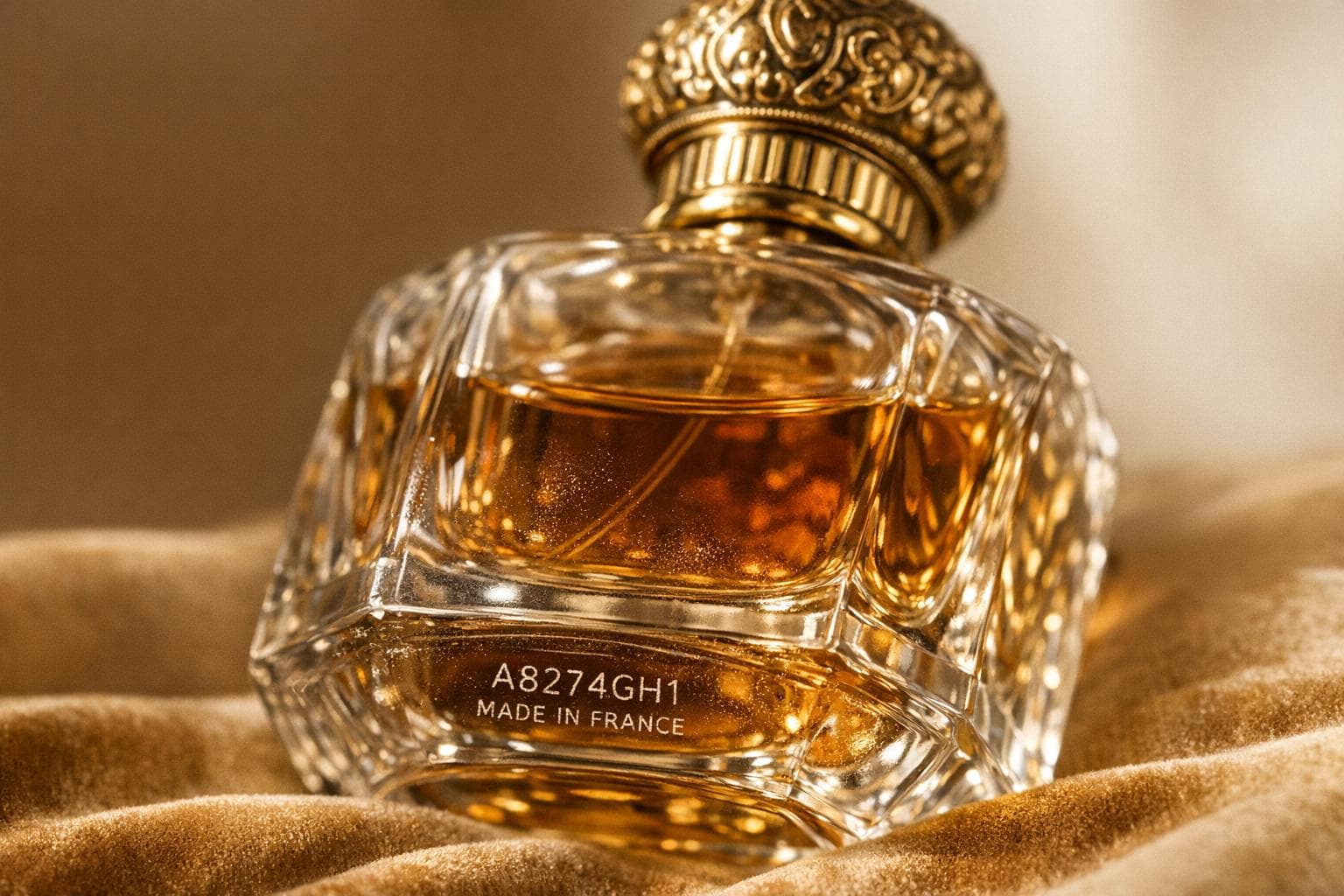
Gefälschte Sammler-Parfümflakons sind überall, und sie zu erkennen, kann Ihnen Geld sparen und Ihre Gesundheit schützen. Gefälschte Parfums verwenden oft billige Materialien, verfügen nicht über ordnungsgemäße Sicherheitstests und erreichen nicht die Qualität echter Flakons. Darauf sollten Sie achten:
- Eingravierte Markierungen und Chargencodes: Echte Flakons besitzen glatte, eingeätzte Logos und Chargencodes, die mit der äußeren Verpackung übereinstimmen. Fälschungen verlassen sich oft auf aufgedruckte oder minderwertige Markierungen.
- Glasqualität: Hochwertige Flakons werden aus klarem, dickem und makellosem Glas gefertigt. Bei Fälschungen können Blasen, Nähte oder eine ungleichmäßige Dicke sichtbar sein.
- Gewicht und Haptik: Echte Flakons fühlen sich dank erstklassiger Materialien schwerer und robuster an. Leichtere Flakons sind ein Warnsignal.
- Kappen und Passform: Originalkappen sitzen sicher und rasten mit einem präzisen Klick ein. Gefälschte Kappen können wackeln oder billig wirken.
- Verpackungsdetails: Authentische Schachteln verwenden hochwertigen Karton, gestochen scharfen Druck und straff sitzende Cellophanfolie. Achten Sie auf verschwommenen Text, Rechtschreibfehler oder lose Folie.
- Alterungsspuren bei Vintage-Flakons: Natürliche Abnutzung wie Verfärbungen oder Rückstände ist bei älteren Flakons normal. Übertrieben makellose „Vintage“-Flakons könnten gefälscht sein.
Wenn Sie unsicher sind, vergleichen Sie den Flakon mit einem Original von einem autorisierten Händler oder überprüfen Sie Chargencodes mit Tools wie CheckFresh. Vermeiden Sie Angebote, die zu gut erscheinen, um wahr zu sein – starke Preisnachlässe sind oft ein Hinweis auf Fälschungen. Schützen Sie Ihre Investition und Ihre Gesundheit, indem Sie bei vertrauenswürdigen Quellen kaufen.
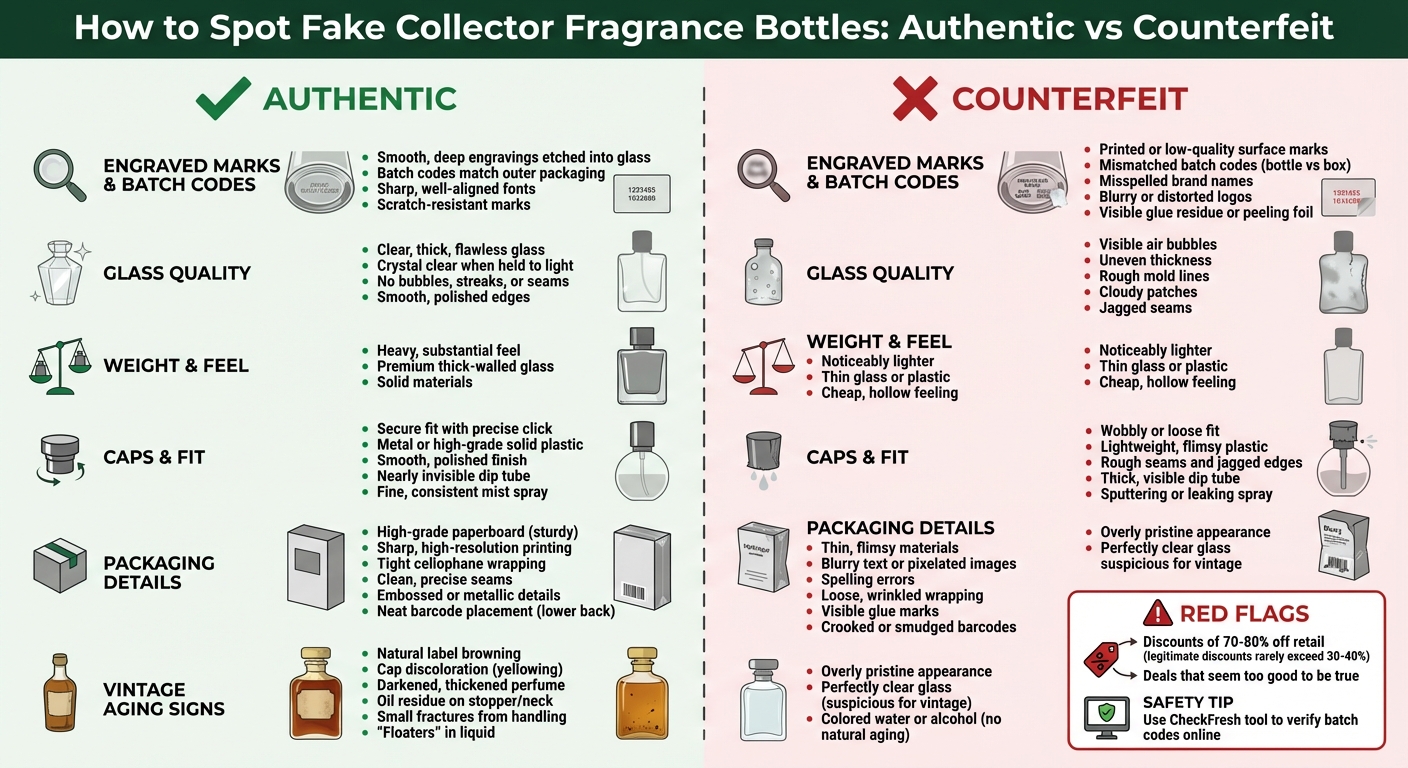
Authentische vs. gefälschte Parfümflakons: Visueller Vergleichsleitfaden
Check Maker’s Marks and Signatures
Herstellerkennzeichen sind entscheidend für die Authentifizierung von Sammler-Parfümflakons und spiegeln die bereits zuvor angesprochenen hohen Standards handwerklicher Perfektion wider. Diese Kennzeichen – etwa eingravierte Logos, Signaturen und Chargennummern – werden direkt in das Glas geätzt und dienen als Markenzeichen der Echtheit. Echte Kennzeichnungen zeichnen sich durch glatte, tiefe Gravuren aus, die Fälscher nur schwer nachbilden können.
Was Herstellerkennzeichen über die Handwerkskunst verraten
Luxus-Parfümmarken legen größten Wert auf Präzision und Qualitätskontrolle, und ihre Herstellerkennzeichen zeugen von dieser Hingabe. Authentische Flakons haben in der Regel Chargencodes, die in das Glas eingraviert sind – häufig am Boden, am Hals oder nahe dem Sockel zu finden – anstatt auf die Oberfläche gedruckt zu sein. Diese Chargencodes, eine Kombination aus Buchstaben und Zahlen, werden von den Herstellern verwendet, um Produktionsdetails nachzuverfolgen.
"Untersuchen Sie den Flaschenboden auf Gravuren oder Prägungen, denn echte Parfums enthalten in der Regel Seriennummern oder Logos, die eingeätzt und nicht aufgedruckt sind." — GQ India
Damit ein Produkt echt ist, muss der Chargencode auf dem Flakon mit dem auf der äußeren Verpackung übereinstimmen. Diese Übereinstimmung ist ein entscheidender Echtheitsnachweis. Online-Tools wie CheckFresh können diese Codes ebenfalls überprüfen und das Herstellungsdatum sowie die Legitimität der Marke bestätigen.
Gefälschte Kennzeichnungen erfüllen diese Standards hingegen oft nicht.
Häufige Fehler bei gefälschten Kennzeichnungen
Gefälschte Kennzeichnungen verraten sich häufig durch mangelhafte Ausführung. Achten Sie auf falsch geschriebene Markennamen, unscharfe oder verzerrte Logos und ungleichmäßige Abstände im Text. Während authentische Gravuren scharfe, sauber ausgerichtete Schriftarten verwenden, sind Fälschungen oft dezentriert oder schief.
"Wenn der Code auf der Schachtel und der Code auf der Flasche nicht übereinstimmen, haben Sie es mit einer Fälschung zu tun. Keine Ausnahmen." — Databazaar
Auch die Art der Anbringung ist ein wichtiger Unterschied. Fälscher greifen häufig auf Oberflächendruck oder billige Aufkleber zurück, die sich leicht abreiben lassen, während echte Gravuren kratzfest und langlebig sind. Authentische Kennzeichnungen fühlen sich glatt und präzise an, wohingegen Fälschungen oft raue Kanten oder ungleichmäßige Prägungen aufweisen. Zudem sind sichtbare Klebereste oder sich ablösende Folie klare Hinweise auf eine Fälschung.
Glasqualität und Gewicht beurteilen
Die Qualität des Glases kann viel über die Echtheit eines Parfums verraten. Hochwertige Duftmarken scheuen keine Kosten, wenn es um Materialien geht, und das zeigt sich in der Verarbeitung ihrer Flakons. Echte Flakons bestehen aus dickem, hochwertigem Glas, das sich glatt, schwer und frei von Makeln wie rauen Kanten oder sichtbaren Nähten billiger Formen anfühlt.
"Authentische Parfümflakons werden oft aus hochwertigem Glas gefertigt, das klar und frei von Unvollkommenheiten wie Blasen, Schlieren oder Nähten ist. Das Glas sollte glatt sein und sich massiv anfühlen." — Luxury Parfum Blog
Um dies zu prüfen, halten Sie den Flakon gegen ein helles Licht. Echtes Glas erscheint kristallklar, ohne Trübungen, Schlieren oder eingeschlossene Luftblasen. Gefälschte Flakons dagegen verwenden oft Glas minderer Qualität, das solche Mängel aufweisen kann.
Häufige Mängel bei gefälschtem Glas
Nachdem Sie die allgemeine Glasqualität beurteilt haben, achten Sie genau auf spezifische Mängel, die eine Fälschung entlarven könnten. Gefälschte Flakons zeigen oft verräterische Anzeichen wie sichtbare Luftblasen, ungleichmäßige Dicke oder raue Formlinien entlang der Kanten. Diese Unvollkommenheiten sind meist das Ergebnis billiger, hastiger Produktionsmethoden.
Auch die Oberflächenveredelung des Glases ist ein entscheidendes Detail. Authentische Flakons sind poliert und veredelt, mit glatten Kanten und eleganten Kurven. Im Gegensatz dazu können Fälschungen gezackte Nähte dort aufweisen, wo die Formhälften zusammentreffen, oder trübe Stellen statt der makellosen Klarheit, die man erwarten würde. Achten Sie außerdem auf das Markenlogo oder den Chargencode. Wenn dieser lediglich auf die Oberfläche gedruckt statt präzise eingraviert ist, ist das ein deutliches Warnsignal.
Die Rolle des Gewichts bei der Echtheitsprüfung
Auch das Gewicht eines Flakons kann ein wichtiger Hinweis auf seine Echtheit sein. Echte Flakons werden aus dickwandigem Glas gefertigt, was ihnen ein substanzielles, solides Gefühl verleiht. Fälscher hingegen, die Kosten sparen wollen, verwenden oft dünneres Glas – oder sogar Kunststoff – was dazu führt, dass sich die Flakons spürbar leichter und weniger hochwertig anfühlen.
"Echte Parfums sind schwerer, weil sie aus hochwertigem Glas und dickwandigen Flaschen bestehen. Wenn es sich leicht oder billig anfühlt, ist Vorsicht geboten." — ClinicAdvisor
Wenn Sie unsicher sind, vergleichen Sie das Gewicht des Flakons mit einer authentischen Version bei einem autorisierten Händler. Eine Fälschung wirkt für ihre Größe oft überraschend leicht. Vergessen Sie nicht, auch die Kappe zu prüfen – echte Kappen bestehen aus soliden, hochwertigen Materialien, während gefälschte Kappen oft leicht, hohl und aus billigem Kunststoff gefertigt sind.
Stopfen, Kappe und Passform prüfen
Genau wie Herstellerkennzeichen und Glasqualität spielen auch Kappe und Stopfen eine entscheidende Rolle bei der Identifizierung eines authentischen Duftes. Echte Kappen werden mit höchster Präzision gefertigt und sind so konzipiert, dass sie sanft und sicher mit einem befriedigenden Klick einrasten. Wenn Sie eine authentische Kappe schließen, sitzt sie perfekt ausgerichtet und erzeugt ein klares, hörbares Geräusch.
"Eine echte Kappe hat Substanz. Sie ist dafür gemacht, mit befriedigender Präzision einzurasten und eine perfekte Versiegelung zu schaffen." — Databazaar
Gefälschte Kappen hingegen bleiben qualitativ oft deutlich zurück. Sie werden meist aus billigeren Materialien gefertigt, was zu einem wackeligen oder lockeren Sitz führt. Wenn sich die Kappe instabil anfühlt oder sichtbare Lücken zwischen ihr und der Schulter des Flakons hinterlässt, ist das ein Warnsignal dafür, dass das Produkt möglicherweise nicht echt ist. Dieser Mangel an Präzision steht in starkem Kontrast zur makellosen Konstruktion authentischer Kappen.
Merkmale echter Kappen
Nehmen Sie sich einen Moment Zeit und fühlen Sie die Kappe. Authentische Kappen bestehen in der Regel aus edlen Materialien wie Metall oder hochwertigem, massivem Kunststoff, was ihnen ein schwereres, substanzielleres Gefühl verleiht. Sie sind so gestaltet, dass sie sich wie ein integraler Bestandteil des Produkts anfühlen – nicht wie ein nachträglicher Einfall.
Ein weiteres Detail, das Sie prüfen sollten, ist das innere Steigrohr – das schlanke Kunststoffröhrchen im Flakon, das den Duft zum Zerstäuber führt. Bei authentischen Parfums ist dieses Röhrchen nahezu unsichtbar und präzise so zugeschnitten, dass es den Boden des Flakons erreicht und bei jeder Anwendung einen gleichmäßigen Sprühstoß gewährleistet.
Gefälschte Kappen und Komponenten hingegen zeigen deutliche Zeichen minderwertiger Verarbeitung.
Anzeichen schlechter Verarbeitung bei gefälschten Kappen
Gefälschte Kappen sind oft leicht und klapprig und bestehen aus hohl wirkendem Kunststoff. Sie können lose sitzen, sich nur mit übermäßigem Kraftaufwand befestigen lassen oder nicht sicher halten und mitunter schon bei minimaler Berührung abfallen.
"Die Kappe sollte sicher und perfekt auf dem Flakon sitzen. Wenn die Kappe locker ist oder nicht gut passt, ist das ein starkes Indiz dafür, dass das Parfum gefälscht ist." — FNP.ae
Achten Sie genau auf die Kanten und die gesamte Verarbeitung. Authentische Kappen sind glatt und poliert, während gefälschte Exemplare raue Nähte, gezackte Kanten oder sichtbare Formlinien aufweisen können – klare Hinweise auf minderwertige Produktion. Ebenso sind gefälschte Steigrohre oft dicker, durch das Glas besser sichtbar und ungeschickt zu lang, sodass sie sich am Boden biegen. Auch gefälschte Zerstäuber verraten sich, indem sie stottern, auslaufen oder den Duft in einem harten, ungleichmäßigen Strahl statt als feinen, gleichmäßigen Nebel abgeben, wie man es von einem echten Produkt erwarten würde.
Ihr persönlicher Duftexperte erwartet Sie
Machen Sie unser kurzes Duftquiz und entdecken Sie authentische Designer- und Nischenparfums, die zu Ihrem Geschmack passen – als 2, 5, 8 & 30 ml Dekants und Proben, damit Sie jeden Duft testen können, bevor Sie sich für einen ganzen Flakon entscheiden.
Finden Sie Ihren DuftEtiketten, Chargencodes und Verpackung überprüfen
Wenn es darum geht, die Echtheit eines Parfums sicherzustellen, ist die Prüfung von Etiketten, Chargencodes und Verpackung unerlässlich. Luxusmarken unterliegen einer strengen Qualitätskontrolle, weshalb diese Details ein verlässlicher Prüfpunkt sind, den Fälscher oft nicht überzeugend nachbilden können. Dieser Schritt baut auf den zuvor behandelten Prüfungen von Herstellerkennzeichen und Glasqualität auf.
Warum Etiketten und Chargencodes wichtig sind
Chargencodes sind mehr als bloße Zufallszahlen – sie geben wichtige Produktionsdetails preis, etwa das Herstellungsdatum und den Produktionsort. Zur Echtheitsprüfung muss der Chargencode auf dem Flakon mit dem auf der äußeren Verpackung übereinstimmen.
Authentische Chargencodes sind in der Regel direkt in das Glas eingeätzt oder in die Verpackung geprägt, während gefälschte Versionen häufig hastig auf die Oberfläche gedruckt werden. Jede Marke hat ihr eigenes, unverwechselbares Format; so verwenden Chanel und Dior beispielsweise häufig vierstellige alphanumerische Codes. Sie können diese Codes mit Online-Tools wie CheckFresh, CheckCosmetic oder BeautyChecker abgleichen, um das Herstellungsdatum zu bestätigen. Auch wenn diese Tools nicht unfehlbar sind – manche Fälschungen kopieren gültige Codes –, bieten sie eine zusätzliche Ebene der Sicherheit.
Verpackungsmängel bei Fälschungen erkennen
Auch bei der Verpackung zeigen Fälscher häufig Schwächen. Beginnen Sie mit der Cellophanfolie – echte Luxusparfums verwenden dickes, hochwertiges Cellophan, das straff mit sauberen, präzisen Nähten um die Verpackung gelegt ist. Gefälschte Versionen hingegen haben oft lose, zerknitterte Folie oder sichtbare Kleberspuren.
Sehen Sie sich die Druckqualität genau an, bei Bedarf sogar mit einer Lupe. Hochwertige Marken verwenden scharfen Druck in hoher Auflösung. Verschwommener Text, pixelige Bilder, uneinheitliche Schriftarten oder Rechtschreibfehler sind sofortige Warnsignale. Luxusmarken halten strenge Qualitätsstandards ein und würden solche Fehler niemals zulassen. Darüber hinaus weisen authentische Schachteln oft geprägte oder metallische Details auf, die Fälscher aus Kostengründen weglassen.
Auch Barcodes können verräterisch sein. Bei echten Produkten sind Barcodes in der Regel ordentlich auf der unteren Rückseite der Schachtel angebracht. Wenn der Barcode schief, verschmiert oder merkwürdig an der Seite positioniert ist, handelt es sich wahrscheinlich um eine Fälschung. Fühlen Sie zuletzt auch die Schachtel selbst. Authentische Verpackungen verwenden stabilen, hochwertigen Karton, der sich solide anfühlt und oft innere Strukturen enthält, um den Flakon sicher zu fixieren. Gefälschte Schachteln hingegen bestehen meist aus dünnen, instabilen Materialien, die sich leicht verbiegen.
Patina, Gebrauchsspuren und Seriennummern betrachten
Bei Sammler-Parfümflakons kann natürliche Alterung ein entscheidender Hinweis auf Echtheit sein. Echte Vintage-Flakons entwickeln im Laufe der Zeit Abnutzungsmuster, die gefälschte Versionen häufig nicht überzeugend nachahmen können.
Wie Alterung und Patina Echtheit offenbaren
Authentische Vintage-Flakons zeigen natürliche Alterungserscheinungen. Etiketten können bräunen, Kappen sich verfärben, und auch das Parfum selbst wird durch Einwirkung und Verdunstung oft dunkler und dickflüssiger. So neigen beispielsweise Vintage-Kappen aus Lucite dazu, mit der Zeit zu vergilben, und können kleine Bruchstellen vom Gebrauch aufweisen.
Die Sammlerin Diane von Dragonfly Scent Me teilt ihre Einschätzung:
"Vintage-Parfums verfärben aufgrund der Öle oft die Innenseite von Flaschenhals und Stopfen und hinterlassen selbst dann Rückstände, wenn sie noch versiegelt sind!!"
. Sie merkt außerdem an, dass echte gealterte Parfums häufig „Schwebstoffe“ entwickeln – winzige Ölkügelchen oder geronnene Partikel –, da die Duftöle mit der Zeit eindicken. Gefälschte Flakons, die oft mit gefärbtem Wasser oder Alkohol gefüllt sind, weisen diese natürlichen Alterungsmerkmale nicht auf.
Seien Sie vorsichtig bei Flakons, deren Glas ungewöhnlich makellos erscheint, insbesondere wenn sie als Vintage angeboten werden. Diane warnt:
"Wenn Stopfen und Hals aus vollkommen klarem, sauberem Glas bestehen, könnte das ein Hinweis darauf sein, dass es sich um eine Factice handelt"
. Dies könnte auf einen Display-Flakon hinweisen, auch als „Factice“ bekannt, der nie dafür gedacht war, echtes Parfum zu enthalten. Hochkarätige Marken wie Guerlain oder Balenciaga markieren solche Flakons mitunter mit „DUMMY“ oder „FACTICE“, in das Glas eingeätzt.
Diese visuellen und haptischen Alterungsmerkmale können andere technische Prüfmethoden ergänzen, um die Echtheit sicherzustellen.
Seriennummern mit Herstellern verifizieren
Zusätzlich zu natürlichen Gebrauchsspuren sind Seriennummern eine verlässliche Möglichkeit, die Geschichte eines Flakons nachzuverfolgen. Authentische Flakons besitzen Seriennummern, die direkt in das Glas eingraviert oder eingeätzt sind, während Fälschungen oft billige, aufgedruckte Codes verwenden, die sich leicht abreiben lassen. Stellen Sie immer sicher, dass die Seriennummer auf dem Flakon mit der auf der äußeren Verpackung übereinstimmt.
Online-Tools wie CheckFresh, CheckCosmetic und Checkexp können helfen, das Herstellungsdatum eines Flakons zu überprüfen. Wenn das entschlüsselte Datum nicht mit dem bekannten Produktionszeitraum der Sammleredition übereinstimmt, ist das ein starkes Zeichen für eine Fälschung. Bei hochpreisigen Käufen kann eine Kontaktaufnahme mit dem Kundenservice der Marke unter Angabe der Seriennummer zusätzliche Sicherheit bieten. Bedenken Sie, dass jedes Parfumhaus sein eigenes, einzigartiges Codierungssystem verwendet – oft eine Mischung aus bestimmten Zeichenlängen sowie Kombinationen aus Buchstaben und Zahlen. Es ist entscheidend, das Format der jeweiligen Marke vor dem Kauf zu recherchieren.
Fazit
Gefälschte Sammler-Parfümflakons zu erkennen, erfordert einen geschulten Blick und eine sorgfältige Prüfung. Von der Sicherstellung, dass Chargencodes den authentischen Standards entsprechen, bis hin zur Kontrolle des Glases auf glatte Oberflächen und das Fehlen von Mängeln – jedes Detail zählt, um Ihre Investition zu schützen. Echte Parfums besitzen eine Tiefe und Komplexität, die Fälschungen schlicht nicht nachbilden können.
Die Risiken gehen weit über den finanziellen Verlust hinaus. Gefälschte Düfte enthalten häufig nicht regulierte Chemikalien, die Ihrer Gesundheit schaden können. Ein Duft, der mit 70–80 % unter dem Verkaufspreis angeboten wird, ist fast immer gefälscht – legitime Rabatte übersteigen selten 30–40 %.
Zu den wichtigsten Schritten gehören die Überprüfung von Seriennummern, die Nutzung von Tools wie CheckFresh und die Beurteilung der Funktion des Zerstäubers. Ein echter Zerstäuber gibt einen feinen, gleichmäßigen Nebel ab, während ein gefälschter spritzen oder auslaufen kann. Zudem sollte die Kappe eines authentischen Flakons sicher sitzen und mit einem befriedigenden Klick schließen.
Für alle, die zunächst Probiergrößen testen möchten, bevor sie sich für einen ganzen Flakon entscheiden, bieten vertrauenswürdige Plattformen eine sichere Möglichkeit, echte Düfte zu erleben. Plattformen wie Scento bieten verifizierte Abfüllungen in Fläschchen mit 2 ml, 5 ml und 8 ml sowie bei den meisten Düften als Flakon-Abfüllung mit 30 ml an, sodass Sie die Echtheit und Komplexität eines Duftes prüfen können, bevor Sie in eine Sammleredition investieren. Wählen Sie stets autorisierte Händler und verlässliche Quellen, die Echtheit garantieren und klare Rückgaberichtlinien bieten.
FAQs
Wie kann ich anhand von Chargencodes prüfen, ob ein Sammler-Parfümflakon echt ist?
Um sicherzustellen, dass das Produkt echt ist, suchen Sie den Chargencode – in der Regel auf dem Flaschenboden eingraviert oder auf der Verpackung aufgedruckt. Verwenden Sie diesen Code auf der offiziellen Website der Marke oder in einem vertrauenswürdigen Tool zur Chargencode-Prüfung. Ein legitimer Code stimmt mit dem korrekten Herstellungsdatum und den Produktinformationen überein. Wenn das nicht der Fall ist, könnte es sich um eine Fälschung handeln.
Wie kann ich erkennen, ob ein Sammler-Parfümflakon gefälscht ist?
Eine Fälschung bei einem Sammler-Parfümflakon zu erkennen, bedeutet vor allem, auf feinste Details zu achten. Beginnen Sie mit der Prüfung von Druck und Logos – achten Sie auf alles, was verschwommen, ungleichmäßig oder falsch geschrieben wirkt. Logos sollten perfekt ausgerichtet sein, und die Chargen- oder Seriennummern sollten klar und sauber eingeätzt sein. Fehlen diese Nummern oder sind sie schlecht ausgeführt, ist das ein deutliches Warnsignal.
Auch die Materialqualität ist aufschlussreich. Authentische Flakons bestehen aus hochwertigem Glas, das sich solide und glatt anfühlt. Seien Sie vorsichtig bei Flakons mit dünnem, leichtem Glas, sichtbaren Blasen oder rauen Kanten, da dies typische Anzeichen für Fälschungen sind.
Schließlich zählt auch die Verarbeitung. Echte Flakons strahlen Präzision und Solidität aus, mit raffinierten Oberflächen, die gefälschte Versionen oft nicht überzeugend nachahmen können. Um jede Unsicherheit zu vermeiden, kaufen Sie immer bei vertrauenswürdigen Anbietern, damit Sie Ihrer Sammlung ein authentisches Stück hinzufügen.
Warum sollte ich Düfte nur aus verlässlichen Quellen kaufen?
Der Kauf von Düften aus vertrauenswürdigen Quellen ist essenziell, um sicherzustellen, dass Sie Originalprodukte erhalten, die den Qualitäts- und Sicherheitsstandards entsprechen. Gefälschte Parfums verwenden häufig minderwertige oder potenziell schädliche Inhaltsstoffe, was zu Hautreizungen oder anderen gesundheitlichen Problemen führen kann.
Neben der Sicherheit schützt der Kauf bei verlässlichen Anbietern auch Ihre Investition. Echte Düfte bieten die Handwerkskunst, Haltbarkeit und den Gesamtwert, den Fälschungen schlicht nicht erreichen können. Um eine Sammlung authentischer Düfte aufzubauen und unangenehme Überraschungen zu vermeiden, sollten Sie sich an seriöse Händler oder Plattformen halten, die verifizierte Echtheitsgarantien bieten.

