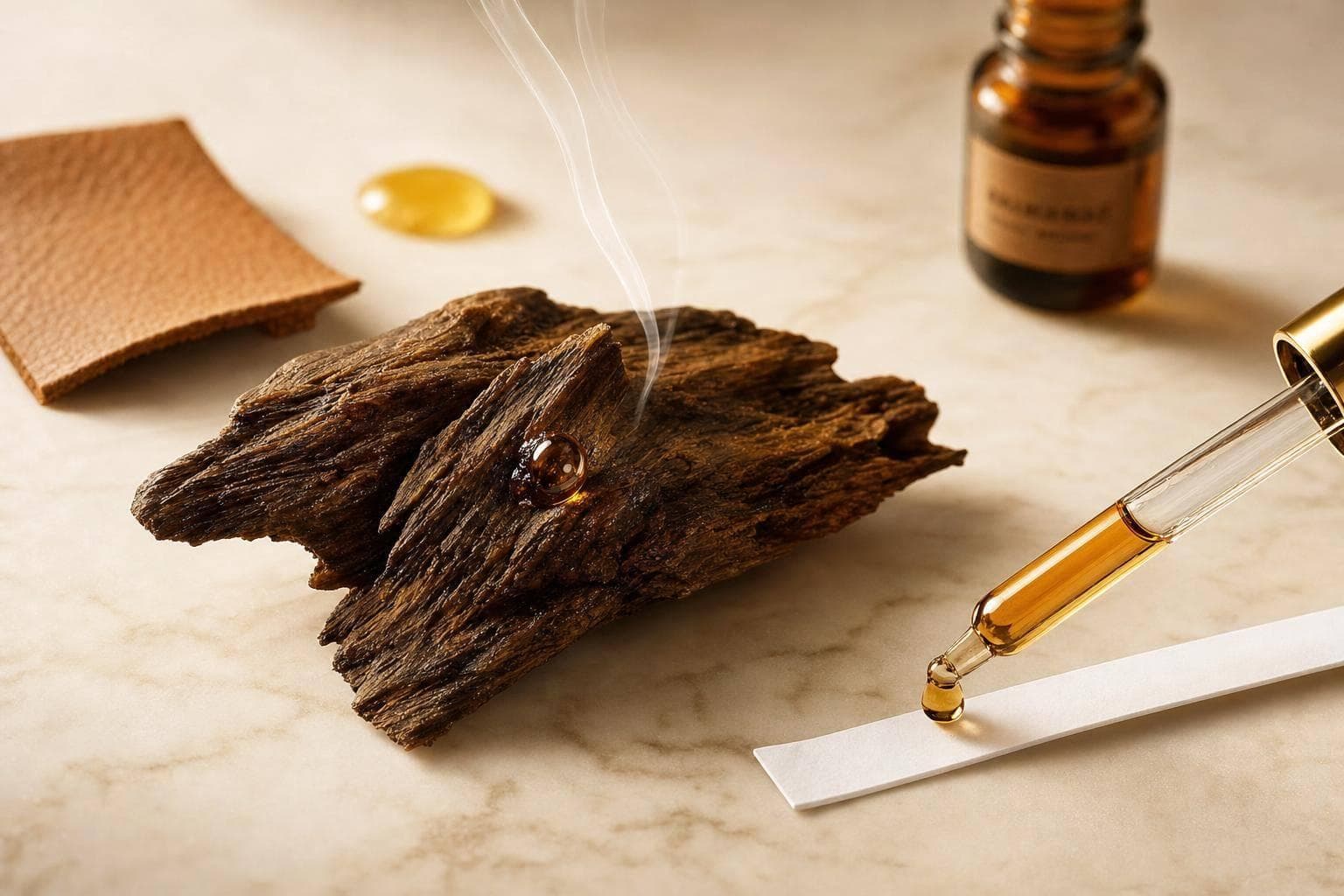
Oud riecht nicht wie eine einzelne Duftnote. Wenn ich es Einsteigern erkläre, halte ich es einfach: Oud riecht meist dunkel, holzig, harzig, rauchig, ledrig, erdig oder süß – und in der Kopfnote manchmal leicht medizinisch.
Wenn Oud Sie verwirrt, ist das völlig verständlich. Die meisten Parfums, die in 2026 als Oud verkauft werden, enthalten nicht viel rohes Oudöl. Stattdessen verwenden sie einen Oud — Akkord. Deshalb riecht ein Flakon weich und geschmeidig, während ein anderer tief, trocken und beinahe animalisch wirkt.
Hier ist die Kurzfassung:
- Weiches Oud = sanfte Hölzer und Moschus
- Süßes Oud = Amber, Vanille, Rose
- Dunkles Oud = Rauch, Leder, Erde
- Natürliches Oudöl kann 12 bis 24 Stunden halten
- Einige Stilrichtungen, vor allem Hindi- oder indonesische Typen, können 10–20 Minuten lang medizinisch riechen, bevor sie sich beruhigen
- Oud lässt sich am besten im Dry-down nach 30–60 Minuten beurteilen
Wenn ich Oud in einfachen Worten zusammenfassen müsste, würde ich sagen: Es riecht nach dunklem Holz, Harz, Weihrauch, getragenem Leder, feuchter Rinde und warmem Amber – alles zugleich, in unterschiedlichen Anteilen.
Die beste Art, es zu testen: Probieren Sie drei kleine Proben auf der Haut – ein weiches Oud, ein süßes Rosen- oder Amber — Oud und ein dunkleres, rauchiges Oud – und schauen Sie, welches sich nach ein paar Stunden noch gut anfühlt.
| Oud — Stil | Wie er oft riecht | Guter Einstieg für |
|---|---|---|
| Weich / Clean | Sanftes Holz, heller Moschus, polierte Basis | Tägliches Tragen |
| Süß / Amber | Rose, Amber, Vanille, sirupartige Wärme | Abend, kühlere Monate |
| Dunkel | Rauch, Leder, Erde, trockenes Holz | Markanten Geschmack |
Das ist die Hauptidee des vollständigen Leitfadens: Lernen Sie die wichtigsten Duftseiten kennen, warten Sie auf den Dry-down und vergleichen Sie die Stilrichtungen auf der Haut, bevor Sie € für einen ganzen Flakon ausgeben.
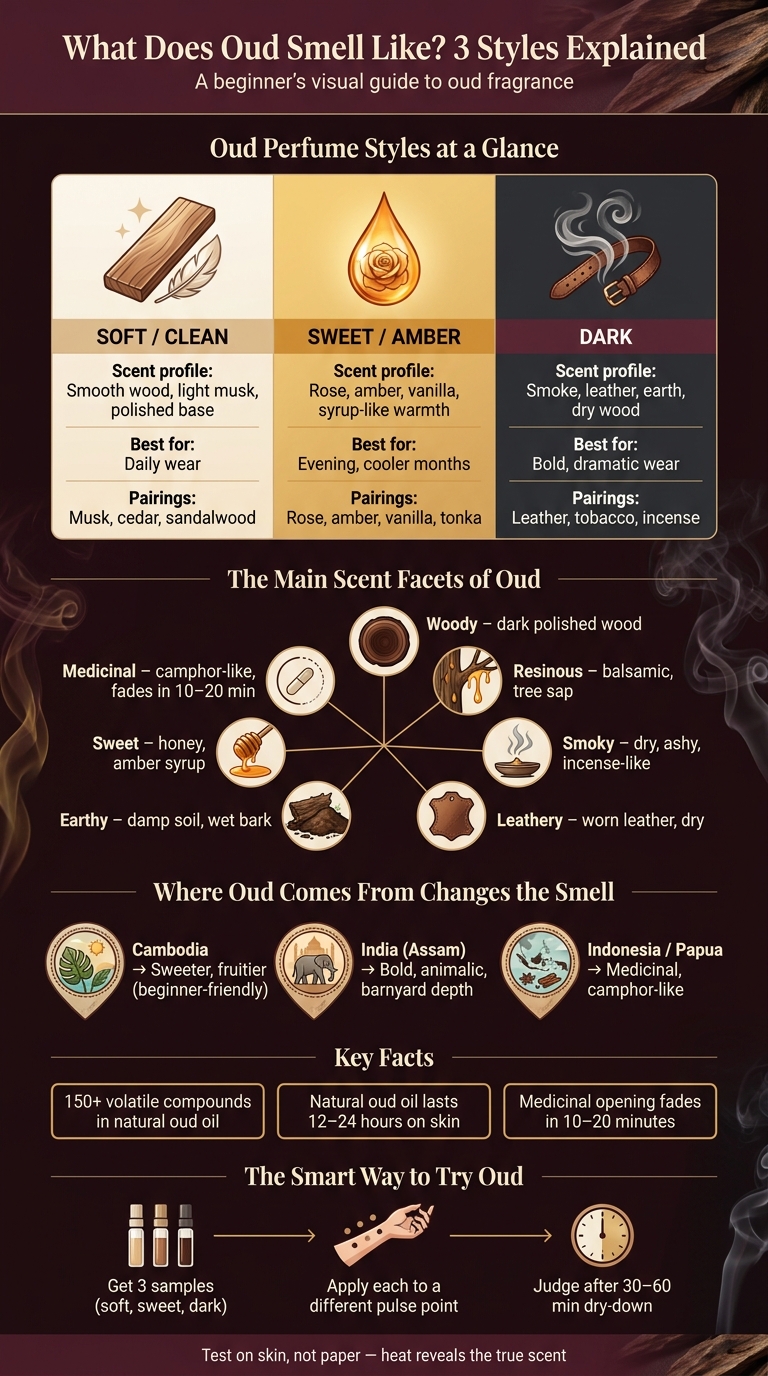
Oud — Parfumstile im Vergleich: Weich vs. Süß vs. Dunkel
Was ist OUD? Duftnoten der Parfümerie einfach erklärt. #perfume101 #oud
Die wichtigsten Duftfacetten von Oud, einfach erklärt
Oud hat Schichten. Es riecht nicht nur nach einer Sache. Am einfachsten erkennt man es in einem Parfum, wenn man es in Bestandteile aufteilt, die die Nase benennen kann.
Holzige, harzige, rauchige und ledrige Facetten
Die Seite, die die meisten Menschen zuerst wahrnehmen, ist seine holzige Tiefe. Es riecht weniger nach frisch geschnittenem Holz, sondern eher nach dunklem, poliertem Holz mit Gewicht und Wärme. Darunter liegt oft eine harzige Qualität - klebrig, balsamisch, fast wie von der Sonne erwärmter Baumsaft.
Die rauchige Facette wirkt meist trocken und aschig, ein wenig wie Weihrauch oder die letzte Spur verglimmender Glut. Daneben besitzen viele Ouds eine ledrige Kante. Sie fühlt sich trocken und strukturiert an, eher wie getragenes Leder oder Pferdegeschirr als etwas Scharfes.
Diese dunkleren, wärmeren Facetten gehen oft ineinander über. Deshalb kann Oud in einem Parfum glatt und seidig wirken und in einem anderen dicht und schattenreich.
Erdige, animalische, süße und medizinische Facetten
Die erdige Facette kann nach feuchter Erde, nasser Rinde oder einem Waldboden nach Regen riechen. Nah daran liegt die animalische Seite, die für Einsteiger meist am schwierigsten ist. Sie kann an Stallungen oder warme Haut erinnern und ist oft die polarisierendste Facette.
Viele moderne Oud — Parfums mildern diese raueren Kanten, sodass die meisten Einsteiger zuerst einem saubereren, stärker polierten Stil begegnen. Oud kann auch süß riechen - balsamisch, mit einer Anmutung, die an Honig oder dichten Ambersirup erinnert. Und manche Hindi — Ouds eröffnen mit einer medizinischen Note: scharf, kampferartig und fast klinisch, wie ein Kräuterbalsam oder ein alter Medizinschrank. Diese Kante verfliegt gewöhnlich nach 10–20 Minuten und legt sich dann in die wärmeren, holzigeren Schichten darunter.
Da jede Formel diese Facetten auf eigene Weise mischt, kann Oud von weich und rund bis markant und intensiv reichen.
Warum ein Oud — Parfum weich riecht und ein anderes intensiv
Oud verändert sich je nach Material, Komposition und Herkunft. Einfach gesagt: Dieselbe Note kann in einem Flakon luftig wirken und in einem anderen tief, rauchig oder fast wild.
Natürliches Oudöl versus moderne Oud — Akkorde
Natürliches Oudöl enthält über 150 verschiedene flüchtige Verbindungen. Das ist ein wesentlicher Grund, warum es sich auf der Haut so vielschichtig anfühlt. Über einige Stunden hinweg kann es rauchige, süße, medizinische und animalische Phasen durchlaufen.
Moderne Oud — Akkorde funktionieren anders. Sie werden oft aus einer kleineren Auswahl an Aromamolekülen aufgebaut, sodass das Ergebnis tendenziell glatter, sauberer und leichter tragbar riecht.
Wenn Sie nach einem modernen Oud — Duft suchen, begegnen Sie meist eher einem polierten synthetischen Akkord als natürlichem Oudöl. Das erklärt, warum viele neuere Oud — Düfte zugänglicher wirken als rohes Oud.
Drei Oud — Kategorien, die man kennen sollte: weich, süß und dunkel
Parfümeure ordnen Oud oft in drei Hauptstile ein, je nachdem, welche Facetten sie in den Vordergrund rücken:
- Weich / Clean - polierte Hölzer und helle Moschusnoten; ideal für den Alltag
- Süß / Amber - Vanille, Amber und Rose; besonders geeignet für Herbst- und Winterabende
- Dunkel - Rauch, Leder und Erde im Vordergrund; markant und dramatisch
Wie Region und Konzentration den Duft beeinflussen
Die Herkunft verändert den Duft erheblich. Kambodschanisches Oud riecht oft süßer und fruchtiger, was es zu einem der zugänglicheren Stile für Einsteiger macht. Indisches Oud aus Regionen wie Assam ist kühner und animalischer, mit einer stallartigen Tiefe. Indonesische und papuanische Stile tendieren stärker ins Medizinische oder Kampferartige.
Wenn Menschen also sagen, Oud sei weich, markant oder medizinisch, reagieren sie oft ebenso sehr auf seine Herkunft wie auf das Parfum selbst.
Auch die Konzentration spielt eine Rolle. Ein Eau de Parfum wirkt in der Regel leichter und diffuser, während ein Extrait oder Attar näher an der Haut sitzt und dichter wirkt. Natürliches Oudöl kann 12 bis 24 Stunden auf der Haut halten, sodass reichhaltigere Formeln oft besonders langanhaltend erscheinen.
Diese Muster bemerkt man schnell, sobald man Oud in gängigen Kombinationen riecht, besonders mit Rose, Amber und Vanille.
Ihr persönlicher Duftexperte erwartet Sie
Machen Sie unser kurzes Duftquiz und entdecken Sie authentische Designer- und Nischenparfums, die zu Ihrem Geschmack passen – als 2, 5, 8 & 30 ml Dekants und Proben, damit Sie jeden Duft testen können, bevor Sie sich für einen ganzen Flakon entscheiden.
Finden Sie Ihren DuftWie man Oud in echten Parfums erkennt
Versuchen Sie, Oud im Dry-down zu beurteilen, nicht beim ersten Sprühen. Auf der Haut wandelt sich Oud nach etwa 30–60 Minuten oft von rauchig oder scharf zu etwas Holzigerem und Süßerem. Diese Veränderung ist eines der klarsten Anzeichen dafür, dass Oud in der Komposition enthalten ist. Sobald Sie sich an diesen Dry-down gewöhnt haben, wird es viel leichter, die Noten darum herum auseinanderzuhalten.
Häufige Oud — Kombinationen: Rose, Amber, Vanille, Leder und Gewürze
Die Noten neben Oud verraten viel darüber, wie ein Parfum sich auf der Haut tragen wird. Rose glättet meist die raueren Kanten von Oud und verleiht dem Duft ein samtiges, reiches Gefühl, das zu Abendgarderobe und romantischen Momenten passt. Amber fügt Wärme hinzu und lässt Oud weicher, runder und behaglicher wirken. Vanille und Tonkabohne führen es in eine cremigere, leichter tragbare Richtung, weshalb sie für Einsteiger oft gut funktionieren. Leder und Tabak ziehen den Duft in die andere Richtung. Sie betonen die dunklere, rauchigere Seite von Oud und können das Ergebnis ernster und polarisierender wirken lassen.
In vielen modernen Parfums wirkt Oud eher wie ein dunkles, holziges Rückgrat als wie der eigentliche Star der Komposition. Auf der Haut bedeutet das meist:
- Frische holzige Ouds wirken sauber
- Amber — Ouds wirken warm
- Weiche Akkorde wirken poliert
- Traditionelle Ouds wirken rauchig und animalisch
Als schnelle Orientierung riecht Tom Ford Oud Wood weich und poliert, Oud Satin Mood tendiert rosig-süß, und Amouage Interlude Man wirkt dunkel und rauchig.
Wenn Oud weiterhin schwer zu fassen ist, hilft es, es mit Gerüchen zu vergleichen, die Sie bereits kennen.
Alltägliche Duftreferenzen, die helfen, Oud zu erkennen
Abstrakte Beschreibungen von Duftnoten können nur bis zu einem gewissen Punkt helfen. Oft ist es einfacher, in klaren Geruchsbildern zu denken: nasses Waldholz nach Regen, Weihrauchrauch, Vintage — Lederwaren, Kräutersalben oder dunkles Harz. Wenn Sie solche Töne in der Basis eines Duftes wahrnehmen, könnte Oud Teil der Mischung sein.
Testen Sie auf der Haut, nicht auf Papier. Wärme bringt die Basisnoten hervor.
Wie man Oud ausprobiert, ohne Geld für einen ganzen Flakon auszugeben
Beginnen Sie mit weicheren Mischungen und testen Sie zuerst auf der Haut
Da Sie nun die wichtigsten Seiten von Oud erkennen können, testen Sie es auf kluge Weise. Lassen Sie den Teststreifen weg. Oud zeigt seinen vollen Charakter auf der Haut. Verwenden Sie ein bis zwei Sprühstöße auf einem Pulspunkt und geben Sie dem Duft dann Zeit, sich zu entfalten. Oud hält meist stundenlang und kann kraftvoll ausstrahlen, daher ist mehr selten besser.
Wenn Oud für Sie neu ist, beginnen Sie mit einer Rosen — Oud- oder Amber — Oud — Mischung statt mit einem dunklen, klassischeren Oud — Stil. Diese Kombinationen glätten einige der anspruchsvolleren Kanten und machen den Duft beim ersten Tragen leichter verständlich. Achten Sie auf die Eröffnung und warten Sie dann auf den Dry-down. Dann treten die tieferen holzigen, ledrigen oder balsamischen Seiten hervor.
Verwenden Sie kleine Probenfläschchen, um Oud — Stile direkt miteinander zu vergleichen
Sobald Sie gesehen haben, wie sich Oud auf Ihrer Haut entwickelt, machen kleine Proben alles deutlich einfacher. Nutzen Sie Probenfläschchen, um ein weiches Oud, ein süßeres Oud und ein dunkleres Oud direkt nebeneinander zu vergleichen.
Ein einfacher Test hilft:
- Sprühen Sie jeden Stil auf einen anderen Pulspunkt
- Lassen Sie sie einige Stunden tragen
- Achten Sie darauf, welcher sich im Dry-down noch gut anfühlt
Dieser direkte Tragetest sagt Ihnen viel mehr als der erste Duftmoment je könnte.
Fazit: Die einfachste Art, herauszufinden, ob Oud zu Ihnen passt
Nach einigen direkten Vergleichstests wird Ihre Vorliebe meist klar. Probieren Sie ein weiches Rosen — Oud, ein süßes Amber — Oud und ein dunkleres Oud auf der Haut. Dasjenige, das sich nach dem vollständigen Dry-down noch mühelos tragbar anfühlt, ist der beste Ausgangspunkt.
FAQs
Ist Oud immer stark?
Nicht immer. Reines Oudöl kann intensiv, medizinisch oder animalisch riechen. In der modernen Parfümerie kann Oud jedoch auch geschmeidig, poliert und leicht tragbar wirken.
Viel hängt von der Komposition ab. Wenn es mit Noten wie Rose, Vanille oder Sandelholz kombiniert wird, kann Oud sich von kühn und dramatisch zu weich, raffiniert und hautnah wandeln.
Warum riecht Oud auf meiner Haut anders?
Oud ist ein komplexer Duft, und er riecht nicht bei jedem gleich. Ihre Körperchemie, Hauttemperatur und sogar das Wetter können verändern, wie er sich entfaltet. Wenn er sich auf Ihrer Haut erwärmt, können im Laufe der Zeit verschiedene Seiten hervortreten, zunächst rauchig oder scharf, später tiefere Töne wie Leder oder eine honigartige Süße.
Da Oud eine Basisnote ist, hängt sein finaler Charakter auch davon ab, wie es sich mit den anderen Inhaltsstoffen des Duftes und mit den natürlichen Ölen Ihrer Haut verbindet.
Woran erkenne ich, ob ein Parfum echtes Oud verwendet?
Allein am Etikett lässt sich das schwer erkennen. Echtes Adlerholz ist selten und teuer, daher findet man es in Düften für den Massenmarkt so gut wie nie.
Ein besserer Hinweis ist, wie sich der Duft auf der Haut verhält. Natürliches Oud entfaltet sich gewöhnlich in Phasen und durchläuft rauchige, harzige, holzige und ledrige Facetten. Synthetische Akkorde riechen dagegen oft linearer oder werden sofort süß. Natürliches Oud ist außerdem sehr kraftvoll und hält tendenziell stundenlang.

