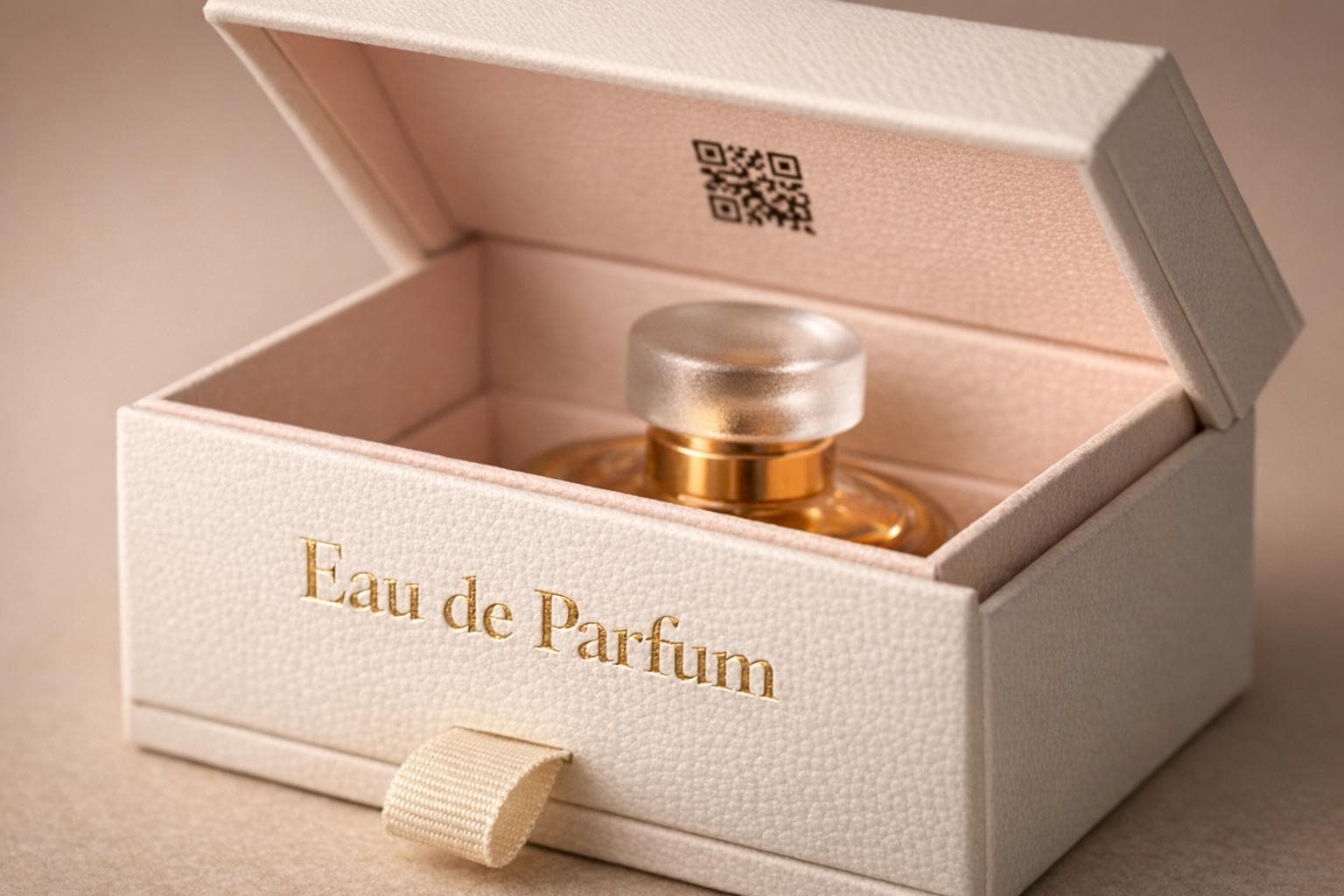
Un frasco de perfume dispone de apenas unos segundos para causar impresión. El diseño del packaging tiende un puente entre una fragancia invisible y una experiencia física, contando una historia que resuena con los clientes. Estos son los cinco elementos clave que dan forma a un packaging de perfume guiado por la narrativa:
- Tipografía: Las fuentes y el espaciado transmiten la personalidad de la marca e insinúan la esencia de la fragancia.
- Materiales y estructura: El peso, la textura y el acabado de un frasco influyen en cómo los clientes perciben la calidad y el valor.
- Imágenes y color: Las señales visuales, como el color y el diseño, establecen expectativas sobre la fragancia del interior, algo especialmente crucial para los compradores online.
- Unboxing y detalles táctiles: Un proceso de apertura en varios pasos crea expectación, mientras que las texturas y los cierres realzan la sensación de lujo.
- Funciones interactivas y digitales: Los códigos QR y las etiquetas NFC prolongan la narrativa en el ámbito digital, ofreciendo vídeos, experiencias de realidad aumentada y mucho más.
Estos elementos trabajan conjuntamente para crear un recorrido sensorial que comienza con el packaging y continúa con la propia fragancia. Cuando se ejecuta con acierto, el packaging se convierte en una parte integral de la identidad del producto, creando una impresión duradera.
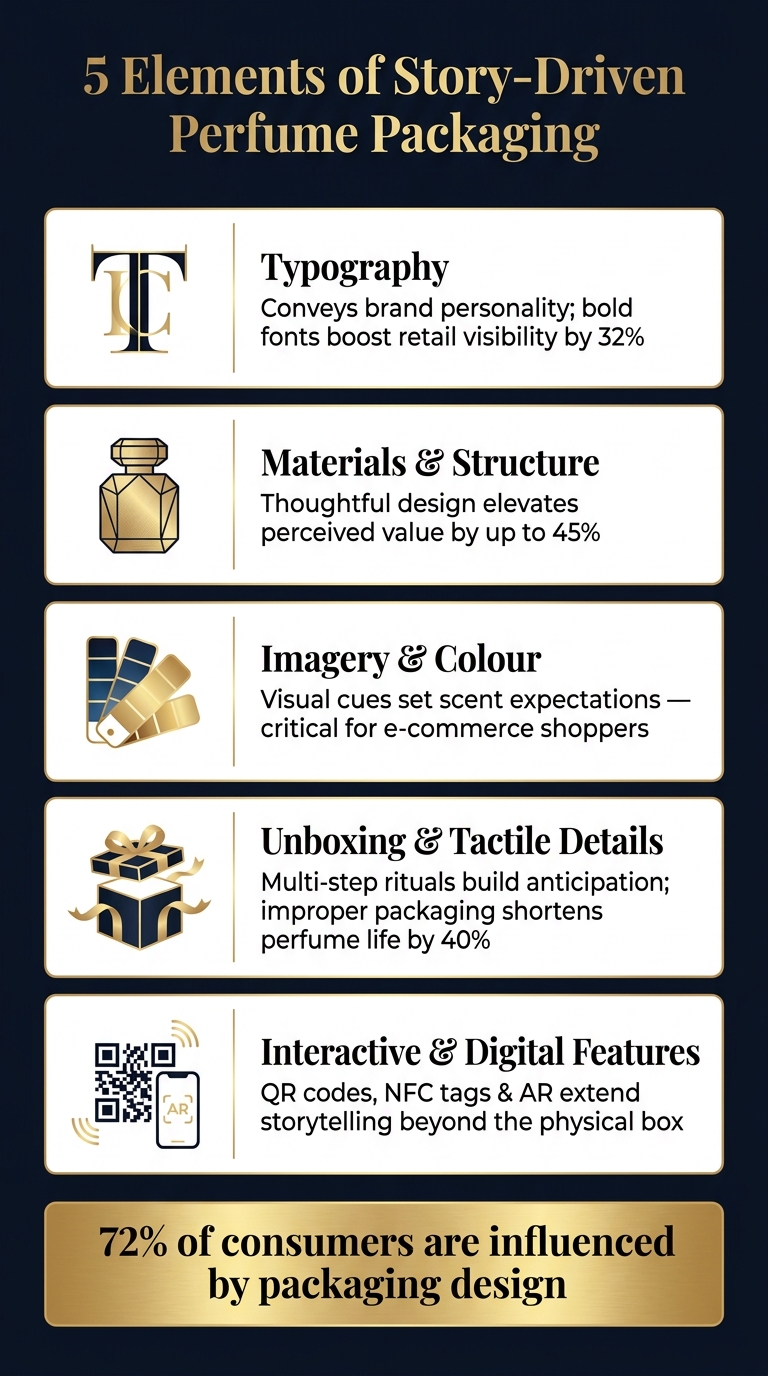
5 elementos de un packaging de perfume impulsado por la narrativa: una guía visual
1. La tipografía como voz narrativa
Antes incluso de que un cliente lea el texto en un frasco de perfume, la tipografía transmite silenciosamente la esencia de la marca. Olivia Bennett, directora de Diseño de Packaging para Joyería en RichPack, describe acertadamente la tipografía como el "héroe anónimo" del diseño de packaging, reflejando de forma sutil pero poderosa la filosofía de la marca.
La decisión entre fuentes serif y sans serif es mucho más que una elección de diseño: es una declaración. Las fuentes serif sugieren herencia, tradición y elegancia atemporal, a menudo vinculadas a las casas perfumistas europeas clásicas. Por otro lado, las fuentes sans serif proyectan modernidad, sencillez y una estética depurada. En Alemania, donde la Sachlichkeit (objetividad y claridad funcional) posee una relevancia cultural especial, la tipografía minimalista y precisa conecta de manera particularmente eficaz con los consumidores de lujo.
La forma en que el texto se espacia y se dispone también influye en la percepción de la marca. Según Elena Marlowe, editora sénior de Fragancias en PerfumerOnline:
"El espaciado del nombre de la marca, la colocación de la etiqueta y el equilibrio entre el texto y el espacio vacío influyen en lo ‘cara’ que parece una fragancia".
Un espacio en blanco generoso irradia confianza y pureza, mientras que los escudos intrincados y las letras superpuestas evocan tradición y legado. Cada elección crea una narrativa distintiva que complementa la identidad de la fragancia.
La tipografía puede incluso reflejar la propia fragancia. Las letras suaves y redondeadas combinan maravillosamente con fragancias florales, mientras que los tipos afilados y angulares evocan la complejidad estructurada de los aromas amaderados o ahumados. Las fuentes audaces y limpias pueden aumentar la visibilidad de la marca hasta en un 32 %, una ventaja crucial en entornos minoristas donde un frasco tiene solo segundos para captar la atención. Para las ventas online, donde las fuentes deben permanecer claras incluso en tamaños de miniatura, la legibilidad se vuelve innegociable.
| Estilo de fuente | Historia que cuenta | Más adecuado para |
|---|---|---|
| Serif | Herencia, tradición, lujo clásico | Casas consolidadas, fragancias con legado |
| Sans serif | Modernidad, claridad, contención | Aromas contemporáneos, minimalistas y de género neutro |
| Script | Artesanal, íntimo, personal | Colecciones nicho, artesanales o románticas |
| Experimental | Vanguardista, conceptual, artístico | Perfumería nicho dirigida a públicos creativos |
La tipografía marca el tono de toda la historia del packaging, actuando como un preludio visual a la experiencia olfativa.
2. Materiales y estructura como creación de un universo
Si la tipografía actúa como la voz de una fragancia, sus materiales y estructura conforman su presencia física. El peso, la textura e incluso la resistencia del tapón de un frasco cuentan una historia mucho antes de que la fragancia sea experimentada. De hecho, unas decisiones de diseño bien meditadas pueden elevar el valor percibido de un producto hasta en un 45 %, ya que la sustancia física suele señalar calidad.
Los materiales utilizados en un frasco influyen directamente en el universo que habita la fragancia. Por ejemplo, la madera en bruto sugiere artesanía y conexión con la naturaleza, por lo que encaja de manera natural con aromas de inspiración botánica. En cambio, los acabados metálicos o el estampado en oro irradian prestigio y elegancia atemporal. Como explica acertadamente Corrado Fioroni de Minelli Group:
"El acabado de una fragancia define su personalidad y la posiciona dentro de su panorama competitivo."
Pero la estructura no trata solo de apariencia: trata de experiencia. Un tapón con peso que encaja con un clic satisfactorio, un cierre magnético o un frasco diseñado ergonómicamente que se siente cómodo en la mano contribuyen todos a una impresión sensorial de calidad.
La sostenibilidad también desempeña un papel cada vez mayor en la narrativa. Las marcas que incorporan madera certificada FSC, compuestos de base biológica o tapones de madera roscados sin revestimientos plásticos envían un mensaje claro: se preocupan por el planeta y están comprometidas con prácticas orientadas al futuro. Minelli Group subraya este cambio:
"Utilizar un material sostenible, por ejemplo, transmite un sentido de responsabilidad y atención hacia el planeta."
Este enfoque no solo complementa la identidad de la fragancia: la enriquece.
La siguiente tabla ilustra cómo las elecciones de material y diseño se alinean con distintos perfiles olfativos y los universos emocionales que crean:
| Perfil olfativo | Combinación de material y forma | Universo emocional creado |
|---|---|---|
| Amaderado / Terroso | Madera en bruto, peso elevado, acabado mate | Arraigo, profundidad, autenticidad |
| Floral / Romántico | Acabados soft-touch, formas curvas, tonos pastel | Intimidad, calidez, feminidad |
| Cítrico / Fresco | Vidrio ligero, tonos luminosos, líneas limpias | Energía, claridad, ligereza |
| Especiado / Intenso | Acentos metálicos, ángulos marcados, colores profundos | Calor, audacia, prestigio |
Cada elección de material contribuye a la narrativa de la fragancia. Cuando el diseño del packaging se alinea de forma impecable con el aroma que contiene, el resultado es una experiencia armoniosa: una que permanece en la memoria y se siente completa.
3. Imágenes y color como atajo emocional
Antes incluso de que una fragancia sea vaporizada, su packaging ya ha establecido expectativas. Los elementos visuales —como el color, la forma y el diseño— ofrecen un primer indicio de la personalidad del aroma. Elena Marlowe, editora sénior de Fragancias en PerfumerOnline, lo explica con claridad:
"Cuando no puedes oler una fragancia en persona, trata el frasco como una hipótesis, no como un veredicto."
Esto resulta especialmente relevante en el comercio electrónico, donde los compradores dependen de impresiones visuales rápidas porque no pueden probar la fragancia por sí mismos. El cerebro procesa las imágenes más rápido que el texto, lo que convierte al color y al diseño en herramientas esenciales para evocar emociones y crear asociaciones antes de que se lea una sola palabra.
El color funciona como un indicador directo de la familia olfativa. Por ejemplo, los azules pálidos y plateados suelen sugerir notas frescas o acuáticas, mientras que los dorados y ámbares insinúan calidez, especias o riqueza. Los tonos negros y los acabados mate transmiten misterio e intensidad, a menudo vinculados al oud o a fragancias ahumadas de noche. Por otro lado, los tonos pastel suaves evocan una sensación de romance y flores. Estas señales visuales aprovechan la capacidad del cerebro para conectar colores con expectativas sensoriales.
| Color y acabado | Expectativa olfativa | Familia olfativa probable |
|---|---|---|
| Azul pálido / Plateado | Frescura, ligereza aérea | Acuática, almizcle limpio |
| Dorado / Ámbar | Calidez, riqueza, especias | Oriental, amaderada, gourmand |
| Negro / Mate | Misterio, intensidad | Oud, ahumada, nocturna |
| Pasteles suaves | Romance, suavidad | Floral, empolvada |
| Geometría limpia y luminosa | Energía, ligereza | Cítrica, fresca |
Las imágenes y los toques finales añaden aún más profundidad a la historia. El foil dorado combinado con ilustraciones intrincadas puede evocar una sensación de herencia y tradición, mientras que los acabados metálicos elegantes sugieren modernidad y precisión. El contexto también importa: hacer referencia a un país de origen, como Francia, aprovecha su reputación histórica en la perfumería de lujo y aumenta el valor percibido.
Olivia Bennett, directora de Diseño de Packaging para Joyería en RichPack, destaca la importancia de esta primera impresión:
"En la industria de la fragancia, el packaging es el primer punto de contacto físico entre una marca y su público."
Cuando los clientes no pueden oler la fragancia, dependen en gran medida de estas señales visuales. Un diseño cohesivo —donde color, imágenes y acabados se alinean— crea una narrativa fluida. Esta alineación hace que la fragancia del interior se sienta como una extensión natural de la historia que cuenta el packaging. A partir de ahí, los elementos interactivos y táctiles del packaging pueden enriquecer aún más la experiencia.
Tu experto en fragancias personal te espera
Haz nuestro test olfativo rápido y descubre auténticos perfumes de diseñador y de nicho elegidos según tu gusto: explóralos en decants y muestras de 2, 5, 8 y 30 ml para probar cada uno antes de decidirte por un frasco completo.
Encuentra tu fragancia4. El recorrido de unboxing y los detalles táctiles
El proceso de unboxing no consiste simplemente en abrir un paquete: es un ritual cuidadosamente elaborado que completa la historia que el packaging comienza.
Las marcas de fragancias diseñan el unboxing como una experiencia en varios pasos, convirtiéndolo en un momento de descubrimiento. Desde deslizar una funda exterior hasta abrir una caja interior robusta, desenvolver papel de seda o desatar una cinta de seda, cada capa construye suspense hasta que el frasco finalmente se revela. Cada paso es intencional, diseñado para intensificar la expectación y el vínculo con la marca.
Los detalles táctiles desempeñan un papel clave en esta narrativa. El peso de un tapón de aleación de zinc, la resistencia suave de un cierre magnético o la textura de un papel con acabado lino transmiten calidad de inmediato. En el interior, insertos moldeados de espuma EVA o terciopelo acunan el frasco como un objeto preciado. Estos elementos sensoriales —cómo se siente, cómo suena y cómo se ve— se unen para subrayar la atención al detalle de la marca. Por ejemplo, el clic satisfactorio de un cierre magnético habla de precisión, mientras que las texturas y los materiales confirman el carácter premium del producto. Como explica Olivia Bennett, directora de Diseño de Packaging para Joyería en RichPack:
"En el sector del lujo, el peso equivale a calidad. Un frasco pesado señala sustancia y materiales de alto valor."
La sostenibilidad también se ha convertido en una parte clave de esta experiencia. Las marcas de lujo están integrando materiales eco-conscientes sin comprometer la sensación premium. La pulpa moldeada biodegradable está sustituyendo a los insertos de espuma plástica, y los tapones de plástico están siendo reemplazados por alternativas de madera roscada. Maison Francis Kurkdjian ejemplifica este cambio con sistemas de vidrio recargables, presentando el frasco como un recuerdo duradero en lugar de un objeto desechable.
Más allá de la estética, la funcionalidad es crítica. Los recubrimientos con protección UV y los sellos herméticos garantizan que la fragancia permanezca intacta, ya que un packaging inadecuado puede acortar la vida útil de un perfume hasta en un 40 %. Esta combinación fluida de atractivo sensorial, sostenibilidad y practicidad prepara el escenario para el siguiente capítulo de la experiencia: la narrativa interactiva y digital.
5. Capas narrativas interactivas y digitales
Tras explorar la experiencia táctil y de unboxing, llega el momento de considerar cómo las herramientas digitales pueden ampliar la narrativa. Aunque el packaging físico tiene sus límites, las capas digitales ofrecen la oportunidad de crear un diálogo continuo entre la marca y su audiencia.
Los códigos QR y las etiquetas NFC se han vuelto esenciales para conectar el packaging físico con la narrativa digital. Un escaneo rápido de un código QR puede transportar al usuario a un vídeo donde el perfumista explica la inspiración detrás de una nota concreta, o a un filtro de realidad aumentada (RA) que captura la esencia de la fragancia. Imagine visualizar una costa mediterránea bañada por el sol o el suelo brumoso de un bosque: estas señales digitales ayudan a dar vida a la historia del aroma. Como explica Olivia Bennett, directora de Diseño de Packaging para Joyería en RichPack:
"Los códigos QR y las etiquetas NFC se integran cada vez más en el packaging para tender un puente entre la caja física y la narrativa digital, proporcionando acceso a filtros de RA o entrevistas con perfumistas."
Este enfoque resulta especialmente valioso en el mundo de la fragancia, donde el propio aroma es intangible. Las herramientas digitales permiten traducir estos elementos invisibles en algo visual o interactivo. Por ejemplo, la RA puede crear un "paisaje olfativo", ofreciendo a los consumidores una sensación vívida de la fragancia incluso antes de abrir el frasco.
La elección de herramientas digitales debe alinearse con la identidad de la marca. Una marca patrimonial podría utilizar un código QR para compartir vídeos de archivo o historias de abastecimiento, reforzando su legado. Por otro lado, una marca visionaria y vanguardista podría usar RA para animar los diseños del packaging, creando una experiencia dinámica y artística. Las etiquetas NFC, que solo requieren un toque, son ideales para lanzamientos premium donde la interacción debe sentirse fluida y exclusiva.
Así es como distintas herramientas digitales pueden enriquecer la narrativa:
| Herramienta digital | Temas olfativos alineados | Propósito narrativo |
|---|---|---|
| Códigos QR | Limpio, natural, sostenible | Transparencia de ingredientes, historias de abastecimiento, información de reciclaje |
| Realidad aumentada | Lúdico, moderno, artístico | Visualización de notas olfativas, tutoriales interactivos, animaciones de marca |
| Etiquetas NFC | Lujo, nicho, premium | Entrevistas exclusivas con perfumistas, recomendaciones personalizadas |
| Enlaces a redes sociales | Estilo de vida, impulsado por la comunidad | Contenido generado por usuarios, fidelidad a la marca, interacción posterior a la compra |
La ubicación de estos elementos digitales es tan importante como su funcionalidad. Los códigos QR, por ejemplo, deben posicionarse con discreción —quizá en la parte posterior o en la base del packaging— para que no alteren el diseño frontal. Edoardo Cavagnetto de Minelli Group destaca cómo los consumidores actuales esperan interacciones digitales personalizadas y buscan niveles similares de participación en los productos físicos. Esto convierte la integración cuidadosa de funciones digitales en una extensión natural de la experiencia táctil, enriqueciendo la historia global de la fragancia.
Conclusión
La tipografía, los materiales, las imágenes, el ritual de unboxing y la narrativa digital se unen para crear una experiencia de fragancia rica e inmersiva. Como expresa acertadamente Edoardo Cavagnetto de Minelli Group: "Todos los aspectos del packaging trabajan juntos para contar algo sobre el producto y la marca. Es el arte de contar historias." Cuando estos cinco elementos se alinean de forma impecable, el packaging se transforma en algo más que una simple cubierta protectora: se convierte en el capítulo inicial de la narrativa de una fragancia.
Con un 72 % de consumidores influenciados por el diseño del packaging y un valor percibido que puede aumentar hasta en un 45 %, la influencia de un diseño meditado es innegable. Estas cifras ponen de relieve cómo un packaging impactante no solo atrae la mirada, sino que también permanece en la memoria, dejando una impresión duradera.
Un envase bien diseñado puede crear una historia perdurable. Cuando un frasco conquista su lugar en un tocador, no solo por la fragancia que contiene sino por su atractivo estético, la influencia de la marca se extiende mucho más allá de la última pulverización. Este tipo de impacto duradero a menudo supera el alcance incluso de los anuncios más persuasivos.
Los decants de fragancias cuidadosamente seleccionados de Scento ilustran perfectamente este principio. Cada detalle —desde la muestra de 2 ml hasta la transición a un frasco de tamaño completo— refuerza una historia cohesiva y significativa, fomentando confianza y lealtad. Al ofrecer fragancias auténticas de diseñador en decants que van de 2 ml a un frasco de 30 ml, Scento permite a los clientes sumergirse en la experiencia completa de la fragancia, incluida su identidad de packaging, antes de comprometerse con una compra mayor. El recorrido desde un pequeño tamaño de descubrimiento hasta un frasco completo de 30 ml o más es mucho más que una transacción: es una progresión natural construida sobre la confianza, la familiaridad y la resonancia emocional que solo una historia bien contada puede ofrecer.
Preguntas frecuentes
¿Cómo combino el estilo del packaging con un tipo de fragancia?
Para crear un packaging que resuene con la esencia de una fragancia, es importante alinear sus características visuales y táctiles con la personalidad y el tono emocional del aroma. Por ejemplo, las fragancias de alta gama suelen incorporar materiales premium y diseños elegantes, mientras que los aromas frescos de base cítrica tienden a favorecer un minimalismo luminoso y limpio. Elementos como las imágenes, la tipografía y las texturas pueden dar vida a la historia de la fragancia, ayudando a que el packaging evoque las mismas sensaciones que el aroma que representa.
¿Qué hace que un packaging se sienta lujoso y, al mismo tiempo, sostenible?
El packaging de lujo actual fusiona el diseño de alta gama con un enfoque eco-consciente, ofreciendo tanto elegancia como responsabilidad. Entre sus rasgos clave suelen figurar texturas superpuestas, diseños a medida y cierres refinados que irradian sofisticación. El uso de materiales como madera, cartón reciclado o alternativas renovables no solo aporta un encanto natural, sino que también reduce los residuos. Las formas simples y minimalistas o los elementos reutilizables elevan aún más la apariencia mientras apoyan los ideales de sostenibilidad, creando un packaging visualmente impactante y respetuoso con el medio ambiente.
¿Cómo pueden utilizarse códigos QR o NFC sin alterar el diseño?
Integrar códigos QR o NFC en el packaging de un perfume puede hacerse sin comprometer su estética. Un enfoque inteligente consiste en colocar estos elementos de forma discreta, por ejemplo, en la base del frasco o escondidos dentro del packaging. Para garantizar que se alineen con el diseño general, considere técnicas sutiles como el relieve o la integración cromática, que armonizan con el estilo del envase. Mantenga un tamaño moderado para conservar el equilibrio visual. Y, sobre todo, asegúrese de que sean funcionales y enriquezcan la experiencia del usuario, conectándose de manera fluida con la narrativa y el storytelling de la marca.

