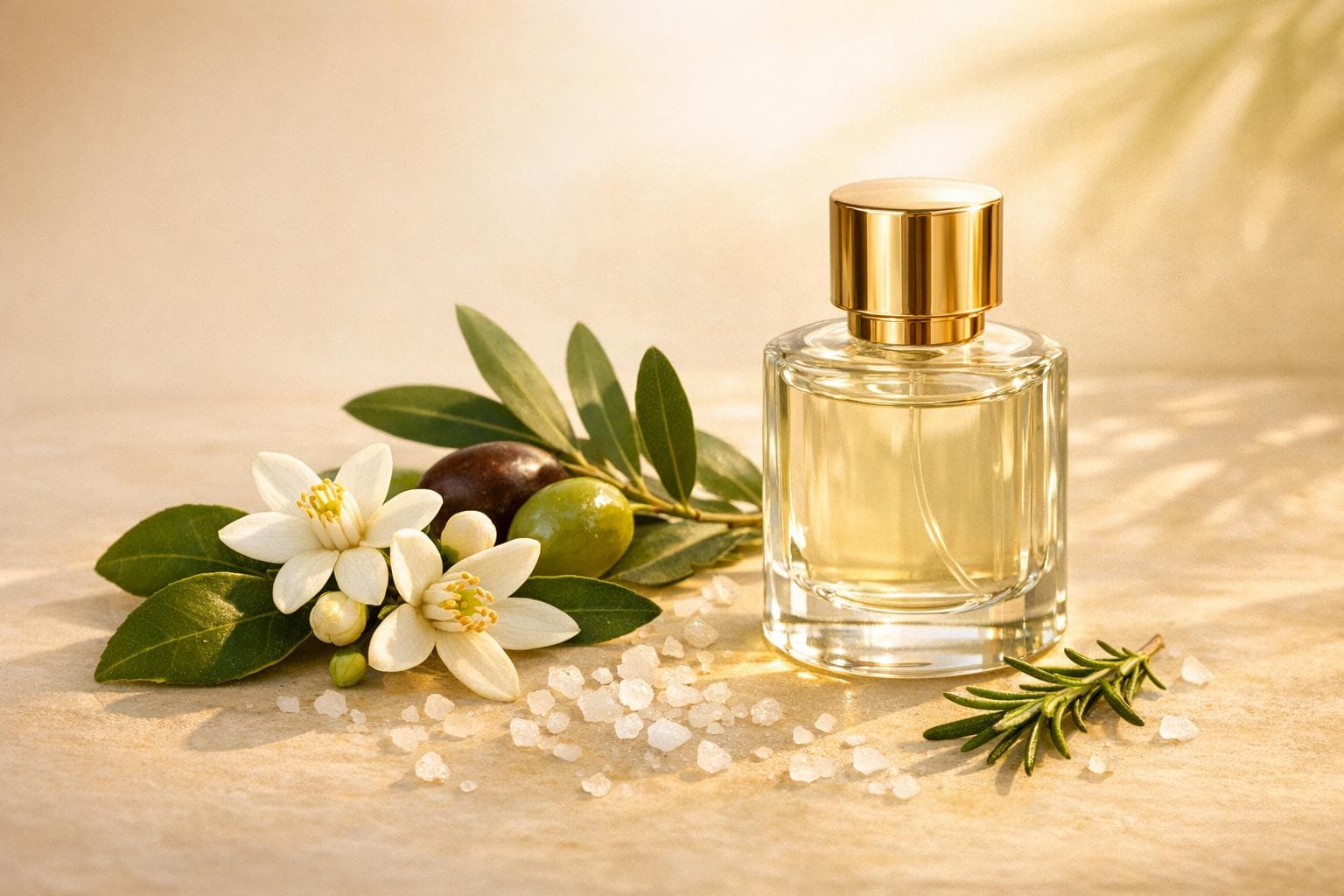
La perfumería española se inspira profundamente en el paisaje mediterráneo, combinando aromas de azahar, notas derivadas del olivo y sal marina. Estos elementos reflejan la rica historia de España, su diversa geografía y su artesanía local. Desde la vibrante fragancia del azahar (flor de naranjo) hasta los matices terrosos de la madera de olivo y el toque fresco de la sal marina, cada ingrediente narra la profunda conexión de esta tierra con sus costas.
Puntos clave:
- Azahar: Símbolo de Sevilla y Valencia, aporta luminosidad floral y calidez, aunque requiere una cuidadosa estabilización debido a su volatilidad.
- Notas derivadas del olivo: Creadas a partir de subproductos del olivo, aportan una riqueza terrosa y amaderada, siendo cada vez más apreciadas en las fragancias contemporáneas.
- Acordes de sal marina: Inspirados en las costas españolas, estas notas evocan la brisa marina y armonizan a la perfección con cítricos y flores.
Los perfumistas españoles son verdaderos maestros en la combinación de estos ingredientes, equilibrando las notas cítricas más etéreas con fondos persistentes como los acordes derivados del olivo. Su maestría ha posicionado a España como el segundo exportador mundial de perfumes, gracias a creaciones que encarnan el espíritu y la belleza del Mediterráneo.
1. La flor de azahar en la perfumería española
Importancia regional
La flor del naranjo amargo, conocida como azahar, ocupa un lugar especial en las tradiciones olfativas de España. El naranjo amargo, introducido en la península ibérica en el siglo 10 por comerciantes árabes, se convirtió en piedra angular de la cultura perfumera española. Ciudades como Sevilla, Valencia y Murcia surgieron como centros clave para el cultivo y la celebración de esta flor aromática.
El vocablo azahar procede del árabe az-zahr, que significa «flor», y también se asocia tradicionalmente con la buena fortuna. En la isla de Ibiza, la perfumería artesanal ha prosperado desde 1965, año en que la familia Torres fundó Hierbas de Ibiza. Sus creaciones ensalzan los ingredientes locales, entre ellos el azahar y las esencias cítricas. Más allá de la perfumería, el agua de azahar desempeña un papel esencial en la gastronomía tradicional española, aromatizando manjares como el Roscón de Reyes, dulce emblemático de la festividad de los Reyes Magos.
Esta arraigada historia continúa definiendo los singulares perfiles olfativos de la perfumería española.
Características olfativas
El método de extracción influye de manera determinante en el aroma del azahar. Cuando se recurre a la destilación al vapor, el resultado es el neroli: una fragancia fresca, chispeante y ligeramente verde, con matices herbáceos. En cambio, la extracción con disolventes da lugar al absoluto, que se distingue por ser suntuoso, dulce y amielado, con una calidez empolvada y envolvente.
La producción de aceite de neroli es particularmente laboriosa. Se necesita una tonelada de flores para obtener tan solo un kilogramo de esencia de neroli, testimonio elocuente de su exclusividad y valor. Un solo naranjo amargo joven puede producir hasta 6,6 pounds de flores en cada temporada, pero se requieren alrededor de 15 years para que el árbol alcance su plena madurez y su nivel óptimo de producción.
Estos perfiles olfativos tan diferenciados permiten a los perfumistas diseñar dinámicos contrastes entre las notas de salida y de corazón.
Uso en la composición de fragancias
Los desafíos económicos del pasado impulsaron a los perfumistas españoles a innovar para estabilizar la naturaleza efímera de las notas cítricas. Como explica el experto en fragancias Michael Donovan:
«Los perfumistas españoles capturan la luz del sol como nadie: su dominio de los cítricos es incomparable, destilando la fuerza vital, vibrante y chispeante de las naranjas y limones de España y logrando, además, una longevidad rara vez vista en esta familia olfativa».
En las composiciones aromáticas, el neroli suele brillar como una nota de salida luminosa y refrescante, mientras que el absoluto enriquece el corazón de la fragancia con su calidez dulce y reconfortante. Con gran frecuencia, los perfumistas españoles combinan el azahar con otros tesoros mediterráneos como la bergamota, la lavanda, el tomillo y la siempreviva, concibiendo perfumes que evocan la caricia del sol sobre la piel y la luz dorada de la tarde.
2. Notas derivadas del olivo en los aromas españoles
Importancia regional
España, como uno de los mayores productores de aceitunas del mundo, ha transformado su legado olivarero en un recurso sorprendente para la perfumería: la revalorización de los subproductos del olivo en ingredientes de alta perfumería. El olivo, introducido en España por los fenicios, forma parte intrínseca de la identidad del país. En la actualidad, los creadores más innovadores transforman los restos de la pulpa de aceituna, subproducto de la extracción del aceite, en componentes aromáticos únicos. Un claro ejemplo es la casa de fragancias barcelonesa que presentó Olivante® en Beautyworld Middle East en octubre de 2025. Este ingrediente exclusivo se elabora a partir de variedades selectas de olivos españoles, tal como detalla Felipe San Juan, Director de I+D:
«Olivante® no puede elaborarse a partir de cualquier pulpa de aceituna. El terruño y el clima de una región muy específica de España son fundamentales para este proyecto».
Este enfoque vanguardista no solo subraya el compromiso de España con la sostenibilidad, sino que también aporta una firma olfativa irrepetible al universo de la alta perfumería.
Características olfativas
Los ingredientes derivados del olivo no poseen el aroma oleoso característico del aceite de oliva comestible. Por el contrario, despliegan un perfil aromático complejo: fenólico, sutilmente animalizado, con matices terrosos, amaderados y delicadamente afrutados, a menudo comparados con el castóreo. La maestra perfumista Belén Garcia explica su versatilidad:
«Olivante® es polifacético y ofrece matices olfativos que hoy gozan de reconocimiento internacional».
A esto añade la Directora de Marketing Global, Sine Guçetil:
«Olivante® destaca por su capacidad de otorgar riqueza y opulencia al perfume de una manera más fresca y liviana».
Esta rica complejidad se entrelaza de forma sublime con las notas luminosas y cítricas del azahar, logrando una armonía perfecta entre frescura y profundidad.
Uso en la composición de fragancias
Las notas derivadas del olivo desempeñan una función esencial como potenciadores en las mezclas de fragancias. Según los perfumistas de Eurofragance, Olivante® sublima los acordes afrutados, gourmand y florales blancos, aportándoles cuerpo y relieve. El perfumista español Ramón Monegal lo demuestra con maestría en su creación «Fiesta», donde las notas de olivo se entrelazan con rosa, humo de vainilla, ámbar y cuero español para recrear el sosiego y la calidez de las tardes entre olivares. Estas notas también brillan al fusionarse con el azahar, acentuando su dulzura natural al tiempo que introducen una sofisticada solidez terrosa.
Más allá de la alta perfumería, los ingredientes derivados del olivo están cobrando gran relevancia en productos de cuidado personal y fragancias para el hogar. Su carácter noble, natural y de origen sostenible los convierte en una elección excepcional para una amplia variedad de aplicaciones.
3. Sal marina y acordes marítimos en las fragancias españolas
Importancia regional
El extenso litoral mediterráneo de España desempeña un papel primordial en la configuración de su identidad aromática, con notas marinas profundamente arraigadas en sus tradiciones olfativas. Las Islas Baleares, y en particular Ibiza, constituyen una inagotable fuente de inspiración para los acordes de sal marina en los perfumes españoles. Un ejemplo emblemático es Hierbas de Ibiza, firma nacida en 1965 que incorpora sal de Las Salinas para acentuar su impronta marítima. Jonathan Anderson, Director Creativo de Loewe, rememora este vínculo:
«Este aroma me transporta de nuevo a Ibiza, donde solía pasar los veranos de mi infancia... Es un recordatorio de tiempos mejores por venir».
Esta honda influencia regional convierte a las fragancias marítimas españolas en un auténtico viaje sensorial vinculado a sus orígenes costeros.
Características olfativas
A diferencia de los aromas acuáticos convencionales, las fragancias marinas españolas apuestan por composiciones ricas en matices y cargadas de atmósfera. En lugar de limitarse a combinaciones predecibles de cítricos y notas marinas, evocan sensaciones como la «sal sobre la piel» o «brisas impregnadas de mar» mediante notas minerales, salinas y ozónicas. Nuria Cruelles, perfumista de la casa Loewe, describe este enfoque en la fragancia Loewe x Paula’s Ibiza (lanzada en abril de 2020 con un precio de 88 €):
«¿Conoces esa sensación cuando vas al mar y encuentras madera a la deriva que ha estado mucho tiempo en el océano? Huele exactamente a eso».
Esta creación combina de forma artística agua de coco, gálbano (para evocar las algas marinas) y ámbar gris sintético, aportando un matiz suavemente animalizado sin caer en las notas excesivamente marinas que a veces presentan estas fragancias. Los perfumistas españoles suelen enriquecer las notas salinas con acordes complementarios: por ejemplo, Café Del Mar de Ramón Monegal se apoya en un fondo de vainilla salada, mientras que su creación La Isla Blanca envuelve el almizcle blanco en sal para reflejar la emblemática arquitectura encalada de Ibiza.
Uso en la composición de fragancias
La sal marina y los acordes marítimos actúan como anclajes estructurales en las fragancias españolas, equilibrando los cítricos radiantes y la opulencia floral. Estas notas aportan una faceta nítida y mineral, al tiempo que realzan los ingredientes besados por el sol. La firma barcelonesa 27 87 Perfumes lo ilustra a la perfección con Sonar, una fragancia inspirada en el festival de música electrónica Sónar. En ella, la bergamota mediterránea se funde con maderas metálicas y ámbar, dando como resultado un singular perfil industrial y marítimo. Asimismo, los perfumistas españoles destacan por su pericia al unir elementos marinos y terrestres: combinan la sal marina con fondos resinosos y de pino, o enlazan acordes de cuero salado con jazmín, concibiendo perfumes que capturan la esencia más pura de los paisajes costeros. En sintonía con las notas cítricas y florales, estos acordes marítimos retratan el Mediterráneo con una viveza incomparable en cada frasco.
Tu experto en fragancias personal te espera
Haz nuestro test olfativo rápido y descubre auténticos perfumes de diseñador y de nicho elegidos según tu gusto: explóralos en decants y muestras de 2, 5, 8 y 30 ml para probar cada uno antes de decidirte por un frasco completo.
Encuentra tu fraganciaPros and Cons
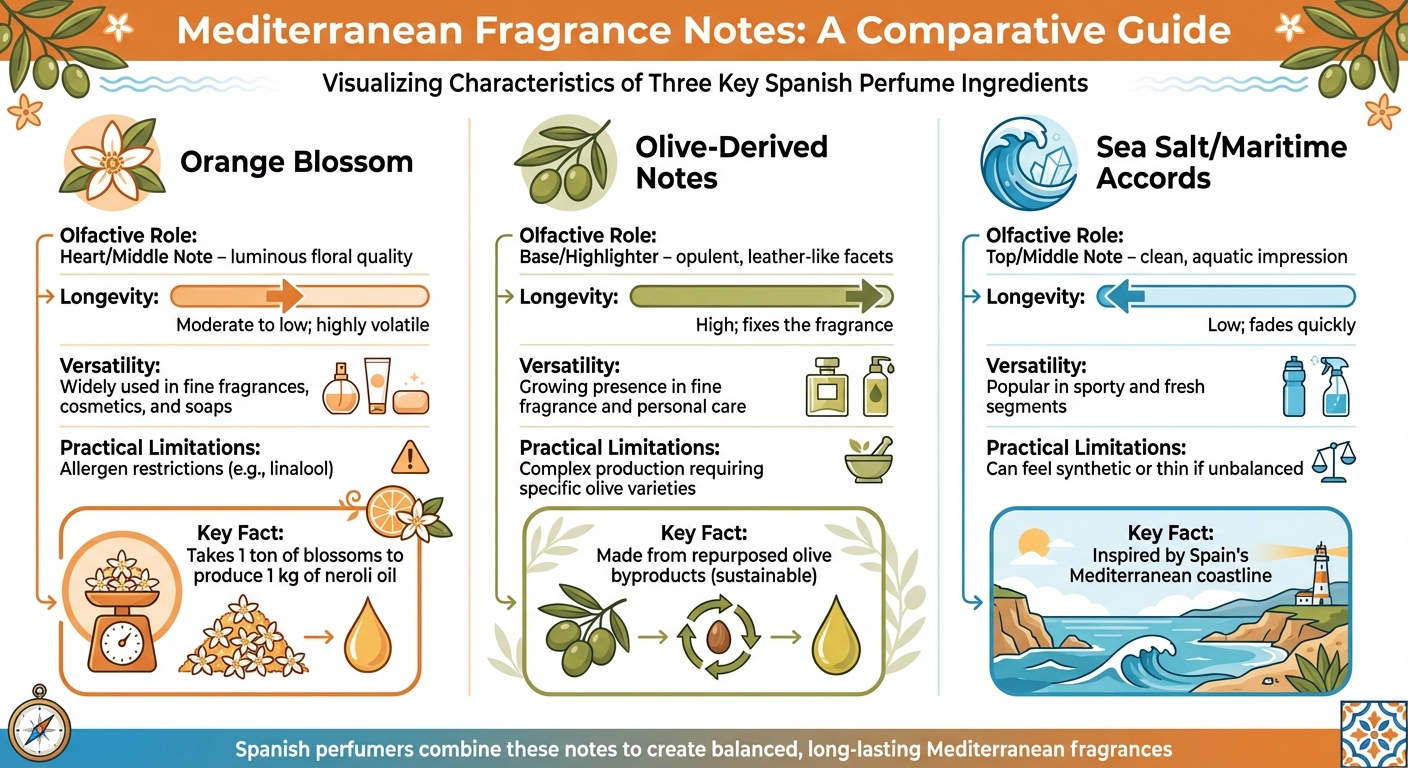
Comparativa de notas de fragancias mediterráneas en perfumes españoles
Cada ingrediente mediterráneo aporta virtudes únicas y retos técnicos a la perfumería española. El azahar, por ejemplo, destaca por una versatilidad sin igual: puede tornarse ligero y chispeante junto a notas cítricas, o volverse profundo y embriagador al maridarse con almizcles y especias. Sin embargo, presenta una particularidad: al tratarse de una nota de corazón de elevada volatilidad, tiende a disiparse con rapidez. Para contrarrestarlo, se recurre a menudo a fijadores como el salicilato de bencilo para prolongar su estela. Asimismo, las normativas de la UE (Reglamento CE n.º 1223/2009) imponen un etiquetado riguroso para alérgenos como el linalol, y las actualizaciones previstas podrían ampliar la lista de declaración obligatoria de 26 a 129 ingredientes.
Por su parte, las notas derivadas del olivo ofrecen una presencia más sólida y duradera. Ingredientes como Olivante actúan como excelentes fijadores, aportando facetas opulentas y persistentes que recuerdan al cuero y a los acordes animálicos. Como subraya Belén Garcia, Maestra Perfumista en Eurofragrance:
«Olivante® es polifacético y ofrece algunas de estas facetas olfativas [cuero y oud] que hoy se aprecian en todo el mundo».
No obstante, su obtención entraña una notable complejidad. Solo determinadas variedades de olivo español reúnen las condiciones necesarias para conservar la riqueza fenólica deseada, y su proceso de elaboración exige múltiples etapas de purificación.
Por último, la sal marina y los acordes marítimos sobresalen por su extraordinaria adaptabilidad. Armonizan con naturalidad con cítricos, azafrán, pino y acordes florales, creando fragancias de inequívoca inspiración costera, muy cotizadas en los segmentos frescos y deportivos. Sin embargo, al igual que el azahar, su volatilidad representa un desafío: sin notas de fondo contundentes que las afiancen, corren el riesgo de percibirse tenues o carentes de la densidad que distingue a la alta perfumería.
A continuación, una comparativa de estos emblemas mediterráneos:
| Criterio | Flor de azahar | Notas derivadas del olivo | Sal marina / Acordes marítimos |
|---|---|---|---|
| Función olfativa | Nota de corazón/media: luminosidad floral | Fondo/Realzador: facetas opulentas y coriáceas | Nota de salida/media: impresión limpia y acuática |
| Longevidad | Moderada a baja; muy volátil | Alta; actúa como fijador | Baja; se desvanece con rapidez |
| Versatilidad | Ampliamente empleada en alta perfumería, cosmética y jabones | Presencia creciente en alta perfumería y cuidado personal | Muy extendida en propuestas frescas y deportivas |
| Limitaciones prácticas | Restricciones por alérgenos (p. ej., linalol) | Producción compleja supeditada a variedades específicas de olivo | Puede resultar sintética o ligera si carece de equilibrio |
Para compensar la volatilidad de estas notas mediterráneas, los perfumistas españoles integran optimizadores de fijación como Time Boost de Xponential. Esta innovación tecnológica prolonga la duración de los ingredientes más delicados sin alterar su perfil olfativo, permitiendo capturar la esencia solar del Mediterráneo con una estela fascinante y duradera.
Conclusión
El legado mediterráneo de España se expresa en toda su plenitud a través de sus notas aromáticas más representativas: el azahar, los acordes de olivo y la sal marina. El azahar personifica el alma vibrante de los campos de cítricos sevillanos, equilibrando una frescura cristalina con una calidez reconfortante. Las notas de olivo aportan una nobleza terrosa con sutiles toques afrutados, reflejo de las colinas aromáticas y las raíces agrícolas del país. Entretanto, la sal marina y los acordes marinos condensan la pureza de las salinas de Ibiza y el espíritu libre de la costa.
Estos elementos se combinan para crear fragancias a la vez revitalizantes y reconfortantes, que reflejan la dualidad entre las soleadas playas de España y sus bosques umbríos y resinosos. Lo que distingue a estos aromas es su profunda conexión con la historia de España. A mediados del siglo 20, la búsqueda de autosuficiencia económica llevó a los perfumistas a perfeccionar el uso de ingredientes locales, lo que dio a las fragancias españolas una ventaja única, especialmente a la hora de crear notas cítricas y frescas que duran mucho más de lo esperado.
Para los apasionados del perfume, las creaciones del Mediterráneo español ofrecen un encanto luminoso e inolvidable que transmite alegría de vivir y una vitalidad desbordante. Cada fragancia encierra una historia de la tierra, transportando a quien la viste a horizontes costeros y tradiciones milenarias.
¿Desea explorar estos evocadores perfiles mediterráneos? Scento ofrece decants en viales de 2 ml, 5 ml y 8 ml, y un decant en frasco de 30 ml para la mayoría de los perfumes, permitiéndole descubrir tanto creaciones de diseñador como fragancias nicho españolas. Encuentre las notas soleadas que mejor definan su estilo y déjese cautivar por el legado olfativo de España.
Preguntas frecuentes
¿Por qué la flor de azahar es un ingrediente tan popular en los perfumes españoles?
El azahar, obtenido de la flor del naranjo amargo, ostenta un protagonismo indiscutible en la perfumería española gracias a su aroma radiante y versátil. Proporciona un matiz fresco y chispeante cuando se combina con acordes cítricos, y adquiere una calidez íntima y seductora al fundirse con almizcles y especias.
En España, esta flor aromática atesora una profunda herencia cultural. Su nombre común, azahar, procede del árabe az-zahr. Cada primavera, ciudades como Sevilla, Valencia y Murcia se envuelven en su fragancia natural, un emblema estacional que ha marcado para siempre su uso en la perfumería. Reconocido por su facultad de armonizar con aceites cítricos y florales, el azahar sigue siendo una nota de salida predilecta en infinidad de creaciones contemporáneas.
¿Cómo se utilizan las notas derivadas del olivo en la perfumería?
Las notas a base de olivo, elaboradas a menudo a partir de materias primas recicladas como Olivante®, confieren una cautivadora complejidad a las fragancias al profundizar las capas de corazón y fondo. Estos acordes despliegan un perfil cálido, ambarino y terroso, con sutiles toques de frutos secos y matices herbáceos, aportando suntuosidad y refinamiento. Asimismo, poseen la virtud de realzar los elementos afrutados, florales y gourmand, volviéndolos más vibrantes y equilibrados.
Estos ingredientes derivados del olivo suelen estructurarse en la fase media y de fondo de una fragancia. Resultan ideales para equilibrar notas de salida más livianas, como los cítricos o el azahar, garantizando un secado suave y duradero. Al proceder de orígenes naturales y sostenibles, conquistan también a los amantes de la perfumería que valoran la conciencia ecológica, encajando a la perfección con las composiciones de inspiración mediterránea.
Si desea adentrarse en la singular atracción de las notas de olivo en las fragancias españolas, plataformas como Scento ofrecen muestras en formato decant, brindando una forma accesible de experimentar el encanto mediterráneo que estos acordes atesoran.
¿Por qué son tan importantes la sal marina y las notas marinas en los perfumes españoles?
La perfumería española recurre con frecuencia a la sal marina y a los acordes marinos, reflejando fielmente el espíritu de la costa mediterránea, piedra angular de la identidad de España. Estos ingredientes recrean la atmósfera tonificante de la brisa marina, dando origen a fragancias abiertas, vivas y llenas de energía.
Al fundirse con notas cítricas, especias y pinceladas florales como el azahar, estos perfumes alcanzan un equilibrio perfecto entre frescura vivaz y calidez acogedora. Esta armonía captura la esencia de las playas bañadas por el sol, las costas pintorescas y el pausado estilo de vida mediterráneo, logrando creaciones tan evocadoras como inolvidables.

