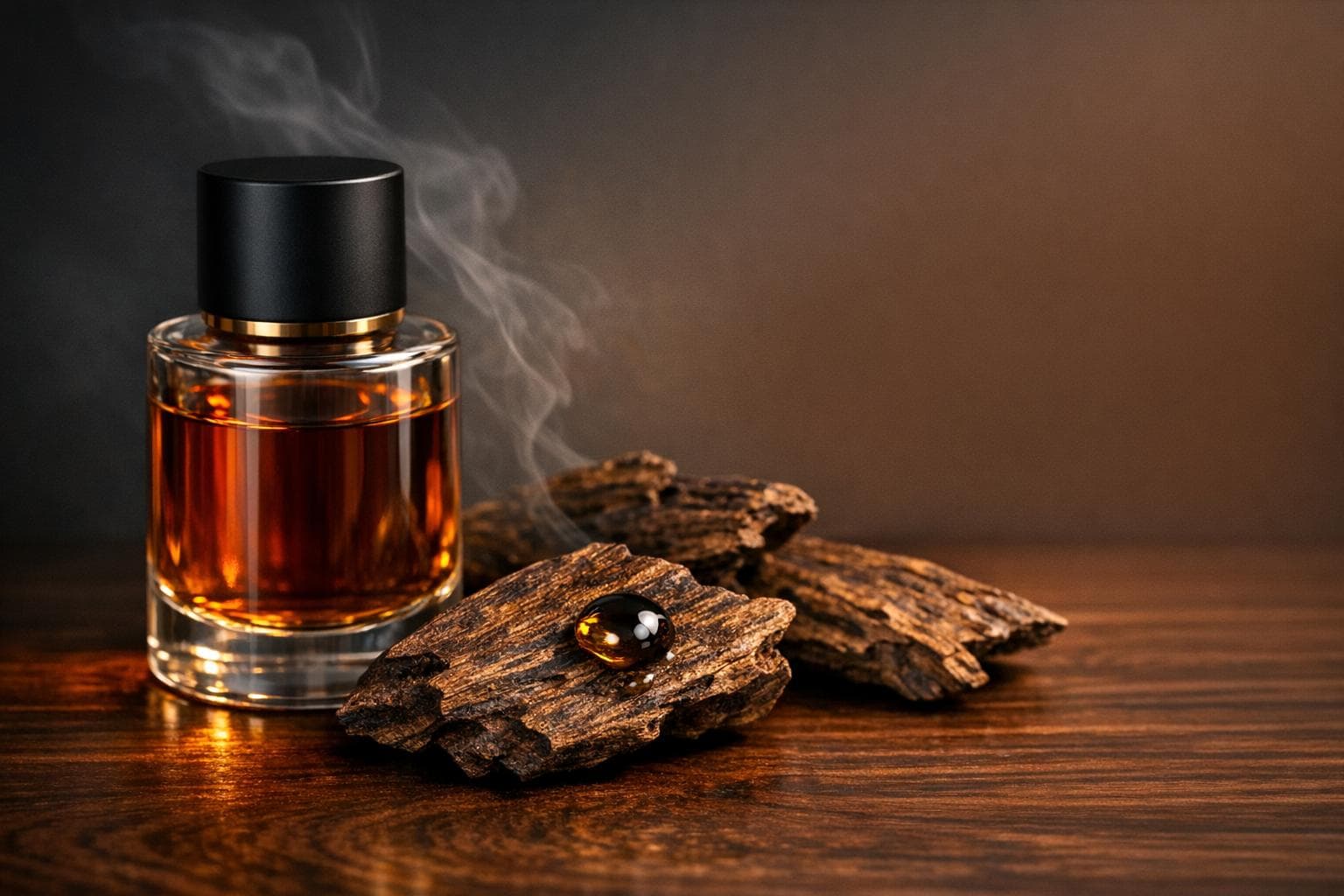
El oud, a menudo llamado el "Rey de las Notas", es uno de los ingredientes más codiciados de la perfumería. Derivado de la resina de los árboles de Aquilaria, es raro y costoso, con aceite puro de oud que puede alcanzar entre 27.000 € y 92.000 € por kilogramo. Su singular proceso de formación, que requiere una infección fúngica en el árbol, lo convierte en un símbolo de lujo y exclusividad. En 2026, la influencia del oud se ha expandido globalmente, fusionándose con notas inesperadas como maracuyá y violeta, mientras conserva sus raíces en las tradiciones de Oriente Medio.
Puntos clave:
- ¿Qué es el oud? Resina de árboles de Aquilaria formada bajo condiciones específicas. Reconocida por su aroma profundo, ahumado y complejo.
- ¿Por qué es tan exclusivo? Solo el 7–10 % de los árboles producen oud de forma natural, y tarda décadas en madurar.
- Tipos de oud: Camboyano (dulce, meloso), indio (seco, medicinal), vietnamita (suave, resinoso).
- Natural vs. sintético: El oud natural evoluciona durante horas, mientras que el oud sintético ofrece consistencia, pero carece de profundidad.
- Uso moderno: Desde aceites puros hasta mezclas con rosa, vainilla y especias, el oud satisface tanto gustos tradicionales como contemporáneos.
El oud es mucho más que un aroma: es un viaje a través del tiempo, la cultura y la maestría artesanal. Tanto si estás descubriendo el oud como si eres un coleccionista experimentado, comprender sus orígenes, perfiles y usos puede ayudarte a encontrar la fragancia perfecta para tu estilo.
3 niveles de fragancias de rosa y oud 🌹🔥 | De principiante a oud en modo bestia
Qué es el oud y por qué importa
El oud es el duramen aromático impregnado de resina del árbol de Aquilaria, que crece en zonas del Sudeste y Sur de Asia. Aunque en inglés se suele denominar agarwood, también se conoce como gaharu en Indonesia y jinko en Japón. Sin embargo, el término árabe oud —que significa "vara" o "palo"— se ha convertido en el nombre estándar en el mundo de la perfumería. Su atractivo no reside solo en su fragancia, sino en la fascinante forma en que se forma.
La historia de la madera de agar
Un árbol sano de Aquilaria produce una madera pálida y sin aroma. Pero cuando el árbol resulta herido —ya sea por insectos, rayos o cortes realizados por el ser humano— se vuelve vulnerable a una infección específica de moho. En respuesta a este ataque, el árbol produce una resina espesa y oscura que, con el tiempo, satura gradualmente la madera, transformándola en lo que conocemos como oud.
Diecisiete especies de Aquilaria son capaces de producir esta resina, incluidas A. malaccensis, A. crassna y A. sinensis. La resina en sí es extraordinariamente compleja, con más de 150 compuestos químicos. Entre ellos se encuentran las cromonas, que aportan matices ahumados y coriáceos, y los sesquiterpenos, responsables de sus notas animales y amaderadas. Para que te hagas una idea de su rareza, se necesitan alrededor de 70 kg de madera saturada de resina para extraer apenas 20 ml de aceite puro de oud.
Debido a la sobreexplotación, todas las especies de Aquilaria están sometidas a estrictas regulaciones internacionales de comercio desde 2004, incluidas en el Apéndice II de CITES. Esto garantiza que su comercio sea cuidadosamente controlado, lo que aumenta la exclusividad de este preciado material.
Este intrincado proceso de formación es lo que otorga al oud su reputación regia en el mundo de la fragancia.
Por qué el oud se llama el “Rey de las Notas”
El oud se describe a menudo como el "rey de las notas" por su profundidad y complejidad incomparables. A diferencia de maderas como el cedro o el sándalo, que son partes naturales de la estructura del árbol, el oud es producto de la supervivencia, el tiempo y la química. Esto hace que su perfil olfativo sea singularmente rico, combinando facetas ahumadas, animales, coriáceas, dulces y ligeramente medicinales.
"El oud no es un solo olor. Es una conversación entre el árbol, la tierra, las décadas de espera y, finalmente, tu piel." - ScentGrade
El oud también se comporta de forma distintiva cuando se aplica sobre la piel. Como nota de fondo intensa, evoluciona durante varias horas, comenzando con tonos medicinales o ahumados antes de suavizarse hacia matices más cálidos y balsámicos durante el secado. Su origen desempeña un papel importante en su carácter: el oud camboyano suele ser dulce y meloso; el oud indio de Assam se inclina hacia un perfil más seco y medicinal, mientras que el oud vietnamita es celebrado por su suavidad y complejidad. Estas diferencias regionales no solo influyen en su aroma, sino también en su rareza y precio.
Esta combinación de formación única, variación regional y profundidad inigualable sigue cautivando tanto a perfumistas como a coleccionistas, asegurando el legado perdurable del oud en las composiciones de fragancias modernas.
La historia y el uso del oud en perfumería
La historia del oud se remonta a más de 3.000 años, lo que lo convierte en uno de los materiales más antiguos y venerados de la perfumería. Los antiguos egipcios lo incorporaban en ritos funerarios, mientras que los Vedas indios lo mencionan ya en el año 1400 a. C. También aparece en la Biblia hebrea y en el Nuevo Testamento, destacando su importancia en diversas religiones, como el hinduismo, el budismo y el islam. Más allá de su papel como fragancia, el oud ha estado profundamente entretejido en la vida espiritual y cotidiana de muchas civilizaciones.
El oud en la perfumería tradicional
En Oriente Medio, el oud ha sido mucho más que un aroma: es un símbolo de hospitalidad y tradición. Durante más de mil años, los anfitriones han utilizado un mabkhara, un quemador de incienso tradicional, para hacer circular el aroma del bakhoor (astillas de madera de oud), permitiendo a los invitados perfumar su cabello y su ropa como gesto de respeto y calidez. También se quemaba en mezquitas durante las oraciones de los viernes y se infusionaba en attars nupciales, marcando celebraciones y estatus.
Los usos del oud iban más allá de las prácticas ceremoniales. Históricamente, se creía que poseía propiedades medicinales, empleándose para tratar dolencias como problemas estomacales, disentería y afecciones pulmonares. En algunas regiones, incluso se masticaba como refrescante natural del aliento. En la antigua Assam, la corteza de la madera de agar —la fuente del oud— se utilizaba como material de escritura llamado Xasipat. En todo el Sur y Sudeste de Asia, el oud era igualmente apreciado por sus cualidades terapéuticas y aromáticas.
Tradicionalmente, el oud se llevaba a menudo como aceite puro, con su aroma intenso suavizado al mezclarlo con rosa, azafrán o almizcle. El resultado era una fragancia fiel a sus raíces, rica y profundamente evocadora.
A medida que los gustos del mundo comenzaron a cambiar, el papel del oud evolucionó, preparando el escenario para su transformación moderna.
Cómo el oud entró en la fragancia moderna
El oud pasó de sus orígenes ceremoniales al escenario global a principios de la década de 2000, convirtiéndose en un codiciado ingrediente de lujo. A Oud Wood de Tom Ford se le atribuye a menudo la introducción del oud entre el público occidental, transformándolo de un tesoro regional en un fenómeno sofisticado y global. Tras el éxito de Ford, grandes marcas de diseñador como Dior, Versace y Gucci comenzaron a crear sus propias interpretaciones de esta nota icónica.
Para hacer el oud más accesible a los consumidores occidentales, los perfumistas desarrollaron acordes de oud: mezclas sintéticas que imitan la esencia del oud natural sin sus intensas cualidades animales ni su elevado coste. Nicolas Bonneville, de Firmenich, ha descrito el carácter profundo y resinoso del oud como la piedra angular de su atractivo perdurable. Este enfoque creativo permitió que el oud trascendiera sus orígenes de nicho, convirtiéndose en un pilar de la perfumería moderna. Su recorrido refleja tanto su encanto atemporal como la capacidad del mundo de la fragancia para adaptarlo a nuevos públicos.
Cómo se obtiene y se elabora el oud
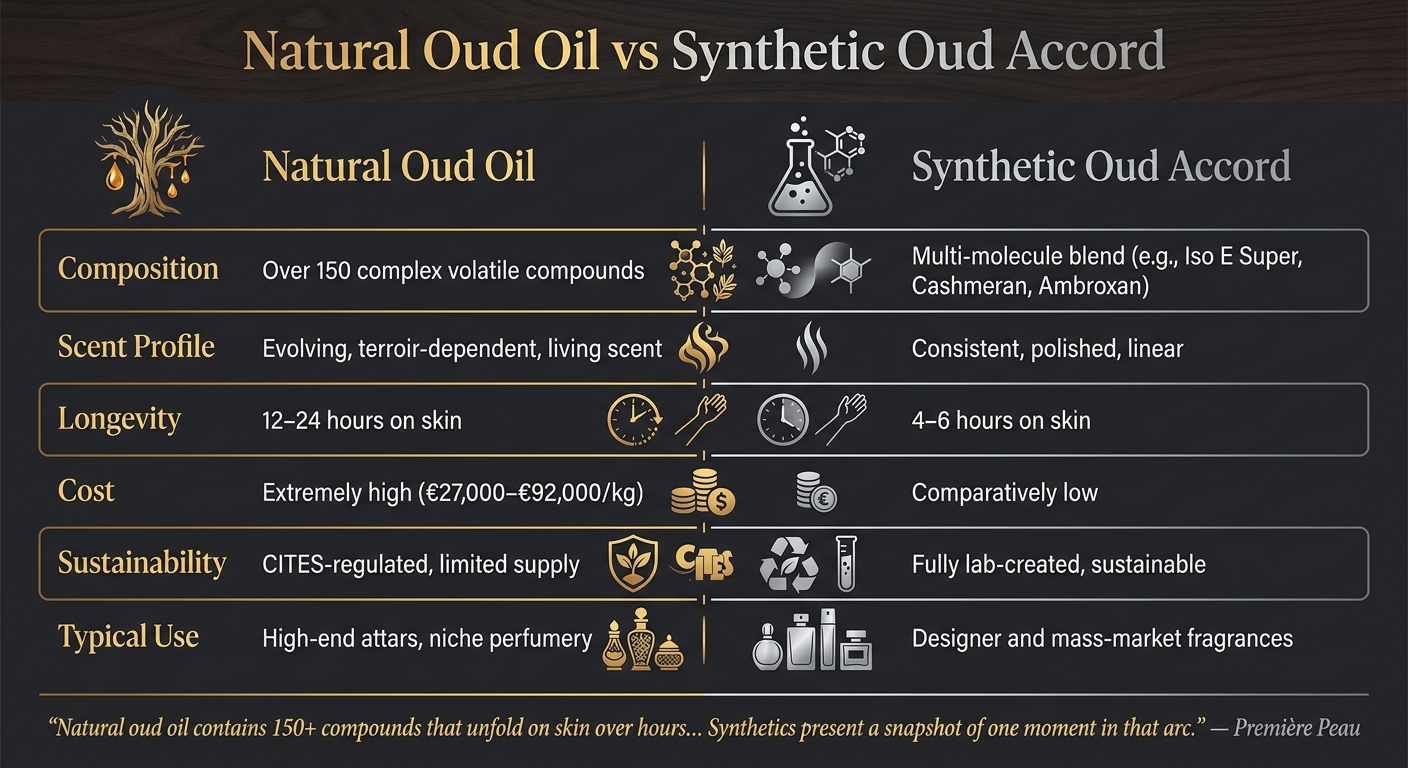
Aceite de oud natural vs acorde de oud sintético: diferencias clave
El oud es una resina que se forma como mecanismo natural de defensa en árboles de Aquilaria y Gyrinops cuando resultan dañados e infectados por el hongo Phaeoacremonium parasitica. Curiosamente, un árbol sano de Aquilaria no produce oud en absoluto. Su duramen permanece pálido, sin aroma y sin utilidad en perfumería. Solo cuando el hongo se instala, el árbol comienza a crear la resina oscura y aromática que satura lentamente la madera durante muchos años, a veces incluso décadas.
"Un árbol sano de Aquilaria no produce oud en toda su vida. Un árbol infectado produce oud de calidad comercial solo tras años de lenta saturación." - Nour Khalil, Parfum Central
Este proceso natural es raro. Solo una pequeña fracción de los árboles silvestres desarrolla la resina, lo que explica por qué el oud es tan altamente apreciado. Según la calidad, puede tardar entre 10 y 15 años en desarrollar calidad comercial, o hasta 25–60 años para un oud de grado coleccionista. Una vez cosechada, la madera resinosa se somete a hidrodestilación o destilación por vapor para extraer el aceite. Estos meticulosos métodos de producción evidencian por qué el oud natural sigue siendo incomparable, incluso mientras las opciones sintéticas ganan popularidad.
El origen del árbol desempeña un papel importante en la configuración del carácter del aceite. El oud camboyano (Aquilaria crassna) es admirado por su aroma dulce, balsámico y meloso, lo que lo convierte en una de las variedades más llevaderas. El oud indio de Assam (Aquilaria malaccensis) posee un aroma más seco, medicinal y animal, que históricamente lo convirtió en el más venerado, aunque hoy se encuentra en peligro crítico. El oud vietnamita, que incluye el raro y muy codiciado grado "Kyara", ofrece un perfil resinoso e incienso. Por su parte, los ouds indonesios y malayos son conocidos por sus cualidades más suaves y verdes.
El proceso exige una gran cantidad de recursos. Se necesitan alrededor de 70 kg de madera rica en resina para producir apenas 20 ml de aceite puro. El oud silvestre, dada su escasez, alcanza precios astronómicos, mientras que el oud cultivado en plantaciones —donde la formación de resina se induce artificialmente— ofrece una alternativa más accesible. Estos desafíos son una parte esencial de lo que hace que el oud sea tan exclusivo y una piedra angular de la perfumería de lujo moderna.
Oud natural vs. oud sintético
Debido a la escasez y el coste del oud natural, la mayoría de las fragancias basadas en oud actuales recurren a acordes sintéticos de oud. Se trata de mezclas creadas en laboratorio a partir de moléculas como Iso E Super, Cashmeran, Ambroxan y Kephalis. Aunque los acordes sintéticos son consistentes, asequibles y respetuosos con el medio ambiente, carecen de parte de la complejidad y el carácter dinámico del oud natural.
"El aceite natural de oud contiene más de 150 compuestos que se despliegan sobre la piel durante horas... Los sintéticos presentan una instantánea de un momento de ese arco y la mantienen fija. La imagen es nítida. Falta el movimiento." - Première Peau
Veamos más de cerca las diferencias:
| Característica | Aceite de oud natural | Acorde de oud sintético |
|---|---|---|
| Composición | Más de 150 compuestos volátiles complejos | Mezcla multimolecular (p. ej., Iso E Super, Cashmeran) |
| Perfil olfativo | Evolutivo, dependiente del terruño, "vivo" | Consistente, pulido, lineal |
| Longevidad | 12–24 horas sobre la piel | 4–6 horas sobre la piel |
| Coste | Extremadamente alto | Comparativamente bajo |
| Sostenibilidad | Regulado por CITES, suministro limitado | Totalmente creado en laboratorio, sostenible |
| Uso habitual | Attars de alta gama, perfumería nicho | Fragancias de diseñador y de mercado masivo |
Cada enfoque tiene sus méritos. Los acordes sintéticos bien construidos pueden ser bellamente llevaderos y fiables. Sin embargo, para quienes buscan la profundidad, la complejidad y la naturaleza evolutiva que hacen del oud algo tan extraordinario, el aceite natural —especialmente de una fuente trazable y regulada— pertenece a una categoría propia.
Principales perfiles olfativos del oud
El atractivo del oud no reside únicamente en su rareza; sus perfiles olfativos son igualmente cautivadores, moldeados por el origen de la madera, la forma en que se procesa y las notas con las que se combina en una composición. En general, las fragancias de oud pueden agruparse en tres perfiles distintivos, cada uno con una experiencia única.
Oud ahumado y amaderado
Este perfil muestra el oud en su forma más cruda e intensa. Piensa en suelos de bosque húmedos, cuero envejecido, hogueras humeantes y una sutil nitidez medicinal. El oud indio, especialmente el de Assam, es famoso por sus rasgos terrosos y animales. A menudo se abre con lo que los perfumistas llaman una nota de "establo", que gradualmente evoluciona hacia especias ricas y cuero. Este estilo audaz es perfecto para otoño e invierno, especialmente para eventos formales o uso nocturno. Sin embargo, puede resultar algo abrumador para quienes se inician en el oud.
Por otro lado, algunos ouds se inclinan hacia un lado más amable y dulce.
Oud dulce y floral
El oud camboyano es la piedra angular de este perfil, ofreciendo un aroma naturalmente meloso y balsámico con matices de frutas secas y bayas. Esto lo hace más accesible en comparación con la intensidad animal del oud indio. Los perfumistas suelen realzar su suavidad combinándolo con notas como rosa, jazmín, vainilla o flores delicadas como la magnolia. Por ejemplo, Oud Voyager Eau de Parfum de Tom Ford utiliza una técnica de tridestilado para combinar oud con geranio y peonía, creando una fragancia dulce y floral que resalta los aspectos más ligeros y fugaces del oud. Este perfil es versátil, apto para todas las estaciones y un excelente punto de entrada para quienes descubren el oud.
Oud especiado y ambarado
Aquí, el oud adopta un carácter cálido y opulento, rodeado de especias como azafrán, canela y cardamomo, y asentado sobre ámbar o resinas balsámicas. Esta combinación amplifica la profundidad del oud y su sensación de lujo, dando como resultado un aroma rico y envolvente. Red Island de Memo Paris ejemplifica este estilo, con canela de Madagascar, extracto de café tostado CO₂ y absoluto de vainilla bourbon junto al oud. De forma similar, Amber Aquilaria de Electimuss London combina coñac, rosa y una profunda base de ámbar-oud para una impresión inolvidable. Estas fragancias brillan en noches frías, ocasiones especiales o siempre que desees causar una declaración audaz.
Para resumir estos perfiles:
| Perfil | Origen típico | Carácter | Ideal para |
|---|---|---|---|
| Ahumado y amaderado | Indio (Assam) | Animal, coriáceo, hoguera | Otoño/invierno, atuendo formal |
| Dulce y floral | Camboyano | Meloso, balsámico, afrutado | Todo el año, principiantes |
| Especiado y ambarado | Laosiano / tailandés | Cálido, resinoso, dorado | Noches, ocasiones especiales |
La paciencia es clave al explorar el oud. Deja al menos 20 minutos para que el aroma se desarrolle en tu piel. Una apertura aguda o medicinal puede transformarse en algo completamente distinto, revelando con el tiempo toda la belleza del oud.
Estilos de fragancias de oud que vale la pena probar en 2026
El oud ha viajado mucho más allá de sus orígenes, evolucionando hacia una variedad de estilos que responden a gustos diversos. En 2026, estos estilos van desde lo audaz y salvaje hasta lo suave y envolvente. Aquí tienes una mirada más cercana a algunas de las interpretaciones de oud más destacadas que podrían resonar con tu personalidad.
Oud puro y attar de oud
El aceite puro de oud, también conocido como Dahn al Oud, representa el oud en su forma más concentrada y sin alterar. Una sola gota en la muñeca puede perdurar de 12 a 24 horas. Su aroma se despliega gradualmente, atravesando etapas ahumadas, coriáceas y resinosas, creando una experiencia profundamente inmersiva.
"El aroma no era lo que esperaba. No era dulce. No era floral. Era casi animal. Ahumado, resinoso, un poco medicinal, un poco sagrado. Como el interior de un cofre de madera de 400 años." - Nour Khalil, Parfum Central
El oud puro auténtico es espeso y se vierte lentamente, con tonalidades que van del ámbar oscuro a casi negro. Si fluye con demasiada facilidad, probablemente esté diluido. Para aplicarlo, deposita una cantidad diminuta en los puntos de pulso sin frotar, ya que la fricción puede hacer que las notas de salida se desvanezcan prematuramente. Este estilo atrae a puristas y a quienes aprecian la profunda importancia cultural y espiritual del oud.
Oud y rosa
La combinación de oud y rosa es un clásico de la perfumería moderna, celebrada por su equilibrio entre fuerza y elegancia. La rosa templa la intensidad animal del oud, mientras que el oud realza la riqueza floral y prolonga su longevidad.
"La rosa suaviza el filo animal del oud. El oud prolonga el corazón de la rosa hacia el fondo. Bien ejecutadas, ambas notas florecen juntas." - Nour Khalil, Parfum Central
Esta combinación crea un perfil olfativo descrito a menudo como regio o evocador de la opulencia de Dubái. Es perfecta para noches formales, bodas y otras ocasiones de celebración. Para quienes se inician en el oud, esta mezcla ofrece una introducción refinada, combinando profundidad con un toque de sofisticación.
Oud y vainilla
Mezclar oud con vainilla da como resultado un aroma cremoso y acogedor con un matiz gourmand. La profundidad amaderada del oud evita que la vainilla resulte excesivamente dulce, creando una sensación confortable y lujosa. Este estilo es especialmente popular durante los meses más fríos de Alemania, lo que lo hace ideal para las noches de otoño e invierno.
Tanto si te diriges a una cena íntima como si buscas un aroma acogedor para el día a día, las composiciones de oud y vainilla encajan a la perfección. En 2026, las casas nicho están elevando este estilo con añadidos como praliné y miel, llevándolo aún más al territorio de las fragancias gourmand. Esto lo convierte en una de las variaciones de oud más accesibles y apropiadas para la temporada.
| Estilo | Carácter | Mejor ocasión |
|---|---|---|
| Oud puro / Attar | Crudo, ahumado, medicinal, evolutivo | Uso tradicional, conocedores |
| Oud y rosa | Floral, profundo, romántico | Bodas, noches formales |
| Oud y vainilla | Cremoso, cálido, accesible | Otoño/invierno, entornos íntimos |
Tu experto en fragancias personal te espera
Haz nuestro test olfativo rápido y descubre auténticos perfumes de diseñador y de nicho elegidos según tu gusto: explóralos en decants y muestras de 2–8ml para probar cada uno antes de decidirte por un frasco completo.
Encuentra tu fraganciaCómo elegir y llevar oud
Elegir el oud adecuado para ti
Empieza considerando tus preferencias actuales en fragancias. Si te atraen los aromas cálidos, especiados o ambarados, una mezcla tradicional de oud puede sentirse como una elección natural. Por otro lado, si te seducen notas más suaves o dulces, busca opciones de oud combinadas con vainilla, rosa o almizcle blanco.
El origen del oud también influye en su carácter. El oud camboyano ofrece un aroma dulce y balsámico, accesible para principiantes. El oud indio, con sus tonos terrosos y animales, es ideal para quienes buscan algo más audaz. El oud malayo proporciona un perfil amaderado equilibrado, lo que lo convierte en una opción versátil para el uso diario.
El formato de la fragancia también importa. Un Eau de Parfum (EDP) es un punto de partida cómodo: fácil de aplicar y versátil. Los aceites puros de oud (attars), aunque más íntimos y complejos, requieren una mano más ligera y algo más de paciencia. Ten en cuenta que es poco probable que un EDP de 100 ml con un precio inferior a 80 € contenga oud natural, ya que normalmente recurre a acordes sintéticos para su aroma.
Si dudas antes de comprometerte con un frasco completo, prueba primero un decant más pequeño. Scento ofrece fragancias de oud en tamaños como 2 ml, 5 ml y 8 ml, permitiéndote comprobar cómo evoluciona el aroma sobre tu piel antes de invertir en un frasco mayor.
Elegir el oud adecuado y aplicarlo con intención te permite experimentar todo su viaje: desde la proyección inicial audaz hasta el secado cálido y persistente. Una vez que hayas encontrado tu oud ideal, el siguiente paso es aprender a llevarlo para lograr el máximo impacto.
Consejos para llevar oud
Aplica tu oud con cuidado: una pulverización en el pecho y otra en el cuello suelen ser suficientes. Evita frotar la fragancia, ya que esto puede alterar las delicadas notas de salida. Para una mayor duración y un secado más suave, aplica una loción sin perfume sobre la piel unos cinco minutos antes de usar el oud.
Concéntrate en puntos de pulso como el interior de las muñecas o la nuca, pero evita zonas como detrás de las orejas, donde la temperatura más alta de la piel puede hacer que el aroma resulte excesivamente intenso.
No te apresures a juzgar una fragancia de oud justo después de aplicarla. Muchas se abren con notas agudas o medicinales que pueden resultar engañosas. Dale de 20 a 30 minutos para asentarse y revelar su verdadero carácter. Para distintos entornos, ten en cuenta la intensidad: mezclas de oud más ligeras, como Tom Ford Oud Wood, son ideales para espacios cerrados como oficinas, mientras que las composiciones más ricas y complejas brillan en ambientes abiertos o frescos.
Cómo conservar perfumes de oud
Conservar correctamente los perfumes de oud es esencial, ya que el oud puro carece de muchos estabilizadores sintéticos y es especialmente sensible al calor, la luz y el aire.
La temperatura desempeña el papel más importante. Para mantener el oud en su mejor estado, conserva una temperatura constante entre 15 °C y 18 °C (59 °F a 64 °F). Un armario cerrado, un guardarropa o un cajón de cómoda funcionan bien para proteger el perfume de la humedad extrema y de las fluctuaciones de temperatura. Este entorno estable ayuda a preservar los compuestos resinosos que otorgan al oud su carácter único.
La luz y el aire también son consideraciones cruciales. La luz UV puede descomponer los delicados compuestos del oud, disminuyendo su aroma con el tiempo. Para protegerlo, guarda siempre los frascos en sus cajas originales para bloquear la exposición a los rayos UV y minimizar el contacto con el aire. Asegúrate de que el tapón esté bien cerrado y evita agitar el frasco, ya que esto puede crear burbujas de aire que aceleran la oxidación.
Para aceites puros de oud y attars, lo ideal es utilizar pequeños viales de cristal con aplicadores de varilla. Estos viales limitan la superficie expuesta al aire, ayudando a mantener la integridad de los compuestos resinosos. Para proteger aún más los aceites concentrados de oud, rellena el vial con solo unos pocos mililitros cada vez, manteniendo el frasco principal bien cerrado. Si buscas la máxima protección, considera una mininevera dedicada a fragancias, ajustada a una temperatura suave y constante. Así se evita la humedad y las condiciones inestables de los frigoríficos de cocina convencionales.
Fragancias de oud destacadas para probar en 2026
Las fragancias de oud siguen cautivando con sus perfiles profundos y complejos. Aquí tienes una lista curada de aromas de oud que destacan en 2026, ofreciendo una variedad de estilos, usos y niveles de rendimiento.
Tom Ford Oud Wood funciona como un punto de partida refinado para los entusiastas del oud. Su acorde amaderado sintético y suave lo hace perfecto para el uso diario sin abrumar los sentidos.
Initio Oud for Greatness es elogiado por su versatilidad, combinando oud con lavanda, azafrán y pachulí. Esta mezcla armoniosa funciona sin esfuerzo tanto para actividades diurnas como para eventos formales de noche. Por otro lado, Maison Crivelli Oud Maracuja ofrece un giro tropical al combinar una base rica de oud con maracuyá, convirtiéndolo en una excelente elección para climas cálidos y públicos más jóvenes.
Para quienes buscan una experiencia más intensa, Amouage Outlands ofrece un perfil de oud seco y ahumado. Su apertura de azafrán y pimienta evoluciona hacia un corazón resinoso y no dulce, atractivo para coleccionistas de fragancias experimentados. Mientras tanto, Fragrance du Bois Heritage presenta auténtico oud malayo procedente de plantaciones, enriquecido con cedro y cuero. Esta fragancia es imprescindible para puristas que valoran la autenticidad y la artesanía.
"El oud no es un solo olor. Es una conversación entre el árbol, la tierra, las décadas de espera y, finalmente, tu piel." – ScentGrade
Para facilitar tu selección, aquí tienes un resumen rápido de estas fragancias de oud destacadas:
| Fragancia | Estilo | Ideal para | Longevidad |
|---|---|---|---|
| Tom Ford Oud Wood | Acorde amaderado | Uso diario | 6–8 horas |
| Initio Oud for Greatness | Equilibrado, moderno | Versatilidad todo el día, oficina | 10–12 horas |
| Maison Crivelli Oud Maracuja | Afrutado, tropical | Clima cálido, usuarios jóvenes | 8–10 horas |
| Amouage Outlands | Seco, ahumado | Noche, invierno, coleccionistas avanzados | 10–12 horas |
| Fragrance du Bois Heritage | Oud real, resinoso | Conocedores, puristas | Más de 12 horas |
| Clive Christian Private Collection Oud | Rosa, cuero, ámbar | Ocasiones formales | Más de 12 horas |
| Memo Paris Red Island (2025) | Amaderado, especiado - raro longoza, canela de Madagascar, extracto de café tostado CO₂; puntuación de la comunidad 4,00/5 | Otoño/invierno, firma única | - |
Estas fragancias muestran la evolución del oud desde sus raíces tradicionales hasta sus interpretaciones modernas, ofreciendo opciones para cada preferencia y ocasión.
Qué buscar al comprar oud
El sello distintivo de una fragancia de oud de alta calidad reside en cómo evoluciona su aroma con el tiempo. El oud natural contiene más de 150 compuestos volátiles que crean un recorrido olfativo dinámico. En las primeras horas, puedes percibir notas medicinales o animales, pero estas acaban suavizándose hacia tonos melosos o amaderados a medida que la fragancia se seca. Si el perfil olfativo permanece estático después de seis horas, casi con seguridad se trata de una mezcla sintética.
La transparencia sobre los ingredientes es crucial. Las marcas confiables incluyen la fuente botánica en sus etiquetas, a menudo utilizando nombres científicos como Aquilaria malaccensis o Aquilaria agallocha. Por otro lado, descripciones vagas como "inspirado en oud", "acorde de oud" u "oriental amaderado" suelen indicar el uso de sintéticos. Además, la especificidad del origen aporta credibilidad. Etiquetas como "Oud camboyano" u "Oud de Assam" indican el uso de materiales auténticos en lugar de sustitutos amaderados genéricos.
El precio es otro indicador fiable de autenticidad. Dado que el aceite bruto de oud de calidad comercial cuesta entre 28.000 € y 74.000 € por kilogramo, un frasco de 100 ml con precio inferior a 75 € casi con toda seguridad será sintético. La tabla siguiente ofrece una guía práctica de lo que puedes esperar en distintos rangos de precio:
| Rango de precio | Resumen del contenido | Contenido de oud natural |
|---|---|---|
| 5 €–25 € | Clon de mercado masivo o spray corporal | Cero; completamente sintético |
| 75 €–185 € | EDP de casa nicho o de lujo | 0 %–2 %; fuerte apoyo sintético |
| 185 €–465 € | EDP de alta perfumería nicho o artesanal | 1 %–5 %; a menudo cultivado en plantaciones |
| 465 €–4.650 € | Attar artesanal o aceite puro | Significativo hasta 100 % oud natural |
"La brecha entre un spray de 15 $ y un attar de 500 $ es categórica, no gradual... llamar ‘oud’ a [los sintéticos] es como llamar playa a una fotografía del océano." – Première Peau
Dado que el oud es una elección tanto polarizante como costosa, empezar con un decant es una opción inteligente para quienes compran por primera vez. Una muestra de 2 ml te permite llevar la fragancia durante todo el día, bajo distintas condiciones y con la química única de tu piel. Esta es la única forma fiable de determinar si el aroma realmente te favorece. Marcas como Scento ofrecen decants desde 2 ml, facilitando la exploración de varios estilos de oud antes de comprometerte con un frasco completo. El aceite auténtico de oud posee una longevidad impresionante, de 12 a 24 horas sobre la piel. Si tu muestra se desvanece en cuatro a seis horas, es una señal reveladora sobre la autenticidad de la fórmula. Probar de esta manera garantiza que tu elección refleje la verdadera esencia del oud.
Conclusión: cómo empezar con el oud
Como hemos explorado en esta guía, el oud es una nota olfativa que prospera en la individualidad, evolucionando de forma única sobre cada piel. Requiere tanto paciencia como disposición a experimentar. Desde la calidez dulce y melosa del oud camboyano hasta la intensidad audaz y terrosa de las variedades indias (Assam), el espectro es amplio e infinitamente fascinante. Tomarse el tiempo para comprender esta variedad es esencial para apreciar plenamente su complejidad.
Si acabas de comenzar tu viaje con el oud, un consejo fundamental es: no te precipites a comprar un frasco completo. La evolución del oud durante 12 horas o más significa que puede cambiar de forma dramática sobre tu piel. Para quienes son nuevos en esta nota, empezar con ouds compuestos —donde el oud se mezcla con notas complementarias como rosa, vainilla o azafrán— puede ofrecer una introducción más suave que lanzarse directamente a attars puros o aceites concentrados. Este enfoque te permite experimentar la transformación del oud de una manera más accesible.
"Tu primer oud no debería ser una batalla... El mundo del oud es más amplio que sus expresiones más duras." - Elena Dubois, ParfumCentral
Para explorar sin asumir un gran compromiso, prueba los decants de Scento desde 2 ml, u opta por su suscripción mensual de 8 ml por 12,90 €. Esta opción flexible te permite probar varios perfiles de oud —ya sean camboyanos, indios o incluso acordes sintéticos— a través de distintas estaciones.
Aprender a apreciar el oud es un proceso. Como expresó acertadamente el perfumista Nicolas Bonneville, "El oud me desafía a componer con contención y respeto, a dejar que el material hable en lugar de domesticarlo." Tómate tu tiempo, pruébalo con atención y permite que tu piel revele la historia de esta nota extraordinaria.
Preguntas frecuentes
¿Cómo puedo saber si un perfume contiene oud real?
Puedes reconocer el oud auténtico en una fragancia por su perfil olfativo inconfundible: ahumado, resinoso y ligeramente animal. Para garantizar su autenticidad, considera la fuente y el origen del oud. El oud verdadero procede de la madera de agar, que se forma durante décadas bajo condiciones naturales precisas. Debido a su rareza, el oud auténtico suele destacarse en la descripción del perfume o en la lista de ingredientes.
¿Qué estilo de oud es mejor para el uso diario en Alemania?
Para el uso diario en Alemania, Ajmal Aristocrat Oud logra un equilibrio perfecto. Combina sofisticación y adaptabilidad, ofreciendo una fragancia pulida y elegante que se siente ideal para el día a día.
¿Puede el oud oler demasiado fuerte y cómo puedo suavizarlo?
El oud posee un aroma poderoso y rico que algunas personas pueden encontrar un poco abrumador. Para suavizar su intensidad, aplícalo con moderación: una pequeña cantidad puede llegar muy lejos. Otro excelente truco es combinarlo por capas con productos que complementen su profundidad, como hidratantes o aceites corporales infusionados con sándalo. Esto no solo equilibra el aroma, sino que también ayuda a que dure más sobre la piel. Recuerda: con el oud, menos es definitivamente más, ya que un exceso puede fácilmente dominar a quienes te rodean.

