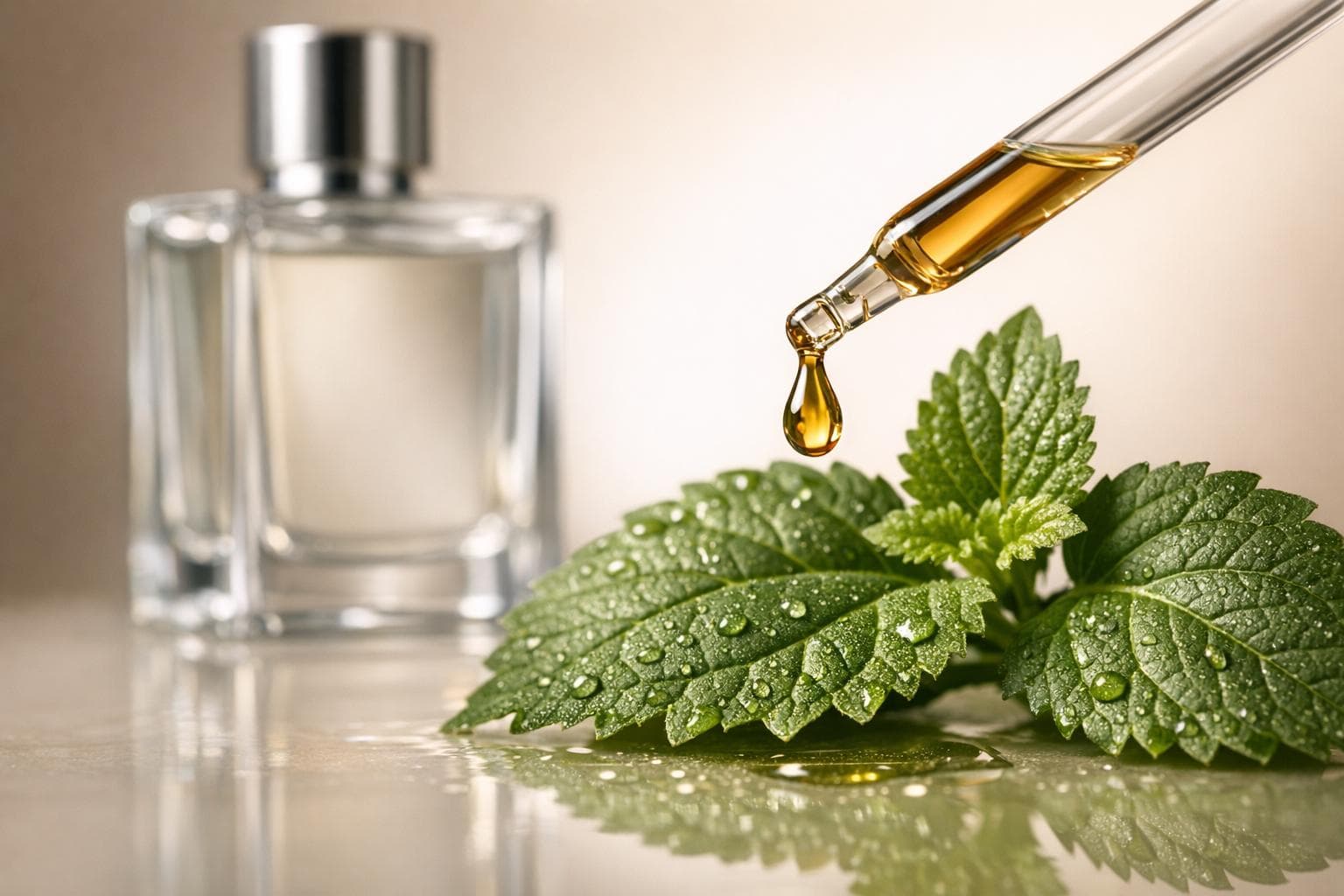
El pachulí sigue siendo una piedra angular de la perfumería en 2026, equilibrando su rica historia con las preferencias modernas. Amado por su profundidad terrosa y amaderada, aunque polarizante por su intensidad, ha experimentado transformaciones a través de avanzados métodos de extracción. Estas técnicas refinan su perfil, haciéndolo más ligero y fácil de llevar mientras conserva su carácter distintivo.
Puntos clave:
- Fijación: el pachulí actúa como un fijador natural, prolongando la duración de la fragancia entre 8 y 12 horas.
- Versatilidad: presente en todo, desde creaciones gourmand hasta mezclas ahumadas y licorosas, se adapta a las preferencias más diversas.
- Actualizaciones modernas: versiones más limpias como Patchouli Coeur eliminan las notas alcanforadas más punzantes, ampliando su atractivo.
- Lanzamientos destacados de 2026: Tuxedo 66 Patchouli Extrait (€350) de YSL y Patch Absolue (CHF 155) de Tauer muestran su evolución.
Tanto si prefiere declaraciones olfativas audaces y terrosas como aromas más suaves y a flor de piel, la presencia imperecedera del pachulí garantiza que siga siendo una pieza central en la creación de fragancias.
Perfil olfativo y características del pachulí
La gama olfativa del pachulí
El aroma del pachulí dista mucho de ser simple. En su estado puro, encierra la esencia de la tierra húmeda, maderas oscuras y cuero, con matices alcanforados y una cualidad añeja que recuerda a una bodega. Con el paso del tiempo, estas impresiones iniciales se suavizan, revelando tonos más cálidos de cacao, tabaco, incienso y un sutil dulzor avinado que evoluciona maravillosamente sobre la piel.
A pesar de pertenecer a la familia de la menta (Lamiaceae), el aroma del pachulí no guarda similitud alguna con ella. Su fragancia característica se desarrolla a través de un meticuloso proceso: las hojas frescas se secan a la sombra durante 5–7 días, lo que concentra el patchoulol, la molécula responsable de su inconfundible carácter.
Como afirmó célebremente el perfumista Bruno Jovanovic:
«¡Si la magia tuviera un aroma, olería a pachulí!»
- Bruno Jovanovic
Cómo la extracción y la mezcla transforman el pachulí
La forma en que se procesa el pachulí ejerce un profundo impacto en su aroma final. La destilación al vapor suele producir un aceite con aproximadamente un 40% de patchoulol, mientras que la extracción supercrítica con CO₂ puede elevar esta concentración al 70–80%, logrando un aroma más refinado y duradero.
El aceite de pachulí envejecido sufre una transformación, despojándose de sus aristas más ásperas y adoptando notas más suaves y suntuosas que recuerdan al chocolate negro o al incienso. Este proceso de maduración hace que los aceites de pachulí con más tiempo sean especialmente codiciados en la alta perfumería.
Para un toque más contemporáneo, los perfumistas recurren con frecuencia a Clearwood®, una alternativa sintética creada mediante la fermentación de levaduras. Clearwood® conserva la esencia amaderada del pachulí pero despoja sus matices terrosos más densos, brindando a los perfumistas una mayor flexibilidad para componer.
Esta versatilidad es parte de lo que distingue al pachulí frente a otras notas de fondo terrosas.
Pachulí frente a vetiver, sándalo y oud
Aunque el pachulí suele compartir protagonismo con otras notas profundas y terrosas, cada una aporta su propio matiz distintivo a una fragancia. He aquí una comparativa detallada:
| Nota | Estilo olfativo | Textura | Efecto en la fragancia |
|---|---|---|---|
| Patchouli | Terroso, amaderado, cacao, tabaco | Denso, oscuro; puede ser «sucio» o pulido | Afianza las notas más ligeras; aporta misterio y profundidad |
| Vetiver | De raíz, ahumado, con matices de cerilla | Seco, austero, herbáceo | Aporta solidez y una elegancia refinada |
| Sandalwood | Cremoso, lácteo, madera suave | Terso, aterciopelado | Suaviza los bordes afilados; aporta calidez y confort |
| Oud | Animálico, acholado, resinoso | Pesado, intenso; «viscoso» | Brinda una fuerza profunda, oscura y carnal |
El contraste más evidente se da entre el pachulí y el vetiver. Mientras que el pachulí, procedente de hojas fermentadas, se inclina hacia tonos dulces y oscuros, el vetiver, extraído de raíces, ofrece un perfil más seco y fresco. El sándalo, por su parte, actúa como un suavizante que amalgama con fluidez los demás elementos, mientras que el oud se impone con su presencia audaz y dominante. El pachulí, según su tratamiento, puede anclar discretamente una fragancia o convertirse en el absoluto protagonista.
10 PERFUMES CON PACHULÍ PARA TODA LA VIDA (Descarte el resto)
Por qué los perfumistas siguen utilizando pachulí
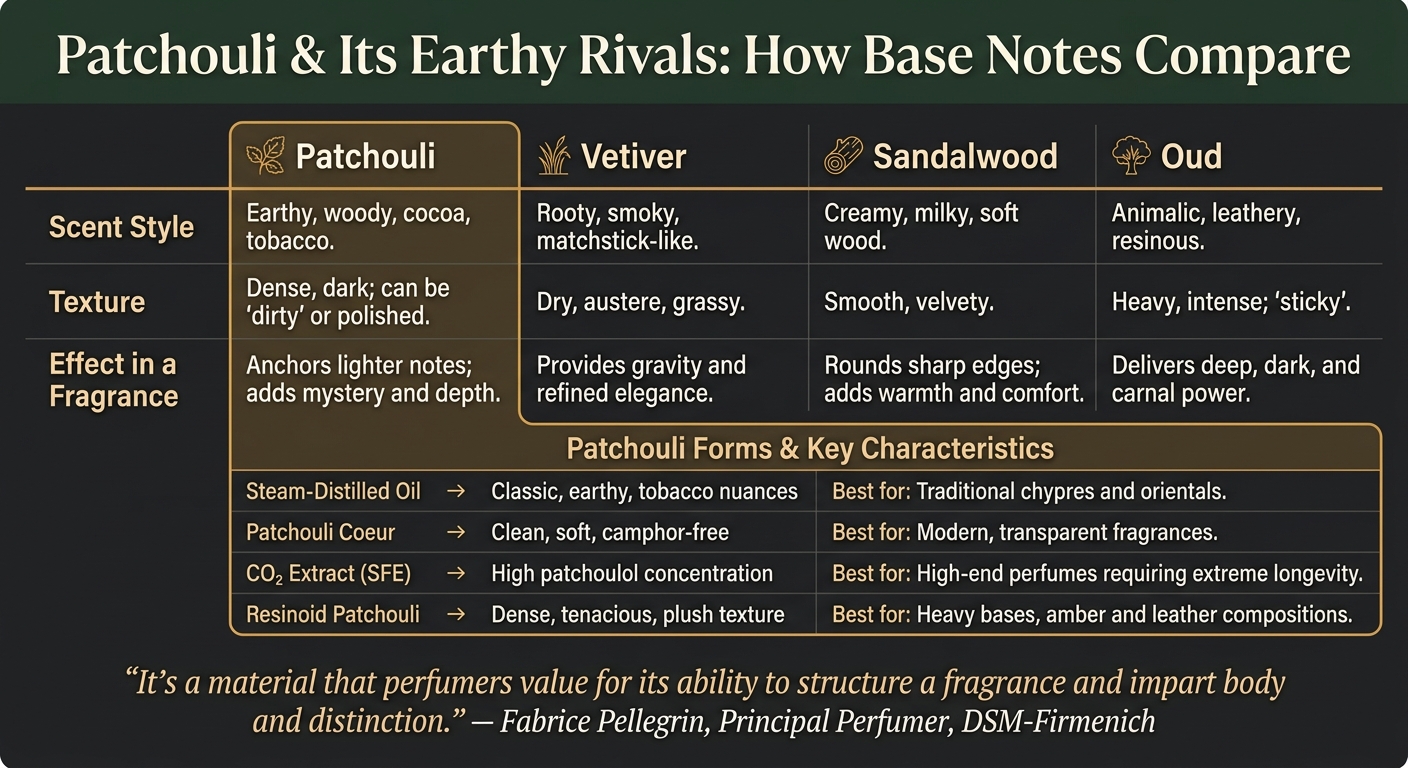
Pachulí frente a otras notas de fondo: comparativa de ingredientes terrosos en perfumería
El papel técnico del pachulí en una fragancia
La presencia inquebrantable del pachulí en la perfumería se debe no solo a su aroma inconfundible, sino también a su función decisiva en la formulación de fragancias. Con más de 150 compuestos aromáticos, el aceite de pachulí destaca como una de las materias primas naturales químicamente más complejas al alcance de los perfumistas. Esta riqueza le permite actuar tanto de nota protagonista como de columna vertebral estructural en las composiciones.
Gracias a sus moléculas pesadas y de baja volatilidad, el pachulí potencia la longevidad de las fragancias, ayudando a que las notas más delicadas perduren entre 10 y 12 horas. Fabrice Pellegrin, perfumista principal en DSM — Firmenich, subraya su trascendencia:
«Es un material que los perfumistas aprecian por su capacidad para estructurar una fragancia y otorgarle cuerpo y distinción».
El pachulí es un componente extraordinariamente versátil en diversas familias olfativas (florales, gourmand, ambarinas y chipres), donde añade profundidad, equilibrio y estabilidad. Los avances modernos, como Patchouli Coeur, han afinado aún más su perfil al aislar sus cualidades terrosas o achocolatadas mientras eliminan las notas medicinales y alcanforadas más punzantes.
| Forma de pachulí | Característica clave | Mejor aplicación |
|---|---|---|
| Aceite destilado al vapor | Clásico, terroso, con matices de tabaco | Chipres tradicionales y orientales |
| Patchouli Coeur | Limpio, suave, libre de notas alcanforadas | Fragancias modernas y transparentes |
| Extracto de CO₂ (SFE) | Alta concentración de patchoulol | Perfumes de alta gama que requieren una duración extrema |
| Pachulí resinoide | Textura densa, tenaz y opulenta | Bases densas, composiciones ambarinas y de cuero |
Esta versatilidad técnica asegura que el pachulí siga siendo un pilar insustituible de la perfumería, adaptándose con fluidez a las cambiantes preferencias de las tendencias actuales.
Cómo encaja el pachulí en las tendencias de perfumería de 2026
La adaptabilidad del pachulí lo convierte en el aliado ideal para las sofisticadas tendencias de perfumería que emergen en 2026. Uno de los giros más notables apunta a composiciones gourmand más oscuras que se alejan de los perfiles empalagosos en favor de una profundidad compleja y llena de matices. Los perfumistas combinan el pachulí con cacao, haba tonka y notas licorosas para dar vida a aromas suntuosos y texturizados que evitan el exceso de dulzor. Un ejemplo magistral es Patch Absolue de Tauer Perfumes, presentado en abril de 2026. Esta creación cuenta con un 40% de aceites naturales de pachulí y abre con cálida canela y clavo antes de asentarse en un fondo resinoso de ámbar y sándalo.
Las fracciones limpias de pachulí también satisfacen la demanda de perfumes minimalistas y a flor de piel, aportando una cualidad aterciopelada y envolvente sin la pesadez terrosa de los extractos tradicionales. Geza Schöen, de Escentric Molecules, describe su atractivo:
«El pachulí es un ingrediente natural único... Posee un carácter amaderado frío y un tanto distante. Me fascina por su belleza enigmática».
Asimismo, el pachulí se ha desprendido de sus connotaciones históricas vinculadas a la feminidad bohemia o a las maderas masculinas más pesadas, evolucionando hacia una nota unisex versátil. Esta reinterpretación contemporánea amplía su atractivo y brinda a los creadores infinitas posibilidades, consolidando su vigencia indiscutible en la perfumería actual.
El pachulí en las tendencias de fragancias de 2026
Nuevas formas en que los perfumistas utilizan el pachulí
En 2026, los perfumistas trabajan con el pachulí con una precisión y un refinamiento inéditos. Técnicas como el fraccionamiento molecular les permiten modular su carácter, tornándolo más sombrío o luminoso según el efecto deseado. Así, este procedimiento permite aislar extractos con concentraciones extraordinariamente altas de patchoulol, otorgando un control absoluto sobre el equilibrio de la fragancia.
Un método especialmente fascinante es el emboisement, que consiste en infusionar aceite de pachulí con virutas de madera de roble. Estas virutas a menudo proceden de tonelerías francesas de coñac como Seguin Moreau, otorgando al pachulí una calidez licorosa y ahumada. Juliette Karagueuzoglou, creadora de Tuxedo Extrait de Parfum 66 Patchouli de YSL (lanzado en mayo de 2026 a €350 por 50 ml), lo explica detalladamente:
«El emboisement de pachulí y roble... este proceso de maceración a medida intensifica por diez las notas de fondo».
Otro enfoque audaz combina el pachulí con un «acorde de tinta» a base de iris y aldehídos almizclados, generando un perfil mineral y sumamente texturizado. El trabajo de Nathalie Lorson para L’Amant de L’Artisan Parfumeur (lanzado en abril de 2026) encarna esta dirección. Mediante una fórmula depurada de apenas 5 o 6 ingredientes, entre ellos hoja de pimiento, cipriol y pachulí, se desmarca de la saturación de oud de años anteriores. Tal y como señala el autor de fragancias Pascal Iakovou:
«Lorson ha eludido el acorde de oud, el recurso predominante en las aguas de perfume nicho de inspiración oriental entre 2015 y 2023. En su lugar, recurre al cipriol, menos reconocible de inmediato».
Estas técnicas innovadoras ponen de relieve la versatilidad del pachulí, permitiéndole desempeñar un papel estelar en los registros olfativos más diversos.
El pachulí en las distintas familias olfativas
Estos métodos creativos han ampliado notablemente el uso del pachulí a través de diferentes familias de fragancias. A continuación se muestra su evolución en 2026:
| Familia olfativa | Cómo se utiliza el pachulí | Ejemplo representativo de 2026 |
|---|---|---|
| Gourmand | Aporta profundidad terrosa para equilibrar el dulzor | Patch Absolue, Tauer Perfumes - canela, clavo, benjuí |
| Ahumada / Licorosa | La infusión de madera de roble confiere una calidez licorosa y opulenta | Tuxedo 66 Patchouli, YSL - azafrán, cuero, ambroxan |
| Terrosa / Mineral | Los acordes de tinta introducen una textura táctil y vanguardista | L’Amant, L’Artisan Parfumeur - hoja de pimiento, cipriol |
| Floral — Amaderada | Las fracciones limpias suavizan el pachulí para lograr armonías elegantes | Lovely Patchouli 55 Extract, Krigler - frutos rojos, pimienta negra, cuero, ámbar |
| Experimental / Verde | Combinado con notas vivas como el pimiento morrón y el mango para crear contraste | Thousand Palms Extrait, Fulton & Roark - pimienta rosa, mango |
En 2026, el pachulí ha dejado de ser una simple nota de fondo. A menudo es la gran estrella de la creación, definiendo el carácter y la estructura de los perfumes con una oscuridad resinosa e imponente o con un sutil encanto a flor de piel.
Tu experto en fragancias personal te espera
Haz nuestro test olfativo rápido y descubre auténticos perfumes de diseñador y de nicho elegidos según tu gusto: explóralos en decants y muestras de 2–8ml para probar cada uno antes de decidirte por un frasco completo.
Encuentra tu fraganciaLos mejores perfumes con pachulí para probar en 2026
Descubra una selecta colección de fragancias con pachulí que aúna clásicos eternos y audaces creaciones contemporáneas para 2026.
Perfumes clásicos con pachulí
Pocos aromas encarnan la sofisticación tradicional como Lovely Patchouli 55 de Krigler. Con motivo de su 70.º aniversario, Krigler lanzó en 2026 una edición limitada de 45 ml de su Classic Extract, valorada en €3.800 y limitada a solo 300 frascos. Esta lujosa composición despliega acordes de frutos rojos, vainilla, ámbar y cuero, ofreciendo una calidez gradual de extraordinaria elegancia.
Otro referente ineludible es Tuxedo de YSL, una fragancia inspirada en el revolucionario esmoquin femenino de 1966. Su edición 2026 Extrait de Parfum 66 Patchouli (€350 por 50 ml) recurre a la exclusiva técnica del emboisement, infusionando el aceite de pachulí con virutas de madera de roble. El resultado es una profundidad licorosa y ahumada que une tradición y modernidad.
Mientras estos clásicos rinden tributo a la rica historia del ingrediente, las interpretaciones contemporáneas traspasan los límites con propuestas atrevidas e imaginativas.
Perfumes modernos de diseñador y nicho con pachulí
Para quienes buscan propuestas audaces y experimentales, Patch Absolue de Tauer Perfumes (CHF 155 por 50 ml) ofrece una intensa concentración del 40% de aceite de pachulí natural. Esta composición densa y resinosa se enriquece con notas licorosas, canela y benjuí, creando una experiencia olfativa fascinante.
Patchouli Paris de Guerlain adopta una perspectiva más vanguardista al combinar aldehídos con un iris empolvado para conferir al pachulí una faceta urbana y electrizante. Delphine Jelk, directora creativa de perfumes de Guerlain, lo define a la perfección:
«Si Patchouli Paris fuera un color, sería el resplandor rojo de la efervescencia artística de las noches parisinas».
Esta creación ostenta una tasa de recomendación del 94% y una puntuación media de 4.4/5 basada en 29 reseñas.
Otra incorporación destacada es Patchouli Intense de Nicolaï, elaborada con un 91.6% de ingredientes naturales y ampliamente elogiada con un 4.7/5 en 23 reseñas. Patricia de Nicolaï comparte su visión sobre la nota:
«El pachulí es, para mí, el alma de una composición. Como la viola en una orquesta, sostiene y profundiza todo a su alrededor».
Estas creaciones modernas confirman la evolución del pachulí, que ha pasado de ser una nota polarizante a erigirse en un pilar esencial del lujo contemporáneo.
Si prefiere fragancias discretas que permanezcan cerca de la piel, estas opciones sutiles revelan la faceta más íntima del pachulí.
Opciones sutiles y a flor de piel con pachulí
Aria di Patchouli de Al Ghaliyah (€135 por el extracto de 25 ml) está pensado para quienes aprecian aromas más ligeros y equilibrados. Esta etérea composición, con almizcle blanco, sándalo y un acorde de brisa refrescante, resulta fluida y distinguida. Goza de una impresionante valoración de 4.8/5 a partir de 262 opiniones.
Como alternativa íntima y accesible, Patchouli Velour de Darren Alan (edición limitada, $40 por 30 ml) ofrece una lectura aterciopelada y achocolatada del pachulí. Enriquecido con almizcle blanco, chocolate y vainilla, proporciona un aroma envolvente y personal sin la intensidad terrosa habitual. Es una magnífica puerta de entrada para descubrir la nota por primera vez.
| Perfume | Estilo | Notas clave | Precio |
|---|---|---|---|
| Lovely Patchouli 55 Classic Extract, Krigler | Cálido, refinado | Frutos rojos, vainilla, ámbar, cuero | €3.800 (45 ml, edición limitada) |
| Tuxedo 66 Patchouli Extrait, YSL | Ahumado, licoroso | Azafrán, cuero, madera de roble | €350 (50 ml) |
| Patch Absolue, Tauer | Denso, resinoso | Canela, benjuí, notas licorosas | CHF 155 (50 ml) |
| Patchouli Paris, Guerlain | Electrizante, empolvado | Aldehídos, iris, ámbar gris | aprox. €445 |
| Patchouli Intense, Nicolaï | Oscuro, aterciopelado | Composición predominantemente natural | €260 (100 ml) |
| Aria di Patchouli, Al Ghaliyah | Etéreo, a flor de piel | Almizcle blanco, sándalo, acorde fresco | €135 (25 ml) |
| Patchouli Velour, Darren Alan | Aterciopelado, achocolatado | Almizcle blanco, chocolate, vainilla | $40 (30 ml, edición limitada) |
Cómo llevar perfumes con pachulí
Cómo elegir el estilo de pachulí adecuado
El pachulí brinda un amplísimo abanico de interpretaciones, adaptándose a distintos gustos y ocasiones. Si se inicia en esta nota, opte por una mezcla gourmand cremosa donde matices como el chocolate y la vainilla atenúen su carácter terroso. Una vez familiarizado, podrá explorar variedades más densas e intensas. El pachulí fraccionado contemporáneo ofrece un perfil más limpio e intimista, ideal para entornos profesionales. En cambio, el aceite de pachulí clásico sin procesar aporta una profundidad terrosa inigualable, perfecta para quienes buscan una presencia más rotunda y carismática.
«El pachulí es un ingrediente natural único... Posee un carácter amaderado frío y un tanto distante. Me fascina por su belleza enigmática». - Geza Schöen, perfumista
Otro elemento fundamental que considerar es cómo las estaciones influyen en el comportamiento y la percepción del pachulí.
Cuándo y dónde llevar fragancias con pachulí
La estación del año es determinante en el rendimiento de los perfumes con pachulí. Las creaciones más densas, terrosas o licorosas, como Patch Absolue de Tauer, lucen en su máximo esplendor en otoño e invierno. Las temperaturas frías ralentizan su evaporación, permitiendo que la calidez de la fragancia se despliegue con lentitud sobre la piel. En primavera y verano, las interpretaciones más ligeras con acordes cítricos o de proyección sutil resultan mucho más idóneas.
Para el día y el entorno de trabajo, el pachulí fraccionado limpio es ideal por su discreción. Por el contrario, los perfumes de pachulí más especiados, licorosos o añejados es mejor reservarlos para veladas nocturnas o compromisos formales. Estas composiciones con mayor cuerpo pueden fijarse entre 10 y 12 horas en la piel, siendo perfectas cuando se busca una presencia prolongada.
La técnica del layering (superposición de fragancias) también permite adaptar su carácter a diversos estados de ánimo o contextos.
Combinación del pachulí con otras notas olfativas
En perfumería, el pachulí se utiliza a menudo como fijador, ya que retarda la evaporación de las notas más volátiles y prolonga la fijación de la fragancia. Esta propiedad lo convierte en una base excepcional para superponer perfumes. Si un aroma con pachulí resulta excesivamente austero o terroso, vaporizar por encima una fragancia con notas de vainilla o haba tonka aportará un matiz más cálido y gourmand. Por el contrario, si la fragancia es demasiado dulce, flores frescas como el jazmín o la gardenia añadirán un toque de equilibrio y sofisticación.
No obstante, procure evitar combinar el pachulí con notas acuáticas o marinas muy punzantes, ya que el contraste puede resultar discordante.
«Las posibilidades de combinación con el pachulí son prácticamente infinitas». - Eduardo Valadez, director de marketing de Diptyque
| Estilo de pachulí | Notas complementarias | Ocasión | Estación |
|---|---|---|---|
| Terroso / Clásico | Musgo de roble, bergamota, cuero | Noche / Formal | Invierno |
| Gourmand | Vainilla, chocolate, haba tonka | Citas / Eventos sociales | Otoño / Invierno |
| Fresco / Limpio | Cítricos, flores blancas, enebro | Día / Oficina | Primavera / Verano |
| Cremoso / Suave | Sándalo, almizcle, iris | Profesional / Informal | Todo el año |
| Especiado / Oriental | Canela, clavo, ámbar | Noche / Formal | Otoño |
Para apreciar plenamente las fragancias ricas en pachulí, aplíquelas en los puntos de pulso (muñecas, cuello y detrás de las orejas) para optimizar su difusión. Gracias a su extraordinaria potencia, incluso una pequeña cantidad de un extracto de calidad superior puede desplegar su estela durante meses.
Conclusión: el lugar del pachulí en la alta perfumería moderna
Pachulí: controvertido pero insustituible
El pachulí despierta pasiones encontradas en el universo olfativo, pero sigue siendo un ingrediente irremplazable. Su densa arquitectura molecular lo sitúa como uno de los fijadores naturales más formidables, consolidándolo como una pieza imprescindible en la creación de fragancias. Fabrice Pellegrin, perfumista principal en DSM — Firmenich, destaca su valor:
«Es un material adorado por los perfumistas porque lo estructura todo. Otorga cuerpo, nobleza y una auténtica identidad».
A escala global, la industria del perfume consume entre 1.000 y 2.000 toneladas de pachulí al año. No se trata de un ingrediente meramente nicho; es un pilar maestro que habita desde las fragancias de gran tirada hasta los extractos más exclusivos del lujo. Su fiabilidad técnica ha sido el motor que le ha permitido reinventarse en las vanguardistas interpretaciones que admiramos hoy.
El pachulí en 2026: más versátil que nunca
Si bien el pachulí siempre ha sido fundamental, en los últimos años ha vivido una auténtica metamorfosis. Llegados a 2026, los avances en las tecnologías de extracción han hecho posible la creación de versiones mucho más diáfanas y ligeras. Estas modalidades purificadas se despojan de los rasgos densos y alcanforados de antaño, volviéndose extraordinariamente versátiles y adecuadas para múltiples contextos y épocas del año.
Las casas de lujo han acogido con entusiasmo esta evolución. En abril de 2026, Yves Saint Laurent presentó Tuxedo Extrait de Parfum 66 Patchouli (€350 por 50 ml), compuesto por Juliette Karagueuzoglou, una obra que aprovecha una infusión de pachulí y roble inspirada en la tonelería de coñac. Casi al mismo tiempo, Tauer Perfumes desvelaba Patch Absolue, con una prodigiosa concentración del 40% de aceite natural de pachulí, haciendo patente el magnetismo moderno de esta materia prima.
El atractivo del pachulí trasciende hoy cualquier barrera de género tradicional. En 2026 se consagra como un imprescindible unisex, valorado por la presencia envolvente y la distinción que aporta a las fragancias, sin importar quién las vista. Desde acordes gourmand acariciadores hasta composiciones de vanguardia con toques minerales y de tinta, el pachulí demuestra una ductilidad admirable en todas las familias olfativas. Su travesía de nota controvertida a reverenciado emblema del lujo contemporáneo refleja su vigencia intemporal: una condición que asegura su liderazgo indiscutible en el porvenir de la perfumería.
Preguntas frecuentes
¿Cómo puedo saber si un perfume utiliza pachulí «limpio» o la variedad clásica y terrosa?
Para distinguirlo, busque la indicación Patchouli Coeur en la descripción olfativa de la fragancia. Esta versión ha sido fraccionada para eliminar los componentes alcanforados más pesados, ofreciendo un aroma mucho más ligero y pulido. El pachulí clásico, por el contrario, destaca por su densidad terrosa, evocando a menudo la estética bohemia de los años sesenta y setenta. Mientras que la versión limpia se siente aérea y contemporánea, la variedad tradicional exhibe matices más oscuros, achocolatados o avinados.
¿Por qué el pachulí dura tanto sobre la piel en comparación con otras notas?
El pachulí debe su extraordinaria fijación a una estructura molecular densa, compuesta fundamentalmente por sesquiterpenos de peso molecular elevado. Al tener una volatilidad muy baja, se evaporan lentamente y actúan como un excelente fijador natural. Otro componente determinante es el patchoulol, que se forma durante el proceso de secado y fermentación de las hojas. Esta molécula aporta riqueza y profundidad, logrando que los perfumes con pachulí perduren en la piel durante 12 horas o incluso más tiempo.
¿Qué estilo de pachulí es el más adecuado para la oficina en épocas cálidas?
Para un entorno profesional en días calurosos, lo ideal es elegir fragancias donde el pachulí se combine con cítricos luminosos como la bergamota o el limón, o bien con flores frescas y diáfanas. Estas notas aligeran la densidad del pachulí, logrando un aura más fresca y accesible. Busque composiciones donde el pachulí ejerza como un soporte sutil en el fondo, creando una estela refinada y sobria. Aplique con moderación en los puntos de pulso: el pachulí evoluciona con lentitud y desplegará una presencia agradable y discreta a lo largo de toda la jornada.

