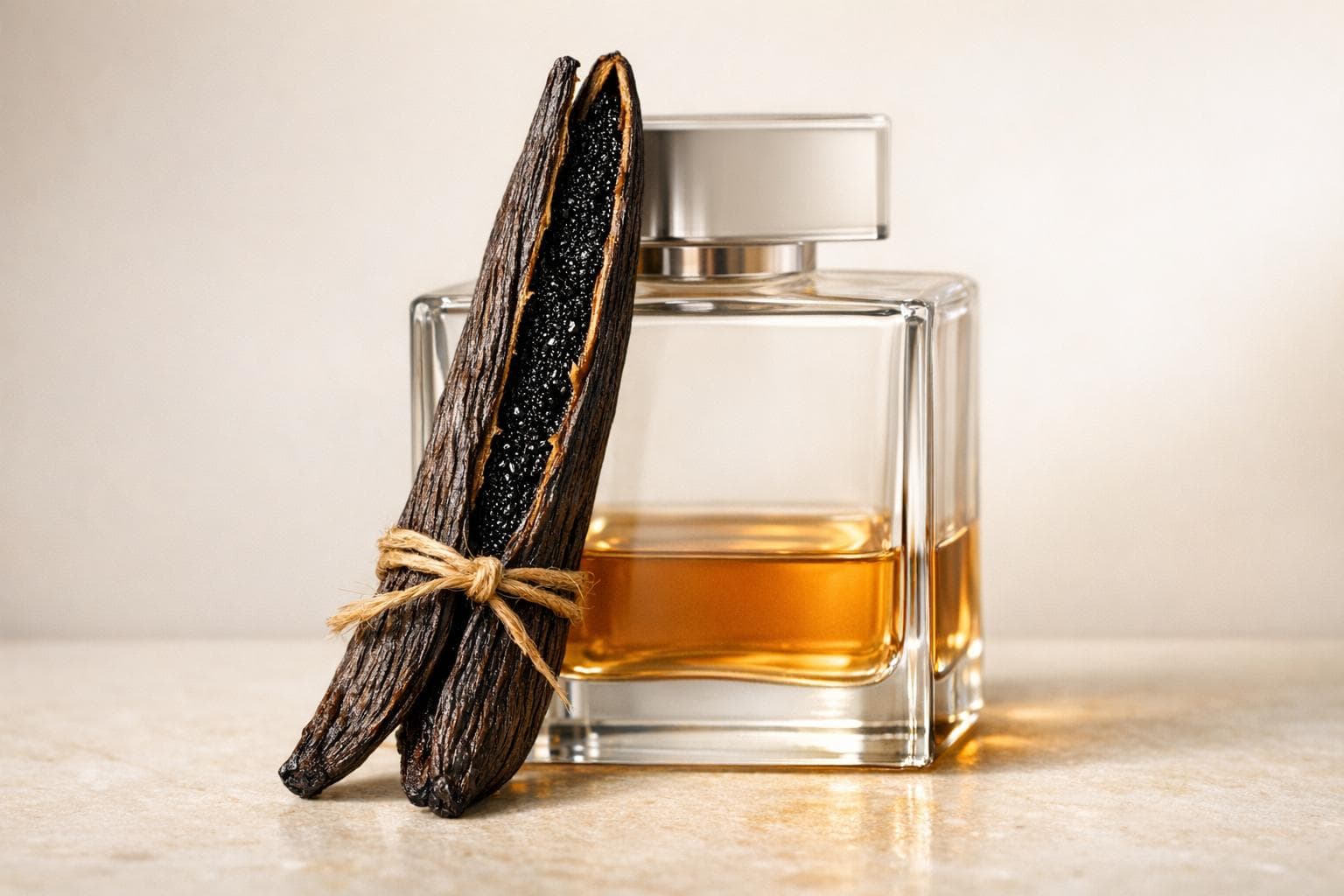
La vainilla ya no es solo una nota dulce y sencilla en los perfumes. En 2026, ha evolucionado hasta convertirse en un ingrediente sofisticado, celebrado por su complejidad y versatilidad. Desde sus orígenes en Madagascar, donde se produce el 80 % de las vainas de vainilla del mundo, hasta su papel en la alta perfumería, la vainilla abarca ahora un amplio espectro de estilos: desde ligeros y etéreos hasta oscuros y resinosos.
Puntos clave:
- La transformación de la vainilla: antes considerada básica, ahora brilla en fragancias gourmand, amaderadas y florales.
- Abastecimiento y sostenibilidad: Madagascar lidera la producción, con programas de abastecimiento ético que garantizan una remuneración justa y mejores prácticas agrícolas.
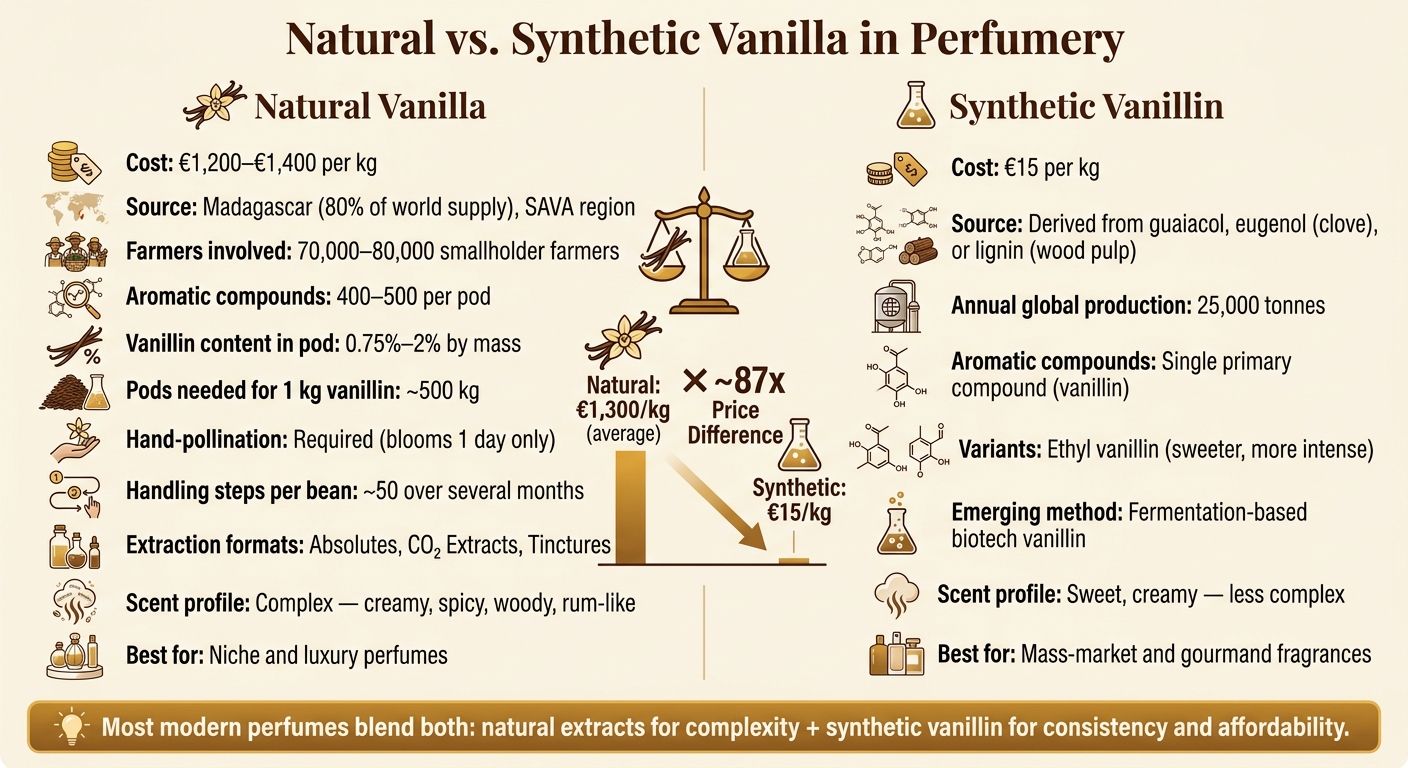
- Natural frente a sintética: la vainilla natural es muy apreciada por su profundidad, pero cuesta entre 1.200 € y 1.400 €/kg, mientras que la vainillina sintética ofrece una alternativa asequible a 15 €/kg.
- Tendencias en 2026: las vainillas gourmand saladas, las audaces mezclas de nicho y los aromas sutiles para el día dominan el mercado.
- Probar fragancias: plataformas como Scento permiten descubrir perfumes de forma asequible mediante decants antes de comprometerse con un frasco completo.
El auge de la vainilla refleja la evolución de los gustos, con perfumistas que crean perfiles texturizados y llenos de matices que van más allá del simple dulzor. Ya prefiera un aroma ligero y cercano a la piel o una propuesta audaz y ahumada, existe una vainilla para cada estado de ánimo y ocasión.
17 fragancias de vainilla de diseñador que todo amante del perfume debería conocer
De las vainas de Madagascar a los ingredientes de vainilla modernos
Natural vs. Synthetic Vanilla in Perfumery: Cost, Complexity & Use
Cómo se obtiene la vainilla y por qué es importante la sostenibilidad
Madagascar es el corazón indiscutible de la producción mundial de vainilla. Solo su región nororiental de SAVA concentra alrededor del 80 % del suministro mundial de vainas de vainilla, sustentando los medios de vida de unos 70.000 a 80.000 pequeños agricultores. El elevado coste de la vainilla se debe a su proceso de cultivo intensivo en mano de obra. Las orquídeas de vainilla florecen durante solo un día, lo que exige una polinización manual inmediata mediante el método de Edmond Albius. Para producir 1 kg de vainas de vainilla negra curadas, se deben polinizar a mano unas 600 flores. Posteriormente, cada vaina se manipula aproximadamente 50 veces a lo largo de varios meses de curado.
El abastecimiento ético se ha convertido en una prioridad clave para los proveedores de materias primas en la industria de las fragancias. Symrise, por ejemplo, gestiona un programa de abastecimiento directo en la región de SAVA en Madagascar desde 2006. Esta iniciativa involucra a más de 7.000 pequeños agricultores en 99 aldeas, beneficiando indirectamente a unas 30.000 personas. Los agricultores reciben una remuneración justa, seguro médico y formación en prácticas agrícolas sostenibles. Symrise también opera una planta de extracción local con 220 empleados, lo que garantiza que los procesos de valor añadido permanezcan dentro de la comunidad. Laurence Briand, General Manager Madagascar en Symrise, destaca la importancia de este enfoque:
«Para lograr un impacto positivo en entornos tan complejos, estar presente en la comunidad es vital. Nuestras instalaciones están establecidas en el corazón de la región productora de vainilla de Madagascar para garantizar que nos mantengamos proactivos».
En 2026, las cadenas de suministro totalmente trazables se han convertido en un requisito indispensable en el mercado de las fragancias de lujo. Las casas de alta perfumería exigen ahora un abastecimiento documentado para mantener los estándares éticos y garantizar la calidad. Este énfasis en las prácticas responsables no solo preserva los métodos tradicionales, sino que también allana el camino para explorar las diversas formas naturales de la vainilla en la perfumería moderna.
Formatos naturales de vainilla utilizados en perfumería
Una vez obtenida de forma ética, el método de extracción se convierte en el factor determinante del perfil aromático de la vainilla. Los tres formatos principales de vainilla natural empleados en perfumería son:
- Absolutos: extraídos con alcohol, ofrecen un aroma suntuoso y con gran cuerpo.
- Extractos de CO₂: capturan los compuestos aromáticos más puros sin necesidad de solventes.
- Tinturas: elaboradas mediante la maceración de vainilla en alcohol, muy utilizadas en formulaciones de perfumería clásica.
La vainilla natural posee una complejidad extraordinaria. Cada vaina contiene entre 400 y 500 compuestos aromáticos individuales, lo que da lugar a un perfil olfativo que puede oscilar entre lo dulce y lácteo y matices especiados, amaderados e incluso con toques de ron. Este intrincado aroma hace que la vainilla natural sea especialmente valorada en perfumes nicho y de lujo. Por ejemplo, la Vanilla planifolia (vainilla Bourbon) de Madagascar y Reunión ofrece la clásica cremosidad dulce que la mayoría asocia con la vainilla. Por su parte, la Vanilla tahitensis de Tahití aporta un perfil floral con matices anisados, y la Vanilla pompona de Centroamérica proporciona un aroma más profundo y terroso.
Cabe destacar la notable diferencia de precio entre la vainillina natural y la sintética. La vainillina natural cuesta entre 1.200 € y 1.400 € por kilogramo, en comparación con los apenas 15 € por kilogramo de su equivalente sintético.
Vainilla sintética y biotecnológica: ampliando el acceso a la vainilla
Dado el elevado coste y la complejidad de la vainilla natural, las alternativas sintéticas se han vuelto fundamentales para la industria de las fragancias. La vainillina, el principal compuesto aromático de la vainilla, es en la actualidad el aroma más producido en todo el mundo, con una producción anual que alcanza las 25.000 toneladas. Las vainas de vainilla natural contienen solo entre un 0,75 % y un 2 % de vainillina en masa, lo que significa que se necesitan aproximadamente 500 kg de vainas para extraer tan solo 1 kg de vainillina natural.
La vainillina sintética moderna suele obtenerse a partir de guayacol, eugenol (del clavo) o lignina (de la pulpa de madera). La etilvainillina, una variante, es aún más dulce e intensa, lo que la convierte en una opción muy popular para las fragancias gourmand. Recientemente, la vainillina biotecnológica obtenida mediante fermentación ha marcado un antes y un después. Este método utiliza microorganismos para convertir materias primas de origen vegetal en vainillina mediante una fermentación controlada, ofreciendo una alternativa escalable y homogénea a la síntesis química tradicional y a la extracción natural. Sin embargo, aunque la vainillina sintética destaca por capturar una nota dulce y cremosa, no logra reproducir toda la complejidad aromática de la vainilla natural. Yannick Leen, Global Competence Director Vanilla en Symrise, explica:
«Compuesta por más de 400 sustancias aromáticas y necesitada de polinización manual, es sutil, compleja y requiere maestría y pasión para crear los distintivos aromas y sabores de vainilla que a todos nos apasionan».
En la práctica, muchos perfumes contemporáneos combinan extractos naturales con moléculas sintéticas. Este enfoque equilibra coste, consistencia y riqueza olfativa, garantizando que la vainilla siga siendo un ingrediente versátil y venerado en el universo de la perfumería de lujo.
Cómo actúa la vainilla en la composición de fragancias
La vainilla como nota de fondo y fijador
La vainilla desempeña un papel esencial como nota de fondo en perfumería, célebre por su capacidad para perdurar en la piel durante períodos prolongados, a menudo más de 24 horas. Sus moléculas de baja volatilidad aportan una calidez duradera y una profundidad que asienta la composición general del perfume.
Asimismo, la vainilla actúa como fijador, contribuyendo a estabilizar los índices de evaporación de otros ingredientes. Al equilibrar las presiones de vapor de las notas más ligeras y volátiles, la vainilla asegura una difusión más suave y gradual de la fragancia. En un Eau de Parfum, esto también ralentiza la evaporación del alcohol, prolongando la longevidad del aroma. Utilizada habitualmente en concentraciones del 3 % al 5 %, la vainilla no solo prolonga la fijación, sino que también armoniza elementos contrastantes como los almizcles y el sándalo, creando una mezcla equilibrada que de otro modo podría sentirse discordante.
Esta versatilidad permite que la vainilla brille en una amplia variedad de familias olfativas.
La vainilla en las diferentes familias olfativas
Sin perder su esencia natural, la vainilla se ha transformado en un componente clave de numerosas familias olfativas, redefiniendo los acordes tradicionales gracias a su maleabilidad.
En las fragancias orientales y ambarinas, la vainilla añade una calidez inconfundible. El icónico Shalimar de Guerlain fue uno de los pioneros en explorar este potencial, fusionando vainillina sintética con absoluto de vainilla natural, junto con bergamota y opopónaco, para componer el acorde de vainilla oriental por excelencia. En las composiciones amaderadas, la vainilla suaviza las aristas más punzantes de notas como el cedro o el vetiver. Tobacco Vanille de Tom Ford, creada por Olivier Gillotin, lo ilustra a la perfección al combinar absoluto de vainilla con hoja de tabaco, frutos secos y cacao para lograr un efecto gourmand suntuoso. Del mismo modo, en las fragancias florales, la vainilla aporta sofisticación y equilibrio. Hypnotic Poison de Dior, ideada por Annick Menardo, recurre a la vainilla como puente para armonizar la almendra amarga, el jazmín y el almizcle, logrando un perfil redondo y seductor.
Acordes de vainilla clara frente a vainilla oscura
La polivalencia de la vainilla se amplía aún más mediante su interpretación en acordes claros y oscuros, que ofrecen diferentes atmósferas y texturas según la ocasión.
Los acordes de vainilla clara son etéreos e íntimos, a menudo acompañados de almizcles blancos, notas lactónicas y maderas suaves como el sándalo. Estas composiciones crean una calidez delicada y cercana a la piel, lo que las hace idóneas para el día o para las estaciones más templadas. Por su parte, los acordes de vainilla oscura son más densos e intensos, construidos a partir de ingredientes como el benjuí, el ládano y el incienso. Estos acordes aportan una profundidad ahumada y resinosa con una estela más pronunciada, perfecta para veladas nocturnas o climas frescos.
| Característica | Vainilla clara | Vainilla oscura |
|---|---|---|
| Materiales principales | Almizcles, lactonas, sándalo | Benjuí, ládano, incienso, resinas de ámbar |
| Textura | Transparente, láctea, etérea | Densa, balsámica, ahumada |
| Proyección | Cercana a la piel, íntima | Estela de moderada a potente |
| Mejor ocasión | De día, oficina, primavera/verano | De noche, eventos formales, otoño/invierno |
| Estilo 2026 | Minimalista, lujo limpio | Seductora, madura |
La tendencia en la creación de fragancias se aleja de las vainillas excesivamente azucaradas para buscar perfiles con mayor textura y sutileza. Como señala la consultora de fragancias Cassandra Browning:
«Las marcas van mucho más allá de las vainillas azucaradas y predecibles del pasado, apostando por combinaciones que transmiten más textura, toques salados y narrativa».
Incluso las vainillas «claras» incorporan ahora con frecuencia matices sutiles como la sal marina o notas secas para añadir complejidad, mientras que las mezclas más oscuras se centran en una riqueza refinada sin resultar abrumadoras. Esta evolución garantiza que los acordes modernos de vainilla sigan siendo dinámicos y sofisticados, cautivando a una gran variedad de gustos.
Tu experto en fragancias personal te espera
Haz nuestro test olfativo rápido y descubre auténticos perfumes de diseñador y de nicho elegidos según tu gusto: explóralos en decants y muestras de 2–8ml para probar cada uno antes de decidirte por un frasco completo.
Encuentra tu fraganciaTendencias en perfumes de vainilla para 2026
El interés por las fragancias de vainilla aumentó un 233 % a finales de 2025, marcando la pauta para las nuevas tendencias en 2026. Lejos de quedar relegada a sus aplicaciones convencionales, la vainilla se ha reinventado como una nota polifacética que cuenta historias complejas desde su cosecha en Madagascar hasta las composiciones vanguardistas y estructuradas de la actualidad.
Vainilla gourmand: contrastes salados y notas de frutos secos
La familia gourmand ha adquirido una nueva dimensión. La vainilla, que durante mucho tiempo fue sinónimo de dulzor simple y reminiscencias de repostería, se acompaña ahora de matices salados y aromáticos que elevan su elegancia. Los acordes de praliné aportan una riqueza tostada y sutilmente floral, mientras que las notas de sal generan un contraste sugerente que aleja la creación del territorio de los postres empalagosos.
Como explica David Seth Moltz, perfumista de D.S. & Durga:
«Todos estamos cansados de la típica vainilla azucarada de siempre. Los perfumistas están desafiando los límites hacia notas saladas, e incluso explorando terrenos surrealistas o desmedidos».
Esta tendencia encaja con la preferencia europea por la sofisticación y el deleite comedido frente al dulzor evidente. Estos giros salados demuestran la adaptabilidad de la vainilla, ofreciendo una alternativa fresca frente a acordes más densos y estructurados.
La vainilla oscura en la perfumería nicho
En la perfumería nicho, la vainilla se concibe ahora como una nota estructural y audaz, y no como un simple edulcorante de fondo. Se combina con resinas, incienso y matices animálicos para forjar fragancias atrevidas y refinadas. Vanagloria de Laboratorio Olfattivo, compuesta por Dominique Ropion, combina vainas de vainilla Bourbon extraídas con CO₂ con olíbano, cuero y azafrán para evocar un «aura mística» y un «fondo ritual», con un precio de 175 € los 100 ml. En una línea similar, Caviar Vanille de BDK Parfums recurre a vainilla de Madagascar de origen sostenible, enriquecida con matices de cuero, bálsamo de Perú y ládano para lograr un carácter profundo y especiado. Roasted Vanilla Eau de Parfum de Loewe (365 € por 100 ml) mezcla vainilla con madera de roble y coñac añejo, transformándola en una fragancia madura y distinguida.
Jun Lim, fundador de BornToStandOut, sintetiza este atractivo:
«Si aportas textura, profundidad y un giro inesperado, de repente ese aroma comestible e inocente se transforma en algo seductor, decadente e imposible de olvidar».
Vainilla translúcida para el día y la primavera
Las fragancias de vainilla translúcida apuestan por una calidez ligera y cercana a la piel, ideal para el uso diurno y la primavera. Estos perfumes funden la vainilla con almizcle blanco, flores delicadas y cítricos, ofreciendo una discreta distinción adecuada tanto para entornos profesionales como para momentos informales. Las vainillas ligeras contemporáneas realzan las facetas naturales, florales y ligeramente verdes de la orquídea de la vainilla, apartándose del extracto azucarado con el que suele relacionarse. El resultado es una elegancia sutil, propia del «lujo silencioso», que acompaña con soltura de la mañana a la noche.
Estas tendencias demuestran la versatilidad de la vainilla y ofrecen a los amantes de los perfumes en Alemania un abanico diverso de opciones: desde el placer gourmand con toques salados hasta el carácter audaz y la elegancia serena.
Cómo descubrir perfumes de vainilla en Alemania con Scento

Las fragancias de vainilla abarcan múltiples estilos en 2026, desde los más delicados e íntimos hasta los más opulentos e intensos. Esta riqueza de opciones puede dificultar la elección del aroma adecuado. Para facilitar esa búsqueda existe Scento, que ofrece decants asequibles para explorar diferentes perfumes sin necesidad de invertir de inmediato en un frasco completo, cuyo valor puede alcanzar hasta 300 €.
Cómo elegir el estilo de vainilla perfecto para usted
La forma más sencilla de seleccionar un perfume de vainilla es adaptar el estilo a la ocasión o al contexto deseado. Las vainillas etéreas son ligeras y delicadas, con notas de almizcle blanco, maderas suaves y acordes lácteos, idóneas para el día a día o el entorno laboral. Las vainillas resinosas, enriquecidas con benjuí, ámbar e incienso, desprenden una calidez envolvente y resultan perfectas para la noche o los meses más fríos. Para quienes prefieren un perfil más dulce y envolvente, las vainillas gourmand con notas de haba tonka, caramelo o praliné aportan una personalidad inconfundible, especialmente en reuniones sociales o veladas especiales.
| Estilo de vainilla | Notas principales | Mejor ocasión |
|---|---|---|
| Etérea | Almizcle blanco, maderas suaves, leche | Oficina, día |
| Resinosa | Benjuí, ámbar, incienso | Noche, otoño/invierno |
| Gourmand | Tonka, caramelo, praliné | Eventos sociales, citas |
| Segunda piel | Lactonas suaves, Iso E Super | Uso diario, viajes |
Por qué los decants son la mejor forma de probar fragancias de vainilla
Una vez definido el estilo de su preferencia, el siguiente paso es comprobar cómo evoluciona en su piel. Los perfumes —y en particular la vainilla— reaccionan de manera única según el pH de la piel, la temperatura corporal e incluso la humedad ambiental. Scento facilita esta experiencia ofreciendo decants en formatos de 2 ml, 5 ml y 8 ml. Estas muestras permiten descubrir toda la evolución del aroma, desde la salida hasta el secado y su estela persistente.
Alemania es el principal mercado de Scento, concentrando el 31 % de todos los pedidos. Entre los clientes alemanes, el formato de 2 ml es el predilecto para un primer descubrimiento. Con precios a partir de aproximadamente 5,25 €/ml para perfumes de diseñador y 5,71 €/ml para creaciones nicho, es posible probar composiciones tan aclamadas como Althaïr de Parfums de Marly y Naxos de Xerjoff (ambas con una valoración de 4,5/5 en Scento) sin realizar un gran desembolso. Además, Scento incluye una garantía de satisfacción en el primer pedido, facilitando cambios o crédito en cuenta si la fragancia no cumple sus expectativas.
«Solía gastar dinero en frascos completos que luego no usaba. Ahora simplemente pido en Scento; me resulta mucho más rentable». — Elena R., cliente verificada, Scento
Cree su propia colección de fragancias de vainilla
Cuando encuentre un aroma de vainilla con el que conecte, puede comenzar a diseñar una colección adaptada a distintos momentos y estados de ánimo. En lugar de limitarse a una sola vainilla «ideal», considere conformar un guardarropa olfativo con fragancias que se complementen. Las métricas de Scento indican que los clientes suelen pedir una media de 3,55 unidades por pedido, lo que hace muy accesible contrastar diferentes propuestas: por ejemplo, una vainilla luminosa para el día y una variante más intensa y enigmática para la noche.
Tras probar una fragancia con el formato de 2 ml, puede optar por el tamaño de 5 ml para valorar cómo se adapta a su rutina diaria. Si un perfume se convierte en su firma predilecta, la suscripción mensual de 8 ml de Scento, disponible a partir de 12,90 € al mes, es una alternativa muy práctica para incorporarlo con regularidad. Esta suscripción ajusta el precio por mililitro a unos 4,14 € para fragancias nicho y 4,15 € para opciones de diseñador; cada vial de 8 ml ofrece unas 120 pulverizaciones, cantidad ideal para 30 días de uso cotidiano.
Este método progresivo no solo ayuda a descubrir sus fragancias de cabecera, sino que le permite consolidar una selecta colección de vainillas para cada instante del año.
Conclusión: cómo encontrar su perfume de vainilla ideal
La vainilla ha recorrido un trayecto fascinante. De ser una orquídea polinizada a mano en Madagascar, se ha convertido en uno de los ingredientes más polifacéticos y sofisticados de la perfumería actual. En 2026, este «renacimiento de la vainilla» ha redefinido el concepto de esta nota, trascendiendo por completo su clásica dimensión azucarada. En la actualidad, las fragancias de vainilla abarcan múltiples matices —ahumados, coriáceos, etéreos o íntimos—, trabajados por los perfumistas con la misma maestría que cualquier otra materia prima noble. Esta metamorfosis invita a explorar las variadas facetas de la vainilla en su propia experiencia aromática.
Dar con el perfume de vainilla adecuado requiere experimentar. Como apunta la consultora de fragancias Cassandra Browning:
«La vainilla siempre ha transmitido esa sensación universal de bienestar, pero, en el plano olfativo, jamás ha sido tan fascinante como ahora».
La prueba sobre la piel es indispensable, ya que la vainilla interactúa de manera particular con cada persona. Un aroma que parece cálido y resinoso sobre una tira olfativa puede volverse seco y amaderado al entrar en contacto con la piel. Del mismo modo, una vainilla suave y aireada puede desplegar matices más suntuosos con temperaturas bajas. Esta singularidad convierte el descubrimiento mediante muestras en una decisión acertada antes de adquirir un frasco completo, cuyos precios suelen situarse entre los 175 € y más de 300 €.
Los decants de 2 ml de Scento ofrecen una vía cómoda para descubrir diferentes estilos de vainilla y comprobar su desempeño en el día a día. Dado que Alemania representa el 31 % de los pedidos de Scento, es evidente que numerosos amantes del perfume eligen esta fórmula para acertar en su elección. Ya busque una vainilla gourmand con notas de café y praliné, una calidez balsámica para el invierno o un matiz íntimo para la oficina, probar las fragancias en situaciones cotidianas le asegurará encontrar aquella que mejor se adapte a su estilo.
Preguntas frecuentes
¿Cómo puedo saber si un perfume de vainilla utiliza vainilla natural o principalmente vainillina?
Para comprobar si un perfume contiene vainilla auténtica, revise la lista de ingredientes en busca de términos como extracto natural de vainilla o absoluto de vainilla. Estos indican la presencia de vainilla natural. En cambio, menciones como vanillin o ethyl vanillin corresponden a compuestos sintéticos. Una lectura detallada del etiquetado le permitirá identificar la naturaleza de sus notas.
¿Qué estilo de vainilla es el más adecuado para la oficina en Alemania?
Para un entorno profesional en Alemania, es aconsejable decantarse por una fragancia de vainilla sobria y equilibrada que proyecte calidez y distinción sin caer en un perfil excesivamente dulce o confitado. Se recomiendan composiciones basadas en vainilla de Madagascar de primera calidad, matizadas con especias suaves o maderas nobles. Estos acordes aportan un fondo elegante y perfectamente adecuado para el entorno de trabajo.
¿Cómo se deben probar los perfumes de vainilla para evaluar su duración y estela en la piel?
Para valorar un perfume de vainilla con precisión, aplíquelo en los puntos de pulso —como muñecas o cuello— y observe su desarrollo durante varias horas. De este modo podrá juzgar con claridad tanto su duración (el tiempo que permanece perceptible) como su estela (el alcance de su difusión). Conviene también llevar el perfume en diferentes entornos para comprobar cómo reacciona según la temperatura y el ambiente. Para una apreciación fiel, evite probar varias fragancias a la vez sobre la piel.

