La Generación Z está transformando el universo de la perfumería. A diferencia de las generaciones anteriores, conciben las fragancias como herramientas de autoexpresión y no como símbolos de estatus. He aquí por qué los perfumes nicho conectan tanto con ellos:
- La individualidad es lo primero: La Generación Z huye de los perfumes comerciales y prefiere firmas nicho como Byredo o BDK por la singularidad de sus aromas y sus historias. Más del 56 % de este grupo se decanta por este tipo de propuestas.
- Accesibilidad frente a ostentación: Los perfumes de diseñador, cuyo precio suele superar los 100 €, resultan inalcanzables para muchos.
- Preferencia por lo neutro: El 40 % de la Generación Z opta por fragancias unisex, dejando atrás las etiquetas tradicionales «para él» o «para ella».
- La influencia de las redes sociales: Plataformas como TikTok guían el 45 % de sus decisiones de compra en perfumería, impulsando tendencias como el layering aromático o las colecciones basadas en el estado de ánimo.
- Elaboración ética: Las fórmulas veganas, cruelty-free y las prácticas sostenibles son requisitos indispensables para esta generación.
Esta transformación está impulsando el éxito de los formatos reducidos, los decants de compra única y las marcas alineadas con sus valores de creatividad y transparencia.
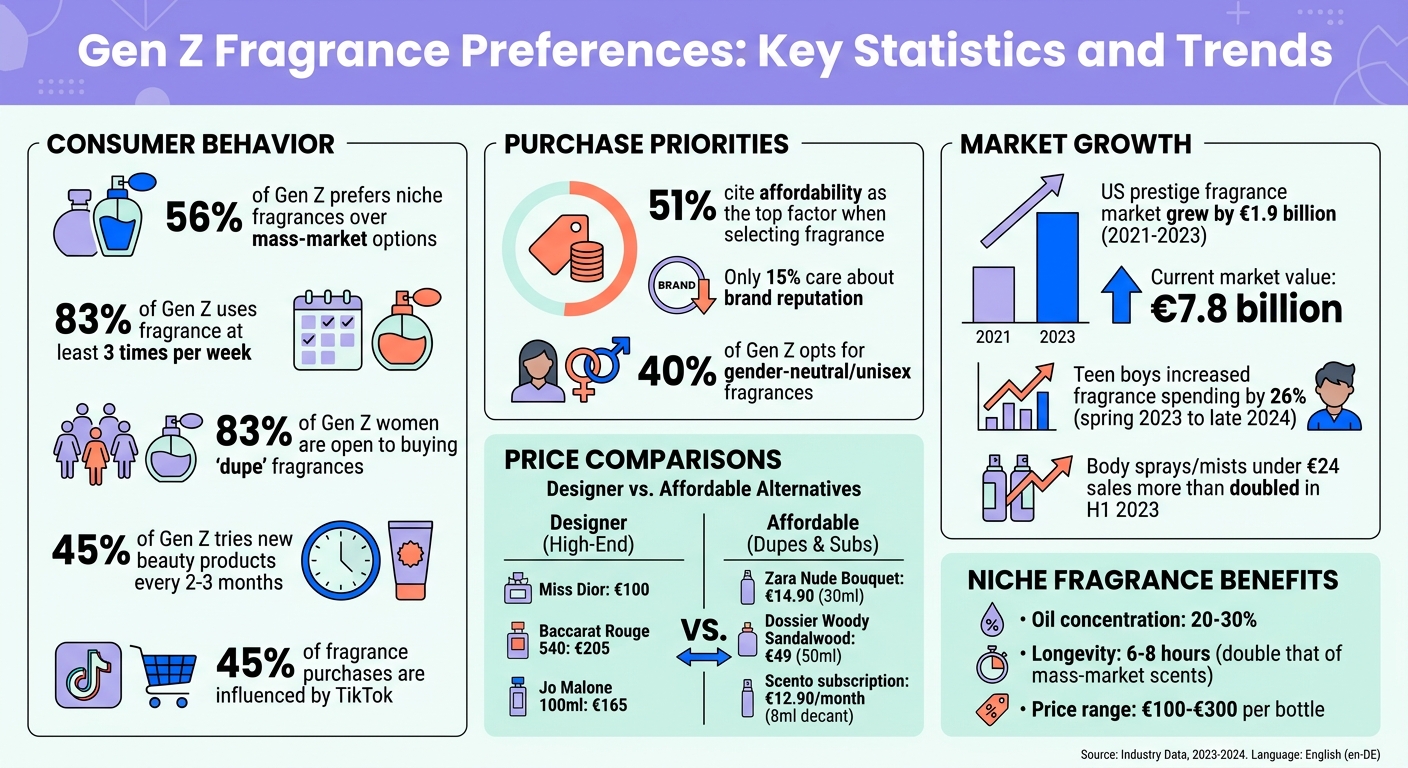
Preferencias de fragancias de la Generación Z: estadísticas y tendencias clave
Why Designer Fragrances Don’t Appeal to Gen Z
Las fragancias de diseñador tienen dificultades para conectar con la Generación Z porque entran en conflicto con sus valores esenciales: individualidad, accesibilidad y flexibilidad. Estas preferencias están reconfigurando el mercado del perfume, orientándolo hacia alternativas que se adaptan mejor a sus prioridades.
Los frascos grandes y caros frenan el descubrimiento
El elevado coste de los perfumes de diseñador supone una barrera considerable para la Generación Z, limitando su libertad para descubrir una amplia variedad de aromas. Con un frasco clásico de Miss Dior rondando los 100 € o Baccarat Rouge 540 alcanzando los 205 €, muchos jóvenes se sienten excluidos de este mercado. Como apunta la creadora de contenido Cèlia Arderiu, esto genera un «choque con la realidad»: la fascinación por descubrir un aroma a través de un prescriptor se desvanece de inmediato ante un precio inaccesible.
Para la Generación Z, la accesibilidad es primordial: el 51 % la sitúa como el factor determinante al elegir una fragancia. Por el contrario, solo al 15 % le importa la reputación de la firma. Esto explica por qué el 83 % de las mujeres de la Generación Z está dispuesta a adquirir equivalencias o «dupes» en lugar de invertir en los originales de diseñador. Opciones como Nude Bouquet de Zara (14,90 € por 30 ml) o Woody Sandalwood de Dossier (49 € por 50 ml) ofrecen una vía para experimentar sin comprometer su economía. Al mantener precios desorbitados, las firmas de diseñador restringen involuntariamente la capacidad de estos jóvenes para construir colecciones diversas.
Los aromas comerciales resultan demasiado genéricos
Las fragancias de diseñador se formulan para gustar a las grandes masas, apostando con frecuencia por perfiles olfativos predecibles como notas florales, cítricas o amaderadas. Aunque estas elecciones «seguras» saturan los estantes de las grandes superficies, no logran satisfacer el deseo de exclusividad de la Generación Z. De hecho, el 56 % de los consumidores de esta generación se siente atraído por la perfumería nicho para plasmar su propia personalidad.
Esta generación valora las casas con historias auténticas y un savoir-faire artesanal por encima de los perfumes respaldados por celebridades o las creaciones de gran consumo. Buscan fragancias singulares que puedan compartir en sus comunidades digitales como reflejo de su refinado criterio personal. Para ellos, no se trata únicamente de oler bien; se trata de concebir una colección olfativa con identidad propia.
La segmentación por género ha quedado obsoleta
Las categorías tradicionales «para él» y «para ella» carecen de sentido para una generación que prioriza la inclusión y la libertad de ser uno mismo. Los antiguos códigos —fresco y deportivo para hombres, floral y dulce para mujeres— chocan con la visión fluida de la identidad que define a la Generación Z. Prefieren elegir sus fragancias según su estado de ánimo o estilo personal, lejos de etiquetas rígidas.
Las marcas que apuestan por el bienestar y el autocuidado frente a los roles de género convencionales ganan cada vez más terreno. La Generación Z está creando «armarios olfativos» inspirados en tendencias de TikTok como «Clean Girl» o «Mob Wife», centrándose en las sensaciones que despiertan las fragancias en lugar de amoldarse a estereotipos caducos.
Las fragancias neutras están en auge gracias a que la Generación Z prefiere expresiones olfativas que no se encasillan en lo masculino o lo femenino.
- freeyourself.com
Esta evolución refleja un rechazo categórico a las clasificaciones restrictivas, inclinándose por aromas que permiten una expresión individual y versátil por encima de las normas publicitarias del pasado.
Qué busca la Generación Z en un perfume
La relación de la Generación Z con la perfumería refleja sus valores fundamentales: individualidad, adaptabilidad y una búsqueda constante de autenticidad. Para ellos, una fragancia es mucho más que un accesorio: es una vía para transmitir emociones, definir su identidad y apoyar causas afines a sus principios.
Firmas independientes con historias genuinas
Las casas de perfumería independiente y de autor conquistan a la Generación Z aportando lo que suele escasear en la perfumería masiva: autenticidad. Nada menos que el 56 % prefiere las fragancias nicho frente a las opciones avaladas por famosos, apreciando los relatos singulares y la libertad creativa que define a estas propuestas. Para ellos, el objetivo no es seguir modas, sino celebrar la originalidad.
Un claro ejemplo es Noyz, la firma originaria de Los Ángeles que debutó en Ulta Beauty en junio de 2024. En lugar de comercializar ideales inalcanzables, sus aromas abrazan emociones sinceras y cotidianas con nombres como «Shitty Day» o «Unmute». Su cofundadora, Malena Higuera, lo explica así:
La narrativa en perfumería suele ser aspiracional, pero tan irreal que no refleja cómo te sientes en realidad. Nosotros queremos estar ahí donde surge la emoción más genuina y transparente.
Esta narrativa honesta conecta de forma directa con una generación que exige transparencia por encima del marketing convencional.
Las creaciones nicho destacan también por su calidad intrínseca. Con concentraciones de esencia del 20 % al 30 %, ofrecen una fijación de 6 a 8 horas, duplicando la duración de muchos perfumes comerciales. Para la Generación Z, destinar entre 100 € y 300 € a un frasco no es una ostentación de riqueza; es una apuesta por el arte de la perfumería y por lucir algo verdaderamente propio.
Aromas por estados de ánimo y técnicas de layering
La Generación Z se aleja del concepto de un único «aroma insignia». En su lugar, componen «guardarropas olfativos» que armonizan con sus emociones, actividades y códigos estéticos. Un impresionante 83 % de estos jóvenes utiliza perfume al menos tres veces por semana, combinando a menudo fragancias con aceites corporales o brumas para dar vida a una firma olfativa irrepetible. Así, el perfume se convierte en un ritual de autocuidado y equilibrio interior.
Entre sus elecciones predilectas destacan los acordes neo-gourmand con notas de café espresso y caramelo salado, o composiciones más vanguardistas con toques de matcha, arroz y acordes de cuero ahumado. La técnica del layering garantiza que su estela sea tan inimitable como ellos mismos.
La divulgadora de perfumes Suzy Nightingale lo resume con maestría:
Una fragancia se convierte en un instante único: es viajar a través del olfato, despertar la nostalgia o encender el deseo de novedad.
Para la Generación Z, el perfume es un universo íntimo que proporciona confort y seguridad personal.
Producción ética y transparencia sin concesiones
La conciencia ética influye de manera determinante en sus elecciones aromáticas. Exigen a las firmas una total trazabilidad en el origen de las materias primas y un compromiso firme con la sostenibilidad. Las fórmulas veganas, cruelty-free y los ingredientes respetuosos con la piel son indispensables para muchos. Estas exigencias van más allá de una preferencia estética: forman parte del concepto de autenticidad que defienden.
La identidad libre de género es otro pilar fundamental. Paul Firmin, cofundador de Earl of East, señala:
Eliminar barreras caducas —como la idea de que un aroma debe vincularse a un género— ha abierto un horizonte nuevo. Esa diferenciación siempre fue un concepto carente de sentido.
La Generación Z prefiere elegir sus perfumes guiándose por el atractivo de la composición y no por etiquetas preconcebidas.
Las marcas que se alinean con estos principios logran una repercusión extraordinaria. Es el caso de Missing Person de Phlur, que se viralizó en TikTok gracias a la creadora Mikayla Nogueira. El impacto agotó las existencias en cuestión de horas, generando una lista de espera de más de 200.000 personas. El equilibrio de Phlur entre ética y narrativa sincera dio exactamente en la diana con este público.
Tu experto en fragancias personal te espera
Haz nuestro test olfativo rápido y descubre auténticos perfumes de diseñador y de nicho elegidos según tu gusto: explóralos en decants y muestras de 2, 5, 8 y 30 ml para probar cada uno antes de decidirte por un frasco completo.
Encuentra tu fraganciaCómo satisface la perfumería nicho las expectativas de la Generación Z
La perfumería de autor ha sabido conquistar a la Generación Z a través de relatos envolventes, opciones de muestreo accesibles y comunidades digitales vibrantes. Esta estrategia se apoya en tres ejes principales: narrativas con carga emocional, formatos reducidos ideales para la experimentación y una presencia activa en redes sociales.
Aromas originales con historias con sentido
Las casas nicho cautivan a la Generación Z centrando su atención en la artesanía y la creatividad, al margen de los dictados comerciales. En lugar de recurrir a celebridades o grandes campañas publicitarias, conciben creaciones que sitúan el aroma en el centro, convirtiéndolas en auténticas declaraciones de intenciones artísticas. El valor reside en la autenticidad y la singularidad.
Marcas como Noyz son un buen ejemplo de ello. Su visión basada en narrativas directas y realistas despierta una profunda empatía con su público. Al invitar a los clientes a expresar sus vivencias y sentimientos, estas casas transforman el perfume en una vía de manifestación personal. Es por esto que los jóvenes no dudan en pagar entre 100 € y 300 € por una botella de autor: no están adquiriendo únicamente una esencia, sino una obra con la que se sienten identificados.
Decants y suscripciones: libertad para experimentar
Históricamente, el coste de los frascos tradicionales de gran tamaño ha limitado el descubrimiento de nuevas creaciones. Un formato de 100 ml de Jo Malone, por ejemplo, alcanza los 165 €, dificultando que los jóvenes puedan diseñar un guardarropa olfativo variado. Frente a este desafío, los decants han marcado un antes y un después.
Los formatos pequeños, habitualmente de 2 ml a 8 ml, permiten disfrutar de múltiples fragancias sin el desembolso que exige un frasco estándar. Para una generación apasionada por el descubrimiento —el 45 % prueba novedades de belleza cada dos o tres meses—, estas alternativas representan la solución perfecta.
Asimismo, estos tamaños compactos invitan a dominar el arte del layering, facilitando una personalización absoluta. Como señala acertadamente la creadora de contenido Emelia O’Toole (@professorperfume):
Cuanto más tiempo estás en el entorno digital, más deseas reinventar cómo te presentas al mundo... Puedes preguntarte «¿Quién quiero ser hoy?» y simplemente aplicarte ese aroma.
Plataformas como Scento simplifican aún más esta experiencia. Ofrecen decants seleccionados (viales de 2 ml, 5 ml y 8 ml, y un decant en frasco de 30 ml para la mayoría de los perfumes) entre más de 1.000 perfumes, tanto de autor como de diseñador. Estos decants brindan el tiempo idóneo para descubrir la evolución de la fragancia sobre la piel durante varias semanas. Más allá de su ventaja económica, el entusiasmo que rodea a estos formatos fomenta la confianza y teje una auténtica comunidad entre los amantes del perfume.
Redes sociales y conexión en comunidad
Las redes sociales constituyen el hábitat natural de la perfumería de autor. Canales como TikTok e Instagram, puntos de partida donde la Generación Z descubre sus fragancias, plantean a las firmas el reto de transmitir sensaciones aromáticas de forma puramente digital. Para lograrlo, las casas nicho se valen de una narrativa visual cuidada, contenidos interactivos e historias magnéticas.
Estas firmas se apoyan además en el feedback de sus seguidores y el análisis digital para perfeccionar sus mensajes. Al observar qué propuestas, paneles de inspiración o creaciones de los propios usuarios suscitan mayor interés, adaptan su comunicación preservando intacta su libertad artística. Este diálogo entre empatía y creatividad mantiene viva su relevancia.
Del mismo modo, las marcas independientes estrechan lazos integrando a sus clientes en una comunidad viva. Comparten los procesos de elaboración entre bastidores, responden activamente a los comentarios y generan debates sobre identidad, bienestar y creatividad. La compra de un perfume pasa de ser una simple transacción a convertirse en una vivencia compartida, en sintonía con lo que más aprecia la Generación Z: la cercanía y la verdad.
La respuesta de la industria de la perfumería
El sector del perfume sigue muy de cerca el creciente interés de la Generación Z por las fragancias de autor y los tamaños reducidos. Este cambio de paradigma ha empujado a las firmas a alejarse de los costosos formatos tradicionales y de la publicidad encasillada por géneros. La transformación se refleja en nuevos lanzamientos, propuestas a medida y una identidad inclusiva pensada para los gustos de este público joven.
Decants en pequeño formato y modelos de suscripción
El mercado estadounidense de perfumería de prestigio ha experimentado un crecimiento impresionante: entre 2021 y 2023 aumentó en casi 1,9 € billion hasta alcanzar los 7,8 € billion. Este auge se debe en gran medida a la preferencia de la Generación Z por los perfumes en formato mini y de viaje, y es que el 83 % de los consumidores de la Generación Z usa perfumes con regularidad. En lugar de invertir en frascos de tamaño completo, este grupo se decanta por opciones más pequeñas y asequibles.
En junio de 2024, Noyz, una firma pensada para este público, dio el salto a la distribución nacional en Ulta Beauty bajo la dirección de su CEO Malena Higuera. Una decisión enmarcada en una corriente global: la venta de brumas y sprays corporales —con precios por debajo de 24 €— aumentó más del doble en el primer semestre de 2023. De forma similar, Lottie London colaboró con la serie «Outer Banks» de Netflix para presentar dos eaux de parfum de edición limitada a finales de 2024. Al comercializar formatos de 50 ml y 100 ml por 33 € y 46 € respectivamente, la casa conectó con éxito con esta comunidad.
Plataformas como Scento han desarrollado sus modelos de negocio en torno a esta demanda de variedad y precios asequibles. Ofrecen decants seleccionados en viales de 2 ml, 5 ml y 8 ml, además de un decant de 30 ml para la mayoría de los perfumes. Con aproximadamente 120 pulverizaciones por vial de 8 ml, los usuarios pueden descubrir cómo interactúa una fragancia con su piel durante varias semanas sin comprometerse a comprar un frasco de tamaño completo. Este modelo responde a una frustración habitual en el mercado de la perfumería, valorado en 52 € billion: gastar cientos en frascos de tamaño completo que a menudo se quedan sin terminar.
Personalización y alternativas para el layering
La Generación Z abandona la idea de un único perfume predilecto para dar paso a la creación de guardarropas olfativos: selecciones diseñadas según el estado anímico, el momento o la estética del día. Las casas de fragancias se suman a esta tendencia fomentando la superposición y la personalización de aromas en lugar de exigir fidelidad a un único lanzamiento.
Muchas marcas presentan sets de descubrimiento como una excelente puerta de entrada para explorar antes de decidirse por un formato mayor. Más allá de los vaporizadores clásicos, el sector innova con propuestas como brumas corporales, perfumes para el cabello, fragancias sólidas y aceites concebidos para mezclarse. Un ejemplo es Jo Loves, que propone sus «brochas de perfume» con gel aromático por 55 €, ofreciendo una experiencia de aplicación sensorial e intuitiva.
Malena Higuera, de Noyz, sintetiza esta corriente a la perfección:
A las personas les entusiasma compartir su propia alquimia aromática según cómo se sienten ese día, transmitiendo con precisión la emoción y el aroma que desean proyectar.
Esta tendencia ofrece además grandes ventajas prácticas. Al explorar mediante el layering, se pueden formular combinaciones irrepetibles sin atarse a un solo frasco de gran volumen. Los decants y los formatos de bolsillo facilitan la creación de un repertorio aromático exclusivo y dinámico.
Marcas e imagen sin distinción de género
Una de las transformaciones más elocuentes del sector es el adiós a las etiquetas de género como «para él» o «para ella». Un número cada vez mayor de personas —el 40 % de la Generación Z— prefiere propuestas unisex o de género neutro. Como respuesta, las firmas rediseñan sus presentaciones, espacios de venta y estrategias visuales para reflejar esta nueva sensibilidad.
Las campañas contemporáneas giran en torno al bienestar, la autoexpresión y la sinceridad emocional. Noyz, por ejemplo, lanzó creaciones con denominaciones disruptivas como «Shitty Day» y «Unmute», dejando a un lado la retórica aspiracional para conectar mediante historias humanas y reales.
El punto de venta también se transforma. Cada vez son más las tiendas que organizan sus espacios de cata por familias aromáticas —amaderadas, florales, cítricas— en lugar de por género. Esta distribución sintoniza con corrientes estéticas de TikTok como «clean girl», «mob wife» o «dark academia», donde la atmósfera y el estilo prevalecen sobre los roles convencionales.
Esta visión inclusiva está demostrando un éxito incontestable. El público masculino joven incrementó su gasto en perfumería en un 26 % entre la primavera de 2023 y finales de 2024, confirmando que la comunicación sin barreras de género amplía el horizonte de la industria. Como señala Susan Wai Hnin, COO de Gabar:
Hoy en día, el público busca mucho más que una simple funcionalidad; concibe sus rituales de belleza como una forma de aportar intención y propósito a su vida diaria.
La evolución de las tendencias aromáticas en la Generación Z
El auge de la perfumería nicho entre la Generación Z refleja un cambio de rumbo en su manera de entender el lujo y la individualidad. Lejos de dejarse guiar por las grandes marcas comerciales, priorizan aspectos como el origen ético, las narrativas genuinas y la total libertad para experimentar. Para ellos, el perfume actúa como un relato personal: una vía para manifestar estados de ánimo, emociones y singularidad.
La industria ha sabido adaptarse a estas demandas superando las fronteras tradicionales. La comunicación sin barreras de género, los decants en tamaños accesibles y las suscripciones flexibles han hecho que la alta perfumería sea mucho más cercana. Estos avances demuestran que el sector comprende la importancia que la Generación Z otorga a la honestidad y la sostenibilidad, factores clave en cada una de sus decisiones de compra.
Como indica Eve Upton-Clark en Business Insider:
Una fragancia nicho ofrece a quien la lleva la ocasión de distinguirse y reafirmar su propio gusto.
Esta transformación ha trasladado el interés desde lo comercial hacia experiencias verdaderamente personalizadas. Las plataformas que ofrecen decants en tamaños como 2 ml, 5 ml y 8 ml hacen posible descubrir infinidad de creaciones sin asumir el coste de frascos completos que a menudo superan los 300 €. Este modelo brinda a los jóvenes la posibilidad de componer armarios olfativos a su medida, acordes a cada instante y estilo.
Del mismo modo, tendencias como el layering, las colecciones enfocadas en el estado de ánimo y el abastecimiento responsable han resignificado el universo del perfume. Para la Generación Z, el verdadero lujo ya no radica en poseer el frasco más exclusivo, sino en descubrir acordes únicos y con significado. La cercanía de los decants y la libertad de combinación hacen de este viaje olfativo una experiencia enriquecedora y fascinante.
En Scento compartimos esta filosofía ofreciendo decants cuidadosamente seleccionados que puede comprar perfume a perfume, permitiéndole descubrir creaciones extraordinarias con total libertad. Al conectar con estos valores, las casas de perfumería no solo responden a las expectativas de la Generación Z, sino que impulsan nuevas oportunidades de evolución. Esta generación encuentra la diversidad y la claridad que busca, mientras la industria se reinventa hacia horizontes más creativos y conscientes.
Preguntas frecuentes
¿Cómo saber si una fragancia nicho merece realmente la pena?
Para valorar si una fragancia de autor justifica su precio, preste atención a su calidad artesanal, a la nobleza de sus materias primas y a la singularidad de su perfil olfativo. Estas composiciones suelen incorporar esencias de gran pureza y acordes complejos que marcan una clara diferencia. Para la Generación Z, el encanto reside en creaciones que expresan su identidad y sintonizan con su estado de ánimo, respaldadas por un conocimiento exhaustivo y opiniones fiables. En última instancia, un perfume vale su precio cuando despierta una emoción genuina, armoniza con sus gustos y se siente como una auténtica firma personal.
¿Cuál es la forma más sencilla de iniciarse en el layering sin recargar?
La superposición de aromas ofrece los mejores resultados cuando se aborda con sutileza y armonía. Comience vaporizando una pequeña cantidad de cada fragancia, eligiendo notas que se complementen de forma natural. Aplique primero una fragancia de base más ligera y sume después un segundo aroma con moderación. Pruebe estas mezclas en los puntos de pulso, dejando que cada creación evolucione sobre la piel antes de añadir la siguiente. De este modo logrará un acorde equilibrado, elegante y siempre distinguido.
¿Cómo comprobar si una firma de perfumes es realmente vegana y cruelty-free?
Para asegurarse de que una casa de perfumes respeta estos estándares, busque sellos oficiales como The Vegan Society o Leaping Bunny. Estos avales garantizan la ausencia de ensayos en animales y certifican que la fórmula carece de ingredientes de procedencia animal. Consulte asimismo el sitio web oficial de la marca para conocer con claridad sus políticas de producción o recurra a plataformas independientes especializadas. Las firmas genuinamente comprometidas con la ética comunican sus procesos de forma transparente y destacan con orgullo sus acreditaciones.

