Las marcas de lujo están transformando la forma en que crean fragancias. En lugar de depender únicamente de equipos internos o de acuerdos de licencia a largo plazo, se están asociando con perfumistas emergentes para crear aromas que destaquen en un mercado saturado. Esta estrategia responde a consumidores más jóvenes, especialmente la Generación Z y los Millennials, que prefieren la variedad a una sola "fragancia distintiva" y valoran las fragancias personales y experimentales.
Conclusiones clave:
- Perfumistas emergentes: Ofrecen aromas audaces y de nicho que atraen a compradores atentos a las tendencias. Estas colaboraciones suelen generar expectación orgánica y conectar con públicos a menudo desatendidos.
- Equipos internos: Aportan consistencia y alinean las fragancias con la identidad de la marca, pero pueden carecer del filo audaz de las colaboraciones externas.
- Tendencias del mercado: El wardrobe de fragancias está sustituyendo la idea de una sola fragancia distintiva, con consumidores que curan colecciones para distintos estados de ánimo y ocasiones.
- Impacto comercial: Las colaboraciones, como el lanzamiento de 2023 de Victoria Beckham con Jérôme Epinette, han demostrado ser muy rentables, impulsando un crecimiento significativo en las ventas.
Las marcas de lujo deben equilibrar el riesgo creativo con la coherencia de marca, asegurándose de que estas asociaciones se perciban como intencionadas y conecten con su audiencia.
1. Trabajar con perfumistas emergentes
Innovación y creatividad
Colaborar con perfumistas emergentes ofrece a las marcas la oportunidad de alejarse de fragancias previsibles y comercialmente seguras para explorar perfiles olfativos audaces que desafían los límites. Líneas exclusivas de alta gama como Collection Privée de Dior o Art Salon de Guerlain han adoptado este enfoque, otorgando a los perfumistas la libertad de crear aromas pensados para conocedores más que para el mercado masivo.
Un ejemplo destacado tuvo lugar en agosto de 2021, cuando Francesco Ragazzi, fundador de Palm Angels, contactó a Johan Bergelin, de la marca sueca de nicho 19-69. Juntos crearon un trío de fragancias inspiradas en la contracultura californiana. Esta asociación, lanzada en retailers exclusivos como Dover Street Market, aportó nuevas perspectivas a un mercado saturado. Este tipo de colaboraciones no solo reinventa la creación de aromas, sino que también introduce formas innovadoras para que las marcas se relacionen con los consumidores.
Alcance de mercado y conexión con la audiencia
Asociarse con perfumistas emergentes permite a las marcas conectar con públicos que el marketing tradicional de fragancias suele pasar por alto. Colaboraciones como Palm Angels x 19-69 o Stussy x Comme des Garçons atraen a consumidores con sensibilidad fashion, predominantemente masculinos, que normalmente no interactúan con productos de belleza. Lori Legaspi Moores, vicepresidenta de Merchandising en SSENSE, destaca el atractivo de estas asociaciones:
"Algunas de las asociaciones y colaboraciones más emocionantes son aquellas que resultan un poco inesperadas o disruptivas".
Estas colaboraciones generan conversación orgánica en redes sociales, eliminando la necesidad de costosos respaldos de celebridades. Por ejemplo, en septiembre de 2023, Victoria Beckham presentó su línea de fragancias junto al perfumista Jérôme Epinette. Con tres aromas a un precio cercano a los 300 dólares cada uno, este lanzamiento contribuyó a un aumento del 50% en las ventas totales de la marca, elevando los ingresos a 89 millones de libras (alrededor de 115 millones de dólares) para 2024. Este éxito demuestra cómo el talento emergente puede ayudar a las marcas de lujo a diferenciarse al ofrecer autenticidad, en lugar de depender de estrategias de licencia orientadas al gran consumo.
Alineación de marca y percepción del consumidor
Estas asociaciones hacen más que ampliar el alcance de mercado: transforman la manera en que las marcas cuentan su historia. Colaborar con perfumistas emergentes permite crear narrativas que se sienten auténticas y resuenan con mayor profundidad que los acuerdos de licencia convencionales. Steven Ekstract, director general de Global Licensing Advisors, resume esta dinámica:
"Una licencia de marca exitosa es como un matrimonio: a largo plazo, tradicional, que aporta estabilidad y seguridad; mientras que las colaboraciones exitosas de marca son romances breves, sorprendentes y apasionados que generan entusiasmo y comentarios entre quienes están al tanto".
Sin embargo, mantener la coherencia de marca es fundamental. Las marcas de lujo deben asegurarse de que estas colaboraciones estén alineadas con su estética y sus valores para evitar ser percibidas como oportunistas. La asociación de Zara con la perfumista Jo Malone (la persona, no la marca propiedad de Estée Lauder) es un gran ejemplo de este equilibrio. Al ofrecer fragancias de alta calidad con precios de entre 10 y 15 dólares, Zara elevó su reputación a un nivel "masstige" sin dejar de ser accesible. El éxito de estas colaboraciones reside en enfatizar la artesanía y la personalización, elementos que justifican un precio premium y fomentan una confianza duradera por parte del consumidor.
2. Trabajar con perfumistas internos
Alineación de marca y percepción del consumidor
Los perfumistas internos desempeñan un papel crucial en la configuración de la identidad olfativa de una marca. Profundizan en la historia y la estética de la marca para crear fragancias que reflejen su esencia única, ya sea una simplicidad discreta o un lujo exuberante. Tomemos como ejemplo el trabajo de Jacques Cavallier Belletrud para Louis Vuitton. Al crear una línea de fragancias centrada en la "esencia del viaje", encapsuló un aspecto central de la identidad de Louis Vuitton. Del mismo modo, la prolongada colaboración de François Demachy con Dior ha dado como resultado aromas que evocan el sello distintivo de la marca: la "elegancia y la artesanía".
Este enfoque evita los problemas que suelen verse en los acuerdos de licencia tradicionales, donde las fragancias pueden sentirse desconectadas de la identidad visual y temática de una marca. Al gestionar internamente el desarrollo de fragancias, las marcas de lujo garantizan que sus productos se alineen de forma impecable con su narrativa. Por ejemplo, cuando los codirectores creativos Luke y Lucie Meier de Jil Sander lanzaron la colección de seis piezas Olfactory Series 1 en enero de 2025, fijaron el precio en 290 dólares e incluyeron notas poco convencionales como hongos. Este movimiento audaz vinculó la línea de fragancias con el nicho distintivo de la marca dentro de la moda. Esta autonomía creativa garantiza que la fragancia se convierta en un reflejo auténtico de la propia marca. Más allá de la alineación creativa, el modelo interno también ofrece ventajas prácticas.
Eficiencia de costes y gestión del riesgo
Trabajar con equipos internos aporta ventajas operativas que las colaboraciones externas a menudo no tienen. Al estandarizar componentes en todas las líneas de producto, los equipos internos pueden centrarse en perfeccionar tanto la fragancia como su packaging. Este enfoque meticuloso garantiza que cada producto cumpla con los estándares internos de calidad y con la normativa de IFRA desde el principio, ofreciendo la estabilidad y la consistencia que definen este modelo de desarrollo.
Dicho esto, el enfoque interno no está exento de desafíos. Un riesgo notable reside en la frecuente rotación de directores creativos en la moda. Si la identidad de fragancia de una marca queda demasiado asociada a un director en particular, su salida podría interrumpir la coherencia de la línea con un nuevo liderazgo. Esta incertidumbre puede socavar la consistencia que la perfumería interna está diseñada para preservar.
Tu experto en fragancias personal te espera
Haz nuestro test olfativo rápido y descubre auténticos perfumes de diseñador y de nicho elegidos según tu gusto: explóralos en decants y muestras de 2–8ml para probar cada uno antes de decidirte por un frasco completo.
Encuentra tu fraganciaVentajas y desventajas
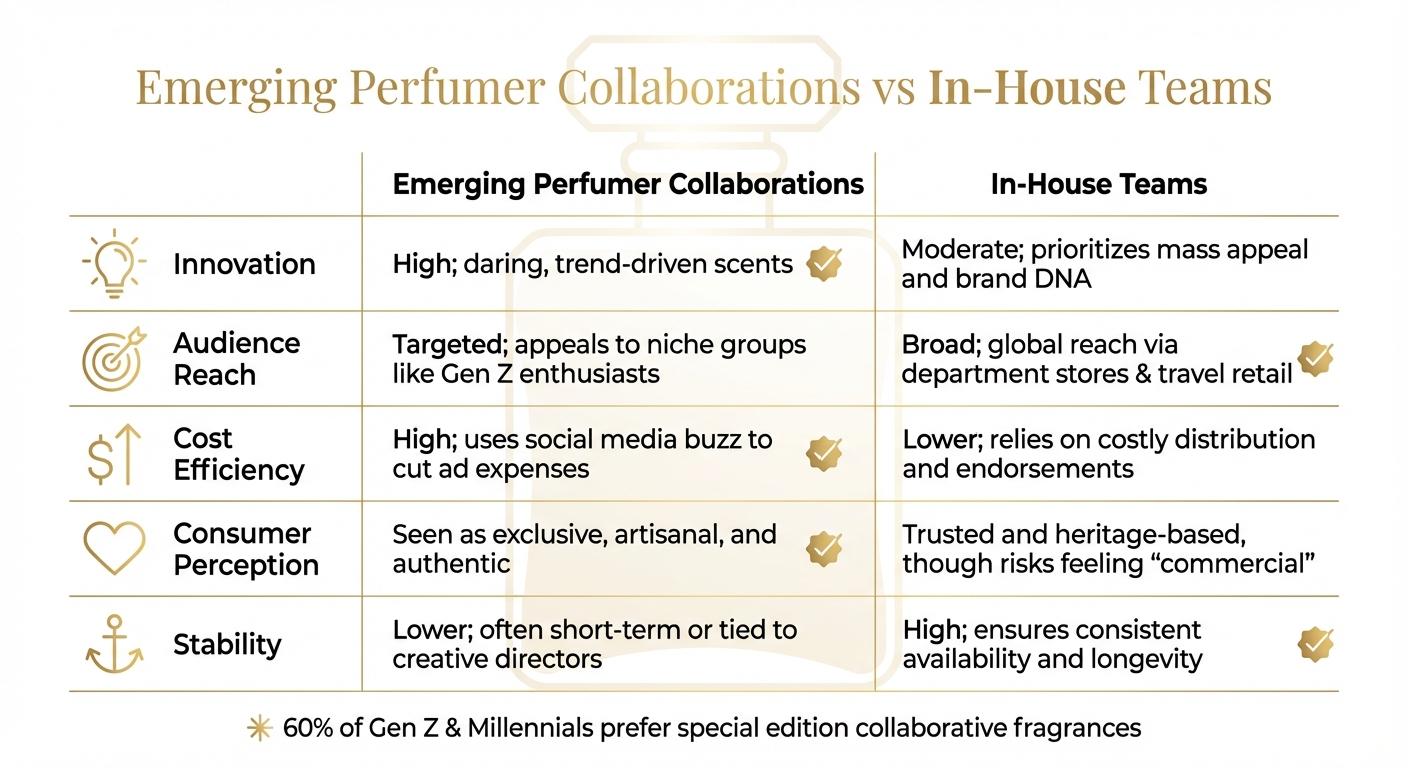
Comparación de estrategias de fragancias de lujo: perfumistas emergentes vs. equipos internos
Cuando las marcas de lujo deciden entre colaborar con perfumistas emergentes o recurrir a sus equipos internos, en esencia están sopesando la flexibilidad creativa frente a la consistencia operativa. Ambos enfoques ofrecen ventajas únicas, pero también conllevan sus propios desafíos.
Las colaboraciones con perfumistas emergentes suelen aportar aromas audaces y orientados a las tendencias, al tiempo que generan expectación orgánica, lo que puede reducir la necesidad de publicidad costosa. Estas asociaciones producen perfiles olfativos atrevidos y poco convencionales, diferenciándose de las propuestas tradicionales del mercado masivo. Sin embargo, suelen carecer de estabilidad a largo plazo. Muchas de estas colaboraciones son de edición limitada o están ligadas al mandato de un director creativo específico. Si estas asociaciones se perciben como forzadas o excesivamente comerciales, los consumidores podrían descartarlas como meros "golpes de caja".
Por otro lado, los equipos internos ofrecen un enfoque más estable y consistente. Garantizan una identidad olfativa cohesionada en todas las líneas de producto de una marca, al tiempo que se benefician de economías de escala. Al gestionar la producción internamente, las marcas pueden mantener una disponibilidad constante de producto y minimizar costes. Sin embargo, esta consistencia a menudo llega a costa de la innovación. Las fragancias internas suelen buscar una amplia aceptación, lo que puede hacer que se sientan menos aventureras. Además, las marcas que dependen de equipos internos suelen afrontar mayores costes iniciales, incluyendo gastos significativos en distribución global y publicidad tradicional. Un riesgo clave aparece cuando un director creativo se marcha, como ocurrió con Jil Sander en enero de 2025. Tras lanzar una colección de fragancias de 290 dólares, la salida del director creativo dejó a la marca luchando por alinear su identidad olfativa con su nueva dirección visual.
| Factor | Colaboraciones con perfumistas emergentes | Equipos internos |
|---|---|---|
| Innovación | Alta; aromas audaces e impulsados por tendencias | Moderada; prioriza el atractivo masivo y el ADN de la marca |
| Alcance de audiencia | Segmentado; atrae a grupos de nicho como entusiastas de la Generación Z | Amplio; alcance global a través de grandes almacenes y travel retail |
| Eficiencia de costes | Alta; aprovecha el ruido en redes sociales para reducir gastos publicitarios | Menor; depende de distribución costosa y respaldos |
| Percepción del consumidor | Se perciben como exclusivas, artesanales y auténticas | Transmiten confianza y herencia, aunque con el riesgo de sentirse "comerciales" |
| Estabilidad | Menor; a menudo a corto plazo o ligadas a directores creativos | Alta; garantiza disponibilidad constante y longevidad |
Esta comparación subraya cómo cada estrategia moldea la identidad y la presencia de mercado de una marca. En última instancia, la decisión se reduce a si una marca prioriza el atractivo de las colaboraciones de nicho que despiertan entusiasmo inmediato o la estructura fiable de las operaciones internas que construyen una confianza duradera con los consumidores.
Conclusión
Las marcas de lujo se están asociando con perfumistas emergentes para crear fragancias audaces y distintivas que conecten con audiencias que buscan algo más allá de los aromas del mercado masivo. Estas colaboraciones suelen dar lugar a creaciones que marcan tendencia y generan expectación de forma natural, especialmente entre la Generación Z y los Millennials. De hecho, el 60% de este grupo demográfico se inclina por productos de edición especial nacidos de este tipo de asociaciones. Un gran ejemplo es el lanzamiento de fragancias de Victoria Beckham en 2023 con el perfumista Jérôme Epinette, que impulsó significativamente las ventas de la marca en un 50%, alcanzando los 115 millones de dólares en 2024.
Estas colaboraciones no solo aportan una creatividad renovada, sino que también ayudan a las marcas a acceder a nuevos mercados y beneficiarse de una experiencia de nicho. Lo más importante es que se perciben más como auténticas aventuras creativas que como acuerdos de licencia convencionales. Sin embargo, el éxito de estas asociaciones depende de la autenticidad. Como señaló Lori Legaspi Moores, de SSENSE:
"Si parece que no hay intención, o [la marca] no está siendo selectiva al respecto… empieza a sentirse como un golpe de caja".
Por ejemplo, Olfactory Series 1 de Jil Sander, con un precio de 290 dólares y lanzada en enero de 2025, es prueba de cómo equilibrar la innovación creativa con la identidad central de una marca. Cuando se ejecutan correctamente, estas colaboraciones logran una armonía delicada entre ampliar los límites creativos y mantenerse fieles a la esencia de la marca, allanando el camino hacia un éxito a largo plazo.
Preguntas frecuentes
¿Cómo eligen las marcas de lujo al perfumista emergente adecuado?
Las marcas de lujo seleccionan perfumistas emergentes centrándose en su sensibilidad artística, sus habilidades técnicas y en qué medida su enfoque se alinea con la identidad de la marca. Priorizan a creadores que aporten originalidad, una artesanía excepcional y una perspectiva distintiva. Algunas marcas también se inclinan por perfumistas con trayectorias poco convencionales o visiones personales audaces, valorando su capacidad para introducir conceptos frescos y desafiar las normas creativas. Estas asociaciones están diseñadas para enriquecer las colecciones de fragancias con un sentido de individualidad y creatividad.
¿Qué hace que una colaboración se sienta auténtica en lugar de oportunista?
Una colaboración se siente auténtica cuando refleja una verdadera conexión entre los artistas o las marcas implicadas, en lugar de estar impulsada únicamente por el beneficio económico. Suele surgir de visiones creativas compartidas, una interacción genuina y respeto mutuo. Colaborar con perfumistas emergentes puede introducir nuevas ideas y enfoques audaces, generando un fuerte impacto en los consumidores. La autenticidad destaca cuando el producto final se percibe como una fusión fluida de las identidades de ambos colaboradores, en lugar de un intento de seguir tendencias.
¿Las fragancias de colaboración suelen ser de edición limitada o a largo plazo?
Las fragancias de colaboración suelen lanzarse como ediciones limitadas, mostrando la creatividad y la visión distintivas nacidas de la asociación. Esta exclusividad las hace especialmente atractivas para coleccionistas y entusiastas de la perfumería.