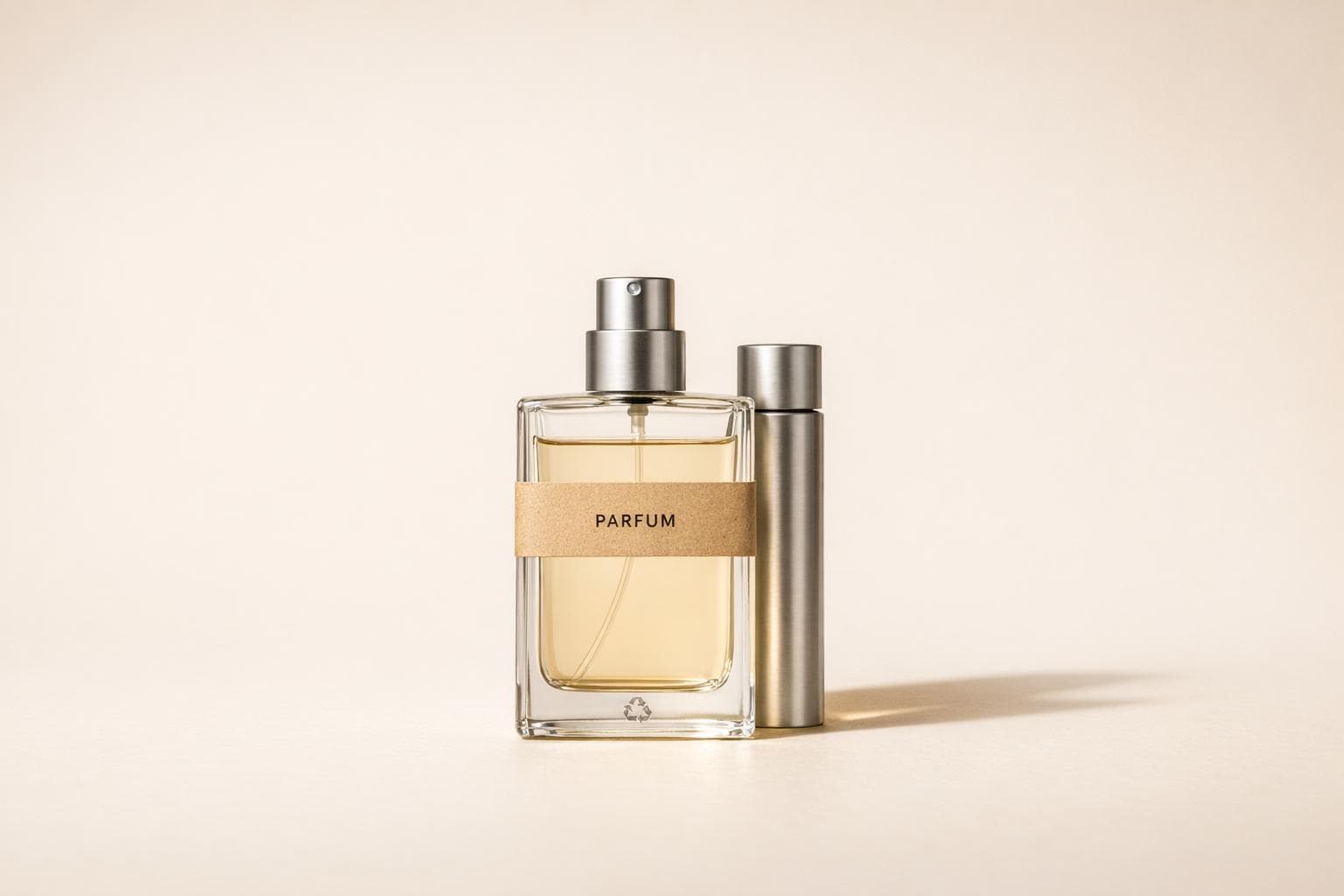
El embalaje minimalista para perfumes está redefiniendo la industria de la fragancia al abordar las preocupaciones sobre residuos y materiales. Los diseños tradicionales suelen depender de materiales complejos y no reciclables como láminas metalizadas, plástico y espuma, que contribuyen a los residuos en vertederos y al daño ambiental. En cambio, un embalaje más depurado reduce los residuos, simplifica el reciclaje y emplea materiales con conciencia ecológica como papel reciclado, madera certificada por FSC y vidrio recargable.
Entre sus principales beneficios se incluyen:
- Menos residuos: Elimina capas innecesarias como envoltorios de plástico o insertos de espuma.
- Reciclabilidad: Se centra en soluciones de un solo material, como aluminio o papel Kraft.
- Menores emisiones: Los diseños ligeros reducen el impacto del transporte.
- Durabilidad: Los sistemas recargables prolongan la vida del producto.
Marcas de perfumes como Le Labo y Floral Street lideran el camino con diseños reciclables y compostables, demostrando que la simplicidad puede alinearse con el lujo. Este cambio no es solo estético: responde a la creciente demanda de los consumidores por elecciones responsables, al tiempo que reduce los residuos a largo plazo.
El coste ambiental del embalaje convencional para perfumes
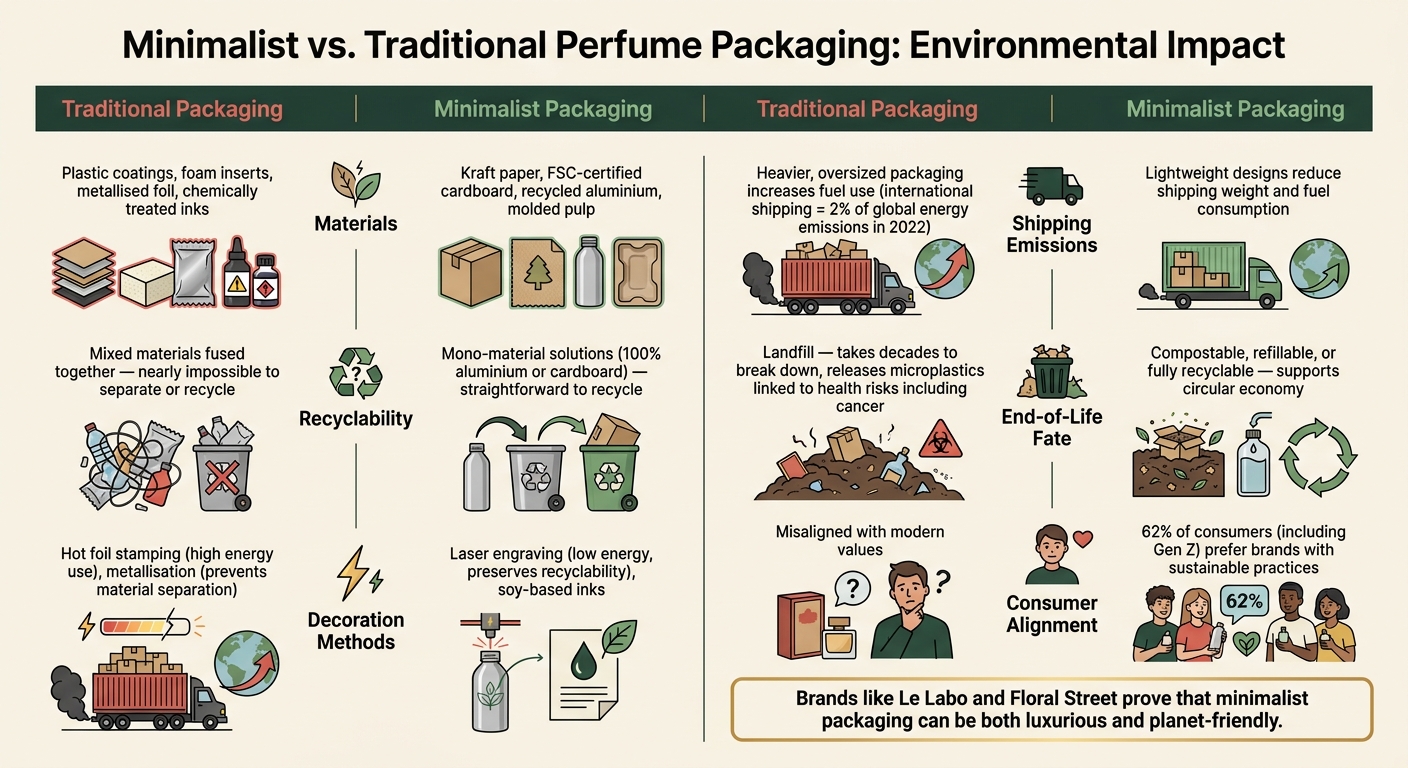
Embalaje minimalista frente a tradicional para perfumes: impacto ambiental
El embalaje de perfumes suele deslumbrar con su apariencia lujosa: cajas envueltas en plástico, espuma y láminas metalizadas. Pero bajo ese glamour se esconde un impacto ambiental preocupante. Veamos cómo las elecciones de materiales y los métodos de producción contribuyen a estos desafíos.
Materiales no reciclables y su impacto
Muchos envases de perfume se fabrican con materiales que los sistemas de reciclaje simplemente no pueden procesar. Los recubrimientos plásticos brillantes, los insertos de espuma y los papeles tratados químicamente son culpables habituales, y sus acabados decorativos agravan el problema. Por ejemplo, la metalización —los efectos brillantes en dorado, plateado o cromado que suelen verse en cajas y frascos— fusiona una capa metálica con el material base, haciendo imposible separarla para su reciclaje.
Como señala Corrado Fioroni de Minelli Group:
"La capa metálica impide separar el material natural subyacente (madera o biopolímero), lo que puede limitar la ecocompatibilidad."
Esto significa que los materiales de embalaje que, de otro modo, podrían ser reciclables, a menudo terminan en vertederos. Elegir materiales más simples y menos procesados podría reducir de forma significativa los residuos y la presión ambiental.
Demandas de energía y recursos en la producción
El coste ambiental del embalaje va más allá de sus materiales. El propio proceso de producción consume una gran cantidad de recursos. Muchas cajas de perfume recurren a madera virgen en lugar de papel reciclado, una práctica que contribuye a la deforestación. Además, técnicas como el estampado con lámina caliente requieren una cantidad considerable de energía y recursos.
Los envases sobredimensionados y más pesados añaden otra capa de daño ambiental. Los productos más pesados incrementan el peso del envío, un asunto nada menor si se considera que el transporte marítimo internacional representó el 2% de las emisiones globales relacionadas con la energía en 2022. En contraste, el uso de papel reciclado puede reducir drásticamente el consumo de energía y agua durante la producción. El embalaje minimalista que prioriza materiales más ligeros y reciclados ofrece una vía clara para disminuir estos impactos.
Residuos a largo plazo y degradación ambiental
Después de vaciar un frasco de perfume, su embalaje —a menudo una mezcla de plásticos, espuma, cartón metalizado y tintas tratadas químicamente— suele acabar en un vertedero. Estos materiales son casi imposibles de separar o reciclar, y pueden tardar décadas en descomponerse. Peor aún, a medida que el embalaje plástico se degrada, libera microplásticos en el medio ambiente. Estas diminutas partículas contaminan suelos y cursos de agua, y acaban entrando en la cadena alimentaria. La investigación ha vinculado los microplásticos con graves preocupaciones para la salud, incluido el cáncer.
Dado el enorme número de unidades de perfume vendidas cada año, el daño acumulado es abrumador. Pasar a un embalaje minimalista no es solo una tendencia de diseño: es un paso esencial para reducir el desperdicio de materiales, la degradación ambiental y los riesgos para la salud.
Cómo el embalaje minimalista reduce el daño ambiental
Usar menos materiales y reducir residuos
El embalaje minimalista ayuda a disminuir los residuos al prescindir de materiales innecesarios. Piénselo como retirar todo lo superfluo: no más envoltorios exteriores de plástico, insertos de espuma ni láminas decorativas que suelen ir directamente a la basura. Como lo expresa Waqas Khan Pitafi de OXO Packaging:
"Las cajas minimalistas para perfumes... requieren menos material para la caja, al tiempo que reducen la cantidad de impresión y otros elementos decorativos."
Algunas marcas ya lideran con el ejemplo. Le Labo, por ejemplo, sustituye las cajas brillantes de múltiples capas por sencillo papel Kraft y frascos de aluminio reciclable. Floral Street va un paso más allá con estuches de pulpa totalmente compostables que pueden reutilizarse —por ejemplo, para germinar semillas— antes de ser compostados. Al simplificar los materiales, estas marcas también facilitan el reciclaje del embalaje al final de su vida útil.
Facilitar el reciclaje y la reutilización del embalaje
Los envases fabricados con materiales mixtos —como cartón fusionado con película plástica o lámina metálica— complican el reciclaje. Los diseños minimalistas abordan este problema recurriendo a soluciones de un solo material (monomaterial). El uso de materiales como cartón certificado por FSC o aluminio 100% reciclable hace que el reciclaje sea sencillo. Además, técnicas como el grabado láser sustituyen los estampados con lámina, manteniendo los materiales plenamente reciclables. Corrado Fioroni de Minelli Group destaca esta ventaja:
"El grabado láser es sutil, preciso y permanente... Esta técnica es ideal para marcas minimalistas o premium que valoran la autenticidad y la artesanía, porque no requiere materiales adicionales y preserva la reciclabilidad."
Los sistemas recargables también desempeñan un papel importante. Los frascos de vidrio o aluminio de alta calidad diseñados para reutilizarse eliminan la necesidad constante de nuevos envases. En conjunto, estos esfuerzos no solo simplifican el reciclaje, sino que también reducen los residuos generados por los envases de un solo uso.
Reducir las emisiones de carbono en la producción y el transporte
El embalaje ligero no solo reduce residuos: también recorta emisiones de carbono. El aluminio, por ejemplo, pesa menos que el vidrio, lo que significa que se necesita menos combustible durante el transporte. Los métodos decorativos más simples, como el grabado láser, también consumen mucha menos energía que procesos como el estampado con lámina caliente. Y al elegir materiales como el cartón en lugar del plástico virgen, se reduce aún más la huella de carbono de la producción.
Materiales utilizados en el embalaje minimalista para perfumes
El embalaje minimalista para perfumes no se trata solo de estética: se trata de elecciones de materiales cuidadosas que reducen el impacto ambiental. Al centrarse en materiales sostenibles e innovadores, las marcas están redefiniendo cómo el embalaje puede contribuir a un futuro más verde.
Papel y cartón reciclados
El papel y el cartón reciclados son básicos en el embalaje minimalista. Materiales como el papel Kraft, el cartón reciclado y la pulpa moldeada se utilizan habitualmente para cajas exteriores e insertos protectores. Estas opciones requieren menos recursos para producirse, alineándose con el objetivo minimalista de reducir residuos.
La pulpa moldeada, elaborada a partir de fibras de papel reciclado, destaca como una alternativa biodegradable y compostable. Sustituye eficazmente los tradicionales insertos de espuma o plástico, ofreciendo la misma función protectora para los frascos de vidrio, pero sin las desventajas ambientales asociadas.
Aunque las soluciones a base de papel predominan, los materiales de origen vegetal también están ganando protagonismo en el embalaje sostenible.
Materiales biodegradables y de origen vegetal
Los materiales de origen vegetal como el bambú, la espuma de almidón de maíz, la celulosa y los polímeros derivados de plantas son cada vez más populares. Estas opciones proceden de recursos renovables, se descomponen más rápido que los plásticos convencionales y tienen una menor huella de carbono durante la producción.
Por ejemplo, Dior anunció en diciembre de 2025 una alianza con Avantium para explorar el poliéster PEF (furanoato de polietileno) de base biológica y reciclable para embalajes, marcando un cambio significativo respecto a los plásticos derivados del petróleo. Del mismo modo, Jijide colaboró con mPackting (Minelli Group) en septiembre de 2025 para desarrollar un innovador tapón hecho de madera de haya certificada por FSC. Este tapón utiliza la tecnología patentada WoodPin™: un sistema de cierre de 3 pines que elimina la necesidad de componentes no reciclables.
"Un tapón de perfume de madera es un símbolo de calidad y una representación de los valores de una marca." - Minelli Group
Estas innovaciones de origen vegetal se complementan con avances en envases de vidrio centrados en la durabilidad y la reutilización.
Vidrio ecológico y sistemas de recarga
El vidrio siempre ha sido un material preferido para los frascos de perfume, pero su papel está evolucionando con la sostenibilidad en mente. Al incorporar contenido reciclado y adoptar diseños recargables, el embalaje de vidrio ahora respalda un modelo circular que reduce los residuos.
Los frascos de vidrio recargables son especialmente impactantes. Reducen significativamente los residuos en comparación con los frascos de un solo uso y se alinean con el espíritu minimalista de disminuir el uso de materiales. Como señala un experto del sector:
"El vidrio sigue siendo atemporal y ahora puede incluir contenido reciclado. Los formatos recargables minimizan los residuos." - Editor de PAGE
La durabilidad es clave para el éxito de los sistemas recargables. Los frascos deben ser lo bastante resistentes para soportar usos repetidos sin comprometer su atractivo visual. Este equilibrio garantiza que el envase siga siendo funcional y elegante, encarnando los principios del diseño minimalista mientras promueve la sostenibilidad.
Tu experto en fragancias personal te espera
Haz nuestro test olfativo rápido y descubre auténticos perfumes de diseñador y de nicho elegidos según tu gusto: explóralos en decants y muestras de 2, 5, 8 y 30 ml para probar cada uno antes de decidirte por un frasco completo.
Encuentra tu fraganciaEmbalaje minimalista y lujo: encontrar el equilibrio
El minimalismo en el embalaje suele realzar la percepción de lujo en lugar de disminuirla. La contención cuidadosa en el diseño transmite confianza, un rasgo distintivo de las marcas de alta gama.
Cómo un diseño sencillo puede transmitir lujo
El lujo prospera en la intención. Las líneas limpias, las paletas neutras y las proporciones precisas sugieren que cada elemento ha sido considerado con minuciosidad. Como explica Corrado Fioroni de Minelli Group:
"El embalaje es la primera capa de narrativa, que traduce los valores de la marca en forma, peso y sensación."
Este enfoque de diseño reflexivo se alinea de manera natural con el uso de materiales premium y ecológicos. Las primeras impresiones importan: los consumidores suelen evaluar el atractivo de un producto en cuestión de segundos, incluso antes de experimentar su fragancia. Este fenómeno, conocido como Efecto Halo, pone de relieve cómo la elegancia de un recipiente puede moldear la percepción del lujo del producto.
Usar materiales premium dentro de un marco minimalista
El minimalismo no equivale a simplicidad en la calidad. Más bien implica seleccionar materiales que irradien refinamiento. Por ejemplo, la madera certificada por FSC y los materiales reciclados de alta gama pueden comunicar artesanía sin adornos innecesarios.
Las técnicas también marcan la diferencia. El grabado láser ofrece un efecto sutil tono sobre tono, al tiempo que mantiene la reciclabilidad del material. Del mismo modo, los acabados naturales como aceite o cera sobre madera aportan una textura aterciopelada que comunica autenticidad y cuidado.
A continuación, una mirada más detallada a cómo materiales y métodos equilibran lujo y sostenibilidad:
| Material / Técnica | Señal de lujo | Beneficio ambiental |
|---|---|---|
| Madera certificada por FSC | Autenticidad y calidez | Renovable y de origen responsable |
| Grabado láser | Artesanía sutil, permanente | Preserva la reciclabilidad |
| Tintas a base de soja | Colores vibrantes y definidos | Derivadas de cultivos renovables |
| Papel Kraft | Atractivo artesanal y discreto | Biodegradable y duradero |
Estas elecciones resuenan con consumidores que valoran tanto la elegancia como la responsabilidad ambiental.
Por qué los consumidores se sienten atraídos por el embalaje moderno
Los diseños minimalistas atraen a los compradores actuales con conciencia ecológica, especialmente a las generaciones más jóvenes. Por ejemplo, el 62% de los consumidores, incluida la Generación Z, prefiere marcas con prácticas sostenibles.
El embalaje moderno refleja intencionalidad. Eliminar la ornamentación innecesaria sugiere que el producto interior es excepcional por sí mismo. Marcas como Le Labo han adoptado esta filosofía, utilizando sencillas cajas de papel Kraft para crear una identidad directa y artesanal. Este enfoque no solo moderniza el embalaje, sino que también genera confianza entre consumidores exigentes.
Hacia dónde se dirige el embalaje minimalista para perfumes
Creciente interés de los consumidores por opciones más ecológicas
Los compradores de hoy miran más allá del aroma de un perfume: también examinan su embalaje. Ante la creciente preocupación por los residuos plásticos y el cambio climático, los consumidores más jóvenes, en particular, buscan productos que minimicen los residuos y tengan un menor impacto ambiental.
Como señala el editor de PAGE Magazine:
"Las estrategias sostenibles definirán el éxito futuro, ya que los clientes más jóvenes exigen prácticas éticas y transparentes."
Esta tendencia está transformando la manera en que las marcas comunican, y la transparencia sobre materiales, origen y reciclabilidad se considera ahora esencial.
El minimalismo como rasgo distintivo
En un mercado de fragancias cada vez más competitivo, el diseño minimalista se ha convertido en una forma de destacar para las marcas. Algunas empresas recurren a soluciones innovadoras como frascos de acero reciclable o formatos sólidos totalmente reciclables para diferenciarse. Estas decisiones de diseño, cuidadosamente consideradas, conectan con los consumidores y fomentan la fidelidad. Como explica Corrado Fioroni de Minelli Group:
"En el mundo de la perfumería, el diseño es estrategia."
Estas estrategias no se limitan a la estética: están influyendo en las prácticas de toda la industria.
Cambios en toda la industria hacia la sostenibilidad
El avance hacia envases ecológicos no se limita a marcas individuales. Los frascos recargables, los componentes compostables y los materiales reciclables como el aluminio y el acero son cada vez más comunes. Un ejemplo destacado tuvo lugar en septiembre de 2025, cuando la casa de fragancias Jijide se asoció con mPackting para crear un tapón de madera de haya utilizando materiales certificados por FSC y la tecnología patentada WoodPin™. Esta colaboración pone de relieve un compromiso creciente en toda la industria para repensar el embalaje desde sus cimientos.
Si este impulso continúa, el embalaje sostenible podría convertirse en el estándar, beneficiando tanto al planeta como a los consumidores conscientes.
El argumento a favor del embalaje minimalista para perfumes
El embalaje tradicional para perfumes ha planteado durante mucho tiempo desafíos ambientales, con su dependencia de materiales no reciclables y diseños complejos. El embalaje minimalista ofrece una alternativa clara, abordando estos problemas mediante la reducción del desperdicio de materiales y la simplificación de los procesos de reciclaje. Este enfoque también contribuye a disminuir las emisiones de carbono, convirtiéndolo en una opción más sostenible.
Como destaca Edoardo Cavagnetto de Minelli Group:
"La sostenibilidad en el diseño del embalaje para perfumes ya no es una consideración secundaria: es un componente central del espíritu de una marca y un factor crítico en su atractivo de mercado."
Las preferencias de los consumidores se están desplazando claramente en esta dirección. La investigación revela que el 62% de los compradores actuales busca activamente marcas sostenibles. El embalaje minimalista se alinea perfectamente con estas expectativas, ofreciendo diseños limpios y funcionales que priorizan la reciclabilidad, los materiales ligeros y los sistemas recargables. Para las marcas, esto significa operaciones más eficientes y una menor huella ambiental. Para los consumidores, se traduce en menos desorden y en una sensación de afinidad con marcas que comparten sus valores.
Este movimiento hacia el minimalismo no consiste solo en seguir tendencias; representa una transformación más amplia en la industria de la fragancia. Al adoptar materiales reciclables y compostables, las marcas líderes están demostrando que el lujo y la responsabilidad ambiental pueden coexistir. El embalaje minimalista es más que una elección de diseño: es una respuesta cuidadosa a la creciente necesidad de sostenibilidad, que reduce los residuos al tiempo que mejora tanto la experiencia del usuario como la conciencia ecológica.
En Scento, vemos el embalaje minimalista como una extensión natural de nuestra dedicación al lujo sostenible, equilibrando la elegancia con el cuidado del medio ambiente.
Preguntas frecuentes
¿Cómo puedo saber si una caja de perfume es realmente reciclable?
Para determinar si una caja de perfume puede reciclarse, compruebe si está hecha de materiales como pulpa moldeada u otros componentes reciclables. Busque etiquetas o certificaciones que indiquen explícitamente su reciclabilidad. Los embalajes con diseños más simples y minimalistas suelen utilizar menos materiales, lo que puede convertirlos en una elección más respetuosa con el medio ambiente.
¿Los frascos recargables realmente reducen los residuos y el CO₂ con el tiempo?
Los frascos recargables ofrecen una forma práctica de reducir residuos y emisiones de CO₂. Al disminuir la demanda de nuevas materias primas y minimizar los envases desechados, abordan dos preocupaciones importantes a la vez. El embalaje tradicional para perfumes, a menudo elaborado con diseños complejos y materiales mixtos, es notoriamente difícil de reciclar. Pasar a opciones recargables simplifica este problema y puede contribuir a una reducción notable de residuos con el tiempo.
¿Qué materiales minimalistas son mejores para proteger frascos de vidrio?
Los materiales sostenibles, como la pulpa moldeada, son una excelente elección para proteger frascos de vidrio. Ofrecen una protección sólida y con conciencia ecológica utilizando menos recursos, lo que ayuda a disminuir la huella ambiental. Con su enfoque en la eficiencia y la durabilidad, los diseños minimalistas se alinean perfectamente con los objetivos de un embalaje ambientalmente responsable.

