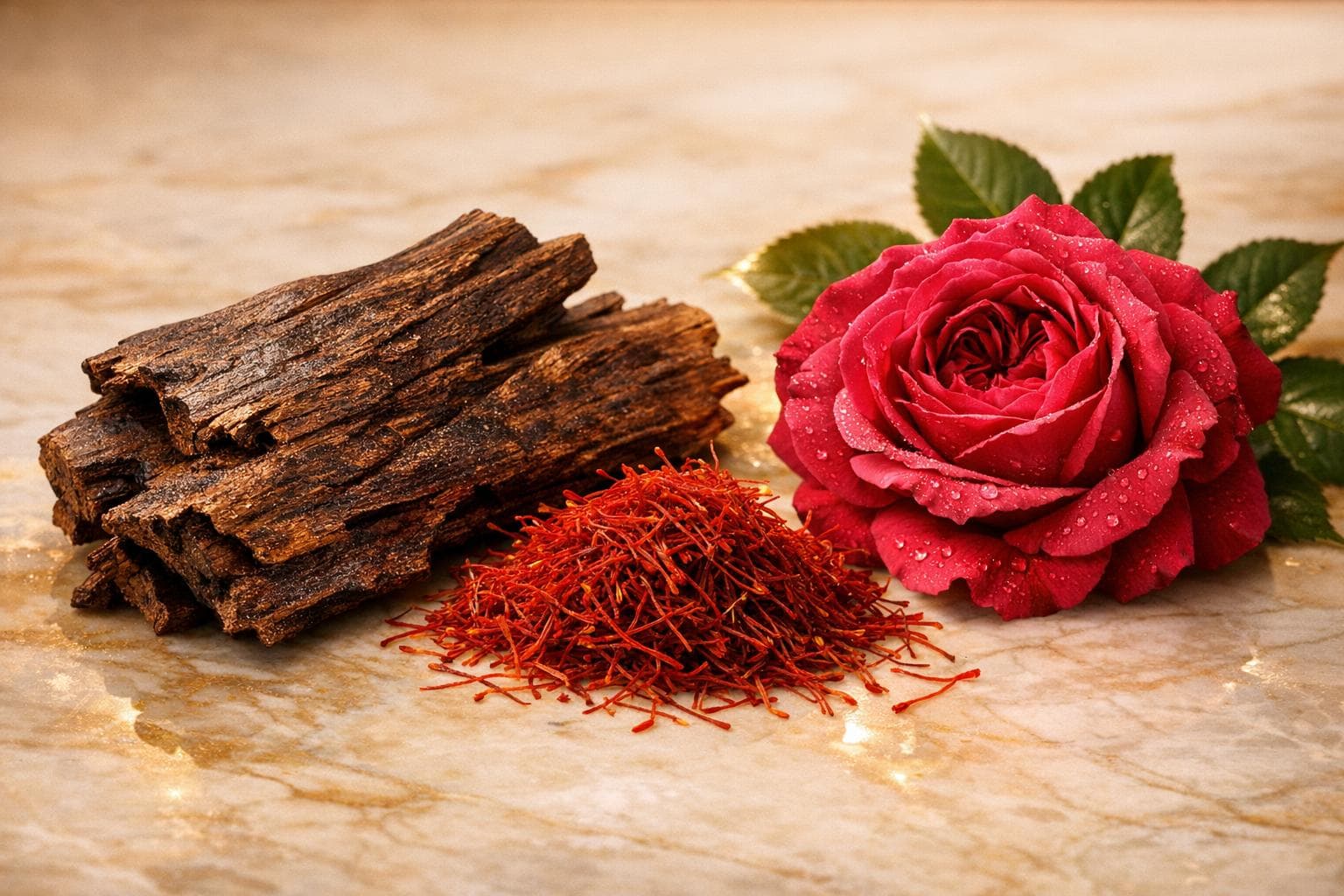
Le Moyen-Orient façonne l’univers du parfum depuis des siècles, des anciennes techniques de distillation aux ingrédients iconiques comme l’oud et la rose. Aujourd’hui, des maisons telles que Lattafa Perfumes, Louis Vuitton et MAJOURI portent cet héritage à un public contemporain, en mariant tradition et préférences actuelles. Voici un aperçu rapide :
- Lattafa Perfumes : Des options accessibles aux sillages affirmés, avec des notes telles que le safran et l’oud, offrant une tenue de 8 à 10 heures. Parmi les créations les plus appréciées figurent Oud for Glory et Khamrah.
- Fleur du Désert de Louis Vuitton : Une fragrance de luxe à 365 € mettant en scène le jasmin, la fleur d’oranger et la rose de Damas, pensée pour un sillage audacieux et un raffinement absolu.
- MAJOURI : Des compositions syro-françaises mêlant rose de Damas, oud et safran, pour des créations riches et d’une belle persistance.
Chaque maison trouve son propre équilibre entre héritage et modernité, s’adressant à des goûts et à des budgets variés tout en célébrant la profondeur et la tenue de la parfumerie moyen-orientale.
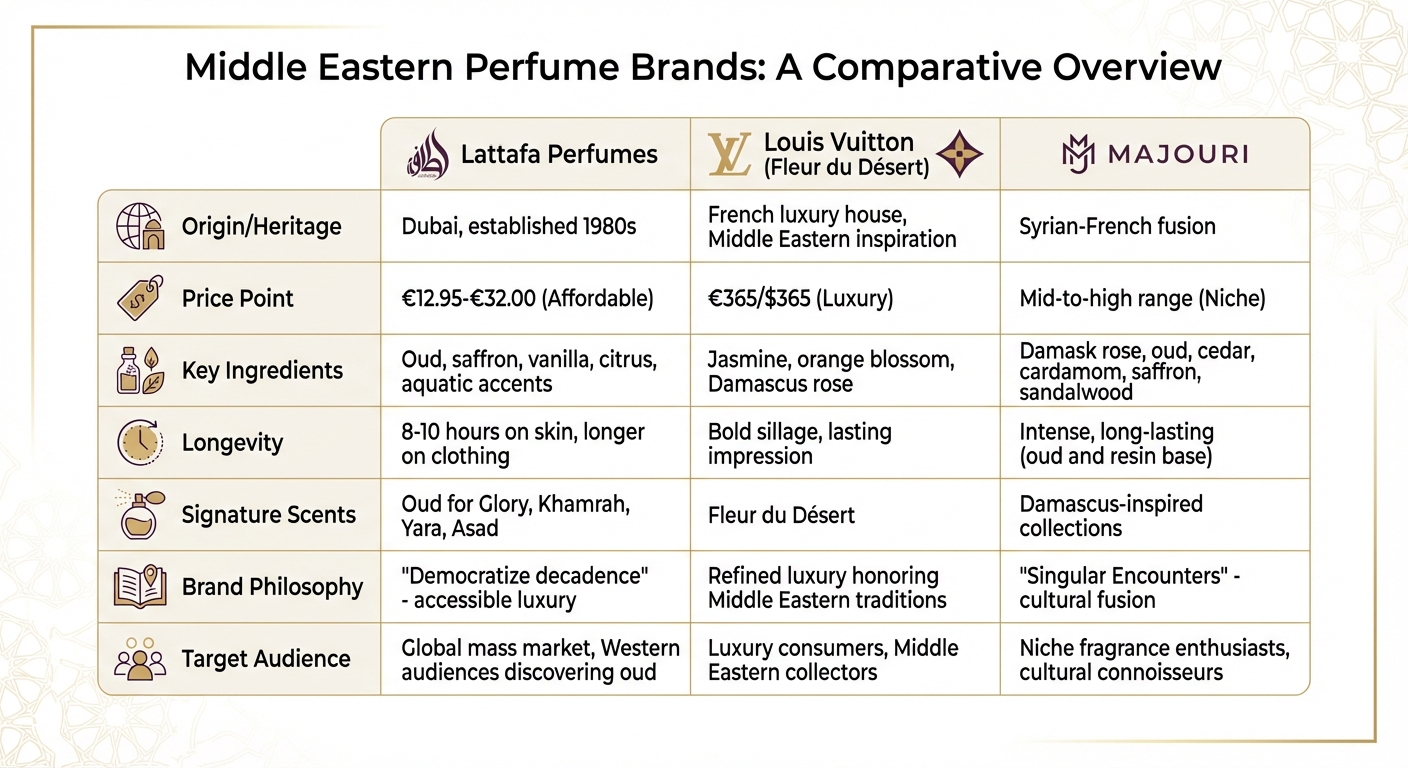
Comparaison des marques de parfums moyen-orientaux Lattafa, Louis Vuitton et MAJOURI
1. Lattafa Perfumes
Fondée dans les années 1980 à Dubaï, Lattafa Perfumes associe des ingrédients traditionnels du Moyen-Orient comme l’oud et le safran à des notes telles que la vanille, les agrumes et des accents aquatiques. Cette alliance singulière honore ses racines tout en séduisant un public plus large.
Intégration des ingrédients
Avec plus de 100 fragrances à son actif, Lattafa réinterprète les notes classiques du Moyen-Orient d’une manière moderne et accessible. Prenons Oud for Glory, qui marie un oud fumé au safran, ou Khamrah, un accord chaleureux d’oud, de cannelle, de datte et de rhum. Yara révèle un profil plus doux avec l’orchidée, le bois de santal et la vanille, tandis que Asad propose un assemblage masculin et audacieux d’épices. Ces créations servent souvent de porte d’entrée au public occidental pour découvrir la richesse du safran et de l’oud.
Sillage et tenue
L’un des atouts majeurs de Lattafa réside dans son excellent sillage et sa belle longévité. La plupart de ses fragrances tiennent de 8 à 10 heures sur la peau, et davantage encore sur les vêtements. Par exemple, Asad a obtenu la note de 4,12/5 sur Fragrantica, les utilisateurs saluant fréquemment sa forte projection et sa tenue durable.
Influence régionale
Lattafa puise son inspiration dans la tradition moyen-orientale d’accueillir les invités avec de l’oud ou du bakhoor, un geste profondément ancré dans l’hospitalité. Cette essence culturelle se retrouve dans chacune des fragrances de la maison. En outre, Lattafa a su rendre ces senteurs empreintes d’héritage plus accessibles, en offrant des expériences luxueuses à des prix abordables. Par exemple, Yara est proposé entre 12,95 € et 26,99 €, Asad à 24,95 €, et Khamrah à 32,00 €. Comme le résume justement VMAN SEA Editorial : "Ce ne sont pas de simples copies creuses. Ce sont des interprétations réfléchies conçues pour démocratiser la décadence".
"Lattafa n’est pas simplement un nom de plus dans le marché saturé du parfum - c’est une maison qui réécrit notre manière de vivre la fragrance."
- Hilda Rodriguez, Fragrance Market
La capacité de Lattafa à unir tradition et accessibilité offre une base séduisante pour explorer d’autres maisons qui réinventent l’art du parfum moyen-oriental.
2. Louis Vuitton et sa Fleur du Désert
En juillet 2022, Louis Vuitton a dévoilé Fleur du Désert, une fragrance à 365 $ signée par le maître parfumeur Jacques Cavallier Belletrud. Cette création rend hommage à la parfumerie moyen-orientale et célèbre la riche histoire de la région en tant que berceau de la parfumerie moderne.
Un mélange de tradition et de modernité
Au cœur de Fleur du Désert se trouve un trio floral profondément enraciné dans l’héritage du Moyen-Orient : le jasmin, la fleur d’oranger et la rose de Damas. Cette sélection s’inspire du style traditionnel du mukhallat - une technique d’assemblage qui constitue depuis des générations un pilier des foyers du Golfe. Habituellement centré autour de la rose, du safran et de l’oud, le mukhallat incarne à la fois un art et une portée culturelle. Cavallier Belletrud réinvente cette pratique ancestrale en tissant le jasmin, la fleur d’oranger et la rose de Damas dans une fragrance qui relie le passé au présent. Grâce à sa composition finement élaborée, Fleur du Désert capture l’essence de la région tout en offrant une expérience moderne et luxueuse. Son sillage affirmé et son empreinte durable renforcent encore davantage son lien avec les traditions moyen-orientales.
Un hommage à la culture du parfum au Moyen-Orient
Fleur du Désert reflète l’engagement de Louis Vuitton à comprendre et à honorer la parfumerie moyen-orientale. Comme le souligne Rawya Catto, directrice générale de CPL Aromas Middle East :
"On le voit lorsque les marques vont plus loin, qu’elles ont travaillé, étudié, sélectionné les bons ingrédients et su les célébrer."
La projection puissante de cette fragrance et son sillage intense correspondent aux préférences des consommateurs moyen-orientaux, qui superposent volontiers les parfums et composent des collections selon les occasions. Dans une région où les ventes de parfums sont soutenues - trois flacons sont vendus chaque seconde - et où les fragrances représentent 70 % du marché de la beauté prestige, Fleur du Désert offre précisément ce que recherchent les acheteurs locaux : intensité et présence. Cela s’accorde avec les habitudes d’achat singulières de la région, où l’on possède souvent des flacons distincts pour la maison, le travail et même la voiture, façonnant ainsi une identité olfactive hautement personnelle.
Votre expert parfum personnel vous attend
Faites notre quiz olfactif express pour découvrir des parfums de créateurs et de niche authentiques, choisis selon vos goûts – explorez-les en décants et échantillons de 2, 5, 8 et 30 ml, pour essayer chaque fragrance avant de vous engager sur un flacon entier.
Trouvez votre parfum3. MAJOURI
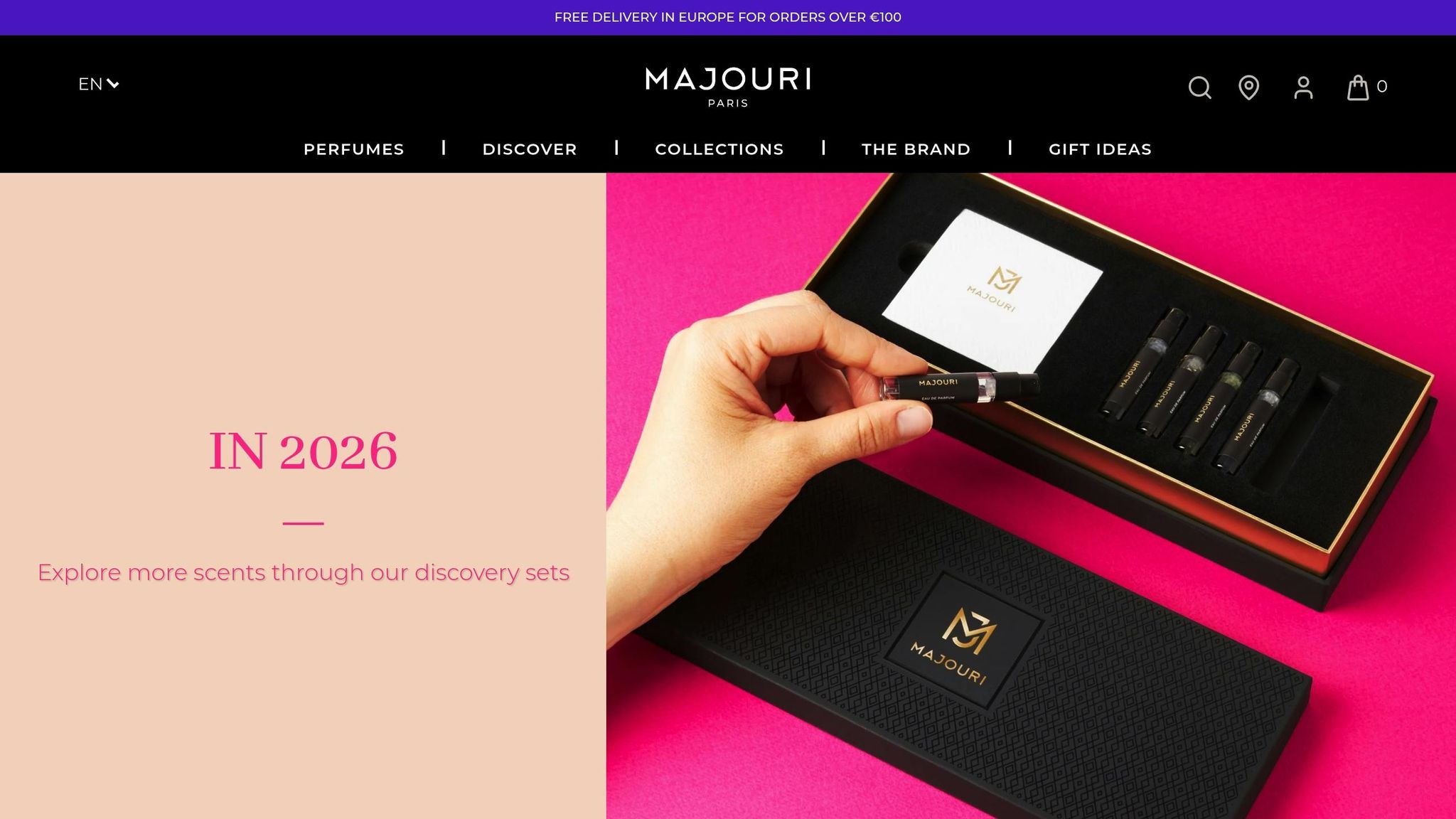
MAJOURI réunit la richesse des traditions syriennes et l’art raffiné de la parfumerie parisienne. En collaborant avec des parfumeurs renommés de Paris et de Grasse, la maison compose ce qu’elle appelle des "Rencontres Singulières", mêlant la sophistication de la parfumerie française à la chaleur et à la profondeur des traditions moyen-orientales. Cette fusion réinvente des coutumes séculaires pour un public contemporain.
Intégration des ingrédients
Au cœur des créations de MAJOURI se trouve l’antique rose de Damas, symbole de Damas, sublimée par des notes de cardamome, de safran, de jasmin et de fleur d’oranger. Ces ingrédients évoquent l’essence des cours damascènes, imprégnées d’une élégance intemporelle et d’un charme rare. Comme l’explique la maison :
"Les bois et les résines comme l’oud, le cèdre, le santal, la myrrhe, le labdanum et le benjoin forment l’ossature de compositions intenses, durables et authentiques" (MAJOURI).
Cette combinaison réfléchie d’ingrédients traduit un profond respect de la tradition tout en embrassant le savoir-faire moderne.
Sillage et tenue
Les fragrances de MAJOURI sont conçues pour affirmer une présence remarquable, avec une base intense bâtie sur l’oud et les résines. Cette approche s’inscrit dans la tradition moyen-orientale qui valorise une forte projection comme expression de générosité et d’hospitalité. Plutôt que de s’appuyer sur les techniques traditionnelles de superposition, MAJOURI obtient une projection durable grâce à des formulations modernes de pointe. Il en résulte une collection de fragrances au caractère affirmé, laissant une impression mémorable.
Influence régionale
S’inspirant de la ville historique de Damas, MAJOURI intègre des bois rares, des huiles essentielles et des résines qui rappellent les légendaires routes commerciales de la région. Pour la maison, la fragrance est bien plus qu’une simple expérience sensorielle - elle est un symbole culturel lié à l’hospitalité, à la romance et à la spiritualité. Comme le décrit MAJOURI :
"définir une attitude, une présence et une histoire" (MAJOURI).
Avantages et inconvénients
Les stratégies adoptées par ces maisons mettent en lumière une réflexion plus profonde dans la parfumerie contemporaine : l’équilibre entre tradition, innovation et accessibilité. Examinons les forces et les défis propres à chaque approche.
Lattafa Perfumes fait rayonner les traditions moyen-orientales auprès d’un public mondial en composant des mélanges gourmands-oud audacieux à des prix abordables. Si cela rend les fragrances riches et complexes plus accessibles, certains critiques estiment toutefois que la maison s’appuie trop fortement sur des ingrédients synthétiques . Comme le souligne VMAN Sea Editorial :
"Lattafa est l’artiste de rue du remix, tout aussi talentueux, mais incroyablement accessible... Ce ne sont pas de simples copies creuses. Ce sont des interprétations réfléchies conçues pour démocratiser la décadence".
Fleur du Désert de Louis Vuitton, à l’inverse, incarne le sommet du luxe. Proposée à 365 $, elle met en scène des ingrédients sélectionnés avec le plus grand soin, comme l’authentique rose de Damas, le jasmin et la fleur d’oranger. Les experts régionaux saluent cet engagement :
"On le voit lorsque les marques vont plus loin, qu’elles ont travaillé, étudié, sélectionné les bons ingrédients et su les célébrer".
Cependant, cette approche haut de gamme adoucit l’intensité brute et animale de l’oud traditionnel, amenant certains puristes, comme le parfumeur Roja Dove, à demander :
"Où est l’oud ?".
MAJOURI trouve un équilibre entre héritage et modernité. Puisant dans ses racines syriennes, la maison utilise des ingrédients inspirés de Damas comme l’oud, le cèdre et le labdanum, qu’elle marie à un raffinement français. Il en résulte une fusion culturelle riche, authentique et résolument contemporaine. Toutefois, le positionnement de niche de MAJOURI signifie qu’elle n’a ni l’accessibilité de masse de Lattafa, ni le prestige mondial de Louis Vuitton.
Ensemble, ces maisons illustrent la tension persistante entre authenticité et accessibilité dans la parfumerie. La parfumerie traditionnelle du Moyen-Orient met souvent l’accent sur un sillage puissant et des notes d’oud animales, parfois trop intenses pour les goûts occidentaux. Pour s’y adapter, Lattafa mise sur l’accessibilité et le volume, Louis Vuitton propose une interprétation luxueuse et polie, tandis que MAJOURI façonne un espace dédié à la fusion culturelle. Chaque approche possède ses forces - et ses compromis - révélant les multiples façons dont la parfumerie évolue pour répondre aux préférences mondiales.
Conclusion
Les traditions olfactives du Moyen-Orient ont profondément influencé la parfumerie moderne, éloignant l’industrie des styles minimalistes et eurocentrés au profit de créations audacieuses et durables. Cette évolution se reflète dans les chiffres : la demande européenne pour les fragrances à base d’oud a bondi de 47 % au cours des cinq dernières années, signe d’une fascination mondiale croissante pour ces ingrédients de caractère.
Cette transformation remet également en question les normes occidentales traditionnelles. L’une des tendances les plus marquantes est l’art de la superposition - le mélange de différents formats de parfum, comme les huiles et les sprays. Cette pratique, adoptée par la génération Z et les amateurs de parfums de niche, permet à chacun de créer une "empreinte olfactive" unique plutôt que de s’en remettre à un seul parfum signature. Comme l’exprime Rawya Catto de CPL Aromas Middle East :
"La seule chose qu’ils ont [pour montrer leur personnalité], c’est le parfum. Votre sillage est un élément distinctif de votre individualité".
Cette évolution des préférences des consommateurs ouvre la voie à un échange culturel dynamique dans l’univers du parfum.
Les maisons embrassent déjà ce mouvement de différentes manières. Lattafa s’est fait remarquer en rendant accessibles des senteurs opulentes grâce à une popularité portée par les réseaux sociaux. Louis Vuitton, quant à lui, sublime les ingrédients traditionnels du Moyen-Orient dans des créations luxueuses et raffinées. Pendant ce temps, des maisons comme MAJOURI unissent héritage syrien et sophistication française, mettant en lumière la beauté de la fusion culturelle. Toutes ces approches reflètent une conviction centrale de la parfumerie moyen-orientale : la fragrance est une expression puissante de l’identité.
À mesure que ces innovations continuent de se déployer, les amateurs de parfum disposent de plus d’occasions que jamais d’explorer des senteurs inspirées du Moyen-Orient. Par leur intensité riche, leur complexité en strates et leur dimension personnelle, ces créations transforment la notion de garde-robe olfactive, d’une tradition régionale en un phénomène mondial - redéfinissant notre manière de vivre et de porter le parfum.
FAQ
Qu’est-ce qui rend les fragrances moyen-orientales si influentes dans la parfumerie moderne ?
Les fragrances moyen-orientales sont célébrées pour leurs profils riches et opulents, profondément enracinés dans des siècles de tradition. Au cœur de ces senteurs se trouve l’oud (bois d’agar), reconnu pour sa chaleur profonde et fumée, souvent accompagné d’ambre, d’encens et de myrrhe - des ingrédients qui leur confèrent une qualité résineuse, presque mystique. Pour équilibrer cette profondeur, des notes comme la rose de Damas, le safran et des épices telles que la cardamome et la cannelle sont couramment utilisées, créant des compositions audacieuses empreintes d’une élégance intemporelle.
L’une des caractéristiques emblématiques de la parfumerie moyen-orientale est l’art de la superposition. Cette pratique consiste à associer plusieurs fragrances afin de créer une "empreinte olfactive" personnalisée, une tradition qui a influencé les marques de parfums de niche à travers le monde. Ces parfums sont généralement unisexes, appréciés pour leur longue tenue et leur chaleur intense, offrant un contraste saisissant avec les senteurs plus légères et plus fugaces souvent associées à la parfumerie occidentale. L’alliance harmonieuse d’ingrédients et de techniques traditionnels continue de façonner et d’inspirer l’évolution des créations olfactives contemporaines.
Comment des maisons comme Lattafa rendent-elles les fragrances de luxe moyen-orientales plus accessibles ?
Des maisons comme Lattafa rendent l’élégance des fragrances moyen-orientales plus accessible en proposant des créations de haute qualité inspirées de l’oud, capables de rivaliser avec la sophistication des parfums de niche haut de gamme - sans l’étiquette de prix dépassant les 300 $. Leurs compositions mettent souvent en scène des notes opulentes comme l’oud et l’ambre, offrant une expérience sensorielle somptueuse mais accessible.
Lattafa maintient des prix raisonnables en optimisant les coûts de production et en privilégiant les ventes en ligne, ce qui permet de réduire les frais généraux. Ajoutez à cela des promotions et remises fréquentes, et l’univers de la parfumerie moyen-orientale s’ouvre soudain à un public beaucoup plus large. En rendant ces senteurs envoûtantes plus abordables, Lattafa permet à davantage de personnes de savourer la richesse et le charme des fragrances de luxe au quotidien.
Pourquoi la superposition de parfums devient-elle une tendance populaire en Occident ?
La superposition de parfums gagne en popularité en Occident, car beaucoup cherchent à créer des senteurs à la fois personnelles et distinctives. Au lieu de se limiter à un seul parfum, cette pratique consiste à combiner différentes notes pour composer une fragrance qui reflète votre personnalité. Cette approche trouve ses racines dans les traditions moyen-orientales, où l’art de mêler huiles et parfums est une véritable signature. Aujourd’hui, c’est une manière contemporaine d’exprimer son individualité à travers le sillage.
L’essor des réseaux sociaux a nourri cette tendance, avec d’innombrables vidéos et tutoriels encourageant chacun à expérimenter. De nombreuses maisons de parfum l’ont bien compris et proposent désormais des collections spécialement conçues pour la superposition, facilitant la création de senteurs riches et multidimensionnelles. Pour ceux qui souhaitent s’initier à cet art sans investir immédiatement dans des flacons grand format, des plateformes comme Scento proposent des échantillons décantés en fioles de 2 ml, 5 ml et 8 ml, ainsi qu’en décant en flacon de 30 ml sur la plupart des parfums. De quoi explorer et marier les fragrances de manière accessible et ludique.

