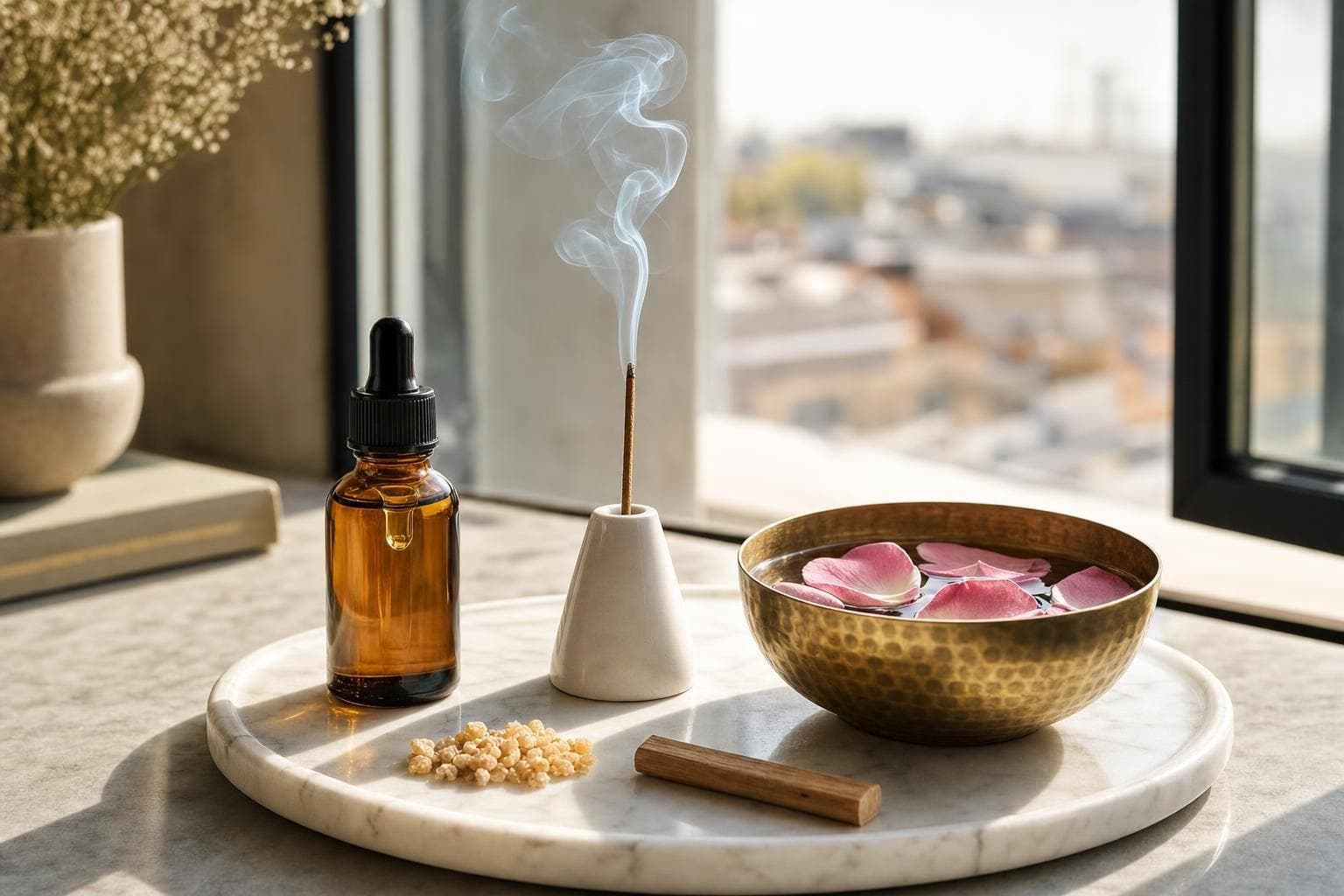
Το τελετουργικό άρωμα δεν αφορά απλώς την όσφρηση. Σηματοδοτεί την προσευχή, την προσφορά, την αγνότητα, τη μνήμη και το καλωσόρισμα. Σε αυτόν τον οδηγό, παρουσιάζω πώς πέντε θρησκείες χρησιμοποιούν το άρωμα με διαφορετικούς τρόπους: οι Χριστιανοί χρησιμοποιούν συχνά λιβάνι και σμύρνα, οι Μουσουλμάνοι μπορεί να χρησιμοποιούν oud, bakhoor, μόσχο και ροδόνερο, οι Ινδουιστές χρησιμοποιούν σανδαλόξυλο, καμφορά και floral attars, οι Εβραίοι χρησιμοποιούν besamim όπως γαρίφαλο και κανέλα, και οι Βουδιστές χρησιμοποιούν σανδαλόξυλο, ξύλο αγάρ (aloeswood) και θυμίαμα ναών.
Αν θέλετε τη σύντομη εκδοχή, είναι η εξής:
- Χριστιανικές γιορτές: θυμίαμα ρητίνης συνδεδεμένο με την προσευχή και τη λατρεία
- Ισλαμικές γιορτές: oud, μόσχος, bakhoor και ροδόνερο συνδεδεμένα με την τιμή, τον αρωματισμό του σπιτιού και τις συγκεντρώσεις
- Ινδουιστικές γιορτές: σανδαλόξυλο, καμφορά και φυτικά έλαια συνδεδεμένα με την προσφορά και την αφοσίωση
- Εβραϊκές τελετουργίες: μείγματα μπαχαρικών συνδεδεμένα με το Havdalah, τη μνήμη και την παρηγοριά
- Βουδιστικές γιορτές: αρωματικά ξύλα θυμιάματος συνδεδεμένα με προσφορές στο βωμό, τη συγκέντρωση και τις τελετές μνήμης
Επισημαίνω επίσης απλές συμβουλές για οικιακή χρήση στη Γερμανία, όπως εξαερισμός, μορφές χαμηλής εκπομπής καπνού, προσοχή στη φωτιά, μέγεθος δωματίου και αποθήκευση στους 18–22 °C. Σε πολλά σπίτια, 1 λεπτό στικ θυμιάματος για έως και 20 m² είναι αρκετό.
Το κύριο σημείο: το ίδιο άρωμα μπορεί να μυρίζει ευχάριστα, αλλά η τελετουργική του σημασία εξαρτάται από το πού, πότε και πώς χρησιμοποιείται.
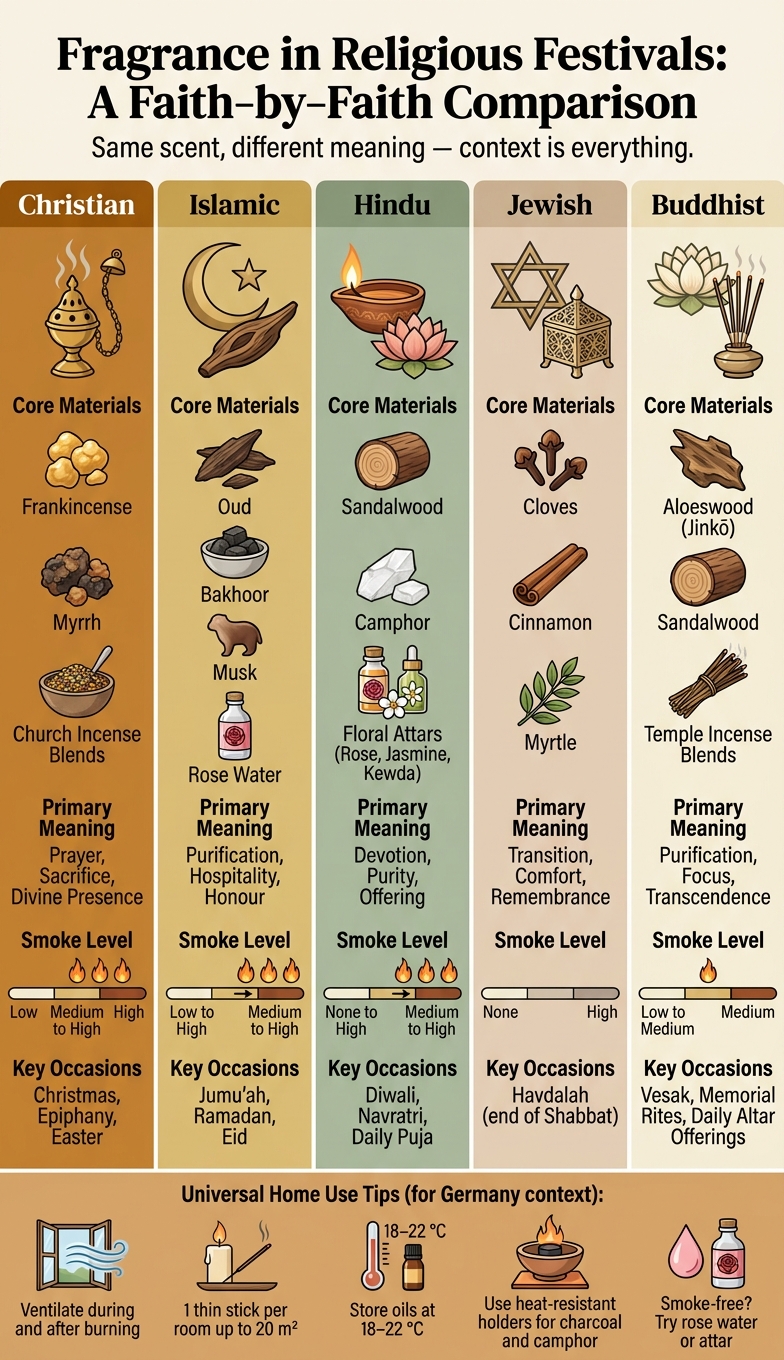
Το Άρωμα στις Θρησκευτικές Γιορτές: Μια Σύγκριση ανά Θρησκεία
Γρήγορη Σύγκριση
| Παράδοση | Κύριοι τύποι αρωμάτων | Κύρια τελετουργική χρήση | Επίπεδο καπνού |
|---|---|---|---|
| Χριστιανική | Λιβάνι, σμύρνα, εκκλησιαστικά μείγματα | Λειτουργία, ευλογία, προσευχή | Μέτριο έως υψηλό |
| Ισλαμική | Oud, bakhoor, μόσχος, ροδόνερο | Προσωπικό άρωμα, άρωμα χώρου, Eid και Jumu’ah | Χαμηλό έως υψηλό |
| Ινδουιστική | Σανδαλόξυλο, καμφορά, floral attars | Puja, aarti, προσφορά σε θεότητες | Μηδενικό έως υψηλό |
| Εβραϊκή | Γαρίφαλο, κανέλα, μυρτιά | Όσφρηση μπαχαρικών Havdalah | Μηδενικό |
| Βουδιστική | Σανδαλόξυλο, ξύλο αγάρ, θυμίαμα ναών | Προσφορά στο βωμό, διαλογισμός, τελετές μνήμης | Χαμηλό έως μέτριο |
Αν λοιπόν έπρεπε να συνοψίσω ολόκληρο το άρθρο σε έναν μόνο κανόνα, θα ήταν αυτός: αντιστοιχίστε τη γιορτή, αντιστοιχίστε το νόημα, και έπειτα επιλέξτε τη μορφή.
Οδηγός: Αρώματα που Χρησιμοποιούνται στις Χριστιανικές, Ισλαμικές και Ινδουιστικές Γιορτές
Χριστιανικές Γιορτές: Λιβάνι, Σμύρνα και Εκκλησιαστικά Μείγματα Θυμιάματος
Στην Καθολική και Ορθόδοξη παράδοση, το θυμίαμα εμφανίζεται συχνότερα τα Χριστούγεννα, τα Θεοφάνια και το Πάσχα. Σηματοδοτεί κομβικά σημεία της λειτουργίας, όπως την πομπή εισόδου, την αγία τράπεζα και τον σταυρό, το Ευαγγέλιο, την προσκομιδή και τον καθαγιασμό. Στην Πασχαλινή Αγρυπνία, πέντε κόκκοι θυμιάματος πιέζονται μέσα στην πασχαλινή λαμπάδα. Κάθε κόκκος αντιπροσωπεύει μία από τις πέντε πληγές του Χριστού.
Το λιβάνι (frankincense) βρίσκεται στο επίκεντρο αυτής της πρακτικής. Συμβολίζει την προσευχή που ανεβαίνει προς τον Θεό και την ευλογία του χώρου. Η σμύρνα προσδίδει έναν πιο σκούρο, πικρό τόνο. Καθώς χρησιμοποιούνταν στην ταφή, παραπέμπει επίσης στα πάθη και τον θάνατο του Χριστού. Ο νάρδος είναι λιγότερο συνηθισμένος στο ίδιο το εκκλησιαστικό θυμίαμα, αλλά συναντάται σε έλαια χρίσματος και ορισμένα ευλαβικά μείγματα. Το νόημά του πηγάζει από το άλειμμα του Ιησού από τη Μαρία της Βηθανίας, υποδηλώνοντας έτσι μια πολύτιμη, ολόψυχη αφοσίωση. Στις γερμανικές ενορίες, οι σύντομοι χρόνοι καύσης και ο καλός εξαερισμός αποτελούν μια σοφή πρακτική.
| Άρωμα | Συμβολισμός | Μορφή | Τελετουργική Χρήση |
|---|---|---|---|
| Λιβάνι | Θεϊκότητα, προσευχή, λατρεία | Κόκκοι ρητίνης | Καίγεται σε θυμιατό τα Χριστούγεννα, τα Θεοφάνια και το Πάσχα |
| Σμύρνα | Θυσία, πάθη, ταφή | Ρητίνη / έλαιο | Αναμειγνύεται σε εκκλησιαστικό θυμίαμα· χρησιμοποιείται σε έλαια χρίσματος |
| Νάρδος | Αφοσίωση, πολύτιμη αγάπη | Έλαιο / μύρο | Ακολουθίες χρίσματος· ορισμένα λατρευτικά μείγματα |
| Εκκλησιαστικά μείγματα θυμιάματος | Προσευχή, αγιασμός | Μείγμα ανάμικτων ρητινών | Τυπική λειτουργική χρήση σε καθολικές και ορθόδοξες ενορίες |
Ισλαμικές Γιορτές: Oud, Μόσχος, Bakhoor και Ροδόνερο
Η χρήση αρώματος τις Παρασκευές, ή Jumu’ah, αποτελεί sunnah. Κατά τη διάρκεια του Ραμαζανιού και του Eid, η συνήθεια αυτή γίνεται ακόμη πιο διαδεδομένη. Το oud κατέχει ξεχωριστή θέση εδώ. Χρησιμοποιείται για να αρωματίζει ιερούς τόπους, συμπεριλαμβανομένης της Kaaba, και συνδέεται με την ιερότητα και την αξιοπρέπεια. Ο μόσχος, συχνά σε attars με βάση το έλαιο, επιλέγεται για τη ζεστασιά και τη μακρά διάρκειά του κατά τις εορταστικές συγκεντρώσεις.
Το bakhoor λειτουργεί διαφορετικά. Πρόκειται για κομμάτια ξύλου εμποτισμένα σε oud και άλλα αρωματικά συστατικά, τα οποία καίγονται πάνω σε καρβουνάκι. Ο καπνός είναι πλούσιος και γεμίζει γρήγορα τον χώρο. Γι’ αυτό το bakhoor είναι δημοφιλές τα βράδια του Ραμαζανιού και τα πρωινά του Eid, όταν στόχος είναι να προετοιμαστεί το σπίτι για τους καλεσμένους. Το ροδόνερο αναλαμβάνει έναν πιο διακριτικό ρόλο. Μπορεί να ραντιστεί σε τζαμιά ή σπίτια, να χρησιμοποιηθεί για να φρεσκάρει τους χώρους προσευχής ή να εφαρμοστεί ελαφρά στο δέρμα. Το λουλουδάτο άρωμά του ταιριάζει με το έλεος και τη χαρά που συνοδεύουν και τις δύο περιστάσεις. Σε γερμανικά διαμερίσματα, ένας ηλεκτρικός καυστήρας με καλό εξαερισμό είναι η ασφαλέστερη επιλογή.
| Τύπος | Μορφή | Περίσταση | Τοποθεσία | Ένταση Αρώματος |
|---|---|---|---|---|
| Προσωπικό άρωμα (oud / musk attar) | Συμπυκνωμένο έλαιο ή σπρέι χωρίς οινόπνευμα | Jumu’ah, προσευχές Eid, συγκεντρώσεις | Εφαρμόζεται στα σημεία των σφυγμών και στα ρούχα | Μέτρια· προσωπικό αρωματικό ίχνος |
| Bakhoor | Αρωματικά κομμάτια ξύλου που καίγονται σε καρβουνάκι ή ηλεκτρικό καυστήρα | Βράδια Ραμαζανιού, πρωινά Eid | Δωμάτια σπιτιού, τζαμιά | Ισχυρή· γεμίζει ολόκληρο τον χώρο |
| Ροδόνερο | Ελαφρώς αρωματισμένο ανθόνερο | Eid, φιλοξενία Ραμαζανιού | Ραντίζεται σε δωμάτια, στα χέρια | Απαλή και δροσερή |
| Musk attar | Με βάση το έλαιο | Καθημερινή προσευχή, εορταστικές περιστάσεις | Προσωπική | Μέτρια· καθαρή και πουδρένια |
Ινδουιστικές Γιορτές: Σανδαλόξυλο, Καμφορά και Floral Attars
Κατά τη διάρκεια του Diwali, του Navratri, των ναϊκών puja και του οικιακού aarti, τρία υλικά εμφανίζονται ξανά και ξανά. Το σανδαλόξυλο μπορεί να προσφερθεί ως στικ θυμιάματος, πάστα ή έλαιο. Δημιουργεί μια ήρεμη, εξαγνιστική ατμόσφαιρα γύρω από την εικόνα της θεότητας ή το οικιακό ιερό. Το απαλό, ξυλώδες άρωμά του θεωρείται δροσιστικό και ιδανικό για μεγάλες περιόδους λατρείας, είτε για την καθημερινή πρακτική είτε για μεγάλες ημέρες γιορτής.
Η καμφορά είναι η κύρια προσφορά του aarti. Καίγεται ολοκληρωτικά, γεγονός που της προσδίδει ένα σαφές νόημα: την απελευθέρωση από το εγώ και την πλήρη αυτοπροσφορά. Το έντονο άρωμά της δρα περισσότερο αφυπνιστικά παρά καταπραϋντικά, ταιριάζοντας απόλυτα στην επικεντρωμένη στιγμή της περιφοράς της φλόγας μπροστά στη θεότητα. Τα floral attars από τριαντάφυλλο, γιασεμί ή kewda, αποσταγμένα σε έλαιο σανδαλόξυλου, λειτουργούν τόσο ως προσφορές όσο και ως προσωπικός καλλωπισμός. Μπορούν να εφαρμοστούν στην εικόνα της θεότητας, σε γιρλάντες ή ελαφρά στο δέρμα. Για μικρά διαμερίσματα, αποτελούν συνήθως την πιο εύκολη επιλογή καθώς δεν παράγουν καπνό.
| Υλικό | Τελετουργικός Ρόλος | Επίπεδο Καπνού | Σημείωση για Οικιακή Χρήση |
|---|---|---|---|
| Θυμίαμα σανδαλόξυλου | Εξαγνισμός, διαλογιστική ατμόσφαιρα | Χαμηλό έως μέτριο | Χρησιμοποιήστε λιγότερα στικ· ανάψτε κοντά σε μισάνοιχτο παράθυρο |
| Καμφορά | Φλόγα και προσφορά aarti | Υψηλό αλλά σύντομο | Χρησιμοποιήστε σταθερή, πυρίμαχη λάμπα σε μη εύφλεκτο δίσκο· μην την αφήνετε ποτέ χωρίς επίβλεψη |
| Floral attars (τριαντάφυλλο, γιασεμί, kewda) | Χρίσμα θεότητας, προσωπικός καλλωπισμός | Μηδενικό | Ασφαλές για μικρούς χώρους· εφαρμόστε με μέτρο για να μην λερώσετε ανοιχτόχρωμα υφάσματα |
Ο επόμενος οδηγός καλύπτει τις πρακτικές των εβραϊκών και βουδιστικών γιορτών.
Οδηγός: Αρώματα που Χρησιμοποιούνται στις Εβραϊκές και Βουδιστικές Γιορτές
Εβραϊκές Τελετές και Γιορτές: Besamim, Γαρίφαλο και Κανέλα
Στην εβραϊκή παράδοση, το άρωμα εξυπηρετεί έναν ξεκάθαρο τελετουργικό σκοπό. Στο κλείσιμο του Shabbat, η τελετή Havdalah περιλαμβάνει την όσφρηση των besamim — αρωματικών μπαχαρικών — για να σηματοδοτηθεί η αποχώρηση της ψυχής από το Shabbat, καθώς η neshama yeteira (η επιπλέον ψυχή που λαμβάνεται κατά το Shabbat) αναχωρεί.
Οποιοδήποτε φυσικά αρωματικό υλικό μπορεί να χρησιμοποιηθεί ως besamim. Σε πολλά σπίτια Ασκεναζιτών, το ολόκληρο γαρίφαλο είναι η συνηθισμένη επιλογή επειδή αναδύει έντονο άρωμα, καταλαμβάνει λίγο χώρο και διατηρείται εξαιρετικά με την πάροδο του χρόνου. Τα ξυλάκια κανέλας προσφέρουν ζεστασιά και γλυκύτητα, ενώ τα κλαδιά μυρτιάς (hadasim) αποτελούν την κλασική σεφαραδίτικη παράδοση. Άλλες συνήθεις επιλογές περιλαμβάνουν φλούδες εσπεριδοειδών, μέντα και δεντρολίβανο.
Ένα απλό μείγμα περιλαμβάνει συχνά 3 μέρη γαρίφαλο, 2 μέρη κανέλα και 1 μέρος αποξηραμένη φλούδα πορτοκαλιού ή μυρτιά. Φυλάξτε το σε ένα μικρό αεροστεγές γυάλινο βάζο ή σε ένα διακοσμητικό κουτί μπαχαρικών, μακριά από το φως.
| Μπαχαρικό | Οσφρητικό Προφίλ | Συμβολισμός |
|---|---|---|
| Γαρίφαλο | Διαπεραστικό, γλυκό-πικάντικο, έντονο | Παρηγοριά μετά το Shabbat· εγρήγορση για τη νέα εβδομάδα |
| Κανέλα | Ζεστό, γλυκό, ξυλώδες | Ζεστασιά και συνέχεια των mitzvot |
Η βουδιστική πρακτική κινείται προς μια διαφορετική κατεύθυνση: μακριά από το φορητό κουτί μπαχαρικών και προς το θυμίαμα στον βωμό.
Βουδιστικές Γιορτές: Ξύλο Αγάρ, Σανδαλόξυλο και Θυμίαμα Ναών
Στις βουδιστικές γιορτές, το θυμίαμα εξυπηρετεί ταυτόχρονα πολλαπλούς ρόλους: προσφορά, δημιουργία ατμόσφαιρας και συσσώρευση πνευματικής αξίας (merit). Αποτελεί κεντρική προσφορά στον βωμό κατά το Vesak και στις τελετές μνήμης. Κατά τη διάρκεια του Vesak, το θυμίαμα τοποθετείται μαζί με κεριά και λουλούδια ως σύμβολο της διάδοσης των διδασκαλιών προς τον κόσμο. Στις επιμνημόσυνες τελετές, χρησιμοποιείται για τη δημιουργία πνευματικής αξίας και την απόδοση τιμών στους προγόνους.
Το ξύλο αγάρ (aloeswood) είναι σπάνιο και συνήθως φυλάσσεται για επίσημες προσφορές, ενώ το σανδαλόξυλο είναι η καθημερινή επιλογή. Τα μείγματα ναών διαφέρουν ανάλογα με τη σχολή και την περιοχή. Συχνά συνδυάζουν ξύλα, ρητίνες και βότανα σε στικ ή σπείρες, σχεδιασμένα να καίγονται ομοιόμορφα.
| Ξύλο / Μείγμα | Σπανιότητα | Κύρια Χρήση | Επίπεδο Καπνού |
|---|---|---|---|
| Ξύλο αγάρ (Jinkō) | Πολύ υψηλή | Vesak, τελετές μνήμης, επίσημες προσφορές | Μέτριο έως υψηλό· χρησιμοποιήστε το με φειδώ |
| Σανδαλόξυλο | Μέτρια | Καθημερινές προσφορές, οικιακός βωμός, διαλογισμός | Μέτριο· απαλό και σταθερό |
| Μείγματα ναών | Χαμηλή έως μέτρια | Γιορτές, κοινοτική λατρεία, οικιακή πρακτική | Χαμηλό έως μέτριο· επιλέξτε στικ χαμηλού καπνού για διαμερίσματα |
Για τα διαμερίσματα στη Γερμανία, η καλύτερη πρακτική είναι να καίτε ένα λεπτό στικ τη φορά σε έναν καλά αεριζόμενο χώρο.
Ο προσωπικός σας ειδικός αρωμάτων σας περιμένει
Κάντε το σύντομο κουίζ αρώματος και ανακαλύψτε αυθεντικά αρώματα designer και niche, επιλεγμένα στα μέτρα σας – εξερευνήστε τα σε decant και δείγματα των 2, 5, 8 και 30 ml, ώστε να δοκιμάσετε το καθένα πριν επιλέξετε ολόκληρο μπουκάλι.
Βρείτε το άρωμά σαςΠρακτικός Οδηγός για τη Χρήση Τελετουργικού Αρώματος στη Γερμανία
Χρησιμοποιήστε τις παρακάτω οδηγίες για να μετατρέψετε τα αρώματα των γιορτών σε πρακτικές οικιακές επιλογές στη Γερμανία.
Αντιστοιχίστε Κάθε Γιορτή με μια Οσφρητική Οικογένεια
Ένα καλό σημείο εκκίνησης είναι να συνδέσετε κάθε παράδοση με μία ή δύο οσφρητικές οικογένειες. Αυτό απλοποιεί τις αγορές σας και σας βοηθά να αποφύγετε τυχαίες επιλογές που δεν ταιριάζουν στην ατμόσφαιρα.
Οι χριστιανικές γιορτές, όπως τα Χριστούγεννα και το Πάσχα, συνδέονται στενά με τη ρητινώδη οικογένεια. Σκεφτείτε το λιβάνι, τη σμύρνα και τα εκκλησιαστικά μείγματα θυμιάματος με βαλσαμικό, ελαφρώς καπνιστό χαρακτήρα. Οι ισλαμικές γιορτές, όπως το Eid, κινούνται στον χώρο του oud, του μόσχου και των απαλών λουλουδιών, με το ροδόνερο να προσφέρει μια επιλογή χωρίς καπνό για προσωπική χρήση. Η ινδουιστική λατρεία κατά το Diwali ή την καθημερινή puja συνδέεται με το σανδαλόξυλο και την καμφορά. Το σανδαλόξυλο χρησιμοποιείται στους βωμούς και στο σώμα, ενώ η καμφορά εμφανίζεται σύντομα στην τελετουργική φλόγα. Το εβραϊκό Havdalah ταιριάζει απόλυτα με τα θερμά μπαχαρικά, όπως το γαρίφαλο, η κανέλα και το κάρδαμο. Οι βουδιστικές γιορτές, όπως το Vesak, συνδέονται συχνά με ξύλα και θυμίαμα ναών, ιδιαίτερα στικ σανδαλόξυλου και ξύλο αγάρ.
| Παράδοση | Κύρια Οσφρητική Οικογένεια | Βασικά Υλικά |
|---|---|---|
| Χριστιανική | Ρητινώδης, καπνιστή | Λιβάνι, σμύρνα, εκκλησιαστικά μείγματα |
| Ισλαμική | Ξυλώδης, μοσχώδης, floral | Oud, bakhoor, μόσχος, ροδόνερο |
| Ινδουιστική | Ξυλώδης, floral, καμφορούχα | Σανδαλόξυλο, καμφορά, attar γιασεμιού |
| Εβραϊκή | Θερμών μπαχαρικών | Γαρίφαλο, κανέλα, μυρτιά |
| Βουδιστική | Ξυλώδης, βοτανική | Σανδαλόξυλο, ξύλο αγάρ, μείγματα ναών |
Μόλις προσδιορίσετε την οσφρητική οικογένεια, το επόμενο βήμα είναι απλό: επιλέξτε τη μορφή που ταιριάζει στο σπίτι σας.
Επιλέξτε τη Σωστή Μορφή: Ρητίνη, Έλαιο, Attar, Θυμίαμα ή Ανθόνερο
Αυτή η επιλογή συνήθως συνοψίζεται σε τέσσερις παράγοντες: σκοπός, μέγεθος δωματίου, ανοχή στον καπνό και προϋπολογισμός.
Για τη δημιουργία ατμόσφαιρας κατά τη διάρκεια μιας σύντομης τελετουργίας, οι ρητίνες σε καρβουνάκι ή τα στικ θυμιάματος προσφέρουν το ισχυρότερο αποτέλεσμα στον χώρο. Σε ένα μικρό δωμάτιο, ένα λεπτό στικ είναι συνήθως αρκετό. Σε έναν μεγαλύτερο, καλά αεριζόμενο χώρο, χρησιμοποιήστε μόνο μια μικρή ποσότητα ρητίνης.
Για προσωπική χρήση που παραπέμπει σε μια αρωματική παράδοση χωρίς να γεμίζει ολόκληρο το δωμάτιο, τα έλαια και τα attars είναι πιο πρακτικά. Δεν παράγουν καπνό, η έντασή τους ελέγχεται ευκολότερα και μπορούν να διαρκέσουν 12–24 ώρες στο δέρμα. Τα ανθόνερα, όπως το ροδόνερο, είναι η ευκολότερη αφετηρία. Ταιριάζουν σε δωμάτια οποιουδήποτε μεγέθους, μπορούν να εφαρμοστούν στο δέρμα, στα μαλλιά ή στα λευκά είδη και τείνουν να είναι ιδιαίτερα προσιτά.
Στη συνέχεια, αξίζει να εξετάσετε την πρακτική πλευρά: καπνός, θερμότητα και εξαερισμός.
Ασφάλεια και Εθιμοτυπία για Οικιακή Χρήση
Η πυρασφάλεια προέχει. Τα καρβουνάκια για ρητίνες ή bakhoor πρέπει να τοποθετούνται σε πυρίμαχο θυμιατό ή μεταλλικό μπολ πάνω σε σταθερή επιφάνεια, μακριά από κουρτίνες και χαρτιά. Χρησιμοποιείτε πάντα λαβίδα για τα αναμμένα κάρβουνα, ποτέ τα δάχτυλά σας. Η καμφορά, που χρησιμοποιείται στα ινδουιστικά τελετουργικά aarti, καίγεται με έντονη ανοιχτή φλόγα, επομένως απαιτεί ειδικό σκεύος aarti ή καντήλι με ελεύθερο χώρο από πάνω και συνεχή επίβλεψη μέχρι να σβήσει εντελώς.
Ο εξαερισμός έχει εξίσου μεγάλη σημασία. Ανοίξτε ένα παράθυρο κατά τη διάρκεια και μετά από κάθε χρήση θυμιάματος ή ρητίνης. Σε μικρότερα δωμάτια, διατηρήστε τον χρόνο καύσης σύντομο. Ένα στικ θυμιάματος είναι συνήθως αρκετό για έναν χώρο έως 20 m². Καλό είναι επίσης να έχετε διαθέσιμες επιλογές χωρίς καπνό για άτομα που είναι ευαίσθητα στα έντονα αρώματα ή στον καπνό.
Όσον αφορά την αποθήκευση, φυλάσσετε τα έλαια και τα attars σε ερμητικά κλειστά γυάλινα μπουκάλια σε ένα δροσερό, σκοτεινό ντουλάπι γύρω στους 18–22 °C, εύρος που αντιστοιχεί στις συνήθεις θερμοκρασίες πολλών γερμανικών σπιτιών. Κρατήστε τα μακριά από καλοριφέρ και την υγρασία του μπάνιου.
Και κάτι ακόμα: χρησιμοποιήστε αυτά τα υλικά με σεβασμό. Πρόκειται για τελετουργικές ουσίες, όχι απλώς για διακοσμητικά χώρου. Εάν συγκατοικείτε, ενημερώστε τους συγκατοίκους σας προτού ανάψετε θυμίαμα. Σε κοινόχρηστους χώρους, είναι συχνά προτιμότερο να επιλέξετε μια διακριτική λύση, όπως μια μικρή σταγόνα attar ή ένα ελαφρύ ψέκασμα με ροδόνερο.
Συμπέρασμα: Συνοπτικός Οδηγός για το Άρωμα στις Θρησκευτικές Γιορτές
Αυτός ο τελικός οδηγός συγκεντρώνει τις σημειώσεις του άρθρου σχετικά με το άρωμα, τη σημασία και τη χρήση σε μια συνοπτική ανακεφαλαίωση.
Το τελετουργικό άρωμα συνδέεται άρρηκτα με τον συμβολισμό, την ατμόσφαιρα και τη συλλογική πρακτική. Υλικά όπως το λιβάνι, η σμύρνα, το oud, το σανδαλόξυλο και τα besamim μπορούν να ενισχύσουν τη λατρεία, να σηματοδοτήσουν τον ιερό χρόνο και να προσκαλέσουν τη συμμετοχή της κοινότητας. Το βασικό σημείο είναι απλό: κάθε άρωμα φέρει νόημα μέσα σε ένα συγκεκριμένο τελετουργικό πλαίσιο.
Η παρακάτω σύνοψη διατηρεί την ιδιαιτερότητα κάθε παράδοσης, αναδεικνύοντας παράλληλα το κοινό τελετουργικό τους μοτίβο.
| Παράδοση | Βασικά Υλικά | Κύριο Νόημα |
|---|---|---|
| Χριστιανική | Λιβάνι, σμύρνα, εκκλησιαστικό θυμίαμα | Προσευχή, θυσία, θεϊκή παρουσία |
| Ισλαμική | Oud, bakhoor, μόσχος, ροδόνερο | Εξαγνισμός, φιλοξενία, τιμή |
| Ινδουιστική | Σανδαλόξυλο, καμφορά, floral attars | Αφοσίωση, αγνότητα, προσφορά |
| Εβραϊκή | Besamim (γαρίφαλο, κανέλα) | Μετάβαση, παρηγοριά, ανάμνηση |
| Βουδιστική | Ξύλο αγάρ, σανδαλόξυλο, θυμίαμα ναών | Εξαγνισμός, συγκέντρωση, υπέρβαση |
Χρησιμοποιήστε αυτόν τον τελικό έλεγχο Πλαίσιο–Νόημα–Μέθοδος:
- Προσδιορίστε τη γιορτή.
- Αντιστοιχίστε το άρωμα με το τελετουργικό του νόημα.
- Επιλέξτε τη μορφή που χρησιμοποιείται σε αυτή την παράδοση.
Αυτές οι διακρίσεις συμβάλλουν στην προστασία της τελετουργικής σημασίας. Όταν χρησιμοποιούνται με σεβασμό, αυτά τα αρώματα μπορούν επίσης να διατηρήσουν αυτό το νόημα αναλλοίωτο και στην οικιακή πρακτική.
Συχνές Ερωτήσεις
Πώς επιλέγω το κατάλληλο άρωμα για μια συγκεκριμένη γιορτή;
Σκεφτείτε τρία πράγματα: τη διάθεση της γιορτής, την ώρα της ημέρας και το προσωπικό σας στυλ. Για ημερήσιες περιστάσεις, τα δροσερά λουλουδάτα και οι ανάλαφρες νότες εσπεριδοειδών είναι συνήθως ιδανικές επιλογές. Για τις βραδινές γιορτές, το σανδαλόξυλο, το oud ή το κεχριμπάρι ταιριάζουν καλύτερα, καθώς αποπνέουν μεγαλύτερο βάθος και ζεστασιά.
Η δοκιμή είναι απαραίτητη. Η χημεία του δέρματος, η θερμοκρασία και η υγρασία μπορούν να μεταβάλουν τον τρόπο με τον οποίο αναπτύσσεται ένα άρωμα πάνω σας. Δοκιμάστε πρώτα μερικά οσφρητικά προφίλ και φορέστε τα κατά τη διάρκεια της ημέρας, ώστε να δείτε πώς εξελίσσεται το καθένα προτού αποφασίσετε.
Ποια τελετουργικά αρώματα είναι τα καλύτερα για μικρά διαμερίσματα;
Για μικρά διαμερίσματα, προτιμήστε ελαφρύτερα, ισορροπημένα αρώματα που δεν θα κυριαρχήσουν υπερβολικά στον χώρο. Καθαρές νότες όπως ο λευκός μόσχος, τα εσπεριδοειδή και τα απαλά άνθη, όπως το γιασεμί ή το νερολί, προσφέρουν μια αίσθηση φρεσκάδας χωρίς υπερβολική διασπορά.
Αν θέλετε να δοκιμάσετε μερικές επιλογές πρώτα, τα φιαλίδια 2 ml, 5 ml και 8 ml, καθώς και το μπουκάλι decant 30 ml για τα περισσότερα αρώματα, του Scento κάνουν τη διαδικασία απλή. Μπορείτε να δοκιμάσετε διαφορετικά επώνυμα και niche αρώματα στο σπίτι πριν καταλήξετε στην τελική σας επιλογή.
Μπορώ να χρησιμοποιήσω επιλογές χωρίς καπνό διατηρώντας παράλληλα το τελετουργικό νόημα;
Ναι. Οι επιλογές χωρίς καπνό μπορούν να διατηρήσουν ανέπαφο το τελετουργικό νόημα των παραδόσεων μιας γιορτής, χωρίς καύση ή την ανάγκη περίπλοκου εξαερισμού.
Τα αρωματικά σπρέι ή οι διαχυτές (diffusers) με αιθέρια έλαια, όπως το σανδαλόξυλο, το λιβάνι ή η σμύρνα, μπορούν να καθαρίσουν τον χώρο και να δημιουργήσουν μια προστατευτική, διαλογιστική ατμόσφαιρα αποκλειστικά μέσω του αρώματος.

