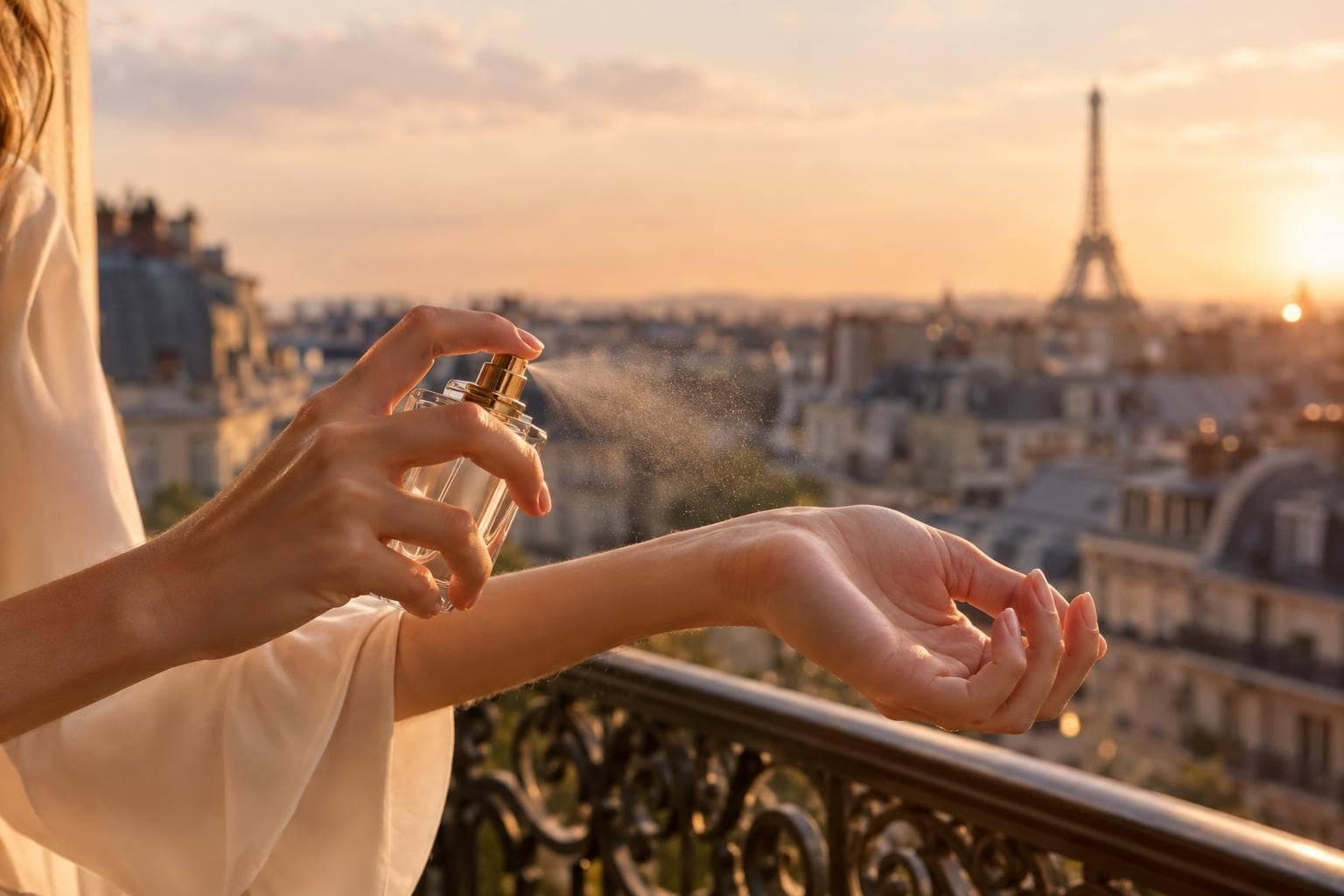
Paris sells the feeling of a perfume - not its smell. I read its fashion, romance and luxury imagery as a brand story, then check the fragrance description and try a sample on my skin.
Here’s the difference I keep in mind:
- Paris sets the mood. Landmarks, lighting and clothes suggest a lifestyle, not fragrance notes or lasting power.
- Grasse points to perfume craft. UNESCO recognised its perfume-making skills in 2018. A Paris backdrop does not tell me where a bottle was made.
- My skin test guides the choice. I follow the scent from the first spray to the dry-down before buying a full bottle.
My rule: <u>enjoy the setting, but choose the scent</u>.
Paris as a Symbol of French Luxury
Paris connects perfume with haute couture, luxury shopping and French style. Its fashion houses and luxury shopping streets give advertisers a ready-made backdrop, lending fragrance campaigns the prestige of couture.
This link is strongest when the perfume belongs to a fashion house. A Parisian setting carries the house’s visual identity into its fragrance advertising. The prestige comes from the brand and the backdrop - not where the perfume was made.
Paris is the image; Grasse is the craft.
The Different Roles of Paris and Grasse
Paris stands for fashion, commerce and brand identity. Grasse stands for perfume heritage, craftsmanship and raw materials. UNESCO recognises Grasse’s perfume-making heritage.
The two roles work together, but a Parisian ad does not prove Parisian manufacture. If origin matters to you, check production details and ingredient-origin claims separately.
How Parisian Settings Suggest Romance and Fashion
Once Paris appears on screen, the ad moves from origin story to aspiration. The city becomes the backdrop for a lifestyle, with perfume as a cue to identity. Images, colour, music and movement sell a mood - not a scent.
What Landmarks, Streets and Night Scenes Suggest
Landmarks, streets and night scenes make Paris instantly recognisable. They suggest romance or freedom without dialogue or a detailed plot.
At night, warm light, deep shadows and lingering shots add mystery and romance. Bright colours and fast movement suggest energy instead. People standing close together hint at intimacy; someone moving alone can suggest freedom. None of these choices tells you the fragrance notes.
How Fashion Styling Shapes Brand Identity
Clothing, hair and posture carry the brand’s attitude, too. Restrained styling can suggest understated elegance, while a dramatic look sets a different mood.
Keep the visual promise separate from the product claim. An independent character expresses an attitude, not a scent. Read that appeal as brand styling rather than information about the fragrance.
How Paris Turns Perfume into a Dream Purchase
That visual promise makes the bottle feel like a small piece of Parisian life. The city’s familiar image lends its luxury associations to the perfume, making the purchase about identity as well as scent. That’s dream buying: choosing the image as much as the fragrance.
Why Paris Appeals Across Global Markets
Paris is recognised around the world, so the ad needs little explanation. A shopper in Germany doesn’t need to have visited the city for its image to make a perfume feel aspirational.
But recognition is not persuasion - and it does not prove quality.
Why the Advertised Lifestyle Does Not Describe the Scent
The lifestyle shown in the ad tells you nothing about how the fragrance wears. The campaign cannot tell you its ingredients, longevity or projection. It also cannot establish whether you’ll enjoy wearing it.
The Paris story sells identity; testing on skin tells you whether the scent works for you. Judge the fragrance by how it wears, not by the ad. Ask yourself:
Would I still want this perfume without the Paris setting?
Ο προσωπικός σας ειδικός αρωμάτων σας περιμένει
Κάντε το σύντομο κουίζ αρώματος και ανακαλύψτε αυθεντικά αρώματα designer και niche, επιλεγμένα στα μέτρα σας – εξερευνήστε τα σε decant και δείγματα των 2, 5, 8 και 30 ml, ώστε να δοκιμάσετε το καθένα πριν επιλέξετε ολόκληρο μπουκάλι.
Βρείτε το άρωμά σαςHow to Judge a Perfume Beyond the Ad
If Paris sells the dream, the fragrance description and a skin test help you decide whether the perfume is worth buying.
Read the Fragrance Description
Look past the ad’s mood and check the note pyramid: citrus, floral, woody or amber. Top notes give the first impression, heart notes form the main body, and base notes leave the lasting finish.
Read beyond the opening. The description is a starting point, not a promise: does the scent sound like something you’d enjoy wearing in everyday life?
Test on Skin Before Buying a Full Bottle
Next, try a small amount on your skin. Follow the scent from the first spray to the dry-down, noticing whether you enjoy both the opening and what remains once it settles.
Wear it through a normal day to see whether its strength feels comfortable in different settings. A small sample gives you time to try the scent before committing to a full bottle.
Conclusion: Paris Sells a Story, Not a Scent Description
Paris gives French perfume ads a visual shorthand for luxury, romance and fashion. Around the world, that story helps buyers picture the identity they’d like to wear.
But a Parisian setting won’t tell you how a perfume smells. Read the ad as a brand story, then test the fragrance on your skin before buying.
Enjoy the story. Buy for the scent.
FAQs
How can I separate Parisian imagery from perfume claims?
Focus on how the perfume wears on your skin, not the brand’s story. Parisian imagery sells luxury, romance and status. It won’t tell you how a scent will work with your skin, local weather or daily routine.
Try curated decants in 2 ml, 5 ml or 8 ml vials over several weeks. Pay attention to how each scent develops and how it fits your day before committing to an expensive bottle you may never finish.
How can I check where a perfume was made?
Check the packaging or the brand’s official documentation for a ‘Made in France’ or ‘Made in Grasse’ label. These labels tell you where the fragrance was made and often point to time-honoured craftsmanship and high-quality ingredients sourced from established French regions.
Scento offers genuine designer and niche fragrances in curated decants, so you can get to know these heritage scents before choosing a full bottle.
How long should I test a perfume before buying?
Give a perfume time on your skin, rather than judging it by the first spray. An 8 ml sample typically gives you around 80 to 160 sprays - enough for several weeks of wear. You can follow how the scent develops over hours and try it in different everyday settings before deciding on a full bottle. [2][3]

