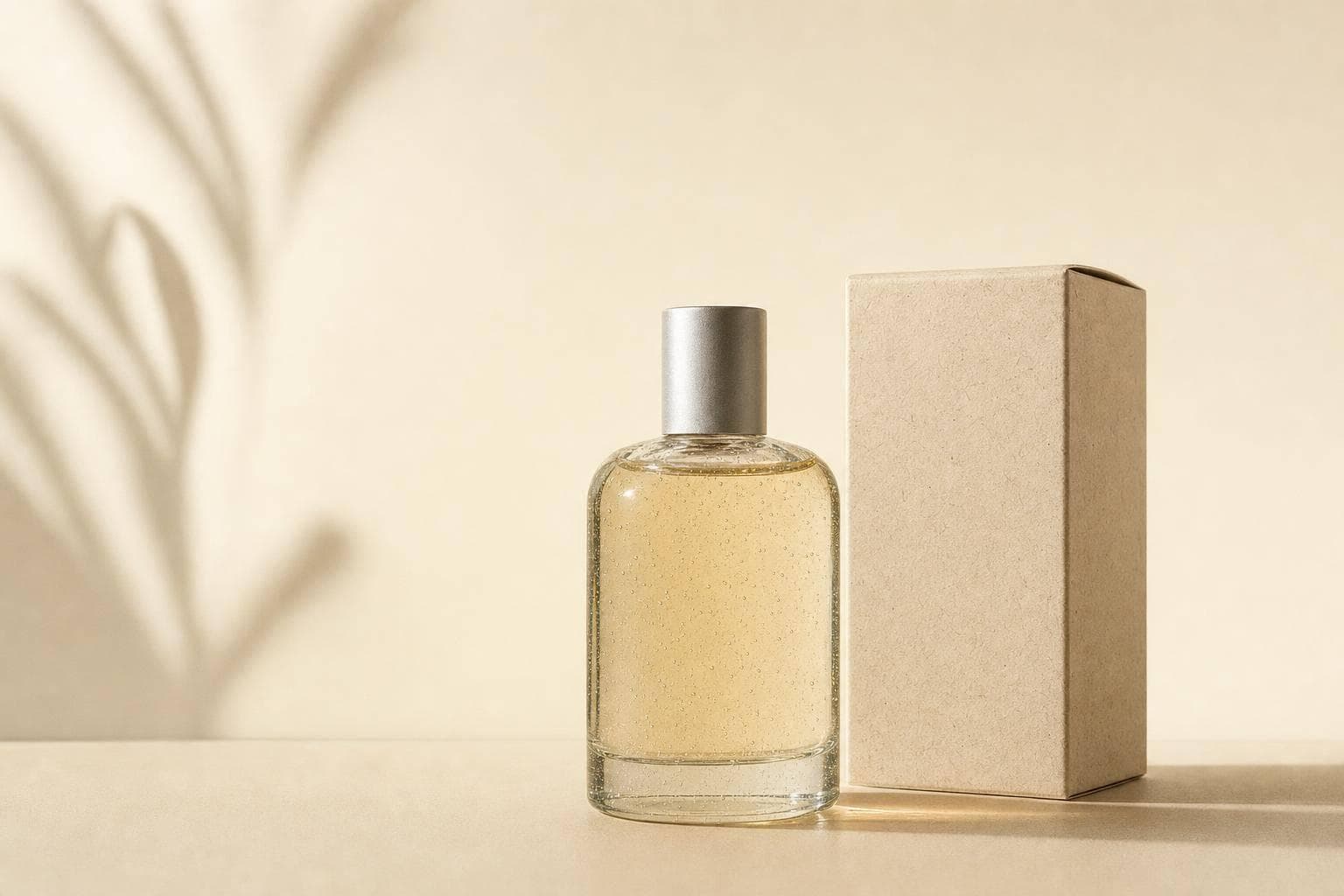
Συνοψίζοντας σε μία πρόταση: πρώτα το χαρτί, μετά το γυαλί, πλαστικό μόνο εκεί όπου η συσκευασία δεν μπορεί να λειτουργήσει χωρίς αυτό.
Από τις 12.08.2026, οι κανονισμοί της ΕΕ για τις συσκευασίες γίνονται πιο αυστηροί, και έως την 01.01.2030 πολλές πλαστικές συσκευασίες στην αγορά της ΕΕ θα πρέπει να περιέχουν ανακυκλωμένο υλικό μετά την κατανάλωση (PCR). Παράλληλα, οι οίκοι αρωμάτων οφείλουν να προστατεύσουν την ποιότητα του αρώματος, τη διάρκεια ζωής του και αυτή την αψεγάδιαστη, πολυτελή όψη. Το ζήτημα, λοιπόν, δεν είναι πλέον αν υπάρχει ανακυκλωμένη συσκευασία. Είναι ποια μέρη μπορούν να αποδώσουν σε μεγάλη κλίμακα χωρίς να θυσιάζεται το φινίρισμα, η λειτουργικότητα ή το κόστος.
Εν συντομία:
- Τα εξωτερικά κουτιά και οι συσκευασίες αποστολής αποτελούν το ευκολότερο σημείο για τη χρήση ανακυκλωμένου περιεχομένου.
- Τα γυάλινα μπουκάλια μπορούν να δεχθούν πολύ περισσότερο PCR, αλλά ο έλεγχος του χρώματος και οι οπτικές ατέλειες εξακολουθούν να παίζουν ρόλο στην πολυτέλεια.
- Τα καπάκια και οι αντλίες αποτελούν το δύσκολο σημείο, καθώς συνδυάζουν διαφορετικά υλικά και απαιτούν εξαιρετικά αυστηρές ανοχές.
- Τα μικρότερα μεγέθη, όπως τα 2 ml, 5 ml και 8 ml, μπορούν να μειώσουν τη σπατάλη του αχρησιμοποίητου προϊόντος, αλλά μόνο αν η συσκευασία παραμένει απλή και ελαφριά.
- Στη Γερμανία, η συμβατότητα με τη διαλογή των απορριμμάτων έχει εξίσου μεγάλη σημασία με την επιλογή του υλικού.
Μερικοί αριθμοί αποτυπώνουν γρήγορα την πραγματικότητα:
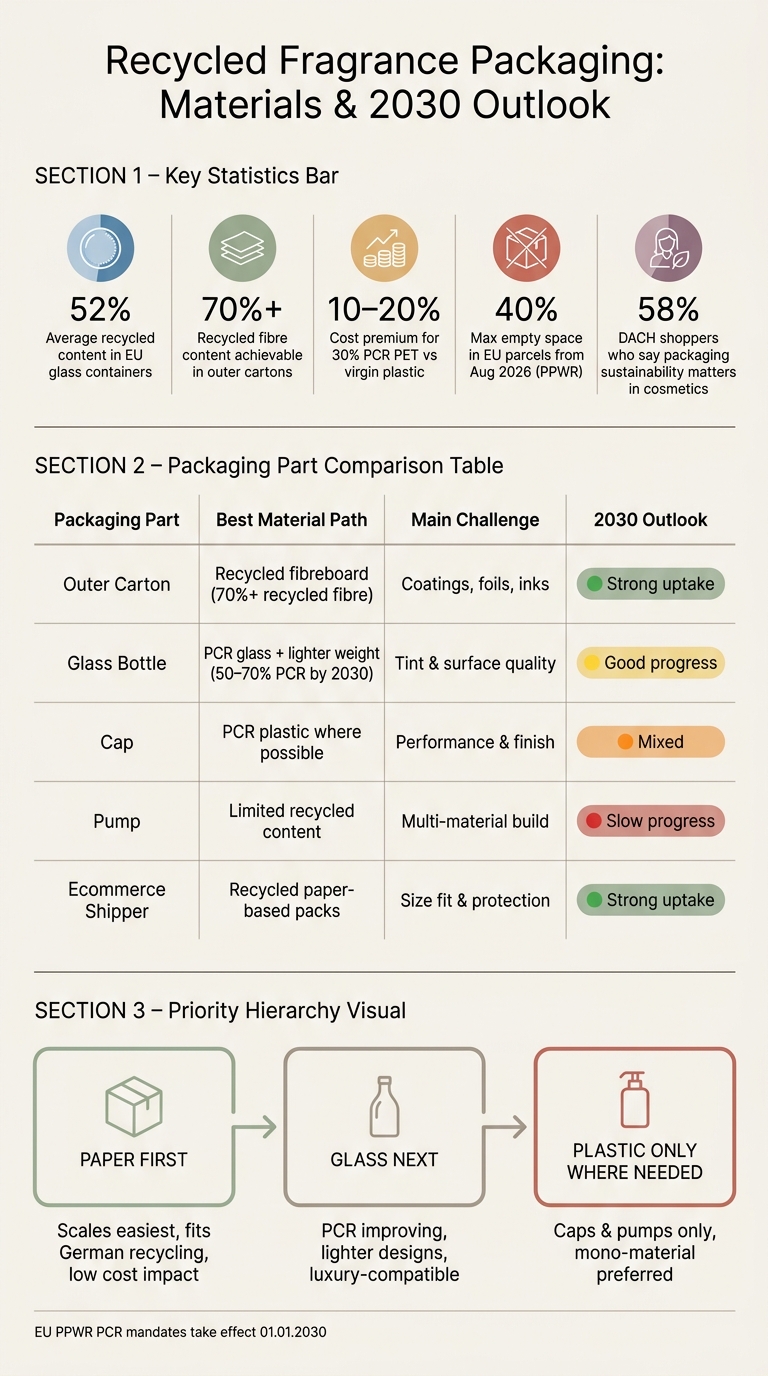
- Τα γυάλινα δοχεία στην ΕΕ περιέχουν ήδη κατά μέσο όρο 52% ανακυκλωμένο περιεχόμενο
- Τα εξωτερικά κουτιά μπορούν να φτάσουν σε ποσοστό 70%+ ανακυκλωμένων ινών
- Ένα μείγμα 30% PCR PET μπορεί να κοστίζει περίπου 10–20% περισσότερο από το πρωτογενές πλαστικό
- Οι κανόνες της ΕΕ για τα δέματα περιορίζουν τον κενό χώρο στο 40% από τις 12.08.2026
- Στην περιοχή DACH, το 58% των καταναλωτών δηλώνει ότι η βιωσιμότητα της συσκευασίας παίζει ρόλο στα καλλυντικά και την περιποίηση
Recycled Packaging in Fragrance: Materials, Scale & 2030 Outlook
Γρήγορη σύγκριση
| Μέρος συσκευασίας | Βέλτιστη βραχυπρόθεσμη επιλογή υλικού | Κύριο ζήτημα | Προοπτική έως το 2030 |
|---|---|---|---|
| Εξωτερικό κουτί | Χαρτόνι από ανακυκλωμένες ίνες | Επιστρώσεις, φύλλα αλουμινίου, μελάνια | Ισχυρή υιοθέτηση |
| Γυάλινο μπουκάλι | Γυαλί με υψηλότερο ποσοστό PCR + μικρότερο βάρος | Απόχρωση και ποιότητα επιφάνειας | Ικανοποιητική πρόοδος |
| Καπάκι | Πλαστικό PCR όπου είναι δυνατόν | Απόδοση και φινίρισμα | Ανάμεικτη |
| Αντλία | Περιορισμένο ανακυκλωμένο περιεχόμενο | Κατασκευή από πολλαπλά υλικά | Αργή πρόοδος |
| Κουτί αποστολής e-commerce | Συσκευασίες με βάση το ανακυκλωμένο χαρτί | Εφαρμογή μεγέθους και προστασία | Ισχυρή υιοθέτηση |
Το συμπέρασμά μου: η συσκευασία των αρωμάτων κινείται προς απλούστερες κατασκευές, περισσότερες ανακυκλωμένες ίνες, περισσότερο γυαλί PCR και λιγότερο σπαταλημένο χώρο. Αυτή η μεταστροφή ευθυγραμμίζεται τόσο με τους κανονισμούς της ΕΕ όσο και με τον τρόπο που διαχωρίζουν τα απορρίμματα οι καταναλωτές στη Γερμανία.
Πού βρίσκεται σήμερα η ανακυκλωμένη συσκευασία αρωμάτων
Τα ανακυκλωμένα υλικά έχουν ήδη θέση στη συσκευασία αρωμάτων. Ωστόσο, η υιοθέτησή τους εξακολουθεί να εξαρτάται από τρία απλά δεδομένα: απόδοση, κόστος και φινίρισμα. Ορισμένα μέρη εξελίσσονται χωρίς ιδιαίτερες δυσκολίες. Άλλα εξακολουθούν να συναντούν εμπόδια όταν οι οίκοι απαιτούν αυστηρές ανοχές, άψογη εμφάνιση και αίσθηση πολυτέλειας.
Ανακυκλωμένο γυαλί, πλαστικά PCR και χαρτόνι από ανακυκλωμένες ίνες
Το γυαλί είναι το πιο καθιερωμένο ανακυκλωμένο υλικό στη συσκευασία αρωμάτων. Τα ευρωπαϊκά γυάλινα δοχεία περιέχουν σήμερα κατά μέσο όρο 52% ανακυκλωμένο περιεχόμενο, και τα μπουκάλια μπορούν τεχνικά να κατασκευαστούν με έως και 100% ανακυκλωμένο γυαλί όταν είναι διαθέσιμο θραύσμα γυαλιού υψηλής καθαρότητας. Τα πολυτελή φιαλίδια αρωμάτων τείνουν να χρησιμοποιούν χαμηλότερα ποσοστά, αν και ορισμένες σειρές φτάνουν πλέον το 10–50% ανακυκλωμένου γυαλιού χωρίς να χάνουν τη διαύγειά τους. Η διαφορά δεν οφείλεται στη διαθεσιμότητα. Έγκειται στο αν το υλικό μπορεί να ανταποκριθεί στα πρότυπα πολυτέλειας για την αισθητική και την απόδοση.
Τα πλαστικά PCR είναι μια διαφορετική περίπτωση. Το PCR PET αποτελεί την πιο εφαρμόσιμη επιλογή για δευτερεύοντα μπουκάλια, travel formats και ορισμένα πώματα. Το PET είναι το πιο εύκολο πλαστικό για πιστοποίηση σε καλλυντικές συσκευασίες. Το τυπικό PCR PET υστερεί σε διαύγεια σε σύγκριση με το πρωτογενές PET. Οι ποιοτικότερες ποιότητες μειώνουν αυτή τη διαφορά, αλλά κοστίζουν και περισσότερο. Ένα μείγμα 30% PCR συνήθως επιβαρύνεται με μια προσαύξηση τιμής 10–20% σε σύγκριση με το πρωτογενές πλαστικό. Στο 100% PCR, η επιβάρυνση αυτή ανέρχεται στο 30–40%.
Το χαρτόνι από ανακυκλωμένες ίνες προσφέρει το ευκολότερο όφελος σε ολόκληρη τη δομή της συσκευασίας. Οι σειρές premium χαρτονιών, όπως οι σειρές πολυτελούς συσκευασίας της Eska, κατασκευάζονται από περισσότερο από 90% ανακυκλωμένα απορρίμματα χαρτιού, με τη σειρά Eska Pure να φτάνει το 100% ανακυκλωμένων ινών. Αυτά τα χαρτόνια μπορούν να δεχθούν ανάγλυφη εκτύπωση, θερμοτυπία και καθαρά αποτελέσματα εκτύπωσης όταν συνδυάζονται με ένα πρωτογενές ή υψηλής φωτεινότητας εξωτερικό φύλλο επικάλυψης.
Τι εφαρμόζεται εύκολα σε μεγάλη κλίμακα και τι εξακολουθεί να δυσκολεύει
Η δευτερογενής συσκευασία — κουτιά, περιβλήματα και εσωτερικά ένθετα αποστολής — είναι το σημείο όπου το ανακυκλωμένο περιεχόμενο κλιμακώνεται με τα λιγότερα προβλήματα. Η προμήθεια ινών είναι ώριμη, το επιπλέον κόστος είναι μέτριο και το σύστημα ανακύκλωσης της Γερμανίας διαχειρίζεται άριστα το χαρτί. Οι συσκευασίες μεταφοράς, όπως τα κυματοειδή κουτιά αποστολής και τα διαχωριστικά, βασίζονται ήδη συχνά σε πολύ υψηλό ποσοστό ανακυκλωμένου περιεχομένου με ελάχιστη ορατή επίδραση στην παρουσίαση.
Οι αντλίες είναι το πιο δύσκολο τμήμα. Συνδυάζουν διαφορετικά υλικά με αυστηρές ανοχές, γεγονός που αφήνει ελάχιστα περιθώρια για διακυμάνσεις στις πρώτες ύλες PCR. Τα διακοσμητικά καπάκια αντιμετωπίζουν σχεδόν το ίδιο πρόβλημα. Τα διακοσμημένα μπουκάλια είναι επίσης πιο δύσκολο να ανακυκλωθούν, καθώς τα βερνίκια, οι μεταλλικές επιστρώσεις και τα κολλημένα διακοσμητικά στοιχεία μπορούν να μολύνουν τις ροές ανακύκλωσης γυαλιού.
Το μοτίβο είναι απλό: οι ίνες και το γυαλί προηγούνται· οι αντλίες και τα διακοσμημένα μέρη ακολουθούν.
Πίνακας σύγκρισης: οι κύριες επιλογές ανακυκλωμένων υλικών σήμερα
Η υιοθέτηση ακολουθεί τη λειτουργικότητα. Όσο πιο απλό είναι το εξάρτημα, τόσο πιο εύκολα κλιμακώνεται το ανακυκλωμένο περιεχόμενο.
| Υλικό | Δυναμική κλίμακας | Κύρια γερμανική ροή | Επίδραση κόστους έναντι πρωτογενούς | Ευελιξία σχεδιασμού | Καταλληλότητα για πολυτελή αρώματα |
|---|---|---|---|---|---|
| Γυαλί PCR | Υψηλή· 10–40% σύνηθες, υψηλότερο σε επιλεγμένες σειρές | Altglascontainer (διαλογή κατά χρώμα) | Ποικίλλει | Υψηλή με οπτική διαλογή | Καλή· μικρός κίνδυνος απόχρωσης σε υψηλότερα επίπεδα PCR |
| Πλαστικό PCR PET | Μέτρια | Gelber Sack/Gelbe Tonne· ιδανικό για μέρη μονο-υλικού | Προσαύξηση 10–40% ανάλογα με το ποσοστό PCR | Περιορίζεται από συμβιβασμούς στη διαύγεια | Μέτρια· χρήσιμο για δευτερεύοντα και travel formats |
| Πλαστικό PCR HDPE | Χαμηλή έως μέτρια | Gelber Sack/Gelbe Tonne· ιδανικό για μέρη μονο-υλικού | Ποικίλλει | Περιορισμένη· προβληματισμοί για χρώμα και μετανάστευση ουσιών | Χαμηλή· κυρίως αδιαφανή πώματα |
| Χαρτόνι από ανακυκλωμένες ίνες | Πολύ υψηλή | Altpapier | Χαμηλή | Υψηλή· ανάγλυφη εκτύπωση, foil, ματ φινιρίσματα | Υψηλή για δευτερογενή συσκευασία |
| Καπάκια/αντλίες μεικτών υλικών | Πολύ χαμηλή | Restmüll στις περισσότερες περιπτώσεις | Υψηλό κόστος ανάπτυξης | Χαμηλή· οι ανοχές ακριβείας περιορίζουν τη χρήση PCR | Χαμηλή ανακυκλωσιμότητα |
Τι θα καθοδηγήσει την υιοθέτηση από τώρα έως το 2030
Τρεις δυνάμεις ωθούν την ανακυκλωμένη συσκευασία προς την καθιέρωση. Αυτές θα κρίνουν αν το ανακυκλωμένο γυαλί, τα πλαστικά PCR και το χαρτόνι ινών θα ξεπεράσουν το επίπεδο της εξειδικευμένης επιλογής και θα περάσουν στην ευρεία παραγωγή. Με απλά λόγια: αυτές οι πιέσεις θα διαμορφώσουν το βασικό πλαίσιο του 2030 για τη συσκευασία αρωμάτων.
Οι κανόνες της ΕΕ και το πλαίσιο συσκευασίας της Γερμανίας
Η νομοθεσία θέτει το ελάχιστο όριο. Η πίεση της αγοράς καθορίζει πόσο γρήγορα κινούνται οι οίκοι.
Ο κανονισμός PPWR θέτει το κατώτατο όριο του 2030 για το PCR στις πλαστικές συσκευασίες. Στην αρωματοποιία, αυτό ασκεί πίεση στα καπάκια, τα πώματα, τις αντλίες, τα ένθετα και άλλα πλαστικά μέρη ώστε να γίνουν απλούστερα και ευκολότερα στην ανακύκλωση.
Ο γερμανικός νόμος Verpackungsgesetz (VerpackG) προσθέτει ένα ακόμη επίπεδο. Ορίζει στόχους ανακύκλωσης βάσει υλικού για το 2030: 55% για τα πλαστικά, 75% για το γυαλί και 85% για το χαρτί και το χαρτόνι. Μια επικείμενη γερμανική επικαιροποίηση συνδεδεμένη με τον PPWR θα αυστηροποιήσει επίσης τις ποσοστώσεις βάσει πραγματικής μηχανικής ανακύκλωσης στο 75% έως το 2030, ενώ η αποτέφρωση δεν θα προσμετράται πλέον σε αυτούς τους στόχους. Αυτό αλλάζει τα δεδομένα για τις μορφές που ανακυκλώνονται δύσκολα. Ό,τι κάποτε φάνταζε ως σχεδιαστική επιλογή αρχίζει να μοιάζει με ζήτημα συμμόρφωσης και προμήθειας.
Στόχοι των οίκων, πίεση από τους retailers και ανταπόκριση των καταναλωτών
Η νομοθεσία δεν είναι η μόνη κινητήρια δύναμη. Οι στόχοι των εταιρειών, τα πρότυπα των retailers και η ανταπόκριση των αγοραστών διαμορφώνουν πλέον καθημερινά τις αποφάσεις συσκευασίας.
Οι εταιρικοί στόχοι βιωσιμότητας συχνά προηγούνται των νομικών προθεσμιών. Πολλοί μεγάλοι όμιλοι ομορφιάς και πολυτέλειας δημοσιεύουν πλέον δεσμεύσεις για ανακυκλωμένο περιεχόμενο και ανακυκλωσιμότητα, και αυτοί οι στόχοι επηρεάζουν άμεσα τις αναφορές ESG και τις αγοραστικές αποφάσεις. Οι ομάδες συσκευασίας καλούνται να δείξουν πρόοδο με σαφείς μετρήσεις, όχι γενικόλογες υποσχέσεις.
Οι κανόνες των retailers αυστηροποιούνται επίσης. Τα κριτήρια εισαγωγής προϊόντων στα ράφια απαιτούν όλο και συχνότερα περιεχόμενο PCR, ανακυκλώσιμο χαρτόνι και απλούστερες δομές συσκευασίας.
Η ζήτηση των καταναλωτών αυξάνεται επίσης για συσκευασίες χαμηλότερου αντικτύπου, ειδικά όταν το προϊόν εξακολουθεί να δείχνει και να έχει premium αίσθηση. Στα αρώματα, αυτή η λεπτομέρεια μετράει πολύ. Η ανακυκλωμένη συσκευασία κερδίζει έδαφος μόνο όταν συνεχίζει να προσφέρει αυτή την εκλεπτυσμένη, πολυτελή εμπειρία.
Πίνακας σύγκρισης: κύριοι μοχλοί υιοθέτησης
| Μοχλός | Ταχύτητα | Σχεδιαστικοί περιορισμοί | Επίδραση στη συσκευασία αρωμάτων |
|---|---|---|---|
| Κανονισμοί PPWR & VerpackG | Μέτρια (σταδιακές, σταθερές προθεσμίες για το 2030) | Υψηλοί (υποχρεωτικό PCR, ανακυκλωσιμότητα) | Νομικό πλαίσιο βάσης· προωθεί το PCR και τις απλούστερες μορφές |
| Εταιρικοί στόχοι βιωσιμότητας | Γρήγορη (οι οίκοι δρουν πριν από τις προθεσμίες) | Μέτριοι (διατήρηση της ταυτότητας του οίκου) | Μείωση βάρους, χαρτόνι από ανακυκλωμένες ίνες, refill formats |
| Απαιτήσεις retailers | Γρήγορη (άμεση για τα συνεργαζόμενα brands) | Μέτριοι (όρια PCR και ανακυκλωσιμότητας) | Επιταχύνει το PCR στη δευτερογενή συσκευασία και τα κουτιά |
| Ζήτηση καταναλωτών | Μεταβλητή (ισχυρότερη στους νεότερους αγοραστές) | Χαμηλοί έως μέτριοι (διατήρηση αισθητικής ποιότητας) | Υποστηρίζει το εμφανές ανακυκλωμένο περιεχόμενο όταν η ποιότητα παραμένει premium |
Ο προσωπικός σας ειδικός αρωμάτων σας περιμένει
Κάντε το σύντομο κουίζ αρώματος και ανακαλύψτε αυθεντικά αρώματα designer και niche, επιλεγμένα στα μέτρα σας – εξερευνήστε τα σε decant και δείγματα των 2, 5, 8 και 30 ml, ώστε να δοκιμάσετε το καθένα πριν επιλέξετε ολόκληρο μπουκάλι.
Βρείτε το άρωμά σαςΠώς θα μοιάζει η ανακυκλωμένη συσκευασία αρωμάτων στο μέλλον
Η επόμενη φάση της ανακυκλωμένης συσκευασίας αρωμάτων δεν αφορά την επινόηση ενός εντελώς νέου σχήματος μπουκαλιού. Αφορά την αποδοτικότερη λειτουργία των υπαρχόντων formats: περισσότερο περιεχόμενο PCR, λιγότερο υλικό και απλούστερη δομή συσκευασίας. Με απλούς όρους, ο κλάδος μετατοπίζεται από το «μπορεί αυτό να ανακυκλωθεί;» στο «μπορεί αυτό να παραχθεί σε μεγάλη κλίμακα;»
Γυαλί με υψηλότερο ποσοστό PCR, εξελιγμένα ανακυκλωμένα πλαστικά και ελαφρύτερα σχέδια
Η πιο ξεκάθαρη βραχυπρόθεσμη κίνηση είναι το περισσότερο ανακυκλωμένο περιεχόμενο σε formats που ήδη υπάρχουν. Ένα σημείο είναι ήδη σαφές: τα πολυτελή μπουκάλια μπορούν να χρησιμοποιούν ανακυκλωμένο γυαλί χωρίς να χάνουν το φινίρισμά τους. Έως το 2030, οι βασικές σειρές αρωμάτων μπορούν να φτάσουν σε 50–70% γυαλί PCR. Τα υψηλότερα ποσοστά πιθανότατα θα παραμείνουν συνδεδεμένα με ειδικές εκδόσεις επικεντρωμένες στη βιωσιμότητα.
Η πλήρης μετάβαση σε 100% γυαλί PCR σε όλα τα premium SKUs δεν είναι πιθανή πριν από το 2030. Το μεικτό θραύσμα μπορεί να οδηγήσει σε χρωματικές διακυμάνσεις και μικροσκοπικές επιφανειακές ατέλειες, οι οποίες γίνονται δύσκολα αποδεκτές στα πολυτελή φιαλίδια. Επιπλέον, η ποιότητα της πρώτης ύλης και τα συστήματα διαλογής χρειάζονται ακόμη χρόνο για να εξελιχθούν. Έτσι, το ταχύτερο όφελος είναι απλούστερο: ελαφρύτερα μπουκάλια. Οι λεπτότερες βάσεις και ώμοι μπορούν να διατηρήσουν το οπτικό βάρος που περιμένει το κοινό, μειώνοντας παράλληλα τη χρήση γυαλιού.
Για τα πλαστικά μέρη, όπως τα καπάκια, τα περιβλήματα των αντλιών και τα πώματα, το μηχανικά ανακυκλωμένο PET και PP θα ταιριάξει σε πολλά εξωτερικά εξαρτήματα όπου η επαφή με το άρωμα είναι ελάχιστη. Ωστόσο, για τα μέρη που αγγίζουν το ίδιο το υγρό (the juice), τα εξελιγμένα ή χημικά ανακυκλωμένα πλαστικά θα παραμείνουν περιορισμένα πριν από το 2030. Η προσφορά παραμένει περιορισμένη και οι τιμές είναι ακόμη υψηλές.
Τα ταχύτερα οφέλη θα προέλθουν από τη δευτερογενή συσκευασία. Εκεί οι ανακυκλωμένες ίνες μπορούν να κλιμακωθούν νωρίτερα από τις πρωτογενείς συσκευασίες.
Εξυπνότερη δευτερογενής συσκευασία και σαφέστερη ιχνηλασιμότητα υλικών
Η δευτερογενής συσκευασία εξελίσσεται πρώτη, και ο λόγος είναι απλός: αλλάζει ευκολότερα. Τα κουτιά μονο-υλικού από ανακυκλωμένες ίνες και τα ένθετα από χυτευτή ίνα αποτελούν ήδη το πιο σαφές επόμενο βήμα. Τα κουτιά χωρίς πλαστικά παράθυρα, μεταλλικά foils ή πολυστρωματικές επιστρώσεις ταιριάζουν ήδη στο σύστημα ανακύκλωσης χαρτιού της Γερμανίας. Και όταν τα ένθετα από χυτευτή ίνα αντικαθιστούν τους πλαστικούς δίσκους θερμοδιαμόρφωσης, ολόκληρη η δευτερογενής συσκευασία μπορεί να κατευθυνθεί σε μία ενιαία ροή ανακύκλωσης.
Η ιχνηλασιμότητα μετατρέπεται επίσης σε ζήτημα συμμόρφωσης και όχι απλώς σε ένα μήνυμα marketing. Το Mojave Ghost Absolu της BYREDO χρησιμοποιεί ήδη έναν τεχνικό κωδικό QR στο κάτω μέρος του μπουκαλιού που συνδέεται με λεπτομέρειες για το ανακυκλωμένο υλικό. Σύμφωνα με τον PPWR της ΕΕ, οι ψηφιακοί φορείς δεδομένων, όπως οι κωδικοί QR, συνδέονται άμεσα με τους κανόνες πληροφόρησης συσκευασίας σχετικά με την επαναχρησιμοποίηση, τη συλλογή και τη σύνθεση των υλικών. Αυτό σημαίνει ότι οι οδηγίες μέσω QR μπορούν να καταστήσουν την απόρριψη σαφέστερη και να προσφέρουν μια καθαρή εικόνα για την προέλευση των υλικών. Οι οίκοι που το οργανώνουν αυτό από τώρα θα βρίσκονται σε ισχυρότερη θέση έως το 2030.
Αυτές οι αλλαγές έχουν ακόμη μεγαλύτερη σημασία στα μικρότερα μεγέθη αρωμάτων, όπου το χαμηλότερο φορτίο υλικού μπορεί παρ’ όλα αυτά να διατηρεί μια premium αίσθηση.
| Υλικό / Σχεδιαστική αλλαγή | Πιθανό χρονοδιάγραμμα | Κύριος περιορισμός |
|---|---|---|
| 50–70% γυαλί PCR σε τυπικές σειρές | Έως το 2030 | Ποιότητα πρώτης ύλης, έλεγχος χρώματος |
| Κουτιά μονο-υλικού από ανακυκλωμένες ίνες | Ήδη σε κλίμακα | Συμβιβασμοί στο διακοσμητικό φινίρισμα |
| Μηχανικά ανακυκλωμένο PET/PP για καπάκια και πώματα | Έως το 2030 | Απόδοση σε μέρη που έρχονται σε επαφή με το άρωμα |
| Εξελιγμένα ανακυκλωμένα πλαστικά για αντλίες/δεξαμενές | Μετά το 2030 για ευρεία χρήση | Προσαύξηση τιμής, διαθέσιμη προσφορά |
| Ελαφρύτερα σχέδια μπουκαλιών (βελτιστοποιημένο πάχος τοιχώματος) | Σε εξέλιξη | Προσδοκίες για το αντιληπτό βάρος πολυτέλειας |
Τι σημαίνει αυτό για τα discovery formats, το e-commerce και το Scento
Γιατί τα αρώματα μικρού μεγέθους μπορούν να υποστηρίξουν την αποδοτικότερη χρήση συσκευασίας
Πολλά μπουκάλια αρωμάτων κανονικού μεγέθους δεν τελειώνουν ποτέ. Τα μικρά μεγέθη γνωριμίας, όπως τα 2 ml, 5 ml και 8 ml, συμβάλλουν στη μείωση αυτής της σπατάλης, επειδή οι καταναλωτές μπορούν να φορέσουν ένα άρωμα μερικές φορές πριν αποφασίσουν αν θέλουν περισσότερο.
Υπάρχει όμως μια παγίδα. Τα μικρότερα μεγέθη απαιτούν περισσότερα εξαρτήματα ανά χιλιοστόλιτρο αρώματος. Κάθε φιαλίδιο χρειάζεται καπάκι, ετικέτα και προστασία αποστολής. Επομένως, το όφελος διατηρείται μόνο εάν αυτά τα μέρη παραμένουν τυποποιημένα, ελαφριά και απλά. Εάν οι οίκοι στραφούν σε custom φιαλίδια, καπάκια μεικτών υλικών ή υπερμεγέθεις φακέλους αποστολής, τα οφέλη μπορούν να εξανεμιστούν γρήγορα.
Αυτό έχει ακόμη μεγαλύτερη σημασία τώρα, καθώς από τις 12 Αυγούστου 2026, ο PPWR της ΕΕ περιορίζει τον κενό χώρο στα δέματα στο 40% του συνολικού όγκου. Με απλά λόγια, τα brands ηλεκτρονικού εμπορίου θα πρέπει να χρησιμοποιούν κουτιά και φακέλους αποστολής με καλύτερη εφαρμογή, ανεξάρτητα από το τι πωλούν. Για τα αρώματα, αυτό θέτει τη διακίνηση των μικρών formats στο επίκεντρο. Ταυτόχρονα, τα καθιστά ένα από τα πιο προφανή πεδία για την ορθή χρήση ανακυκλωμένης δευτερογενούς συσκευασίας.
Για το ηλεκτρονικό εμπόριο, οι φάκελοι αποστολής και τα κουτιά από ανακυκλωμένες ίνες αποτελούν το σαφέστερο πλεονέκτημα. Γίνονται ήδη δεκτά στις ευρωπαϊκές ροές ανακύκλωσης χαρτιού, γεγονός που καθιστά την εξωτερική συσκευασία με βάση το χαρτί έναν από τους απλούστερους τρόπους μείωσης των απορριμμάτων στις παραγγελίες μικρού μεγέθους.
Πώς το Scento ευθυγραμμίζεται με την κατεύθυνση των τάσεων ανακυκλωμένης συσκευασίας
Εδώ είναι που η προσέγγιση του αρώματος με βάση τη δοκιμή και την ανακάλυψη αποκτά ουσιαστικό νόημα.
Η βασική πρόταση του Scento — επιλεγμένα decants αρωμάτων σε μεγέθη φιαλίδια 2 ml, 5 ml και 8 ml, καθώς και μπουκάλι decant 30 ml για τα περισσότερα αρώματα — αντιμετωπίζει άμεσα το πρόβλημα των καταναλωτών που αγοράζουν μπουκάλια τα οποία δεν τελειώνουν ποτέ. Η Scento είναι κατάστημα λιανικής με decants και δείγματα αρωμάτων, και κάθε προϊόν διατίθεται για εφάπαξ αγορά, χωρίς καμία συνδρομή. Το Scento+ είναι η προαιρετική συνδρομή μελών της Scento: το μηνιαίο κόστος επιστρέφει εξ ολοκλήρου ως πίστωση καταστήματος, την οποία ξοδεύετε σε όποιο άρωμα θέλετε, τα μέλη έχουν 10% έκπτωση, ένα δωρεάν δείγμα σε κάθε παραγγελία, ένα δωρεάν άρωμα κάθε έξι μήνες και ένα δώρο γενεθλίων, ενώ μπορείτε να κάνετε παύση ή ακύρωση όποτε θέλετε.
Αυτό το μοντέλο λειτουργεί εξαιρετικά και από την άποψη της συσκευασίας. Τα τυποποιημένα μεγέθη φιαλιδίων καθιστούν την προμήθεια απλούστερη. Καθιστούν επίσης τις οδηγίες ανακύκλωσης ευκολότερες στην κατανόηση και την εκτέλεση των παραγγελιών πιο αποδοτική. Στη Γερμανία, αυτό μετράει. Το 66% των καταναλωτών δηλώνει ότι η μείωση των απορριμμάτων συσκευασίας είναι βασικός παράγοντας αγοράς. Και στα καλλυντικά, το 71% συνδέει τη βιωσιμότητα με την απουσία περιττής εξωτερικής συσκευασίας. Τα απλά formats με σαφείς ετικέτες και εύκολη διαλογή εναρμονίζονται απόλυτα με αυτή τη φιλοσοφία.
Η εξέλιξη του Scento προς μπουκάλια 30 ml+ ακολουθεί το ίδιο μοτίβο. Οι καταναλωτές ξεκινούν με μια δοκιμή χαμηλής δέσμευσης και προχωρούν σε μεγαλύτερο μπουκάλι μόνο όταν γνωρίζουν ότι θα το χρησιμοποιήσουν. Αυτό μειώνει την πιθανότητα να καταλήξει ένα μπουκάλι μισογεμάτο σε ένα ράφι. Ένα τυποποιημένο decant, ένας φάκελος αποστολής από ανακυκλωμένες ίνες και ένας λιτός σχεδιασμός φιαλιδίου μπορούν να κάνουν τόσο τη χρήση υλικών όσο και την εκτέλεση παραγγελιών πιο αποδοτική.
Συμπέρασμα: η πιο πιθανή πορεία για τη συσκευασία αρωμάτων
Η πιο πιθανή κατεύθυνση είναι αρκετά ξεκάθαρη: πρώτα οι ανακυκλωμένες ίνες, μετά το γυαλί, τα πλαστικά όπου χρειάζεται.
Η δευτερογενής συσκευασία από ανακυκλωμένες ίνες είναι πιθανό να αναπτυχθεί ταχύτερα, καθώς λειτουργεί ήδη με τα υπάρχοντα συστήματα συσκευασίας και με τον τρόπο που διαχωρίζουν τα απορρίμματα οι καταναλωτές στη Γερμανία. Το γυαλί αναμένεται να βελτιωθεί πιο σταδιακά μέσω υψηλότερου ανακυκλωμένου περιεχομένου και ελαφρύτερων σχεδιασμών φιαλιδίων. Τα πλαστικά θα συνεχίσουν να έχουν θέση, αλλά κυρίως σε περιπτώσεις όπου το απαιτεί η μορφή ή η λειτουργία. Παράλληλα, το ηλεκτρονικό εμπόριο που βασίζεται στην ανακάλυψη θα αποκτήσει μεγαλύτερη σημασία, καθώς συμβάλλει στη μείωση της σπατάλης αχρησιμοποίητου προϊόντος και καθιστά την αγορά μια πιο συνειδητή διαδικασία.
| Μορφή | Χρήση υλικού | Δυναμική ανακυκλωμένου περιεχομένου | Πιθανότητα πλήρους χρήσης από τον καταναλωτή | Συμβατότητα με τη γερμανική ανακύκλωση |
|---|---|---|---|---|
| Μπουκάλι κανονικού μεγέθους | Υψηλή (βαρύ γυαλί, μεικτά εξαρτήματα) | Μέτρια (το γυαλί PCR βελτιώνεται) | Χαμηλότερη | Γυαλί: υψηλή· αντλία/πώμα: χαμηλότερη |
| Discovery kit (ποικιλία φιαλιδίων) | Μέτρια (πολλαπλές μικρές μονάδες) | Χαμηλή–μέτρια (μεικτά υλικά) | Υψηλή | Ποικίλλει ανά εξάρτημα |
| Μορφή decant (2–8 ml, τυποποιημένη) | Χαμηλή (μικρό βάρος, ομοιομορφία) | Υψηλή, ειδικά με δευτερογενή συσκευασία ανακυκλωμένων ινών | Πολύ υψηλή | Υψηλή εάν τα εξαρτήματα είναι τυποποιημένα |
Ένα τυποποιημένο decant σε συνδυασμό με έναν φάκελο αποστολής από ανακυκλωμένες ίνες και έναν λιτό σχεδιασμό φιαλιδίου μπορεί να βελτιώσει τόσο τη χρήση υλικών όσο και την αποδοτικότητα της εκτέλεσης παραγγελιών — αλλά μόνο όταν ολόκληρο το σύστημα συσκευασίας έχει σχεδιαστεί με αυτόν τον στόχο.
Συχνές ερωτήσεις
Γιατί οι ανακυκλωμένες ίνες είναι η ευκολότερη αλλαγή στη συσκευασία αρωμάτων;
Οι ανακυκλωμένες ίνες αποτελούν συχνά το ευκολότερο σημείο εκκίνησης. Καθιστούν εφικτή την απλούστερη συσκευασία μονο-υλικού, η οποία είναι ευκολότερη στη διαχείριση για τις εγκαταστάσεις ανακύκλωσης και ευκολότερη στη διαλογή για τους καταναλωτές κατά την απόρριψη. Αυτό μειώνει τη σύγχυση στον κάδο ανακύκλωσης.
Προσφέρει επίσης στους οίκους μια καθαρή διέξοδο από τα πολυστρωματικά εξαρτήματα που διαχωρίζονται δύσκολα. Επιπλέον, λειτουργεί εξαιρετικά για ανακυκλώσιμες δευτερογενείς συσκευασίες, όπως τα κουτιά από χαρτοπολτό. Επειδή αυτές οι μορφές εξαρτώνται λιγότερο από περίπλοκους διαχωρισμούς σε σχέση με τα μπουκάλια μεικτών υλικών, οι οίκοι μπορούν να τις εφαρμόσουν ταχύτερα και σε μεγαλύτερη κλίμακα.
Γιατί οι αντλίες και τα καπάκια εξακολουθούν να ανακυκλώνονται δύσκολα σε μεγάλη κλίμακα;
Οι αντλίες και τα καπάκια ανακυκλώνονται δύσκολα σε μεγάλη κλίμακα επειδή τα μπουκάλια αρωμάτων συχνά συνδυάζουν συγκολλημένο γυαλί, μέταλλο και πλαστικό σε μία ενιαία, μικρή κατασκευή. Αυτό ακούγεται αρκετά απλό στη θεωρία, αλλά στην πράξη δημιουργεί έναν πονοκέφαλο στη διαλογή. Τα υλικά είναι δύσκολο να διαχωριστούν και πολλές εγκαταστάσεις τα απορρίπτουν λόγω της πολυπλοκότητάς τους ή του κινδύνου επιμόλυνσης.
Τα περισσότερα τυπικά προγράμματα ανακύκλωσης δεν μπορούν επίσης να διαχειριστούν τους εξειδικευμένους μηχανισμούς ψεκασμού που χρησιμοποιούνται στα μπουκάλια αρωμάτων. Έτσι, ενώ το ίδιο το μπουκάλι μπορεί να γίνεται δεκτό σε ορισμένες περιπτώσεις, η αντλία και το καπάκι συνήθως εξαιρούνται από την κανονική ανακύκλωση και αντιμετωπίζονται ως υπολειμματικά απόβλητα.
Θα αλλάξει η ανακυκλωμένη συσκευασία την πολυτελή όψη και αίσθηση του αρώματος;
Όχι. Η ανακυκλωμένη συσκευασία δεν χρειάζεται να θέσει σε κίνδυνο την πολυτελή όψη και αίσθηση ενός αρώματος.
Χάρη στις προόδους στην επιστήμη των υλικών, τα ανακυκλωμένα πλαστικά μπορούν πλέον να φτάσουν σε επίπεδα διαφάνειας σχεδόν πανομοιότυπα με τα πρωτογενή. Το ανακυκλωμένο γυαλί μπορεί επίσης να προσφέρει το βάρος, τη διαύγεια και το φινίρισμα που περιμένει κανείς από ένα εκλεκτό άρωμα.
Η premium αίσθηση συχνά απορρέει από το συνολικό σχεδιαστικό σύστημα και όχι μόνο από την πρώτη ύλη. Οι οίκοι διατηρούν αυτή την εμπειρία επιπέδου atelier μέσα από μινιμαλιστικές ετικέτες, εξατομικευμένα φινιρίσματα και απτικές λεπτομέρειες, όπως βαριά καπάκια και μαγνητικά πώματα.

